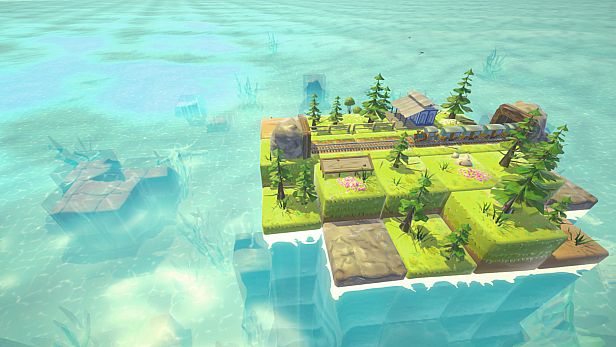




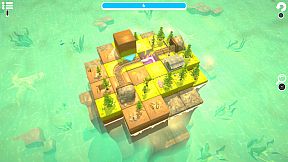
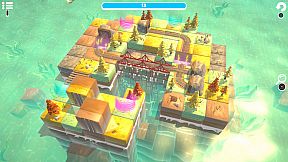
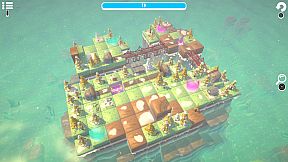
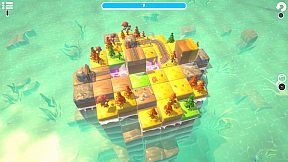
Cube Railway is a casual puzzle game available on PS5 that centers on fitting blocks into place to build complete railway tracks. Players guide the action through a series of spatial challenges where each correct placement advances a train along the newly formed line. The experience emphasizes careful planning within strict move limits, creating a steady rhythm of trial, adjustment, and eventual success across its full set of stages.
Gameplay
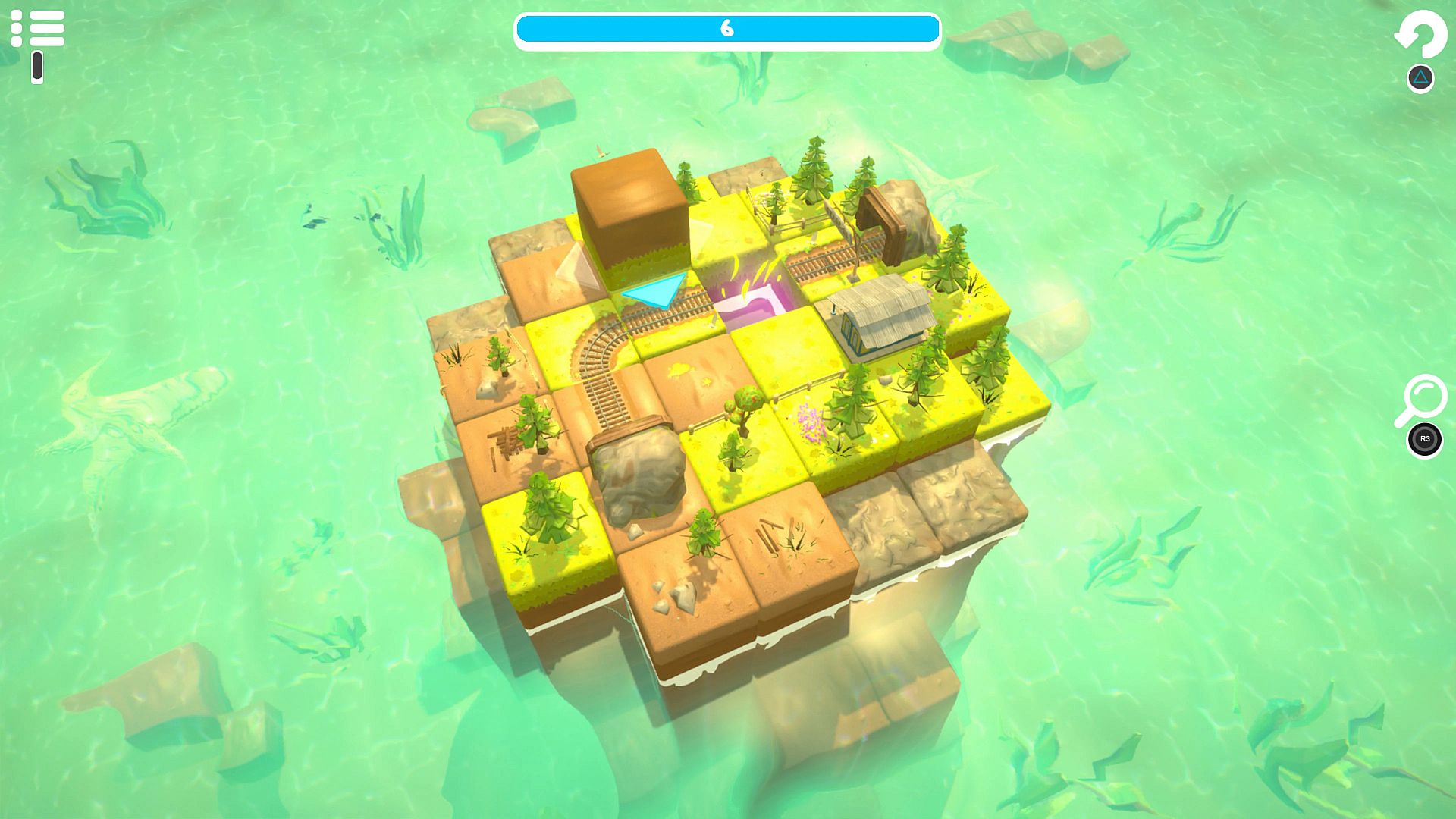
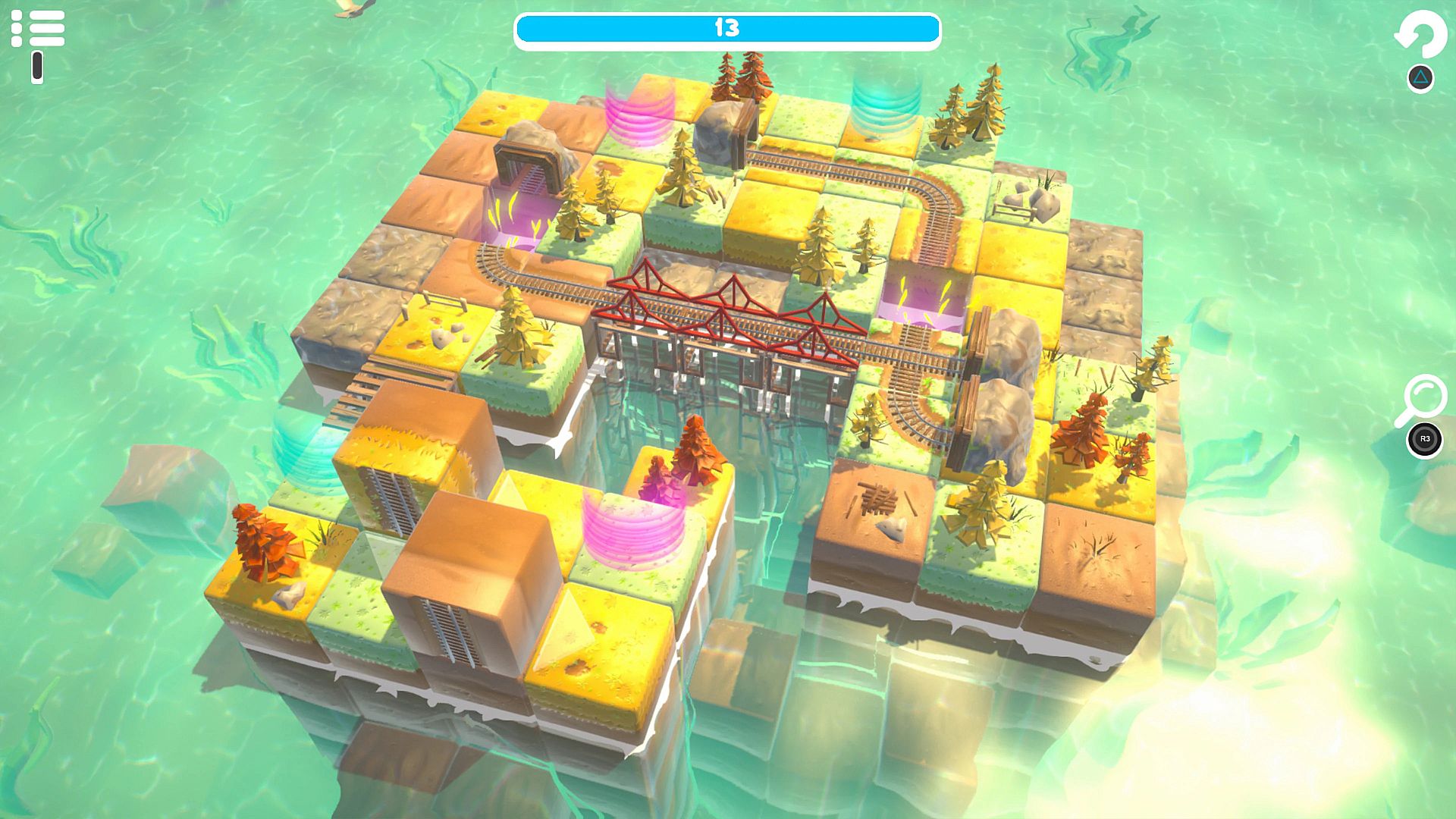
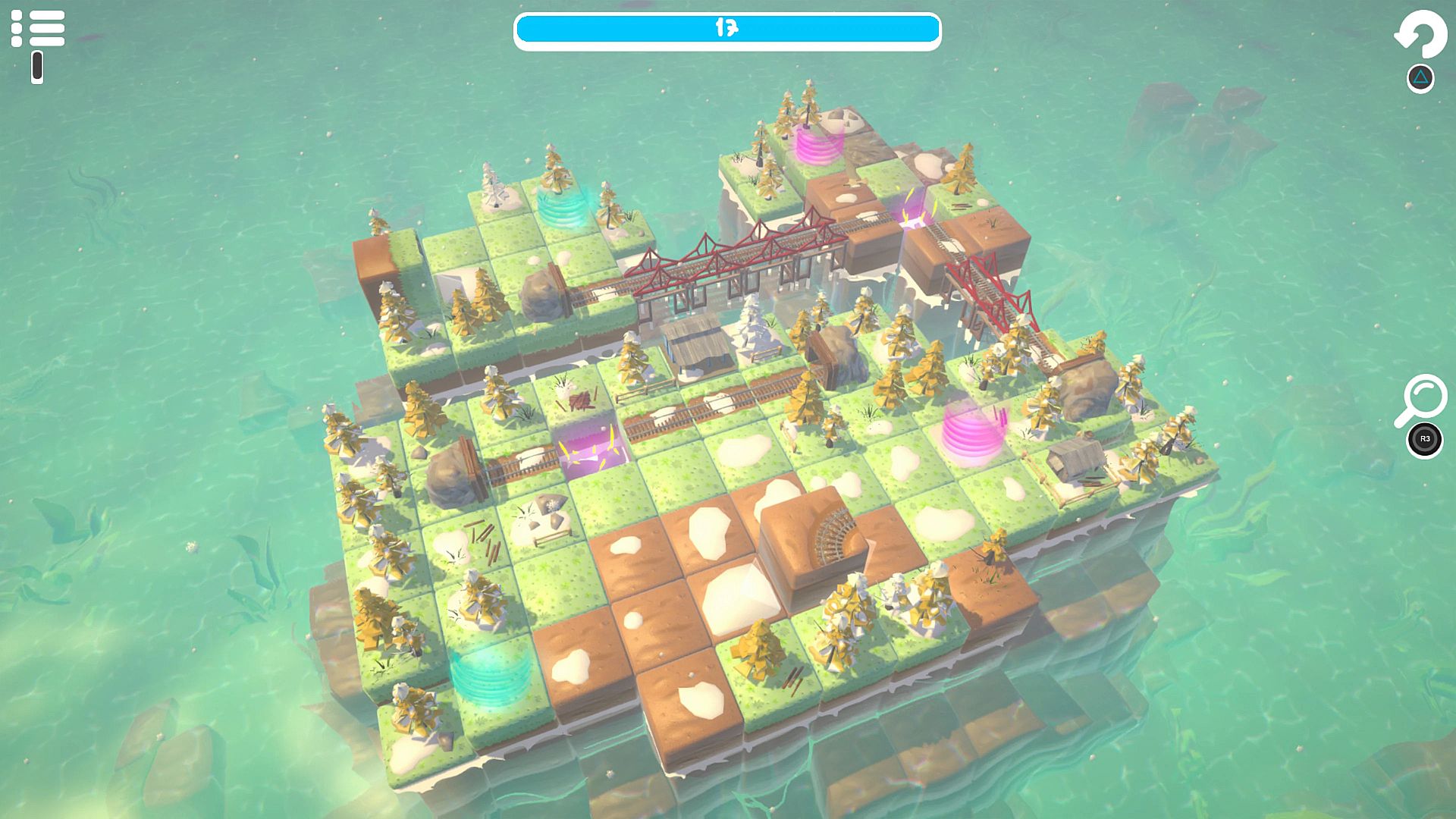
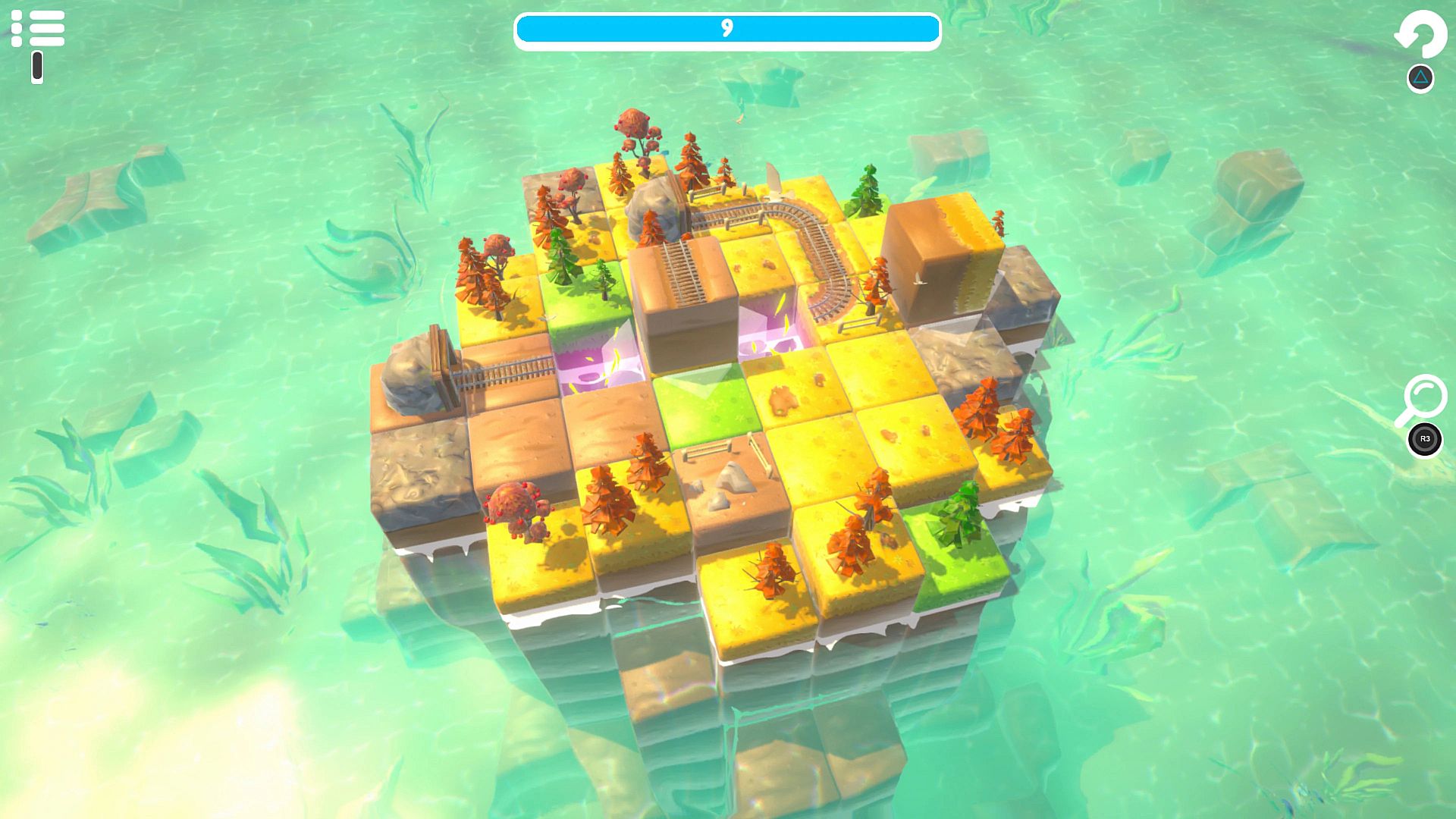
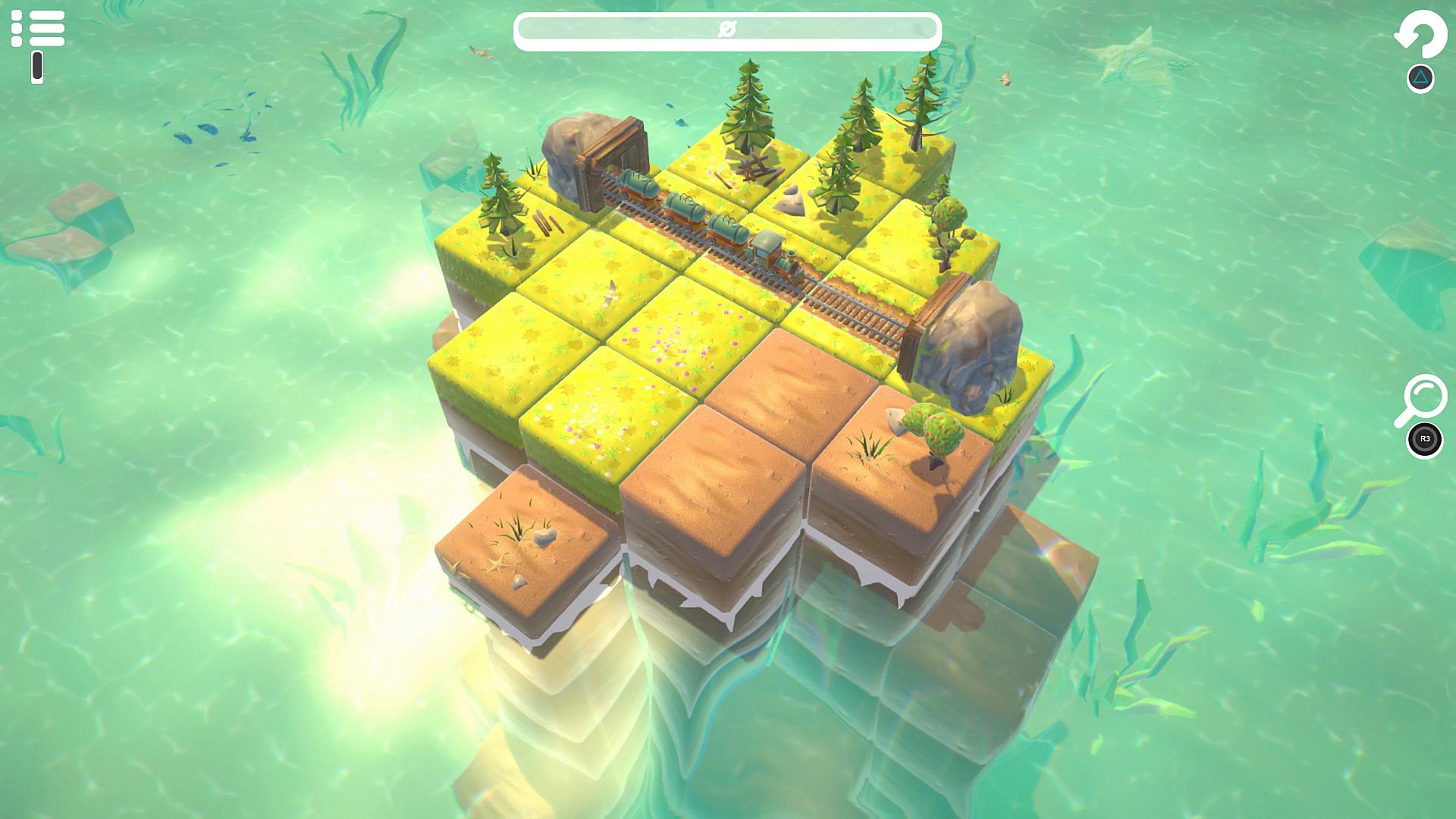
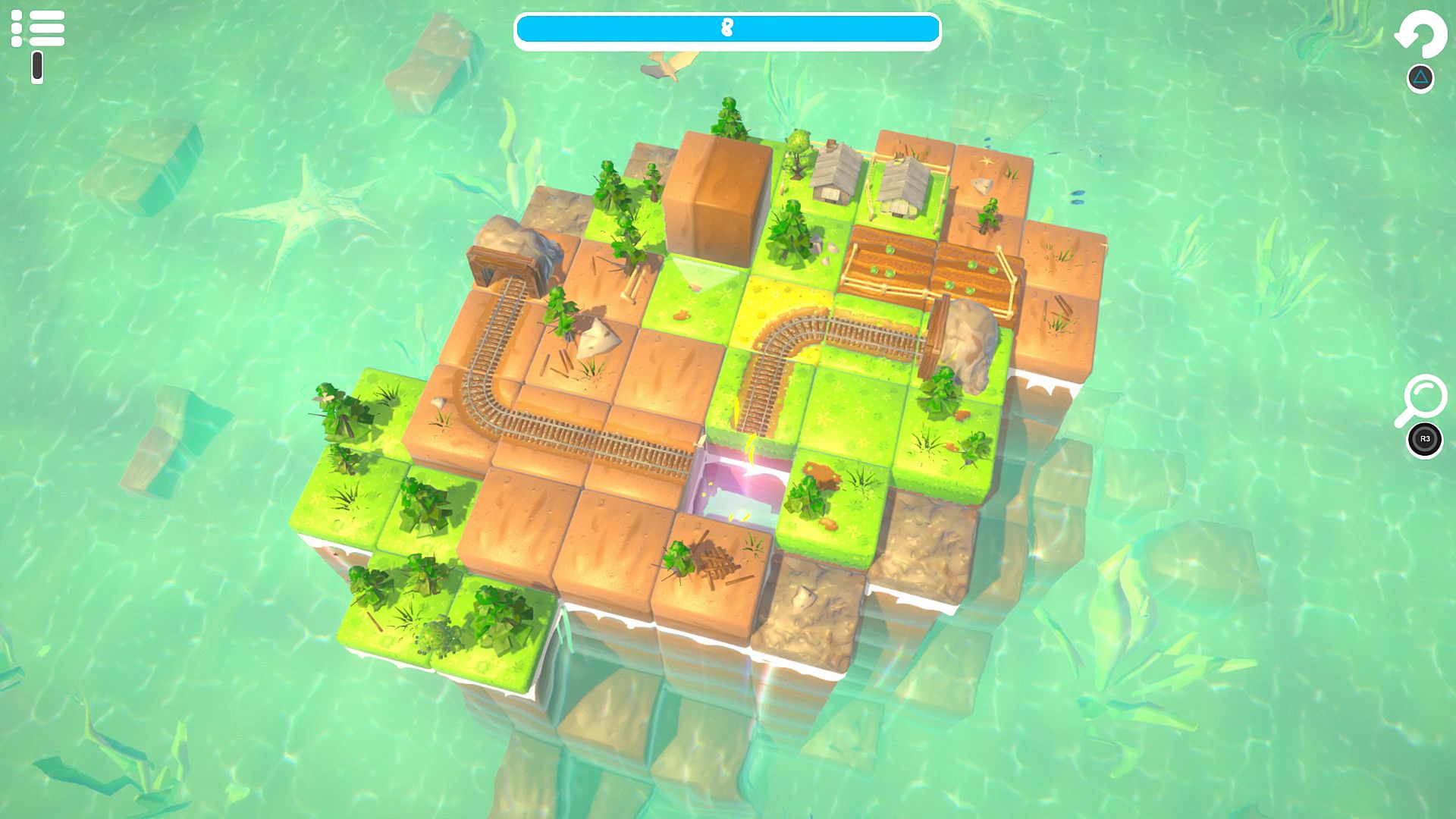
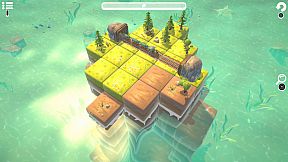
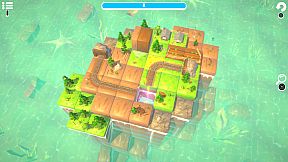
The core loop involves positioning up to three cubes in a low-poly environment so they align and drop into designated holes. This action completes segments of track and lets the train proceed to the next section. Each level restricts the number of moves available, so every tilt or rotation counts toward the solution. If the cubes do not fit within the limit, the stage restarts with the same constraints, encouraging players to refine their approach on subsequent attempts.
Controls remain straightforward, relying on directional inputs to tip the cubes and camera adjustments for better viewing angles. Most stages allow direct solving without major viewpoint changes, though a small number benefit from slight rotations to reveal the optimal path. The low-poly art style keeps the focus on the geometry of the puzzles while the original soundtrack provides a calm, consistent backdrop that supports concentration without distraction.
Progression builds gradually. Early levels introduce basic placement patterns, while later ones layer in tighter move budgets and more intricate layouts that require anticipating how each cube interacts with the others. The 40 levels deliver a complete single-player campaign that rewards methodical thinking and spatial awareness rather than speed or reflexes.
Game Modes
Cube Railway operates entirely in a single-player format with no separate multiplayer or competitive options. All content unfolds through the sequential puzzle levels, each designed as a self-contained challenge that resets independently upon failure. There are no additional modes such as time trials, endless play, or variant rulesets beyond the standard move-limited stages.
The structure stays consistent from start to finish, letting players focus on mastering the block-fitting mechanics without switching between different rule sets or objectives. Completion of the full set of levels marks the primary goal, supported by the built-in restart system that keeps attempts efficient.
Visuals and Audio
Low-poly visuals define the presentation, rendering the railway environments and cubes in clean, geometric shapes that highlight the puzzle elements clearly. The style avoids clutter, ensuring that players can quickly assess placement options and camera perspectives. An original soundtrack accompanies the action with understated tracks that maintain an engaging atmosphere across repeated attempts at each stage.
Simple controls extend to accessibility options on PS5, including the ability to adjust volumes and play without vibration. These elements combine to create a focused, approachable experience suited to short or extended sessions.
Is It Worth Playing?
Cube Railway suits players who enjoy deliberate puzzle solving and spatial reasoning in a compact package. Its 40 levels offer a contained campaign that typically requires under an hour for full completion when following logical sequences, making it accessible for all ages and skill levels. The move-limit mechanic adds tension without overwhelming frustration, as restarts happen instantly and encourage quick iteration.
Reception on the PlayStation Store reflects steady interest from those seeking short, satisfying challenges, with an average rating around 3.5 stars from early players. The game stands as a straightforward entry in its series of cube-based puzzlers, delivering consistent mechanics and charming presentation at a modest price point. Those who appreciate methodical block placement and railway-themed progression will find repeated value in refining solutions across the stages, while casual players can complete the experience in brief sittings without complex systems or ongoing updates.