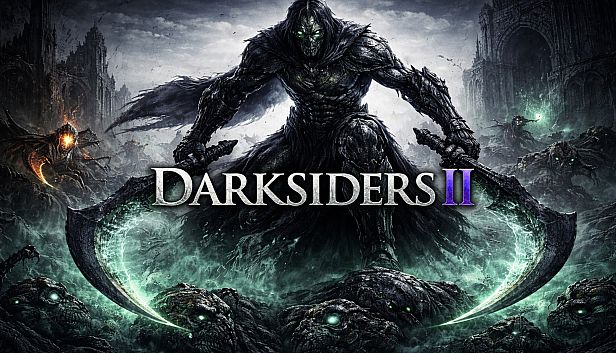











Darksiders II is a single-player action role-playing hack and slash game set in a fantasy world where players control Death, one of the Four Horsemen of the Apocalypse. The experience centers on third-person combat, exploration across large regions, and progression through quests and dungeons on PC.
Gameplay
Combat forms the central loop, with players switching between light weapons such as scythes for faster attacks and heavy weapons for stronger strikes. Necromancy abilities allow summoning allies or performing special attacks during fights. Enemies appear in groups or as bosses, and success depends on timing dodges, combos, and ability use while managing health and resources.
Progression includes gaining experience from combat and quests to level up, allocating points into skill trees that enhance combat styles or abilities. Equipment drops or appears in chests, with armor and weapons that can be swapped and upgraded for better stats. The system encourages experimentation with different loadouts as levels increase.
Exploration involves traversing open areas on foot or with the horse Despair, performing platforming sequences that require precise jumps and wall runs. Fast travel points unlock over time to reduce backtracking. Dungeons mix combat encounters with environmental puzzles that often involve moving objects or activating mechanisms to advance.
Game Modes
The game operates entirely in single-player. Four difficulty options adjust enemy health, damage output, and other parameters. Easy provides a more forgiving experience for newcomers. Normal serves as the standard challenge. Apocalyptic increases the demands on combat skill and resource management. Nightmare unlocks after completing the campaign on a prior difficulty and represents the highest setting, available only on new playthroughs.
These options allow replay with adjusted balance but do not alter core mechanics or add new content branches. Side quests and main objectives remain available across all settings.
Exploration and Progression
Players move between distinct realms connected by story objectives, each featuring unique environments and enemy types. Main quests advance the primary narrative while side quests offer additional combat and collection tasks. Equipment customization through loot and upgrades ties directly into the leveling system, rewarding thorough exploration of hidden areas and chests.
Traversal tools expand gradually, opening previously inaccessible sections of the map. This structure supports repeated visits to earlier regions for missed items or optional fights without requiring linear backtracking.
Is It Worth Playing?
The title suits players who prefer action-focused single-player campaigns with hack and slash combat, light RPG progression, and platforming elements. Combat feels responsive and varied once skill trees develop, while the world encourages steady advancement through quests and upgrades. Those seeking multiplayer features or ongoing seasonal content will find none here, as the experience remains a complete, self-contained campaign.
Reception highlights strong combat and visual presentation alongside some repetition in quest structure. The Deathinitive Edition bundles prior additions into the base game for PC players. It delivers consistent value for those interested in the genre's classic formula without live-service elements.