


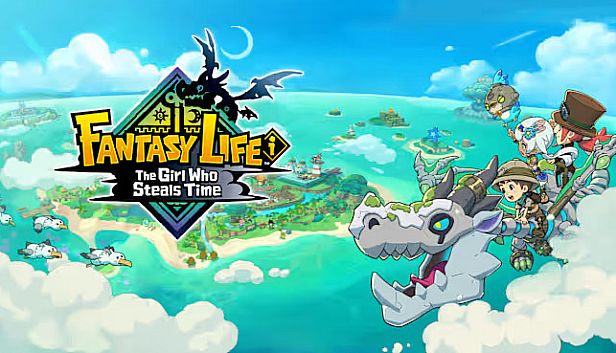


Fantasy Life i: The Girl Who Steals Time is a slow-life RPG developed by Level-5 and available on the Nintendo Switch 2. Players take on the role of an adventurer who arrives on a mysterious island alongside an archaeologist named Edward. The core loop revolves around switching freely between 14 different jobs known as Lives, gathering resources, crafting items, fighting monsters, and shaping the environment while uncovering the island's past through time travel between its thriving state a thousand years ago and its present ruined form.
Gameplay
The Life system forms the foundation of progression. Each of the 14 Lives belongs to one of three categories: gathering, crafting, or combat. Gathering Lives focus on collecting materials such as ore, wood, fish, or crops. Crafting Lives turn those resources into weapons, armor, food, furniture, and other useful items. Combat Lives handle direct encounters with monsters using distinct playstyles like sword and shield defense, heavy melee strikes, ranged archery, or elemental magic. Players can change Lives instantly at any time, allowing seamless shifts between activities without restarting or losing progress.
Exploration expands significantly beyond previous entries in the series. The present-day island serves as a base for building and customization, while a vast open-world area called Ginormosia offers free movement across ledges, rivers, lakes, and other terrain. Mounts provide additional traversal options, and new mechanics encourage thorough investigation of the largest continent featured in the franchise. Time travel connects the two eras, revealing story details about the island's downfall through environmental changes and narrative events.
Building and customization integrate directly with the Life system. Materials gathered through specific Lives allow players to restore structures, place houses and objects, modify the landscape by drawing rivers and roads, and expand personal living spaces with furniture and interior decorations. This creates a personalized town that evolves alongside character advancement and story progress.
Game Modes
The primary experience centers on a single-player campaign that blends story progression, Life leveling, and world restoration. Players advance through chapters involving quests, character interactions, and exploration of both the past and present versions of the island. Combat, gathering, and crafting all feed into this main loop, with skill trees and rank-ups providing ongoing upgrades for each Life.
Local co-op supports two players on the same device using separate controllers. The second participant controls a companion character named Trip rather than a full custom adventurer. This mode unlocks early and allows shared screen play for casual sessions focused on exploration and light assistance during gathering or combat.
Online multiplayer accommodates up to four players in dedicated sessions. These instances support exploration of islands or sections of Ginormosia, resource collection, and tackling randomly generated Treasure Groves that function as roguelike dungeons with time-limited objectives tied to specific Lives. Main story quests remain unavailable during online play, and sessions include duration limits to manage progression separately from solo saves.
Story and World
The narrative follows the discovery of a dragon's fossil and a plea from a mysterious girl to prevent the island's collapse. Travel between eras reveals how the once-prosperous land fell into ruin, with players piecing together clues through archaeology-inspired quests and environmental storytelling. Supporting characters like Edward and various island inhabitants provide context and side activities that tie into Life progression.
Ginormosia stands out as a major addition, delivering expansive terrain filled with monsters, secrets, and events that reward thorough exploration. The contrast between the past's vibrant settlements and the present's overgrown ruins drives both the plot and the motivation to rebuild using gathered resources.
Is It Worth Playing?
Reviews highlight the game's successful mix of relaxed life simulation elements with action-adventure and RPG systems. Critics and players note its addictive progression loops, where activities in one Life naturally support others, leading to extended play sessions that can exceed 50 hours. The Nintendo Switch 2 version benefits from improved performance, including higher frame rates and shorter load times compared to the original Switch release.
Reception remains generally favorable across major outlets, with praise for the depth of the Life system, the freedom of exploration, and the satisfying building mechanics. Some note a slower initial pace before systems fully open up, yet the overall balance appeals to those seeking a hybrid experience that combines cozy town management with combat and discovery. Updates have added features such as photo mode and quality-of-life adjustments, indicating ongoing support.
The game suits players who enjoy switching between varied activities without rigid class commitments or those looking for a single-player focused title with optional local and online co-op. Its emphasis on personalization through Lives and island shaping provides strong replay value for fans of life sims blended with light RPG progression. Those drawn to the original Fantasy Life on 3DS will find meaningful expansions here, while newcomers can appreciate the accessible entry into its systems.