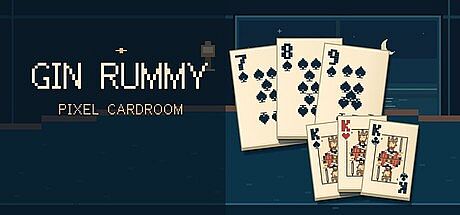


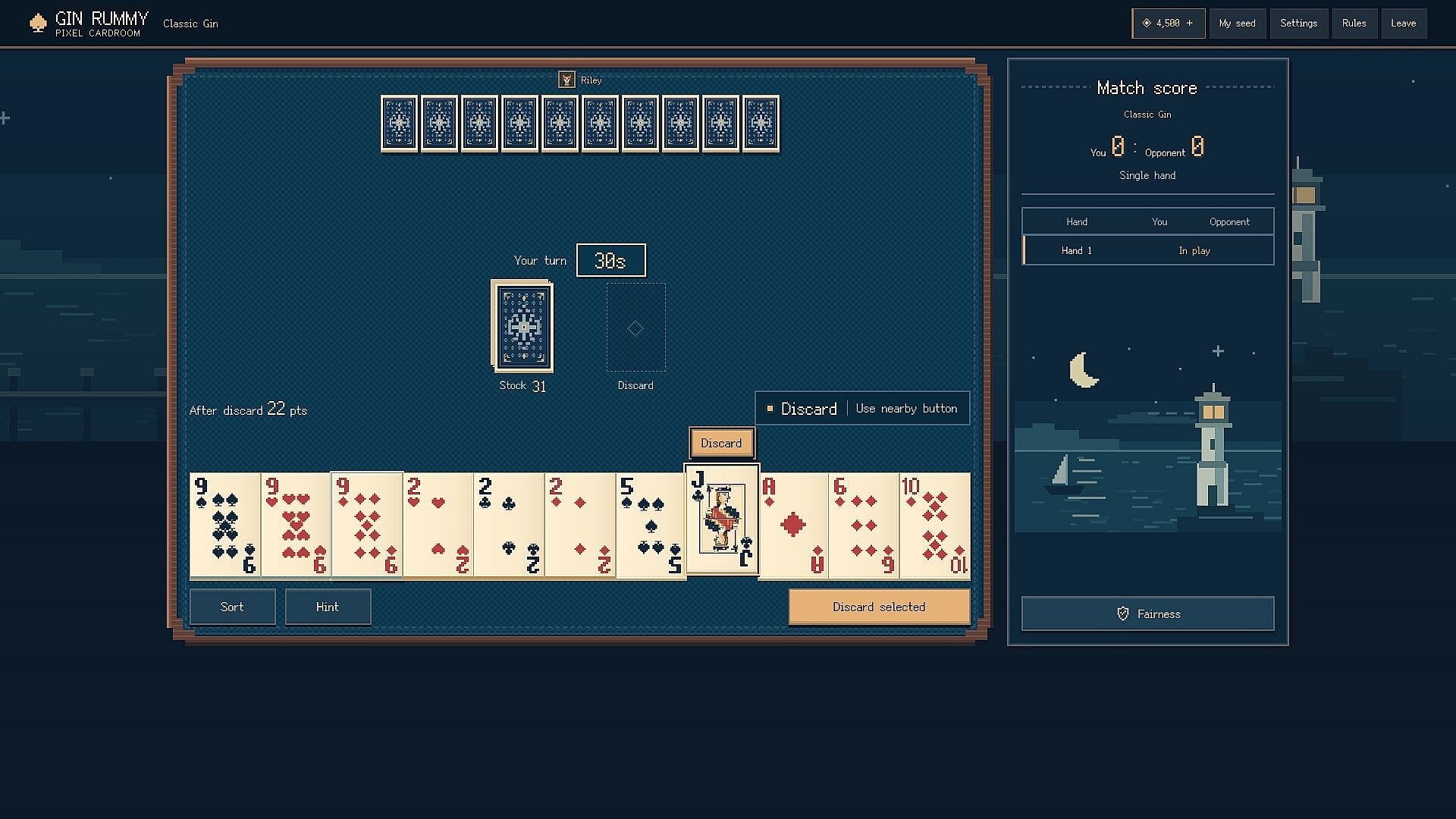
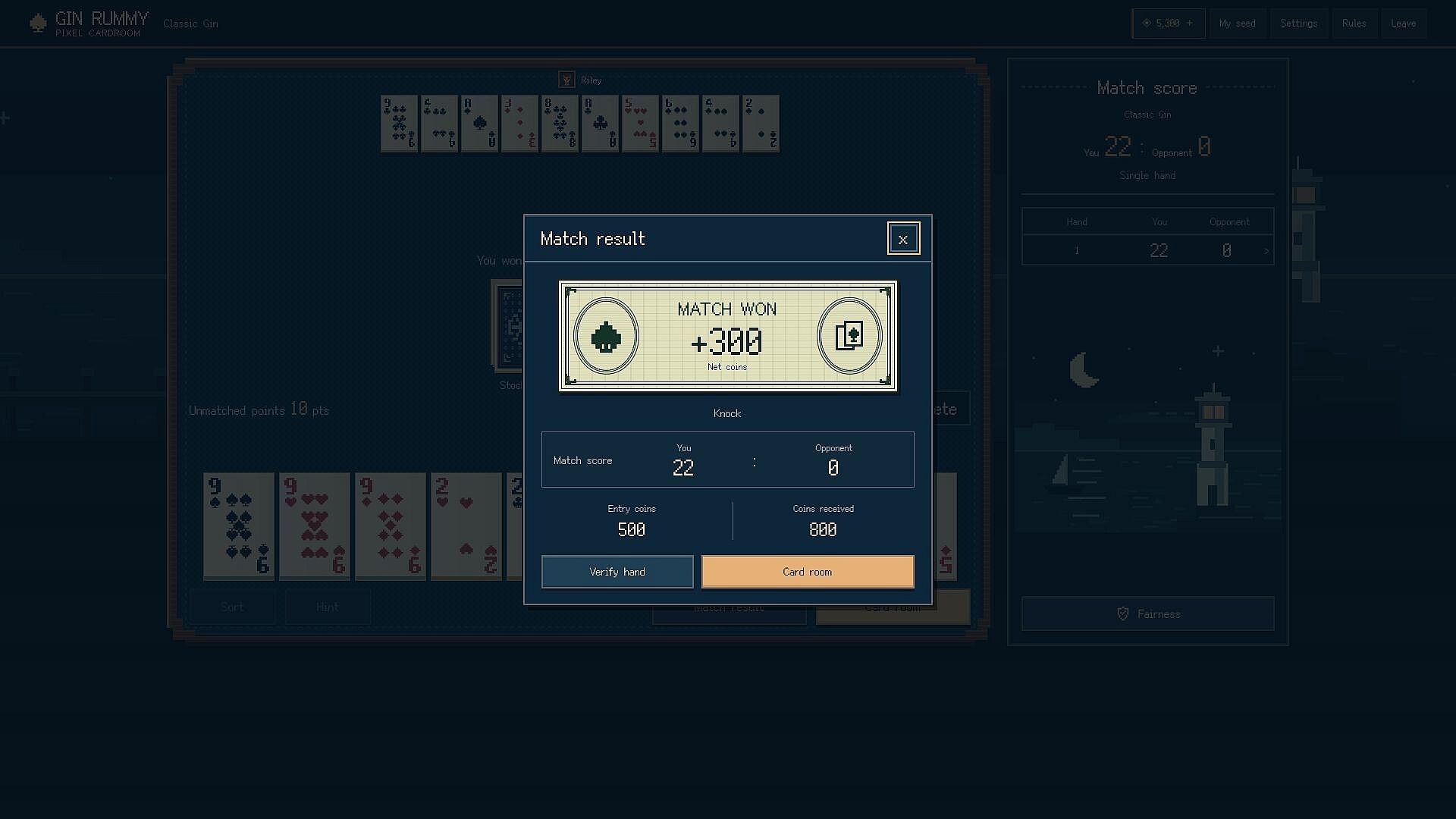
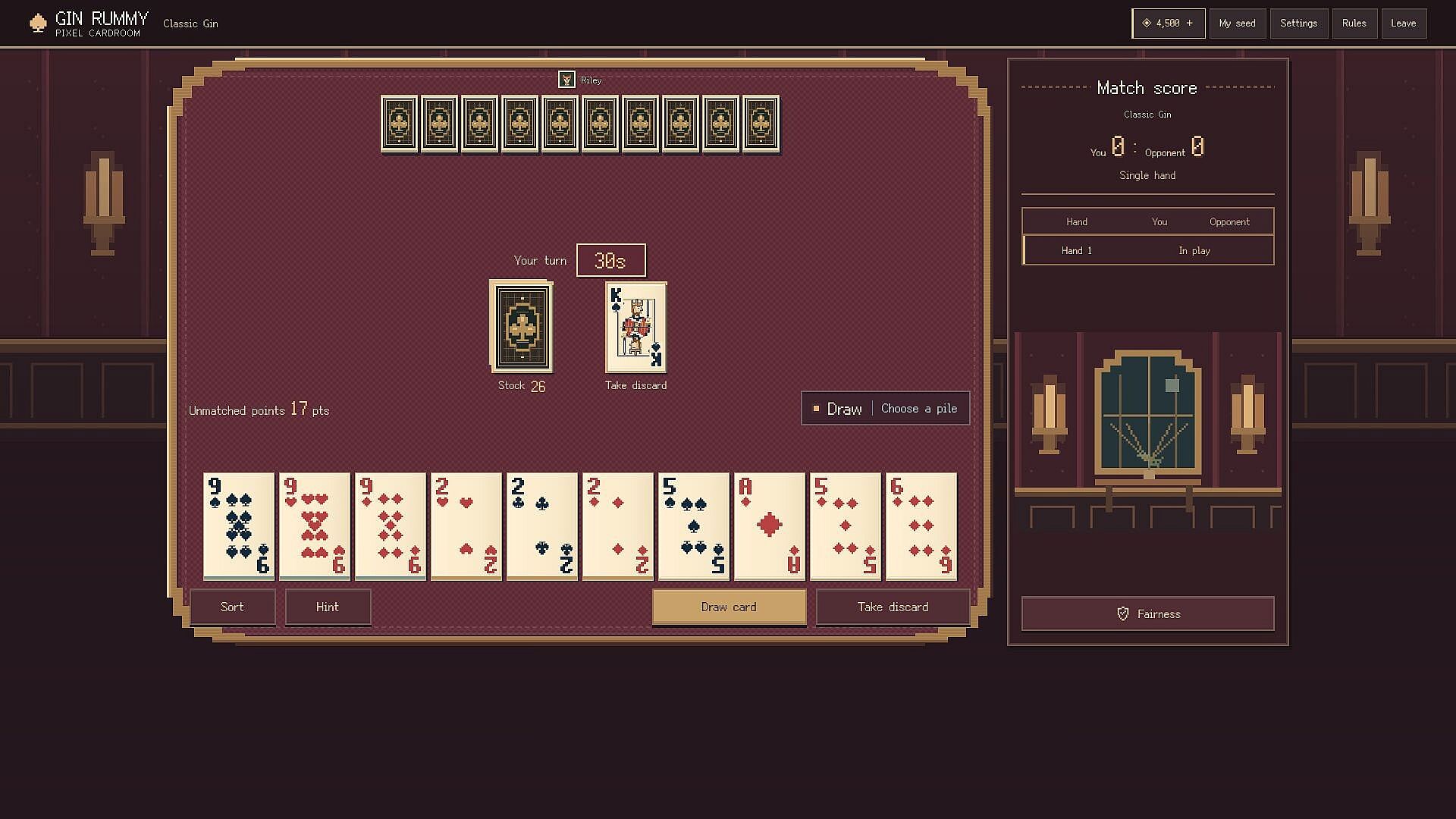
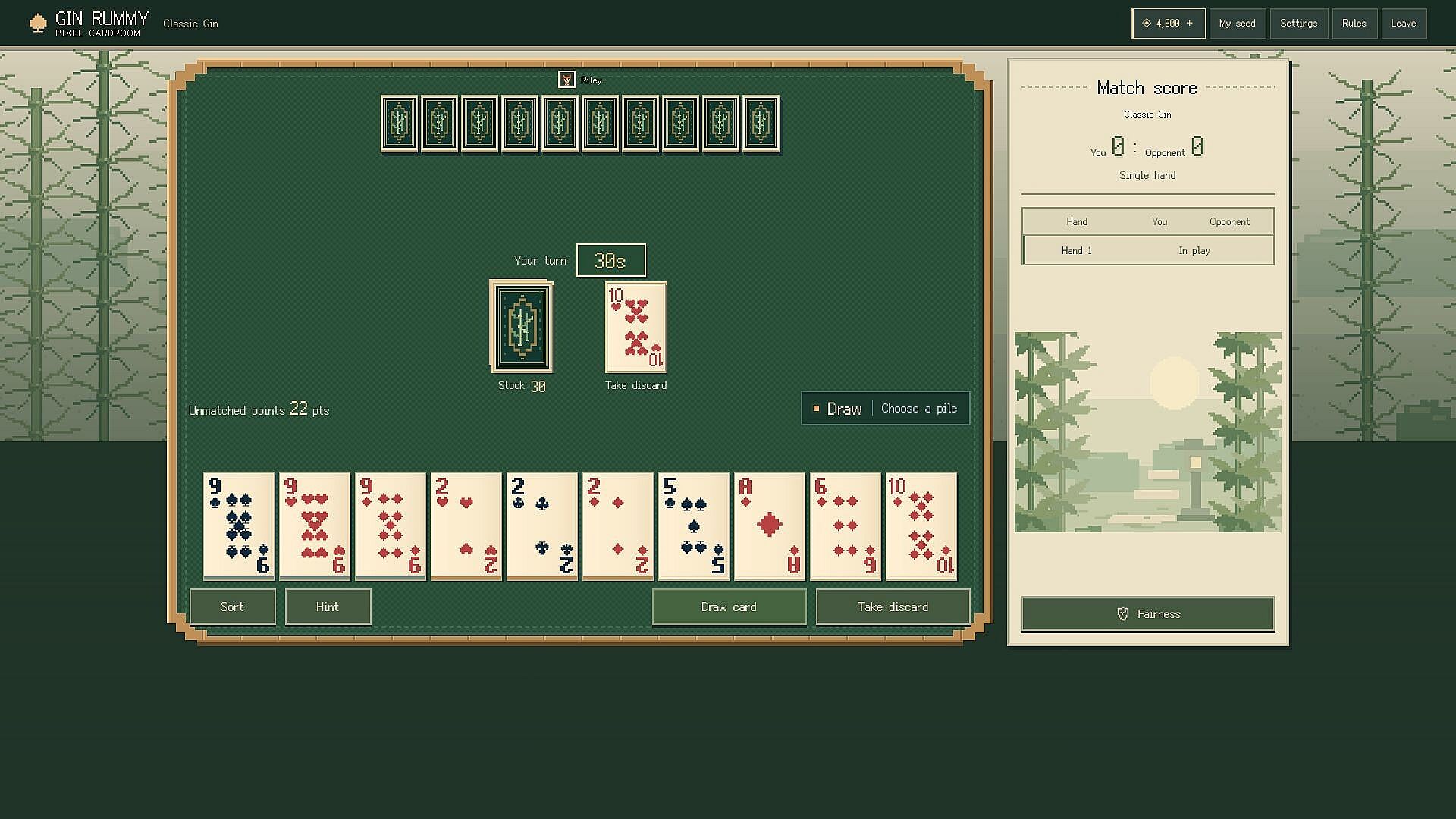
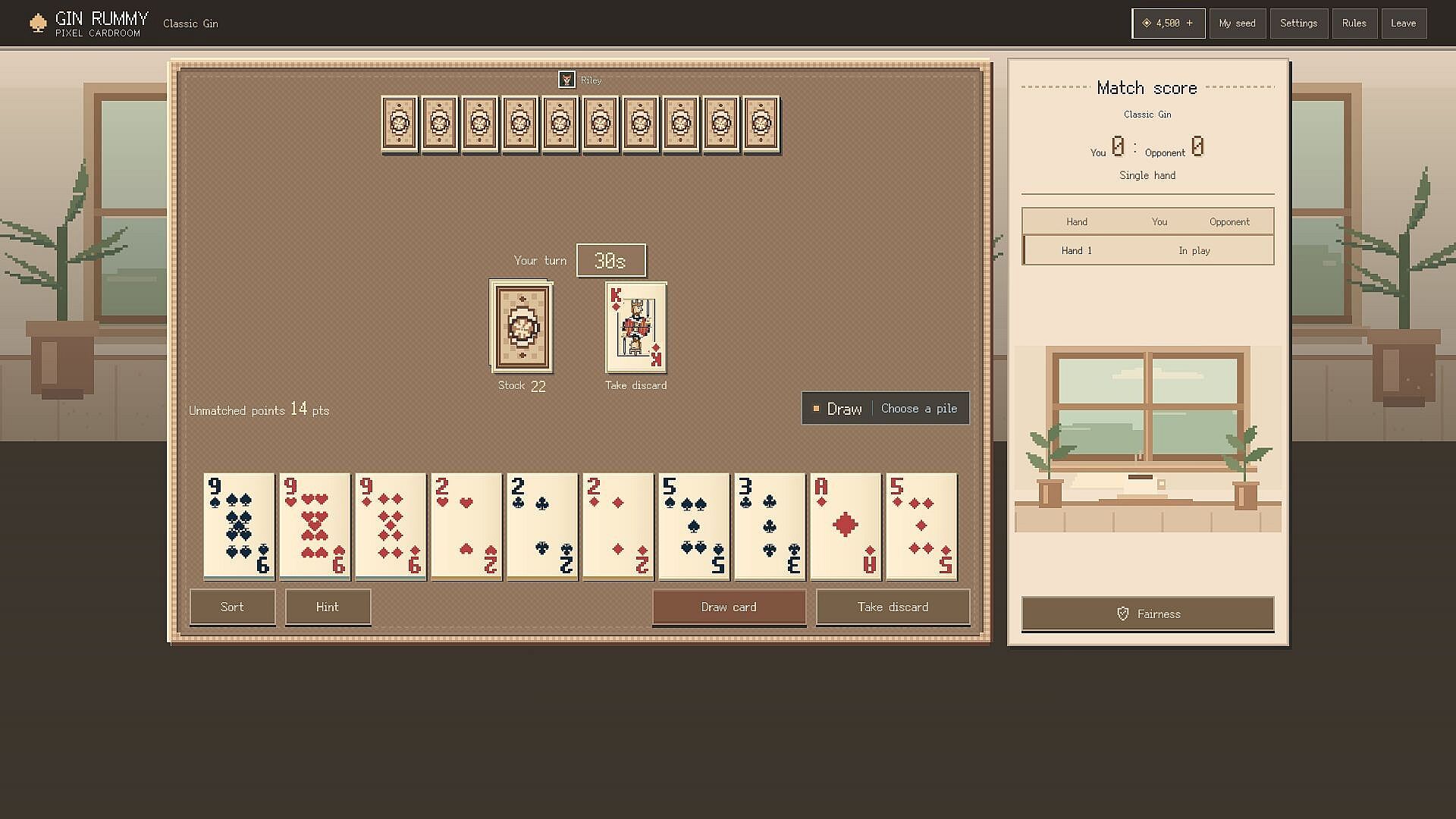
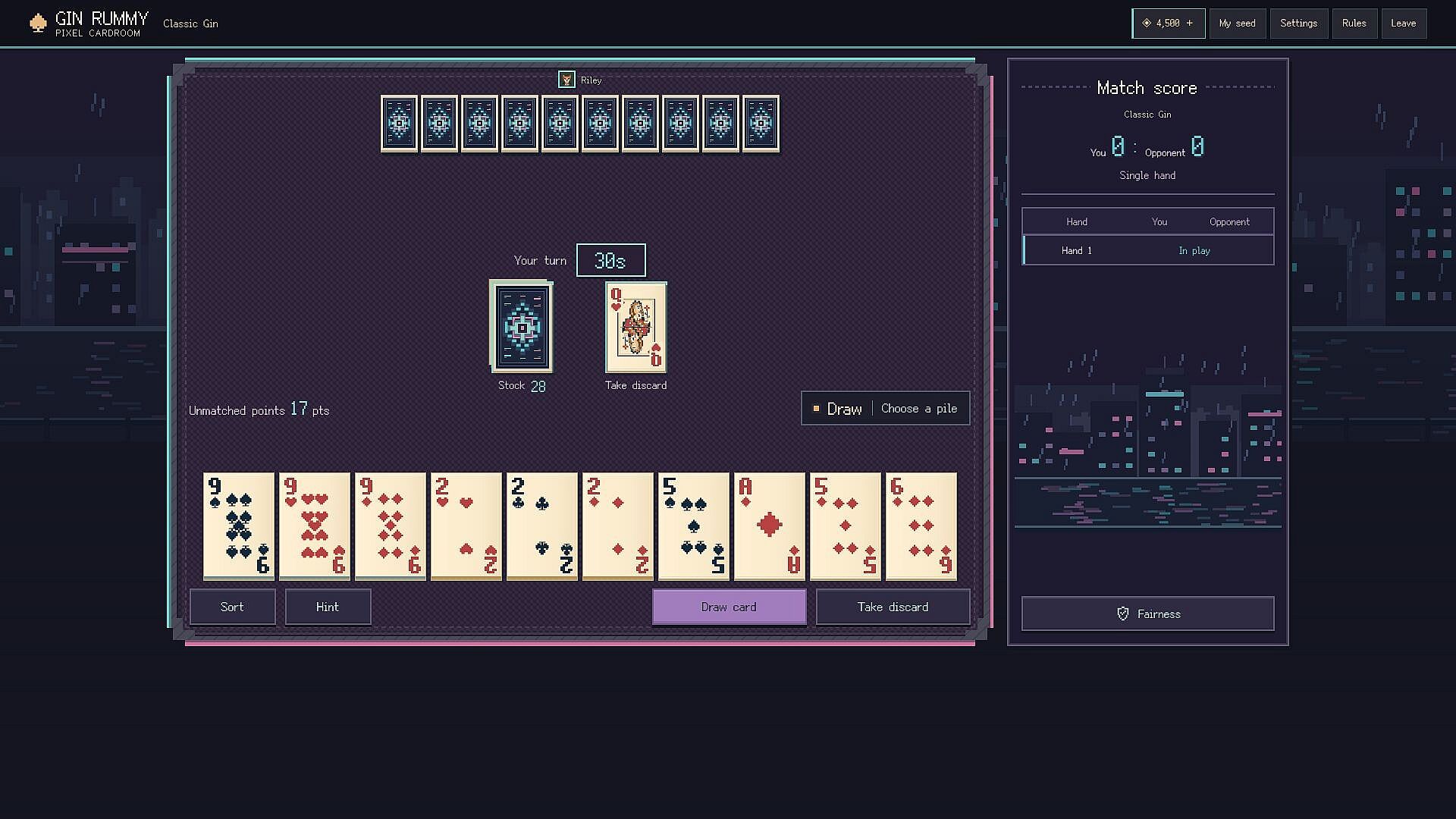
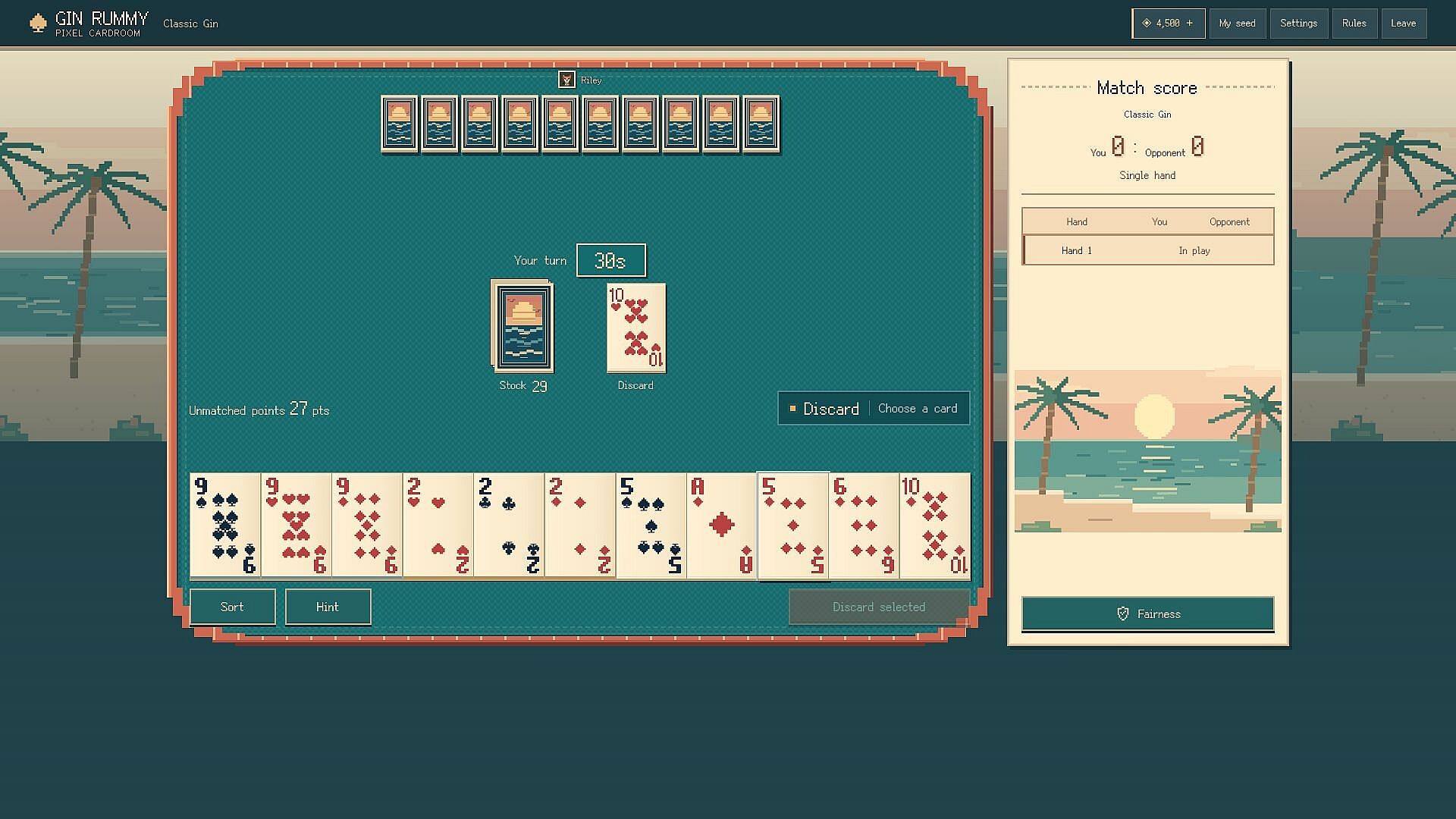


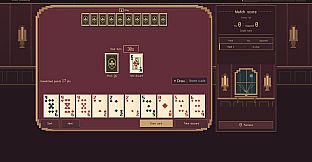
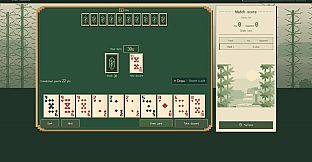
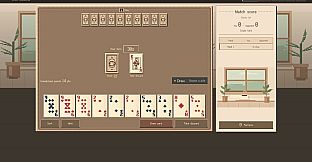
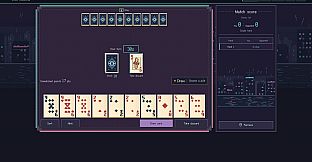
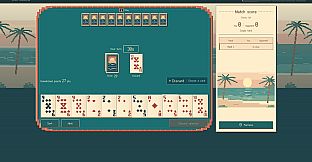
Gin Rummy: Pixel Cardroom delivers a focused take on the classic two-player card game in a pixel-art presentation built for PC. Players test observation, memory, and timing as they draw from the stock or discard pile, form melds in their hand, and decide when to knock or reach Gin. The game emphasizes clean decision-making over flashy effects, with automatic card sorting and quick action options that keep the pace steady during each hand.
Gameplay
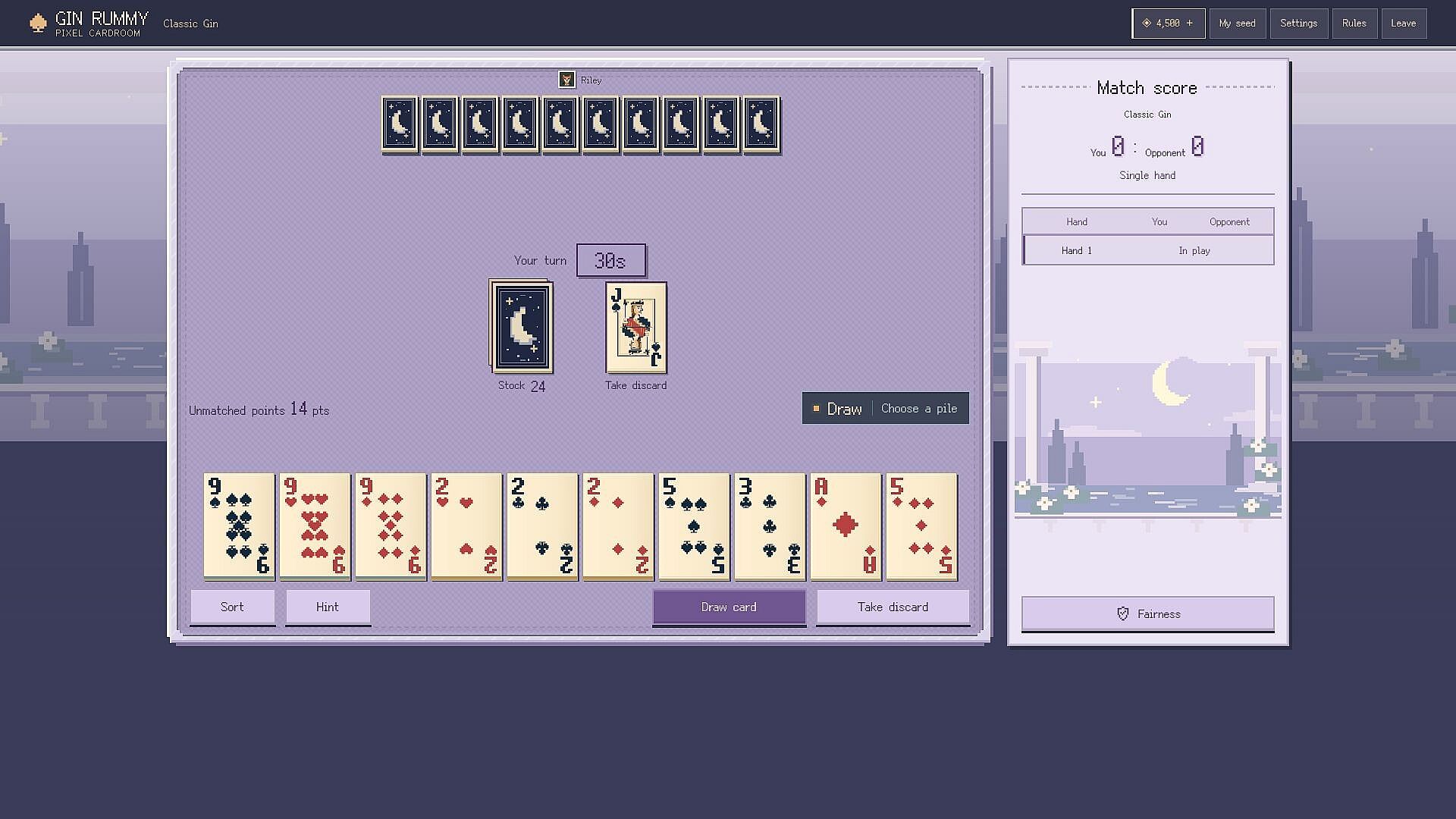
Each hand begins with a standard deal of ten cards per player from a single deck. Participants alternate drawing and discarding while tracking the opponent's visible discards to anticipate possible melds. Deadwood points matter at every stage, and the choice to knock requires careful calculation of remaining unmatched cards. Reaching Gin ends the hand with no deadwood, awarding the standard bonus while the opponent scores any leftover points.
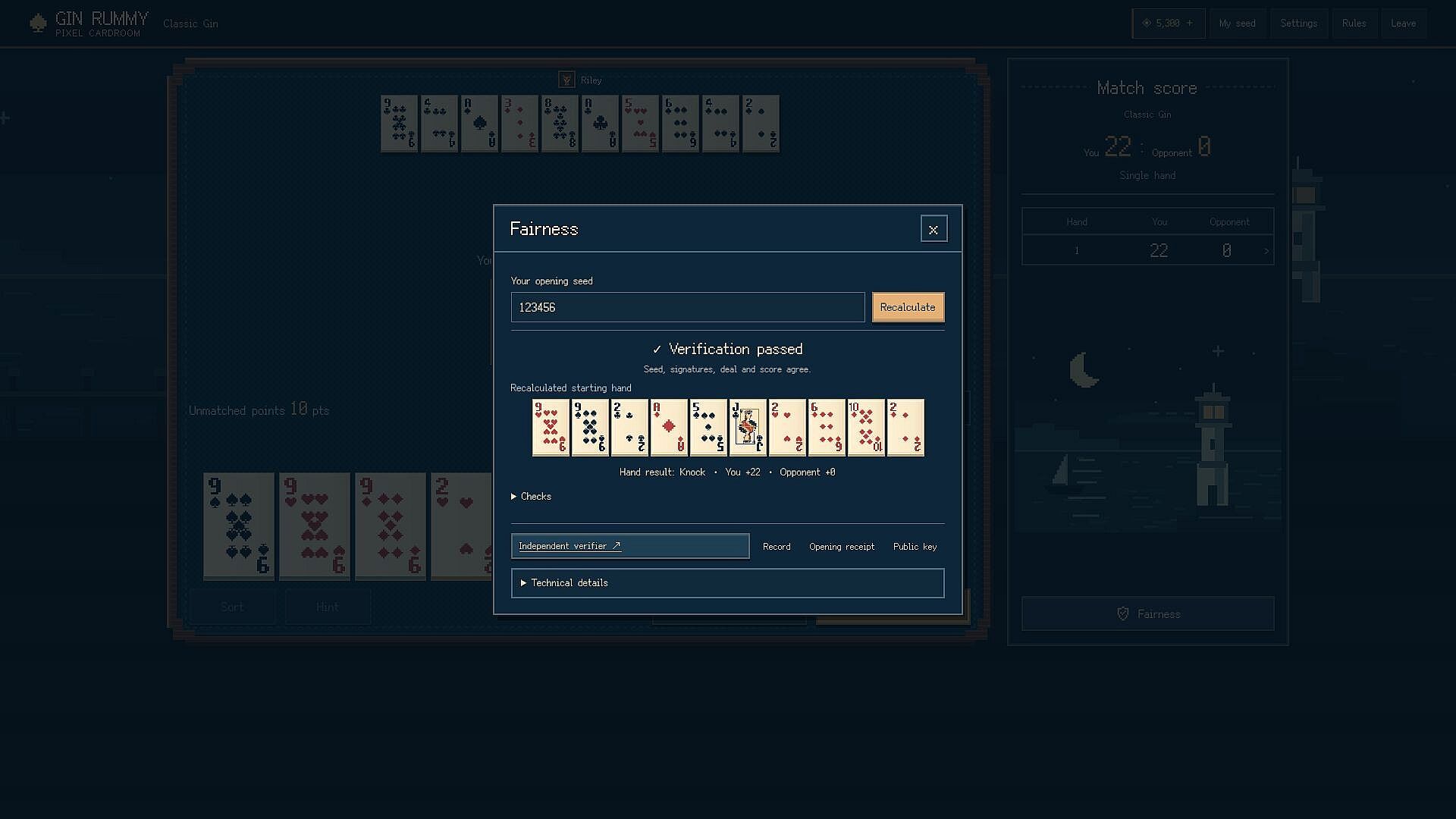
The standout system is the fairness verification built around player-chosen seeds. Before a hand starts, a random seed can be selected to influence the shuffle order. After play concludes, the full record exports for independent checking on a separate verification page. This process lets anyone recalculate the exact card sequence and confirm that moves and scoring followed the rules without external interference. The feature supports both casual sessions and more serious play where transparency matters.
Pixel-art tables provide a retro visual style that stays readable on screen, paired with mellow background music that avoids distraction during longer matches. Automatic sorting keeps the hand organized by suit and rank, while quick actions reduce unnecessary clicks when drawing or discarding. These elements combine to highlight the core strategic loop rather than add layers of complexity.
Game Modes
Players can choose between a single quick hand or a full match that continues until one participant reaches the target score. The six rule variants adjust elements such as knock limits, scoring bonuses, or sequence rules to suit different preferences. Each variant keeps the fundamental Gin Rummy structure intact while offering fresh decision points across repeated play.
Seven distinct pixel-art table themes let users customize the visual setting without altering mechanics. These options pair with the same mellow soundtrack and interface tools, so the focus remains on card play rather than cosmetic changes. Whether settling into one variant for consistency or rotating through them, the structure supports both short sessions and extended matches.
Core Mechanics and Features
Observation plays a central role because the discard pile reveals information about the opponent's strategy. Memory helps track which cards have already appeared, reducing uncertainty when deciding whether to draw from the stock or take the discard. Decision-making peaks at the knock moment, where misjudging deadwood totals can hand the opponent an undercut bonus.
The seed-based verification adds a layer of trust that distinguishes this version from standard digital implementations. Exporting the complete hand record allows external confirmation of every draw, discard, and point total. This system encourages repeated play by removing doubt about randomness while keeping the experience lightweight and accessible on PC.
Is It Worth Playing?
Gin Rummy: Pixel Cardroom suits players who enjoy deliberate card strategy in a no-frills package. The fairness verification appeals especially to those who value verifiable randomness, while the pixel presentation and relaxed audio create a calm environment for focused sessions. Six rule variants and seven themes provide enough variety to prevent repetition without overwhelming newcomers.
Quick hands work well for short breaks, and full matches reward consistent decision-making across multiple rounds. Automatic sorting and responsive controls keep the interface from getting in the way. Because the game stays true to classic Gin Rummy rules with added transparency tools, it fits anyone looking for a straightforward digital adaptation that emphasizes skill over extras. Those who prefer the genre will find the combination of verification, variants, and clean presentation worth trying on PC.