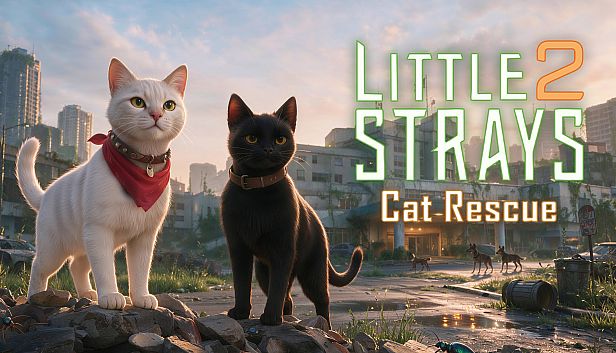


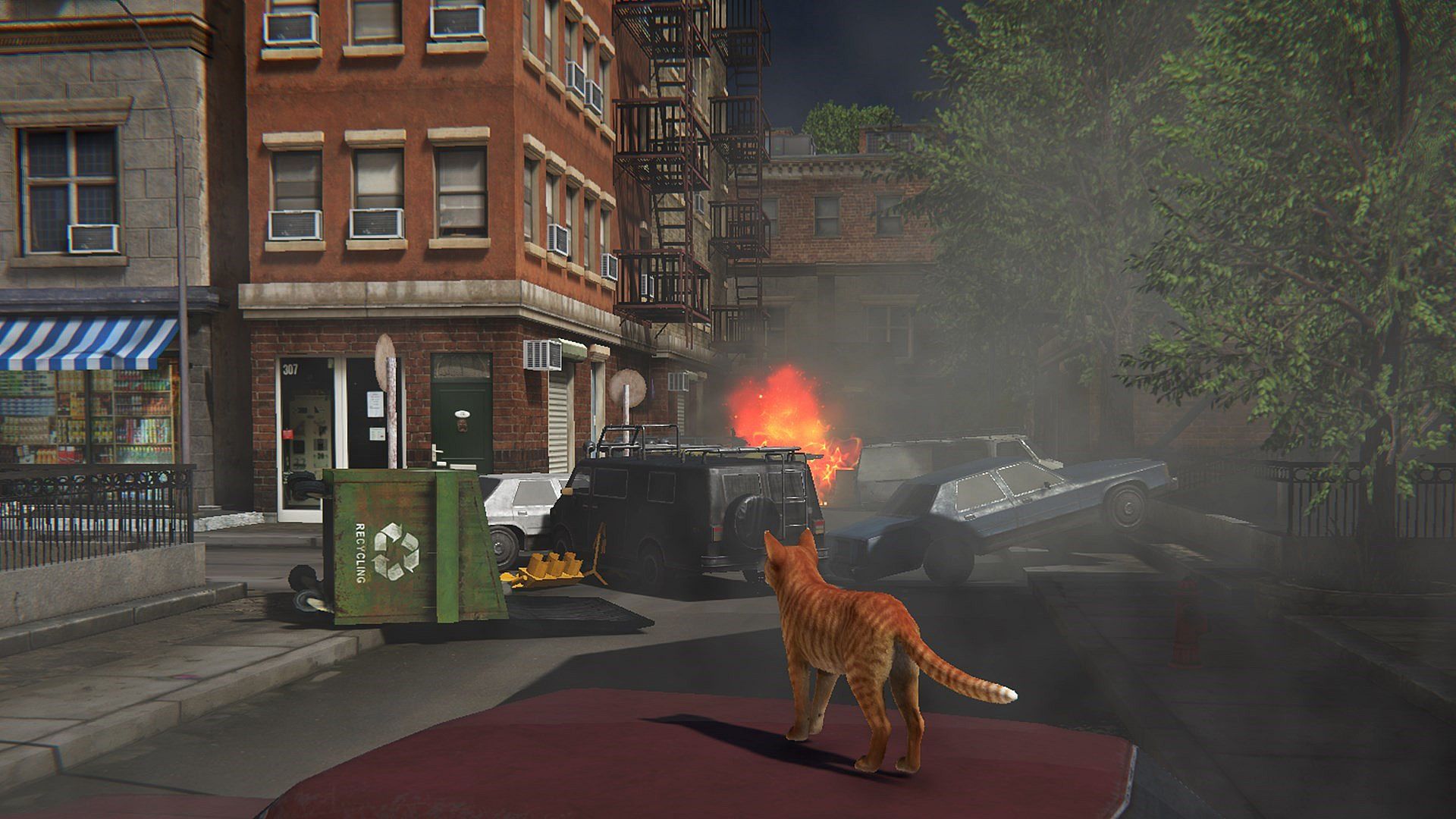





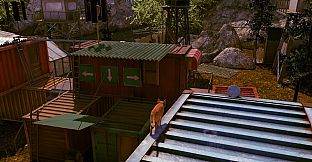



Little Strays 2: Cat Rescue is an action adventure game where players control a stray cat navigating a silent, ruined city. The core experience centers on survival through careful movement rather than direct confrontation, with a focus on rescuing kittens and supporting other strays amid environmental threats.
Gameplay
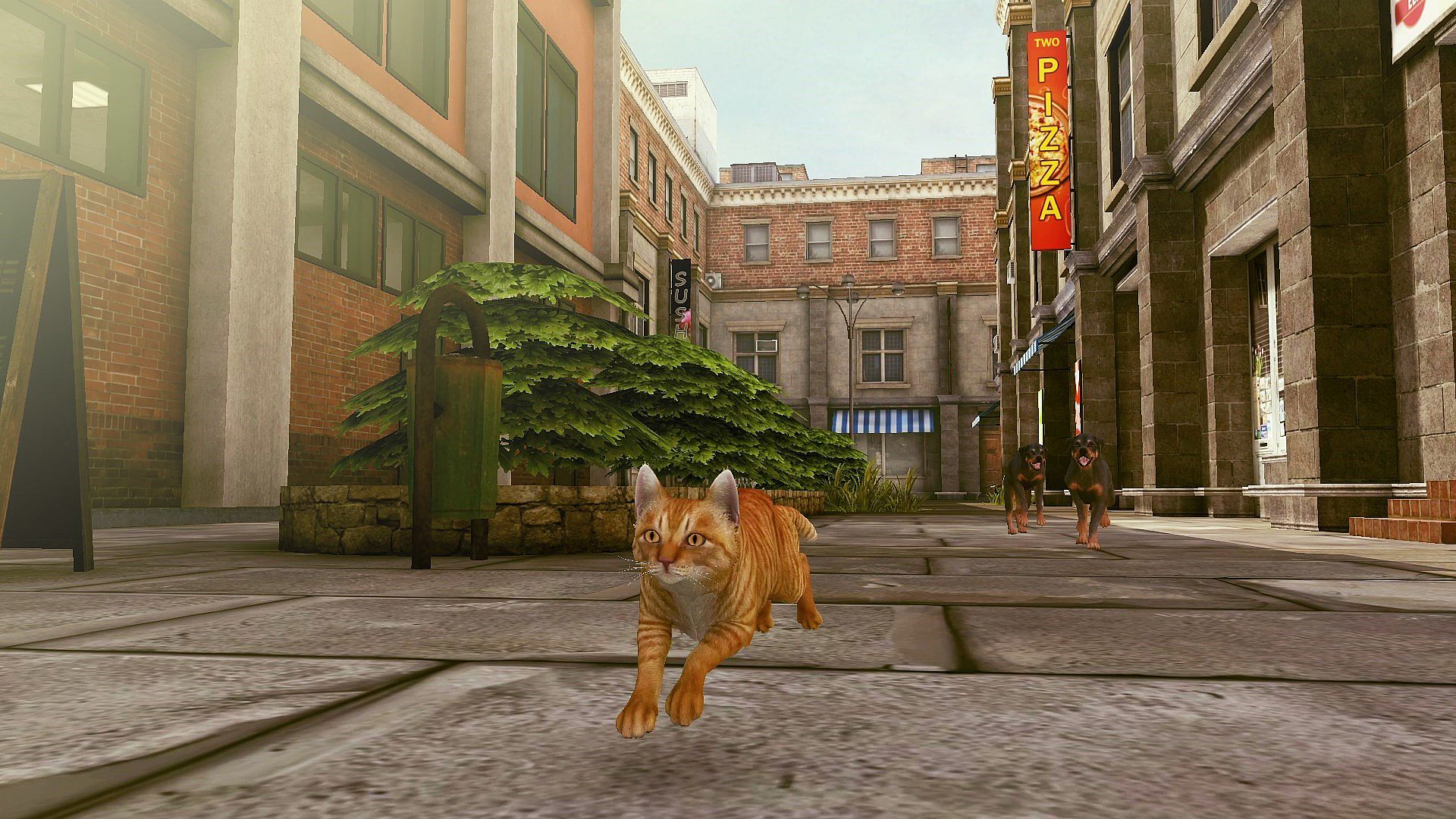
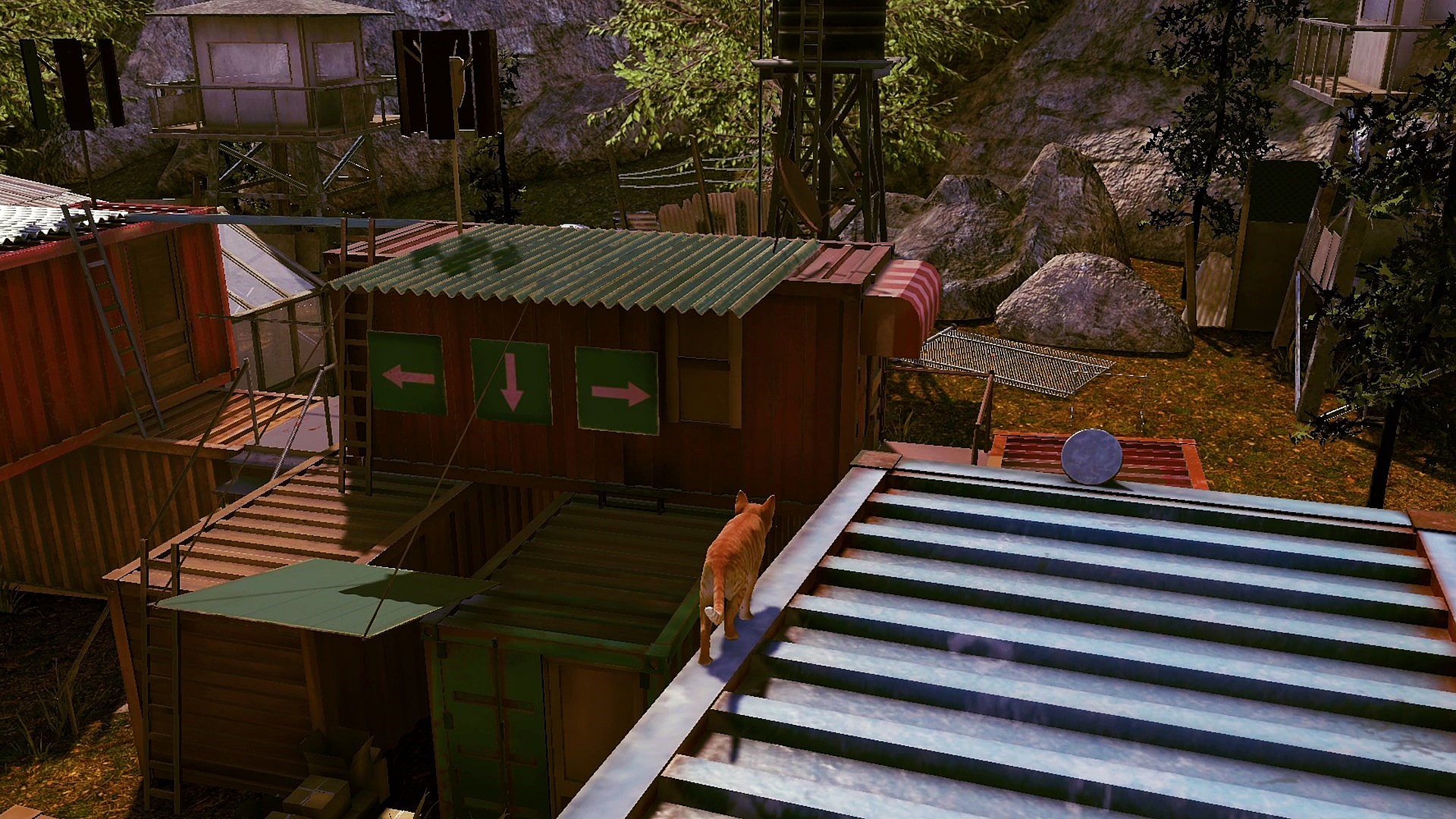
The gameplay loop revolves around exploration of abandoned urban spaces while managing limited resources and avoiding hazards. Players guide the cat through streets, sewers, laboratories, and other overgrown areas, using stealth to slip past patrols and speed for quick dashes across open ground. Puzzles often require pushing objects, squeezing through tight vents, or timing movements to bypass swarms of insects that flood certain paths. Food collection adds tension, as supplies must be rationed between personal needs and helping vulnerable strays at a central hideout. The absence of combat shifts emphasis to observation and planning, with each rescued kitten expanding the sense of community in the otherwise empty world.
Atmospheric details enhance immersion. An evolving soundtrack shifts based on location and progress, while visuals emphasize decay and quiet resilience through crumbling buildings and flickering lights. Solo play rewards patience and route-finding, as players learn enemy patterns and hidden passages across the campaign.
Game Modes
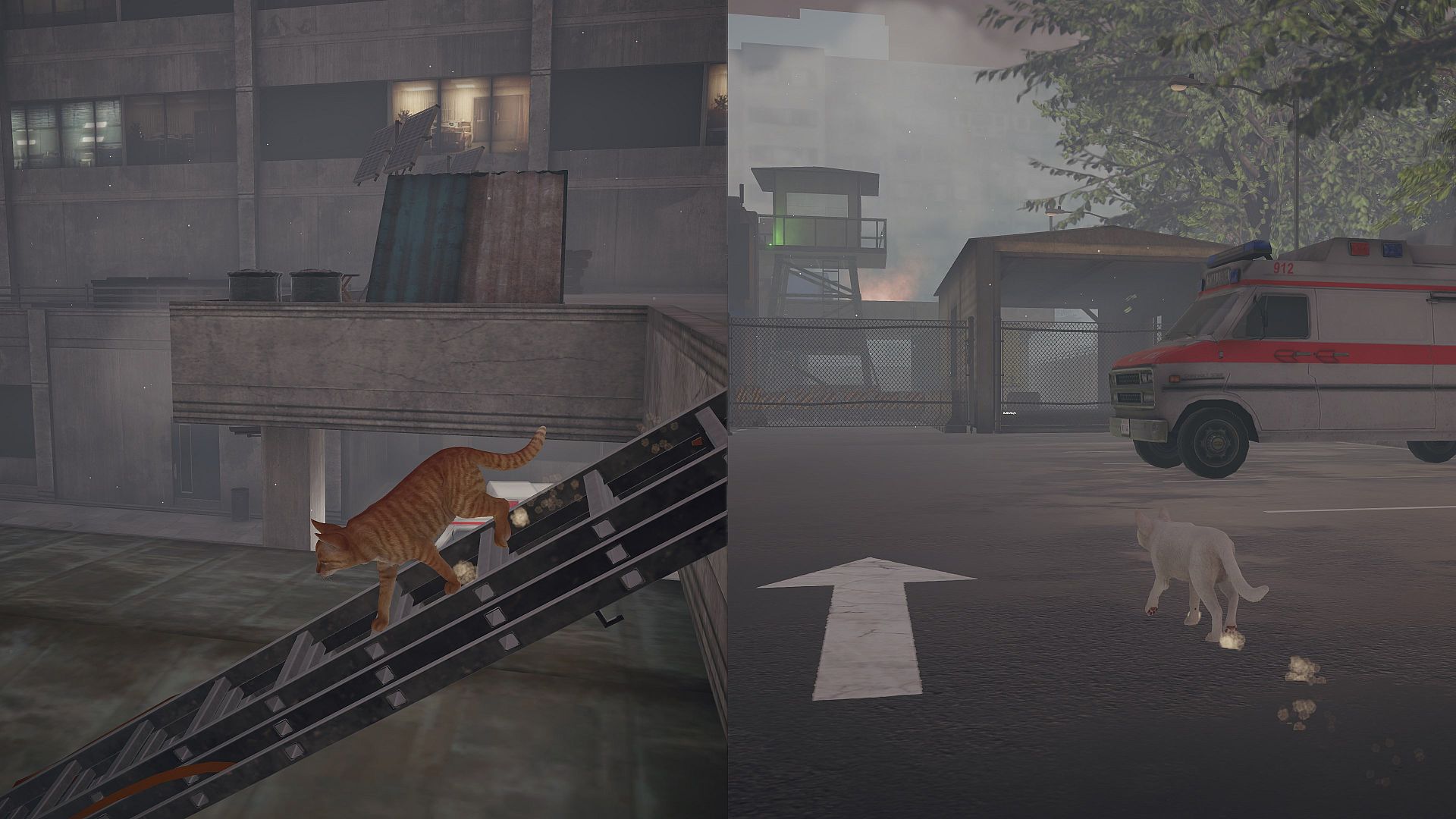
The game supports single-player progression through its story-driven campaign and full two-player local co-op. In co-op, both players share the same screen and must coordinate actions such as one distracting a dog while the other guides a kitten to safety or solves an environmental puzzle together. Supplies can be passed between cats, and teamwork opens alternative paths in the levels. No additional competitive or online modes exist, keeping the focus on cooperative survival and shared decision-making during the seven chapters.
Each chapter features unique quests and secret areas that encourage backtracking or experimentation, whether alone or with a partner. The structure builds from initial scavenging runs to more complex sequences involving multiple objectives in a single area.
Exploration and Challenges
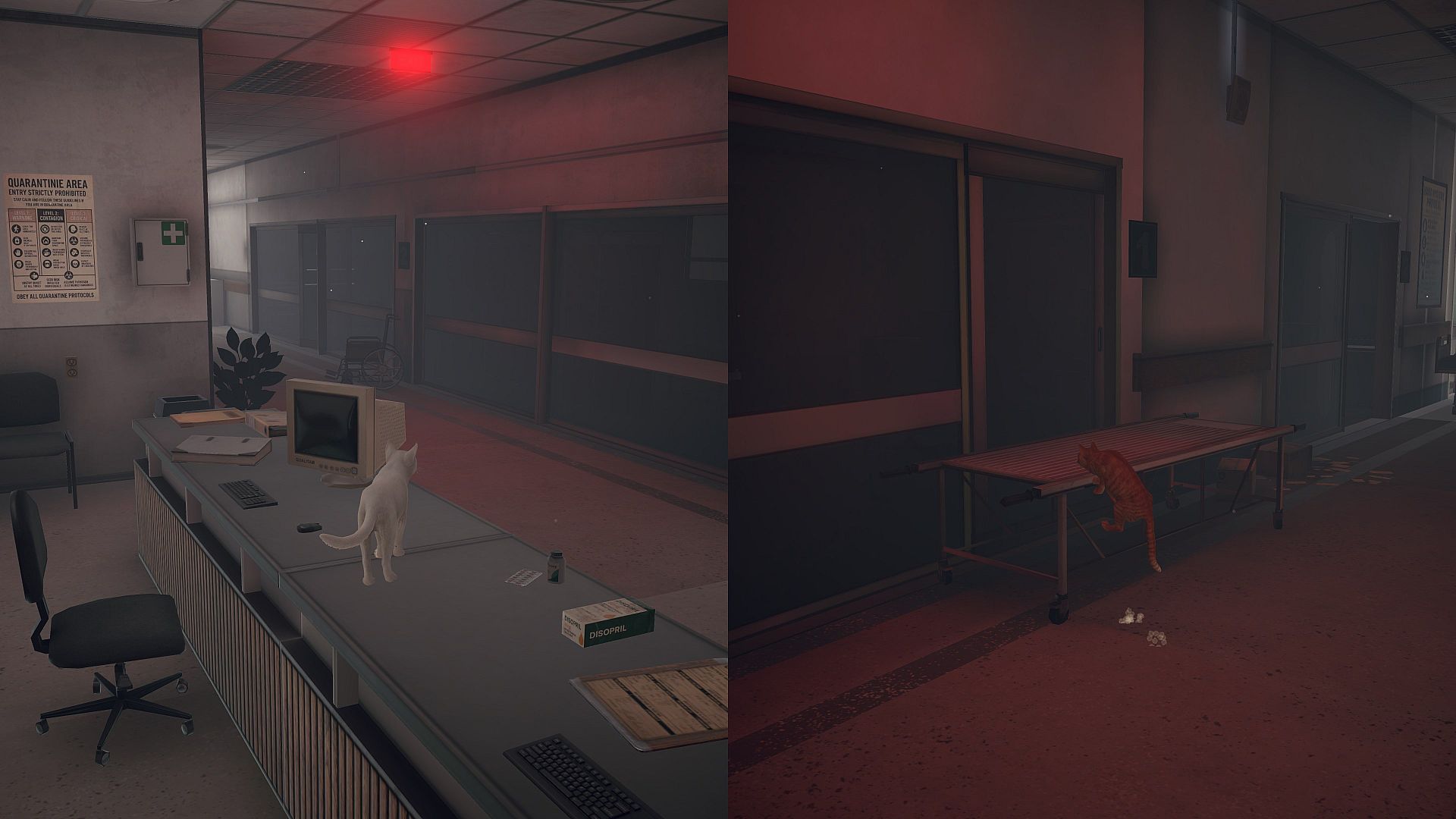
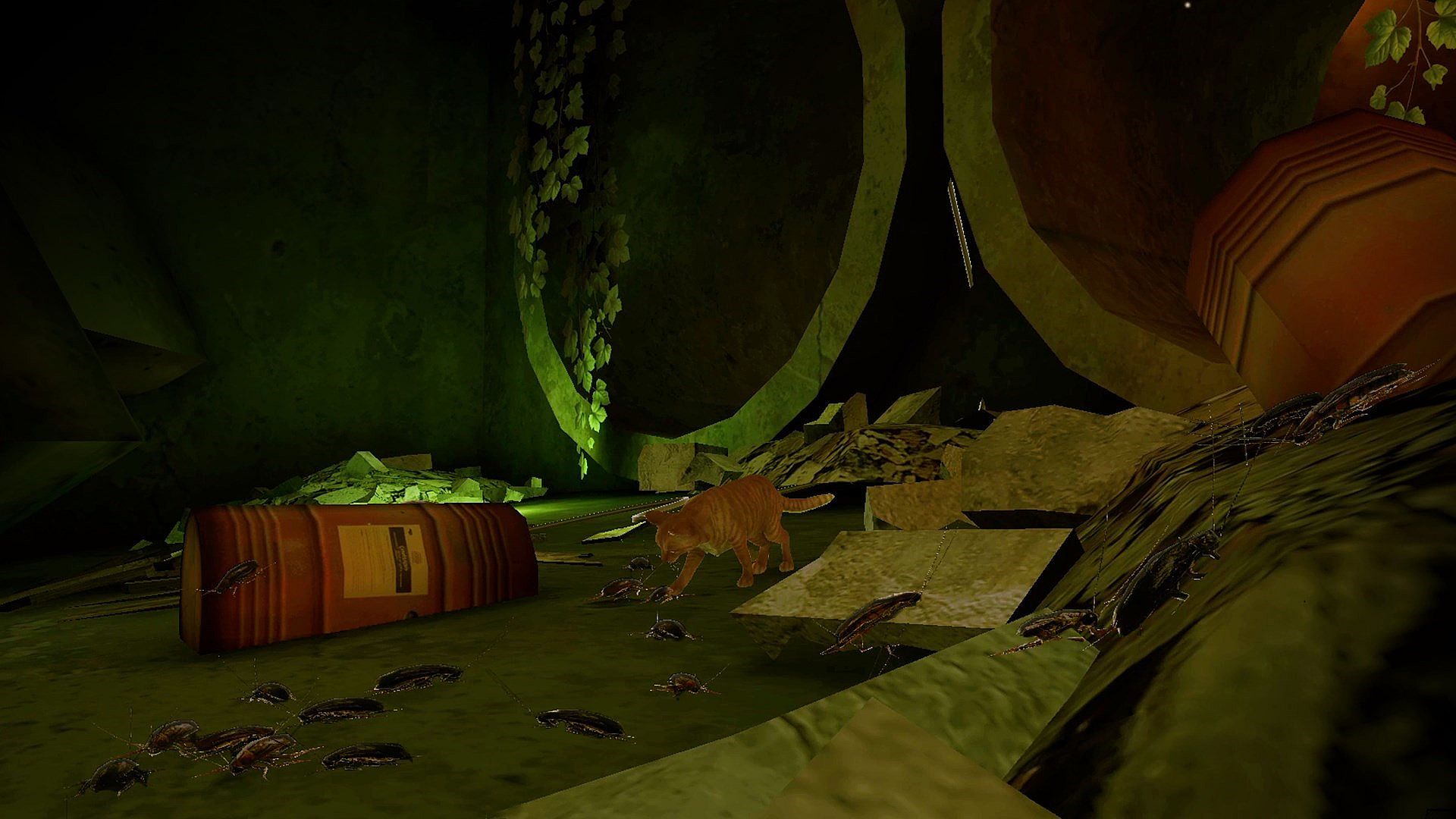
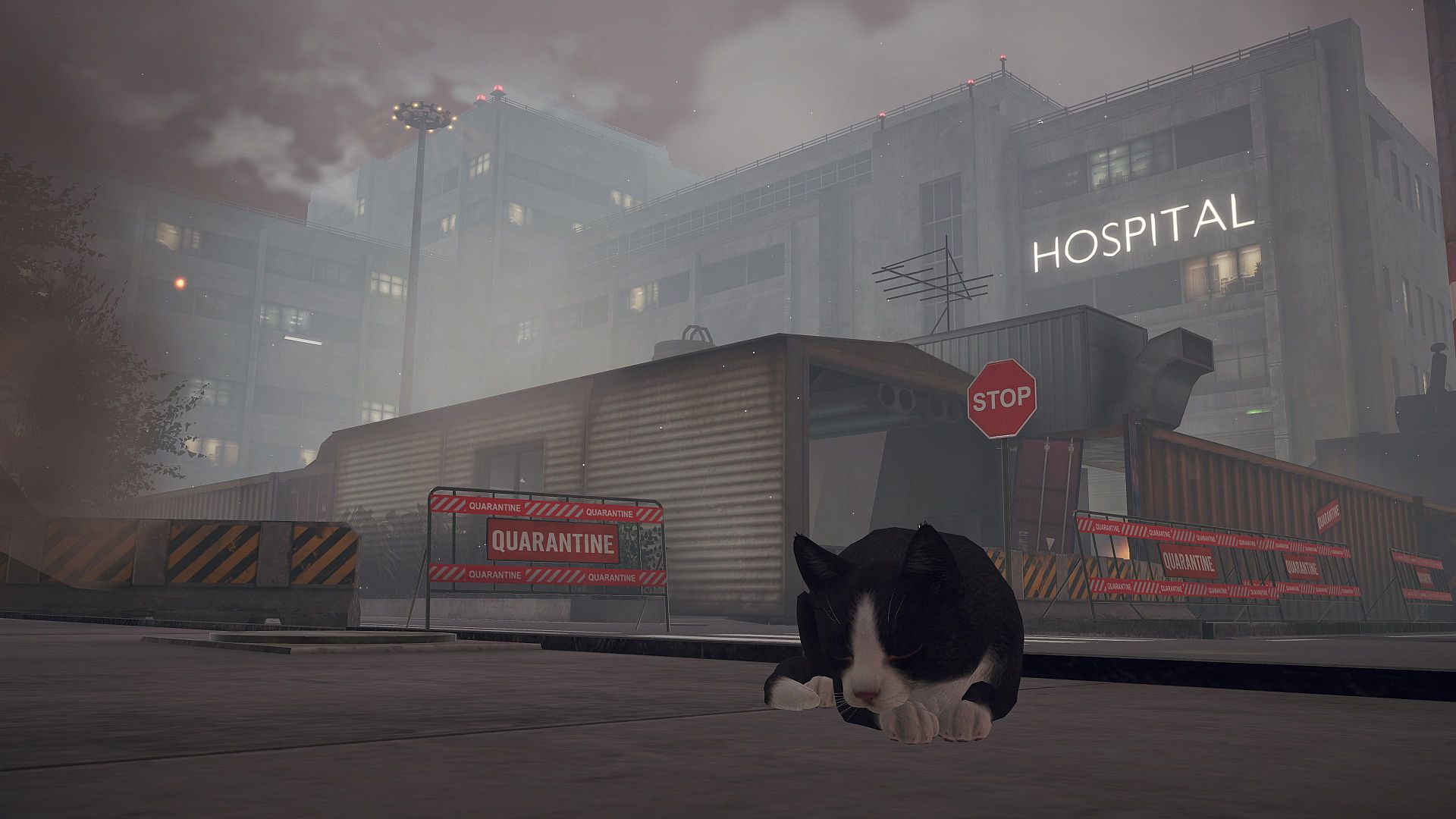
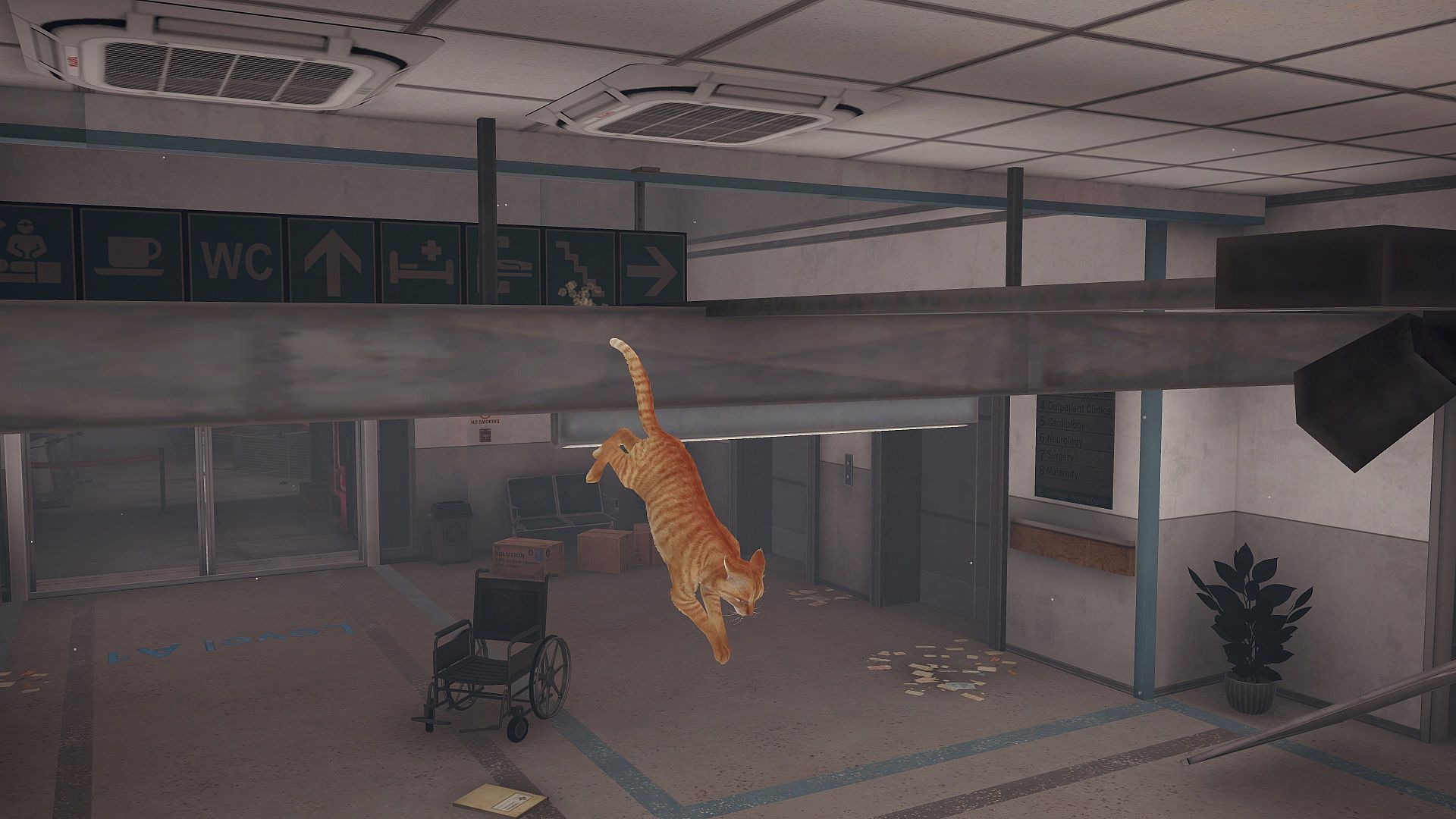
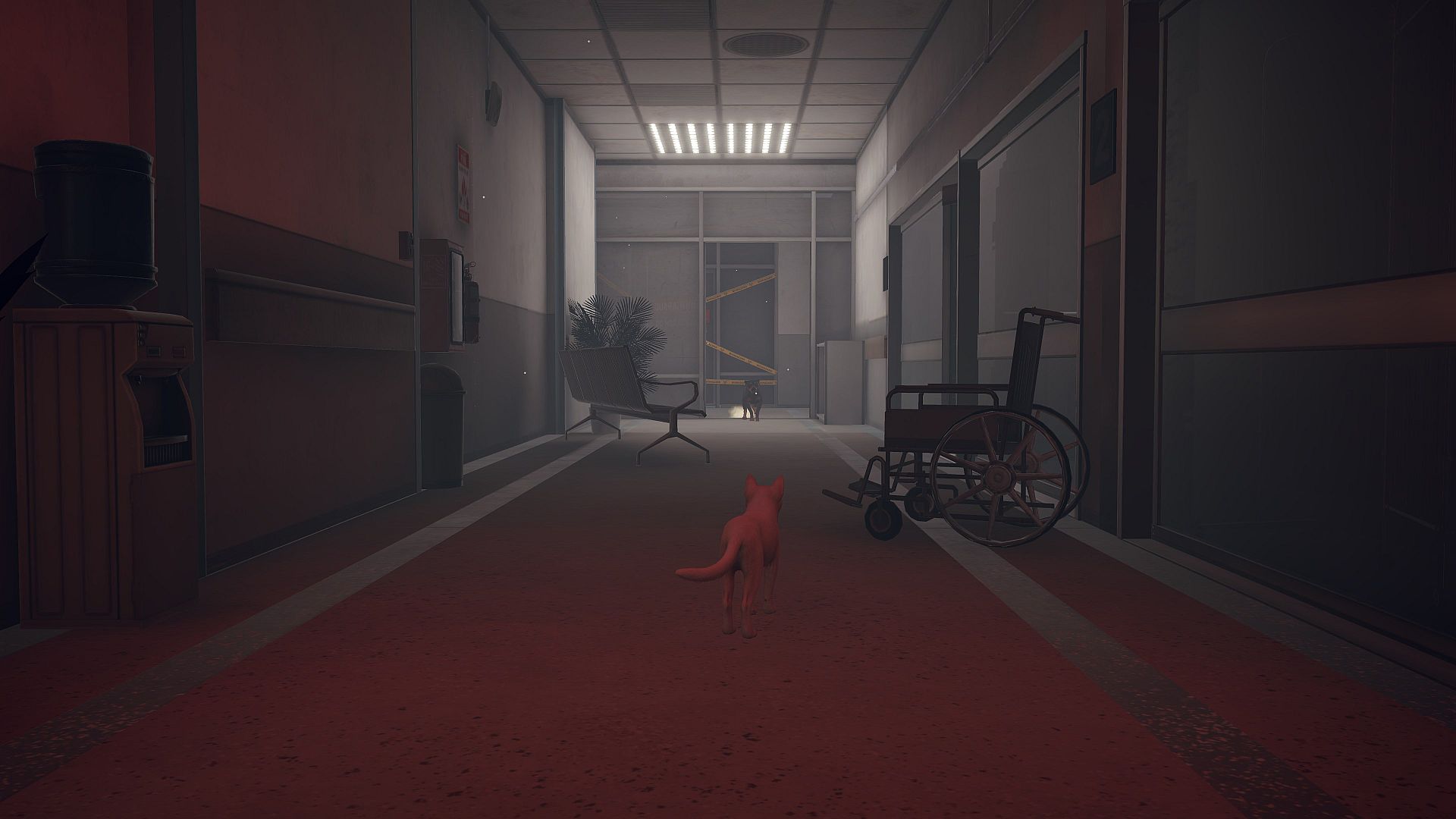
Levels span a variety of ruined environments, including flooded sewers filled with glowing hazards, derelict laboratories with active machinery remnants, and an abandoned hospital section available through expansion content. Players uncover hidden routes by climbing, pushing debris, or timing movements around patrolling dogs that react to sound and movement. Insect swarms function as dynamic obstacles that force rerouting rather than direct engagement. Resource scarcity creates ongoing choices about whether to use food for lures, sustenance, or aid to other cats.
Secret areas often contain extra kittens or supplies, rewarding thorough searches without altering the main narrative flow. The design maintains a consistent pace across the campaign, blending quiet traversal with moments of urgency when threats close in.
Is It Worth Playing?
Little Strays 2: Cat Rescue suits players who enjoy deliberate, observation-based adventures with light puzzle elements and a strong emphasis on atmosphere over action. The local co-op option makes it particularly appealing for pairs seeking a shared experience without requiring online connectivity. Reviews highlight the emotional weight carried by small decisions and the tactile feel of controlling a fragile character in a hostile setting. The game launched in early 2026 and remains available on Xbox One and Xbox Series consoles, with expansions adding further levels such as the Silent Hospital chapter. Those drawn to unique animal perspectives and cooperative problem-solving will find the mechanics consistent and the world cohesive, while players seeking combat or large-scale multiplayer may prefer other titles. The campaign length and replay value through secrets support multiple playthroughs, especially in co-op where coordination changes each run.