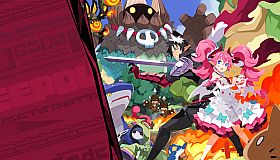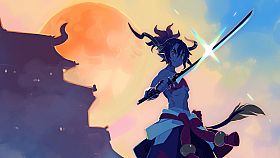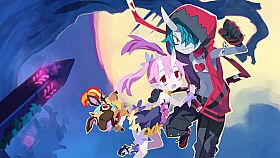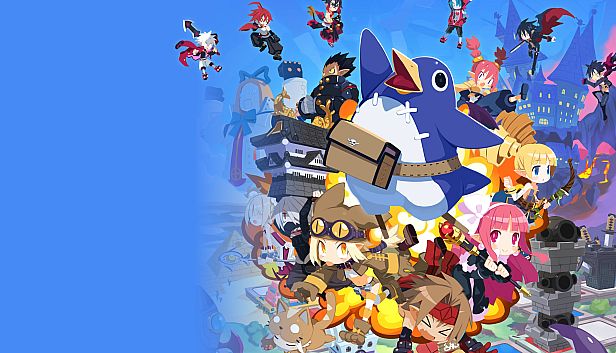


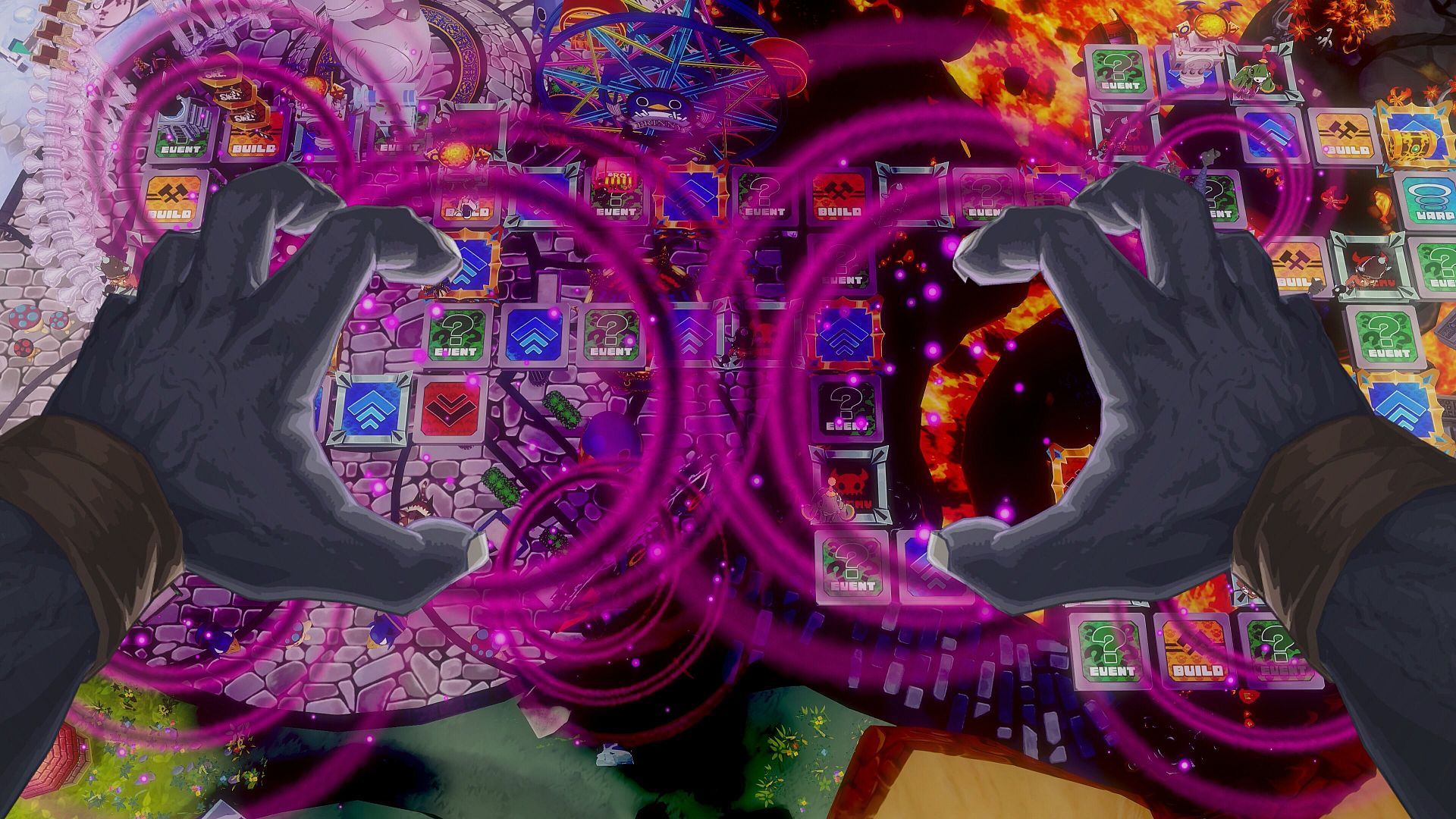
Prinny Party: Going Overboard! is a strategy RPG party game developed by Nippon Ichi Software for the PlayStation 5 and other platforms. Players navigate a board while managing RPG progression elements such as experience gains, equipment upgrades, and quest completion. The experience blends turn-based combat against roaming monsters with board game movement and a core loop of cooperation followed by direct competition among the group.
Gameplay
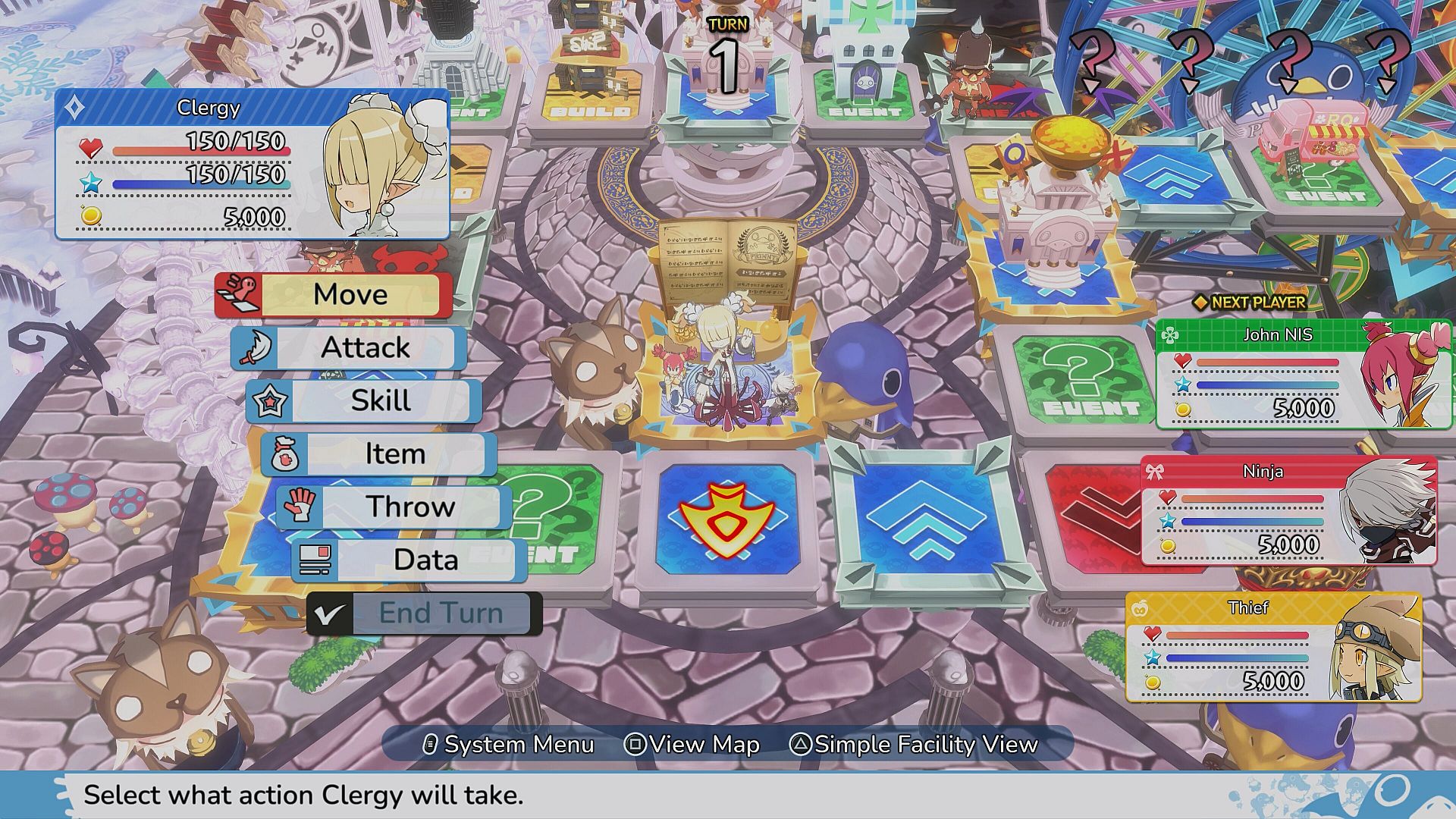
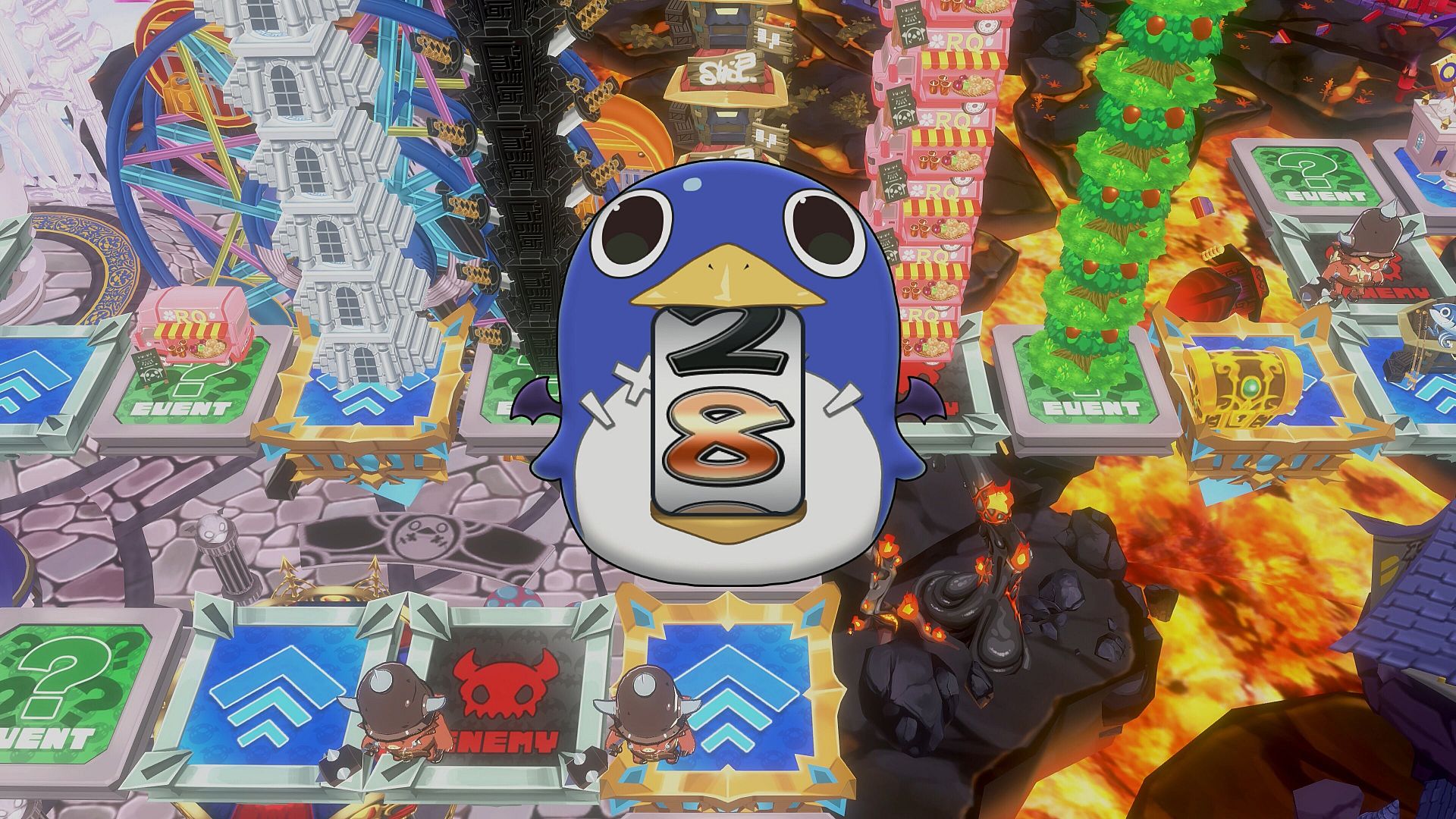
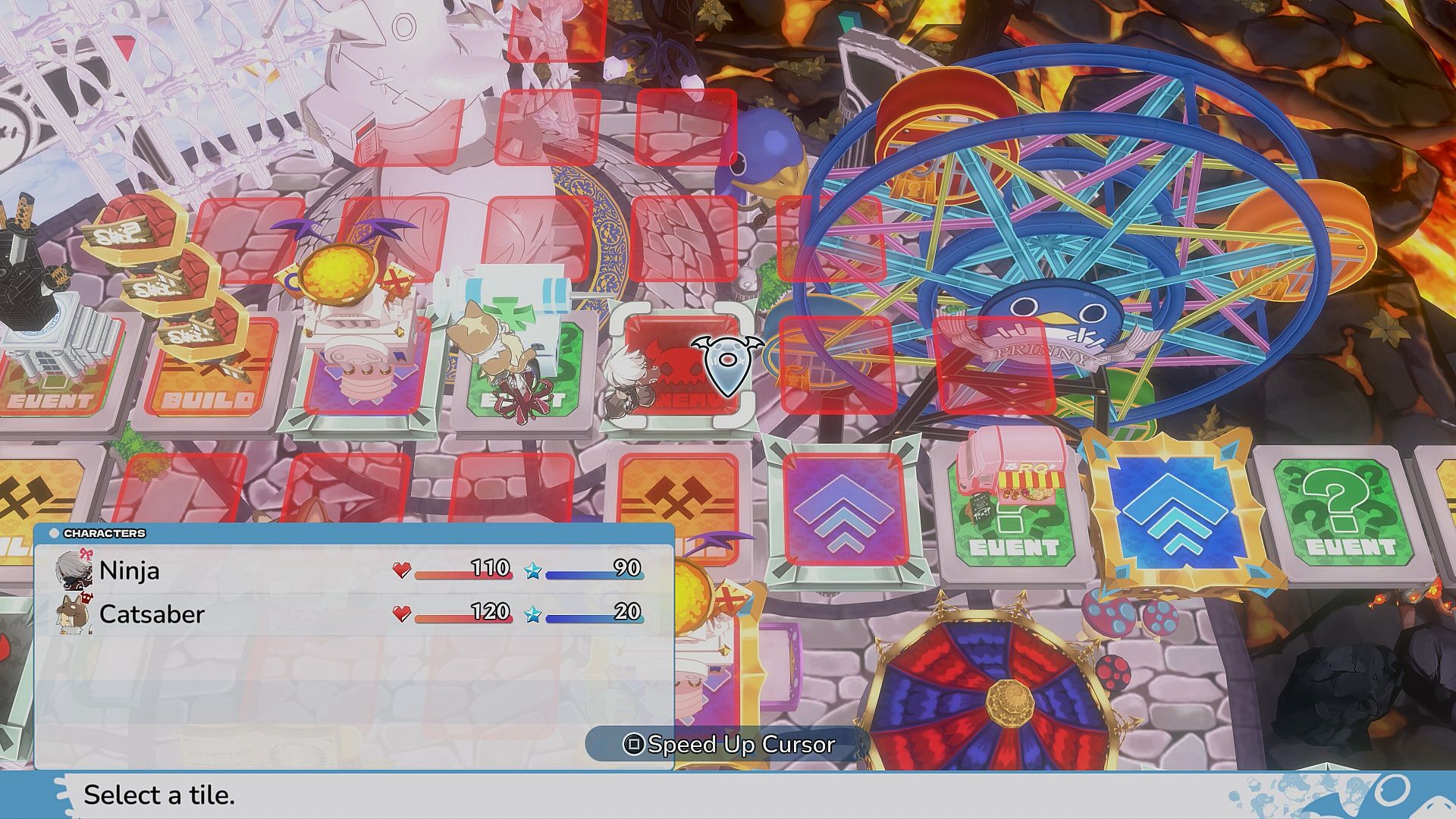
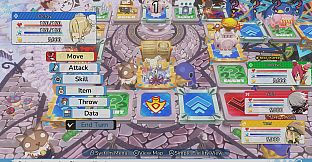
The central loop involves moving across the board using a selection of actions each turn, including movement, attacks, skills, items, and throws. A slot machine determines the outcome of chosen actions, adding an element of chance to positioning and combat results. Players battle monsters in turn-based encounters viewed from a three-quarter overhead perspective, selecting moves from menus that trigger short animation sequences with swords, wands, pistols, and magic.
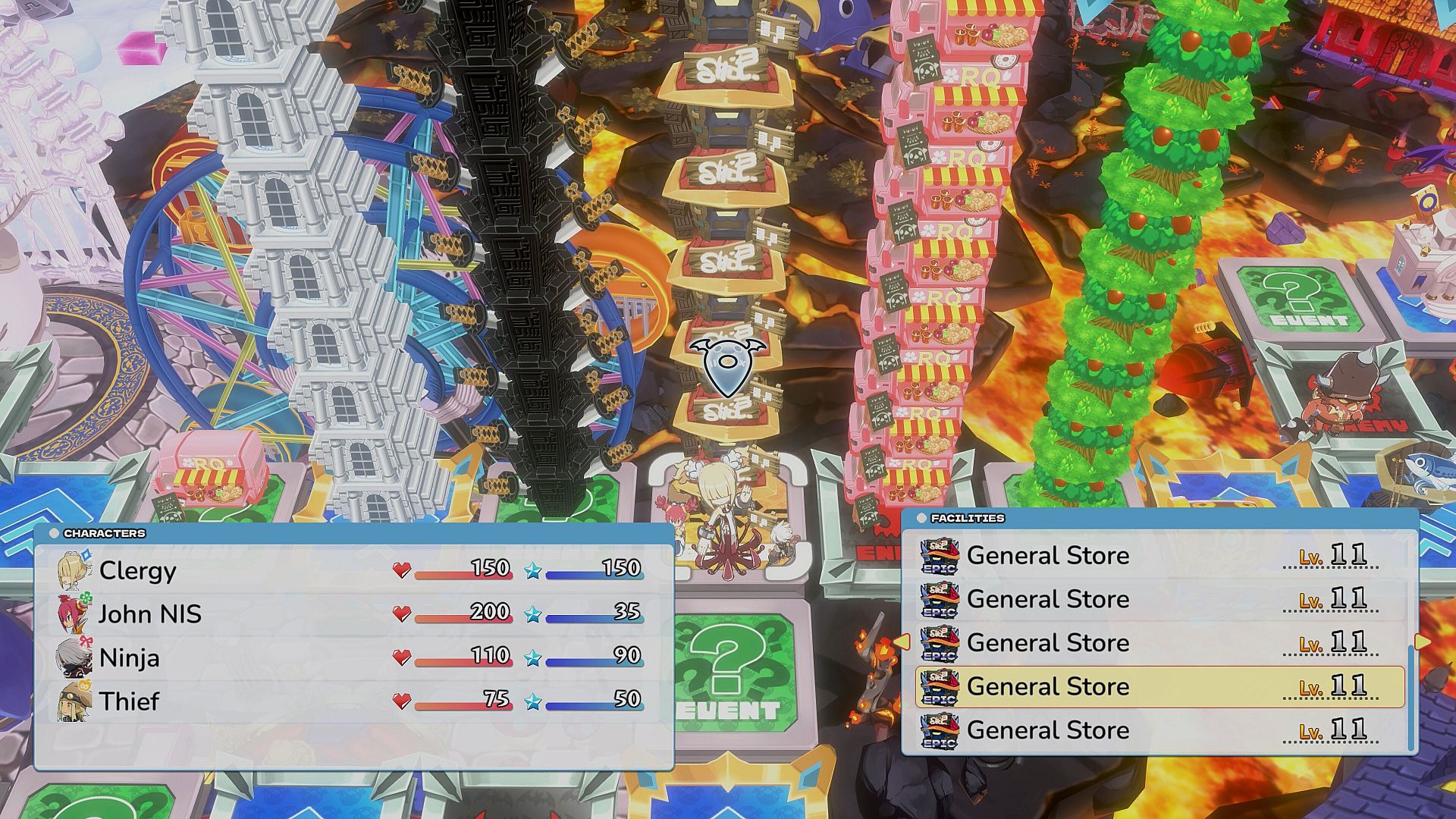
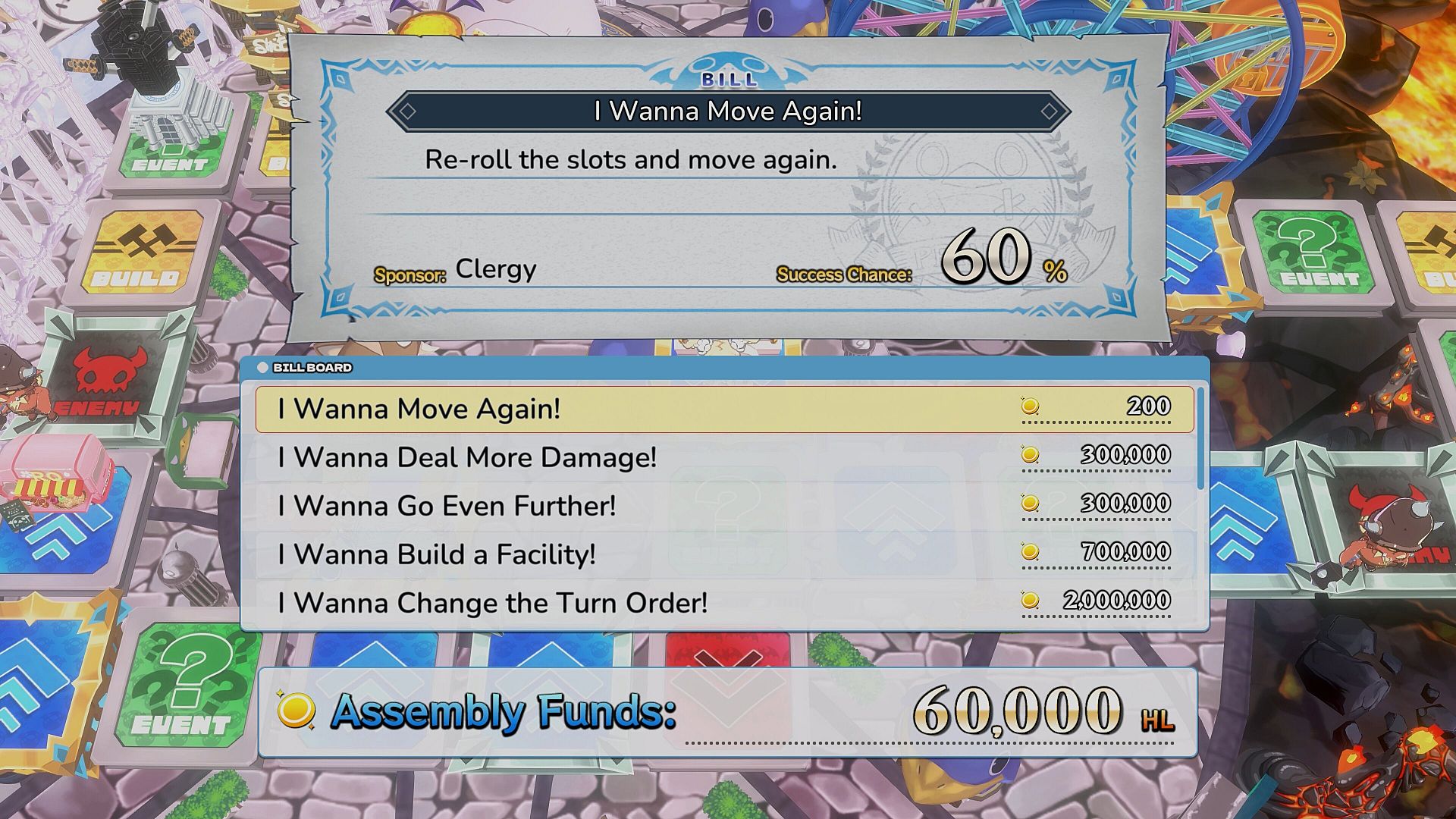
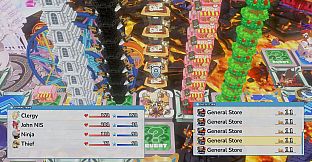
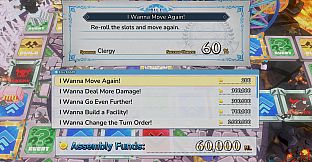
Progression comes through earning experience points to strengthen characters, acquiring better equipment, and completing quests scattered across the board. Landing on specific spaces allows construction and upgrades to shared facilities such as hospitals and armories, which any player can later access. The Assembly system lets participants propose and pass bills that modify match rules, such as tripling damage output, granting an extra move, or summoning a cannon for powerful demon attacks.
A standout mechanic is the throw action, which lets players pick up and hurl friends, enemies, or objects to disrupt positions or gain tactical advantages. Care must be taken with Prinnies due to their explosive nature when mishandled. Combat remains accessible yet layered, fitting the casual strategy genre while drawing on Disgaea series roots for character classes and humor.
Game Modes
The game centers on four-player sessions that combine cooperative and competitive phases within a single core experience. Participants work together to defeat spawned bosses, including the Supreme Overboard Laharl and his Protago-Knights, using combined attacks and positioning. Once a boss falls, the dynamic shifts immediately as players compete to carry the defeated boss back to the starting spawn point, with only the successful carrier claiming victory credit.
Direct interference through attacks, throws, and positioning becomes the focus during this return phase. A shared failure condition applies throughout: if all players perish simultaneously, the session ends for the entire group. The structure supports free-for-all play without team divisions, emphasizing betrayal and individual strategy after initial teamwork. Sessions scale with player count up to four, and the board layout encourages repeated plays through varied facility builds and bill outcomes.
Characters and Progression
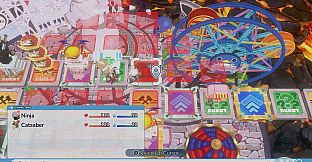
Available classes draw from the Disgaea universe and include the signature Prinny alongside options such as Warrior, Archer, Ninja, Magician, and Bandit. Each class starts with distinct base stats and slot configurations that influence movement ranges, combat effectiveness, and throw distances. Prinny serves as a deliberately weaker starting choice that rewards careful play and item use.
Progression unfolds across multiple turns as characters level up through combat and quests, unlocking stronger equipment purchases at built facilities. The system rewards consistent board control and timely Assembly interventions, allowing players to adapt strategies mid-session through new builds or rule-altering bills.
Is It Worth Playing?
Prinny Party: Going Overboard! suits groups seeking a mix of light strategy, RPG leveling, and chaotic multiplayer interaction on the PlayStation 5. The blend of cooperative boss encounters and post-defeat competition creates memorable sessions where alliances form and break quickly. Shared loss mechanics discourage pure sabotage and encourage measured risk-taking.
The game appeals to fans of Disgaea-style humor and party experiences that incorporate meaningful progression rather than pure randomness. With its focus on four-player local play and support for additional participants through shared features, it works well for regular game nights. Those who enjoy board game structures paired with turn-based combat and character customization will find the core loop engaging, while the upcoming release timing means the full experience becomes available soon for new players.