

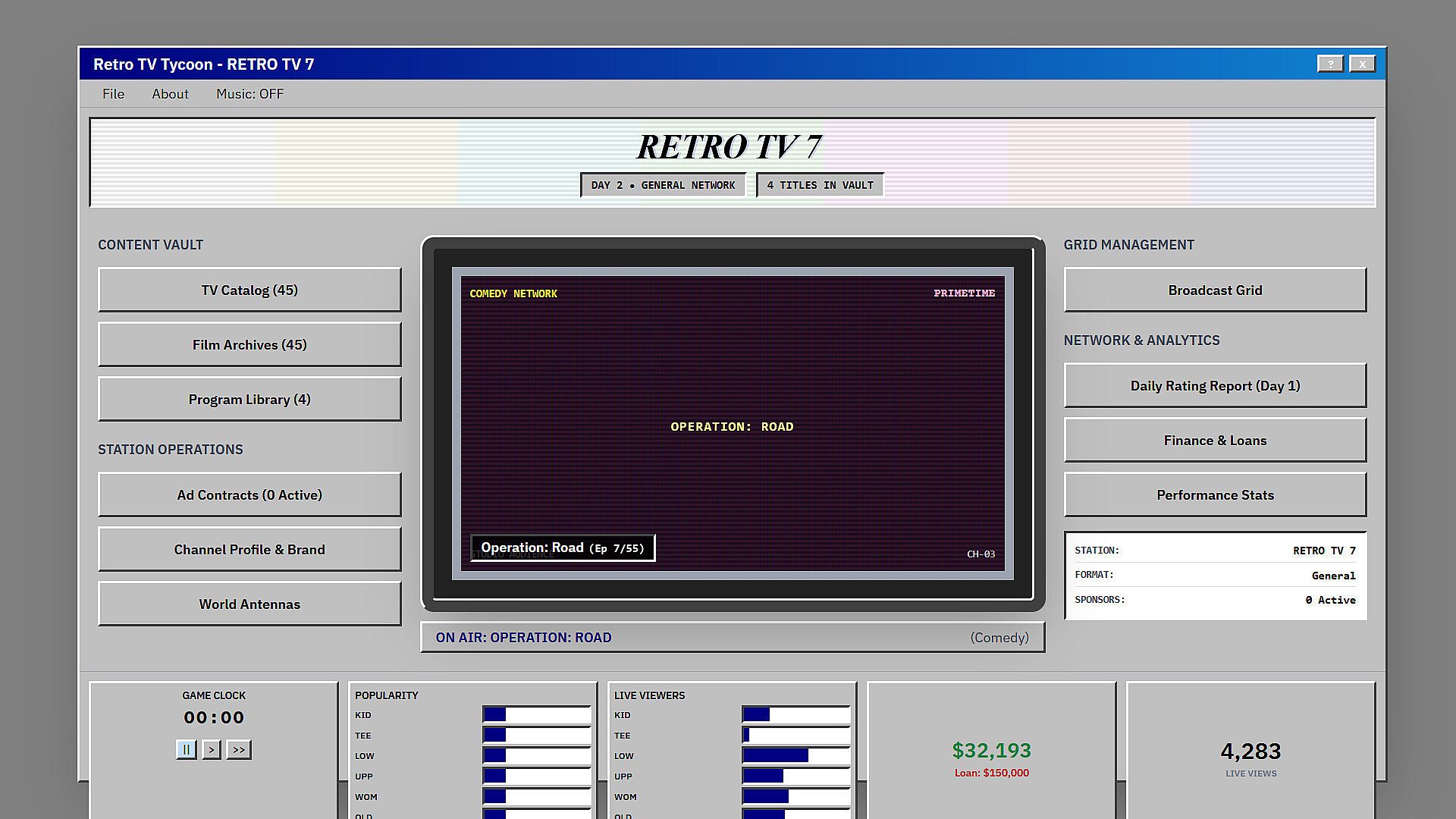
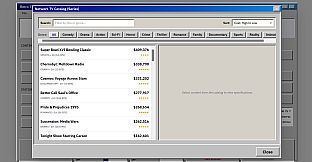
Retro TV Tycoon is a single player simulation game set on PC that places players in charge of building and managing a television station from the ground up. The experience centers on scheduling programming across a full day to attract viewers from different groups while meeting advertiser demands and expanding broadcast reach. Players begin with basic equipment and a small tape library before growing operations into a larger network through careful time slot management and strategic upgrades.
Gameplay
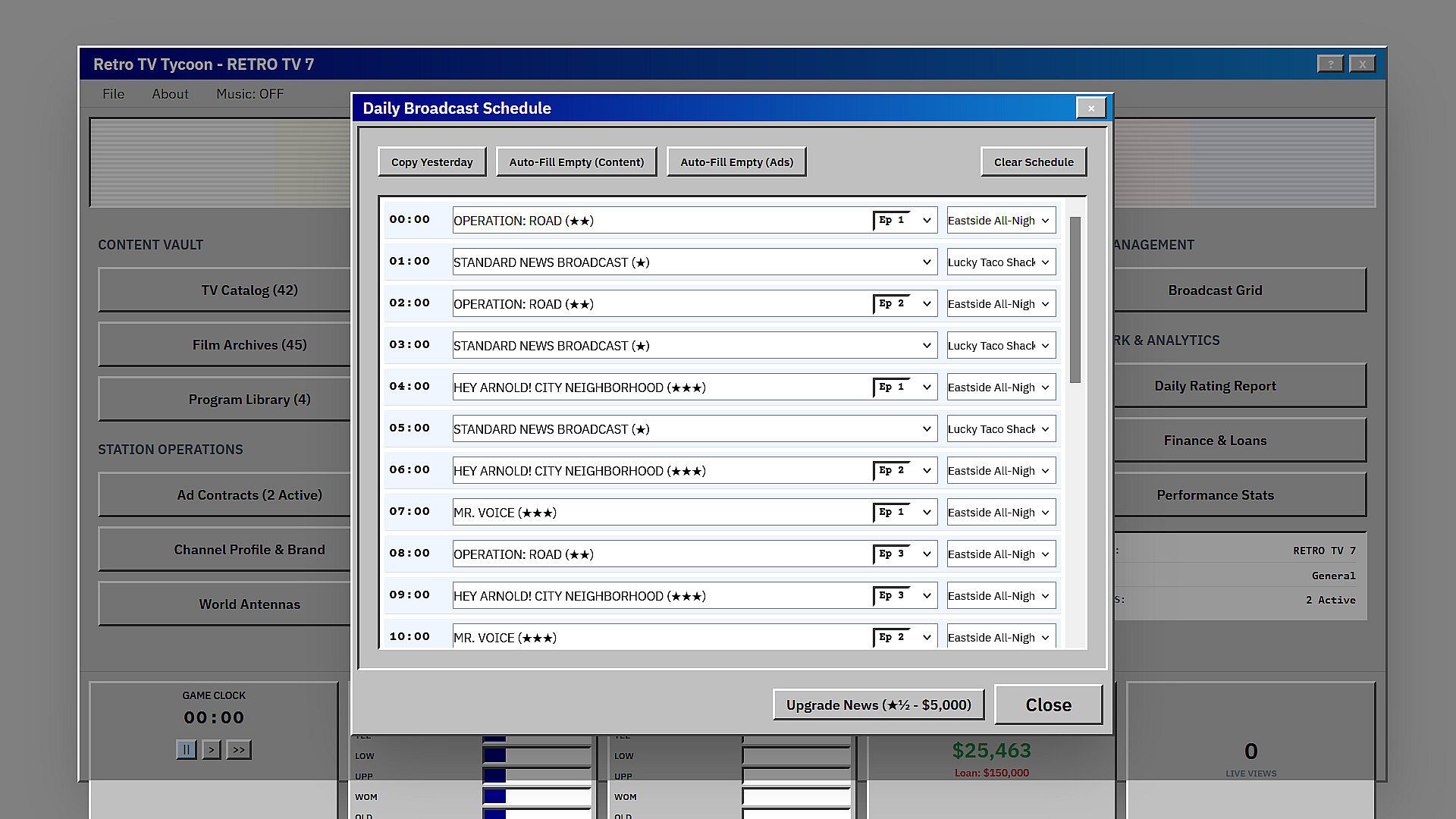
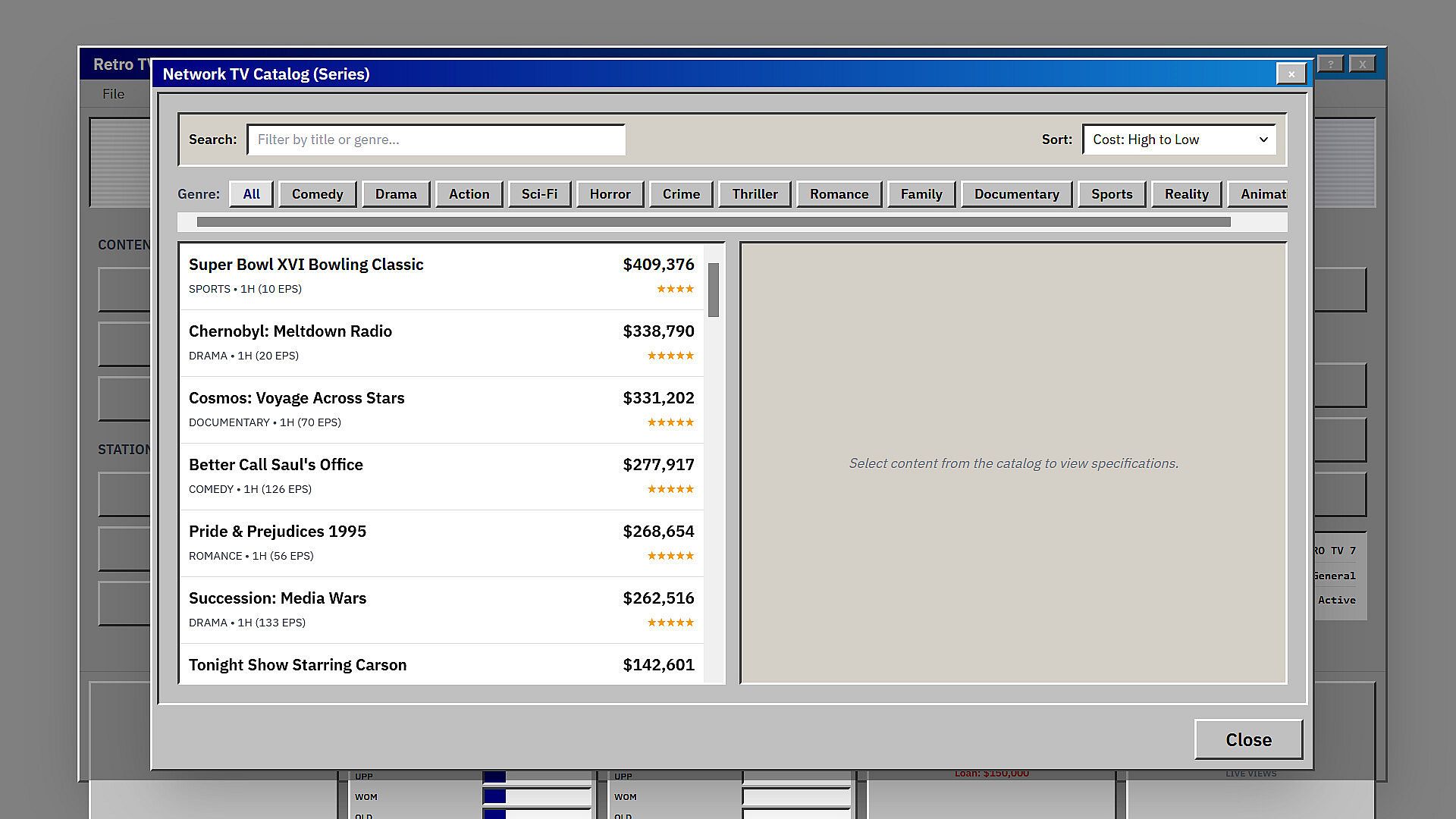
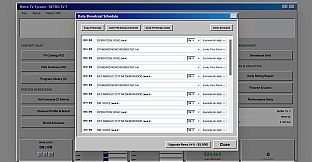
The core loop revolves around filling a 24 hour broadcast grid with content that appeals to five demographic groups including kids, teens, adults, women, and seniors. Morning slots might target commuters or children with cartoons while daytime focuses on dramas and evening primetime from 19:00 to 22:00 demands the strongest blocks to maximize ratings. Players balance series episodes, movie blocks, and in house news segments to build consistent viewership.
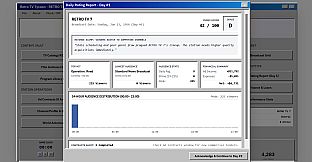
Loyalty streaks form when the same series airs at the same hour on consecutive days, delivering audience bonuses that can reach up to 60 percent. This mechanic encourages long term planning as episodes progress through seasons or syndication rights get sold for capital. News programming stands out because it incurs no syndication costs and provides steady ratings once the desk receives upgrades from a basic setup to advanced satellite capabilities.
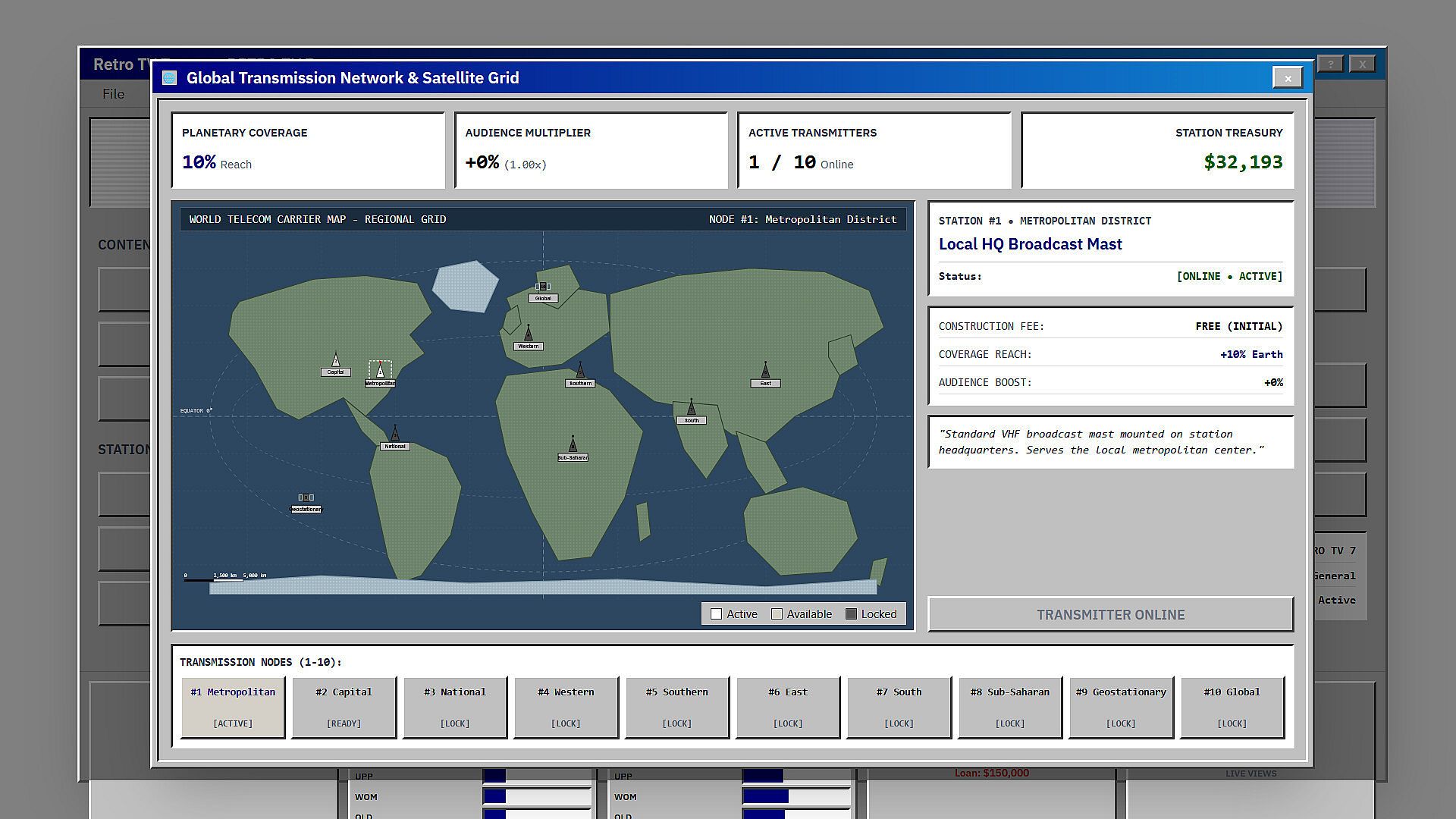
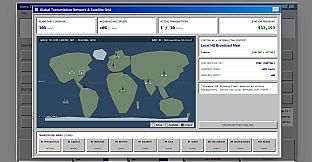
Commercial contracts add another layer by offering upfront payments in exchange for hitting impression targets in specific slots. Missing quotas triggers penalties, so scheduling must align sponsor needs with peak viewing periods. Expansion comes through transmission upgrades that multiply overall reach, starting from a local mast and progressing to continental and satellite systems for multipliers as high as 3.20 times.
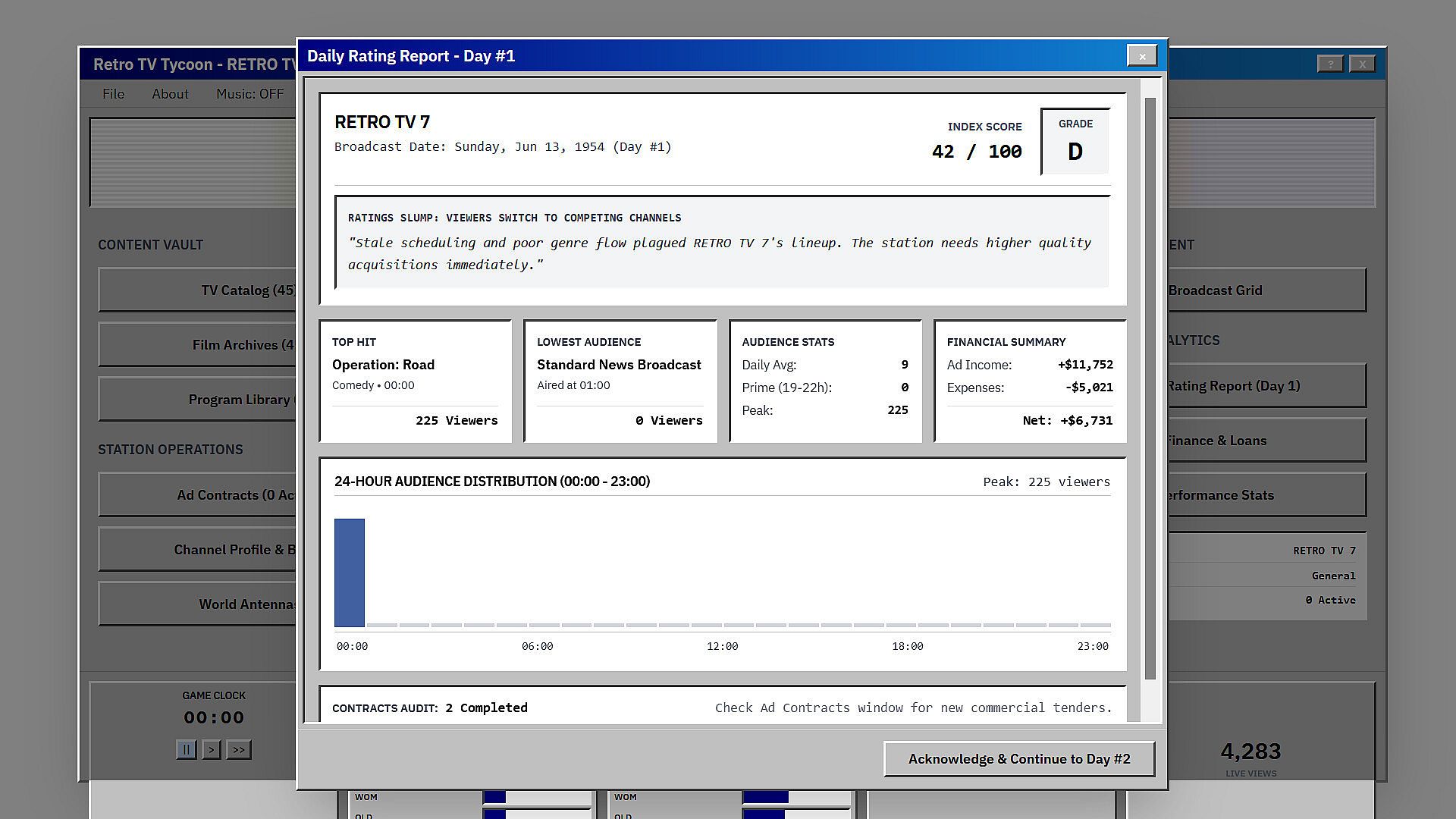
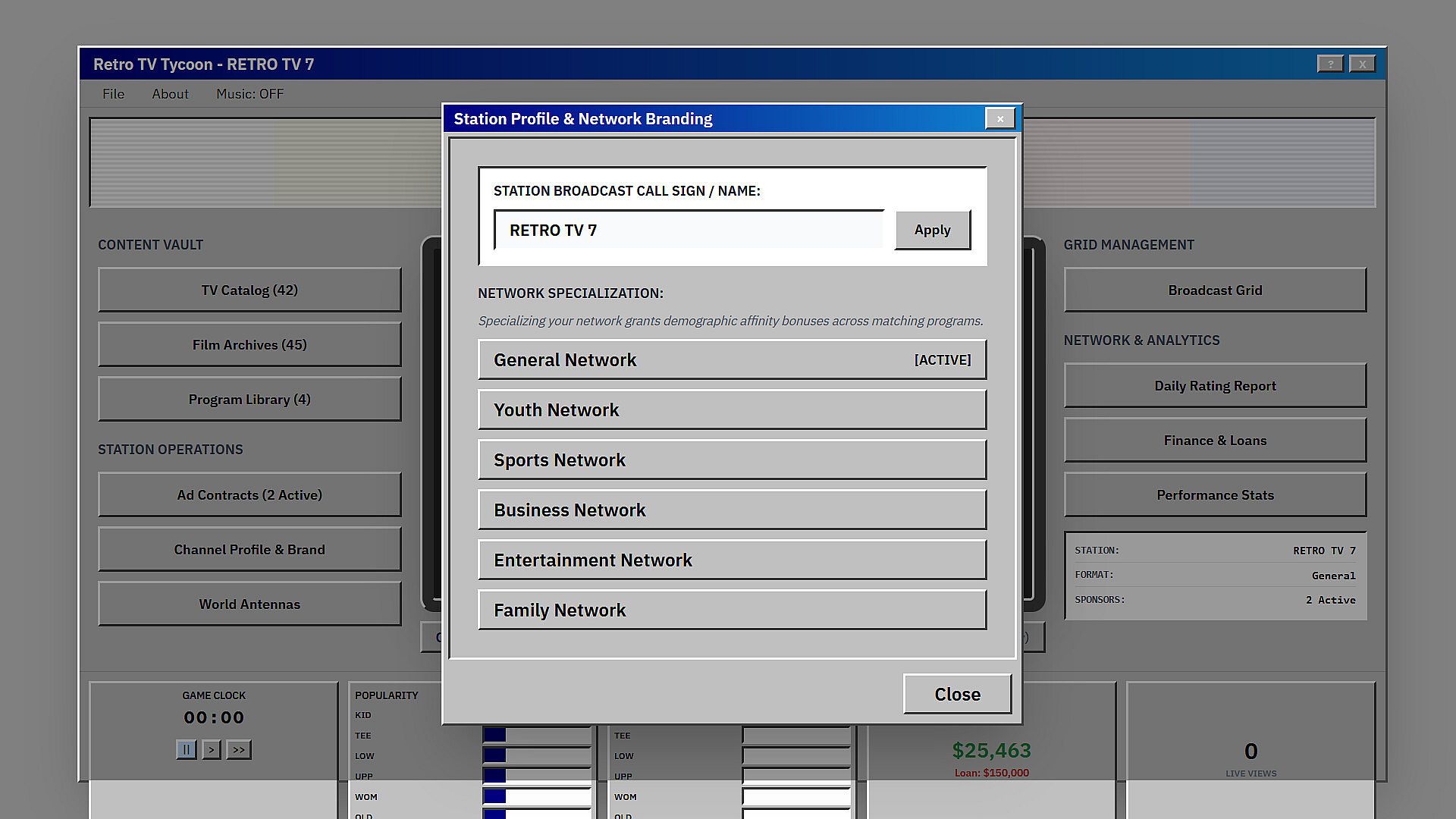
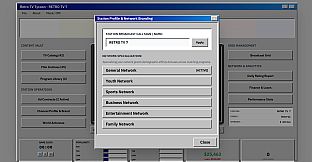
Network branding allows specialization into areas such as youth, sports, entertainment, or family channels, granting ongoing bonuses to matching content types. Financial management requires monitoring loans, transmitter costs, and revenue to avoid bankruptcy while investing in automation tools that copy previous days or auto fill slots.
Game Modes
Retro TV Tycoon operates as a continuous single player management simulation without separate named modes. The entire experience unfolds through one persistent station building campaign that spans from local beginnings to global broadcasting scale. Progression happens naturally through daily scheduling cycles, demographic mastery, and incremental upgrades rather than distinct scenarios or competitive setups.
Players advance by refining the same core systems over time, experimenting with different content mixes and branding choices within the single ongoing world. This structure keeps focus on long term empire growth instead of switching between varied play styles.
Key Mechanics and Progression
Demographic curves shift throughout the day, requiring constant adjustments to capture the right audiences at the right times. Early slots suit younger viewers while later evening blocks favor adults and seniors. Mastering these patterns leads to higher shares and more sponsor interest.
Transmission expansion directly impacts every rating by widening the potential audience pool. Each upgrade layer adds multipliers that reward careful financial planning and successful contract fulfillment. Newsroom improvements provide a reliable backbone that complements purchased programming without extra fees.
Branding choices create lasting advantages once selected, steering future content decisions toward higher performance in chosen demographics. The retro interface supports these decisions with familiar tools that streamline repetitive tasks like repeating yesterday's schedule.
Is It Worth Playing?
Retro TV Tycoon suits players who enjoy detailed management simulations focused on scheduling, resource balancing, and incremental growth. The emphasis on 24 hour grids, loyalty building, and demographic targeting creates a satisfying loop for those who like optimizing systems over many in game days. Financial pressures and contract deadlines add tension without overwhelming complexity.
The authentic 90s aesthetic and automation options help maintain engagement during longer sessions. Anyone interested in tycoon style progression through broadcasting rather than action or narrative elements will find the mechanics rewarding. The game rewards patient planning and repeated refinement of daily operations as the station scales.