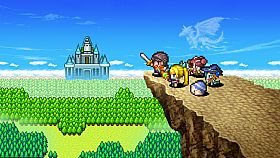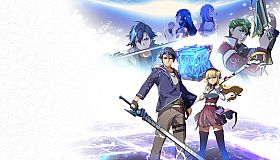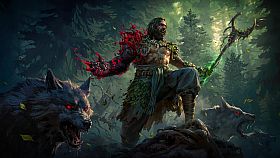


Romancing SaGa 3: Destinies United is a turn-based RPG remake of the 1995 classic, arriving on PlayStation 5 with fully realized 3D visuals and updated mechanics. Players select one of eight protagonists and navigate a non-linear adventure where personal choices determine the path forward.
Gameplay
The core loop revolves around exploration, recruitment, and tactical combat in a world threatened by recurring calamity. Each protagonist begins with a distinct background and perspective, leading to different encounters and allies depending on the starting point. Over twenty additional characters join the party across playthroughs, each bringing unique abilities that players refine through repeated use.
Combat operates on a timeline system that displays action order for allies and enemies. Characters learn new techniques mid-battle through the Glimmer mechanic, and they can develop evasion skills against specific attacks. Formations position party members to alter targeting priorities, grant bonuses, or impose trade-offs such as reduced speed for better protection. United Attacks activate once an Overdrive gauge fills, delivering powerful strikes that bypass normal turn order.
Skill mastery allows learned techniques and spells to transfer to other party members after sufficient practice. A Nonastrum assignment influences affinities for different techs and spells. Side activities include War Mode for commanding forces and a Business minigame focused on trading and empire building.
Game Modes
The experience centers on single-player progression through the Freeform Scenario System. Player decisions control which stories unfold, which characters appear, and the sequence for confronting the Four Sinistrals. This structure produces distinct narratives and challenges on each run without fixed linear paths.
Difficulty selection occurs at the start and includes Casual for accessible play, Normal for balanced encounters, and Classic for a stricter challenge aligned with the original design. Music options let players toggle between newly arranged tracks supervised by composer Kenji Ito and the original compositions. Fully voiced cutscenes in English and Japanese support the narrative delivery across all routes.
Story and Characters
Every three hundred years the Star of Death known as Morastrum appears, destroying most life born under its influence except for one survivor called the Child of Destiny. Nearly two decades after the previous event, unrest in Loanne reveals the Four Sinistrals plotting to open gates to the Abyss. Eight heroes, each with personal stakes, set out to locate the Child of Destiny and prevent catastrophe.
Protagonists include Mikhail, Monika, Katarina, Khalid, Julian, Thomas, Sarah, and Ellen. Recruitment expands the roster beyond the initial choice, and party composition affects available strategies in battle and dialogue options during exploration.
Graphics and Presentation
Character designs draw from Yoshiro Ambe while environments expand the original pixel art and Tomomi Kobayashi illustrations into three-dimensional spaces. The presentation maintains the series emphasis on player-driven discovery rather than guided progression.
Is It Worth Playing?
Romancing SaGa 3: Destinies United suits players who enjoy non-linear JRPGs with heavy emphasis on experimentation and repeated playthroughs. The combination of timeline combat, Glimmer learning, and formation tactics rewards careful party management and adaptation. Those seeking a straightforward story or predictable leveling may find the systems opaque at first, while fans of the SaGa series or similar choice-driven adventures will appreciate the freedom to reorder objectives and discover new allies.
Preorder incentives provide early access to items that boost resource gains at low Renown ranks, easing initial progression for new players. The title launches on PlayStation 5 alongside other platforms, with difficulty and music toggles allowing customization for different preferences. Its structure encourages multiple completions to experience all protagonist arcs and Sinistral confrontations in varied orders.