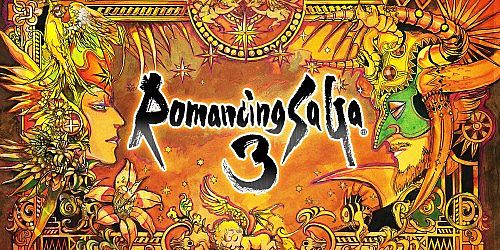



Romancing SaGa 3 is a turn-based RPG originally released in Japan in 1995 and brought to the Nintendo Switch in an HD remaster that polishes the pixel art while preserving the core experience. Players select one of eight protagonists, each offering a distinct starting perspective on a shared world threatened by recurring cosmic events and powerful antagonists. The structure emphasizes freedom, with the story unfolding through player choices rather than a fixed sequence of events.
Gameplay
The combat system relies on a party of up to five characters arranged in formations that influence speed, attack power, and defensive options. Battles proceed in turns, where players issue commands for attacks, healing, or defense before the round resolves. Stat growth occurs without traditional experience points or levels. Instead, characters who participate in fights receive random increases to attributes such as strength, speed, or weapon proficiency based on actions performed. This usage-based progression rewards experimentation with different weapons and spells over repeated play sessions.
A signature element involves the inspiration mechanic during combat. When a character attacks, there is a chance they spontaneously execute and permanently learn a new technique tied to the weapon or spell school in use. These abilities can later be mastered through repeated application and taught to other party members. Magic follows opposing schools that limit cross-learning, adding strategic depth to party composition. Overworld encounters appear visibly rather than through random triggers, allowing players to avoid or engage as desired. Resting at inns restores health and resources, while finite life points mean fallen characters cannot be revived indefinitely without consequences.
Game Modes
The freeform scenario system forms the backbone of progression. Selecting different protagonists alters available quests, recruitable allies, and narrative branches, encouraging multiple playthroughs to experience varied story paths and endings. Commander Mode activates when the protagonist is placed in reserve, shifting control to issuing broad tactical orders that the rest of the party follows automatically. This setup suits certain encounters and highlights multi-character coordination.
The HD remaster introduces the Phantom Maze as a new dungeon with content that varies by the chosen protagonist. New Game+ carries over learned skills and some resources from prior runs, supporting extended exploration and character development across campaigns. Certain protagonists unlock character-specific minigames involving trade or large-scale command decisions that integrate with the main adventure.
Is It Worth Playing?
Romancing SaGa 3 appeals to players who enjoy non-linear RPGs with opaque systems and high replayability. The eight protagonists and branching paths deliver substantial variety, while the remaster's updated visuals and added dungeon provide a refreshed presentation of the 1995 original. Reception has been generally positive among those drawn to its experimental mechanics, though the lack of explicit guidance on progression and the random elements in combat and growth can frustrate players seeking more conventional structure.
The Switch version runs well in handheld or docked play, making it accessible for sessions on the go. Those comfortable with older JRPG design philosophies that prioritize discovery and adaptation will find the title rewarding. Newcomers to the series may benefit from patience while learning the interconnected systems through trial and error.
Story and World
The narrative revolves around the Death Eclipse, a periodic event that spares only one child per cycle amid widespread loss. This premise ties into larger conflicts involving ancient threats and the Abyss Gates. Exploration spans a connected world where towns, dungeons, and side events appear in flexible order, shaped by the protagonist's background and prior decisions. Recruitable characters bring unique backstories and abilities that further personalize each journey.
Visuals and Presentation
The HD remaster enhances the original pixel art with sharper details and improved enemy sprites without altering the fundamental 2D style. Backgrounds receive particular attention, resulting in more vibrant environments. Sound design retains the original score while benefiting from modern playback options on the Switch. These updates make the game more approachable for modern audiences while honoring its roots.