

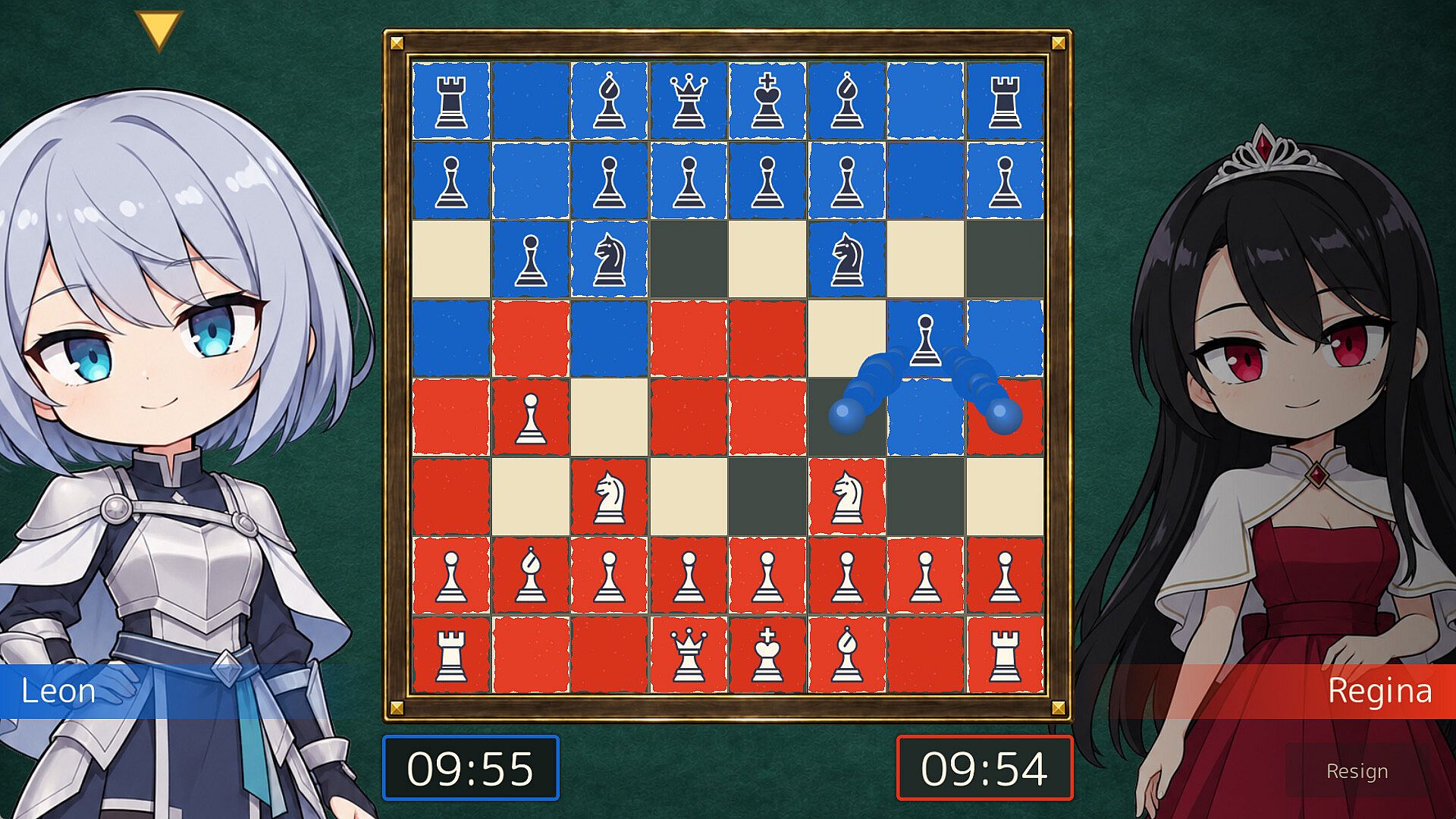
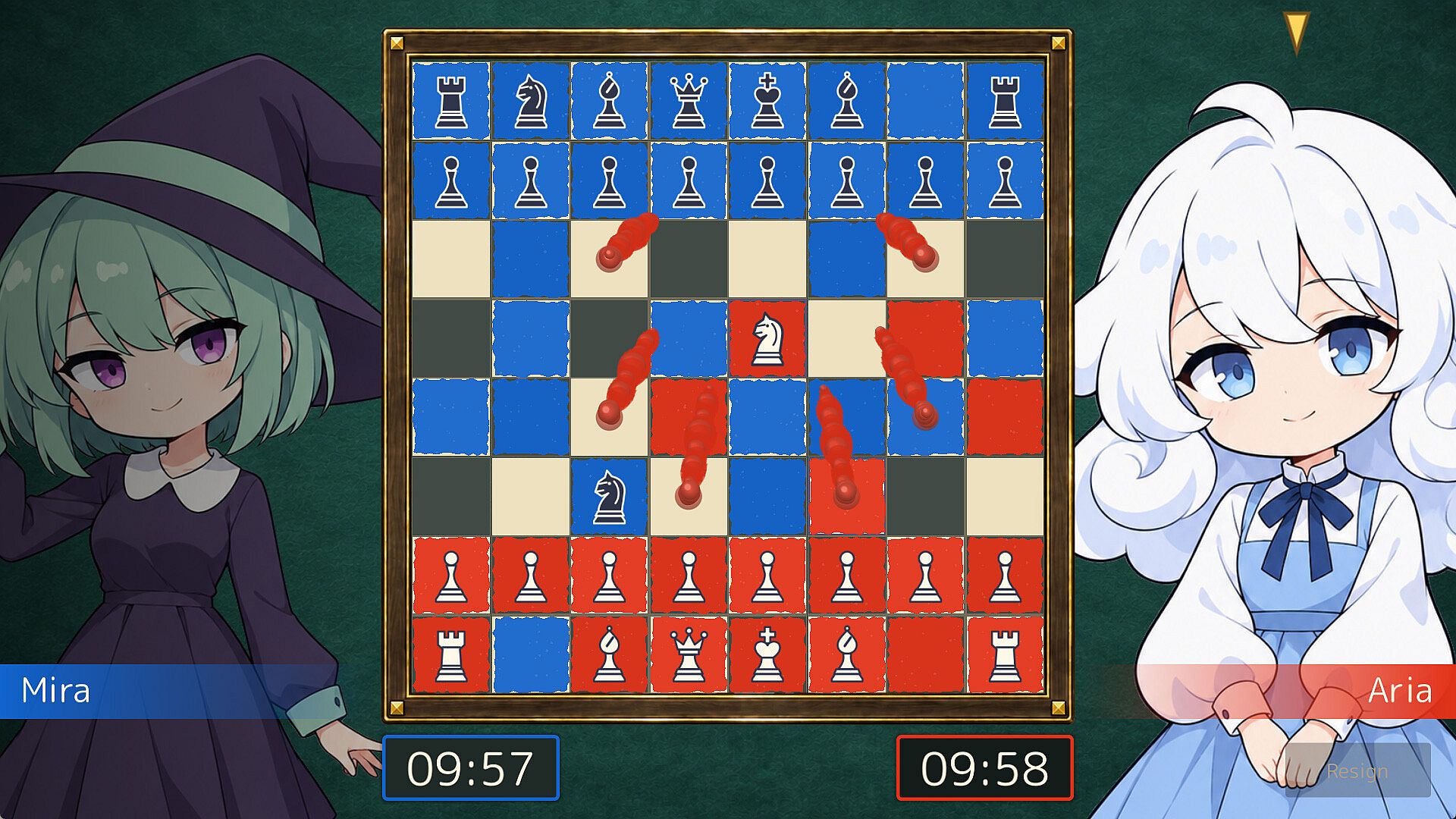
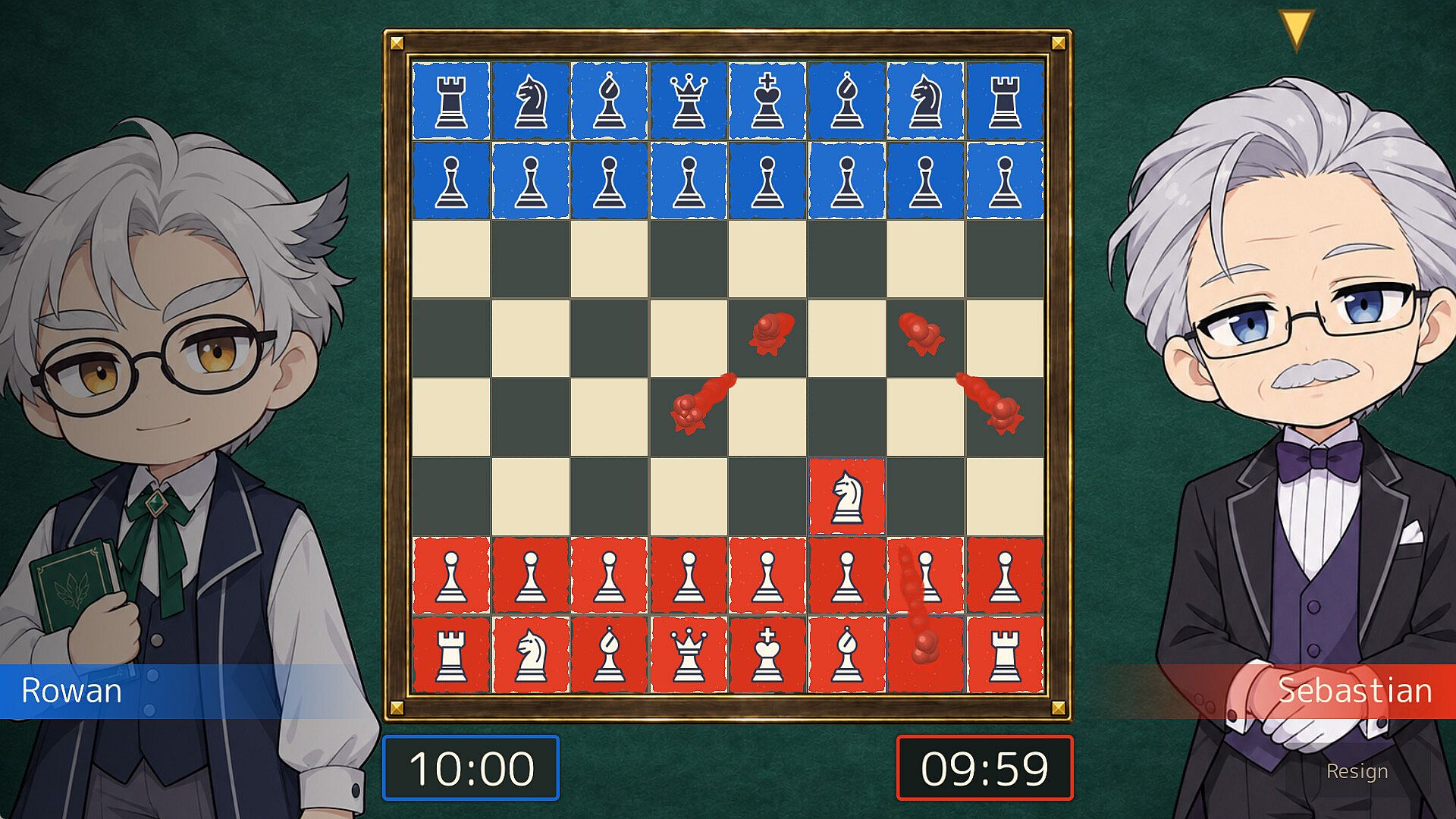
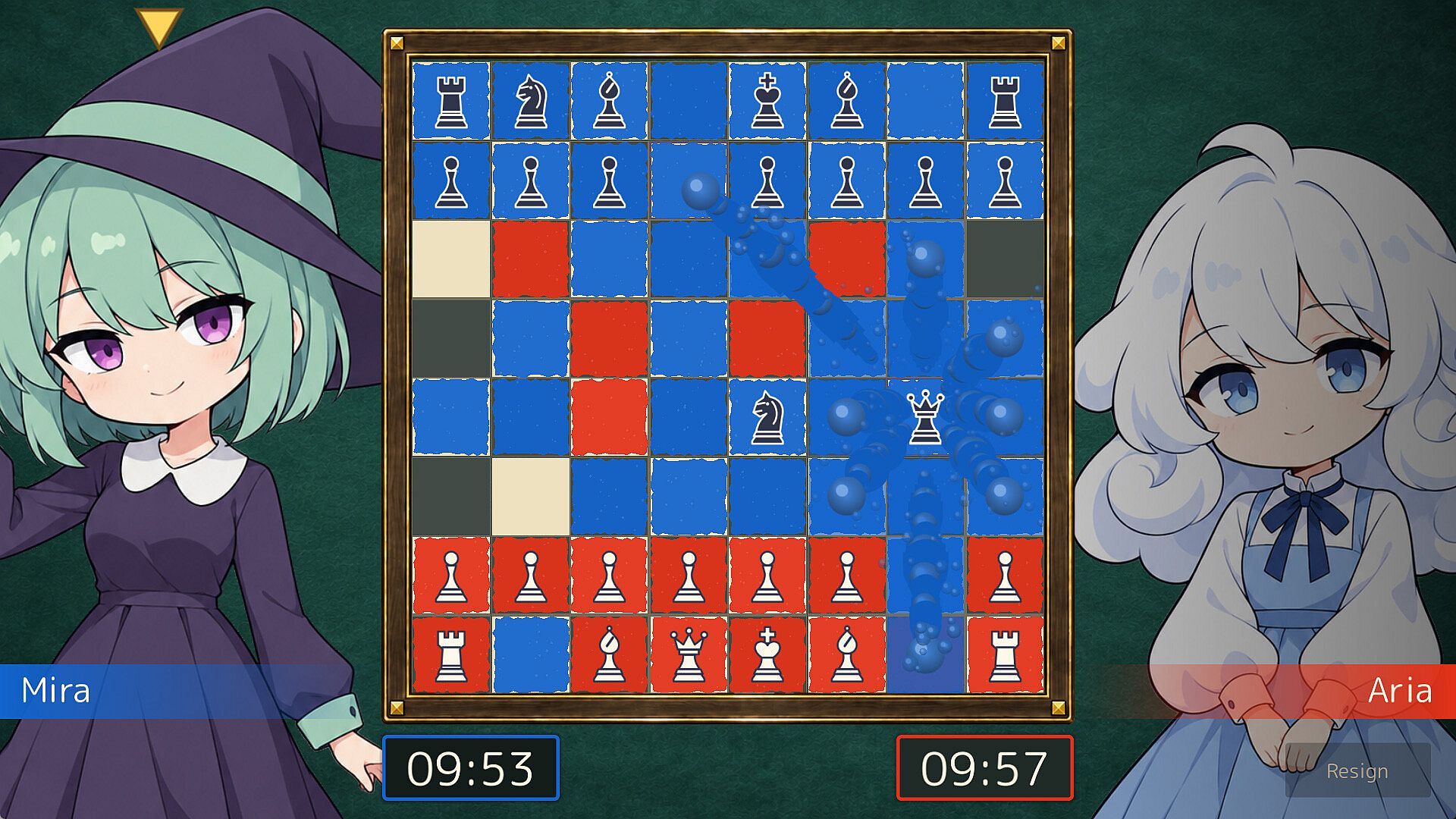
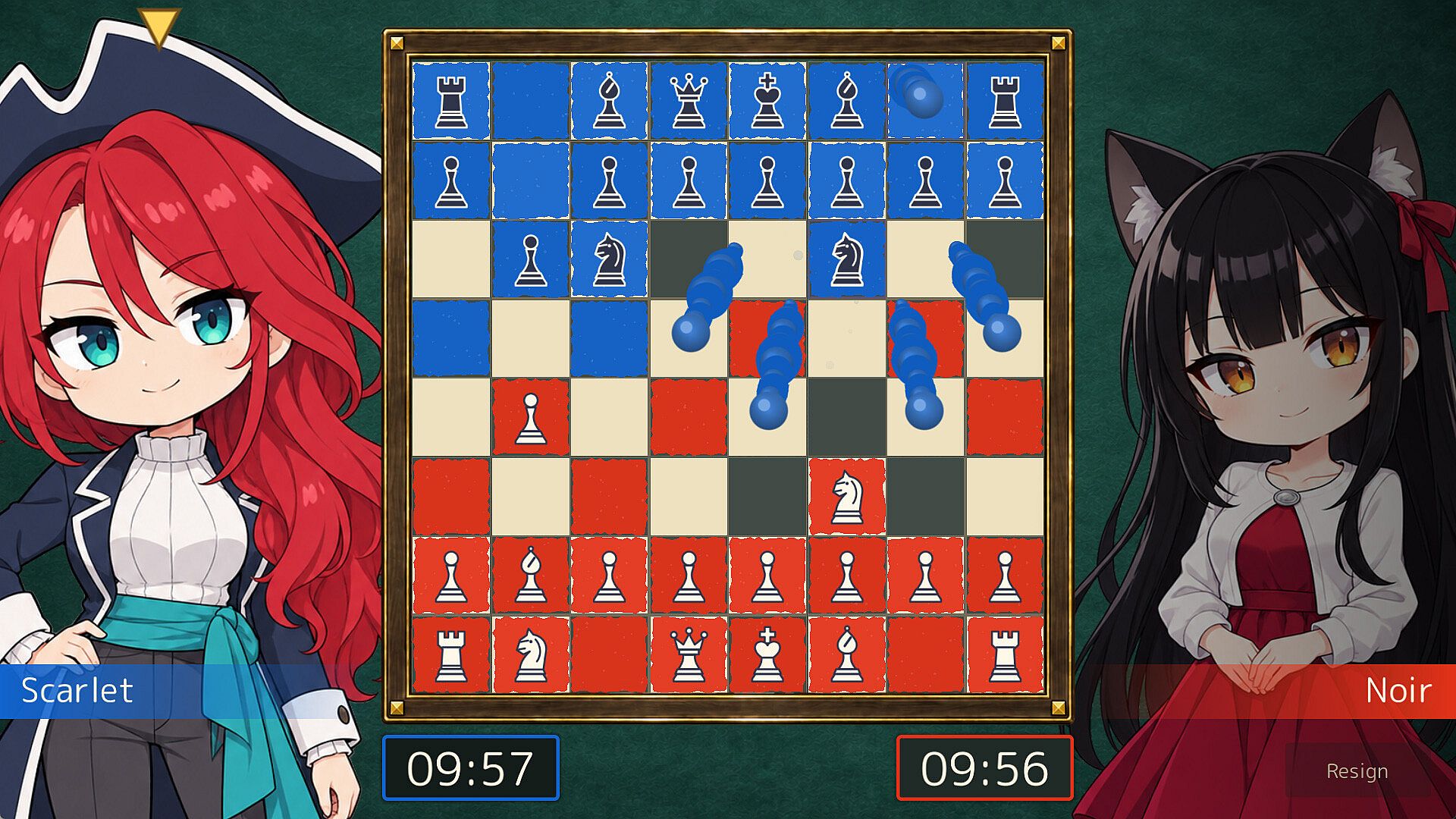
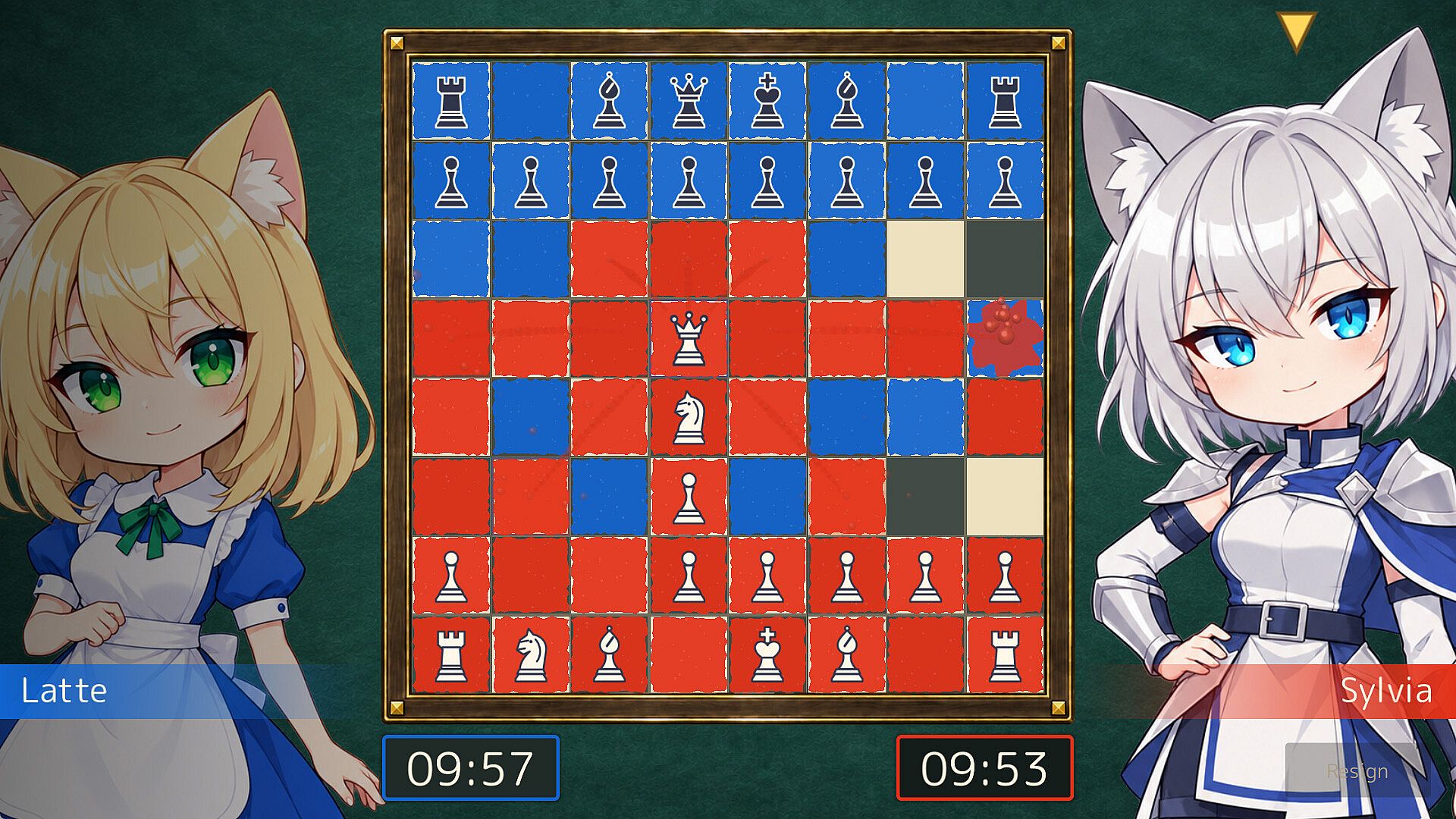
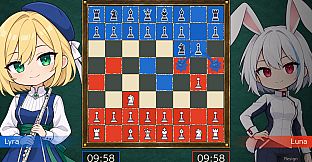
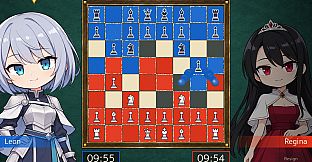
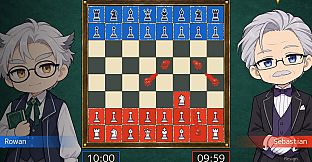
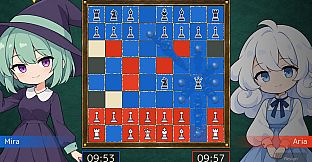
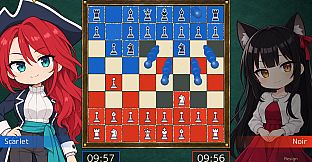
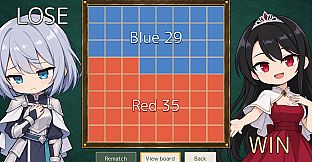
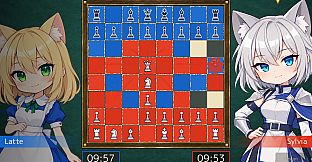
SPLACHESS is a casual board game for PC that fuses classic chess movement with a fresh layer of ink-based territory control. Players move pieces across the standard 64-square board, but each action also spreads color to claim space. Victory comes through the familiar checkmate or by controlling the majority of squares once the board fills completely.
Gameplay
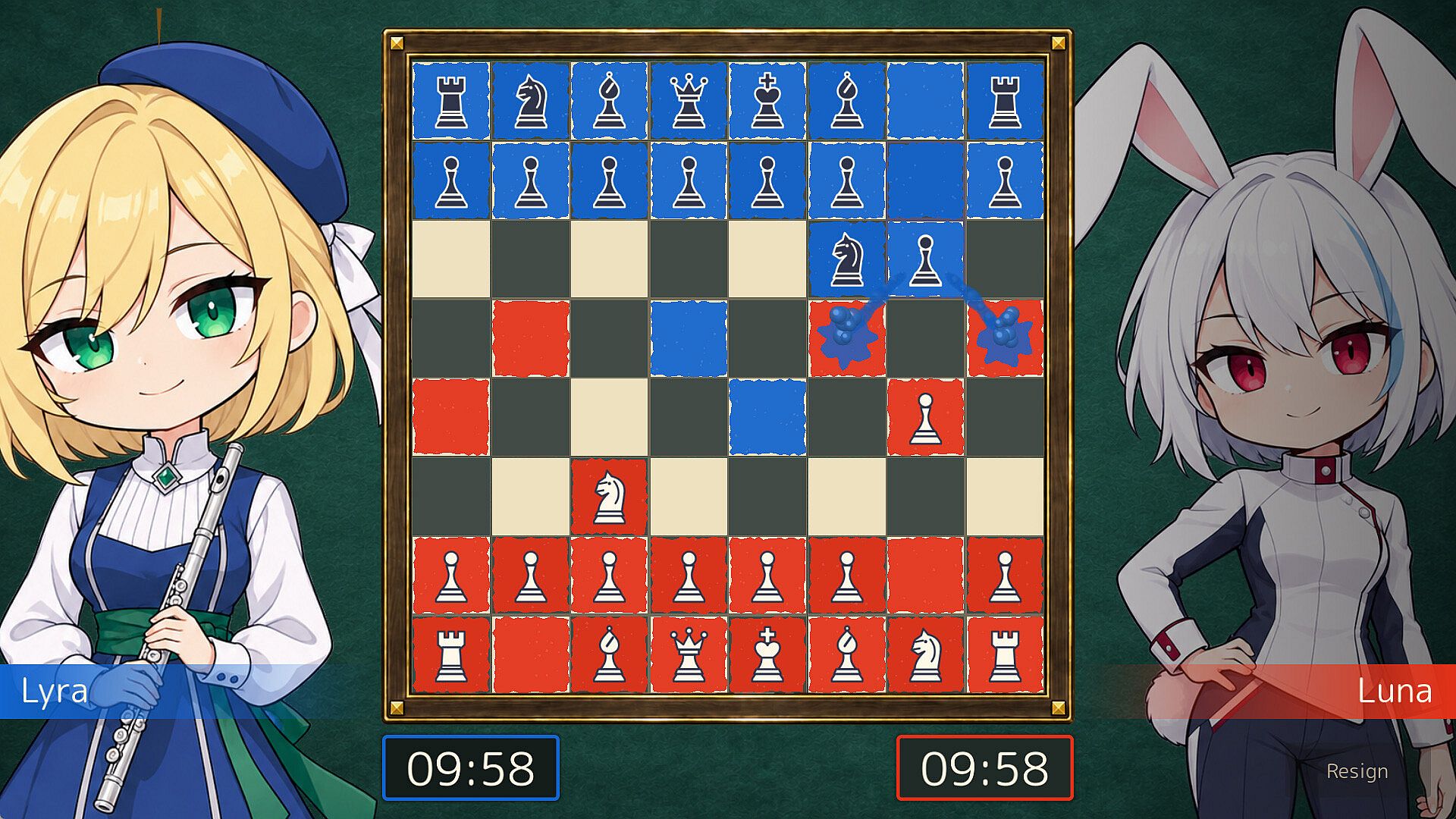
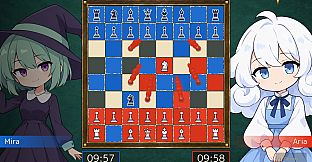
Every move paints the destination square along with the empty squares attacked by the piece. Occupied squares block ink spread, forcing players to consider both tactical threats and territorial gains. Pawns paint their diagonal attack squares rather than forward movement paths, altering standard pawn play into a tool for area expansion. A preview shows the paint effect before committing, and live territory counts track progress toward the secondary win condition.
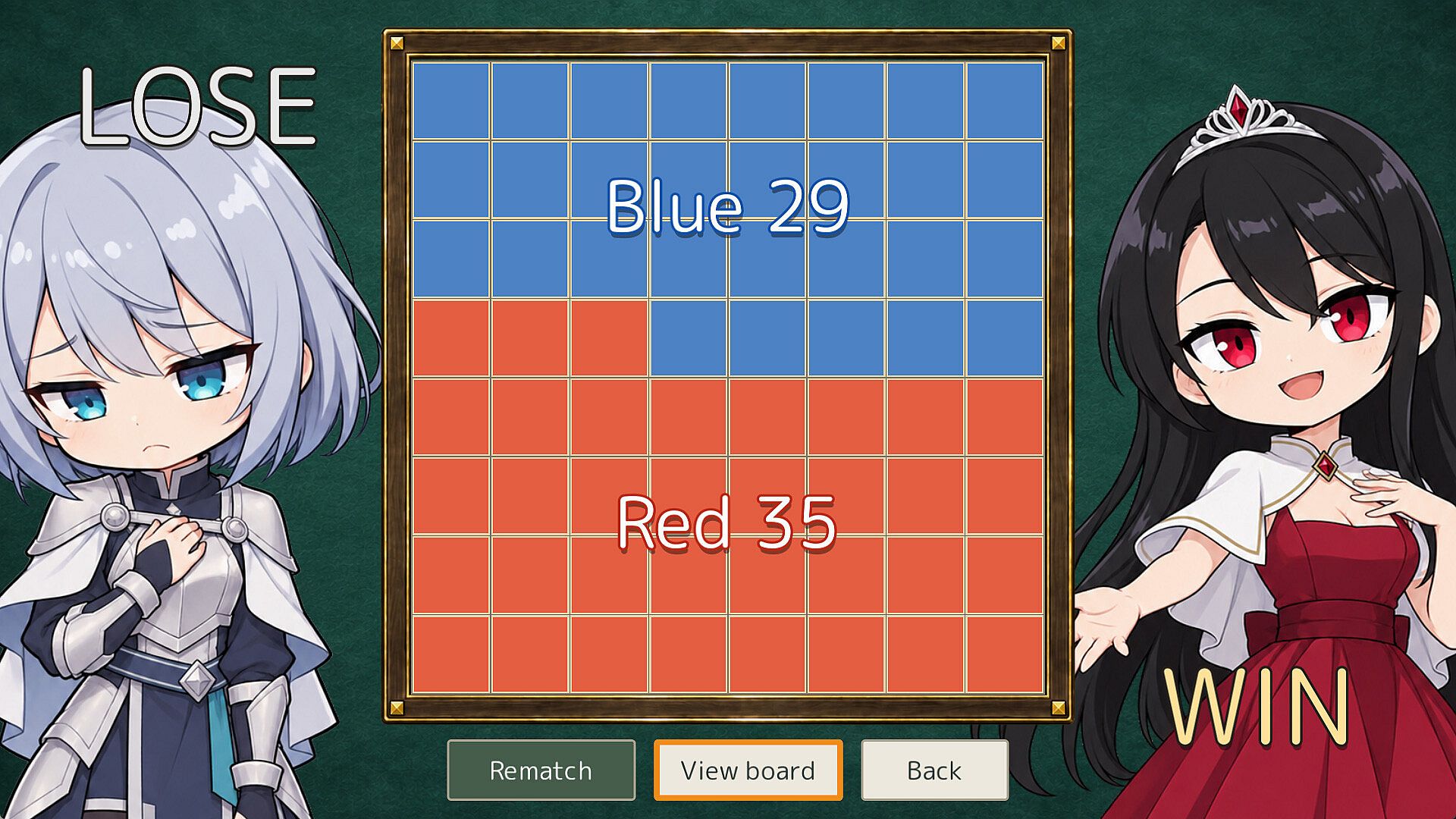
Standard chess elements remain intact, including castling, en passant captures, and pawn promotion. Checkmate ends the game immediately. If the board paints out first, the player with more colored squares wins, though equal coverage results in a draw. Stalemate also produces a draw. These outcomes take precedence over territory results when they occur together. Repetition and insufficient material do not trigger automatic draws, shifting focus toward active play and territorial maneuvering.
Defensive positioning gains new weight because a well-placed piece can both protect the king and deny opponent ink. Exchanges and recaptures influence not only material balance but also which color claims contested squares. The result encourages balanced decisions between aggressive expansion and king safety.
Game Modes
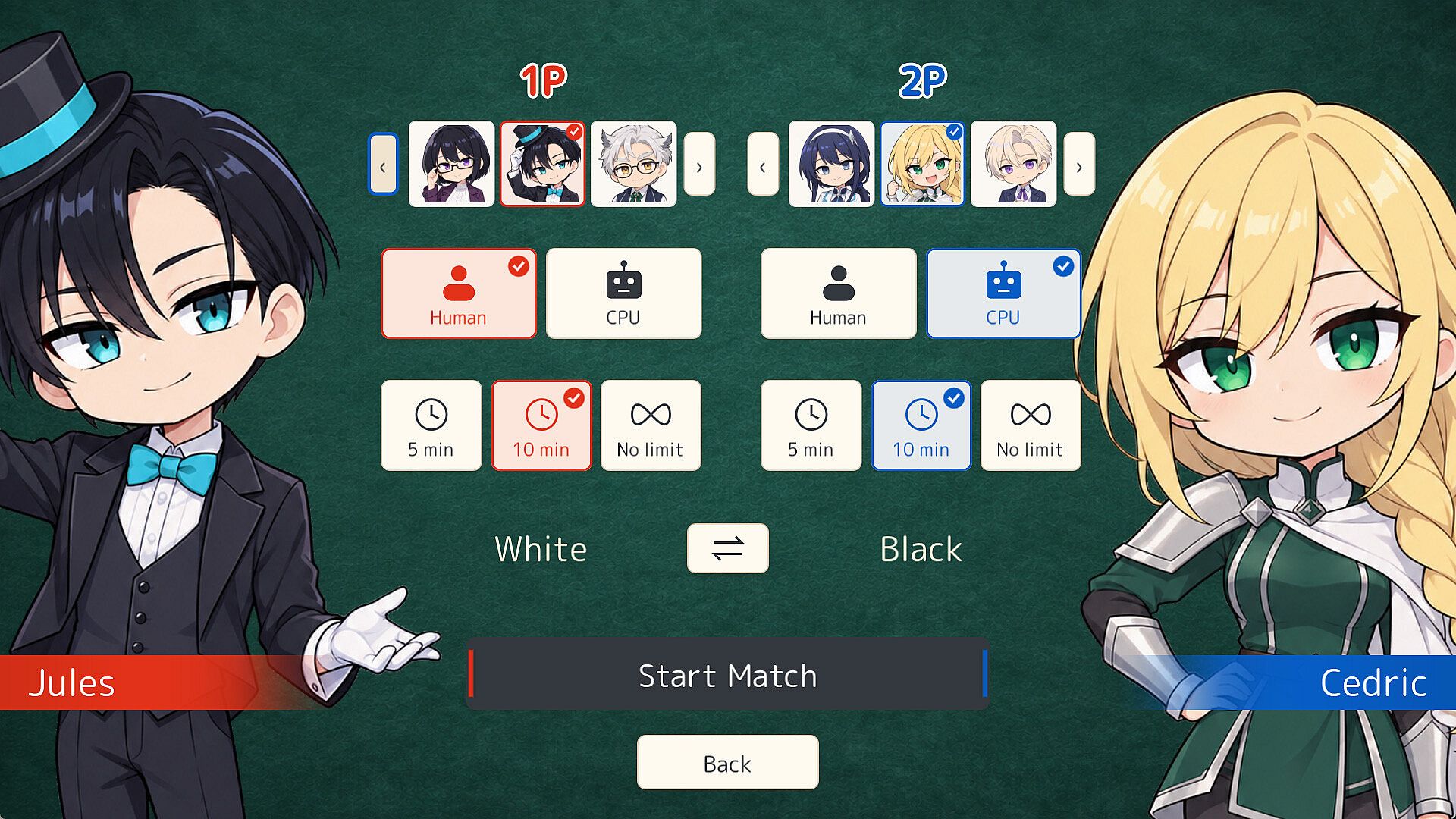
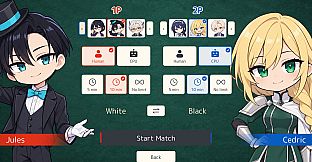
Single-player options pit the user against one of 20 distinct CPU characters. Each character brings its own strength level and personality, ranging from straightforward beginner opponents to more calculated styles that emphasize certain board areas or piece types. Local multiplayer supports two players sharing one device with selectable time controls of five minutes, ten minutes, or unlimited duration.
Online play connects through public rooms for quick matches or private rooms for arranged games with friends. The same core rules apply across all formats, allowing consistent practice whether facing the computer or human opponents. Match records and rematch options support review and repeated play.
Input methods include mouse, keyboard, and controller, with full support for each across the different modes. Previews for both movement and paint effects help players evaluate options before finalizing turns.
Core Mechanics and Strategy
The territory layer transforms familiar chess openings and middlegame plans. Early pawn advances now serve dual purposes of development and color spread, while piece trades can flip large sections of the board depending on positioning. Players must weigh whether to push for checkmate or build a larger painted area when the game extends toward full coverage.
Defending painted squares becomes relevant because opponent moves can overwrite color on empty attacked squares. This creates ongoing tension between preserving territory and launching attacks. The 20 CPU personalities provide varied practice environments that highlight different strategic priorities, such as aggressive painting or conservative king protection.
Is It Worth Playing?
SPLACHESS appeals to players who enjoy chess but want an additional layer of decision-making around board control. The dual win conditions reward both tactical precision and spatial awareness without replacing the core chess experience. Those who appreciate variants that alter priorities while keeping familiar movement will find the ink system a natural extension.
Local and online multiplayer options make it suitable for both solo practice and head-to-head sessions. The range of CPU opponents supports gradual skill building, and the absence of automatic draws from repetition keeps games decisive. As an upcoming title, its value will depend on how the unique mechanics resonate once released, particularly for casual players seeking something beyond standard chess rules.