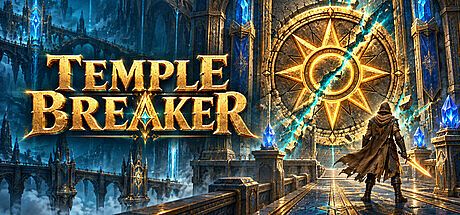


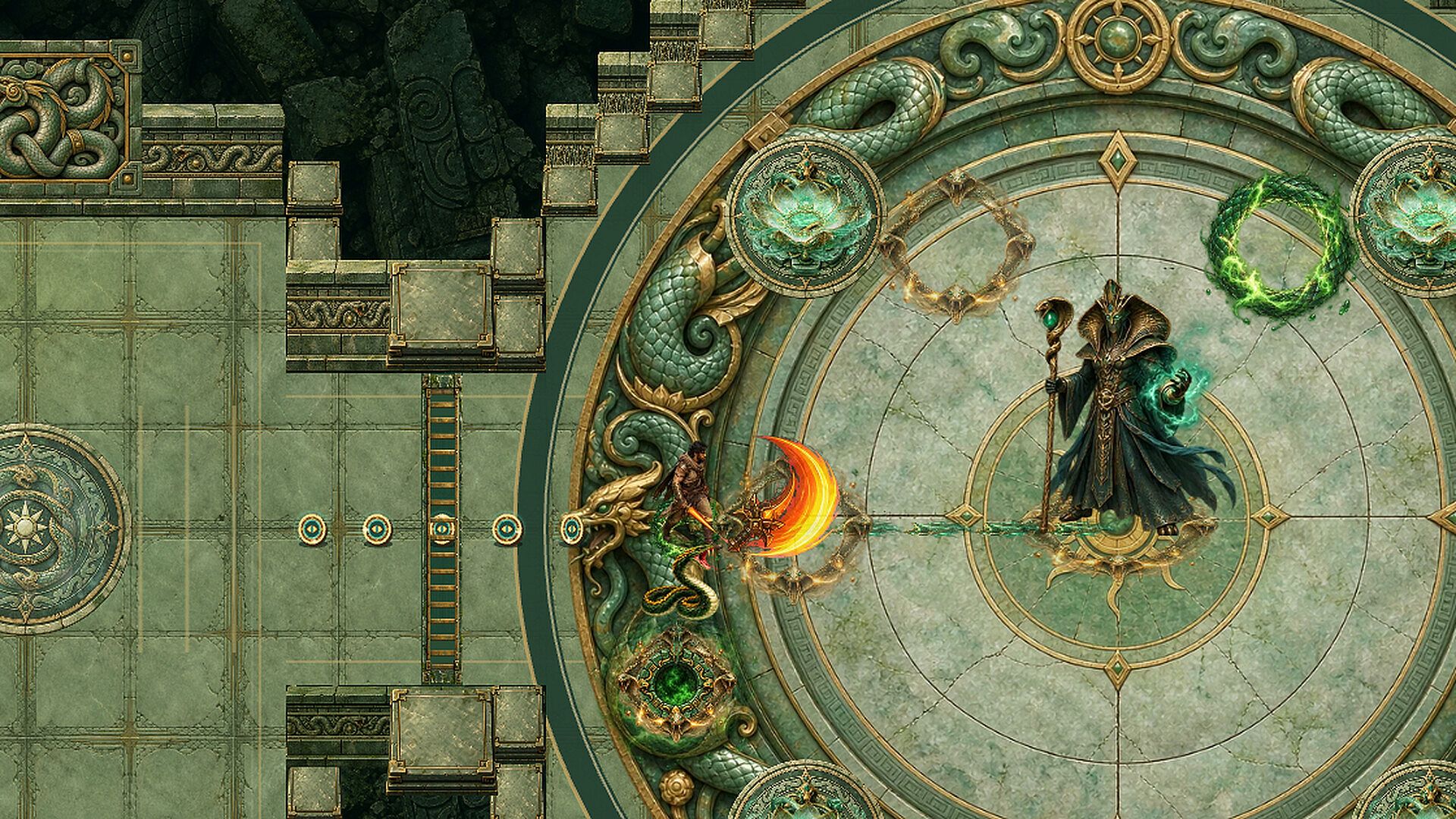
Temple Breaker is a single-player top-down 2D action adventure game set on PC. Players take on the role of Rayan Kade, who enters an ancient temple that seals behind him, accompanied by Luma, as they work toward the Sun Core across a 15-chapter story.
Gameplay
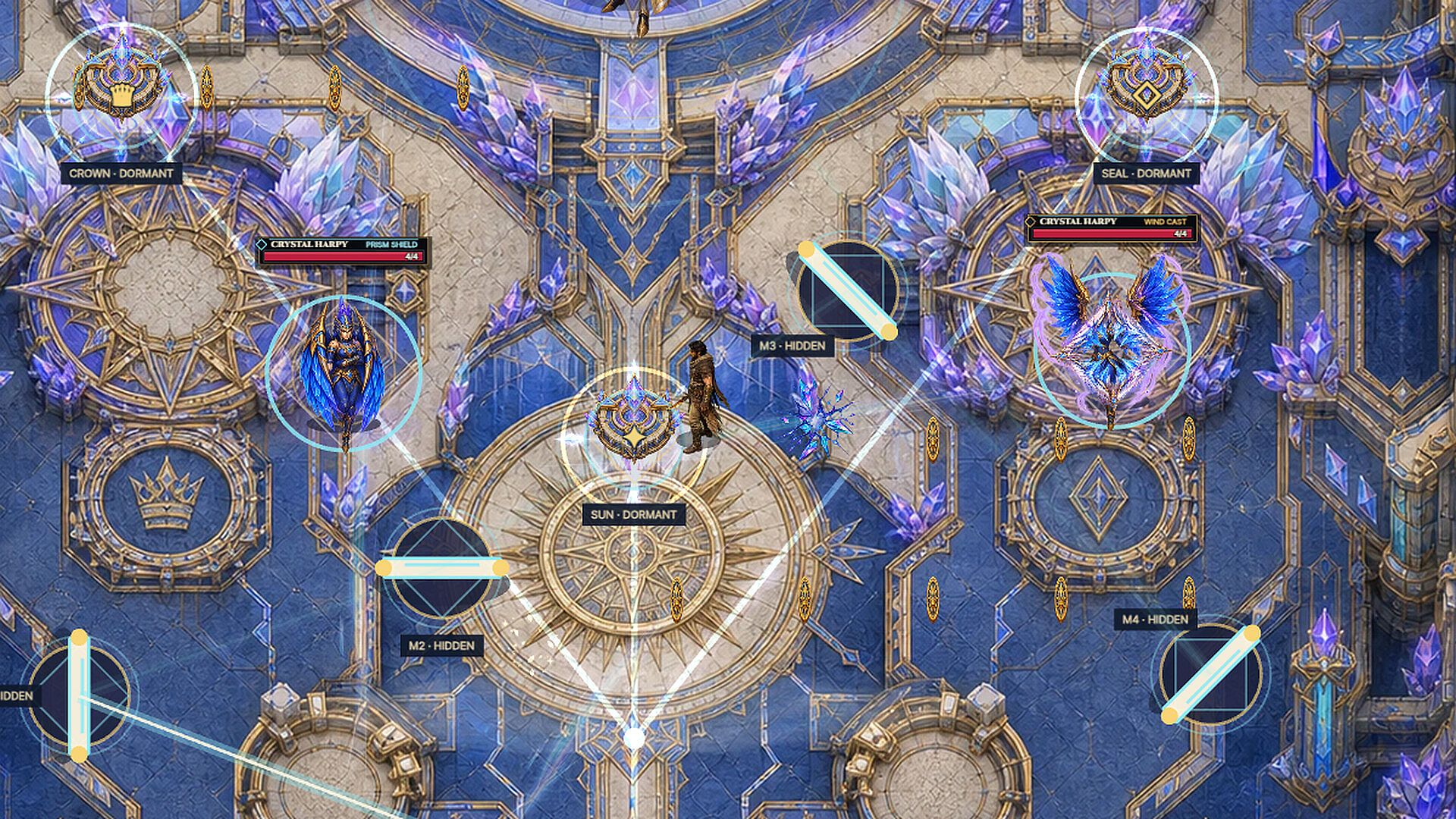
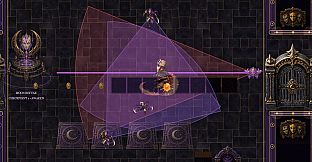
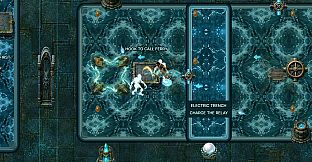
The core loop centers on mastering a growing collection of tools that alter how each room and challenge is approached. The Hook Chain serves as a traversal aid to pull bridges into place or swing across gaps. Clay Bombs destroy specific barriers that block progress. The Mirror Lens starts as a light redirection device and upgrades to the Prism Lens for more complex beam puzzles. Additional items like the Wind Cape extend jumps or crossings, while the Smoke Flask disrupts enemy vision to create openings.
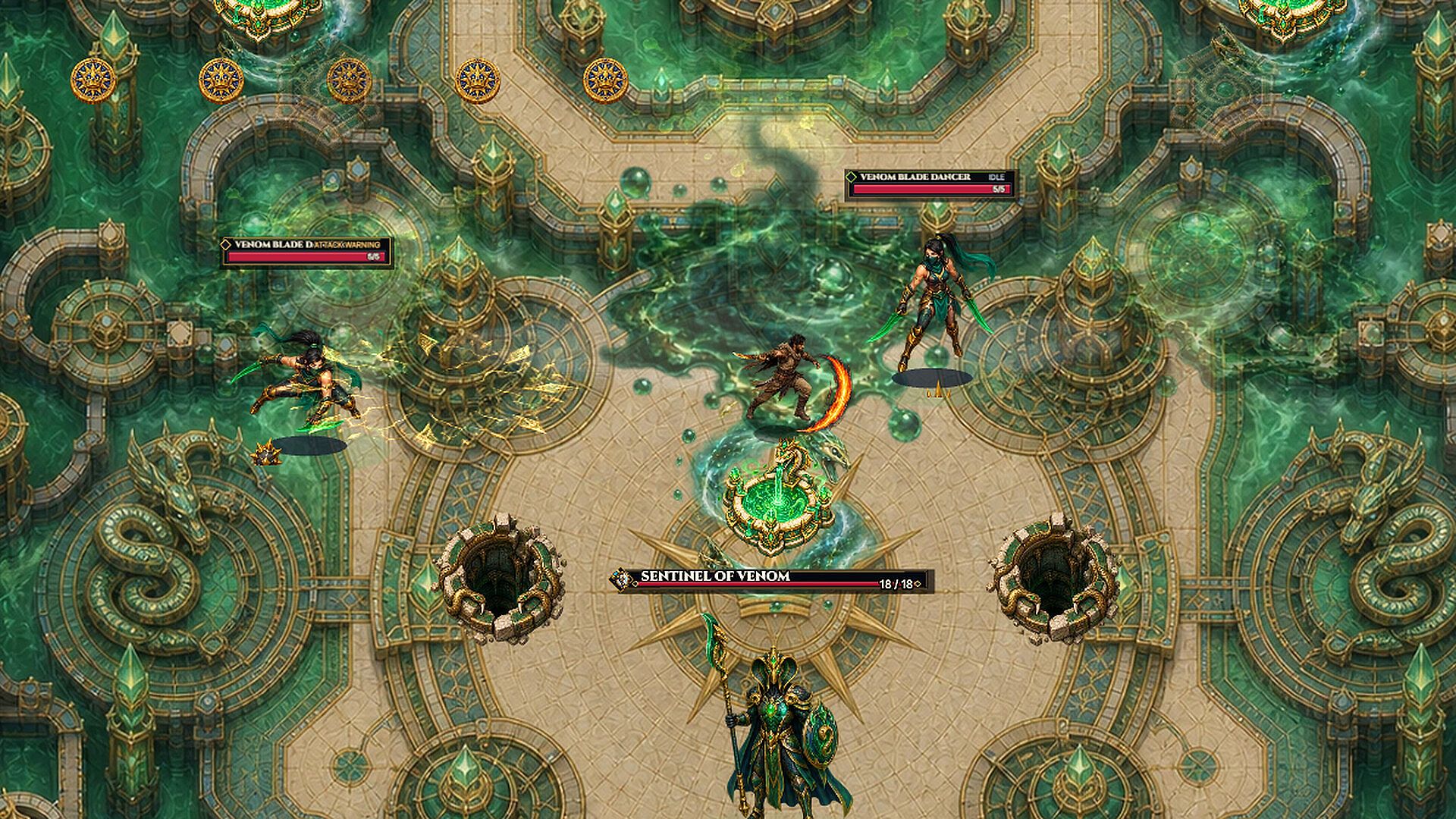
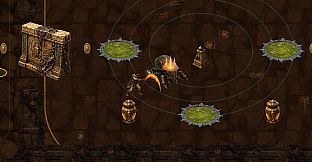
Combat requires reading enemy patterns rather than relying on raw speed. Encounters include scarab nests, cultist patrols, crystal sentries, and venomous serpents. Players time dashes to avoid attacks and exploit recovery windows for damage. Weapon progression begins with the Ember Dagger and advances to the Sun Saber, introducing charged strikes and expanded attack options as chapters unfold.
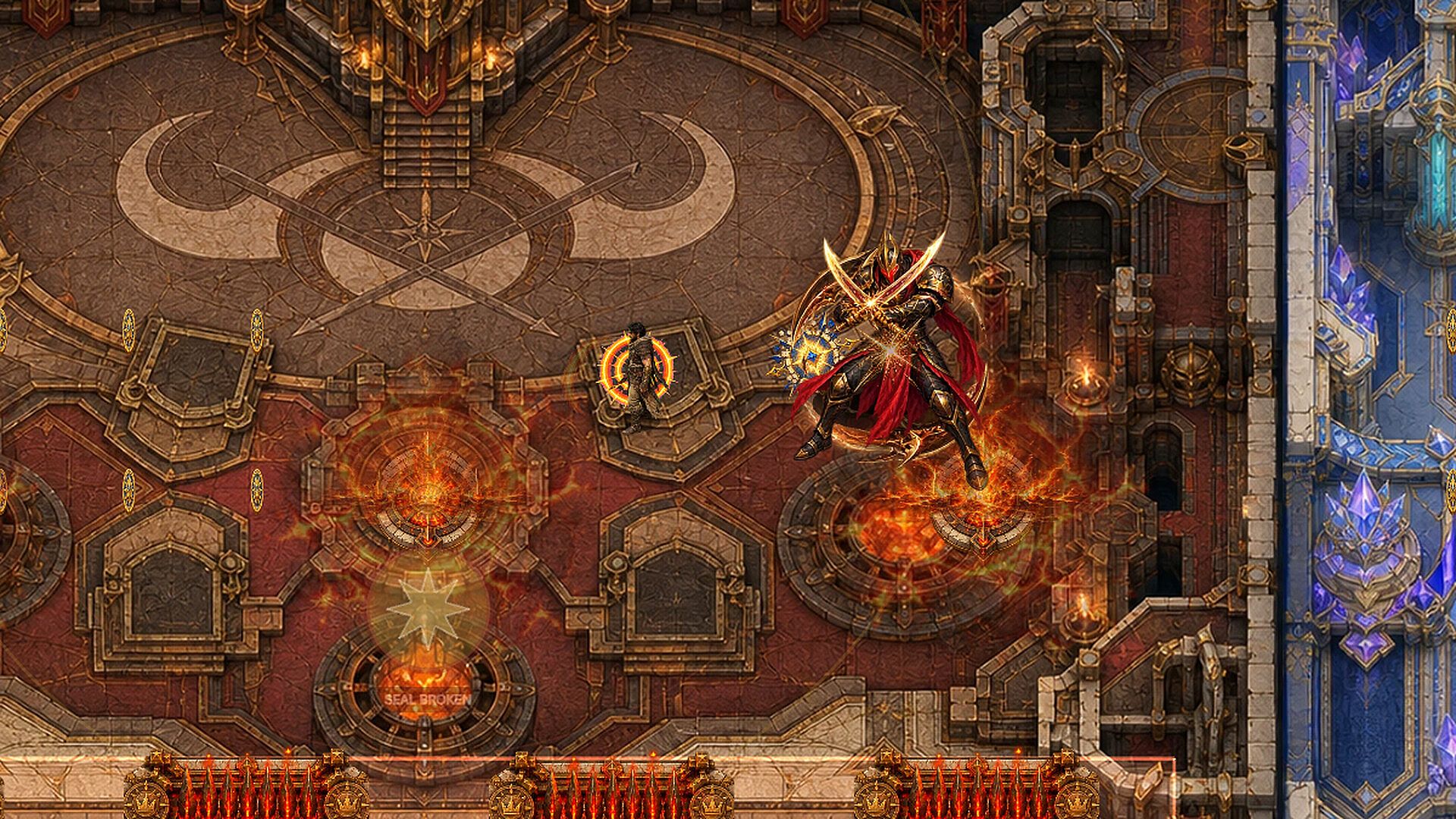
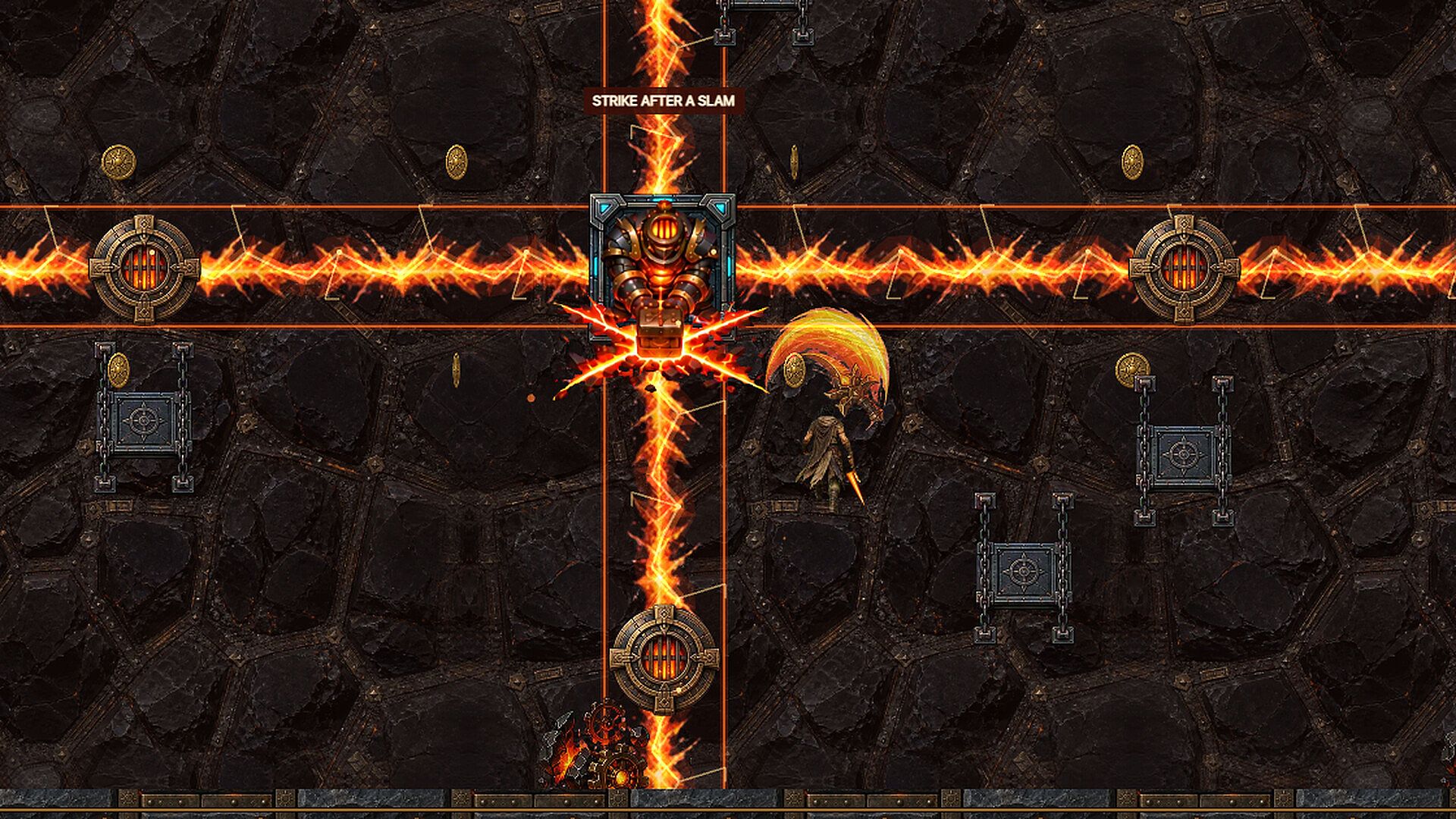
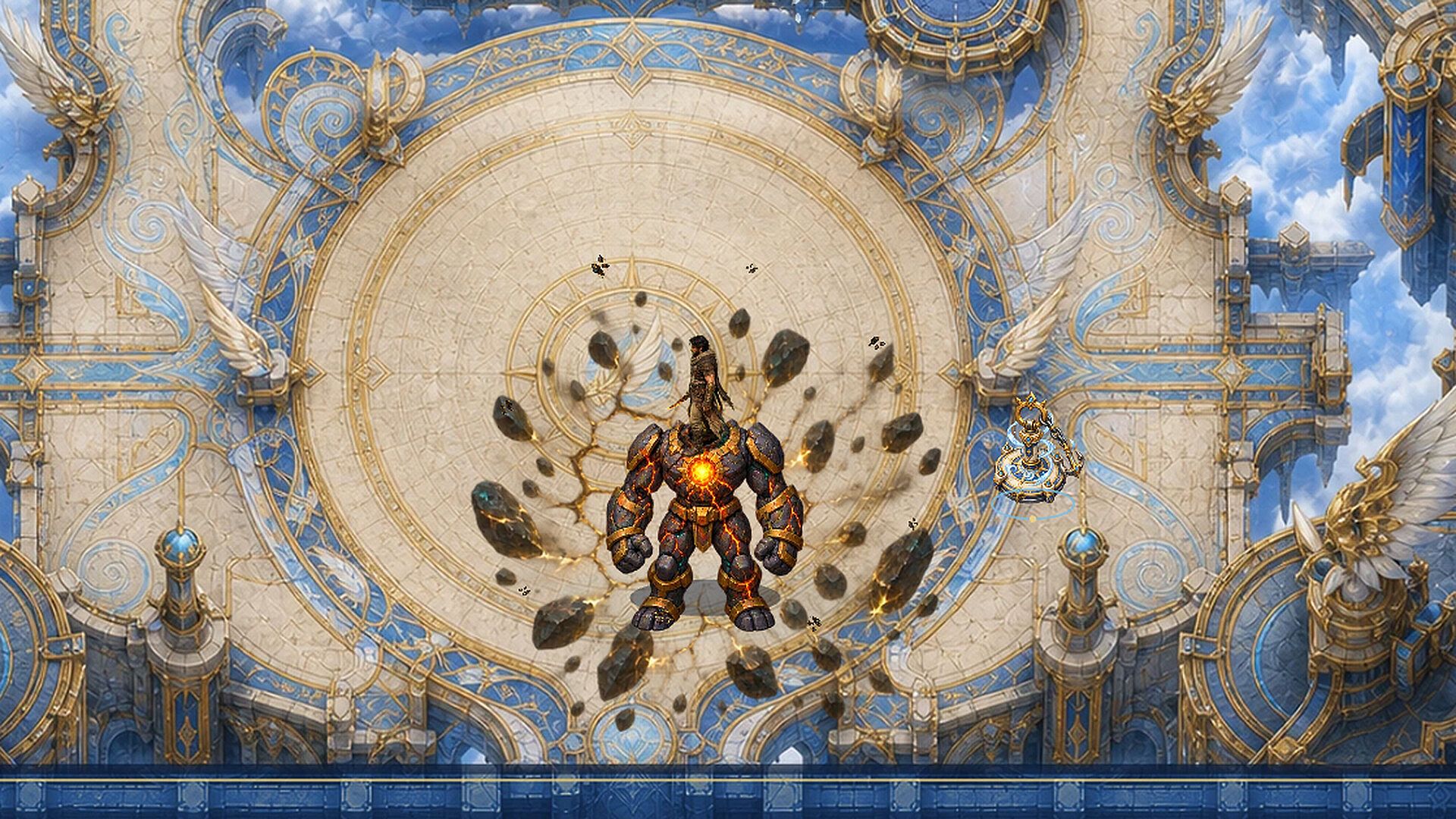
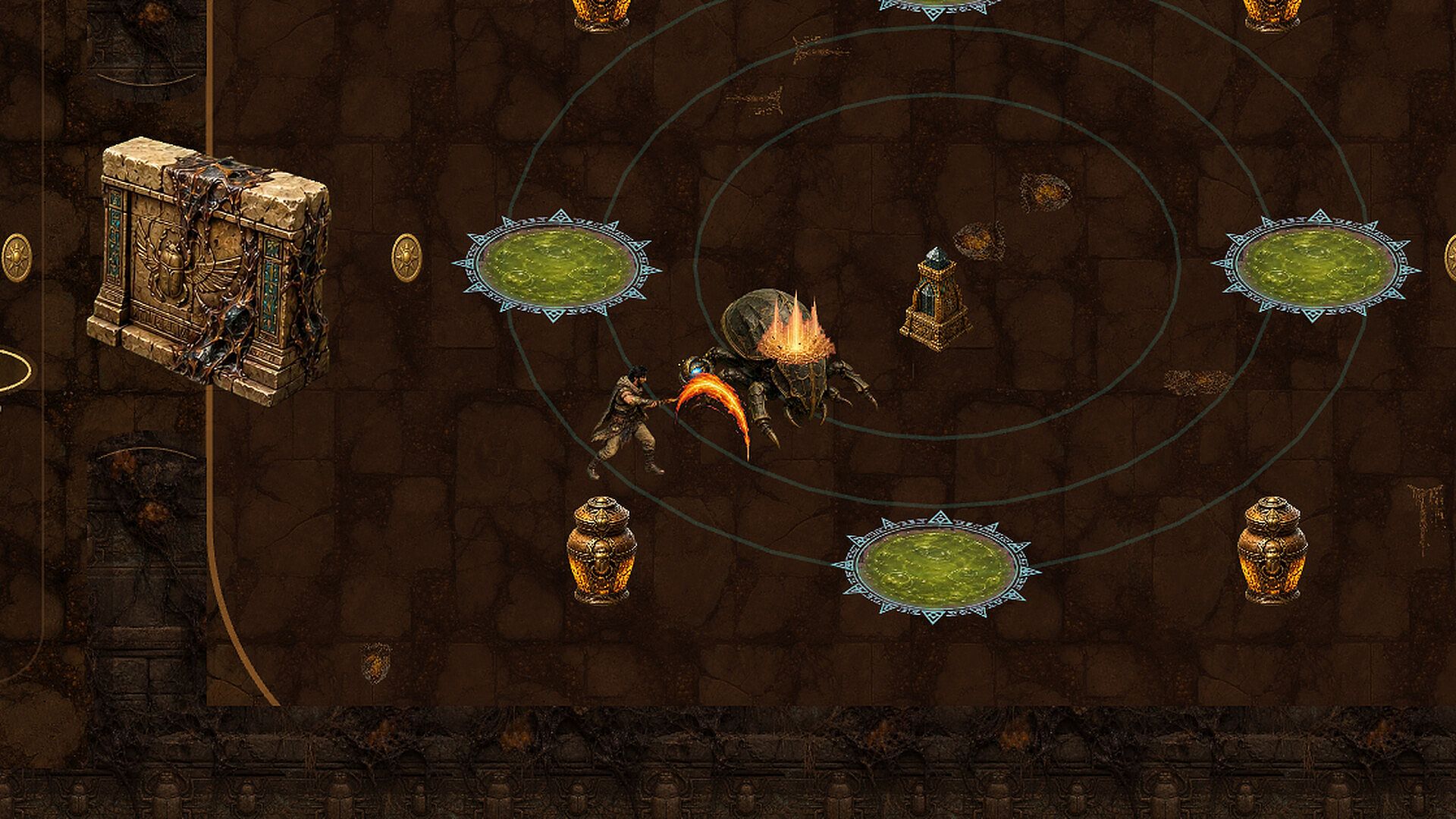
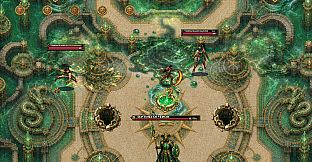
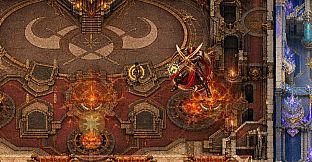
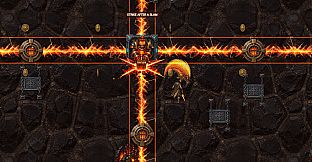
Boss fights demand more than basic aggression. Specific encounters feature the Scarab Broodmother and the Furnace Warden, where guardians require full use of both combat skills and puzzle tools to overcome multi-phase threats.
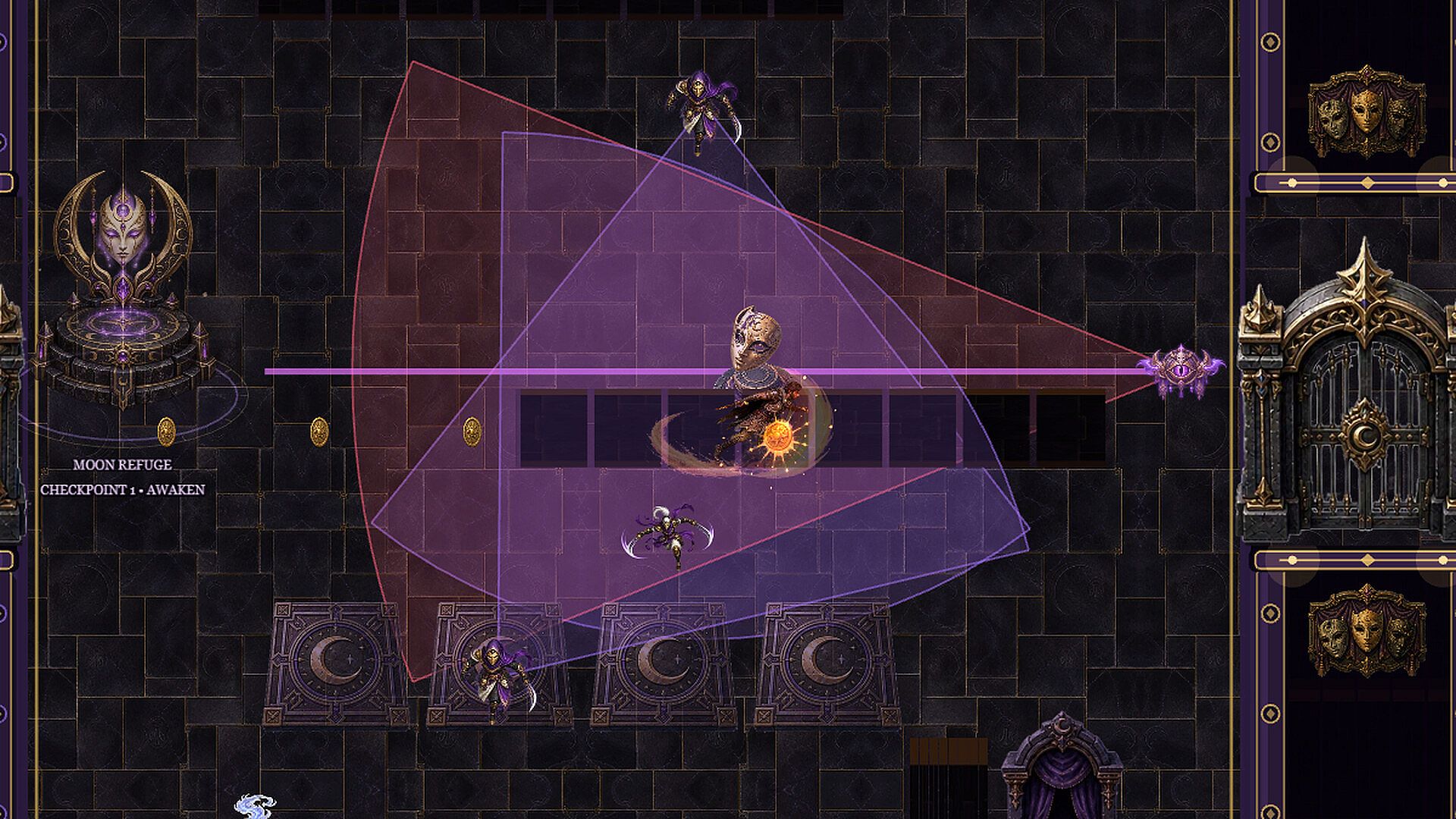
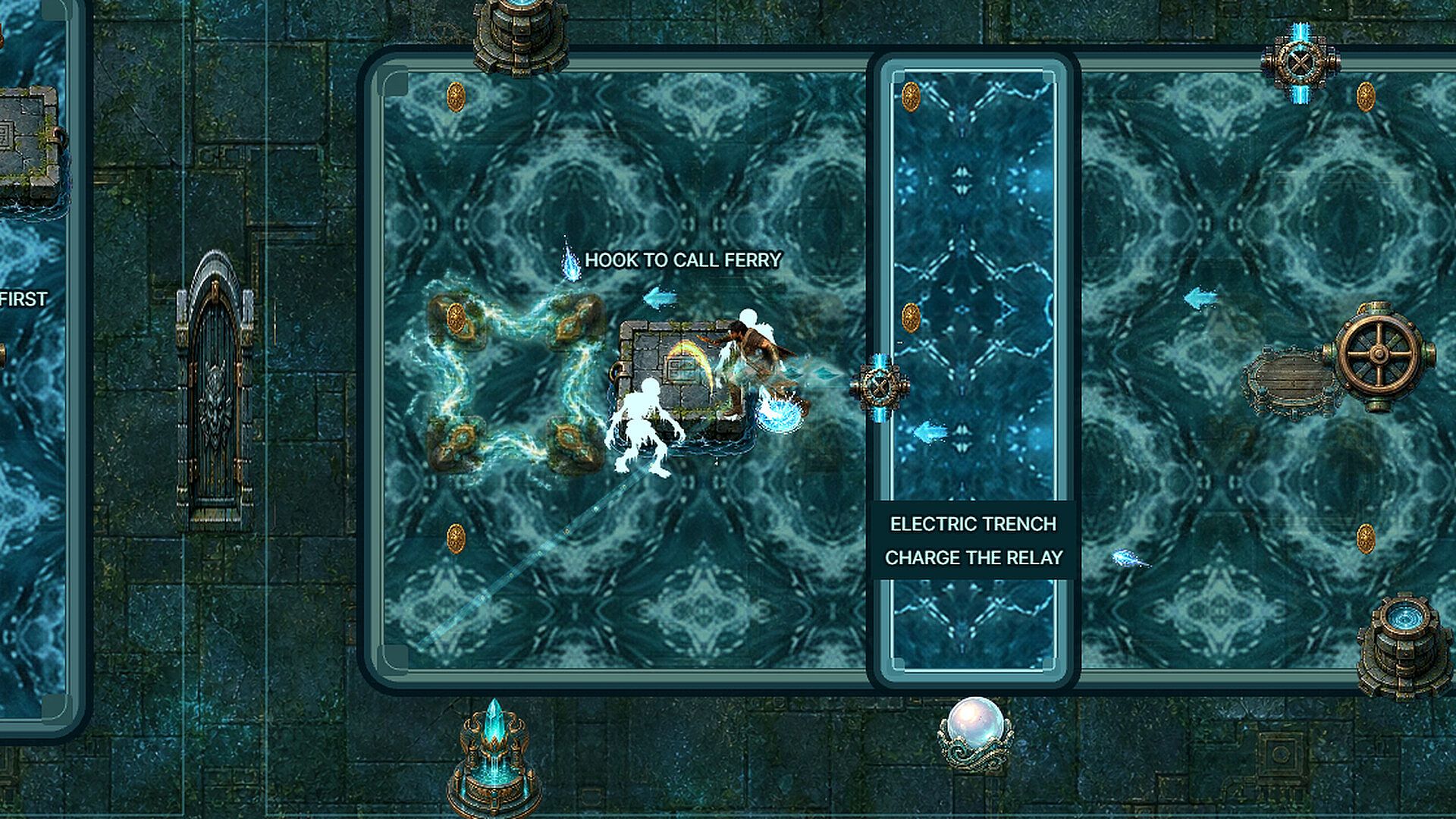
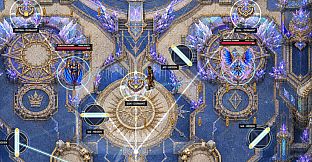
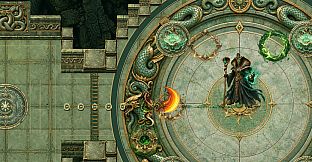
Environmental puzzles tie directly to each chapter's setting. Players rotate mirrors in silver halls, redirect beams in crystal chambers, operate valves and floating platforms in the Flooded Cistern, and navigate the Hall of Masks using smoke and precise movement. These elements create distinct problems per area rather than repeating the same mechanics.
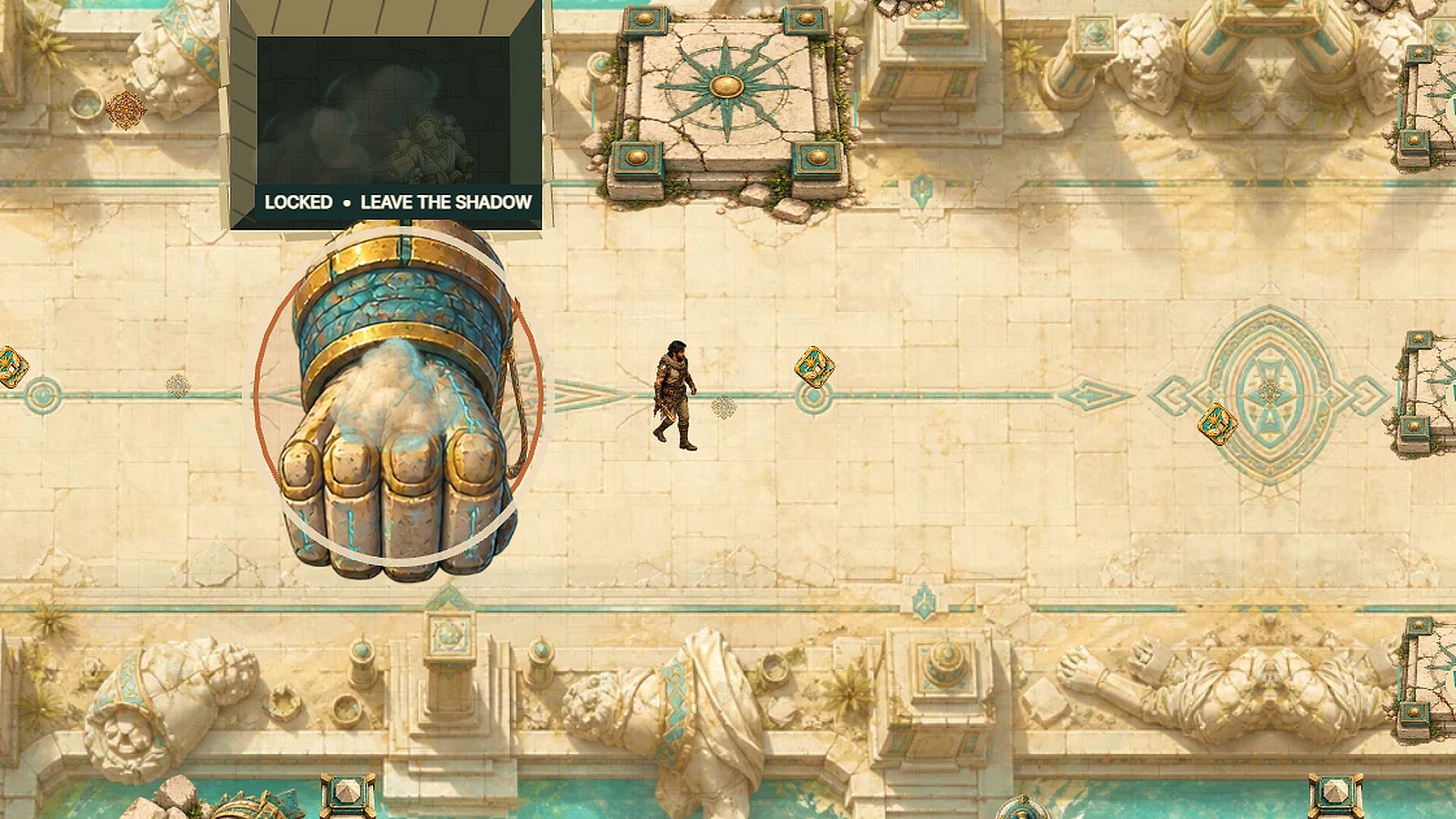
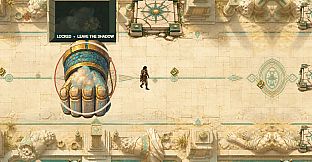
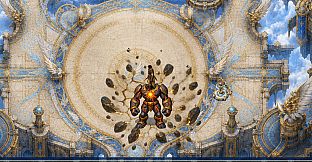
High-pressure escape sequences interrupt quieter sections. The temple itself becomes an active threat through collapsing bridges in the Statue District and pursuits by a massive guardian whose hands sweep through falling stone. These chases test quick use of the Hook Chain and other tools under time pressure.
Game Modes
The game operates entirely in a single-player story campaign divided into 15 chapters. Each chapter blends combat encounters, puzzle solving, exploration of optional paths, and timed escapes. Permanent equipment upgrades carry forward, supported by checkpoints that allow focused practice on difficult sections.
Level Select becomes available after chapters are unlocked, enabling players to revisit completed areas for missed relics or to refine strategies with upgraded tools. Optional relic searches encourage thorough exploration without altering the main progression. No separate multiplayer modes or competitive elements exist.
Exploration and Progression
Optional paths throughout the temple reward careful searching with relics that tie into the permanent progression system. Chapter rewards and equipment upgrades encourage replaying sections once new tools are acquired. The design supports a learning-focused journey where earlier rooms become solvable in new ways after later upgrades arrive.
Visual variety defines the environments, moving through detailed 2D ruins, flooded vaults, molten forges, and celestial halls. Each area presents unique visual and mechanical problems that reinforce the sense of advancing deeper into the structure.
Controls remain keyboard and mouse focused, with accessibility options including reduced-motion settings and beam labels to clarify light-based puzzles. These features keep the emphasis on observation and planning rather than reaction speed alone.
Is It Worth Playing?
Temple Breaker suits players who enjoy single-player action adventures that combine sword combat with environmental puzzles and occasional chase sequences. The structure rewards learning tool combinations and enemy patterns across a linear 15-chapter campaign with replay value through level select and optional content.
Because the game remains unreleased with no player reviews or post-launch updates available yet, any assessment rests on the described systems. Those drawn to methodical puzzle-solving paired with light combat progression will find the most alignment with its approach. Fans of top-down 2D titles that emphasize tool use over fast reflexes should monitor its release for a closer look at how the chapters integrate these elements.