

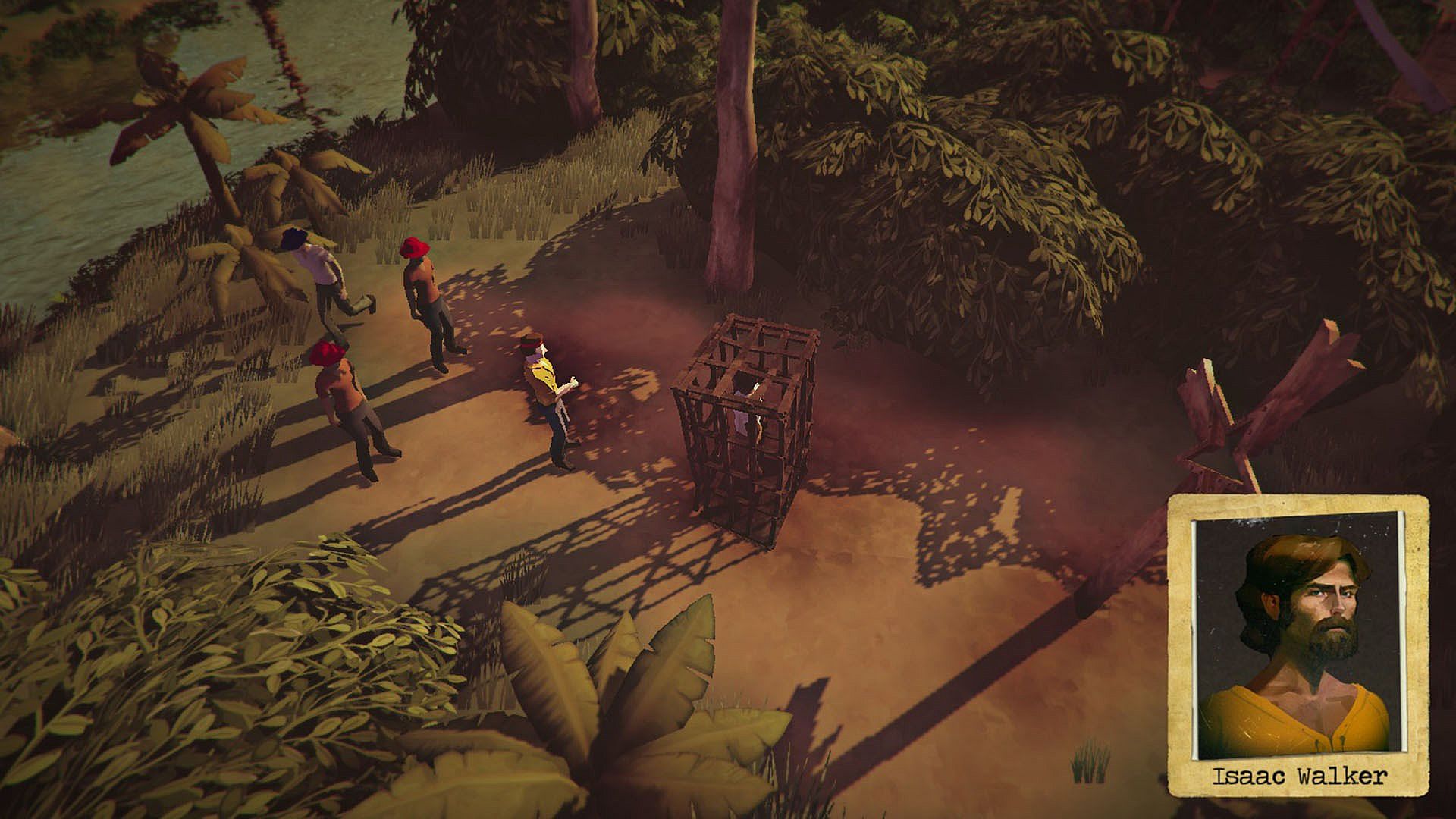
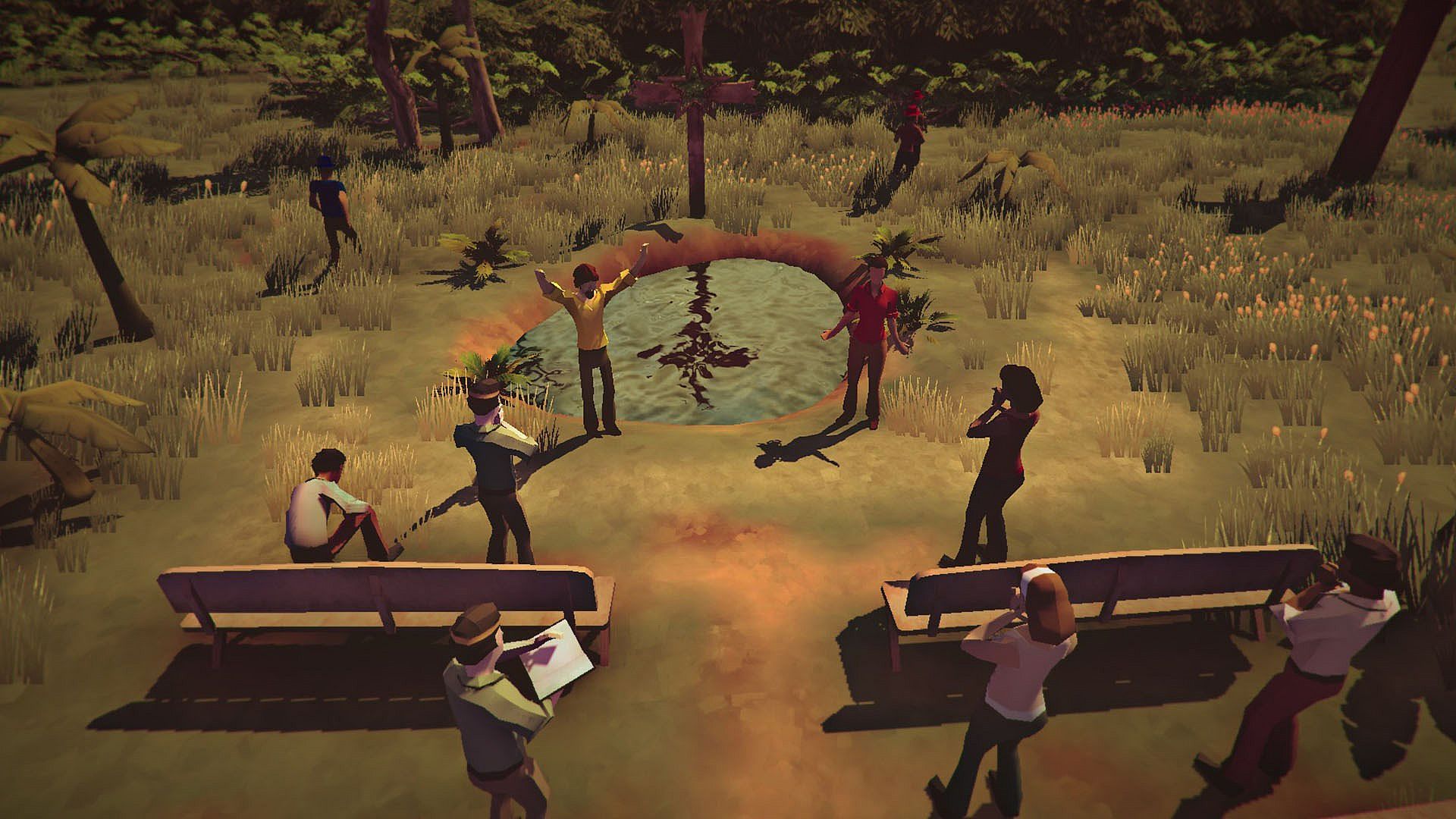
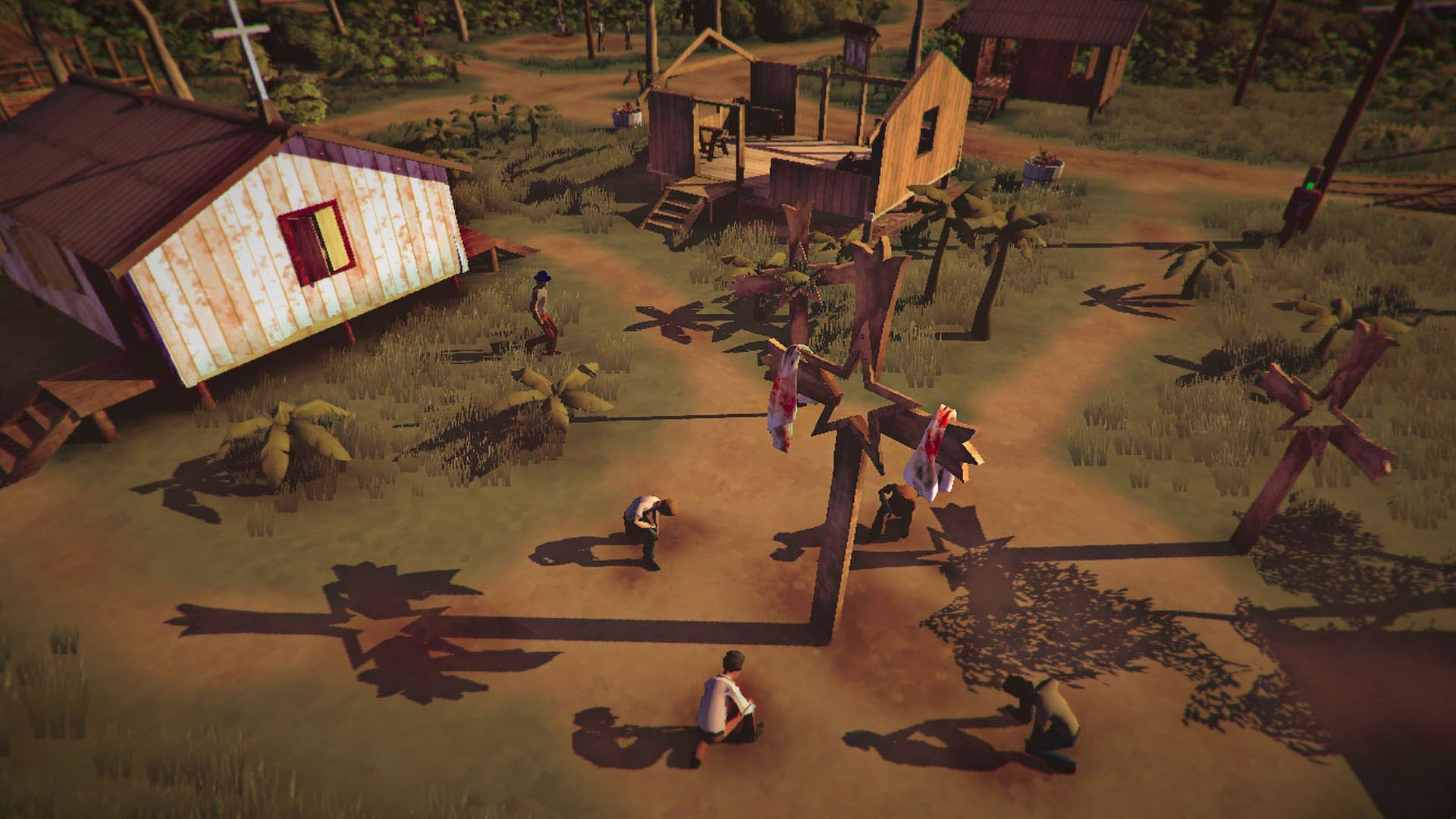
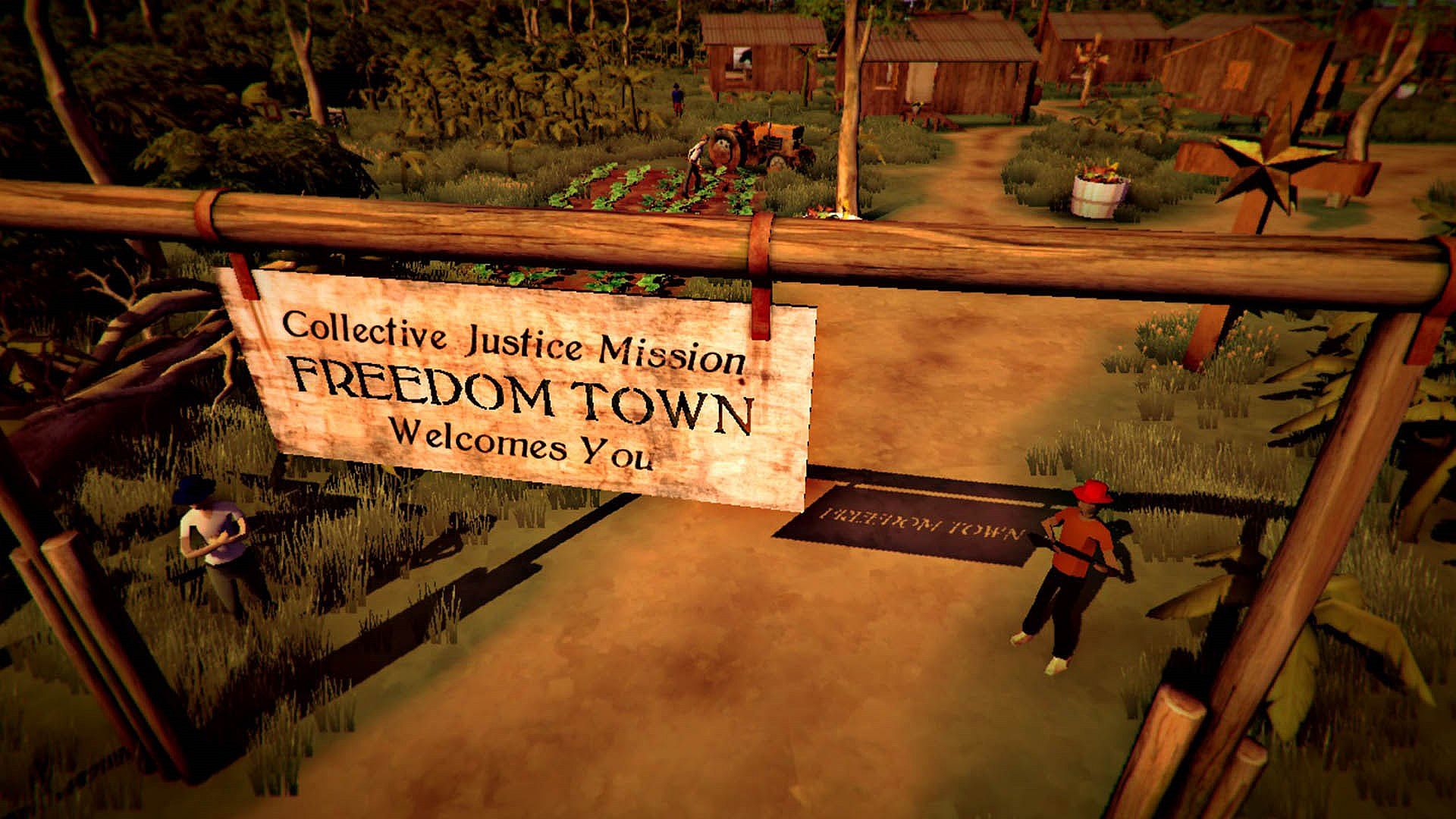
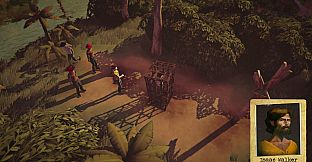
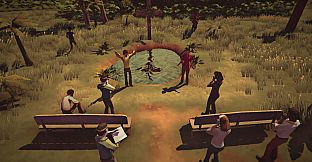
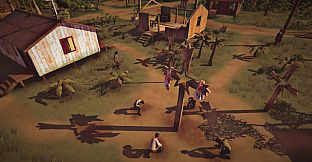
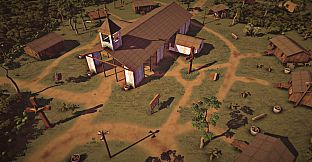
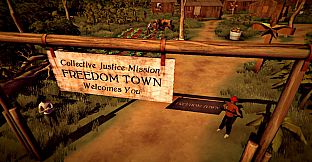
The Church in the Darkness is an action stealth game set in the late 1970s. Players take on the role of Vic, an ex-law enforcement officer who infiltrates a remote commune called Freedom Town in the South American jungle. The goal centers on locating a nephew named Alex while uncovering the activities of the cult leaders Isaac and Rebecca Walker and their followers in the Collective Justice Mission.
Gameplay
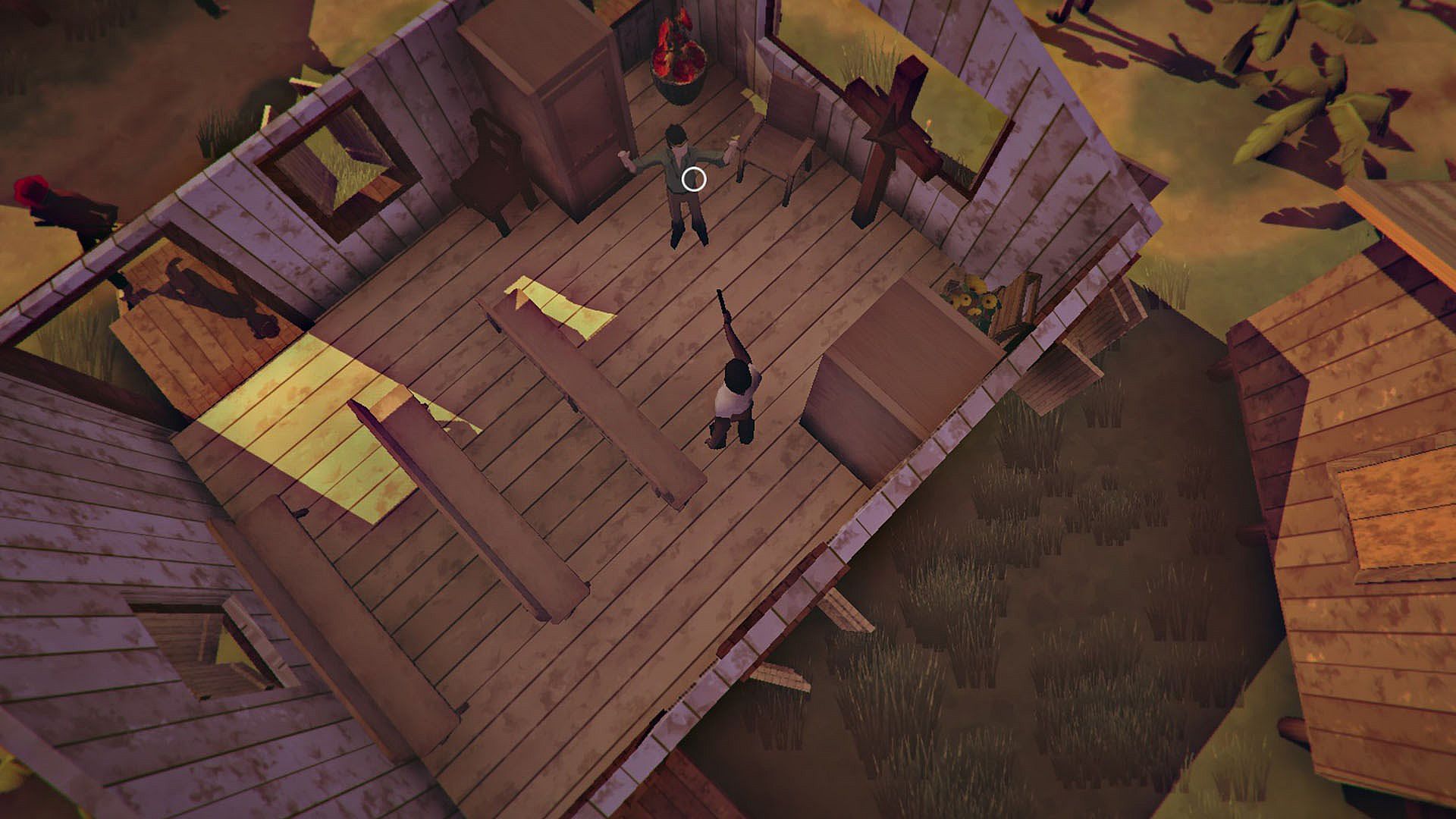
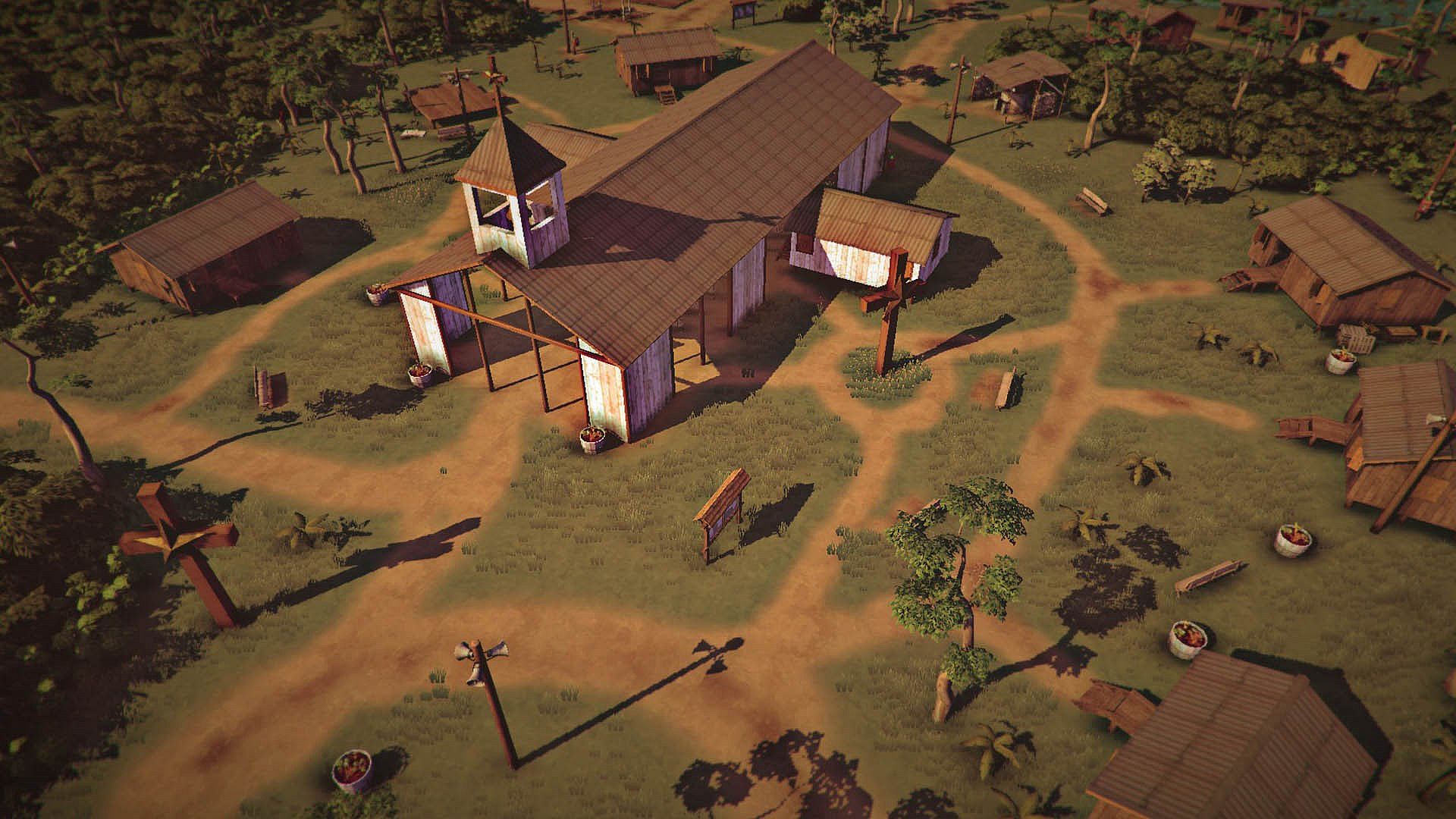
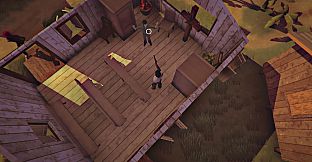
The core loop revolves around top-down infiltration of a large, procedurally arranged compound. Movement requires careful observation of guard and cultist patrol patterns, with vision cones visible on lower difficulty settings to help avoid detection. Players search cabins, desks, and other locations for documents, letters, and items that reveal details about the Walkers' beliefs and Alex's status.
Stealth forms the primary approach, supported by tools such as rocks for distractions, alarm bypass devices, chloroform for non-lethal takedowns, and occasional disguises. Bodies can be hidden to maintain cover. Violence remains an option through collected firearms, though combat feels imprecise and often leads to escalated alerts from the entire compound. Limited inventory slots force choices about carried equipment before each attempt begins.
Each run features changes to starting positions, objective locations, and the personalities of the cult leaders, which shift between peaceful and destructive outlooks. These variations influence how followers react to encounters and shape the available paths through the settlement. Evidence collection and decisions about handling individuals contribute to different outcomes upon locating Alex or exiting the area.
Game Modes
The experience operates entirely in single-player format with no multiplayer components. Four difficulty settings alter the challenge through adjustments to enemy damage, guard density, save restrictions, and visibility of vision cones. Interloper provides the most assistance with sight indicators and lower enemy impact, while Mole removes many HUD elements for a more demanding run.
Replay comes from the procedural narrative shifts rather than separate modes. Each completion unlocks additional starting equipment options for future attempts, expanding strategies across successive infiltrations. Sessions typically last between fifteen minutes and an hour depending on player approach and the current layout.
Narrative and Atmosphere
Story elements emerge through overheard sermons broadcast over the compound's public address system and scattered documents. The Walkers receive full voice performances that convey their shifting philosophies. Player actions determine how cult members respond during direct contact, ranging from cooperation to hostility or even invitations to join the group.
The setting emphasizes isolation and tension within the jungle commune, with buildings that reveal interiors when entered. Procedural elements ensure the leaders' stances and certain follower alignments differ on each playthrough, leading to varied interpretations of the same events.
Is It Worth Playing?
Reception has been mixed, with praise directed at the narrative depth, voice work, and replay value from changing scenarios and multiple endings. Critics and players note the strong atmosphere and thoughtful exploration of cult dynamics alongside criticism of imprecise aiming, basic enemy AI, and occasional technical hiccups.
The game suits players who enjoy methodical stealth infiltration and branching stories over fast-paced action. Its short individual runs encourage repeated attempts to explore different outcomes and unlocked gear. Availability on Xbox One and Xbox Series consoles makes it accessible for those interested in a focused, single-player experience centered on investigation and consequence.