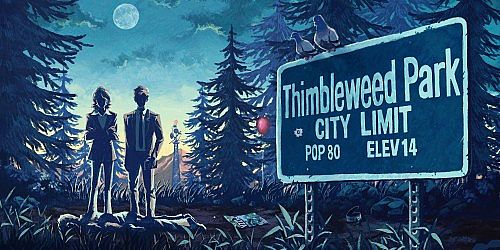


Thimbleweed Park is a point-and-click adventure game available on the Nintendo Switch. Set in 1987, it places players in a quirky small town where a dead body turns up under a bridge, yet that discovery quickly becomes the least of anyone's concerns amid the strange happenings all around. Developed as a spiritual successor to classic LucasArts titles, the game emphasizes deliberate puzzle-solving, character interactions, and exploration of an eccentric world filled with odd locations and memorable residents.
Gameplay
The core loop revolves around the traditional verb-based interface familiar from older graphic adventures. Players select from a list of commands such as open, close, pick up, use, give, talk to, push, pull, and look at, then combine them with objects, characters, or the environment to progress. Inventory management plays a central role, as items collected often require creative combinations or specific uses across different scenes.
Up to five distinct characters become available over the course of the story, and players can switch between them at will once unlocked. Each character brings unique perspectives and dialogue options, allowing puzzles to be approached from multiple angles. Some challenges require coordinating actions between characters in separate locations. Navigation occurs through a series of static screens representing the town and surrounding areas, with a map unlocking later to ease travel between key spots. The experience stays strictly single-player, focusing on thoughtful progression rather than action or time pressure.
On the Nintendo Switch, controls support both traditional button inputs with Joy-Cons or a Pro Controller and touchscreen interaction in handheld mode. The interface highlights interactive elements clearly, and players can adjust settings for cursor speed or object highlighting to suit their preferences.
Game Modes
Thimbleweed Park offers two difficulty settings chosen at the start of a new game. Casual mode streamlines many puzzles by reducing the number of required steps and omitting certain sub-tasks or items. This version prioritizes story and exploration for players new to the genre or those who prefer fewer roadblocks.
Hard mode restores the full scope of the original design. It includes additional puzzles, extra areas, more dialogue branches, and scenarios absent from the easier setting. Several tasks demand multi-step solutions that test observation and logical connections between characters and objects. The choice cannot be changed mid-playthrough, so selecting Hard delivers the most complete version of the adventure for experienced players.
Story and Setting
The narrative unfolds across chapters in the rundown town of Thimbleweed Park, population around eighty. Key locations include a haunted hotel, an abandoned circus, a burnt-out pillow factory, and various everyday spots that reveal layers of oddity. Five playable characters each arrive with their own motivations, and their paths intersect in unexpected ways. The tone blends neo-noir mystery with satirical humor, poking at small-town life, conspiracy tropes, and classic adventure game conventions through frequent witty dialogue.
Progression ties directly to completing chapter-specific goals, often involving conversations that uncover clues and inventory-based solutions. The story maintains a deliberate pace, encouraging players to revisit locations and experiment with different character combinations as more of the town opens up.
Is It Worth Playing?
Thimbleweed Park delivers a self-contained single-player experience built around clever puzzles and distinctive characters. Reception has been generally favorable, with praise centered on the humor, voice acting, pixel-art presentation, and the way it captures the spirit of earlier point-and-click adventures while adding modern conveniences like the map system. The two difficulty modes make it accessible to a range of players, though Hard mode provides the richer puzzle content that defines the genre for many enthusiasts.
It suits those who enjoy methodical exploration, reading dialogue, and solving interconnected challenges without combat or timers. The Nintendo Switch version preserves the full content and adds portable play options through its controls and touchscreen support. Players seeking a complete, story-driven adventure with replay value through the harder mode will find it a strong fit, especially if they appreciate the quirky tone and character-driven storytelling that runs throughout.