




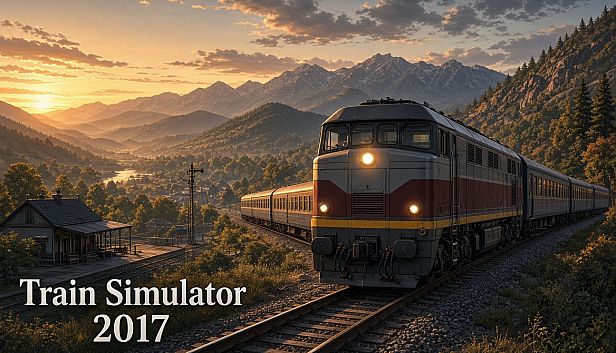






Train Simulator 2017 is a train simulation game developed for the PC platform. Players take control of locomotives and operate them across detailed railway routes that replicate real-world lines, with an emphasis on accurate physics, signaling, and timetable adherence.
Gameplay
The core experience centers on realistic train operation. Users manage speed, braking, and throttle inputs to navigate tracks while accounting for gradients, curves, and weather conditions. Different locomotives feature unique handling characteristics, such as diesel, electric, and steam models, each requiring specific procedures for startup, coupling, and route navigation. Routes span multiple countries, including segments in Germany where players run services like the Vogelfluglinie line between Hamburg and Lübeck using the DB BR 218 locomotive. Attention to detail extends to cab controls, external views, and passenger or freight loading requirements that influence performance and scheduling.
Scenarios present structured tasks with objectives tied to arrival times and operational rules. Free driving options allow exploration of routes without strict goals, supporting repeated practice on the same lines. The simulation models track interactions, including points switching and signal compliance, which directly affect journey outcomes.
Game Modes
Content delivery occurs primarily through route-based scenarios that replicate scheduled services or special operations. These scenarios vary in length and complexity, covering passenger runs, freight hauls, and maintenance tasks. A quick drive function provides immediate access to any available route and locomotive combination for unstructured sessions. Additional content expands the selection of routes and rolling stock through separate additions, though the base package focuses on core driving mechanics across included lines.
Routes and Locomotives
The game features a selection of licensed routes drawn from European and other networks, with new additions introduced in the 2017 edition. Locomotives receive accurate modeling of performance data, sounds, and visual details. Players switch between external chase views, cab interiors, and trackside perspectives to monitor progress. Route length and variety encourage repeated playthroughs to master timing and handling under different conditions.
Is It Worth Playing?
Train Simulator 2017 suits individuals interested in methodical, realistic railway operations rather than fast-paced action. The simulation rewards patience and attention to procedural accuracy, making it suitable for those who enjoy studying timetables or refining driving techniques over multiple runs. Later updates to the broader series have maintained support for the core engine, allowing continued access to the 2017 content alongside newer routes. Reception among simulation enthusiasts highlights the depth of the driving model, though hardware demands increase on more detailed routes. Those seeking a focused train driving experience will find consistent value in the available scenarios and route options.


