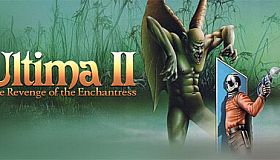




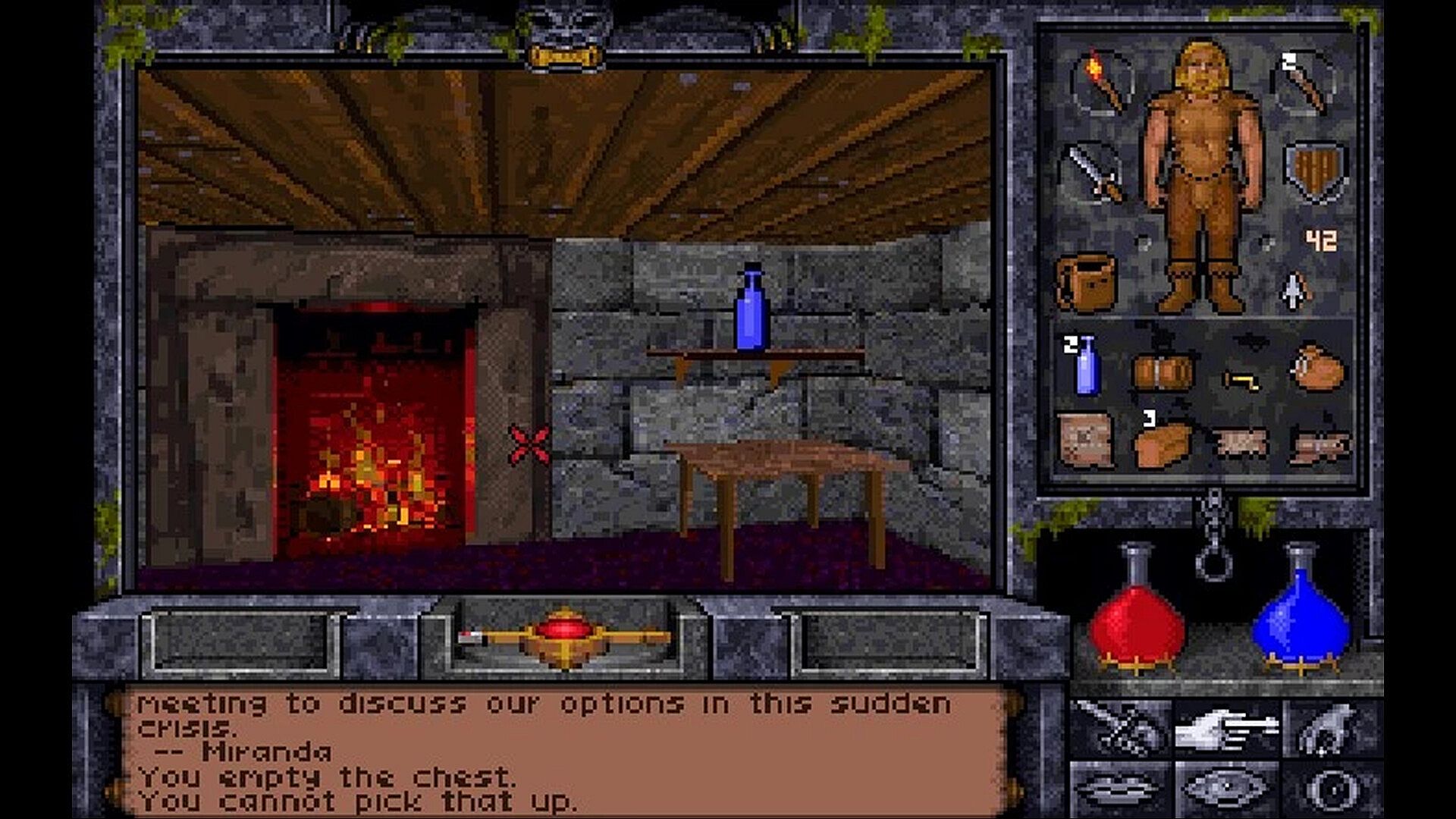

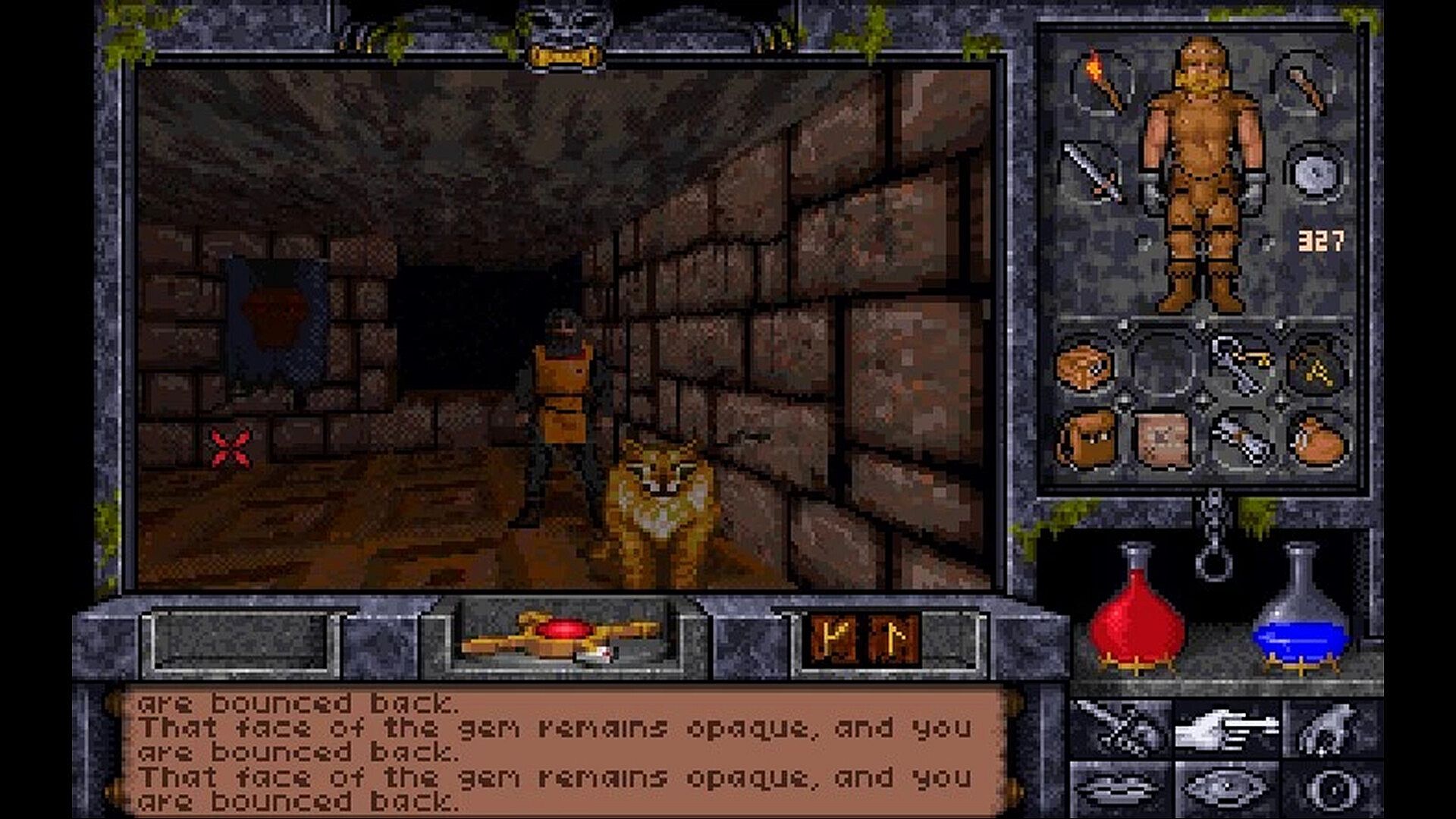
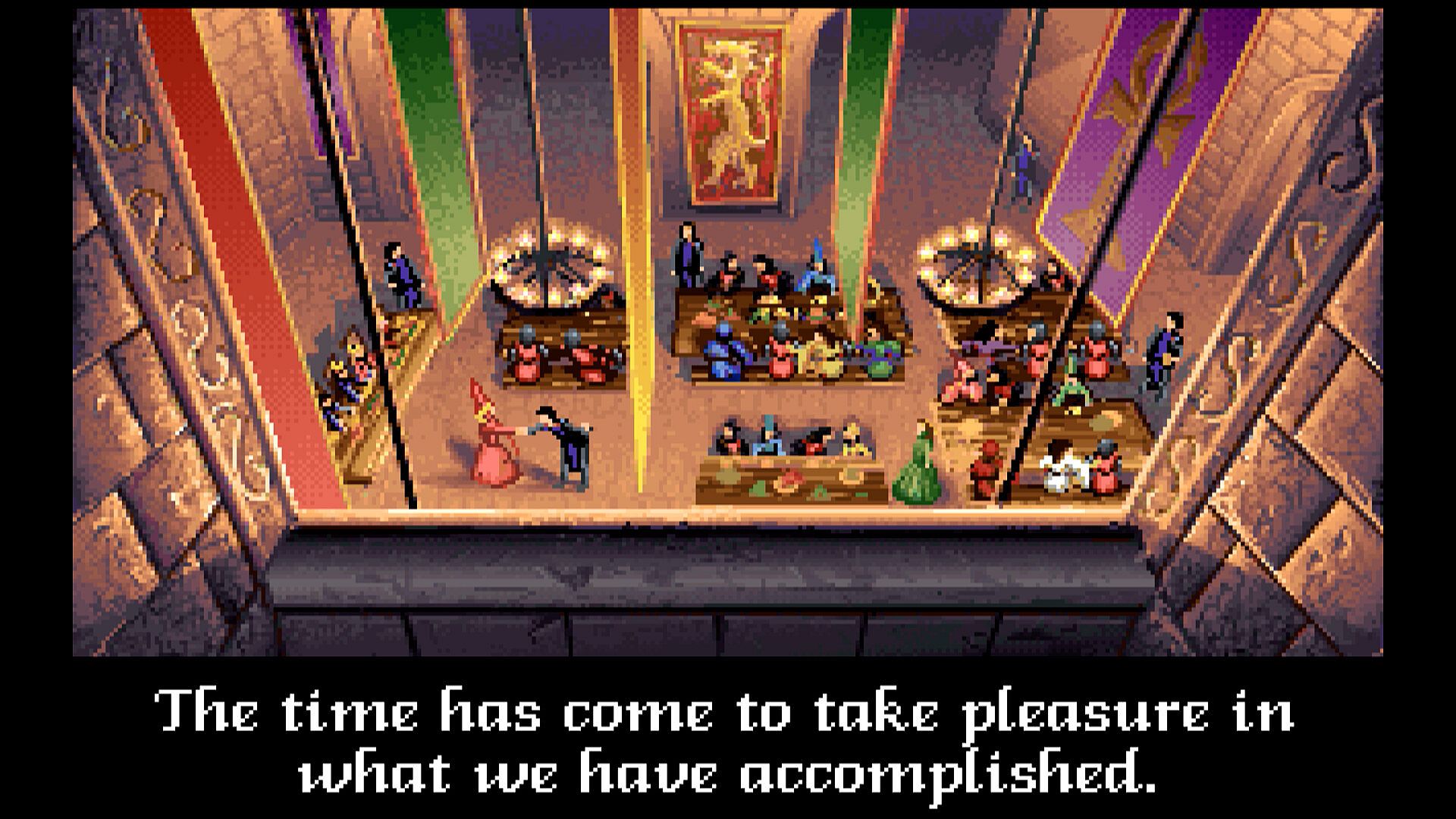

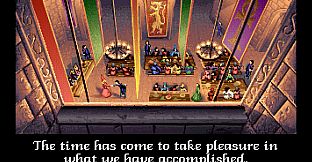

Ultima Underworld II is a first-person action role-playing game that places players in the role of the Avatar trapped inside Lord British's castle. The Guardian encases the structure in a massive blackrock gem, forcing the Avatar to seek escape routes through underground passages and portals to other dimensions under the same threat.
Gameplay
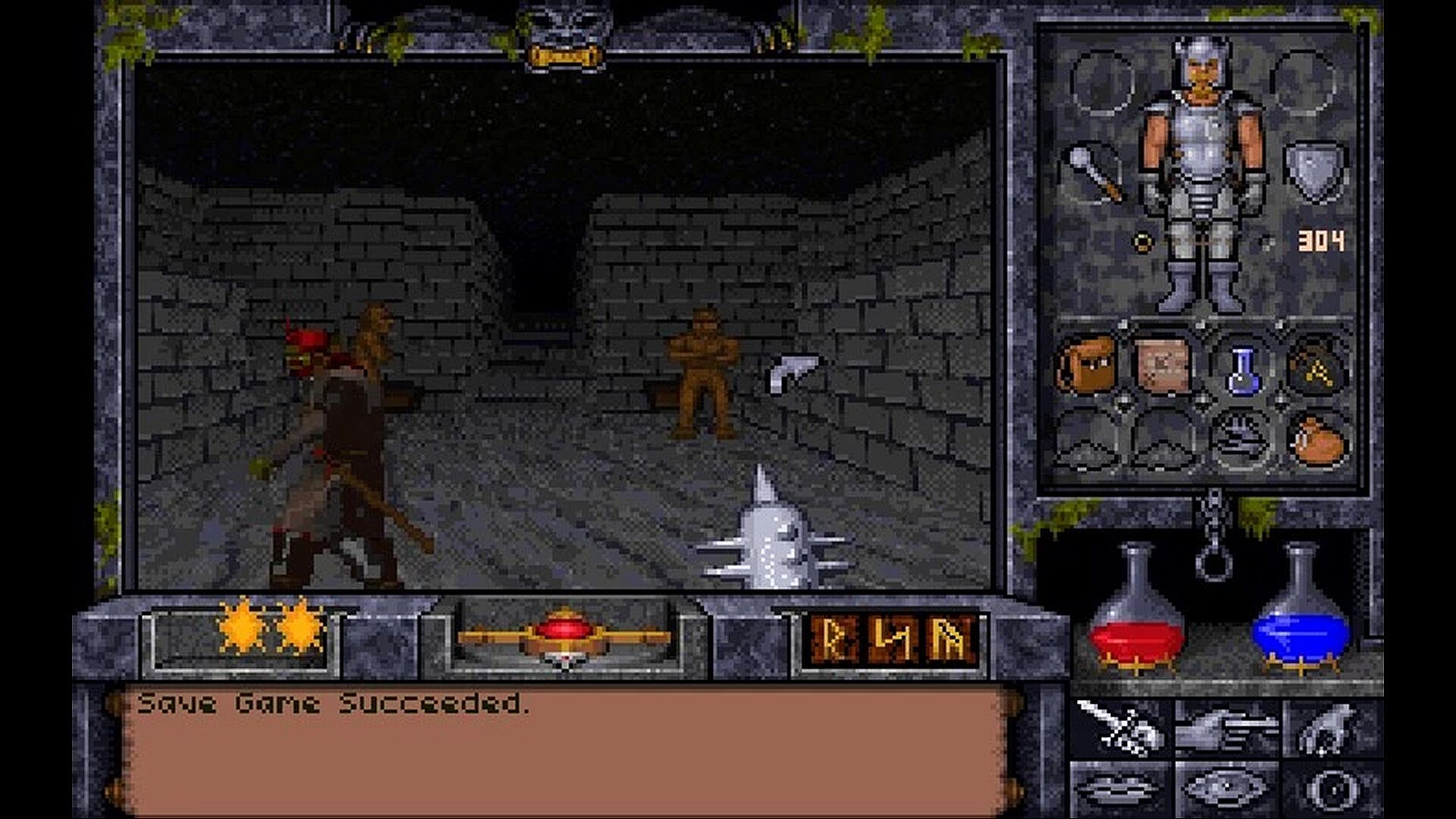
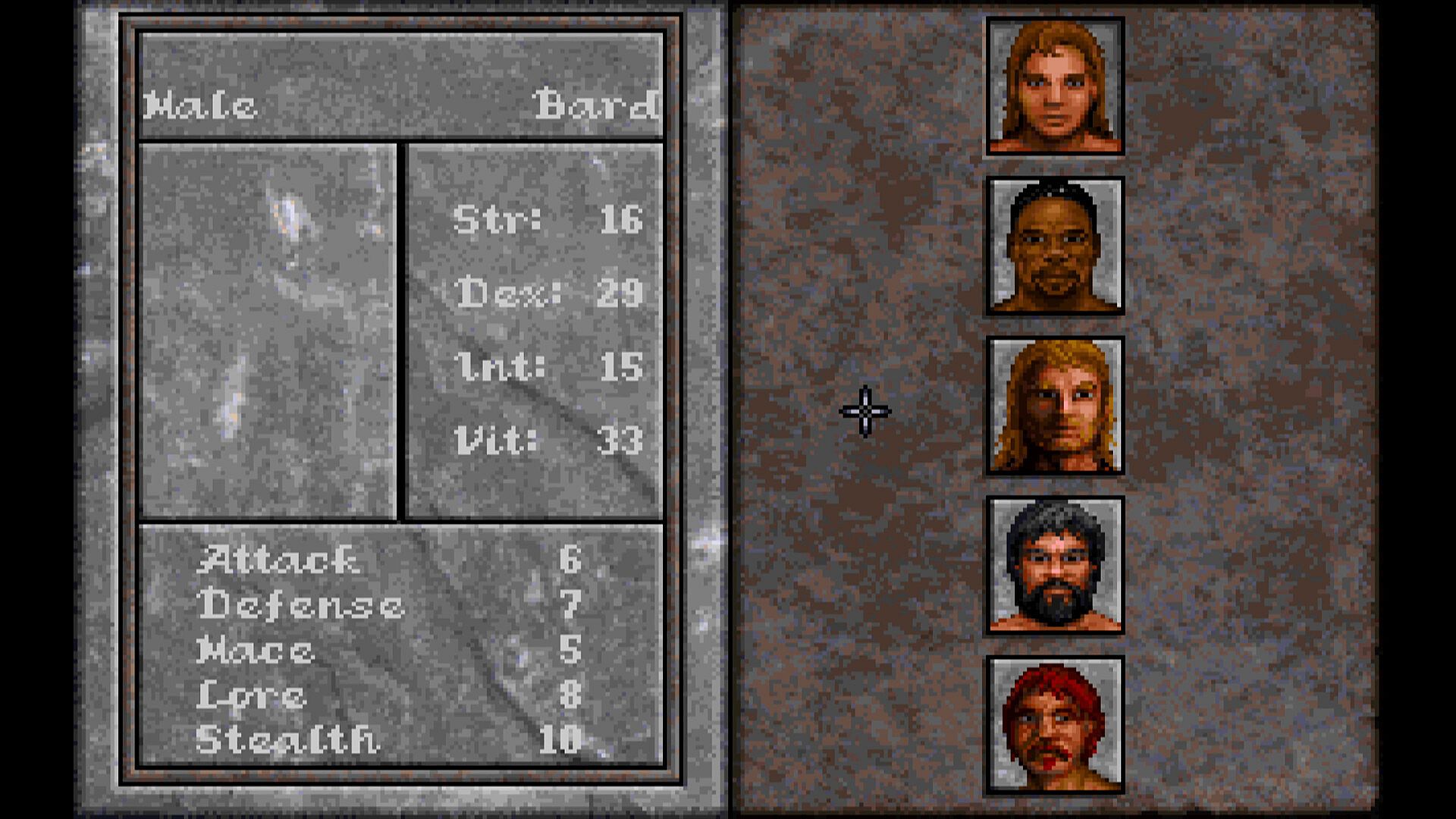
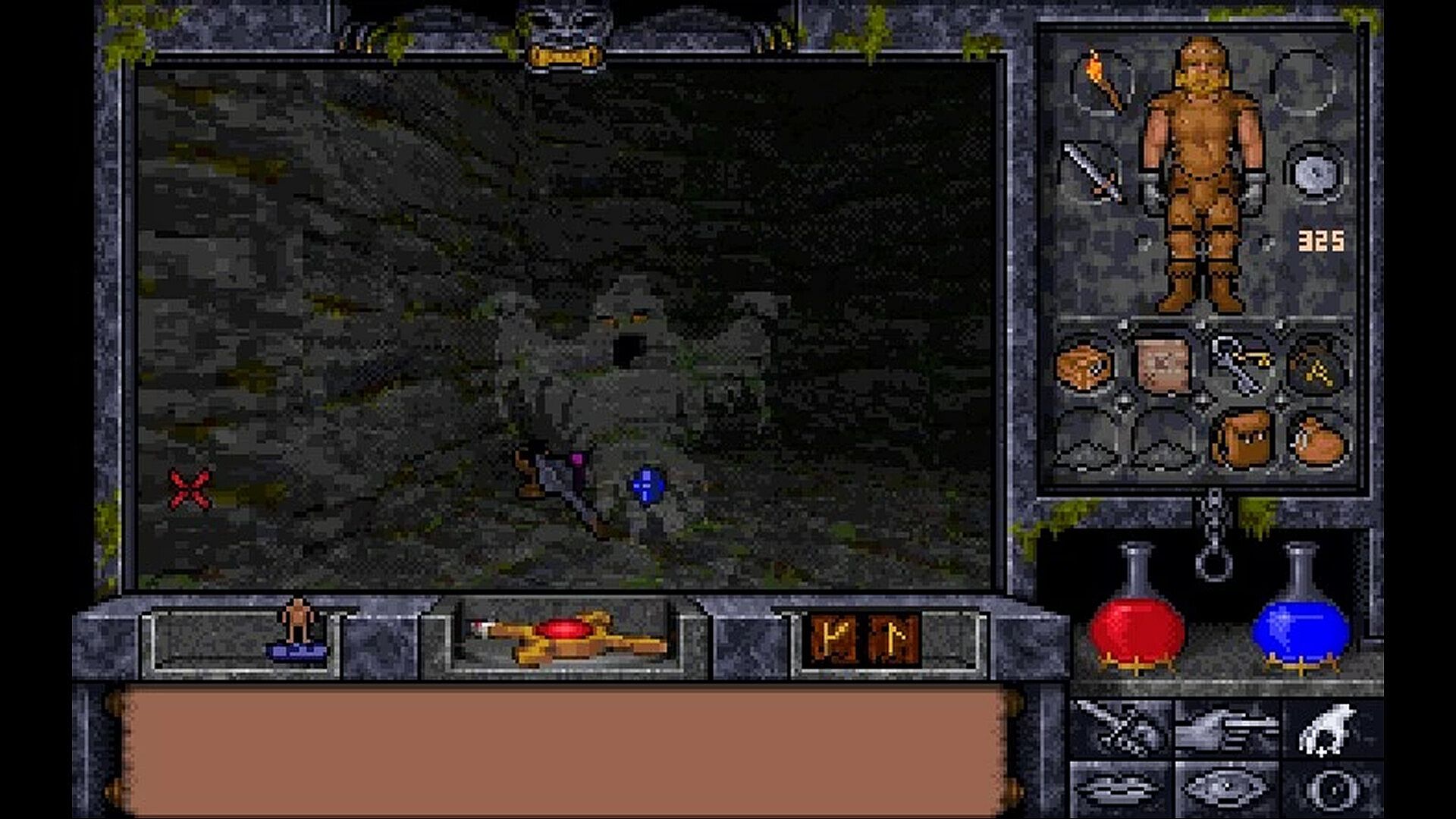
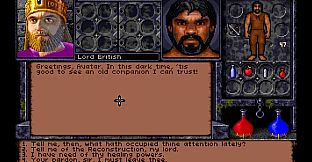
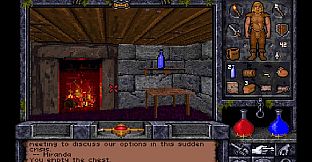
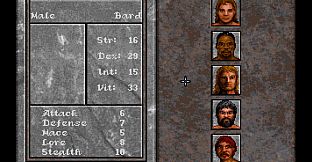
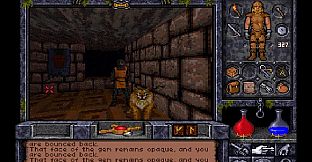
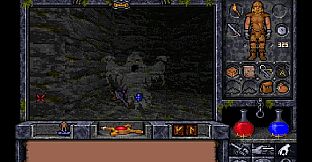
Players navigate a three-dimensional environment using mouse and keyboard controls, with a freely movable cursor for interacting with objects, examining items, and conversing with non-player characters. Combat occurs in real time through direct clicks on the screen, where holding the attack button and selecting different screen areas produces thrusts, slashes, or other strikes. Skills improve through experience points that grant training opportunities with various NPCs rather than automatic shrine-based progression.
Magic relies on collecting runestones to combine into spells, with new options including Deadly Seeker for corner attacks, Shockwave for knocking back foes, and Poison Weapon for creating hazardous artifacts. The larger view window supports smoother creature animations and higher-resolution graphics compared to the prior entry. Terrain challenges include slippery ice surfaces and strong currents that affect movement and positioning during exploration.
Inventory management, puzzle solving, and dynamic NPC reactions form core loops, where choices influence character attitudes and available paths. Traps feature animated multi-level obstacles, moving terrain sections, and pressure-sensitive triggers that demand careful observation and timing.
Game Modes
The game operates entirely in single-player format with no separate competitive or cooperative options. The central experience revolves around progressing through interconnected dimensions accessed via blackrock portals, each presenting distinct environments and objectives tied to weakening the Guardian's influence.
Progression follows a unified campaign structure focused on locating small blackrock gems from each world, treating them with assistance from castle inhabitants, and integrating them to dismantle the enclosing barrier. Side activities such as freeing prisoners, gathering resources, and completing character-specific requests integrate into the main path without branching into distinct modes.
Worlds and Exploration
Eight distinct worlds await discovery, ranging from a goblin-overrun prison tower and a floating keep in a twisted parallel realm to frozen caverns, an alien domain of mechanical entities, an academy setting, brutal fighting pits, an ancient tomb, and the ethereal void. Each location offers unique terrain hazards, inhabitants, and power centers tied to the Guardian that must be addressed to advance the escape plan.
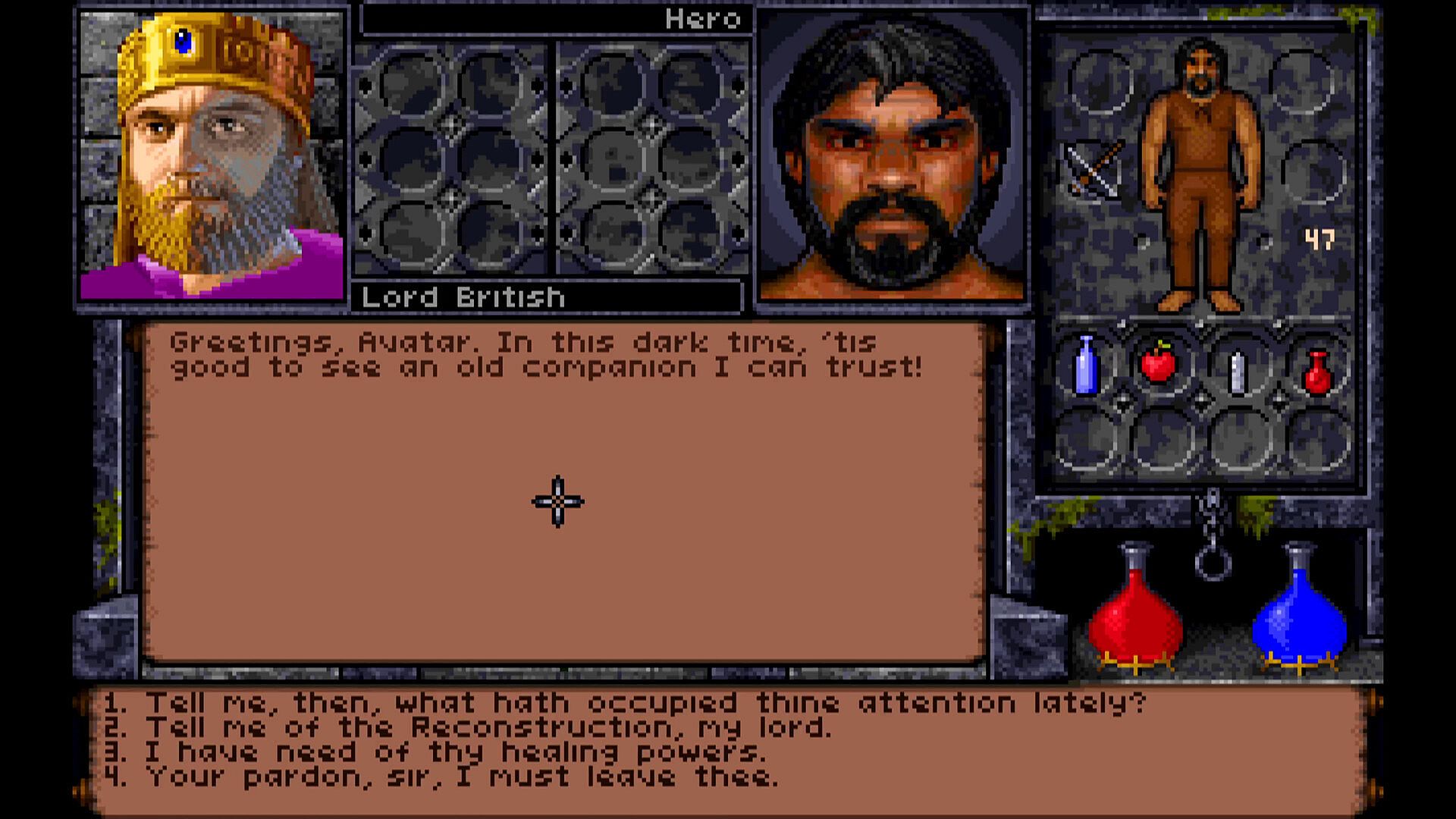
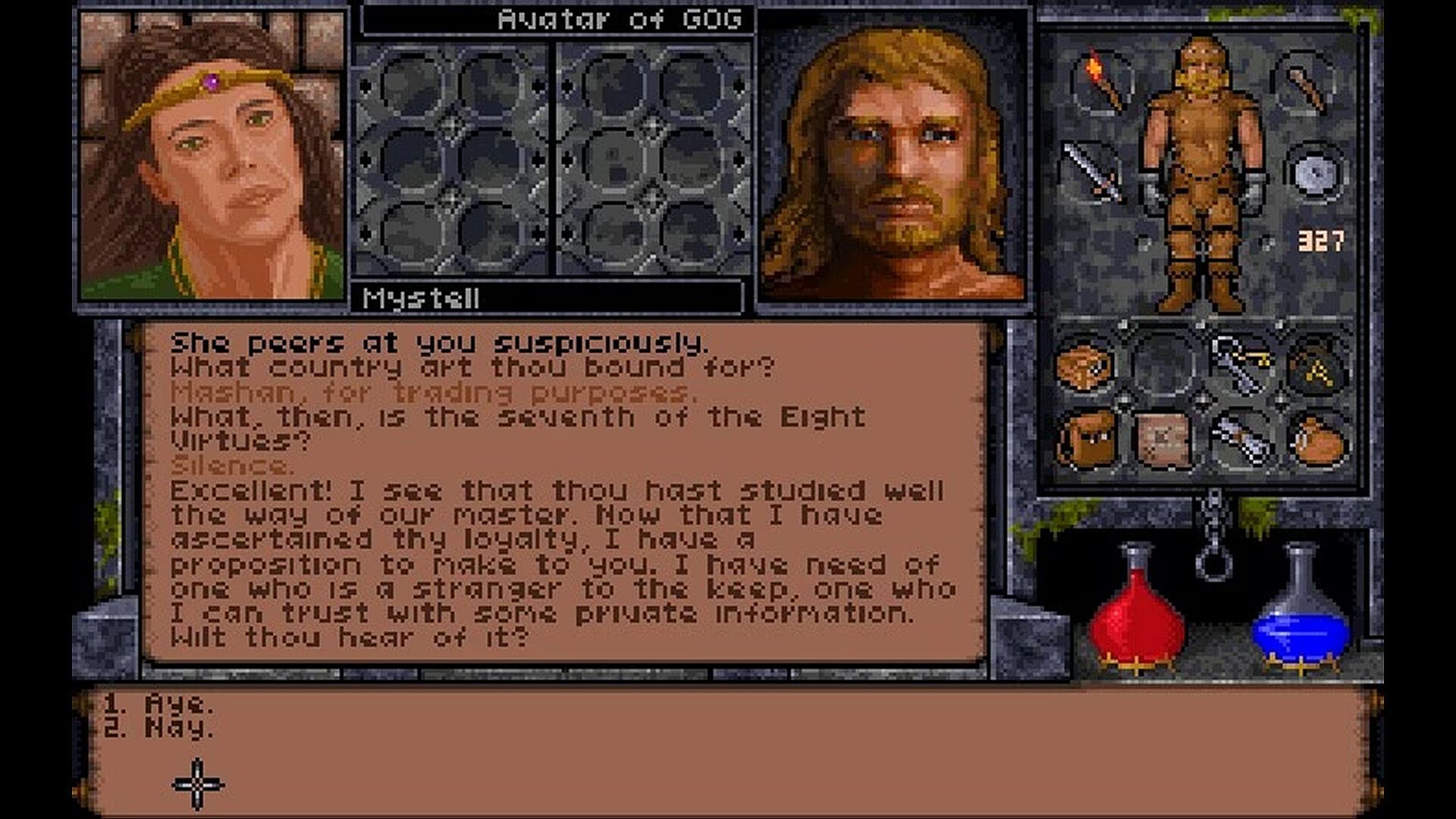
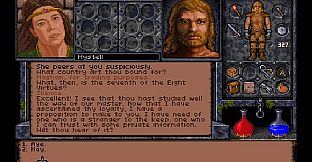
Exploration emphasizes simulation elements where systems like physics, conversation, and item use interact to create multiple solutions for obstacles. Close-up character portraits display during dialogues, reflecting shifts in demeanor based on prior decisions and actions taken across visits.
Is It Worth Playing?
Ultima Underworld II delivers a dense single-player experience centered on dimensional travel, skill training, rune magic, and real-time combat within simulated environments. Recent digital availability on PC platforms brings the 1993 title to modern systems through compatibility layers, preserving the original dynamic musical score and digitized speech elements.
Historical player feedback highlights strong immersion through non-linear problem solving and detailed world interactions, though the age of the engine requires adjustment to its control scheme and visual style. Those seeking classic first-person role-playing with emphasis on exploration across varied realms and meaningful choices in a contained narrative will find the structure rewarding, particularly when resources like food and time pressure add tension to the castle imprisonment scenario.