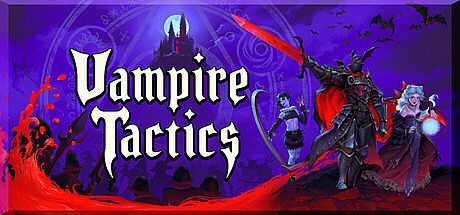


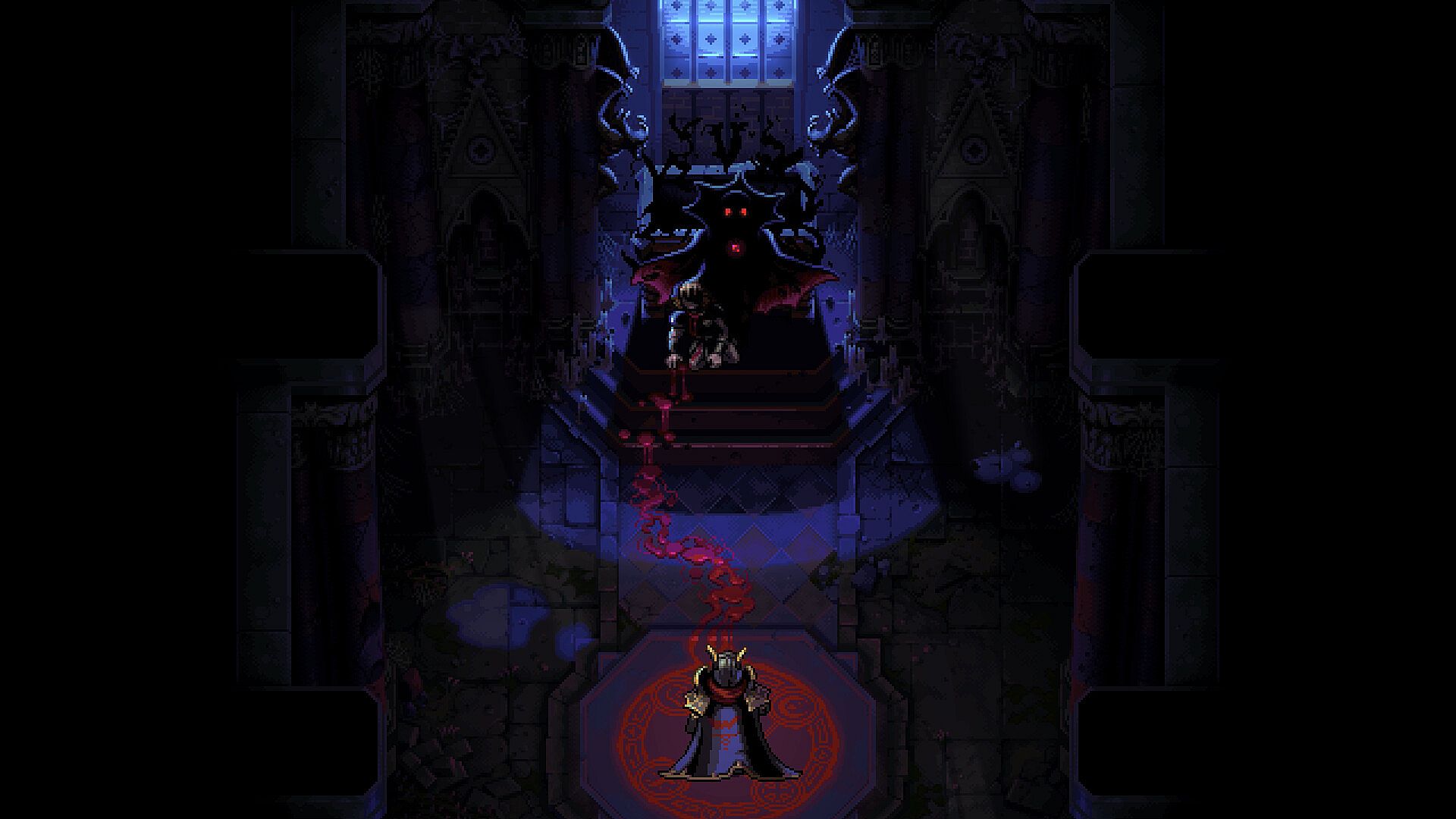
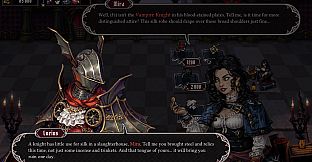
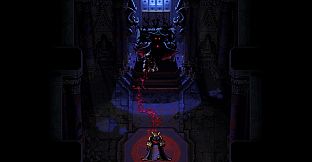
Vampire Tactics is a turn-based tactical RPG set in a dark fantasy world where players build and command a growing army of vampires. Developed by the two-person studio Pixel Conspiracy, the game emphasizes strategic unit management, permanent consequences for losses, and repeated runs through procedurally varied environments. Players recruit followers by converting enemies or hiring mercenaries, then guide them through branching evolutions that alter their appearance, statistics, and abilities. The experience centers on single-player campaigns of castle conquests, where every decision in combat and between battles shapes the next attempt.
Gameplay
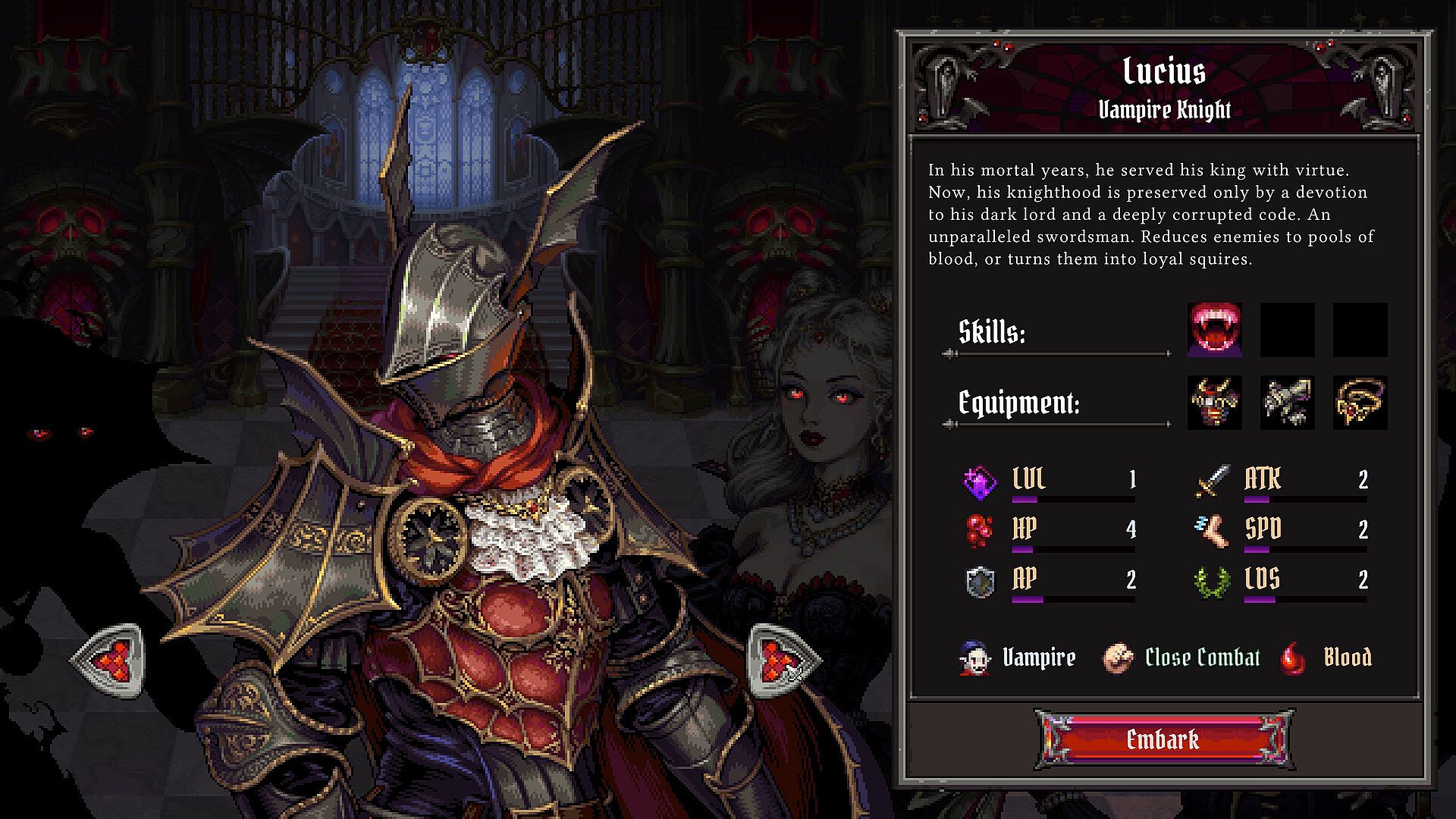
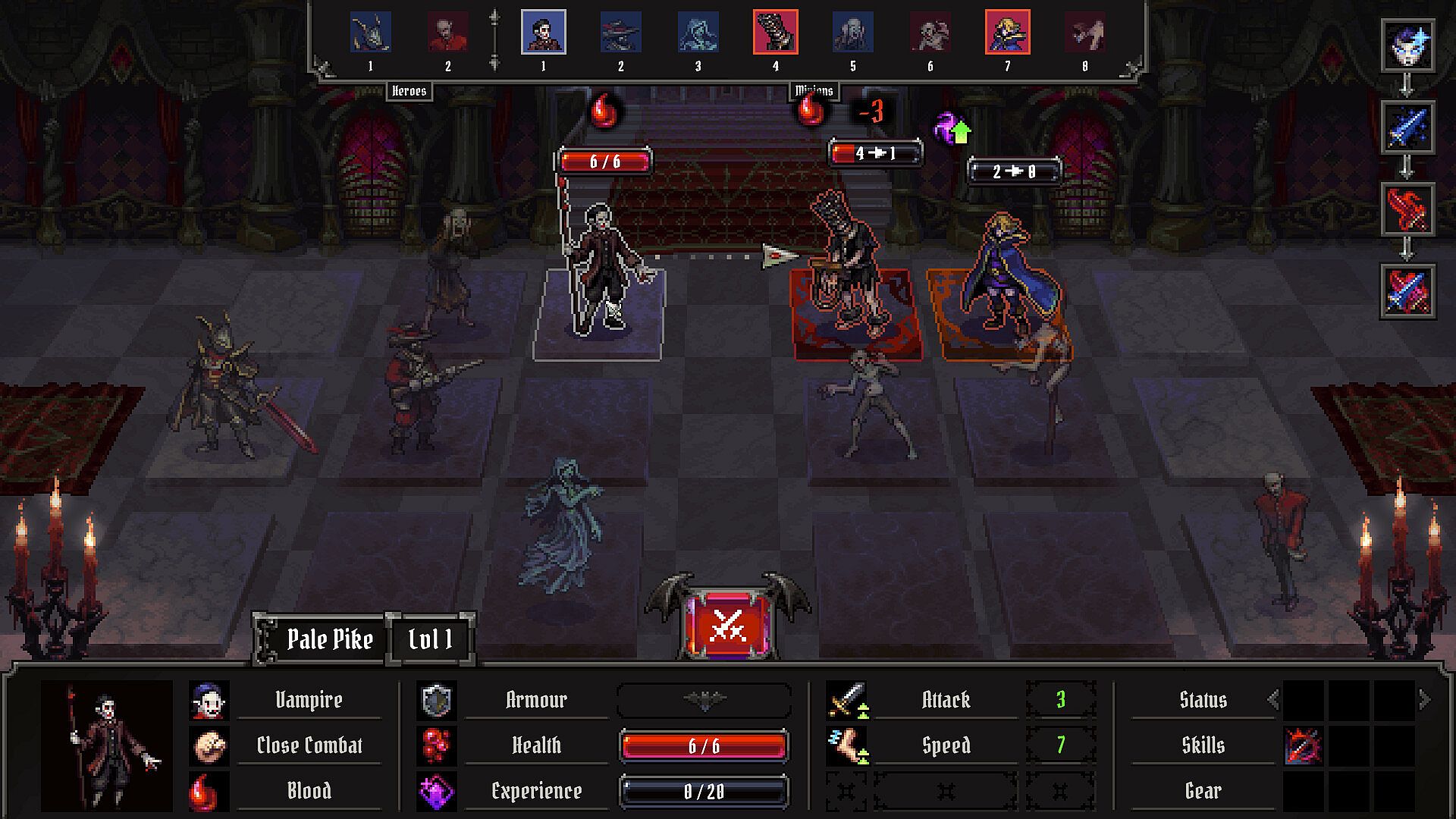
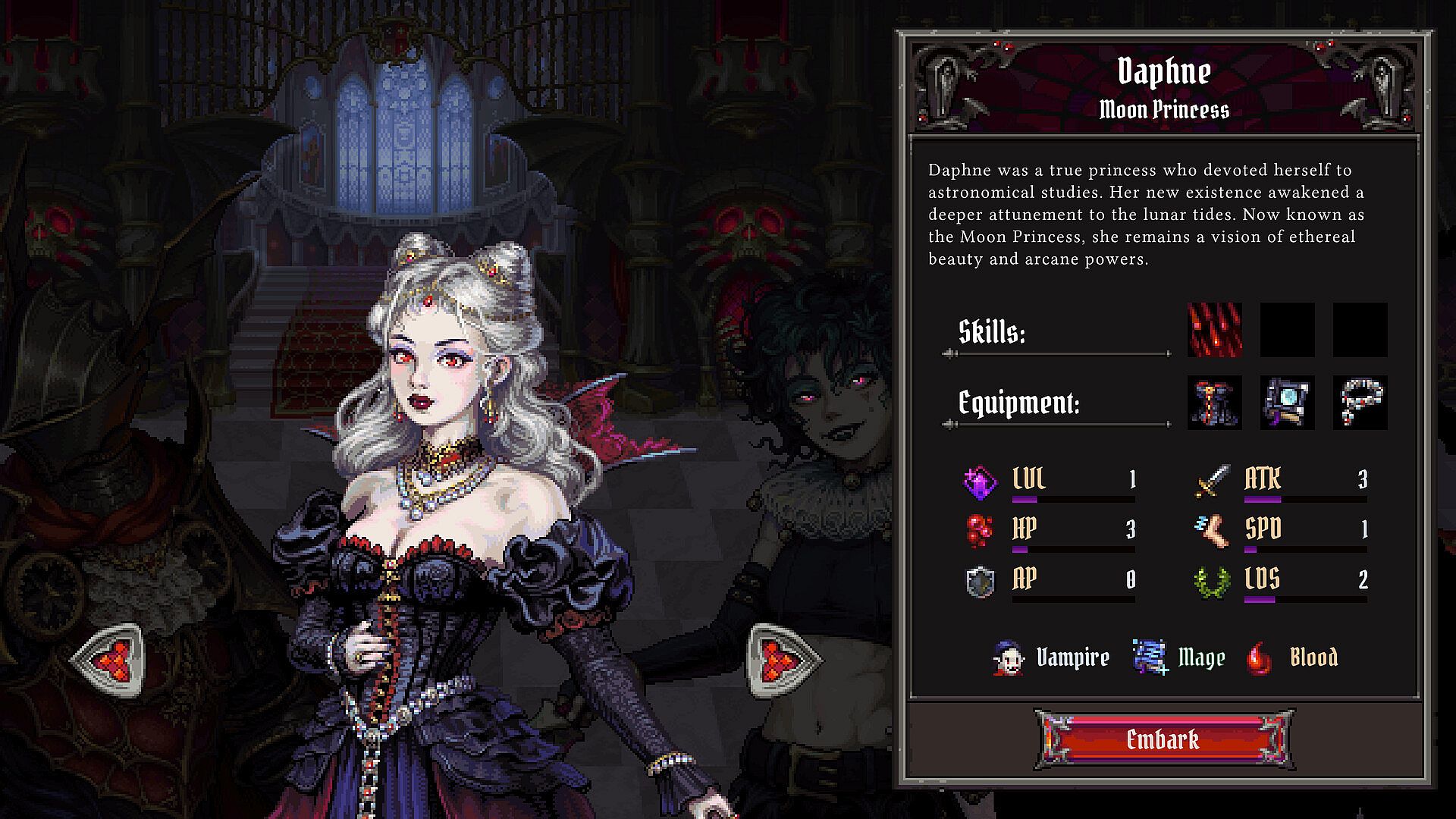
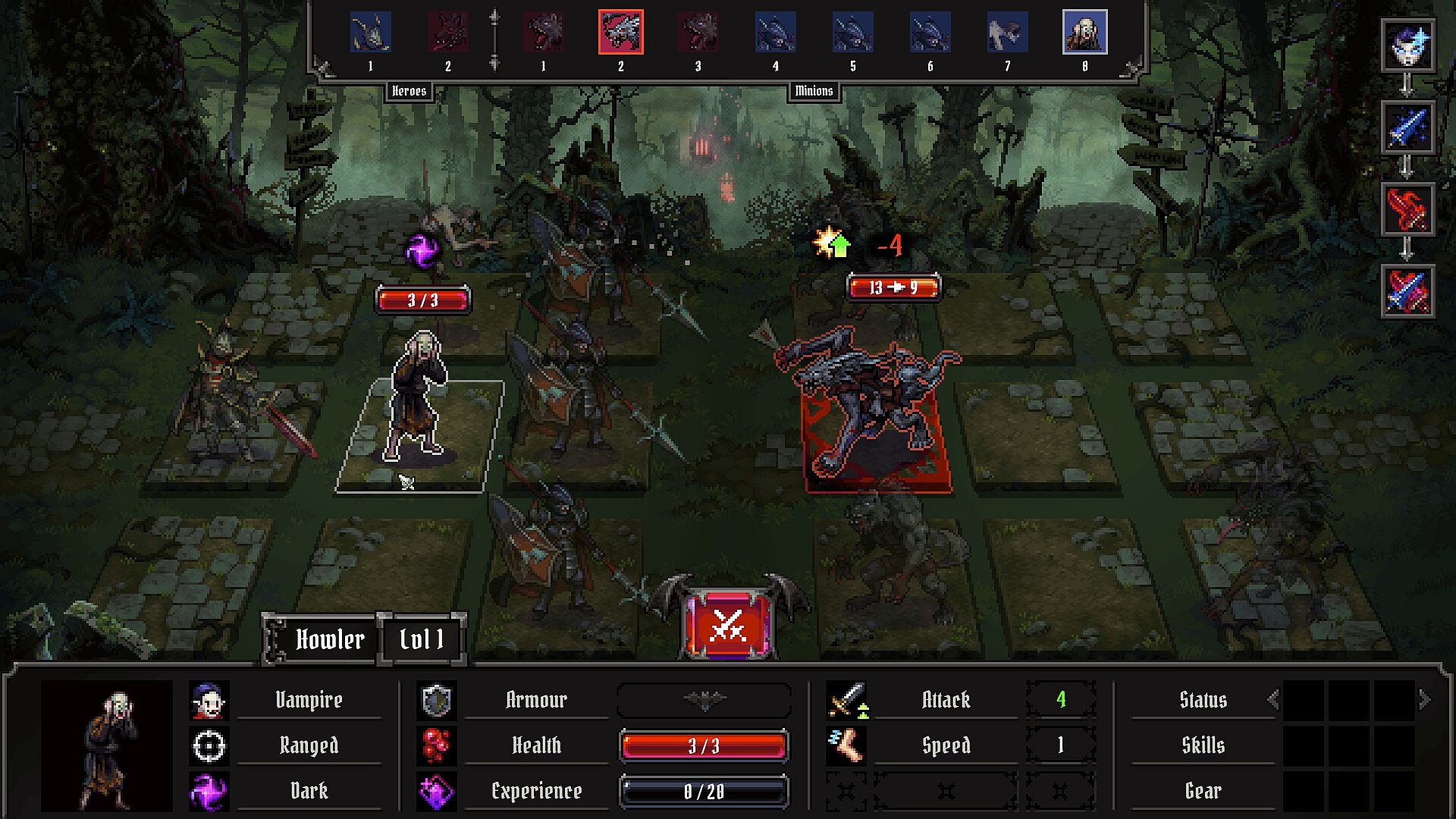
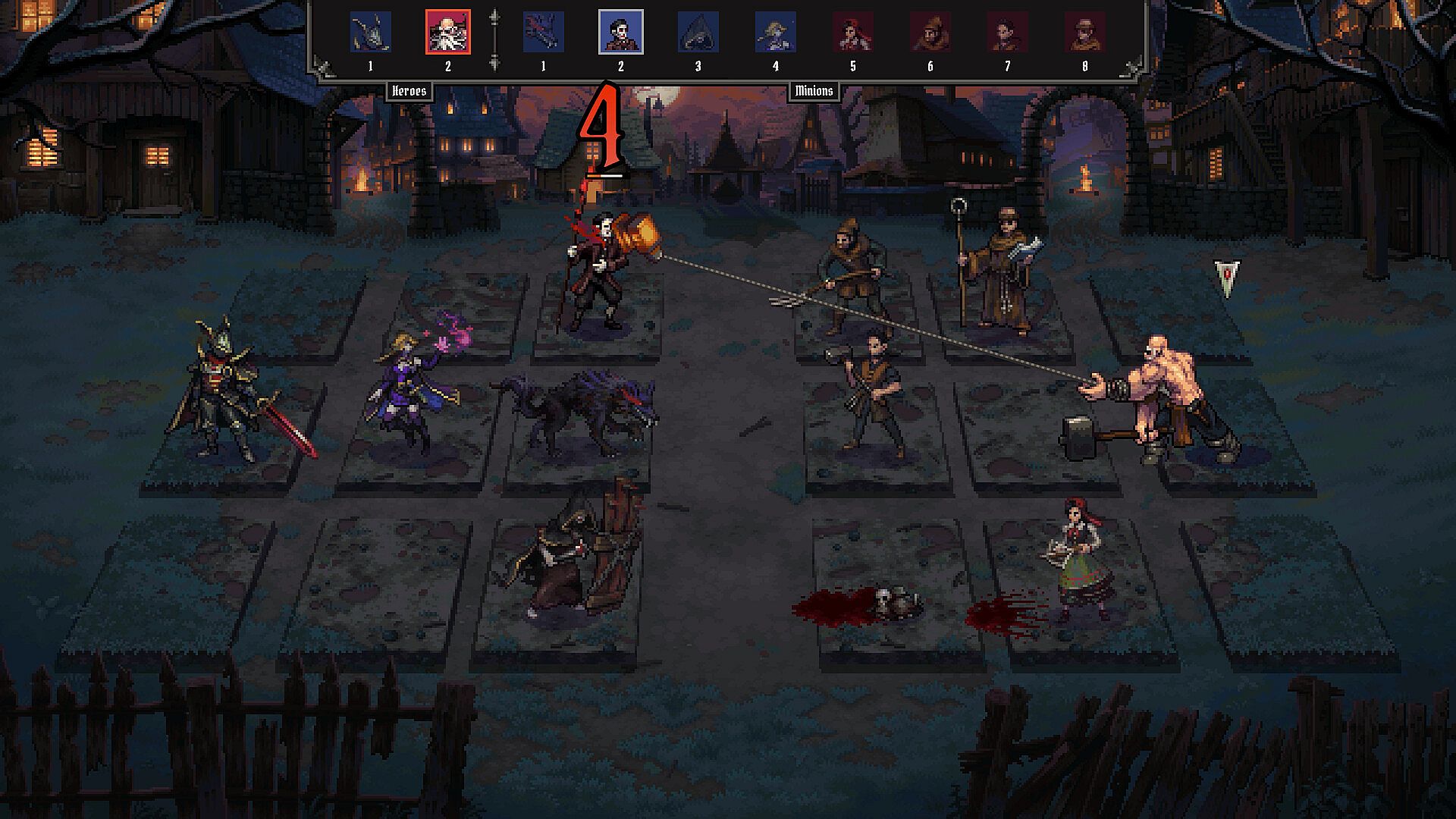
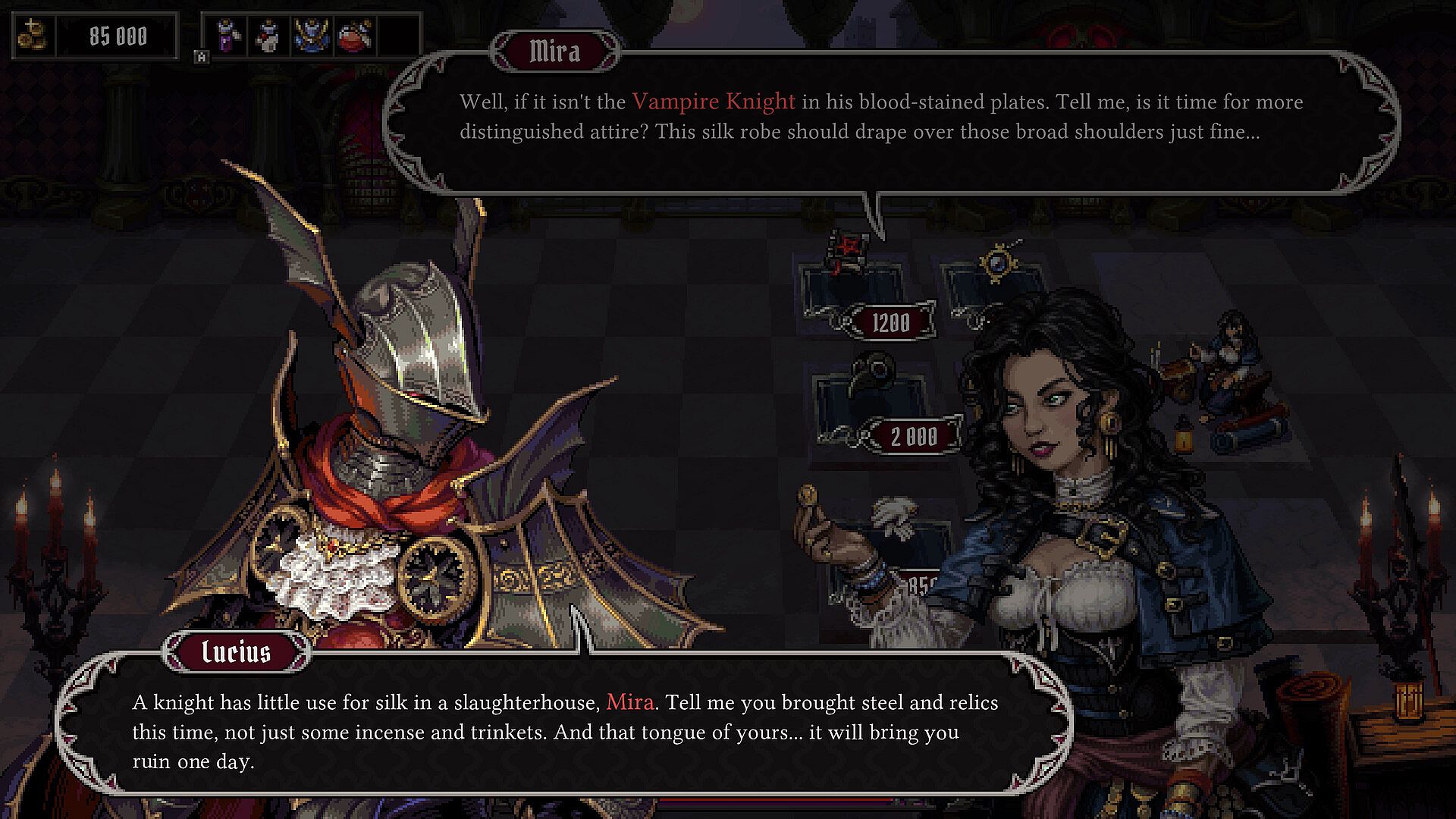
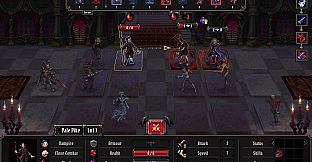
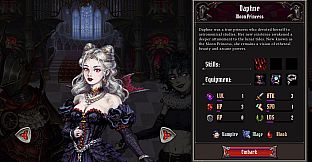
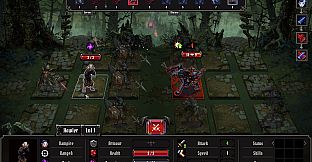
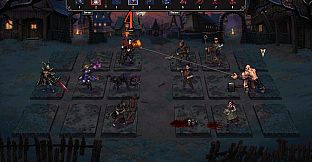
Combat unfolds in a grid-based, turn-based system that rewards careful positioning and ability combinations. Each unit carries signature skills tied to its hero or evolved form, allowing players to chain effects that exploit enemy vulnerabilities. Equipment selection adds another layer, with pieces that boost specific stats or enable new synergies across the party. Heroes stand out with personal backstories and unique transformation powers that convert foes into specialized vampire types. Minions gained through conversion or recruitment follow branching progression trees, such as steering a fledgling toward the swift Impaler path or the heavier Nocturion route. Every evolution visibly changes the unit while shifting its strengths and skill set.
Permadeath applies strictly to minions. A fallen follower is gone for the remainder of that run, forcing players to adapt their remaining roster or recruit replacements on the fly. This risk encourages measured aggression and backup plans rather than reckless charges. Between fights, players manage a party drawn from dozens of possible units, balancing speed, power, and support roles while preparing for the next encounter.
Game Modes
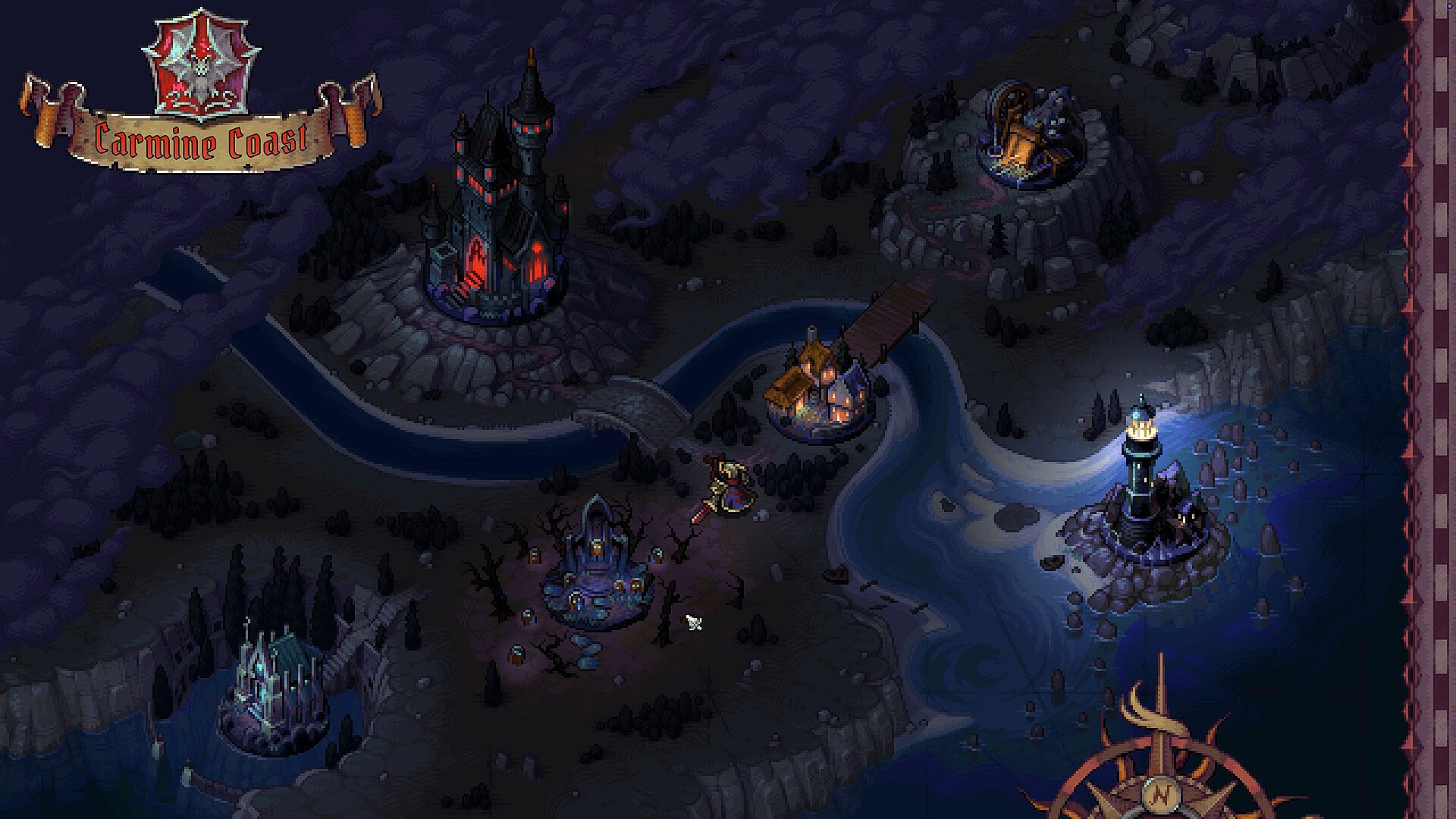
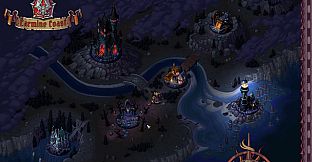
The core loop revolves around successive castle raids that function as roguelite runs. Each attempt generates fresh layouts, enemy groups, and random events inside the shifting vampire strongholds. Players breach gates, eliminate stewards, and claim territory while navigating unpredictable threats. Side decisions affect nearby villages, offering choices to protect inhabitants, exploit them for resources, or harvest them directly to expand the vampire ranks. These elements create meaningful variation across runs without requiring separate modes.
Strategic trading with dark merchants and responses to procedural occurrences further differentiate one playthrough from the next. The absence of named sub-modes keeps focus on the single evolving campaign structure, where progress comes from unlocking new heroes, refining party compositions, and learning to mitigate the impact of permanent losses.
Progression and Party Building
Unit development extends beyond simple leveling. Branching paths let players customize every follower's role over multiple battles, with visual and mechanical changes that reflect those choices. A large pool of equipment and skills supports experimentation, rewarding parties that combine complementary abilities for powerful in-combat effects. Mercenary hires provide immediate options when converted vampires fall short, while hero recruitment adds narrative depth and specialized tools.
The roguelite structure means each castle run serves as both a test and a learning opportunity. Players carry forward knowledge of enemy patterns and effective synergies even when individual minions do not survive. This setup favors those who enjoy iterative improvement and tactical problem-solving over linear story progression.
Is It Worth Playing?
Vampire Tactics targets fans of tactical RPGs who appreciate roguelite risk and vampire-themed army building. The permanent loss of minions adds tension that distinguishes it from games with unlimited retries or resurrection mechanics. Branching evolutions and hero-specific abilities provide depth for players who like shaping distinct party identities across runs.
Because the title remains in pre-release with a Steam wishlist page active and no launch date confirmed, interested players can follow development updates directly from the creators. Those drawn to Castlevania-inspired pixel art, turn-based strategy, and high-stakes recruitment systems will find the described systems align closely with that preference. Early community response has centered on the art and core concept rather than completed gameplay, so final judgment depends on how the full release executes the outlined mechanics.