















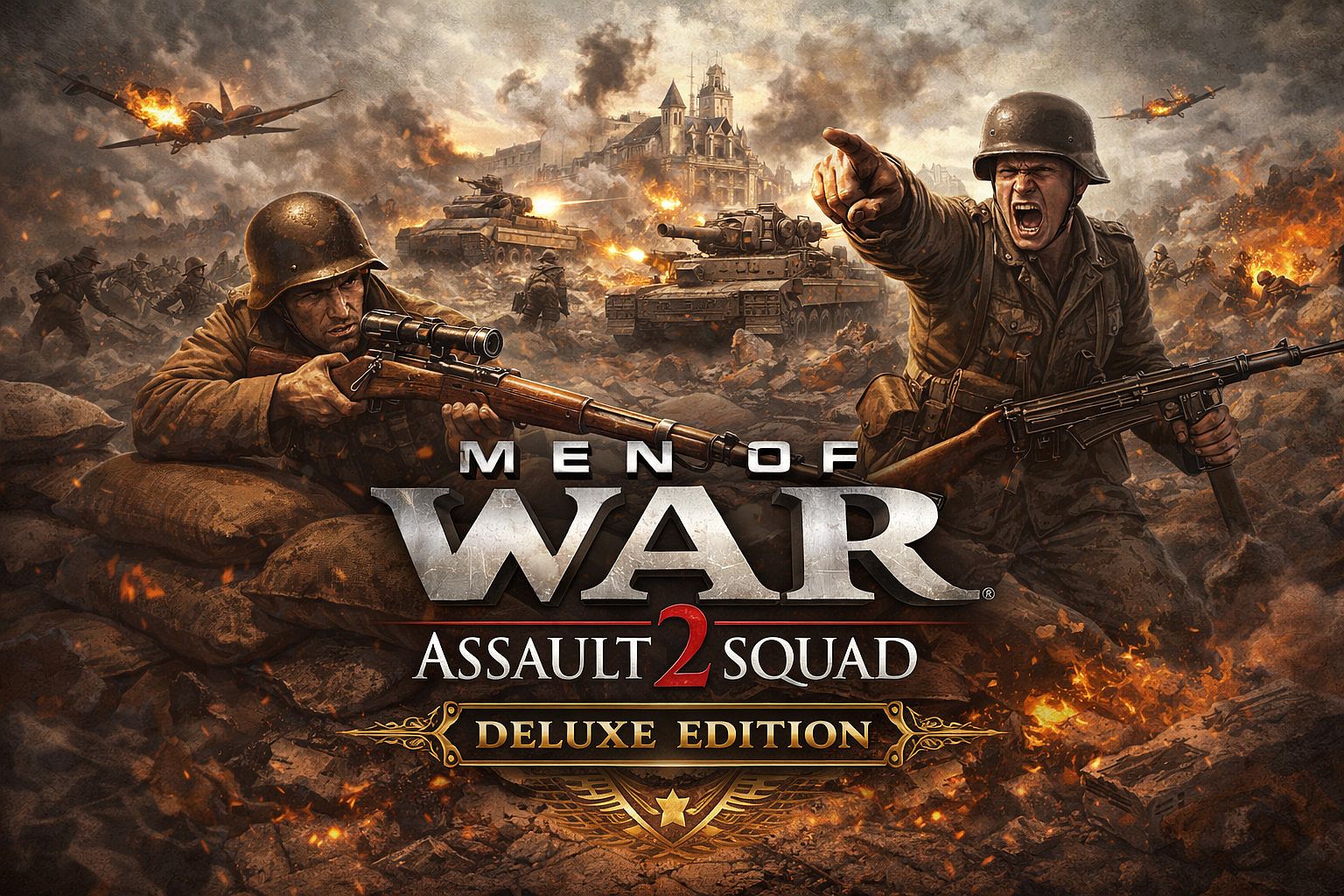
Men of War: Assault Squad 2 is a real-time tactics game focused on squad-level command during World War II. Players direct small groups of infantry, support weapons, and vehicles across detailed battlefields where positioning, terrain, and equipment choices determine outcomes. The title emphasizes direct control of individual units alongside broader tactical oversight, allowing precise movement, targeting, and use of cover in large-scale engagements.
Gameplay
Core mechanics revolve around resource management and unit deployment in a persistent battlefield setting. Cash flows steadily to fund reinforcements, each soldier type subject to cooldown periods that prevent rapid spam of powerful options. Armor penetration follows realistic modeling, with shots angled against vehicle weak points or deflected by sloped plating. Environments suffer permanent damage from explosives and heavy fire, opening new sight lines or collapsing structures mid-fight.
Infantry squads handle personal weapons, grenades, and close-quarters melee when ammunition runs low or enemies close the distance. Vehicles range from light transports to heavy tanks, each with distinct crew roles and vulnerabilities. Seasonal camouflage options alter unit visibility on snow, desert, or woodland maps. The direct control system lets players seize any soldier or vehicle for fine-grained actions such as flanking maneuvers or suppressing fire, shifting seamlessly between macro planning and micro execution.
Five distinct armies each bring unique equipment rosters and campaign structures. Progression through multistage single-player operations introduces new units gradually while testing combined-arms coordination. Skirmish scenarios isolate specific combat styles, from armored breakthroughs to stealth insertions behind enemy lines.
Game Modes
Single-player content centers on faction-specific campaigns and customizable skirmish missions. These range from straightforward assaults to specialized operations requiring careful infiltration or defensive stands. AI opponents scale across difficulty settings that adjust aggression, accuracy, and reinforcement speed.
Multiplayer supports large-scale battles with resource-capture objectives as the foundation. Teams compete to secure and hold key points that generate income over time. One variant expands this format to eight-versus-eight matches on expansive maps, increasing the emphasis on coordinated pushes and defensive lines. Additional modes explore different victory conditions while retaining the same core loop of gradual unit production and tactical positioning.
Visuals and Technical Features
Environments feature high detail with destructible elements that alter gameplay flow during prolonged fights. Unit models display individual equipment and animations that reflect carried weapons or injuries. Performance remains stable during crowded engagements thanks to optimized AI pathfinding and unit handling.
Sound design highlights distinct weapon reports, engine noises, and radio chatter that reinforce the period setting. The interface supports both keyboard shortcuts for rapid commands and direct mouse selection for precise control.
Is It Worth Playing?
The game maintains an active player base years after release, with recent user feedback showing strong approval for its depth and replay value. Matches reward experimentation with different army compositions and map knowledge rather than simple numerical advantages. The learning curve is steep due to the volume of unit types and mechanics, yet the payoff comes in the form of satisfying, high-stakes tactical decisions.
Players who enjoy methodical real-time strategy with realistic simulation elements will find consistent engagement across both solo campaigns and online sessions. Community-created content extends longevity through additional maps and balance adjustments. Those seeking fast-paced action or simplified controls may find the pace and complexity less appealing. The title suits dedicated fans of World War II tactics who value control precision and environmental interaction over streamlined accessibility.


