




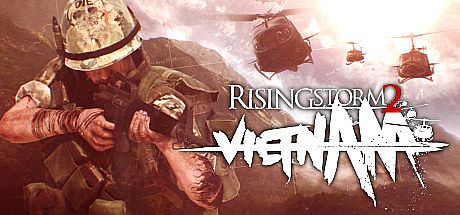























Rising Storm 2: Vietnam is a multiplayer first-person shooter set during the Vietnam War. It emphasizes large-scale online battles with up to 64 players divided across opposing forces in varied environments ranging from dense jungles to urban areas and air bases.
Gameplay
The core loop revolves around team-based combat that rewards coordination and awareness of the terrain. Players select from multiple classes within their chosen faction, each equipped with period-appropriate weapons and tools. US forces rely on conventional firepower including assault rifles, machine guns, and support options, while opposing teams employ guerrilla tactics with traps, tunnels, and ambushes. Four flyable helicopters add aerial elements to certain maps, allowing transport and fire support roles. Mines and other deployable hazards create layered defensive opportunities that change how engagements unfold across each match.
Character customization extends to uniforms and loadouts, letting players tailor appearances and equipment selections without altering core balance. The emphasis remains on authentic weapon handling and movement that reflects the era's military realities, encouraging players to use cover, flanking routes, and suppression fire effectively.
Game Modes
Three primary modes structure the matches. Territories places one team in an attacking role tasked with capturing sequential objectives while the defenders hold positions across the full map layout. Supremacy involves control of key points that shift influence over time, suiting sustained large-scale fights. Skirmish scales down to smaller player counts on compact maps with a limited number of objectives and shorter time limits, focusing on quicker rounds.
Additional campaign-style play links multiple rounds into a broader progression where outcomes influence subsequent stages and resource access for each side.
Factions and Mechanics
Six factions split between two sides provide distinct playstyles. US Army and Marines form the primary conventional force alongside Australian and ARVN units on the southern side. Northern forces include PAVN/NVA regulars and NLF/VC guerrilla elements. Each faction grants access to exclusive weapons and visual variations while maintaining shared class structures. Support abilities such as artillery, napalm strikes, and reconnaissance differ by side, creating asymmetric advantages that players must counter through positioning and timing.
Over 50 weapons appear across the roster, with mechanics for leaning, deployment of heavy machine guns, and helicopter controls integrated into the experience. Recent quality-of-life patches have addressed voice communication stability and other refinements, keeping the title active years after launch.
Is It Worth Playing?
Player reception remains strong, with overall reviews rated Very Positive and recent feedback also Very Positive. The game continues to receive updates focused on stability and balance, supporting an active community on PC. It suits those seeking realistic multiplayer combat that prioritizes teamwork over arcade-style action, particularly players interested in historical settings and large-scale objective play. Those who prefer smaller matches or modern weapon sets may find the pace and mechanics less appealing, but the verified depth in factions, maps, and mode variety delivers consistent engagement for its target audience.


