




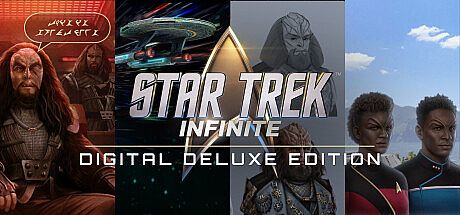




















Star Trek: Infinite is a grand strategy game set in the Star Trek universe. Players lead one of four major factions across a fixed map of the Alpha Quadrant during the late 1990s era of the franchise. The experience centers on managing empire expansion, resource allocation, research, and interactions with other powers through diplomacy, conflict, or covert operations.
Gameplay
The core loop involves directing faction development in real time with the ability to pause for detailed planning. Players oversee starship construction, fleet movements, technological advancement, and territorial growth while responding to events drawn from Star Trek lore. Each faction brings distinct strengths that shape decision-making. The Federation emphasizes exploration, diplomatic relations, and scientific progress, allowing recruitment of figures such as Picard, Janeway, Sisko, and Data. The Klingon Empire focuses on honorable combat and traditional expansion. The Romulan Star Empire and Cardassian Union offer their own specialized approaches centered on intrigue and military conquest respectively. Iconic vessels including the Enterprise-D, Intrepid-class, Defiant-class, Negh'Var battleships, D'deridex warbirds, and Galor-class cruisers become available through faction-specific progression. The game draws from established grand strategy systems but streamlines several layers to align with the source material's tone and pacing.
Game Modes
Star Trek: Infinite offers a single-player campaign structure with no separate multiplayer component. The primary variation comes from selecting one of the four playable factions at the start, each presenting unique mechanics, unit rosters, and narrative branches. Victory paths include diplomatic influence, espionage networks, outright warfare, or combinations of these approaches. A fixed starting scenario places all players in the same galactic setup, encouraging repeated playthroughs through different faction lenses rather than procedural generation. Story elements tie into the chosen leader's decisions, allowing custom narratives that incorporate familiar characters and ships without following a single predetermined plot.
Factions and Mechanics
Four factions anchor the experience. The United Federation of Planets excels at long-term research and peaceful expansion. The Klingon Empire rewards aggressive fleet actions and cultural traditions. Romulan and Cardassian options introduce specialized tools for subterfuge and domination. Mechanics cover fleet command, planetary development, intelligence operations, and event chains that reflect Star Trek themes such as first contact or political intrigue. Character recruitment and ship customization integrate directly into these systems, giving each playthrough a distinct flavor based on the selected power.
Current State and Reception
The game launched in October 2023. Steam user reviews sit in the mostly negative range overall, with recent feedback showing mixed results. Critic scores average around the low seventies on aggregate sites, with praise directed at the faithful recreation of Star Trek aesthetics and faction identity. Common notes include technical issues that affect stability and depth compared to similar strategy titles. No major seasonal content or extensive post-launch updates appear in available records.
Is It Worth Playing?
Star Trek: Infinite suits players who enjoy grand strategy games and hold strong interest in the Star Trek setting. The faction-specific playstyles and recognizable characters provide meaningful variety for those willing to navigate the systems. Individuals seeking polished mechanics or extensive ongoing support may find the experience limited by reported bugs and the absence of further development. Those drawn to managing empires through a mix of exploration, diplomacy, and combat in a licensed universe will find the most direct appeal here. The fixed map and character recruitment add replay value for dedicated fans despite the overall review profile.


