




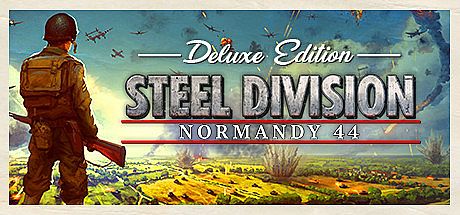

















Steel Division: Normandy 44 is a tactical real-time strategy game focused on large-scale battles during the 1944 Allied invasion of Normandy. Players command entire military divisions in detailed engagements that emphasize positioning, timing, and resource management across varied terrain.
Gameplay
The core loop revolves around selecting a division and deploying its forces in real time while managing three distinct phases of battle that unlock different unit types over time. Early phases favor lighter infantry and reconnaissance elements, while later phases introduce heavier armor and artillery. Line of sight mechanics require careful placement of units behind cover or on elevated ground to spot and engage enemies effectively. Supply lines play a key role, as dedicated transport units keep forward elements fueled and repaired during prolonged fights.
Division choice shapes available forces and playstyle. Each division draws from historical rosters with strengths in specific areas such as airborne operations, armored breakthroughs, or combined arms support. Commanders coordinate infantry squads, tanks, aircraft strikes, and artillery barrages while adapting to enemy movements. The system rewards patient observation and incremental advances rather than rapid rushes across open ground.
Game Modes
Three single-player campaigns place players in command of Allied and Axis forces across linked missions set in the Normandy campaign. These scenarios test sustained management of limited forces that carry over between battles with reduced strength after losses.
Skirmish mode supports customizable matches against AI opponents, including options for destruction objectives that focus on eliminating enemy units and conquest objectives centered on capturing and holding territory. Multiplayer supports matches with up to ten players per side in large-scale confrontations that emphasize coordination across wide fronts.
Divisions and Historical Units
Eighteen divisions from six nations appear in the game, each with unique unit compositions drawn from 1944 records. Examples include the American 101st Airborne Division with its emphasis on paratrooper infantry, the German 21st Panzer Division featuring armored elements, and the 3rd Canadian Division with its mix of infantry and support assets. Over four hundred individual unit types cover infantry formations, tanks, tank destroyers, aircraft, and logistical vehicles.
Unit effectiveness depends on terrain, phase timing, and supporting elements. Players learn to combine reconnaissance to reveal hidden threats with concentrated firepower to break through defensive lines. Supply and recovery mechanics add another layer, as damaged vehicles and depleted squads require dedicated attention to remain combat effective.
Is It Worth Playing?
The game appeals most to players who enjoy methodical tactical decision-making in a World War II setting. Large multiplayer battles offer opportunities for team-based play where individual contributions matter within coordinated efforts. Single-player campaigns provide structured challenges that highlight the strengths and limitations of specific divisions.
Community feedback notes that the campaigns demand careful resource conservation and can feel demanding for newcomers, while skirmish and multiplayer modes allow more flexible experimentation. The title maintains an active player base for its scale of battles and depth of unit interactions. Those seeking fast-paced action or simplified controls may find the pace and complexity less suited to their preferences, whereas fans of detailed wargaming will find substantial systems to master over repeated sessions.


