

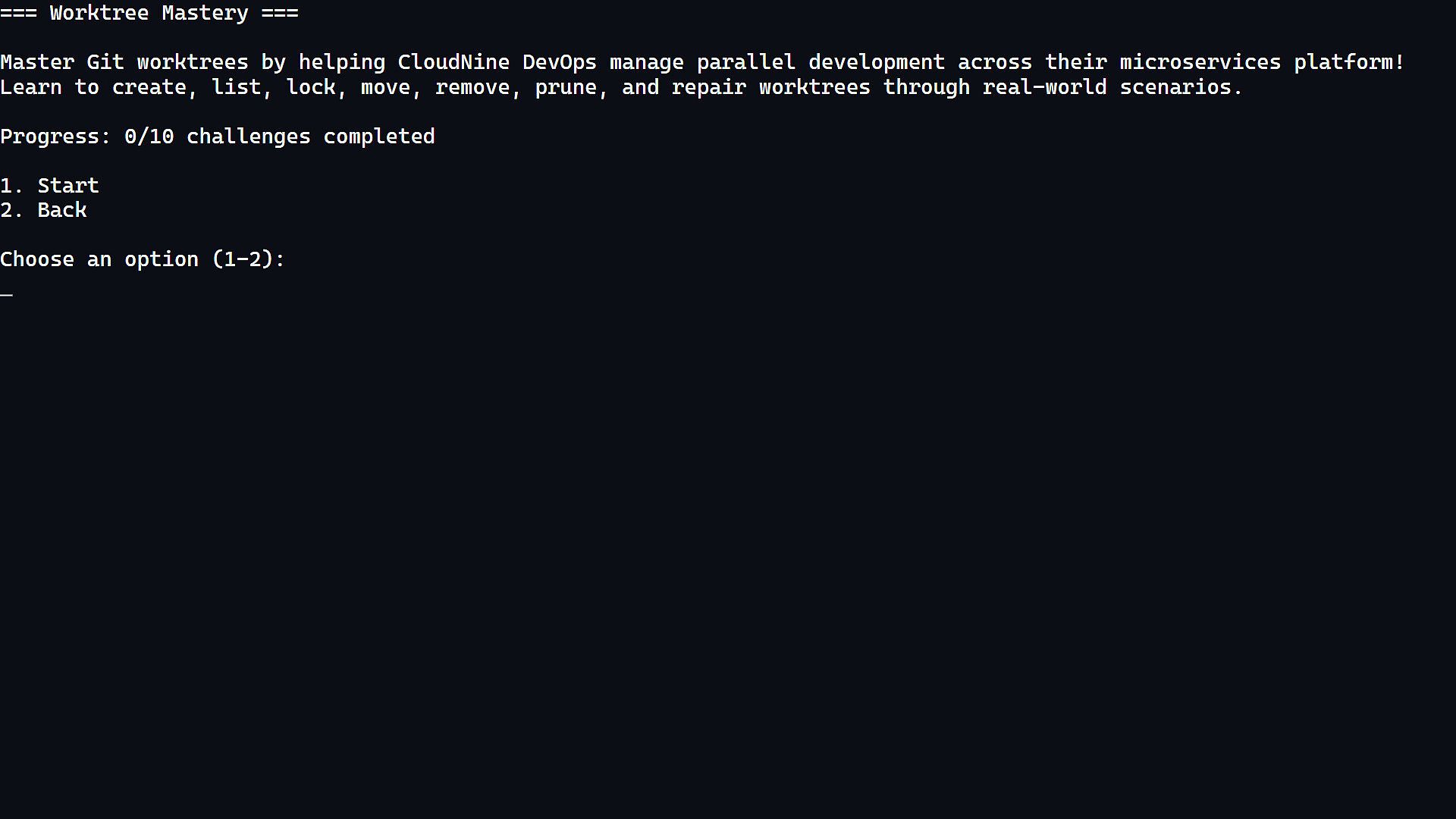
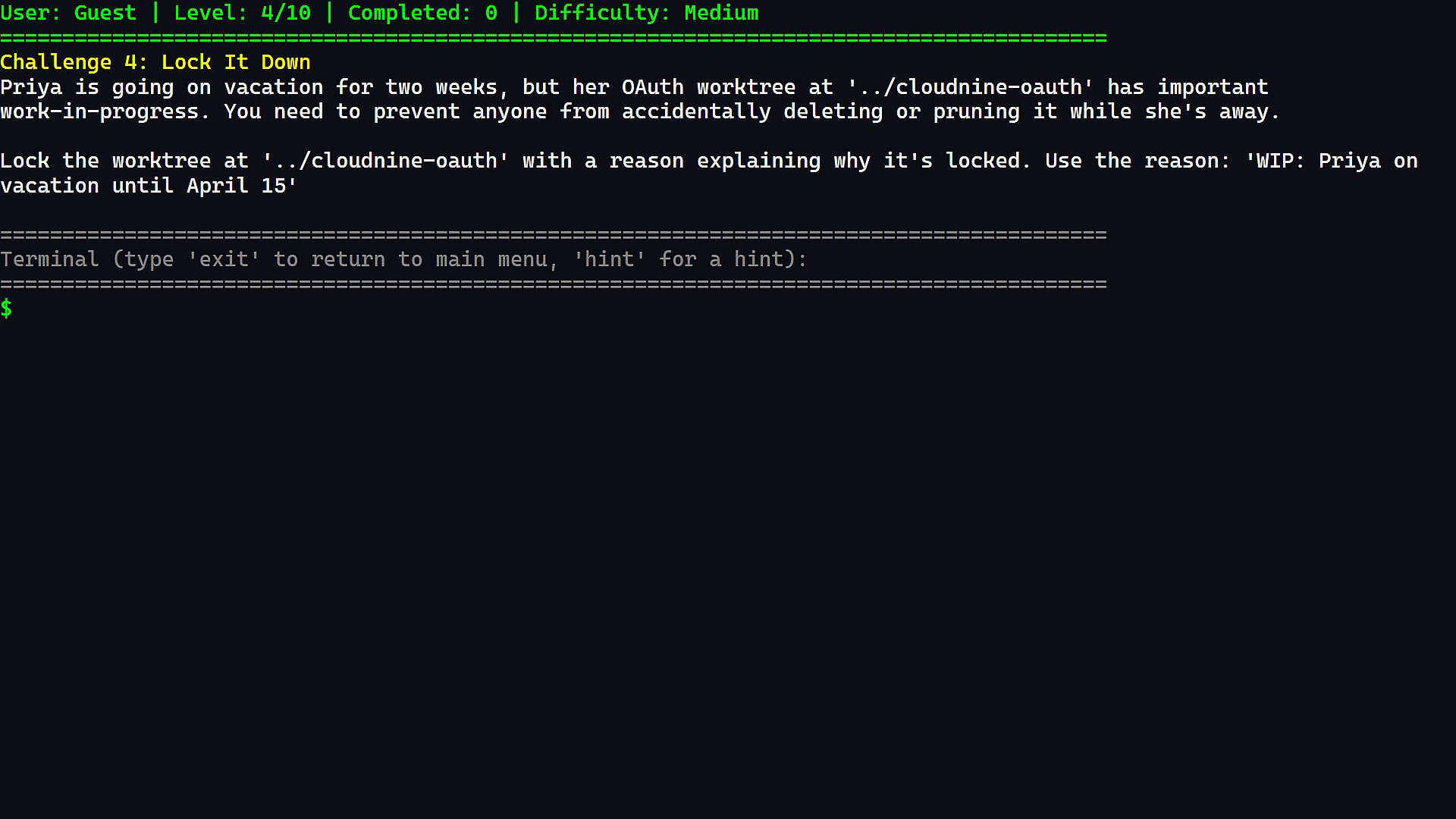
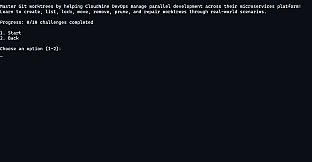
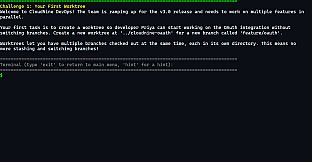
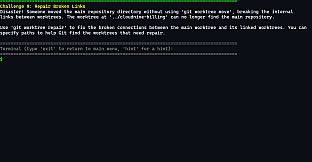
git gud - Worktree Mastery is a casual simulation game that expands the core git gud experience with focused Git worktree training. Players step into the role of a DevOps engineer at CloudNine DevOps, managing a microservices platform under pressure to reach its v3.0 release. The pack delivers ten narrative-driven scenarios inside a fully simulated repository and command-line environment, where every command produces authentic Git behavior including real worktree metadata, lock reasons, detached HEAD states, and prune semantics.
Gameplay
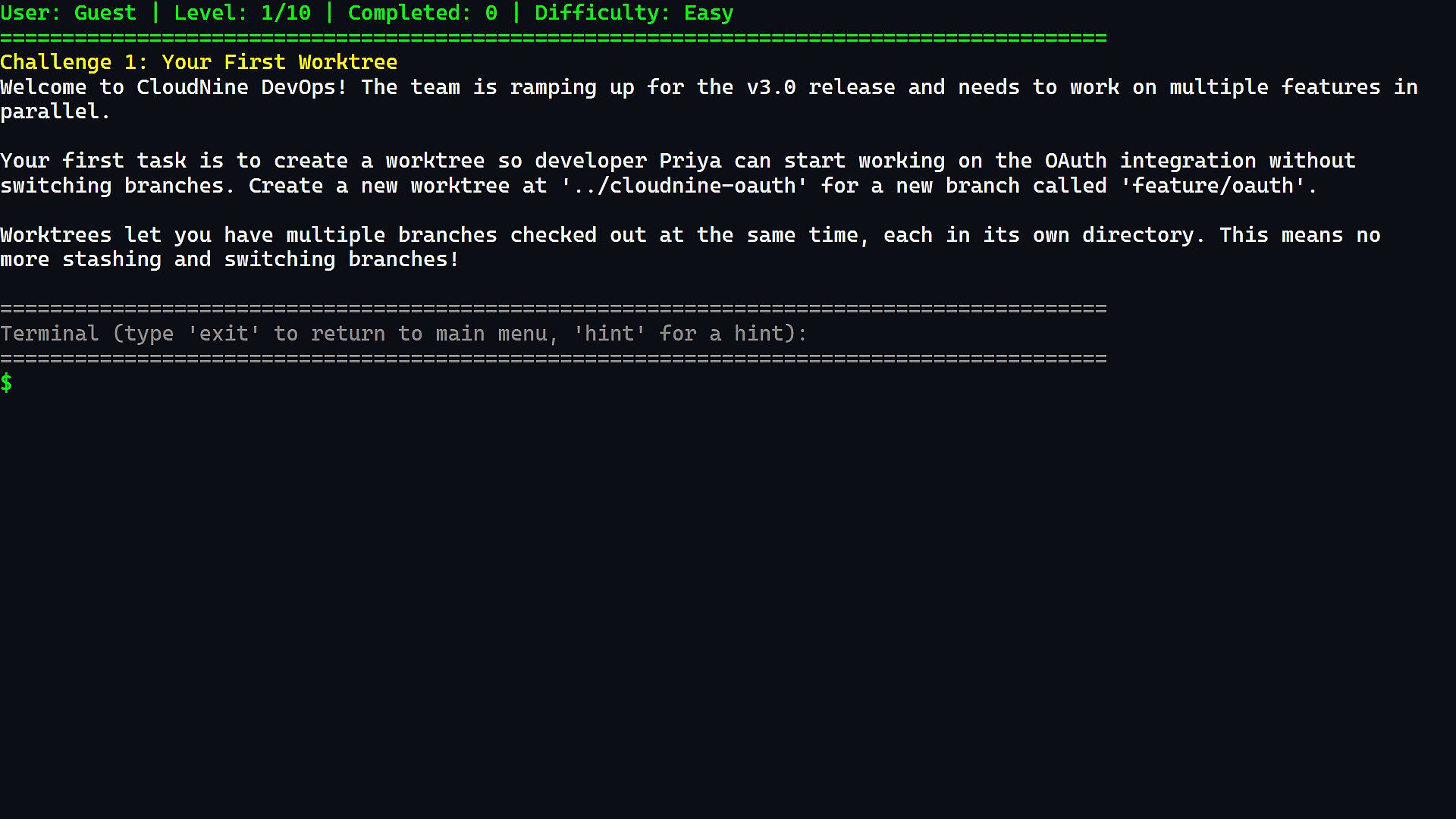
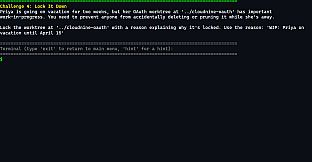
The core loop centers on typing actual Git commands to resolve realistic development bottlenecks. Each scenario places the player in a specific situation, such as enabling parallel work on an OAuth feature without disrupting an active branch or isolating a hotfix for testing. Feedback arrives instantly, confirming whether the typed sequence matches expected Git outcomes. The simulation faithfully replicates worktree commands, so actions like adding a new worktree, listing active ones with verbose details, or applying locks carry over directly to real repositories.
Progression builds from guided tasks to independent problem solving. Early challenges explain the purpose behind each feature through story context, while later ones require planning sequences without prompts. The final scenario presents a complete sprint setup involving multiple feature worktrees, a locked release candidate, and verification steps that players must orchestrate before the team returns. This structure reinforces practical command knowledge rather than abstract puzzles.
Game Modes
The primary experience is Challenge Mode, which structures the ten scenarios as sequential story missions. Players advance through tasks that mirror common team pain points, from spinning up isolated directories to cleaning up after manual deletions. A separate verification pass at the end tests full autonomy with no step-by-step guidance. The base game framework supports hint usage, though the pack encourages direct command entry to build confidence with worktree workflows.
Core Mechanics and Features
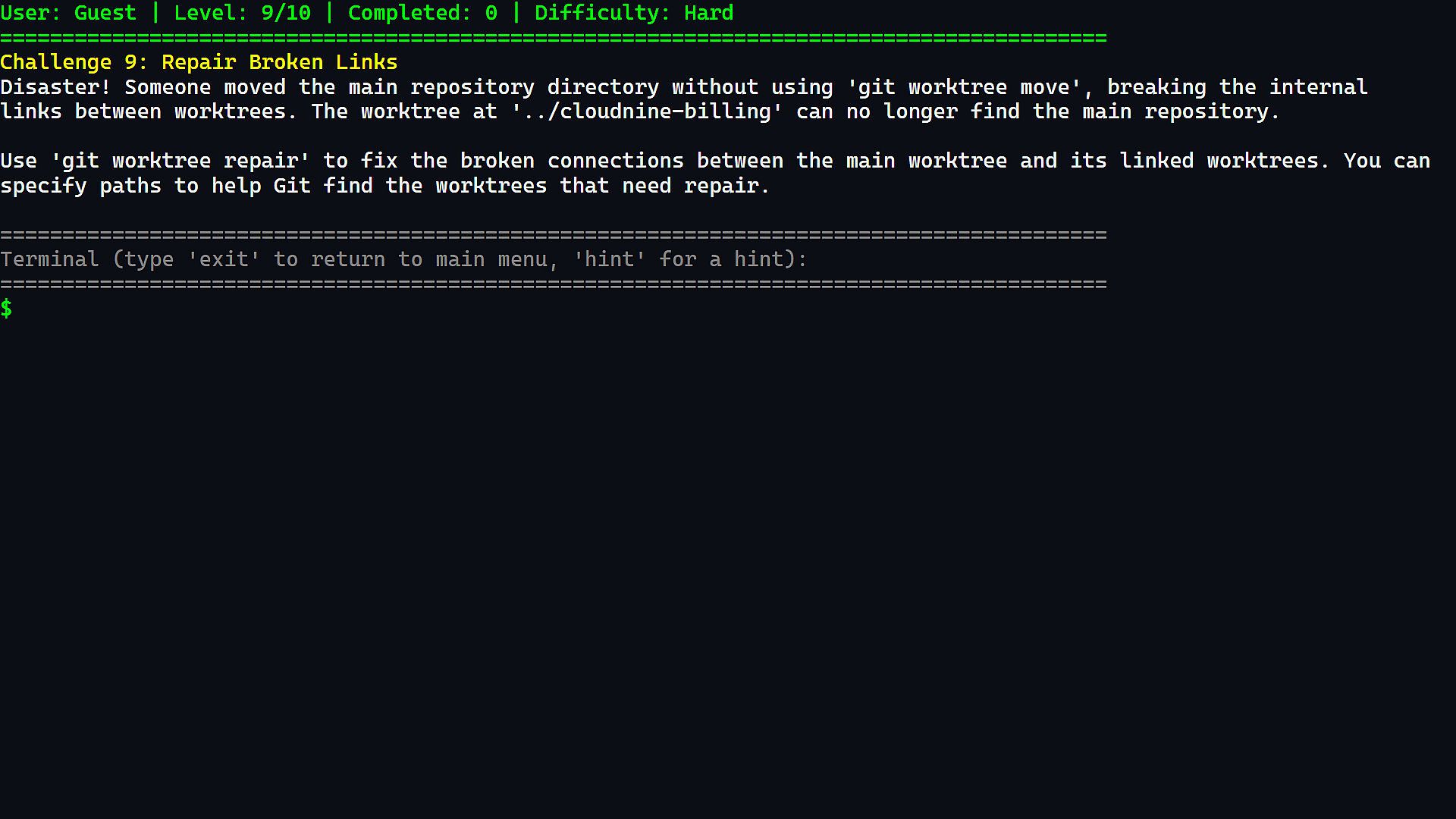
Mechanics emphasize precision with Git's worktree system. Players execute commands to check out branches in separate directories, generate status reports across all active worktrees, lock directories with explanatory reasons, move them to new paths, open detached HEAD states for historical inspection, remove completed worktrees cleanly, prune stale references, and repair links after repository relocation. The environment tracks real metadata at every step, ensuring outputs match production Git behavior exactly.
Ten scenarios cover the full range of practical use cases. Narrative framing shows why teams adopt worktrees, such as avoiding stash conflicts during concurrent feature work or preserving teammate progress during security patches. The simulation includes dry-run options for prune operations and handles edge cases like broken links from moved repositories.
Is It Worth Playing?
git gud - Worktree Mastery suits players who already grasp basic Git operations and want targeted practice with worktrees. The pack integrates seamlessly with the base game's 100-level structure, adding specialized content that rewards accurate command use. Reception for the core title stands at Mostly Positive based on available reviews, reflecting appreciation for its realistic simulation approach. Those seeking hands-on mastery of parallel development workflows will find the scenarios directly applicable to daily development tasks. The DLC remains available as a standalone expansion on PC.