


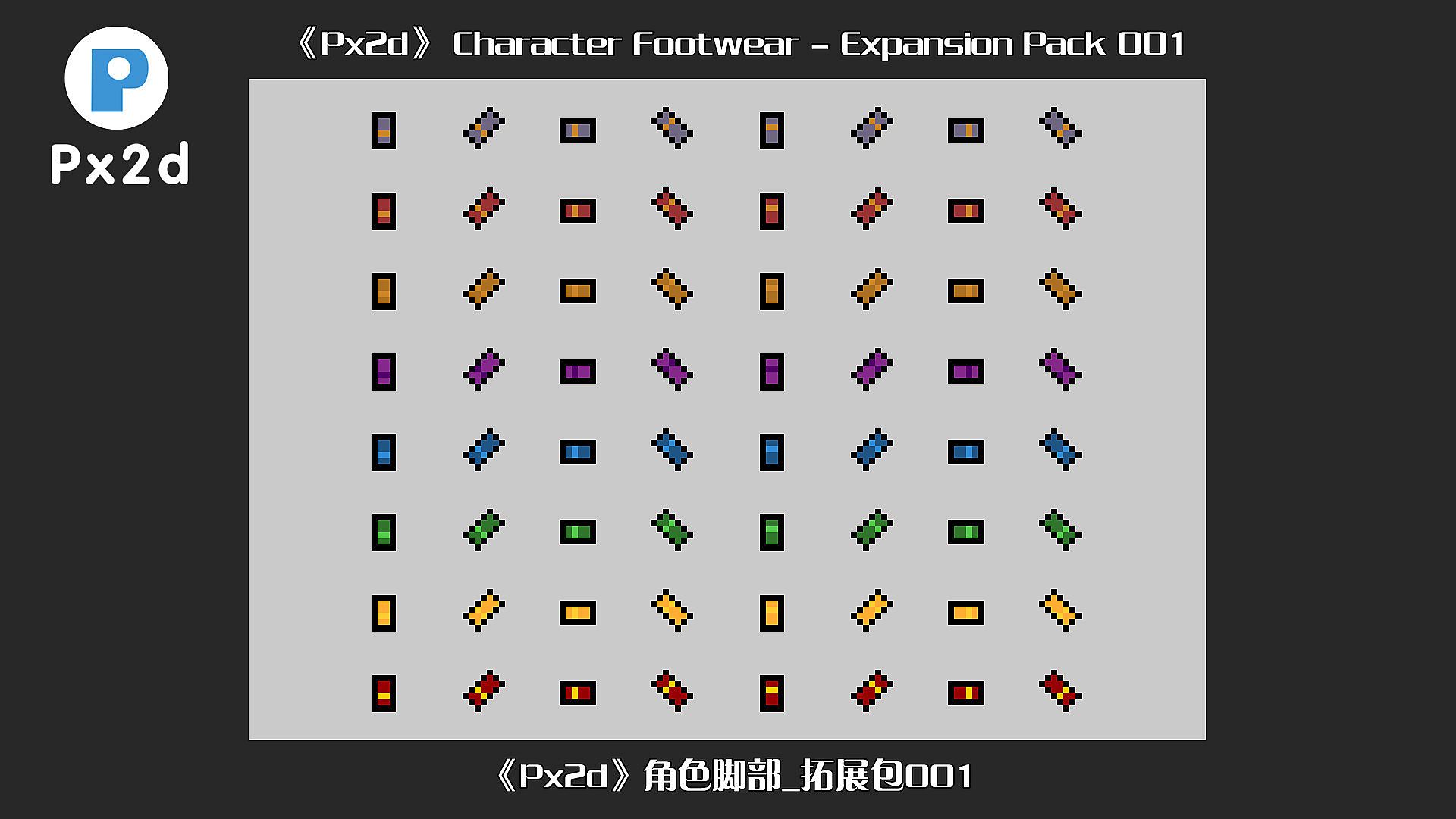
Px2d serves as a specialized animation and modeling tool for creating 2D pixel art characters on PC. The Character Footwear Expansion Pack 001 adds 20 dedicated foot components to the existing library, allowing users to customize lower body details for assembled sprites.
Gameplay
The core loop centers on component assembly within the editor interface. Users select and layer body parts including the new footwear options to build complete characters. Each component integrates into predefined action templates that cover standby, walking, running, attacking, defending, taking damage, item use, and death sequences. Adjustments to layering order and positioning ensure the footwear aligns correctly across all frames without manual redrawing.
Foot components function as modular elements that replace or supplement base options. Placement occurs through the dedicated res/DLC folder in the tool directory, after which they appear in the component selection menu for immediate use in character previews and exports.
Game Modes
Character creation supports multiple output formats tied to common 2D game engines. The editor generates four-directional sprites compatible with top-down or side-view perspectives. Built-in templates extend to RPG-style movement and combat cycles, with options for both idle life actions and battle sequences. Export produces PNG sequences ready for direct integration into projects.
Character Customization Options
Beyond footwear, the tool maintains hundreds of additional components across categories such as heads, bodies, weapons, and effects. The expansion pack focuses exclusively on feet to expand variety in leg and shoe designs. Commercial projects benefit from the license terms that permit use in finished games while restricting redistribution of the raw assets or application in NFT or AI training contexts.
Is It Worth Playing?
Player feedback on the base tool rates positively overall, with the majority of reviews highlighting its efficiency for pixel asset production. The footwear pack extends that utility by increasing lower-body variety without requiring new artwork. It suits independent developers and hobbyists focused on rapid iteration of 2D characters for free-to-play or commercial releases. Those seeking a no-drawing approach to sprite assembly will find the modular system practical, especially once the pack integrates into existing workflows.