

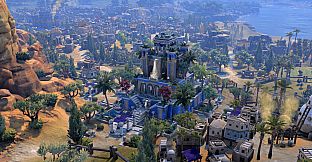
Sid Meier's Civilization VII is a turn-based 4X strategy and simulation game in which players guide a civilization from its origins through multiple historical ages. The Babylon Pack adds the Babylon civilization to the experience, bringing its unique attributes and units into play during the Antiquity Age and beyond.
Gameplay
The core loop centers on expanding settlements, advancing through technology and culture, managing resources, and interacting with rival civilizations via diplomacy or conflict. An ages system divides the timeline into Antiquity, Exploration, and Modern periods, with players able to transition between them while retaining key progress such as settlements and certain units. Each age introduces period-specific mechanics, buildings, and units that influence long-term strategy.
Map features include navigable rivers that allow naval units to travel inland and support trade or movement. Combat relies on commanders to organize armies more efficiently, reducing congestion on the battlefield. Influence serves as a key resource for diplomatic actions, enabling players to form alliances, apply pressure, or pursue indirect advantages without direct warfare. Settlements function differently from full cities, with limits on how many can be promoted and rules governing their growth and yields.
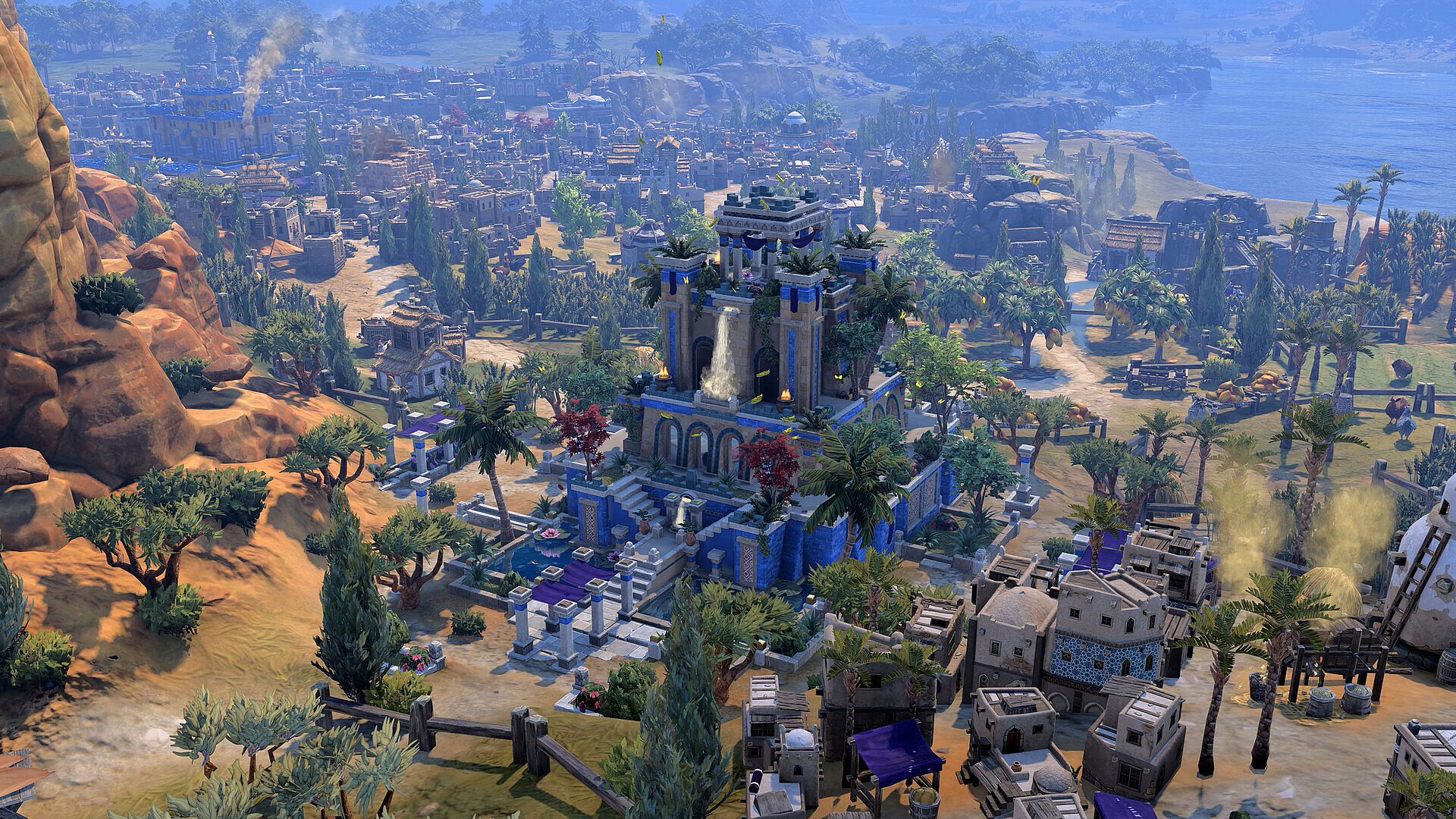
The Babylon civilization fits into this framework with its Cultural and Expansionist attributes. Its unique ability triggers an extra growth event whenever a food building, culture building, or wonder is constructed in a city, though it begins each age with a reduced settlement limit. The Tamkaru merchant unit supports trade routes that generate culture based on distance from the capital, while the Qasti ranged unit gains production bonuses in settlements with altars and combat strength near districts or wonders. The associated Hanging Gardens wonder boosts food on farms, increases growth rates across cities, and grants an expansionist attribute point when placed next to a river.
Game Modes
Single player allows full customization of a campaign against AI opponents. Players select a leader, starting age, and civilization, then adjust difficulty, game speed, map type, size, and advanced options such as age length, disaster intensity, and crisis events.
Multiplayer supports competition against other players through local area network connections or wireless options on supported platforms. Crossplay is available with platform-specific limits on the number of participants, varying by age and hardware. Account linking is required for online sessions.
Key Mechanics and Systems
Empire management involves balancing settlement limits, promoting towns to cities, and directing production toward buildings, units, or wonders. Trade routes and resource management tie into cultural and economic growth, while military units and commanders handle exploration and defense. The ages system resets certain elements like wars and policies at transitions, encouraging adaptation to new civilizations and strategies.
Recent updates have refined victory conditions, introduced more flexible progression options, and added new content such as additional civilizations. These changes emphasize sandbox-style empire building alongside traditional 4X objectives.
Is It Worth Playing?
This title suits players who enjoy methodical turn-based empire building, long-term planning across eras, and experimenting with different civilizations and leaders. The addition of Babylon provides fresh options for those focused on cultural expansion and growth mechanics in the early game.
Reception has been mixed overall, with praise for strategic depth and visual presentation alongside criticism of the interface and some pacing elements. Free updates have addressed player feedback and improved the experience for many. Those who appreciate the series' signature one-more-turn loop and are comfortable with its learning curve will find substantial replay value in both single-player campaigns and multiplayer matches.