

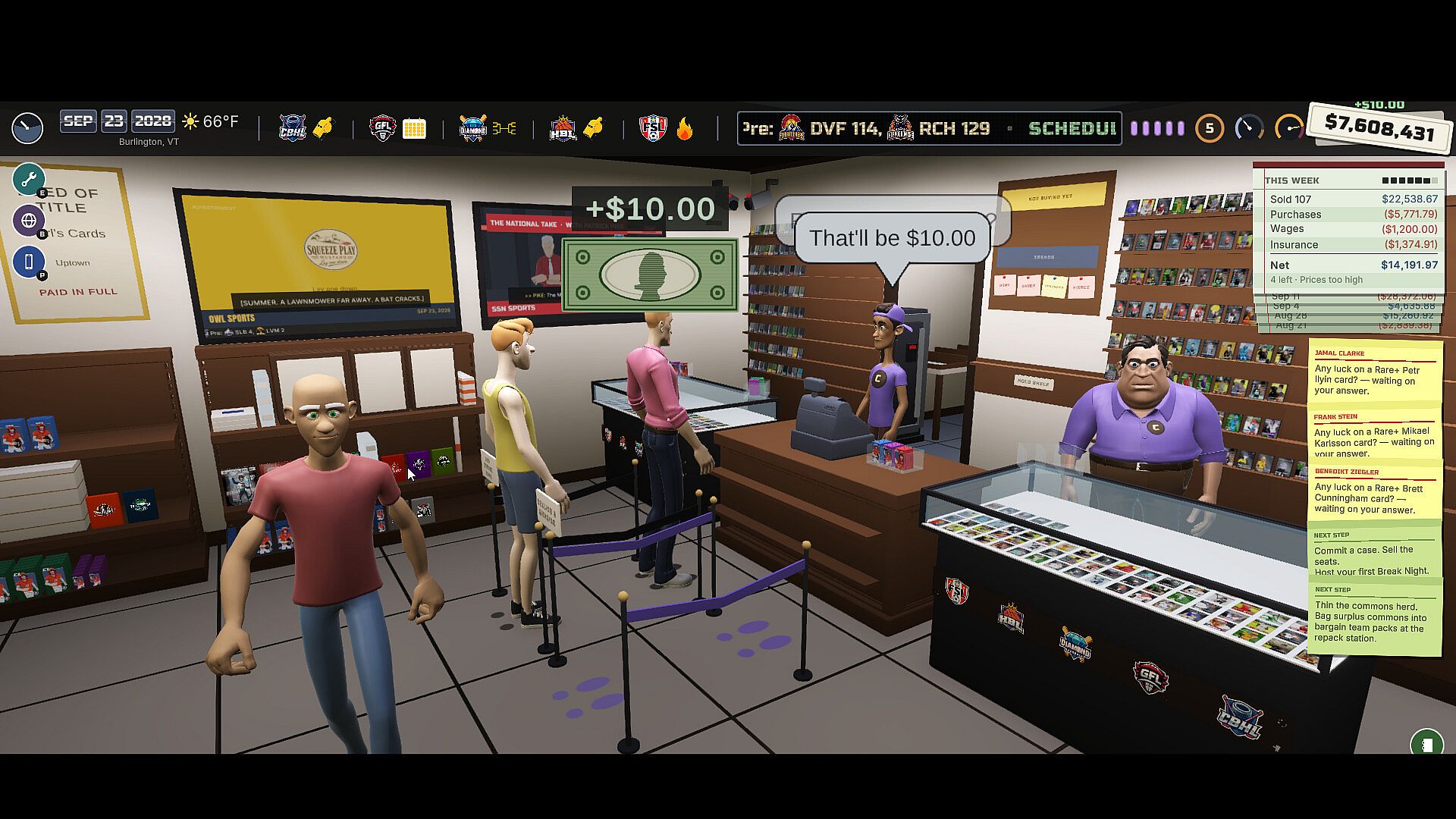
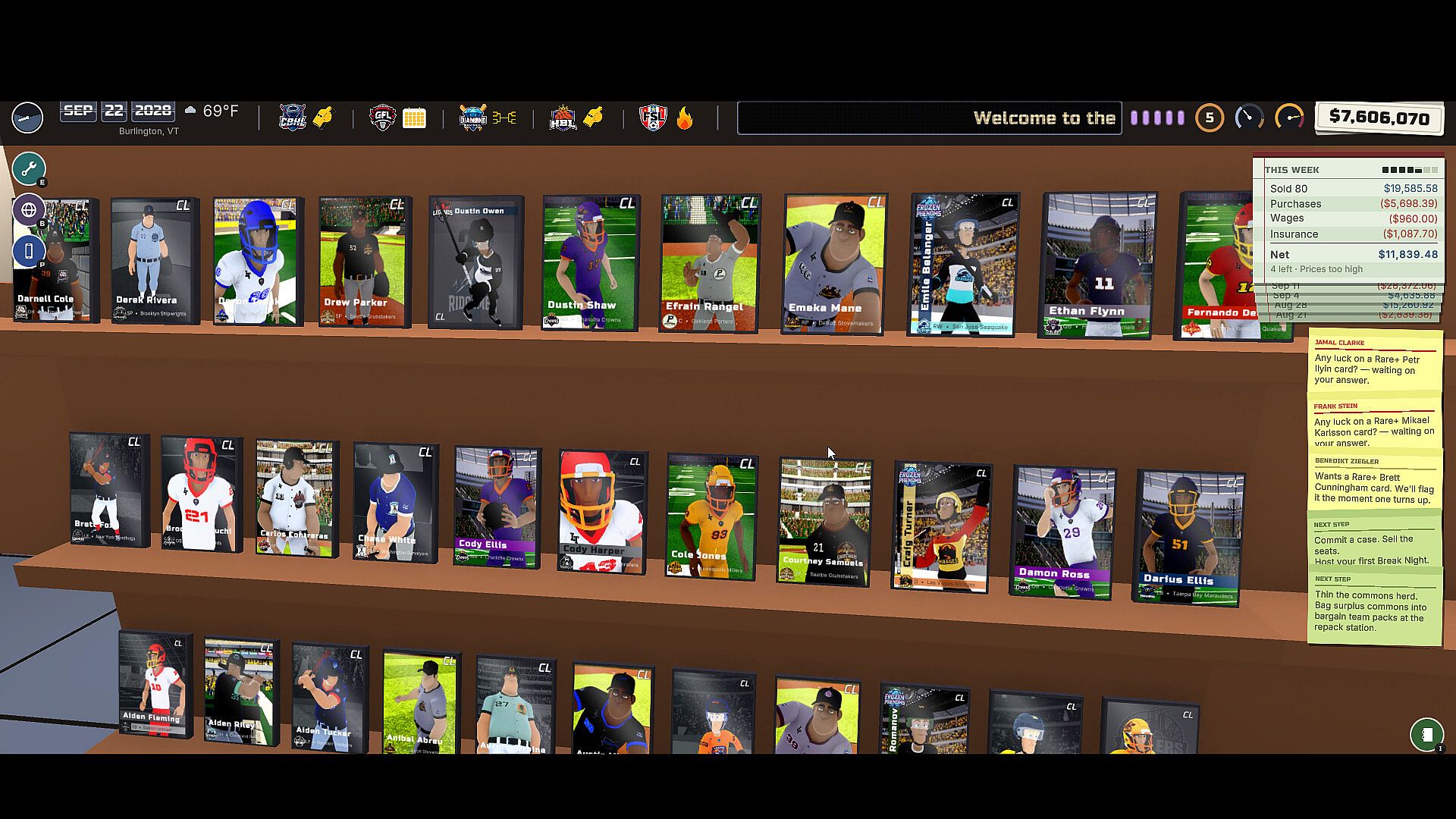
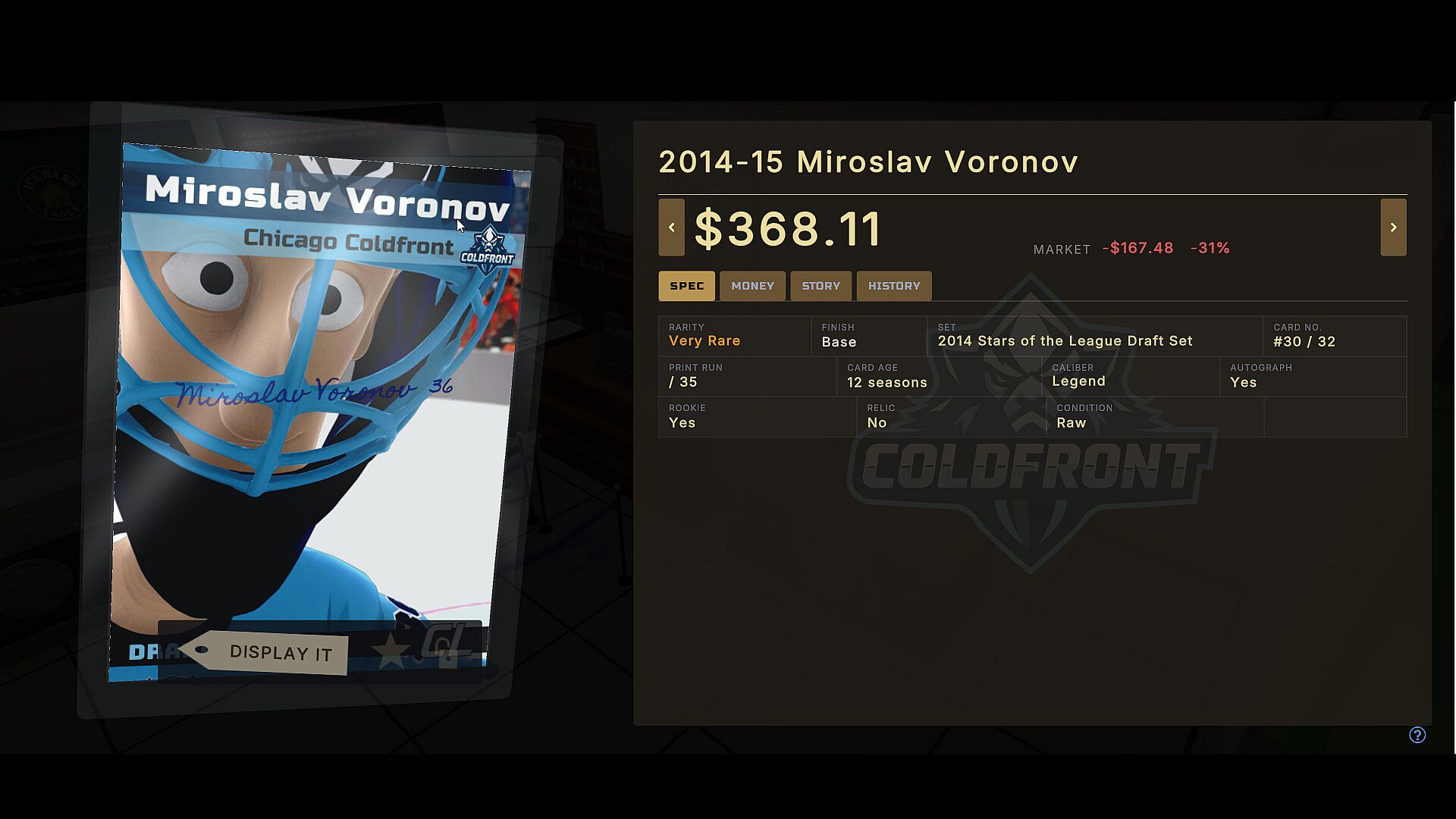
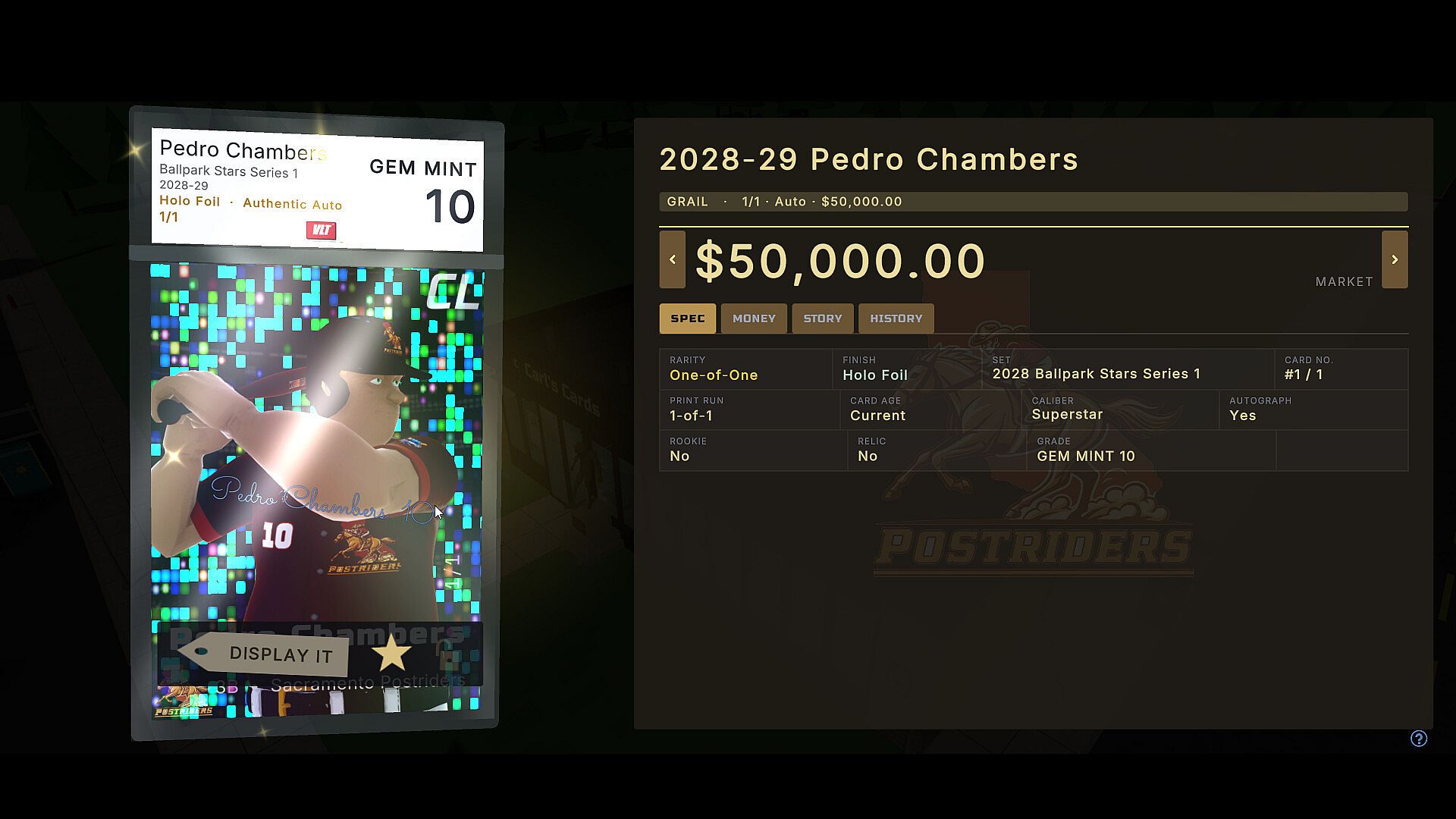
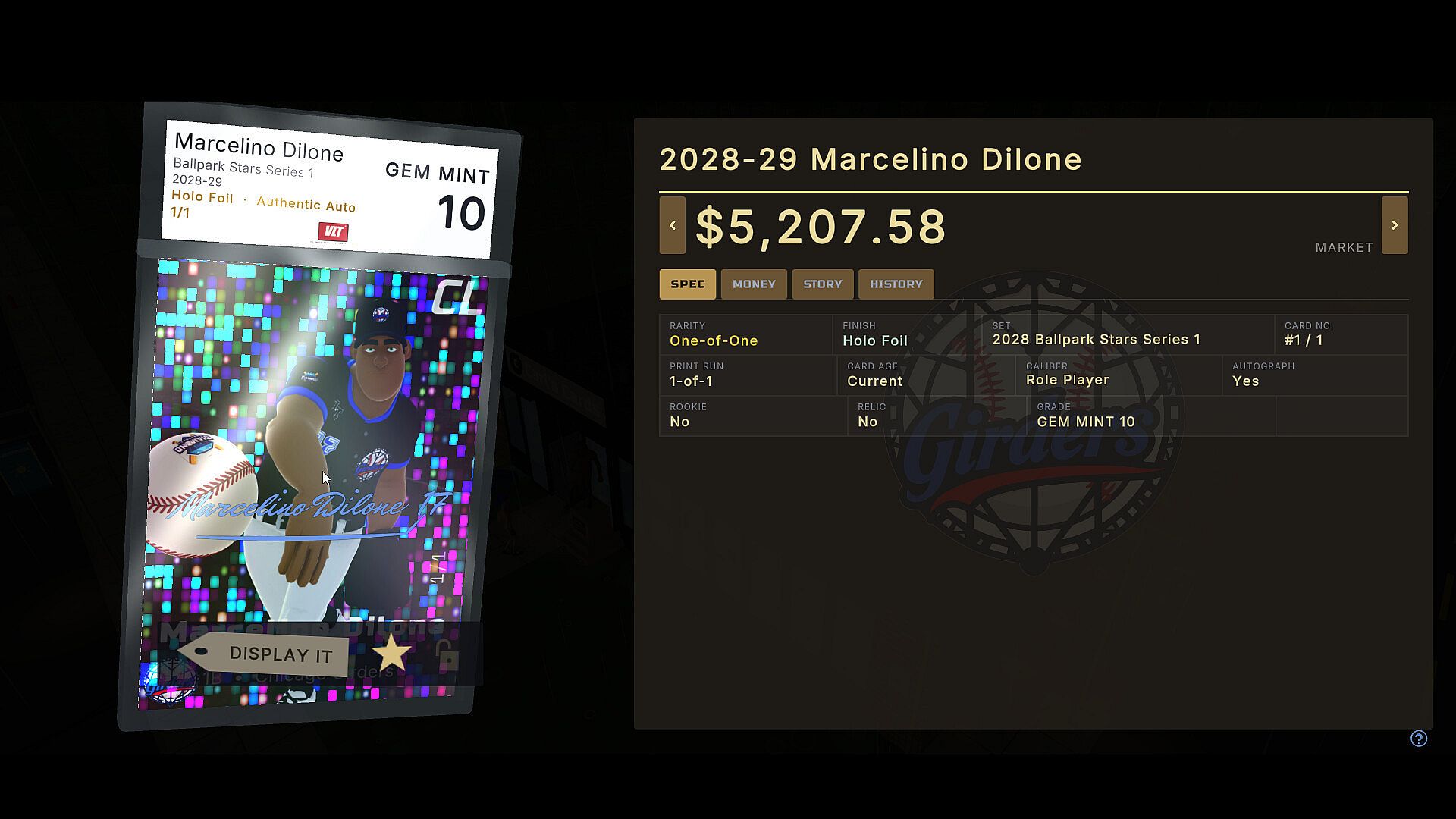
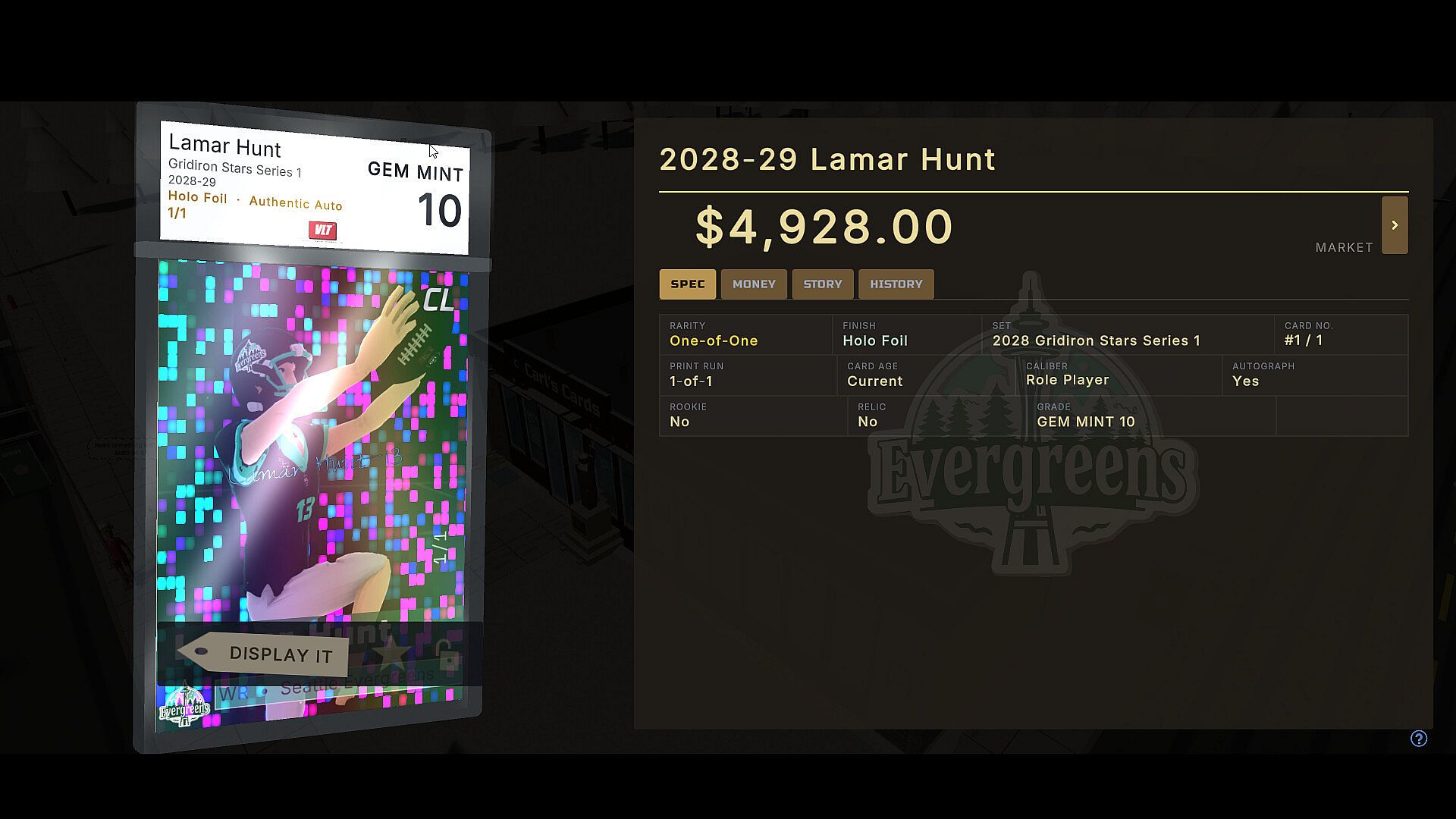

Cardboard Leagues is an indie simulation sports game for PC in which players manage a sports card shop across five fictional professional leagues. The experience centers on market decisions, inventory management, and long-term shop growth rather than direct control of athletes or matches.
Gameplay
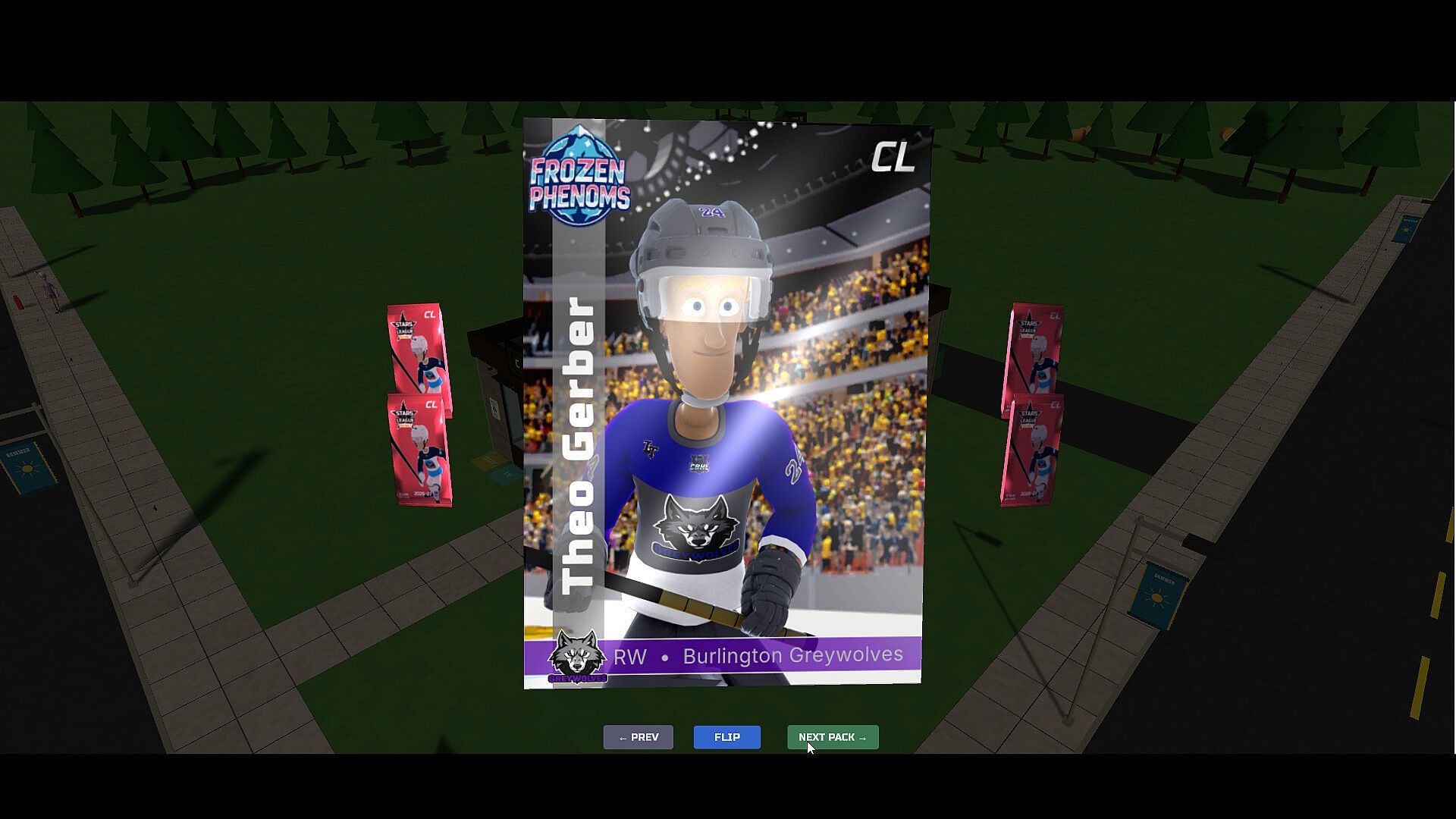
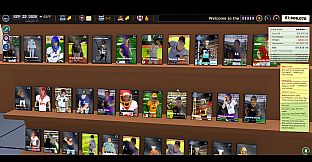
Players begin with a small selection of singles and gradually expand operations by ordering wax packs, deciding which cards to slab for protection, and setting prices based on emerging performance data. Talent evaluation relies on box scores, limited scout reports, and pundit commentary because player abilities remain hidden from the outset. Packs open sequentially in a detailed 3D view that shows the seal breaking and light reflecting off foil surfaces, pausing on rare pulls for closer inspection.
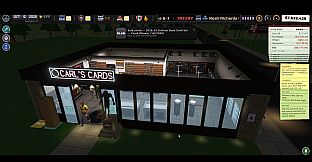
Buying and selling occur through a negotiation interface where offers meet on a shared price rail, with each round of haggling leaving visible markers to help gauge the other party's limits. Staff handle daily register duties, restocking, and intake of graded submissions, though they require attention to prevent burnout or turnover. Shop progression moves through five tiers, starting from a basic card corner and advancing to a premier location through earned revenue and deliberate upgrades to fixtures, lighting, and floor space.
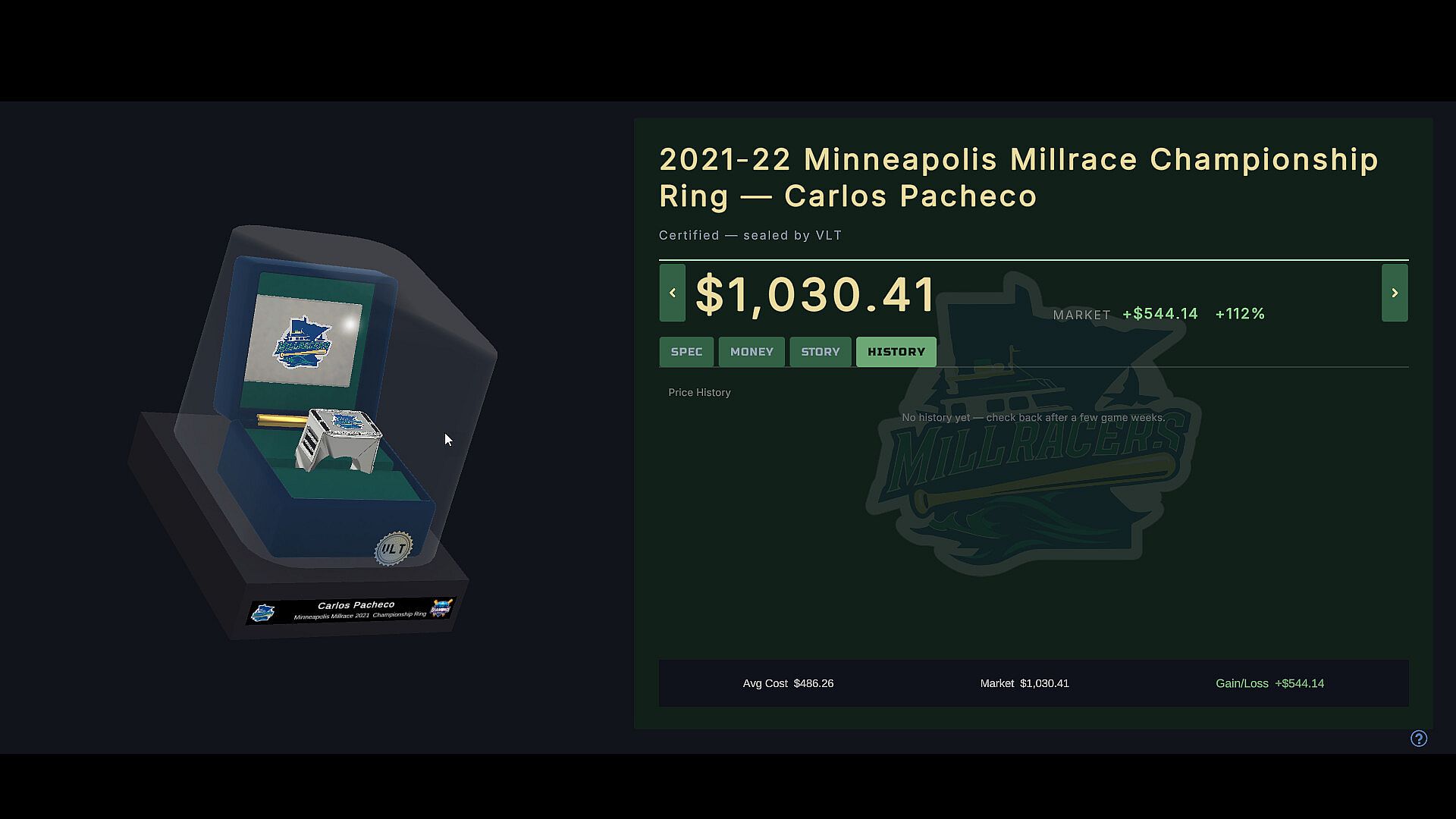
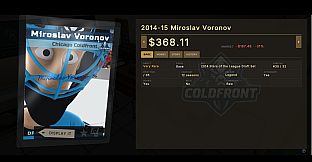
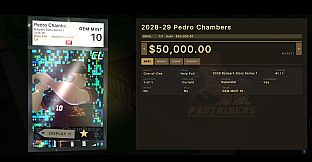
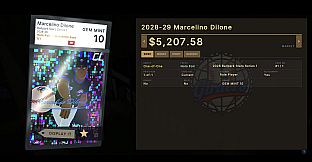
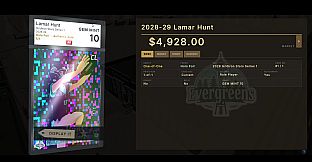
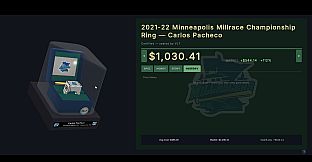
High-value one-of-one cards eventually require auction handling instead of over-the-counter sales. These items appear in quarterly catalogues, receive media coverage, and sell through live bidding that players can join or observe on in-shop displays. Secure storage options such as armored cases and vaults protect the most expensive pieces, with daily costs reflecting the insurance and prestige they provide.
Game Modes
The core loop combines shop management with ongoing league simulation. Five separate leagues operate simultaneously, each featuring 32 teams that follow full seasonal schedules including trades, injuries, playoffs, and awards. Because the leagues are fictional, they maintain decades of history, record books, and retired players whose past performances continue to influence card values long after active careers end.
Grading forms another integrated activity. Customers present cards at the counter for inspection, allowing players to assess centering, corners, edges, and surface quality before assigning a numerical grade. The shop's reputation depends on the accuracy of these calls, as external labs may later disagree with the assessment.
Market dynamics tie directly to on-field results. Card prices shift in response to recent games, creating opportunities to identify undervalued rookies early or adjust inventory when established players surge or decline. Finite print runs mean chase cards disappear from circulation once the tracked total is exhausted, adding scarcity to long-term collection strategies.
Shop Management and Progression
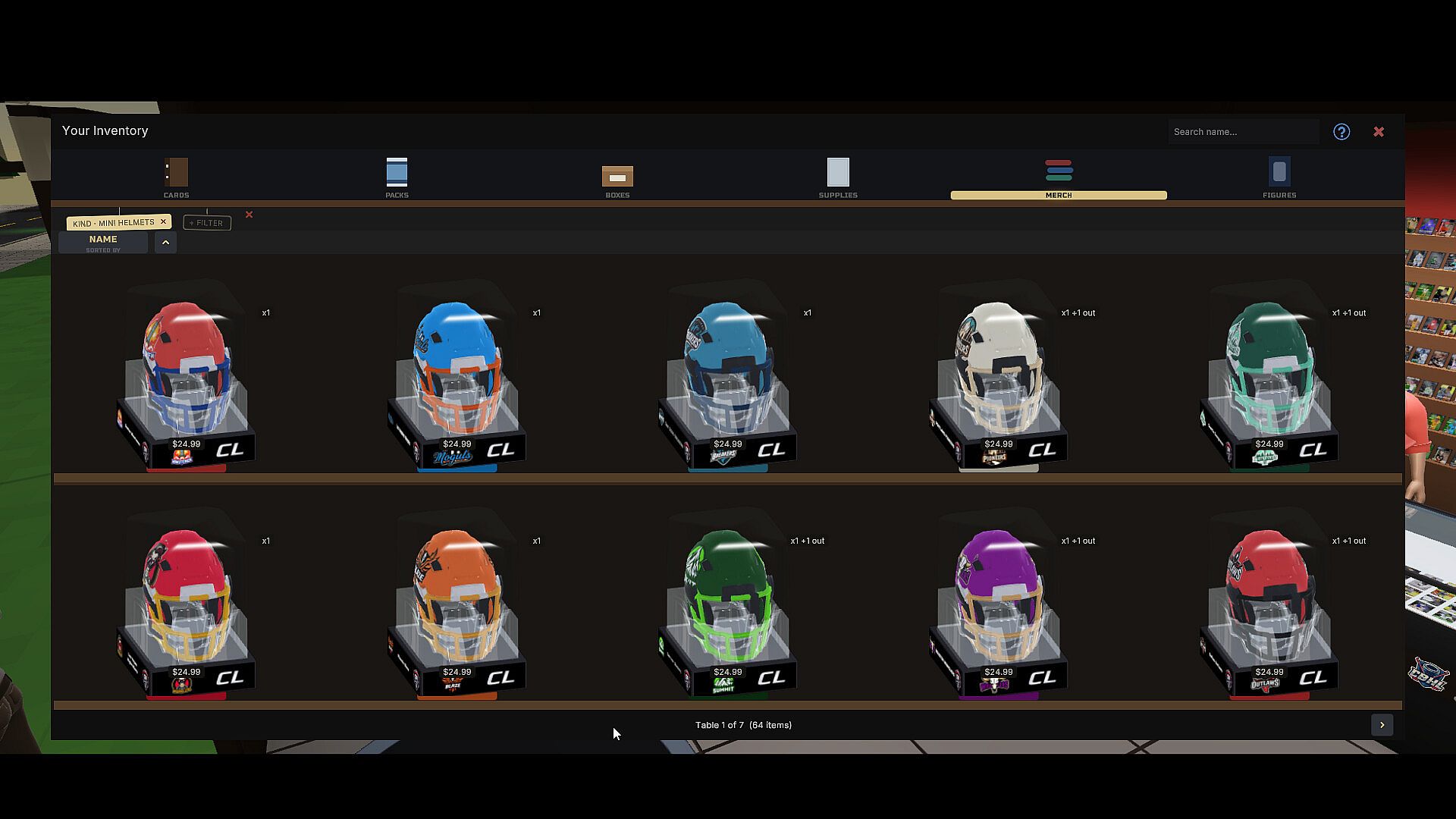
Daily operations require balancing customer traffic with strategic sourcing decisions. Ordering the right wax, choosing which cards merit professional slabbing, and identifying overlooked prospects form the central rhythm. Staff management adds a layer of oversight, as employees handle routine tasks but demand fair compensation and reasonable workloads to remain productive.
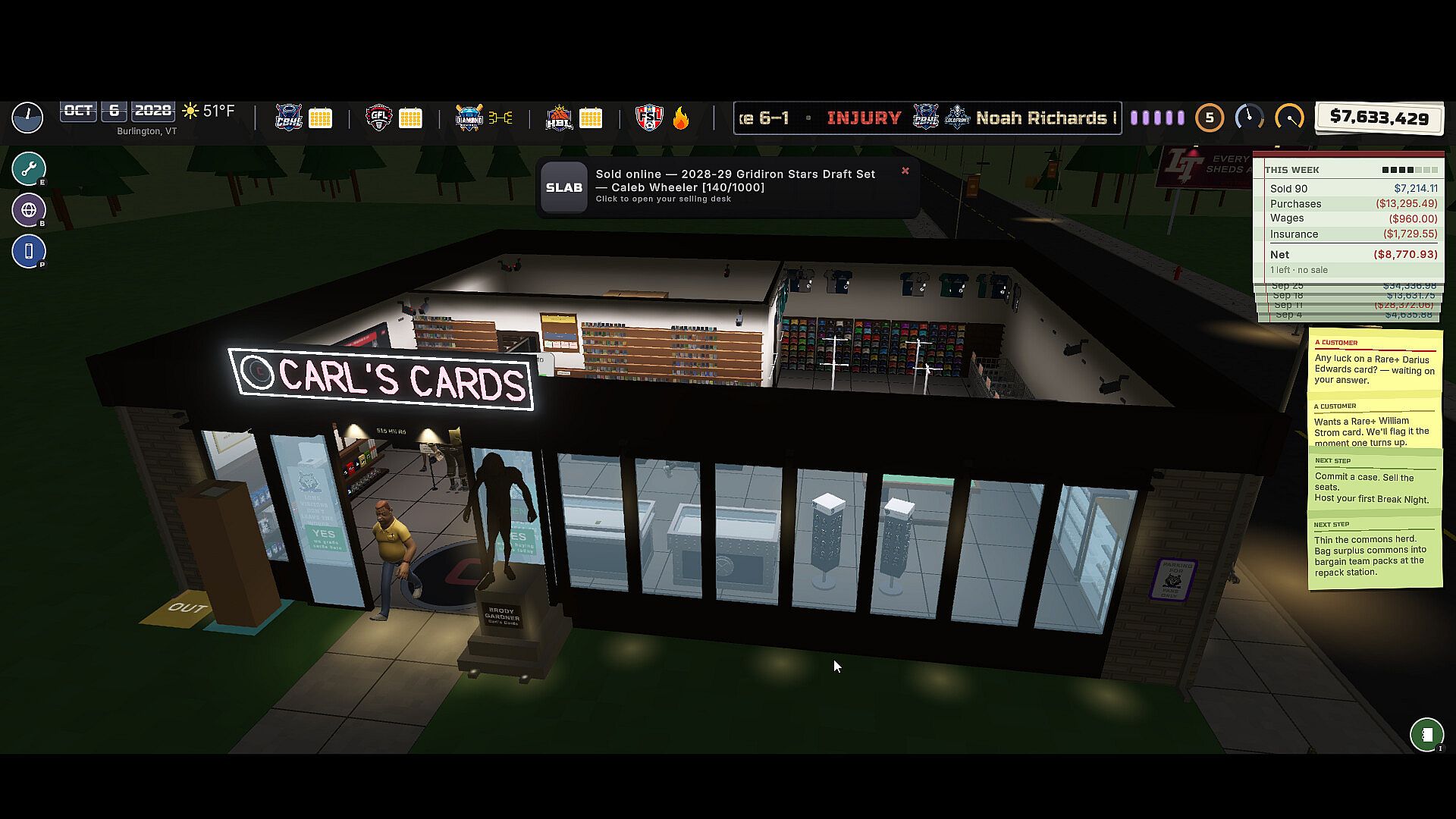
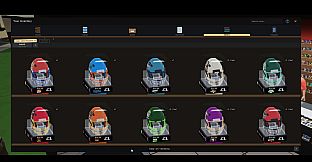
Physical expansion involves purchasing land, repositioning walls, selecting display cases, and installing signage that matches the desired tier. Each upgrade level unlocks greater capacity and higher-end clientele while increasing ongoing expenses such as rent and security.
Is It Worth Playing?
Cardboard Leagues appeals to players who enjoy deliberate, systems-driven management simulations with sports and collectibles themes. The hidden information mechanics and reactive market create a steady sense of discovery without requiring real-time reflexes. Because the game remains in development with a planned release in Q4 2026 and currently lists no user reviews, prospective buyers should monitor official updates for confirmation of final features and balance. Those drawn to realistic negotiation, inventory tracking, and long-term progression in a single-player setting will find the described systems align closely with that preference.