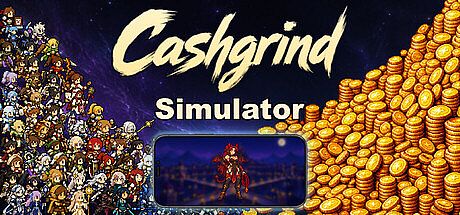


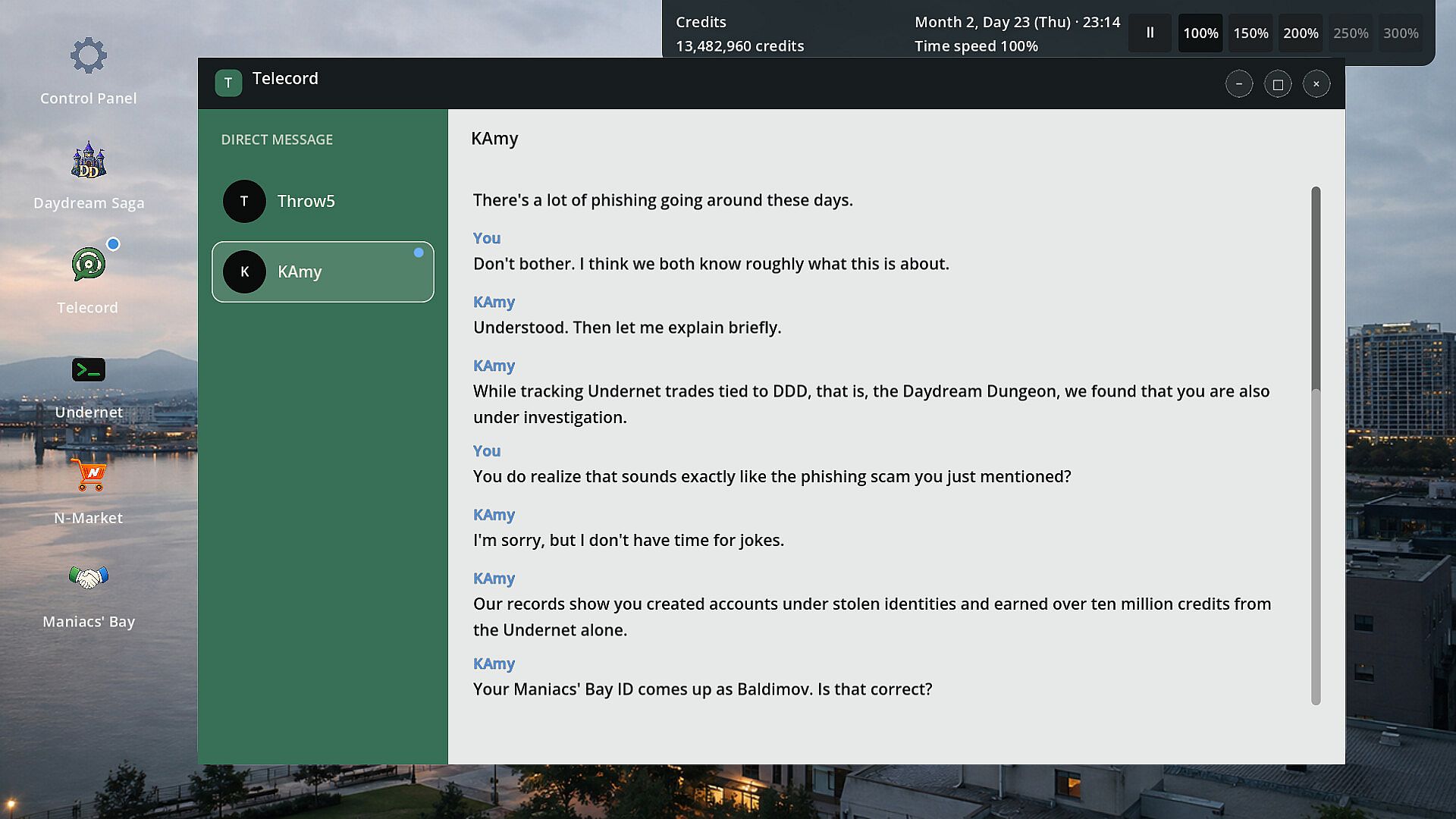
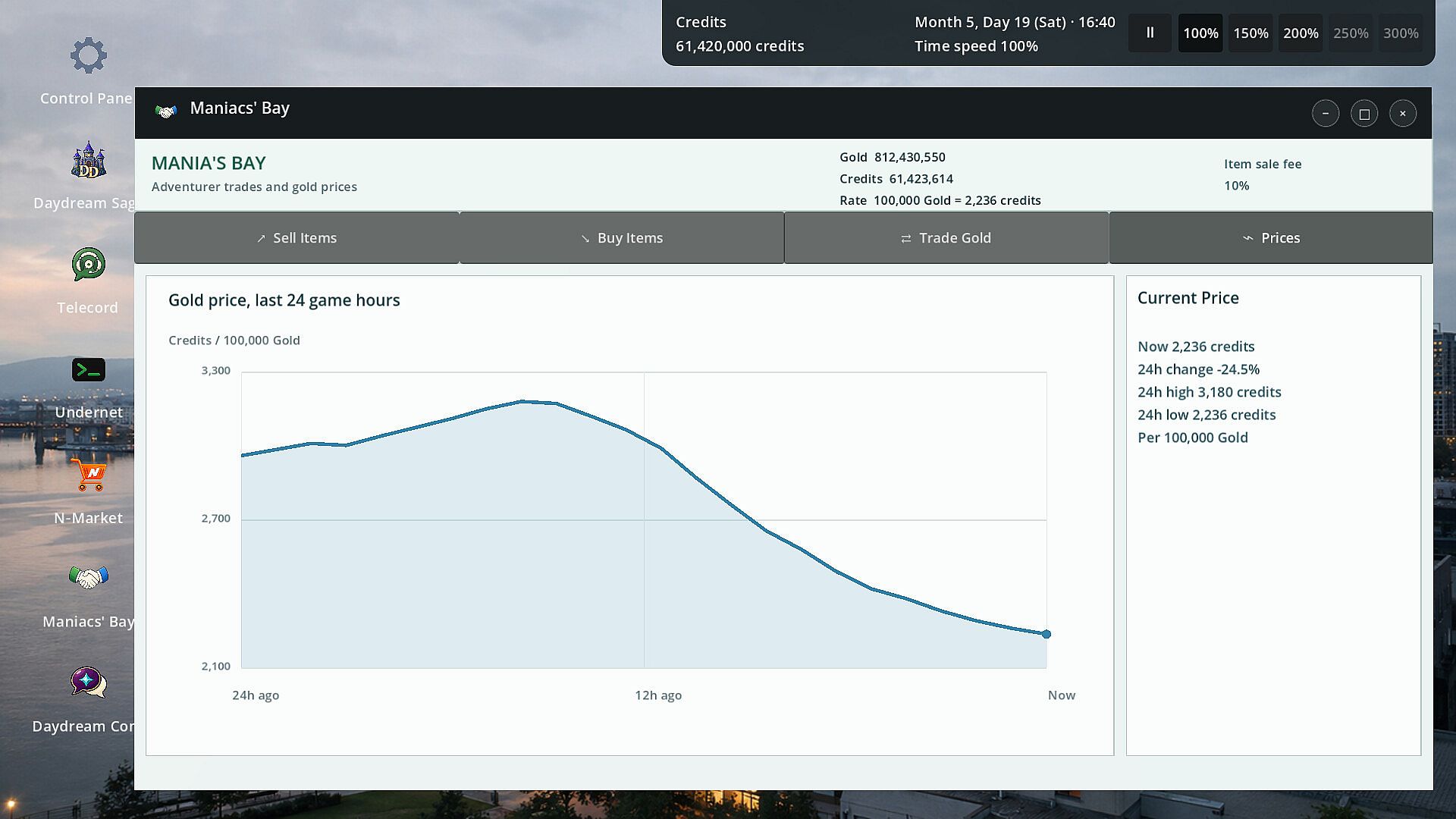
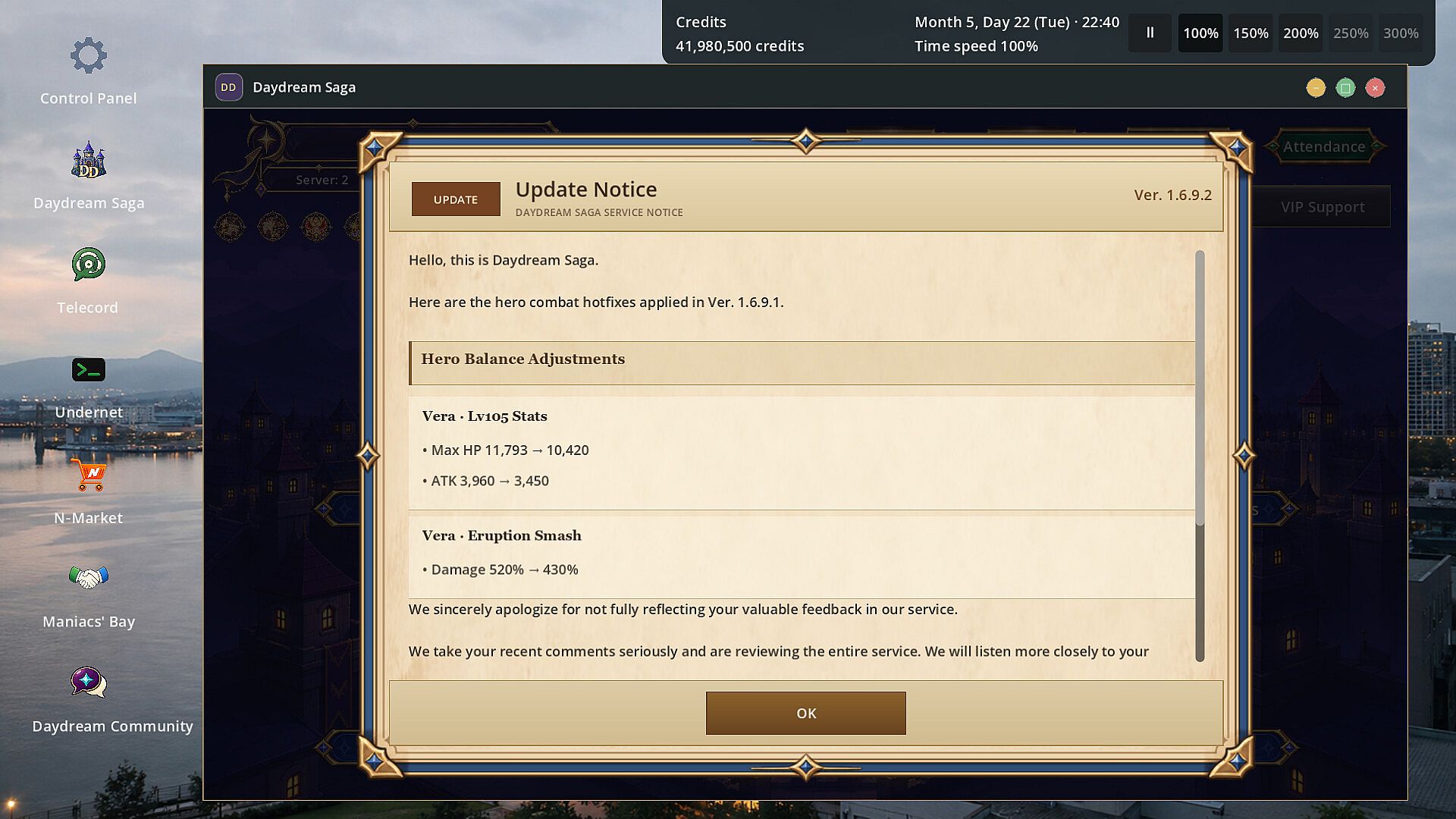

Cashgrind Simulator is a single-player RPG, casual, and simulation game for PC that blends account management, dungeon progression, and personal finance decisions into one experience. Players take on the role of someone who has lost their job and faces mounting debt, turning to the creation and sale of game accounts as a way to generate income while navigating the systems of the fictional title Daydream Saga.
Gameplay
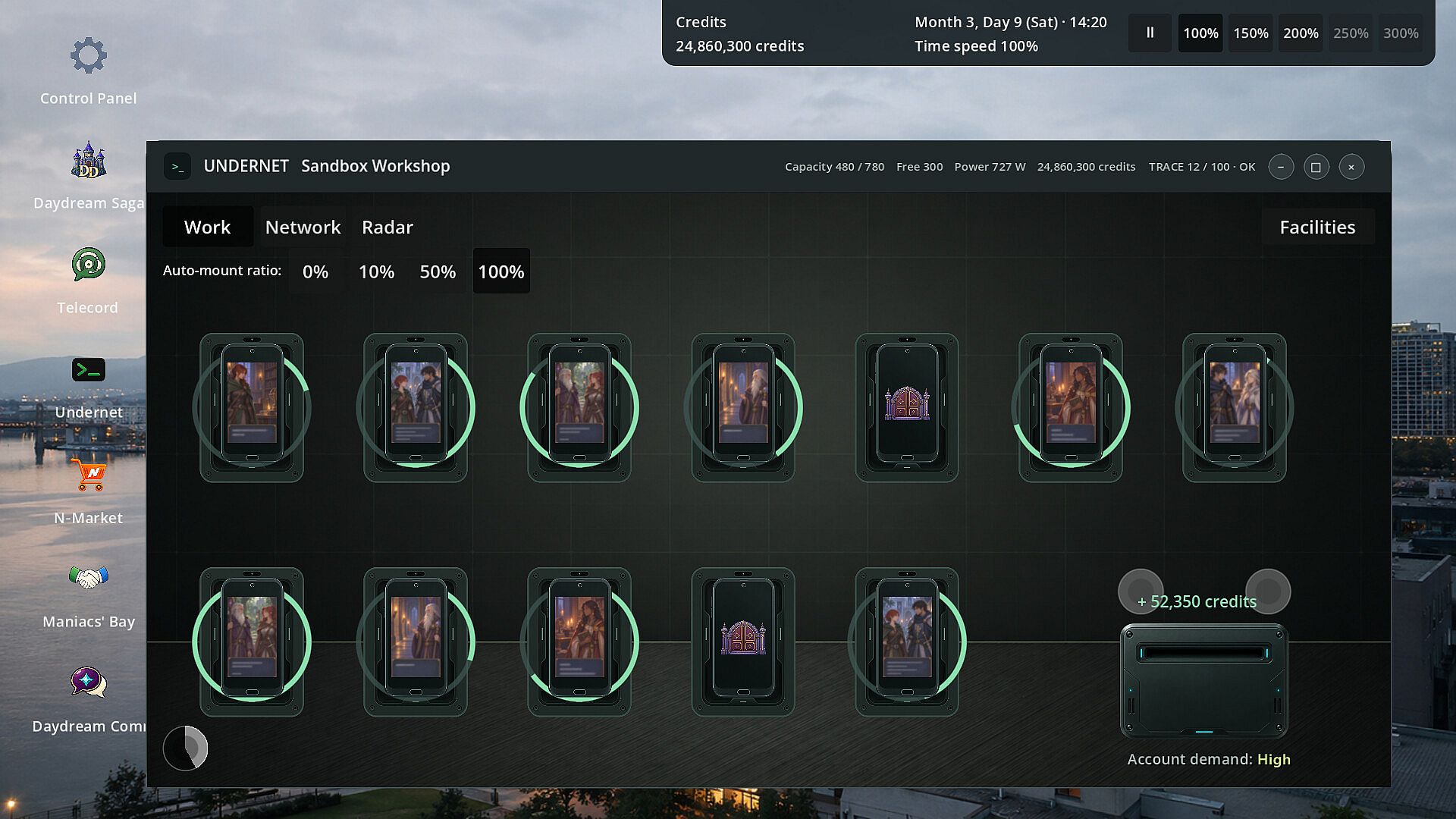
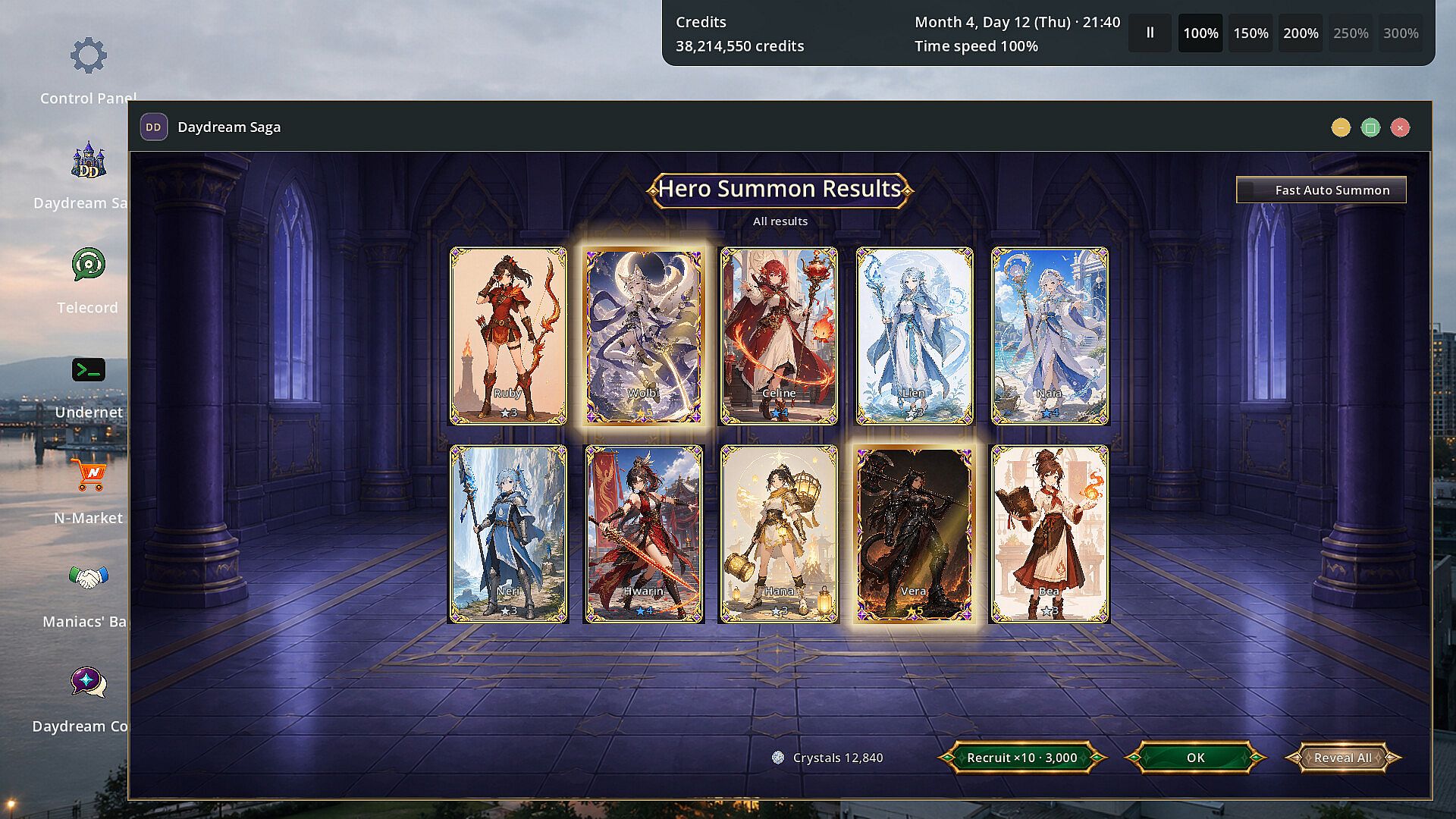
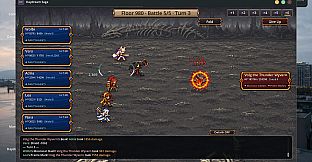
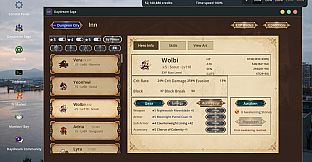
The core loop centers on running operations within Daydream Saga, a retro-styled RPG. Players use provided tools to generate new accounts, rush through the story, and perform pulls for starter heroes before listing the accounts for sale. Successful sales of accounts featuring rare heroes cover living expenses, while repeated attempts on poor results build familiarity with the process. Earnings fund additional devices that automate parts of the workflow, expanding from a single screen to a larger setup capable of handling multiple accounts simultaneously.
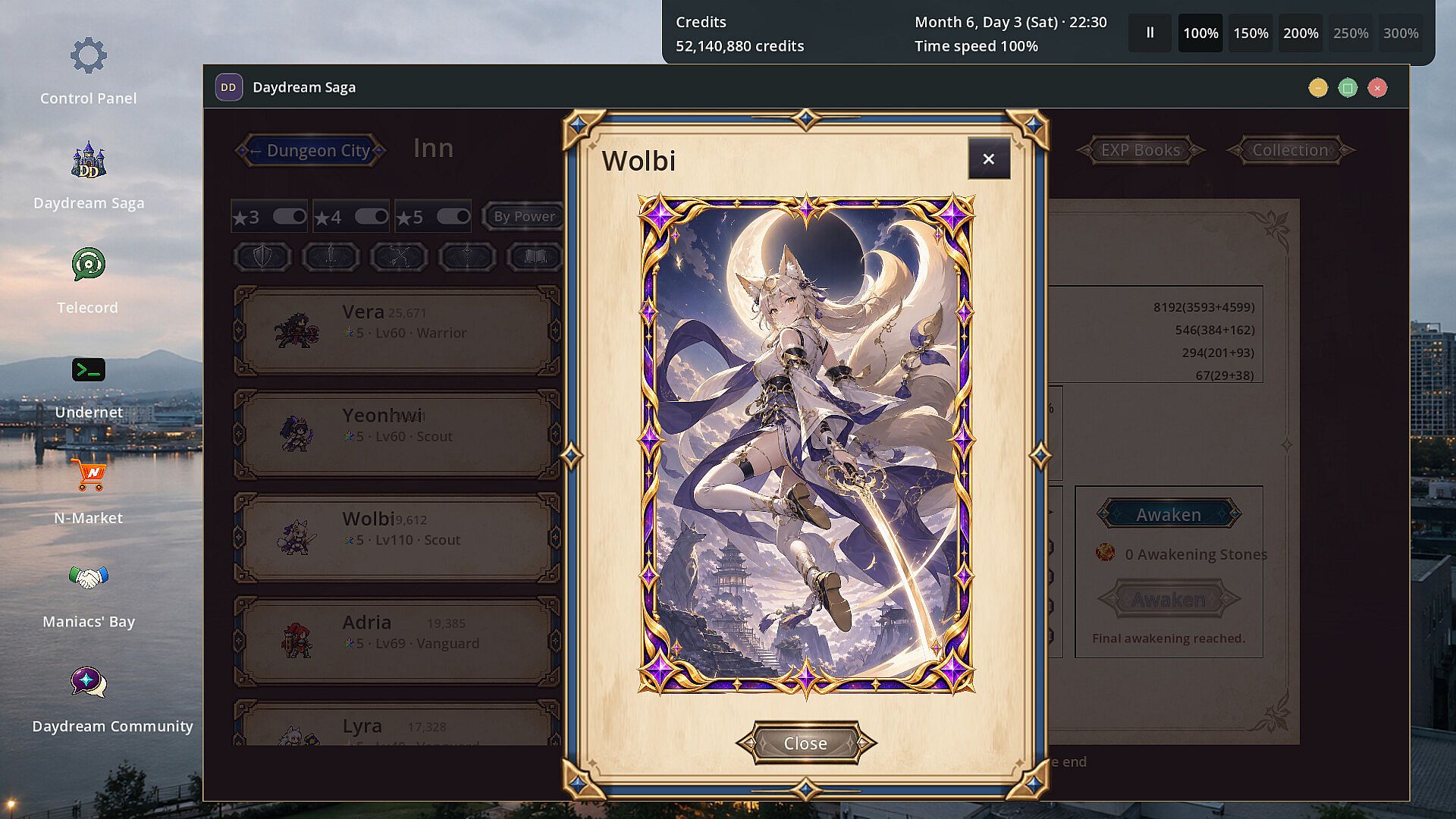
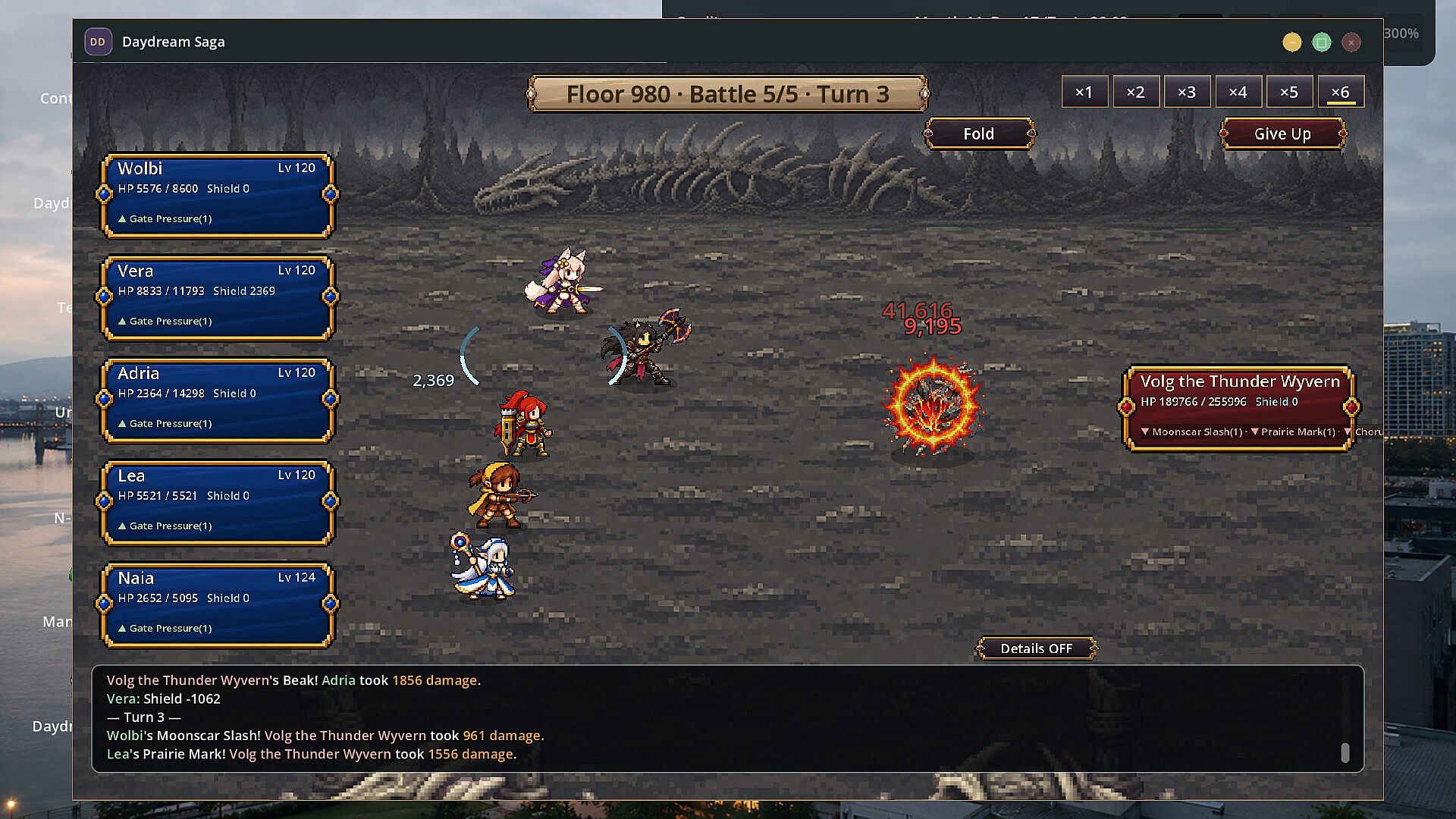
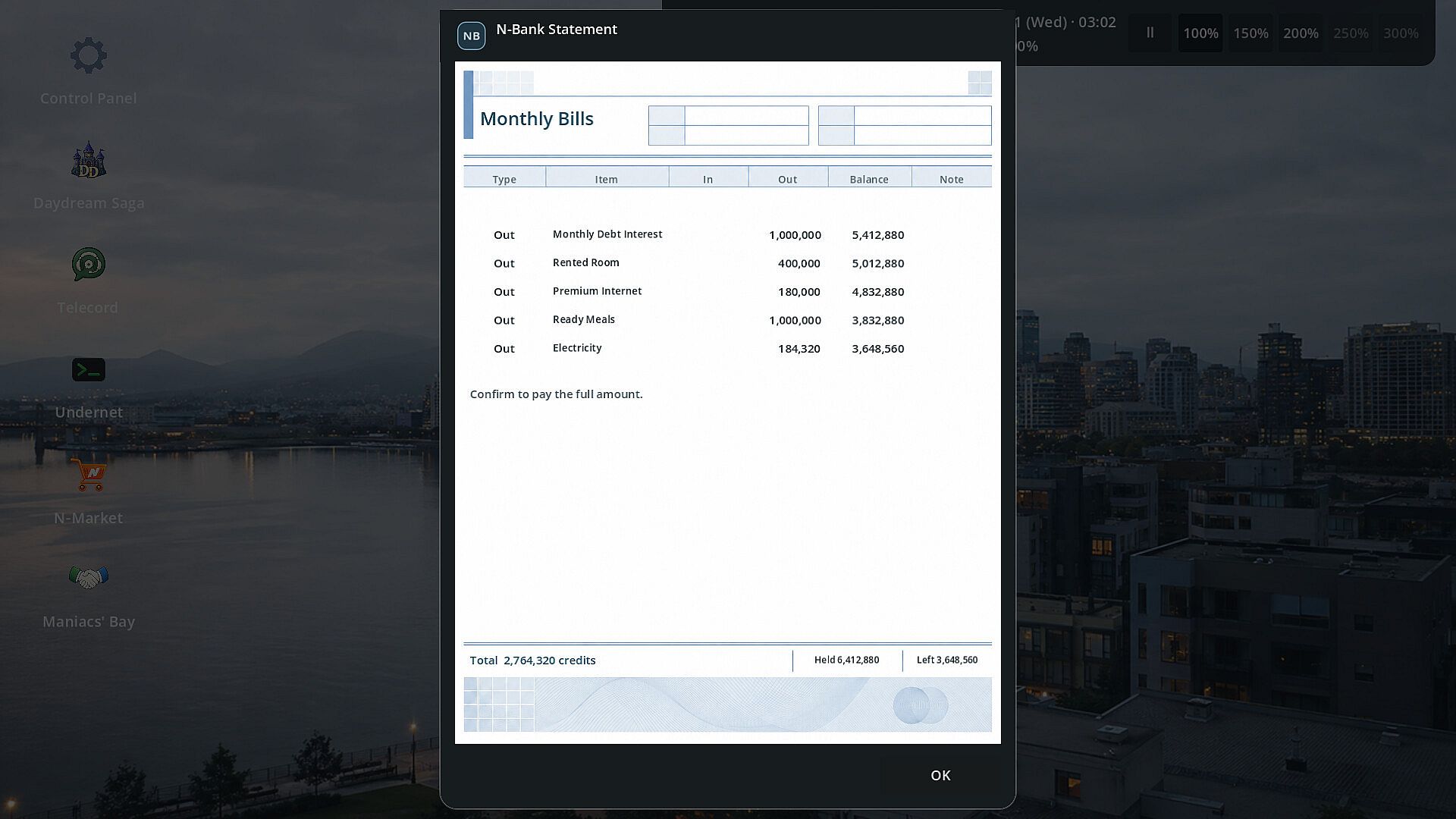
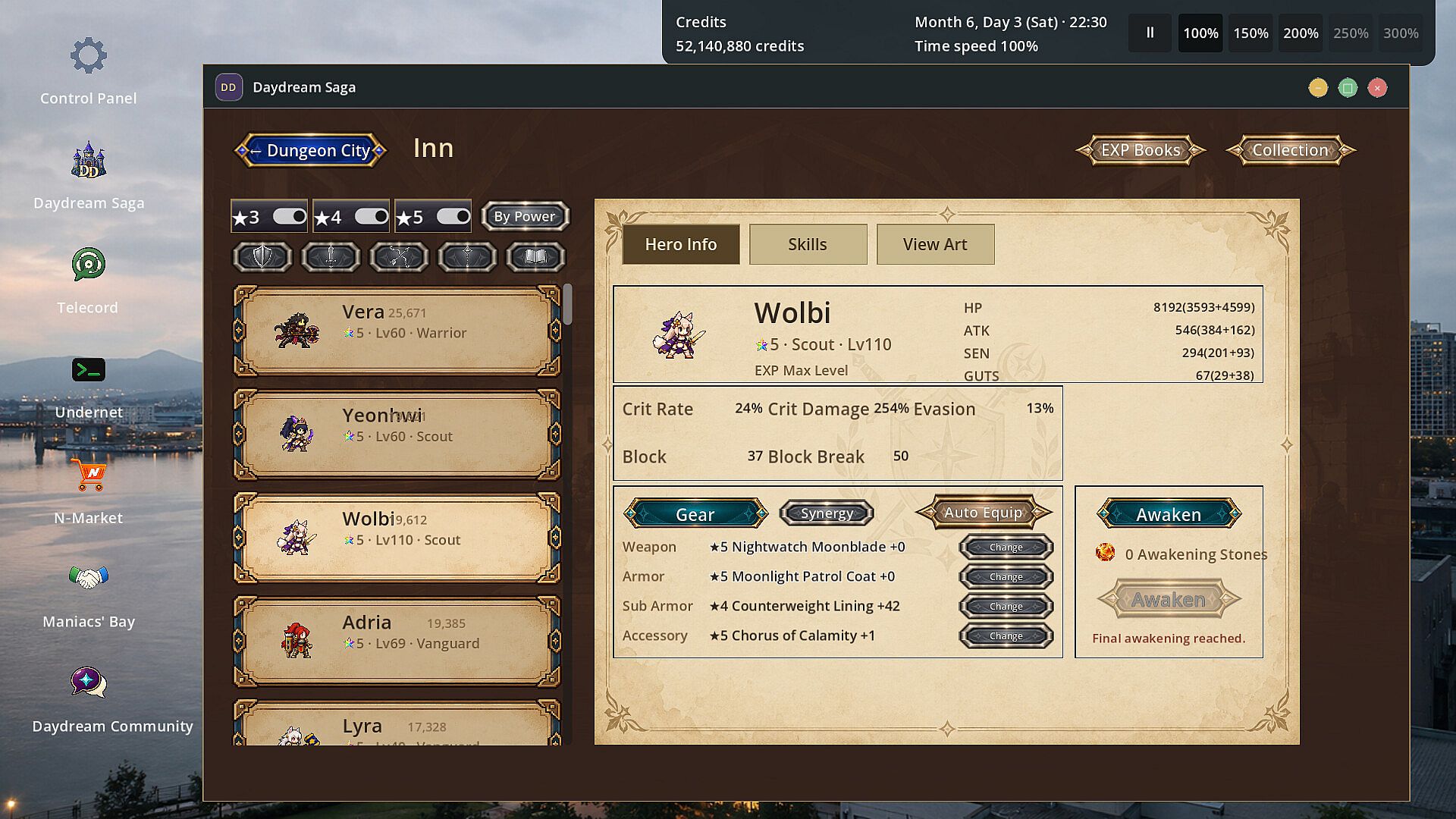
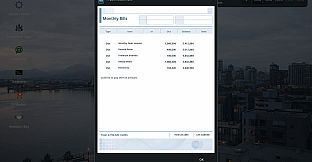
Progress extends beyond account sales into in-game resource management. Players recruit heroes, assemble parties of five, equip them, and advance through dungeon floors where battles resolve automatically. Choices about party composition and gear determine how far a group advances. Cleared zones support stationed patrol parties that gather gold and items over time. Resources are allocated between personal use and further investment, with upgrades to living conditions and equipment improving overall efficiency. Time pressure from monthly bills and loan interest adds urgency to decisions about spending, saving, or expanding operations.
Game Modes
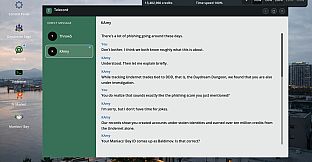
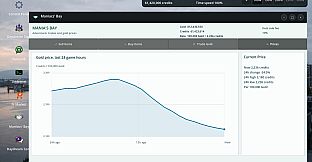
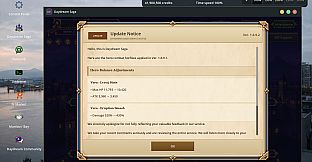
Account creation and sales form the initial focus, with players repeatedly generating and trading profiles to build capital. Gold farming shifts emphasis to sustained dungeon runs, where patrol parties collect resources and players push deeper for higher yields that can be converted into real-world value. Raid encounters tied to hero updates test optimized parties against tougher opponents, requiring adjustments to lineups and equipment. The Proving Grounds provide a competitive layer where players climb rankings against others for monthly rewards and observe shifting strategies from opponent setups. Collection activities involve pursuing rare heroes and elusive monsters, some of which hold significant trade value.
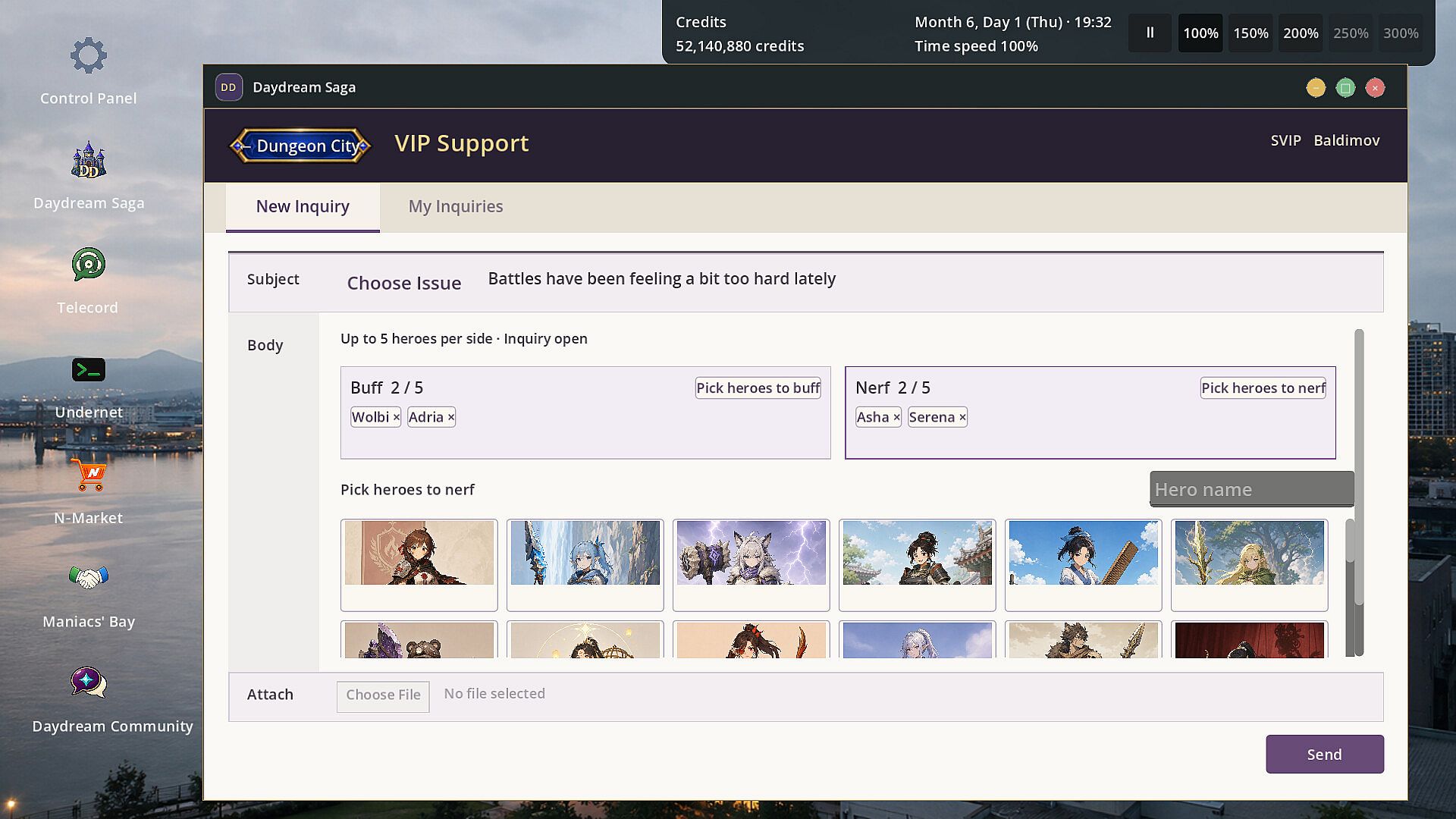
Personal finance elements run parallel to these activities. Players manage debt repayment, daily expenses, and long-term savings goals such as ETF investments that generate dividends. Reaching sufficient funds opens the possibility of purchasing a home. Side choices involve interactions with external groups that may influence the overall path taken.
Life Simulation and Progression
Beyond the game-within-a-game systems, Cashgrind Simulator incorporates management of personal circumstances. Initial debt and limited funds force careful allocation of income between immediate needs and growth tools. Upgrades to workspace equipment increase account production capacity, while lifestyle improvements affect efficiency stats. The narrative tracks the transition from financial strain to stability, with outcomes depending on how players balance short-term survival against long-term accumulation. The setting includes an overarching story about Daydream Saga itself, though engagement remains optional in favor of mechanical focus.
Is It Worth Playing?
Cashgrind Simulator suits players interested in simulation titles that combine incremental progression, resource optimization, and light narrative choices around financial recovery. The mix of account rerolling, automated dungeon farming, and real-life budgeting creates a steady loop of planning and execution without direct combat control. Those who enjoy building systems that scale over time, whether through more devices or stronger in-game parties, will find consistent depth in the described mechanics. The game remains in development with a coming-soon status on PC, so current details reflect the outlined features rather than post-release updates or community feedback. Individuals drawn to casual RPG elements paired with simulation management may find the approach engaging for extended sessions focused on steady advancement and goal completion.