






China Youth Academy is a management simulation blending strategy, RPG, simulation, and sports elements on PC. Players take charge of a grassroots youth football academy in a fictional Chinese setting, starting with limited resources and building sustainable squads across multiple age groups while navigating financial pressures and administrative hurdles.
Gameplay
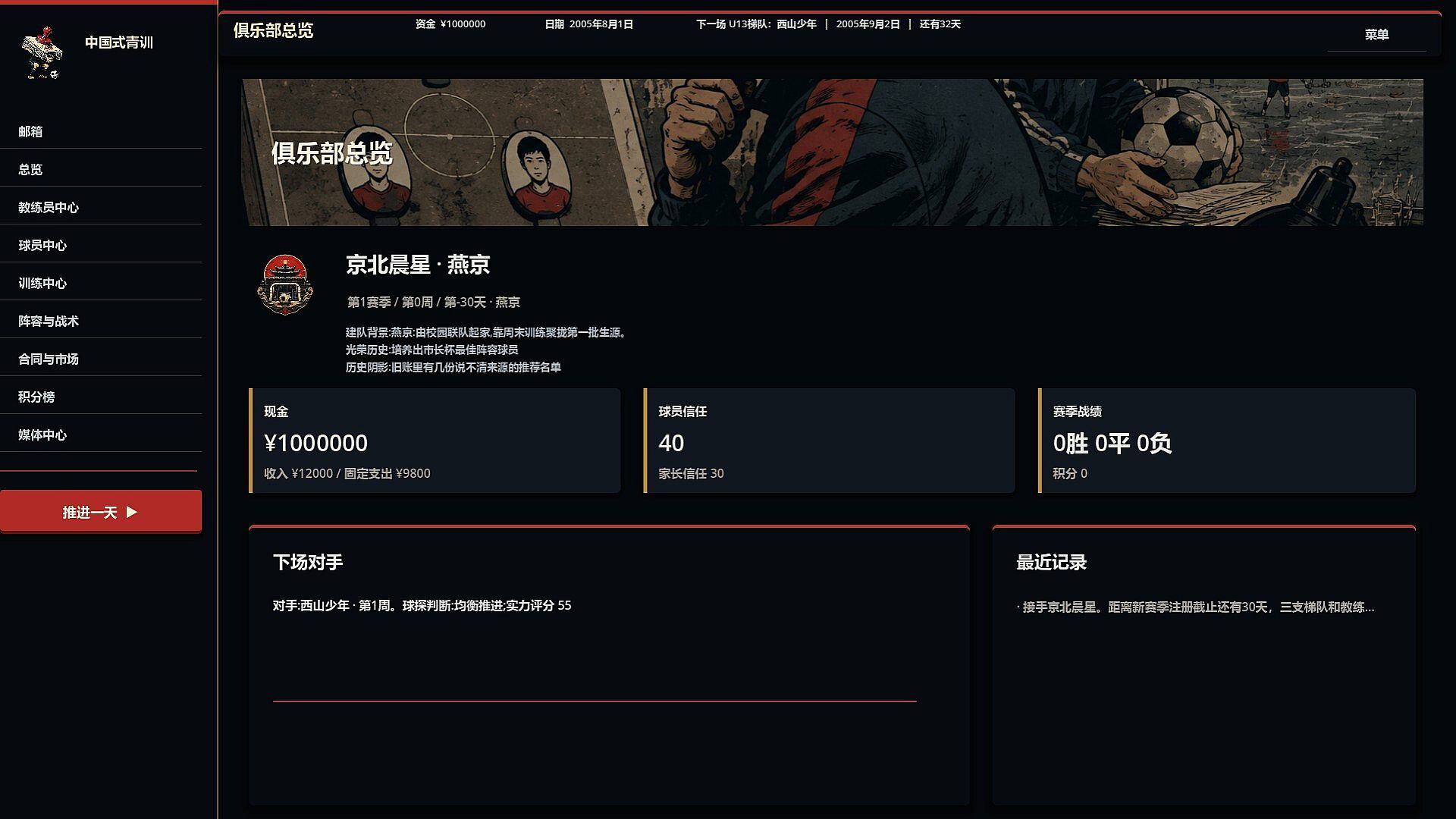
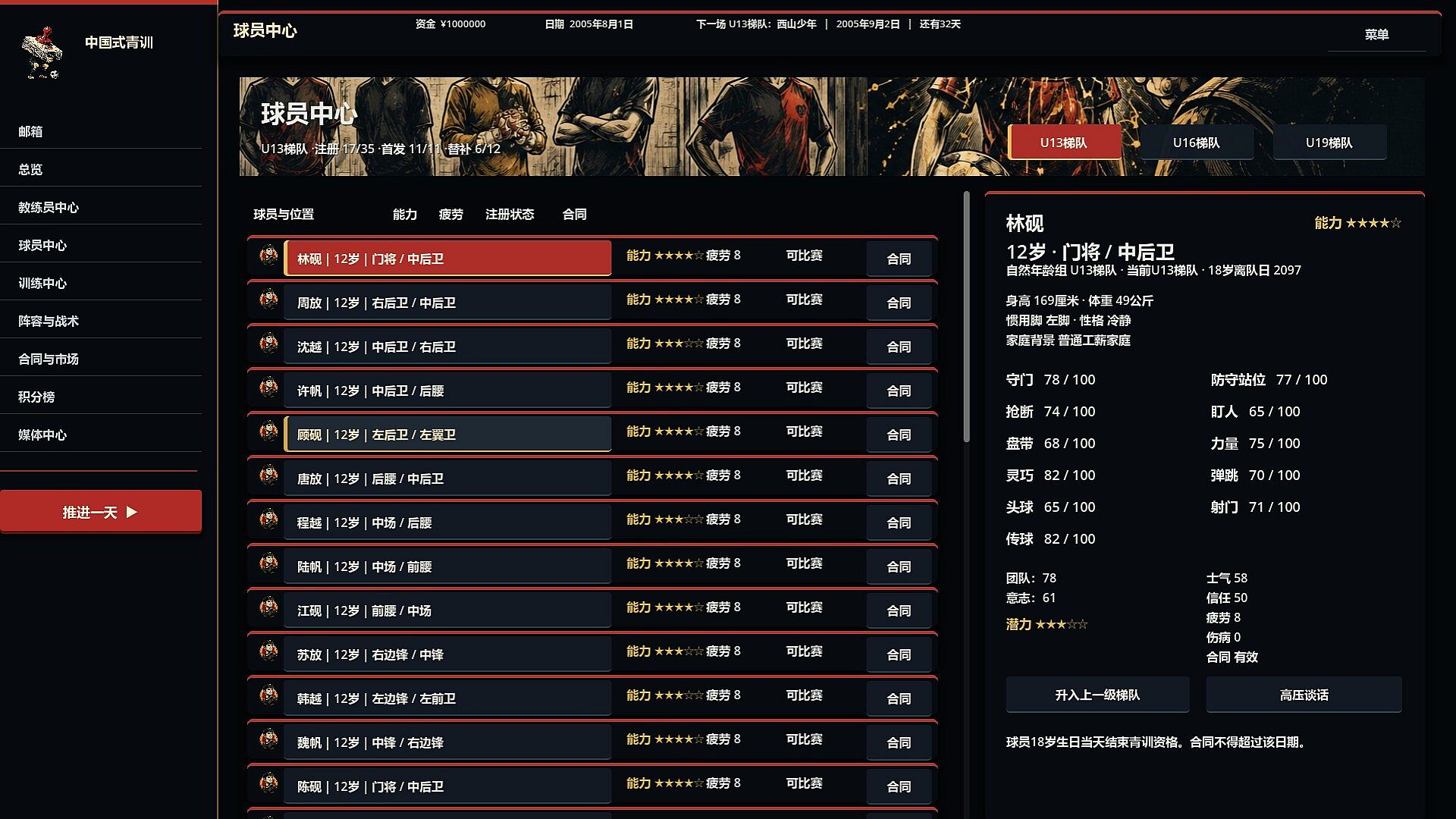
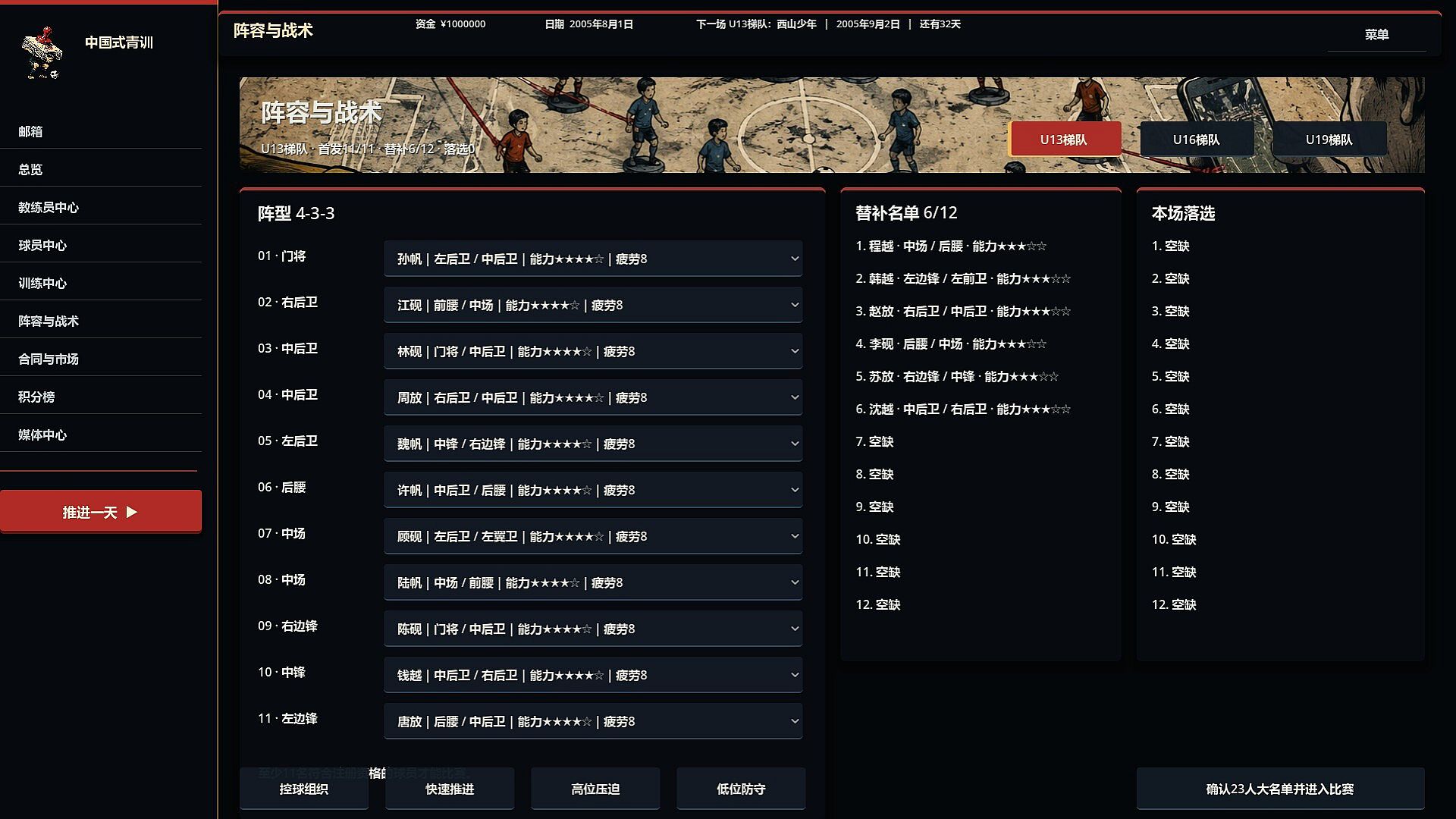
The core loop centers on running three separate squads simultaneously from the outset on August 1, 2005. Each squad operates independently with its own training schedules, fixtures, standings, and national competition paths. Up to 35 players can register per squad, and decisions cover formations, tactics, matchday selections, promotions between age groups, and age eligibility rules. Player attributes such as goalkeeping, defensive positioning, tackling, marking, dribbling, strength, agility, jumping, heading, finishing, and passing improve through targeted training, though fatigue, injuries, and form fluctuations result directly from those sessions. Stable traits including height, weight, preferred foot, personality, family background, teamwork, willpower, and potential influence long-term growth from age 12 until eligibility ends at 18.
Recruitment and retention involve negotiations rather than simple approvals. Ordinary families may cover training fees, while higher-potential prospects negotiate discounts, scholarships, stipends, or youth employment contracts after turning 16. Guardian demands intensify with improved performance and external interest. Transfers require more than an accepted offer; payment, registration certificates, administrative reviews, supplementary documents, arbitration, and disputes determine final eligibility. An inbox system delivers all notices, reports, complaints, offers, and rule changes, forcing prioritization amid ongoing academy operations.
Game Modes
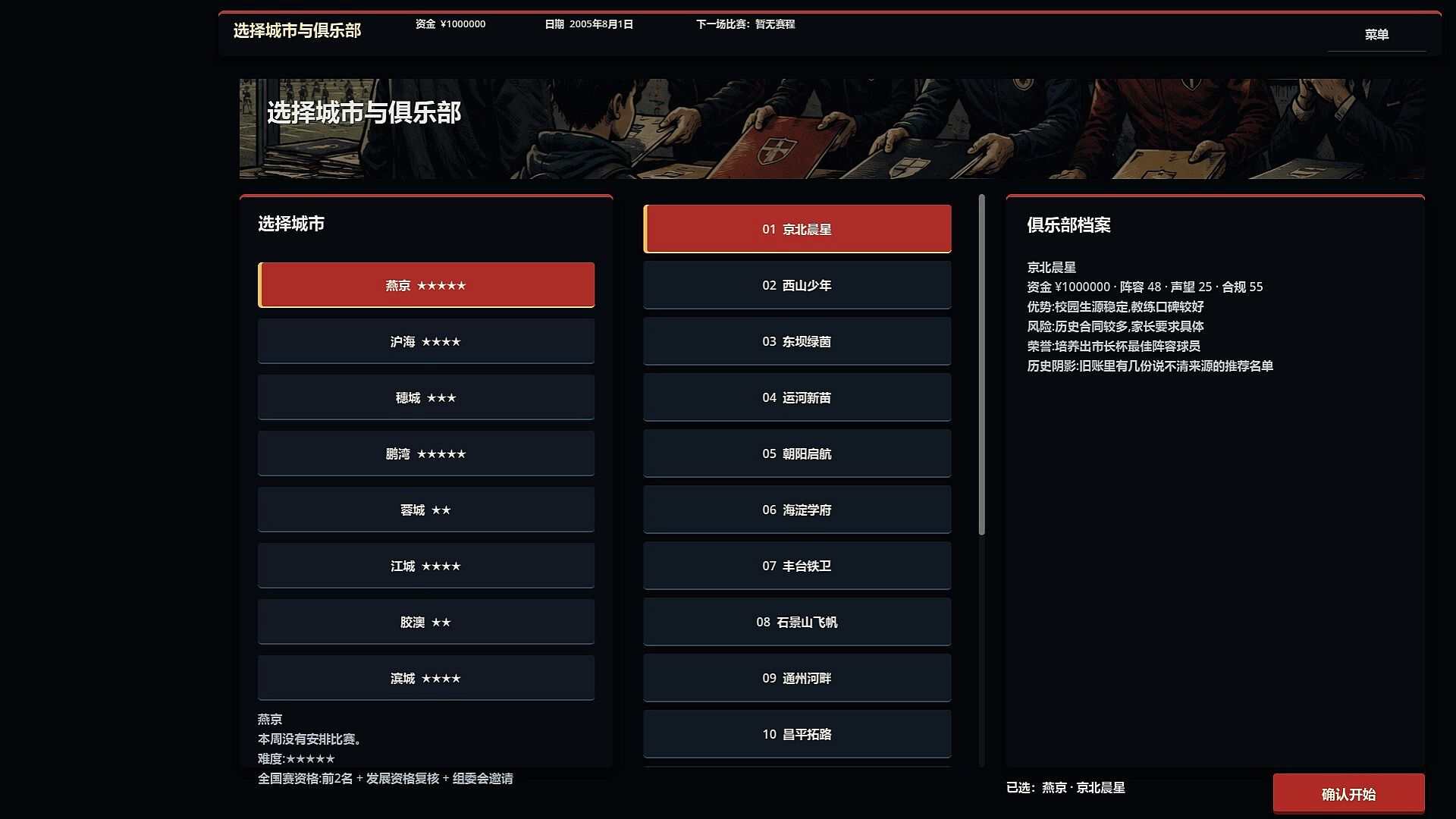
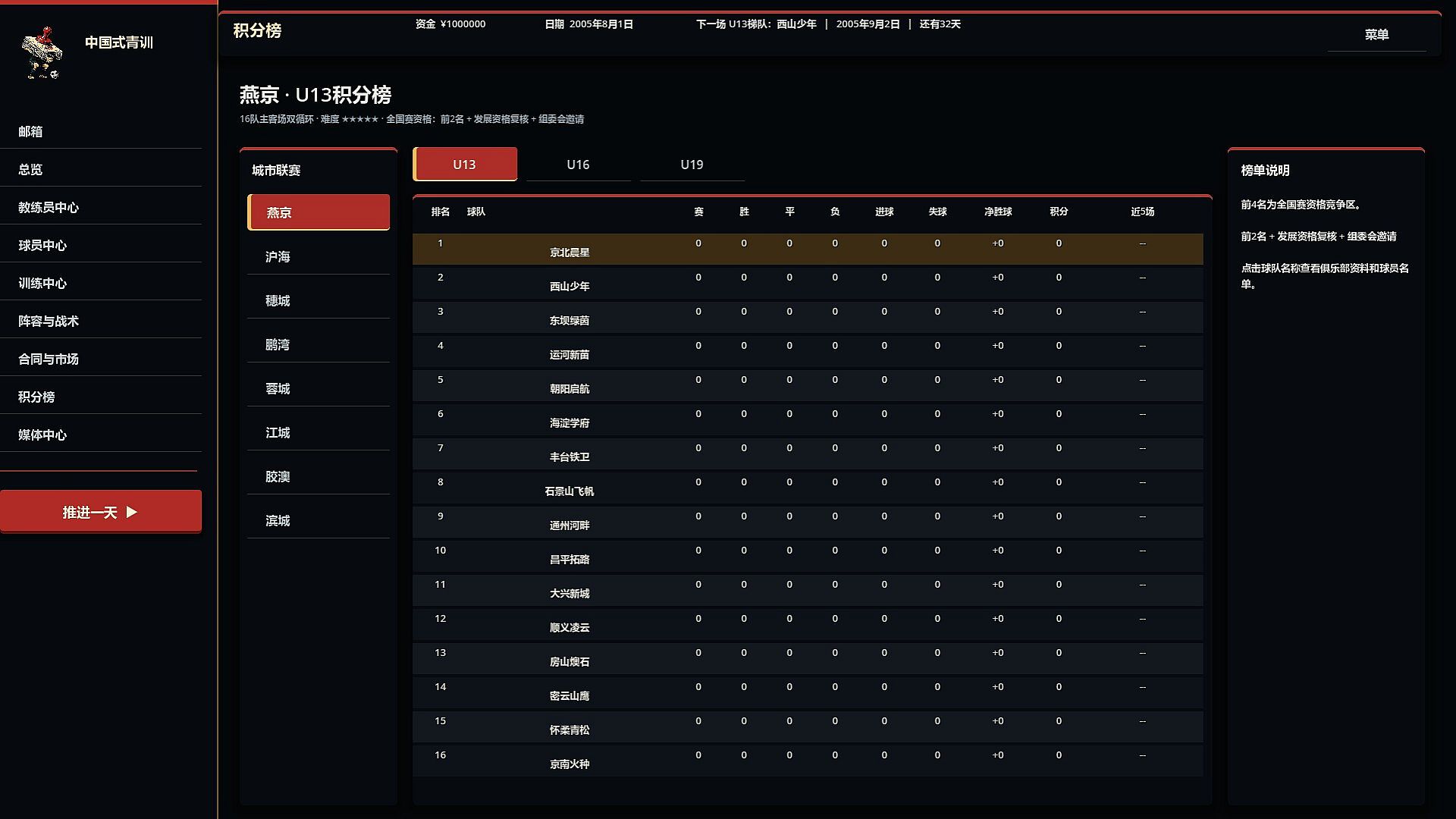
Three independent age-group squads form the primary structure, with separate management of training, fatigue, fixtures, and competitions for U13, U16, and U19 teams. Local city-league levels progress into three tiers of national competitions, where last-minute rule changes, venue shifts, and development evaluations add layers of risk. Rival academies across eight fictional cities with distinct regional traits actively recruit, renew contracts, promote players, and compete for talent. Professional clubs scout standout players aged 16 and above, creating opportunities for successful transfers that affect academy reputation and finances.
Player development runs continuously across squads, with training directly altering attributes while stable traits shape individual trajectories. Financial survival requires balancing training fees, stipends, and institutional costs against performance outcomes. Every action carries consequences for cash flow, squad depth, guardian relations, and regulatory compliance.
Key Mechanics and Systems
Training produces measurable attribute gains alongside fatigue and injury risks that affect match readiness and form. A living world of 128 fictional youth academies responds dynamically through rival actions in recruitment and competition. Paperwork and bureaucracy extend beyond matches, with accepted transfers subject to payment processing, registration hurdles, and potential arbitration. National events introduce sudden regulatory shifts that demand quick adaptation. The inbox aggregates every administrative item, creating a constant stream of decisions that influence academy longevity.
Balance extends beyond results to include cash reserves, player progression, guardian satisfaction, coaching requirements, and institutional exposure. Shortcuts create lasting records that can complicate future operations, while thorough approaches demand greater upfront resources.
Is It Worth Playing?
China Youth Academy suits players who enjoy detailed management simulations focused on long-term planning, negotiation, and systemic consequences rather than direct match control. The emphasis on three concurrent squads, attribute-based development, and layered administrative processes rewards careful resource allocation and foresight. Those seeking straightforward sports action or simplified progression may find the paperwork, fatigue management, and guardian negotiations demanding. The game remains available on PC with its full feature set intact, offering a self-contained experience centered on building and sustaining a youth academy from modest beginnings.