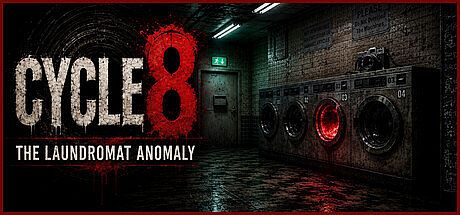


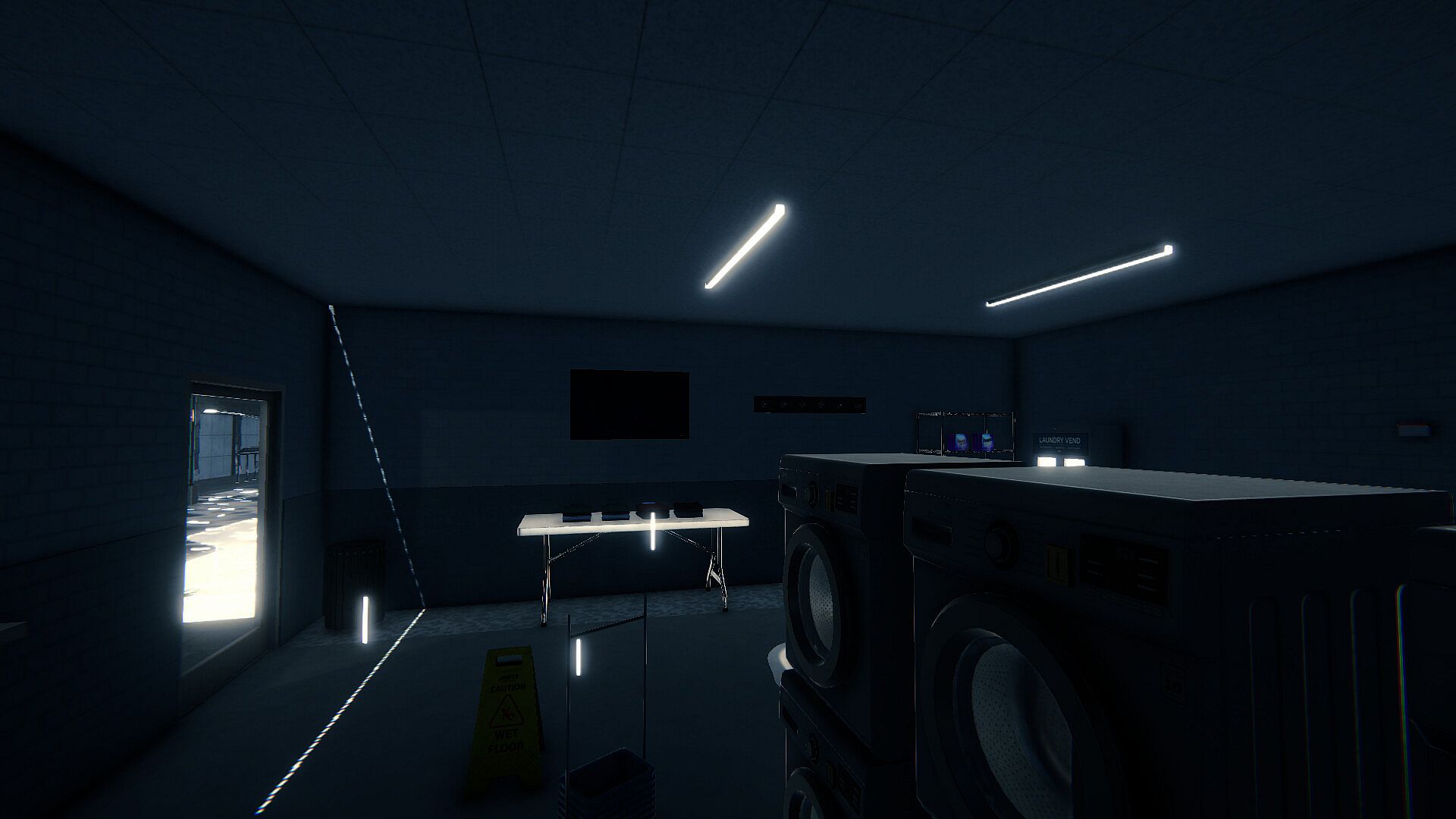
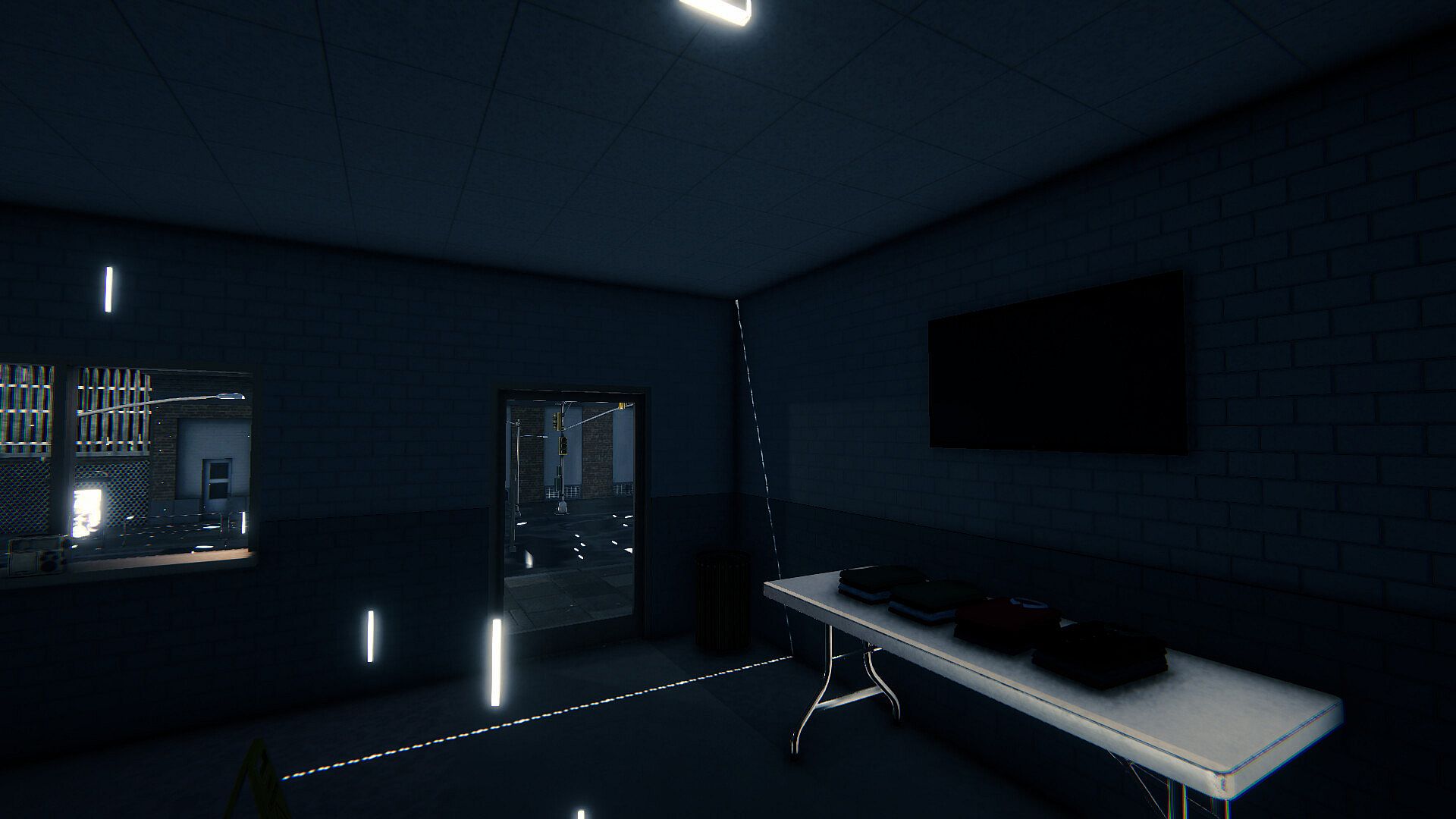
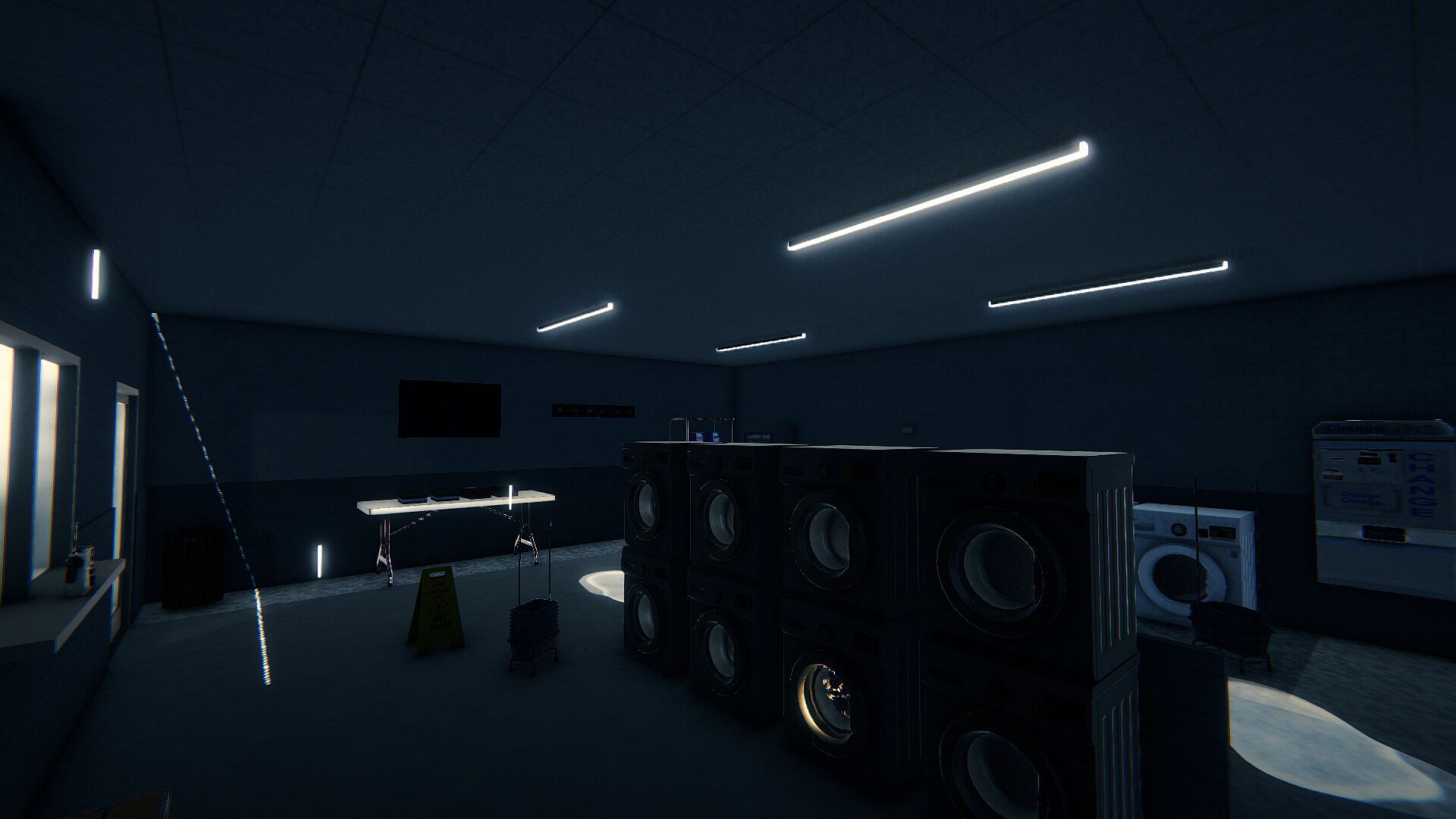
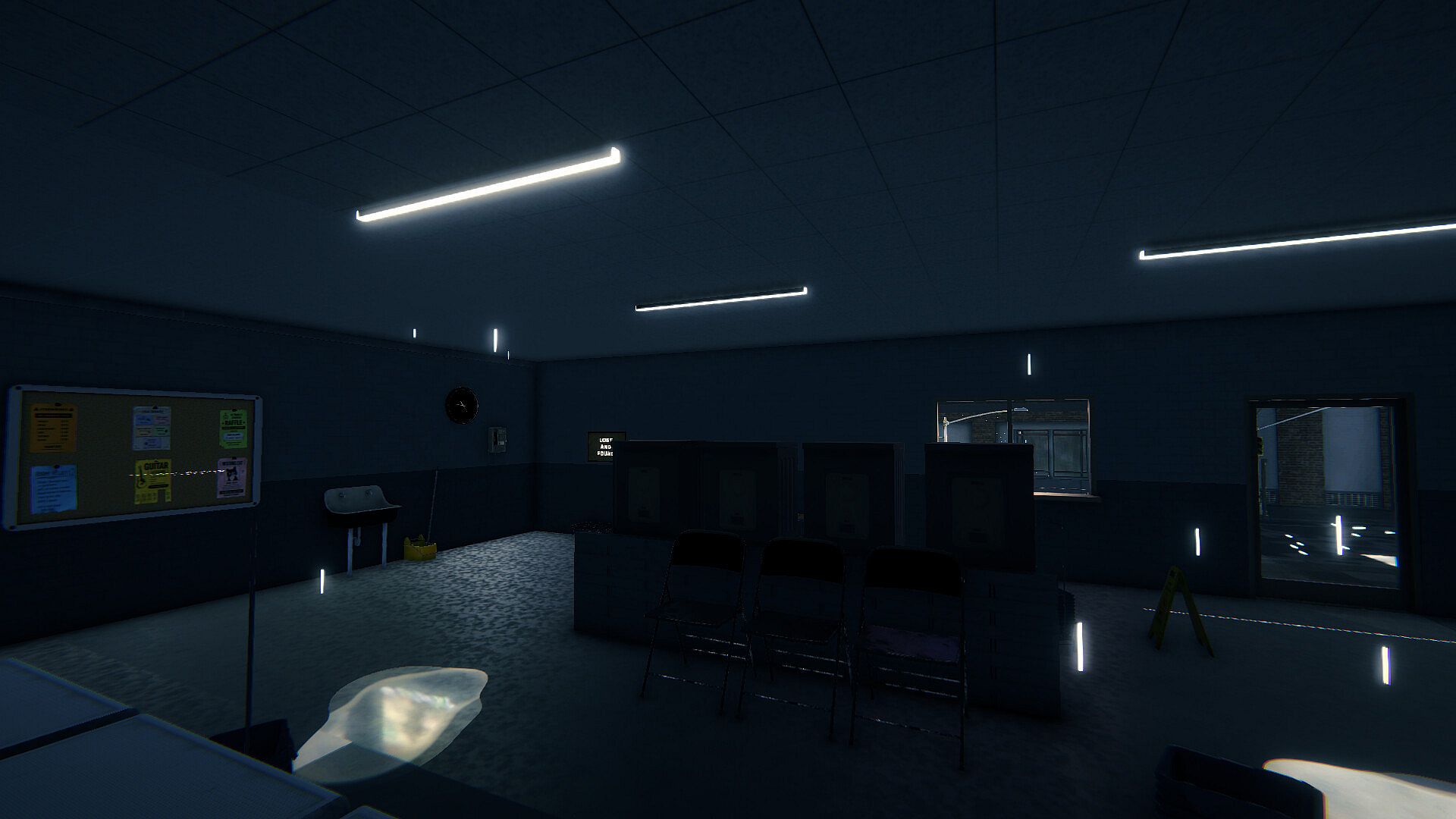
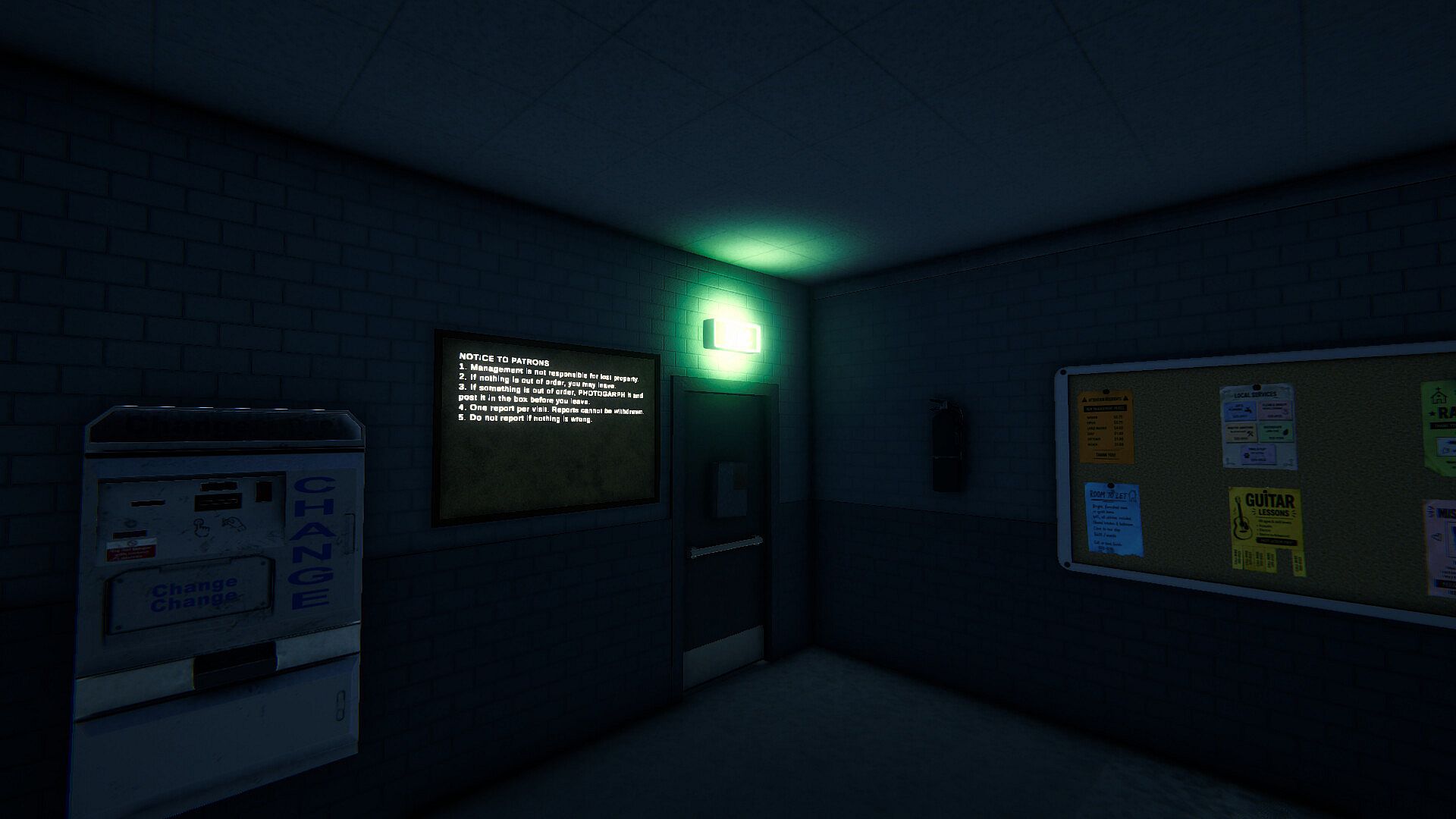
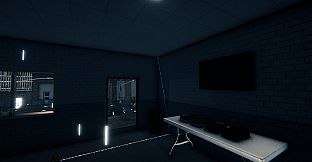
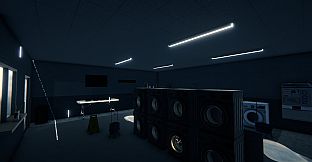
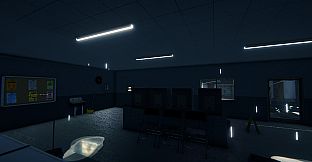
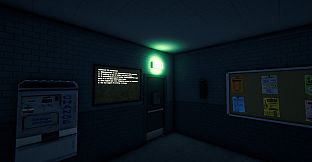
Cycle 8: The Laundromat Anomaly is an indie first-person psychological horror game set entirely inside a single laundromat on PC. Players step into Sunrise Coin Laundry at 3:12 AM during a heavy rainstorm, where the only sounds come from the fluorescent lights and the steady tumble of Dryer #3. The clock has stopped advancing, and the space refuses to release anyone until eight consecutive correct decisions are made about its state. The experience centers on careful observation of a familiar U-shaped layout, where small shifts in the environment carry the weight of an unresolved personal story from three weeks earlier.
Gameplay
The core loop requires players to complete one full lap around the laundromat while committing every detail to memory. Any deviation from the established normal state counts as an anomaly. These changes range from altered flyers on the bulletin board to unexpected wet footprints on the floor, each one serving as a fragment of a larger narrative about grief and denial. When an anomaly appears, the player uses a camera to capture it and deposits the photograph into a mailbox. If the lap reveals no changes at all, the player simply walks out the door to advance the night. A single incorrect choice, whether spotting something that is not there or missing a real shift, resets the entire cycle back to the start of the night. The design emphasizes deliberate pacing over rushed searches, with anomalies placed to reward steady attention rather than frantic pixel hunting.
Over eighty unique anomalies populate the randomized narrative deck. Each playthrough draws from this pool in different combinations, ensuring that no two runs unfold identically. The story unfolds exclusively through these environmental alterations, subtle audio shifts, and the photographs collected along the way. An in-game anomaly journal tracks every captured image across multiple sessions, supporting players who aim for full completion by cataloging every variation encountered.
Game Modes
The game operates through a single continuous loop structure that players repeat until they achieve eight correct decisions in succession. Within each cycle, the choice between documenting an anomaly or confirming the space as normal forms the central decision point. Success advances the in-game clock toward dawn at 11:12 AM, while failure returns everything to the opening conditions. The randomization of anomalies creates natural variation without separate selectable modes, and the journal system adds a completion layer that encourages repeated loops to capture every possible change. This setup keeps the focus on observation and memory rather than branching paths or competitive elements.
Story and Atmosphere
The anomalies themselves function as the primary storytelling device. Each disruption in the laundromat reflects pieces of a memory the player character refuses to confront. Changes begin subtle and grow more pointed across successful cycles, building a personal account of events from three weeks prior through visual and auditory cues alone. The confined setting amplifies tension, turning the ordinary hum of machines and the layout of washing stations into sources of unease. Audio design supports this by layering faint shifts that align with visual anomalies, guiding attentive players without explicit direction.
Is It Worth Playing?
Cycle 8 suits players who enjoy methodical observation games and atmospheric horror built around environmental storytelling. The randomized anomalies and journal system provide strong replay value for those seeking full completion, while the fair detection design avoids unnecessary frustration. The single-location focus and loop-based progression deliver a contained experience centered on pattern recognition and narrative discovery. Anyone drawn to psychological horror that relies on subtle changes rather than overt threats will find the mechanics align closely with that preference. The game remains available on PC as an indie title with no additional modes or expansions confirmed beyond the core loop and anomaly collection features.