


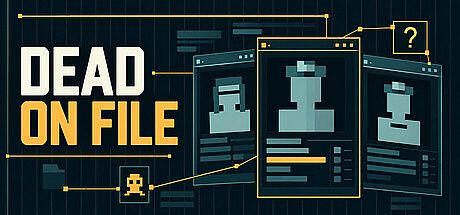


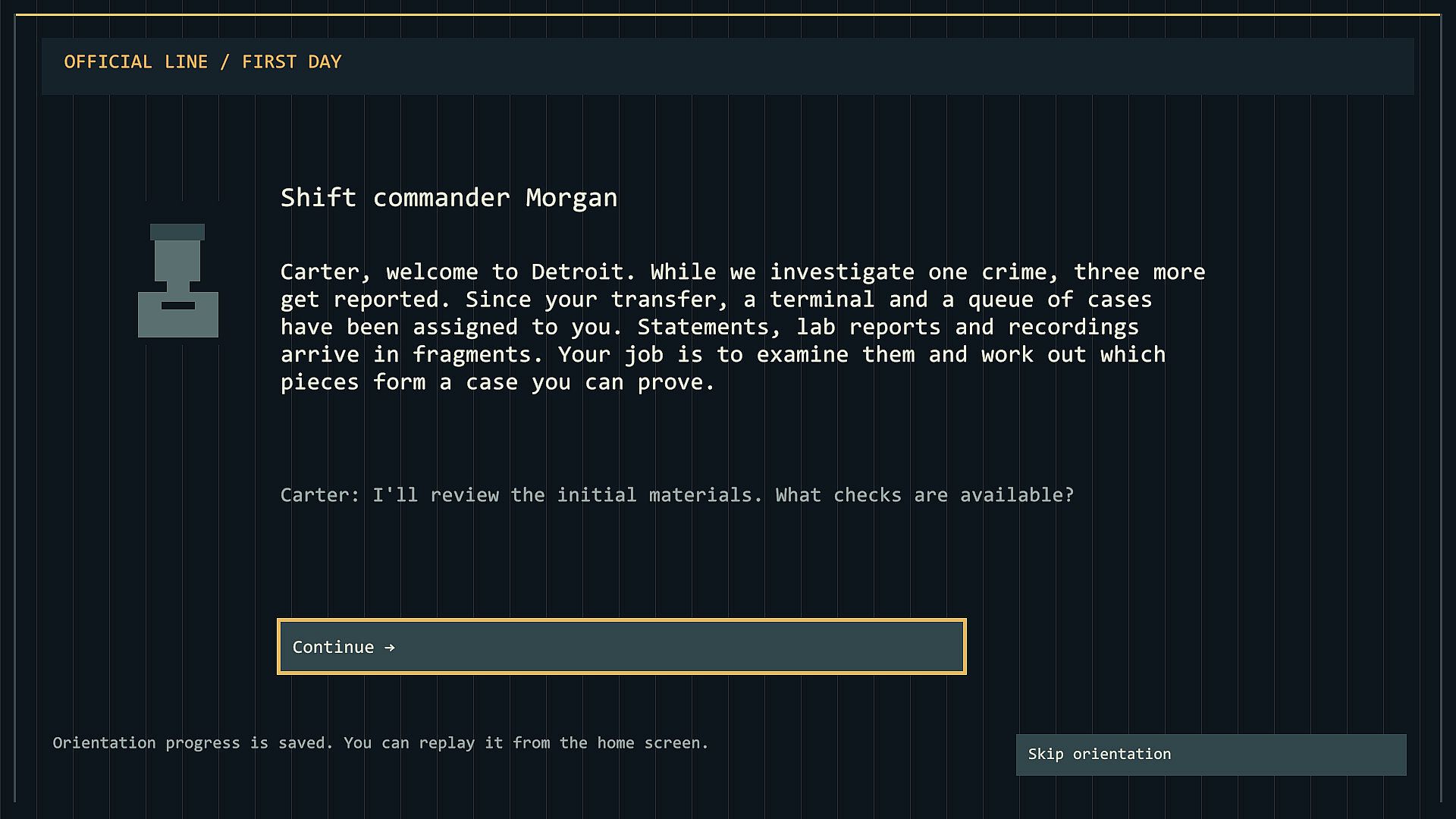
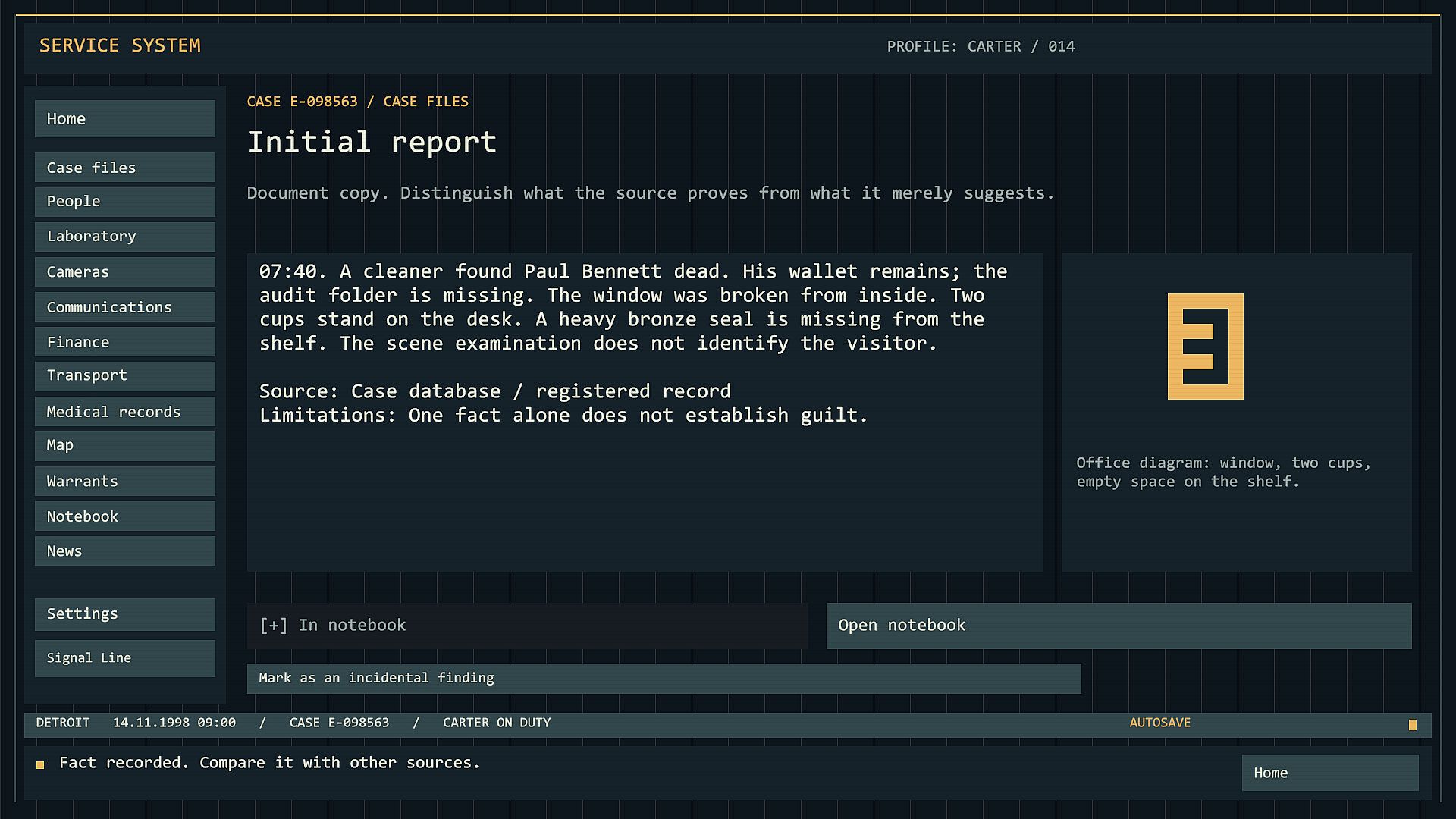
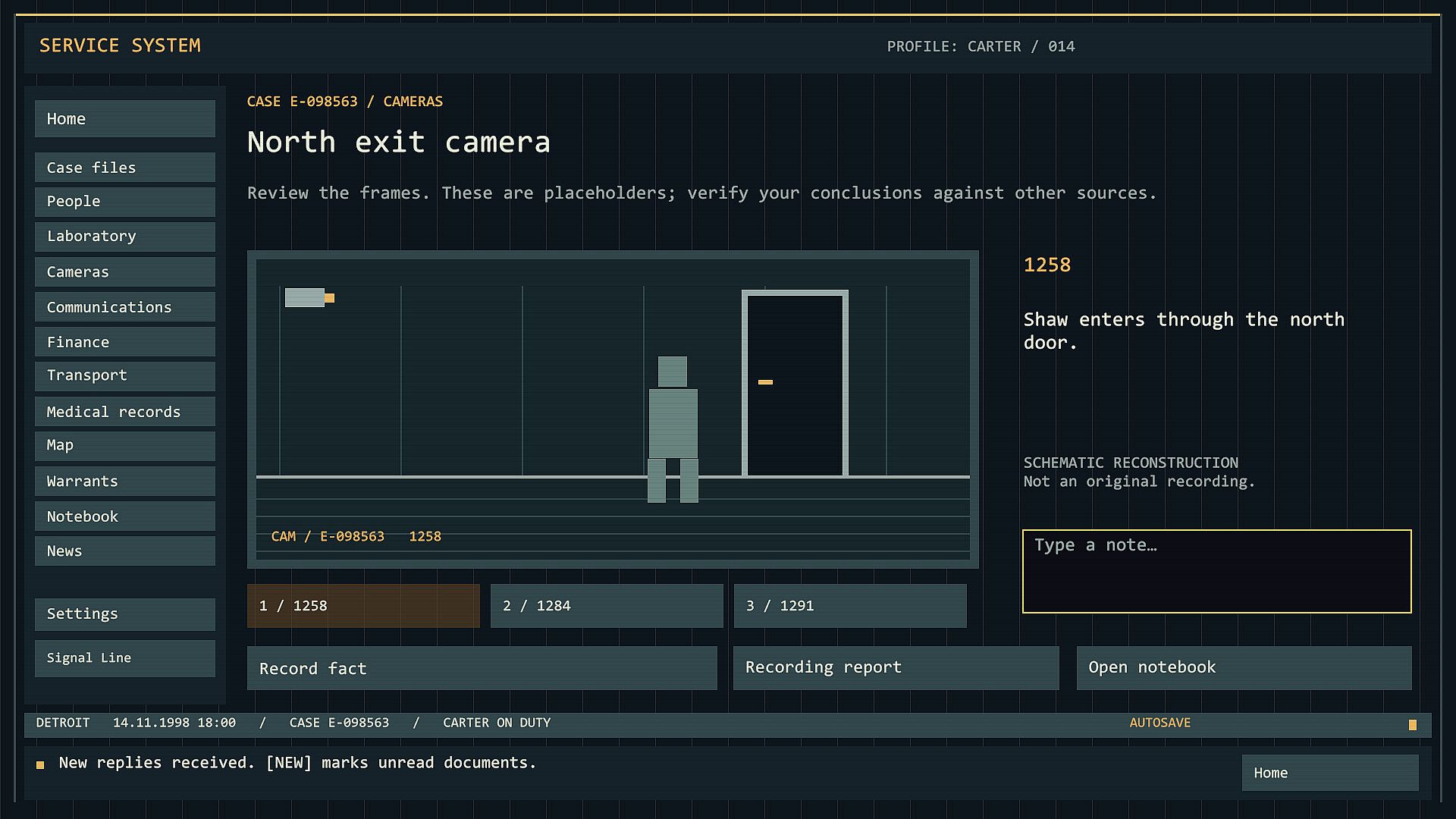
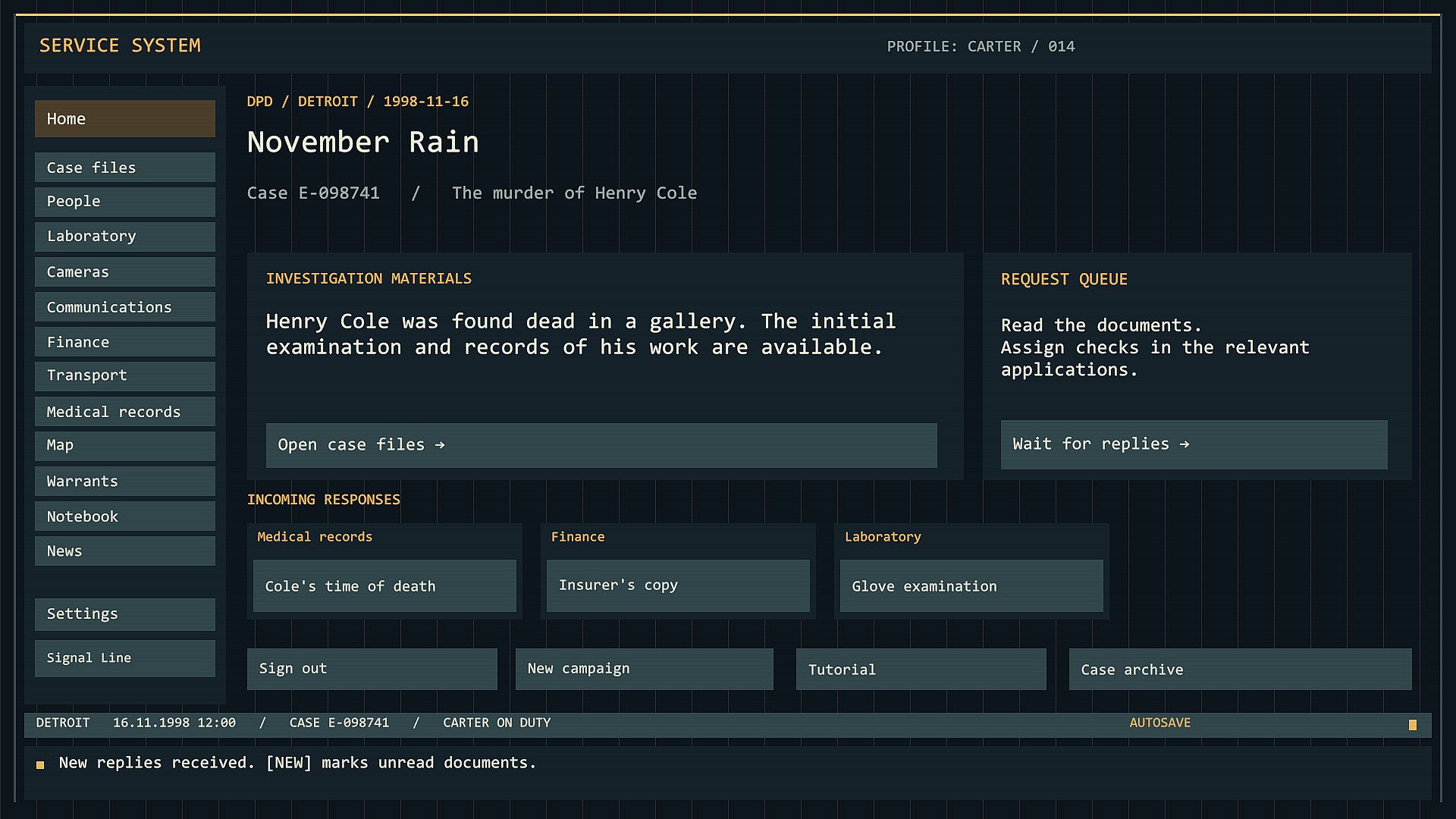
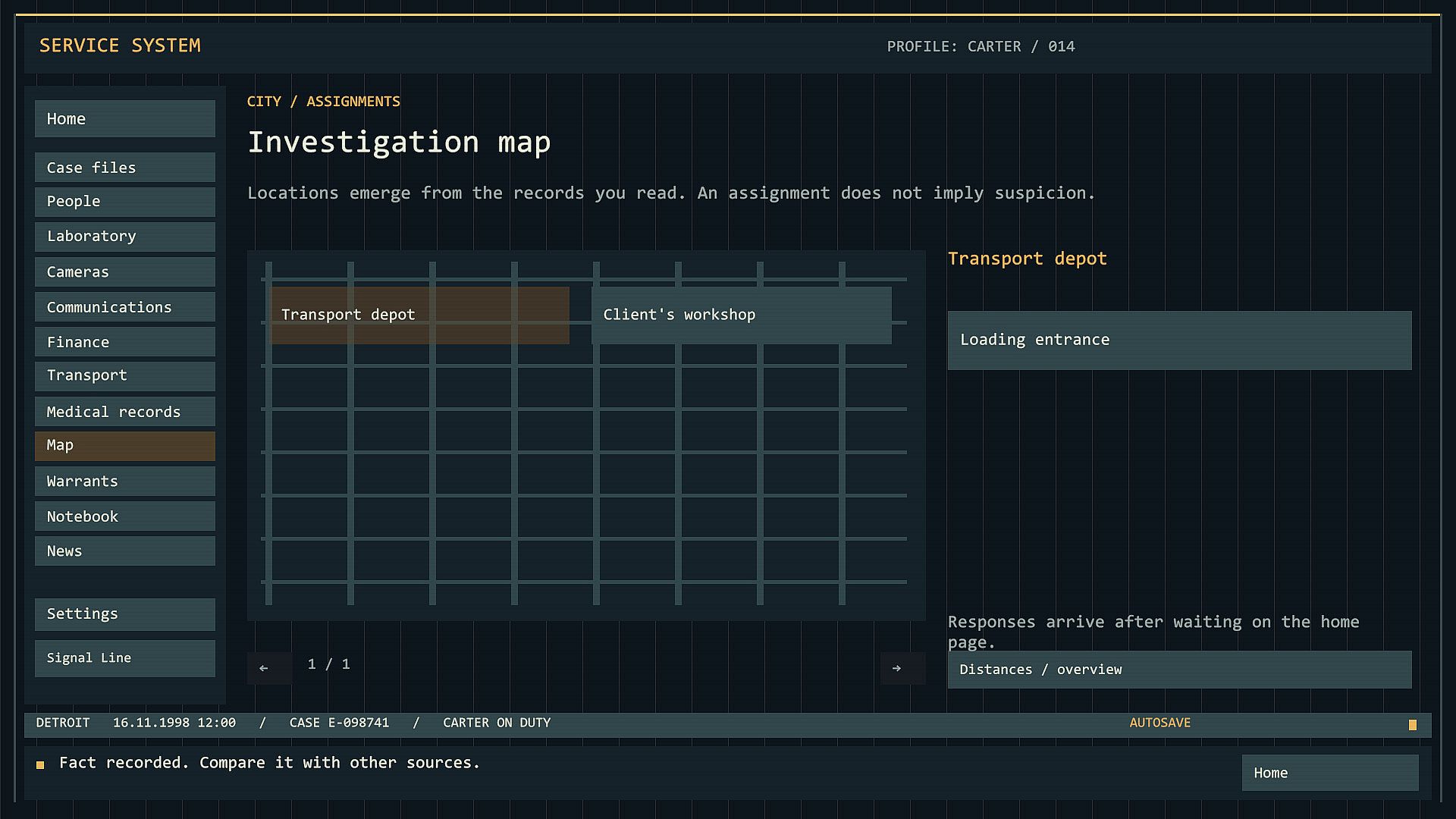
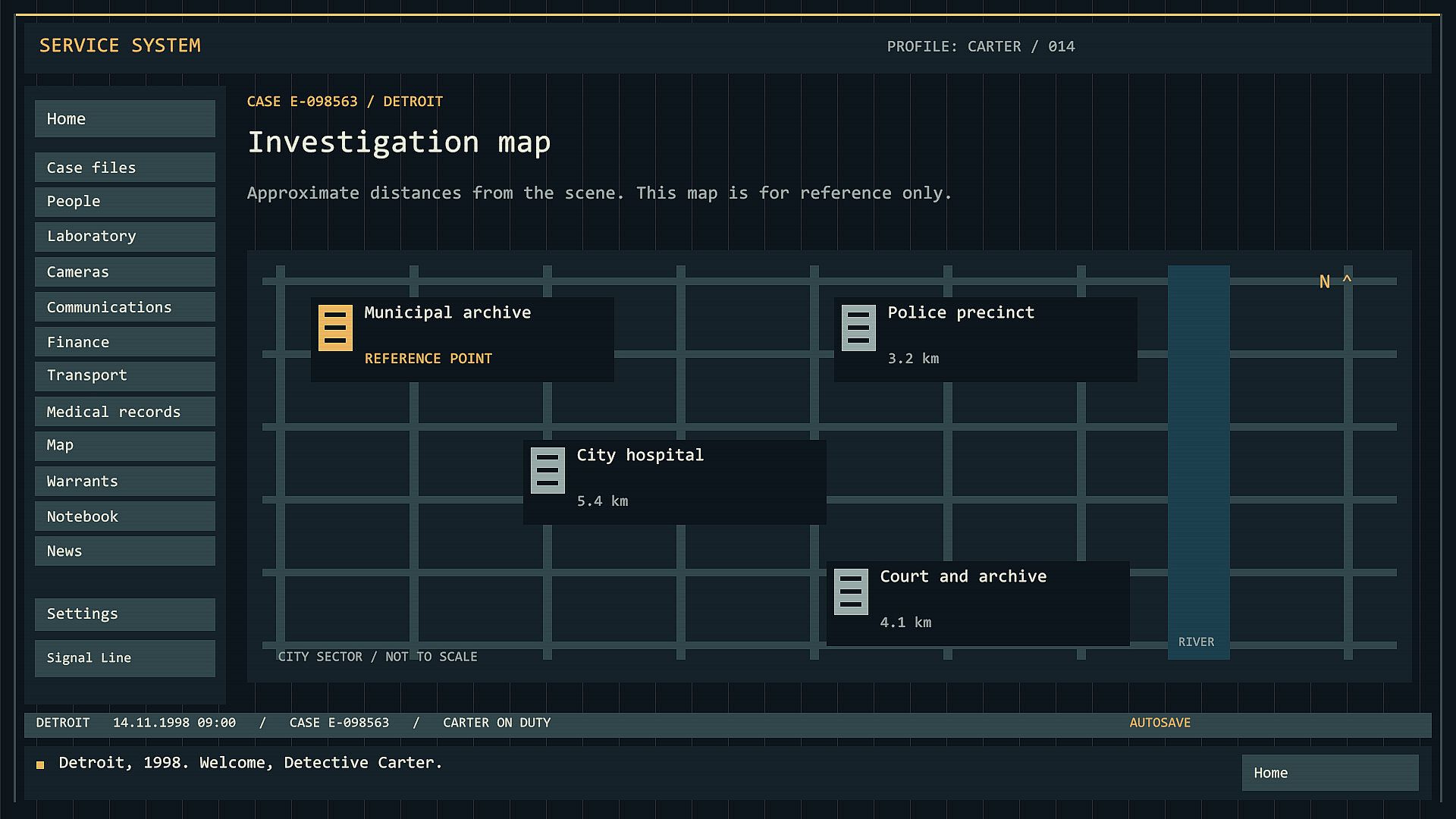
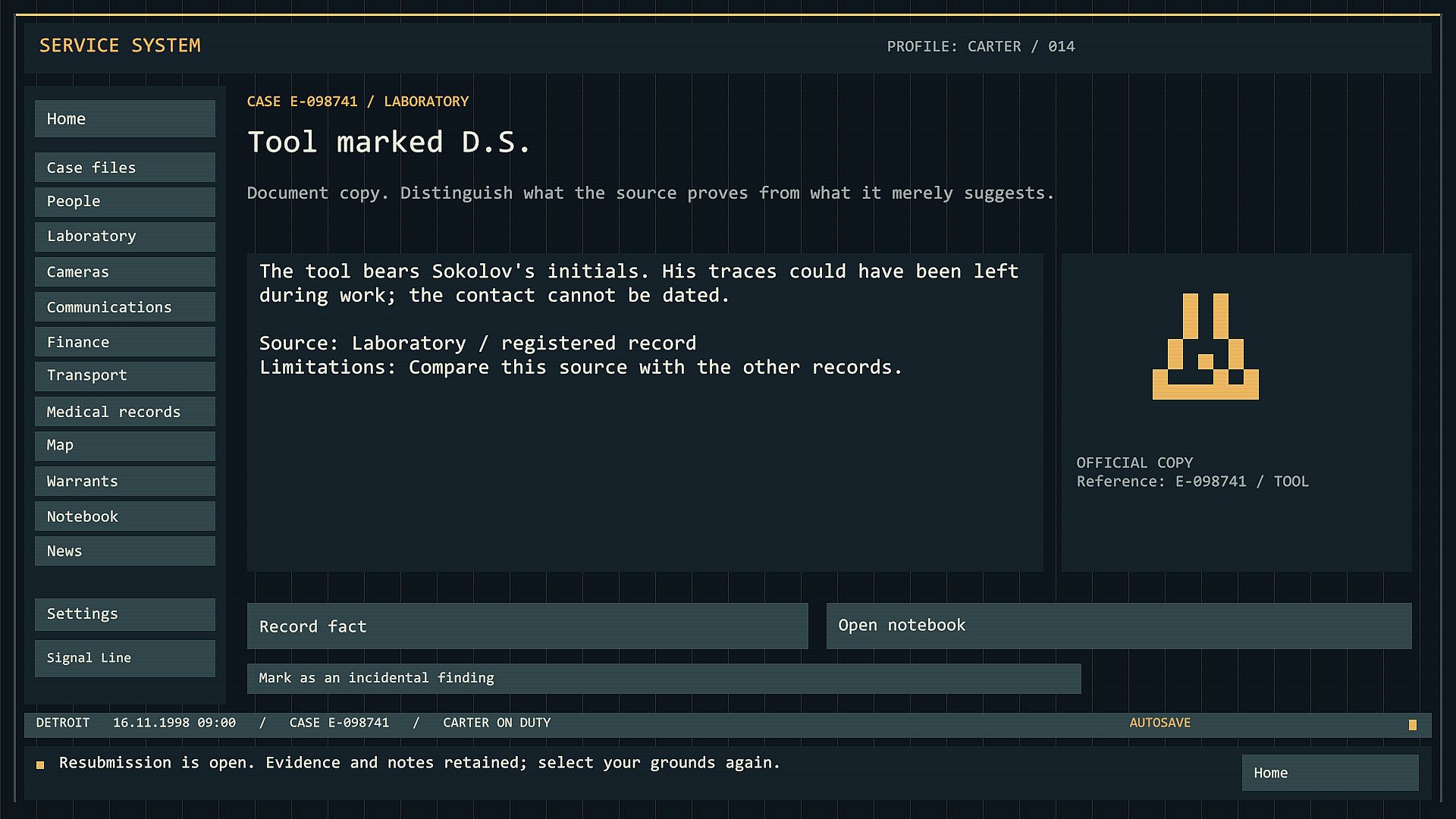
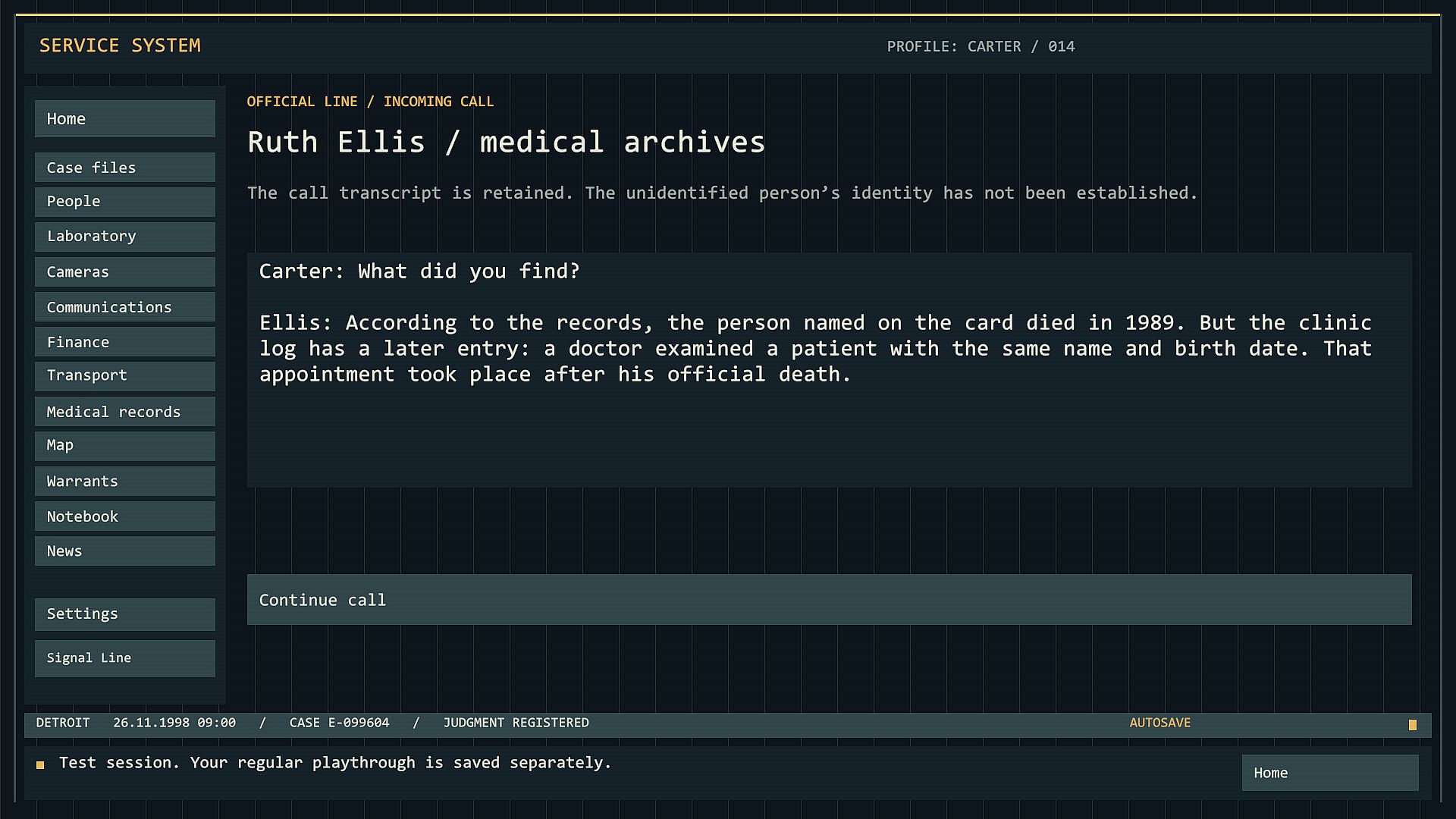
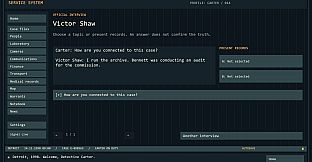
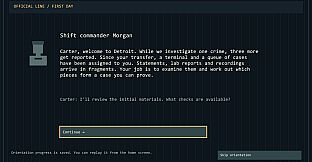
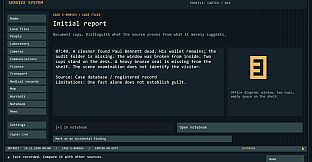
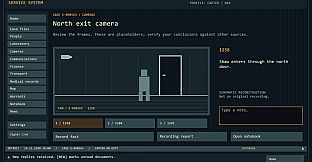
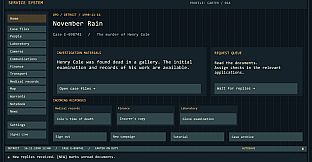
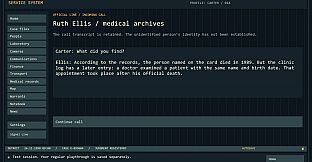
DEAD ON FILE is an indie adventure game set in Detroit in 1998. Players take on the role of Detective Carter, who works through a backlog of cases using only a department terminal. The experience centers on examining fragmented evidence such as statements, forensic reports, and recordings to determine what actually occurred in each investigation.
Gameplay
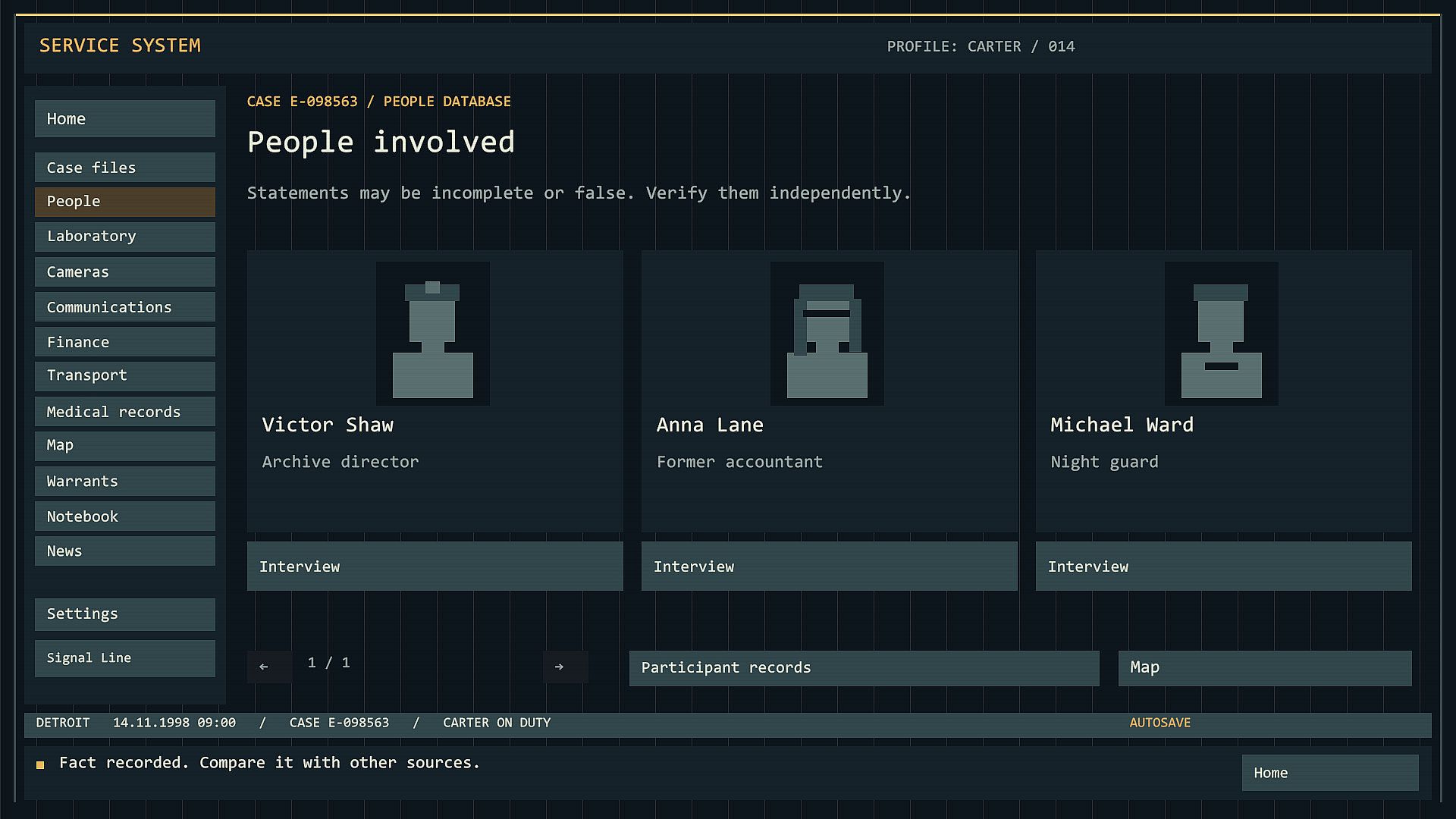
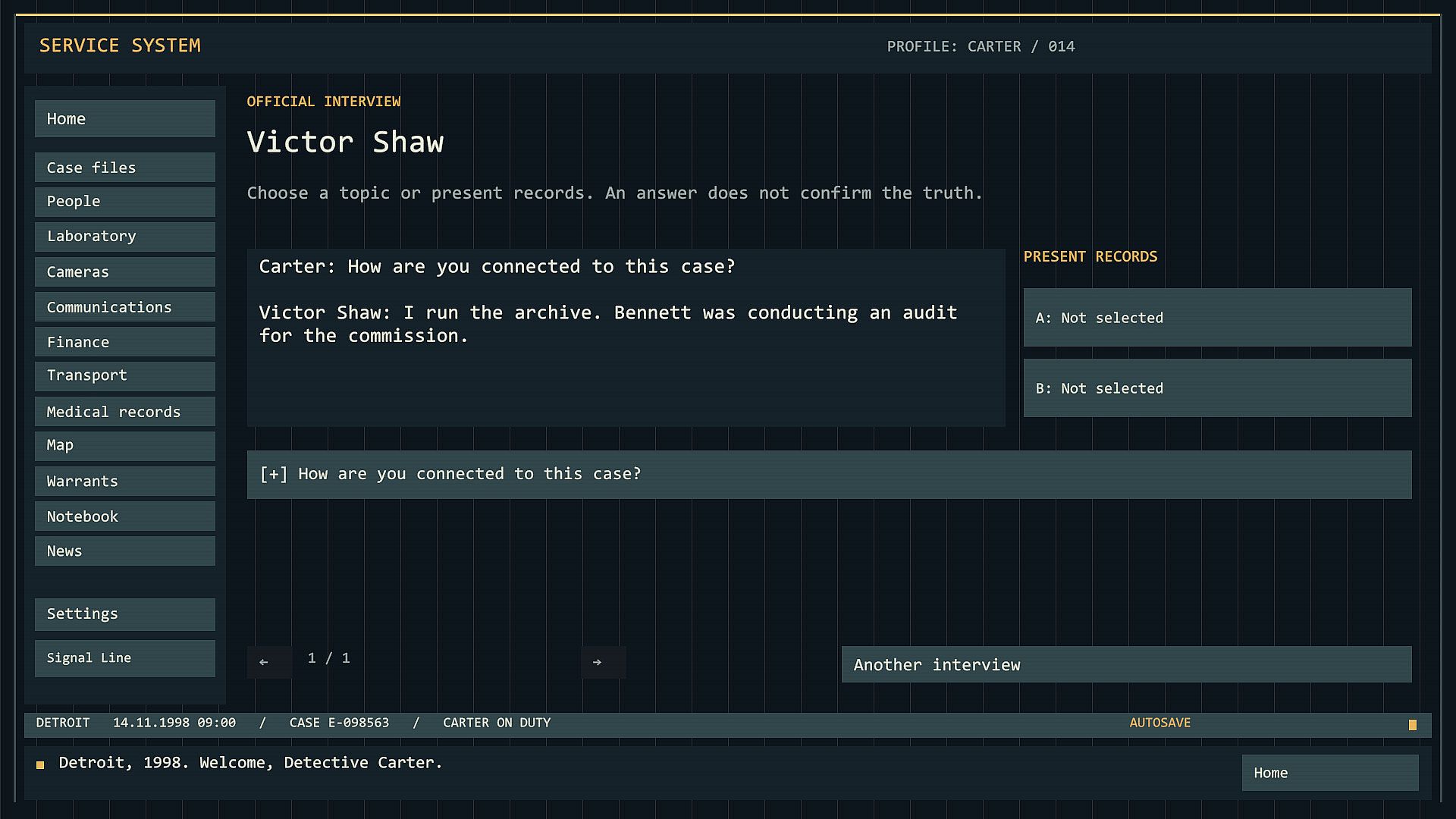
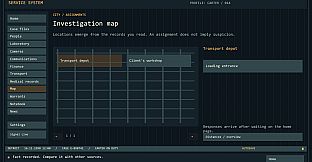
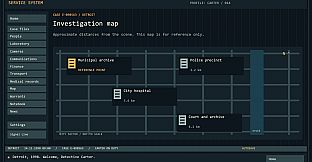
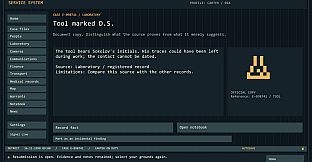
The core loop involves operating within a simulated old police operating system presented through a pixel-art interface. Players read reports, review camera footage, query databases, and communicate with involved parties via official channels. Facts are recorded in a digital notebook where personal theories can also be noted. Decisions focus on identifying supporting details across sources and building a coherent timeline. Requests can be sent to labs or other departments to gather additional information that may prompt reexamination of earlier statements. The process requires comparing multiple pieces of evidence because a single overlooked date or inconsistency can alter the entire picture of events.
Conclusions demand specificity. Each final submission must identify a person, a motive, and a limited set of supporting evidence. Not every trace or statement carries equal weight, and the game emphasizes distinguishing genuine proof from details that merely align with an initial assumption. A theory that appears solid may still lead to an incorrect outcome, with the court decision later appearing in the archive alongside reports on the real consequences.
Game Modes
DEAD ON FILE offers a singleplayer experience built around sequential case investigations. There are no separate multiplayer modes or competitive formats. The structure follows a progression from routine backlog cases toward emerging questions that connect across multiple files. All activity remains confined to the terminal interface, with no external exploration or action sequences.
Investigation Mechanics
Evidence arrives in fragments, requiring players to decide which elements corroborate one another and which serve only as convenient explanations. The digital notebook serves as the central tool for organizing facts and tracking hypotheses. Cross-referencing sources forms the primary challenge, as new information from lab requests or database searches can invalidate prior conclusions. The system simulates the limitations of real investigative work where incomplete records and conflicting accounts are common.
Over time, patterns emerge that extend beyond individual cases. Attention to recurring details can lead back to earlier notes and reveal connections that closed files alone cannot resolve. This layered approach rewards careful documentation and repeated review of accumulated material.
Is It Worth Playing?
DEAD ON FILE remains unreleased, with a Steam page listing it as coming soon and no user reviews or ratings available. The game targets players interested in narrative-driven deduction and evidence analysis within a contained interface. Those who enjoy piecing together timelines from documents and recordings may find the focused terminal-based format appealing. Without completed player feedback or post-launch updates, suitability depends on preference for slow-paced, singleplayer investigative adventures rather than action or multiplayer content. The pixel-art presentation and case structure align with the provided description of fragmented evidence and consequence-driven conclusions.












