






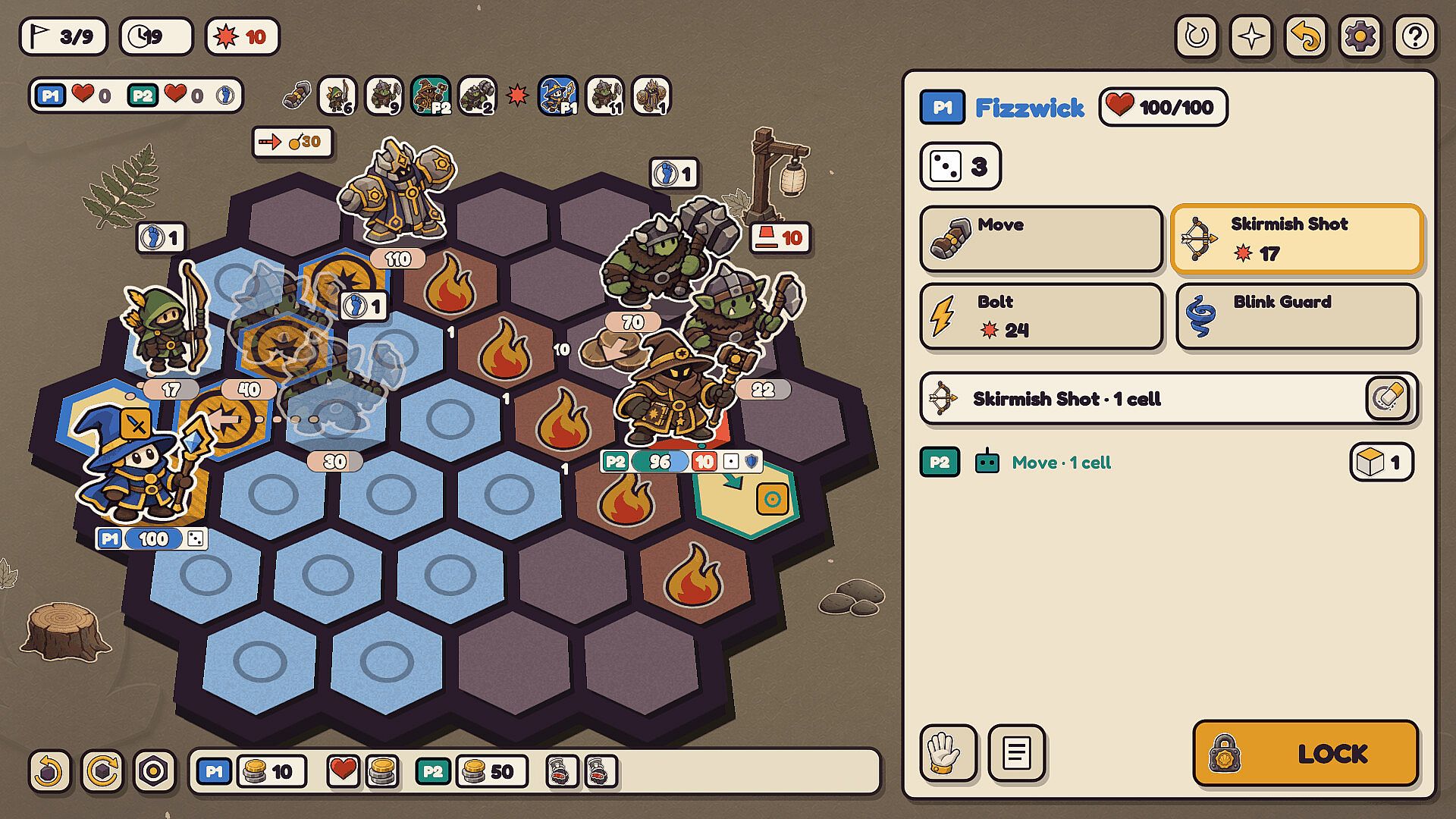
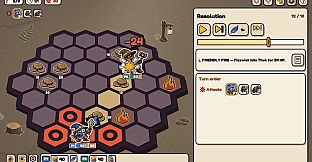
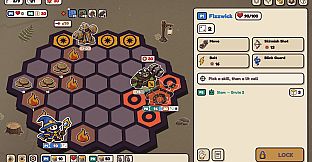
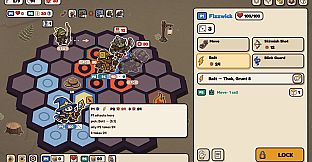
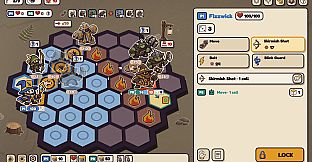
Die Casting Together is a two-player co-op tactics roguelite built around simultaneous resolution and visible dice rolls. Players take on the roles of rollers who each throw one die per turn before selecting a move. Enemies commit to actions in advance as well, so the entire turn unfolds at once once both partners lock in their choices. The game emphasizes planning around known numbers rather than hidden information or random outcomes after decisions.
Gameplay
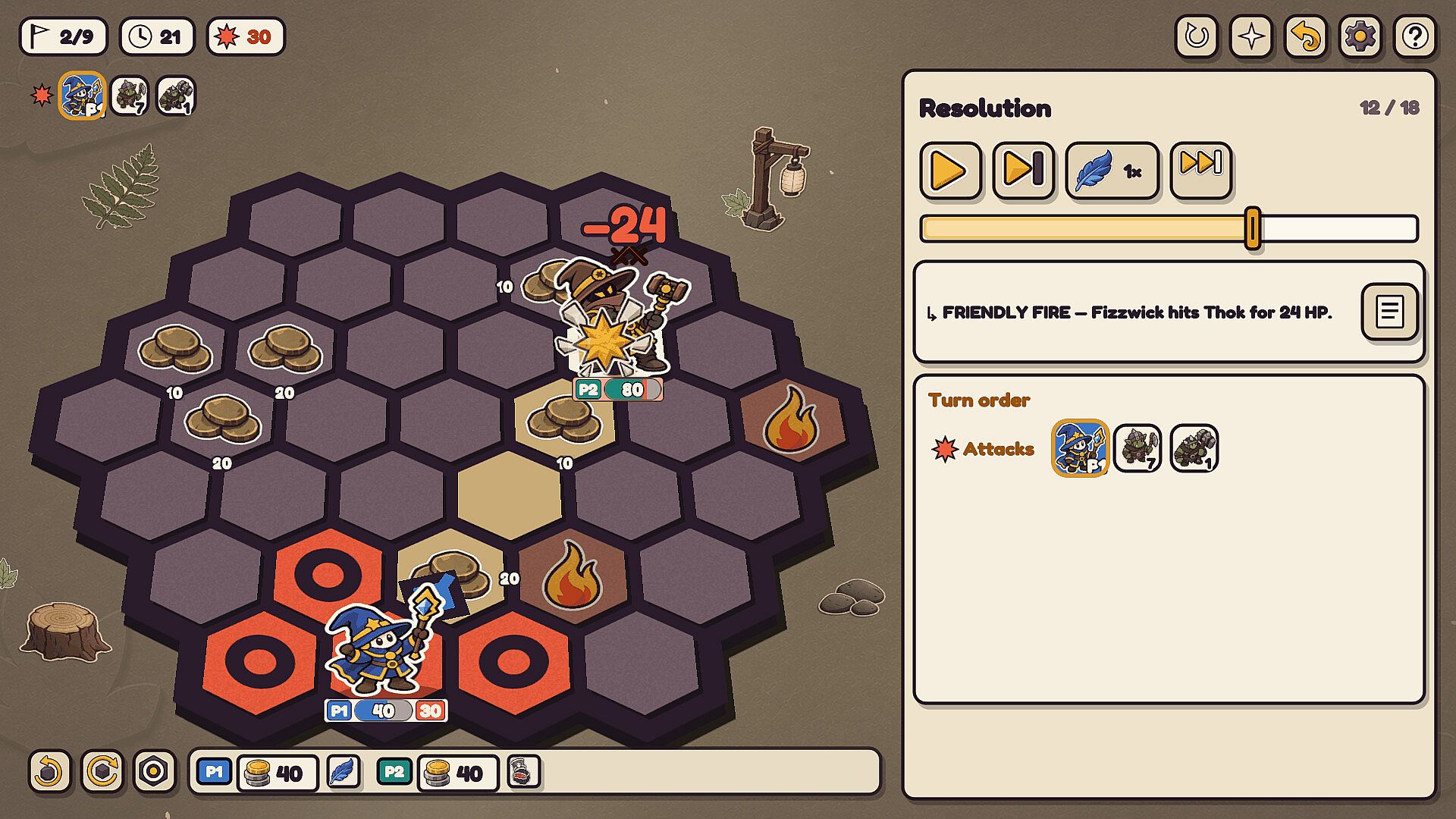
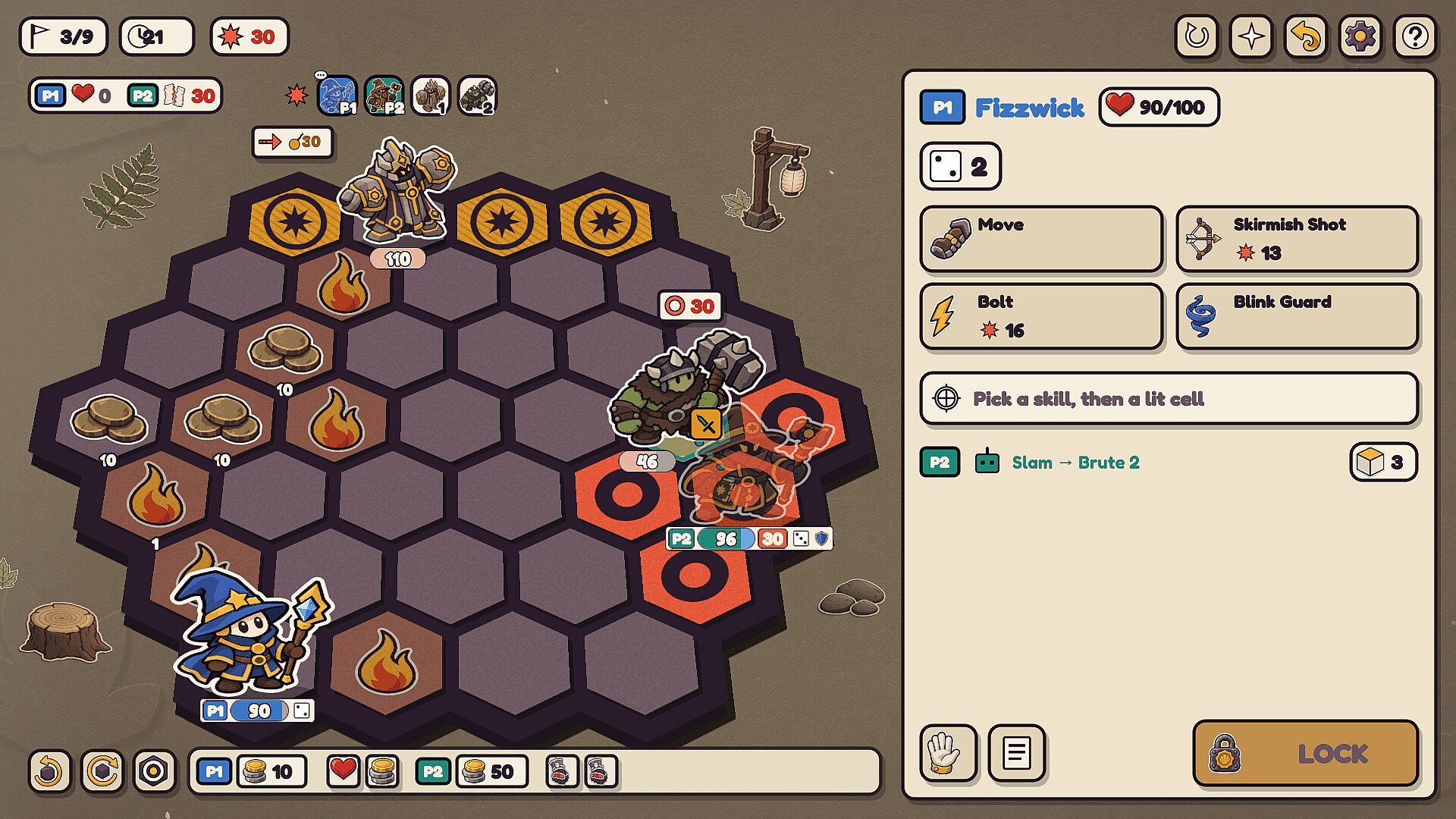
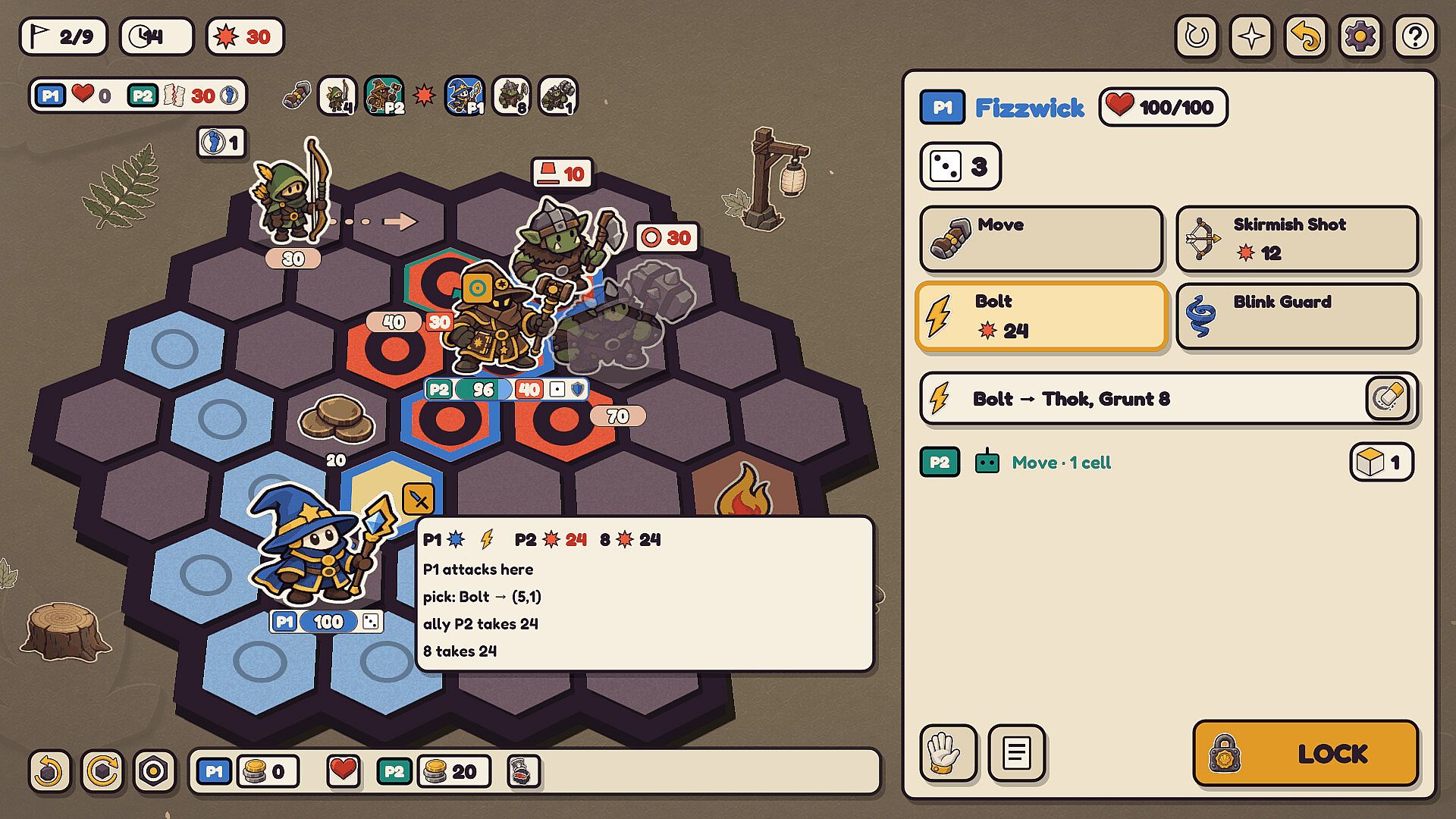
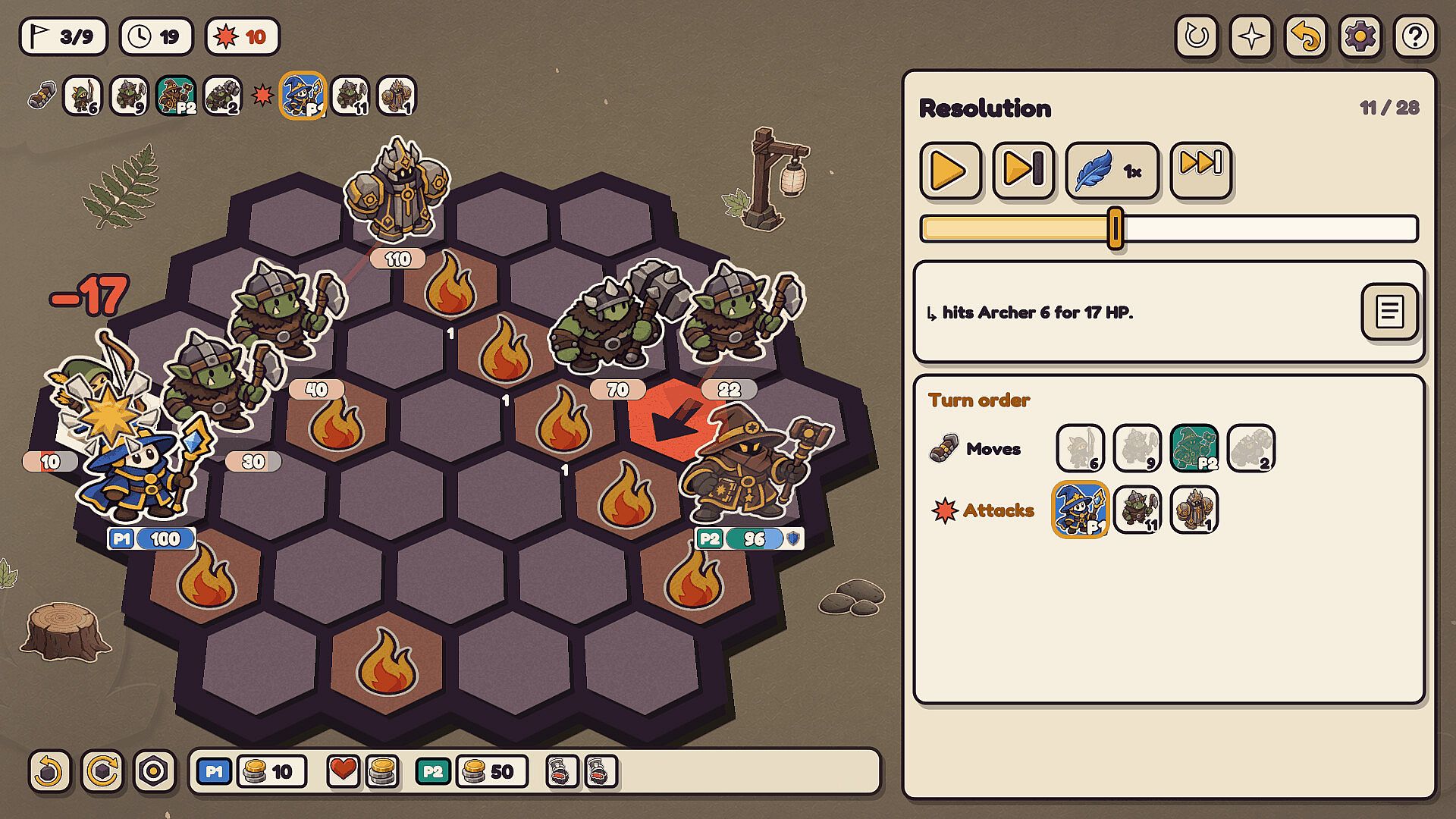
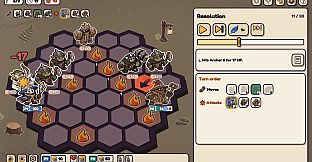
Each turn begins with a die roll that determines attack strength for that round. Partners see their own roll and each other's before committing to a move. This setup encourages discussion and shared strategy, though plans can still go awry once everything resolves simultaneously. Fast heroes act before slower ones, attacks strike their intended targets, and every enemy threat appears with exact numbers shown in advance. Friendly fire remains active at all times, turning potential mishaps into memorable moments between partners.
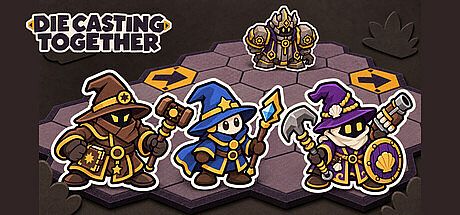
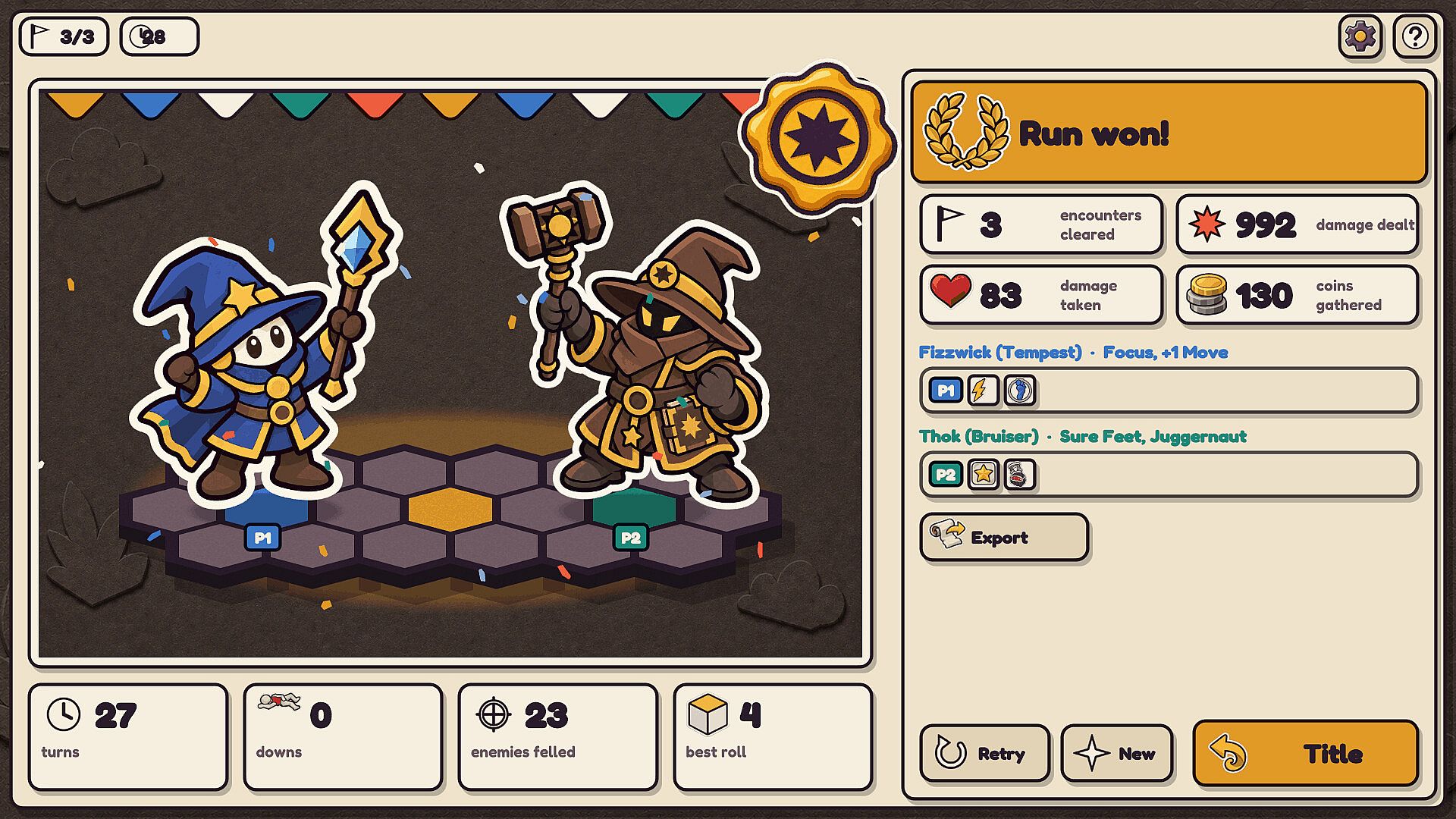
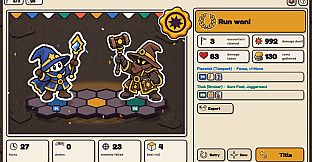
Four distinct heroes offer different playstyles. Thok the Bruiser moves slowly but delivers powerful slams and leaps with a riposte that can be called early. Fizzwick the Tempest acts quickly and focuses on skirmish shots plus a piercing bolt and repositioning blink. Magrid the Anchor uses a chain hook and scatterblast to control enemy positions while providing a bulwark for shared defense. Gustav the Windcaller pushes foes with gusts and repels incoming threats. Duos may select the same hero for specialized team compositions.
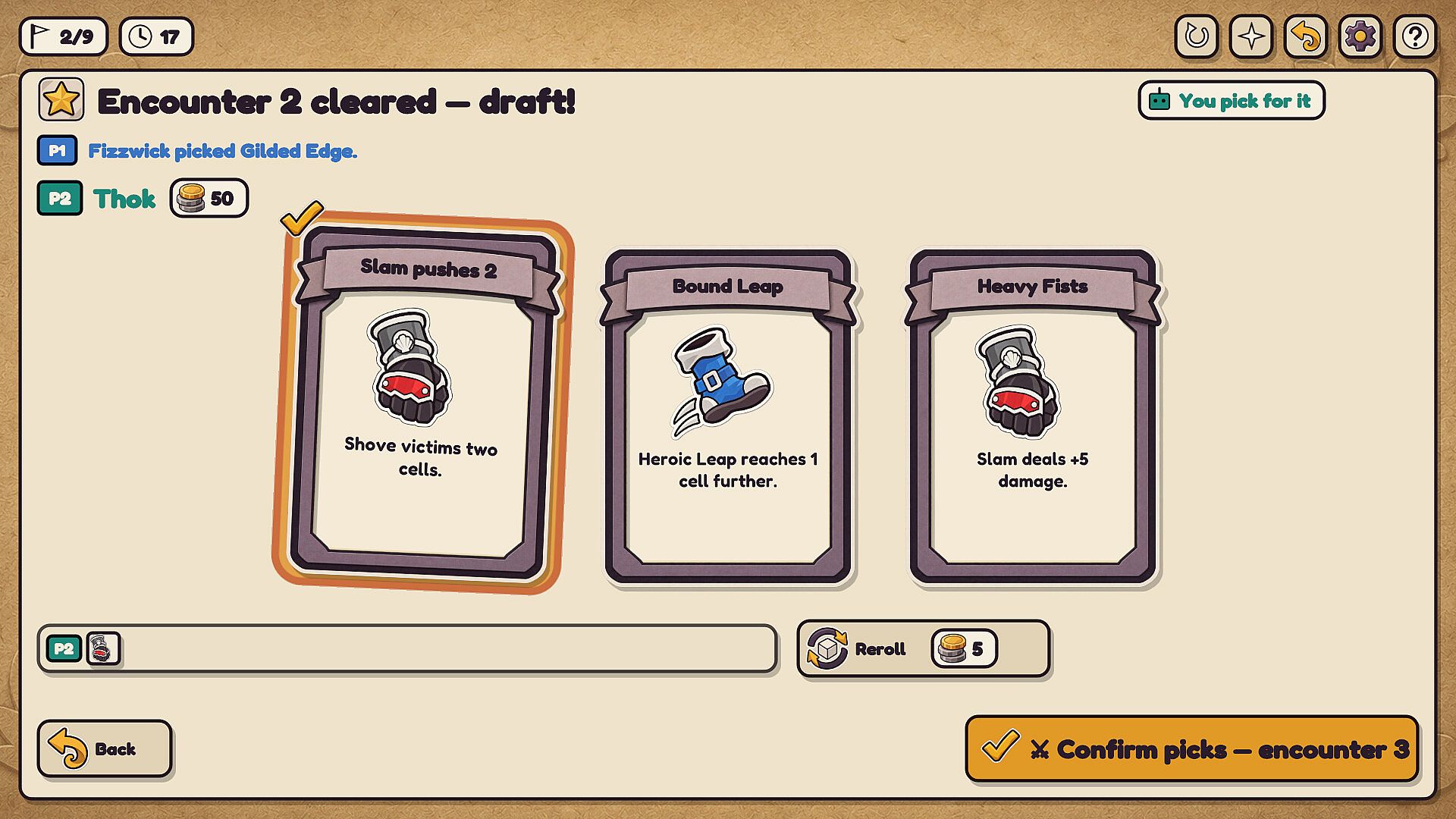
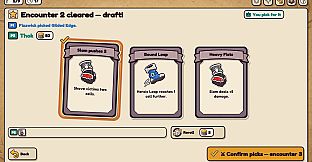
Card drafting between fights allows teams to alter core rules such as action order or collision effects. Relics and gear further modify rolls by weighting specific faces or granting bonuses when both partners roll the same number. Every element stays visible to both players, supporting coordinated builds where one partner's setup enables the other's payoff.
Game Modes
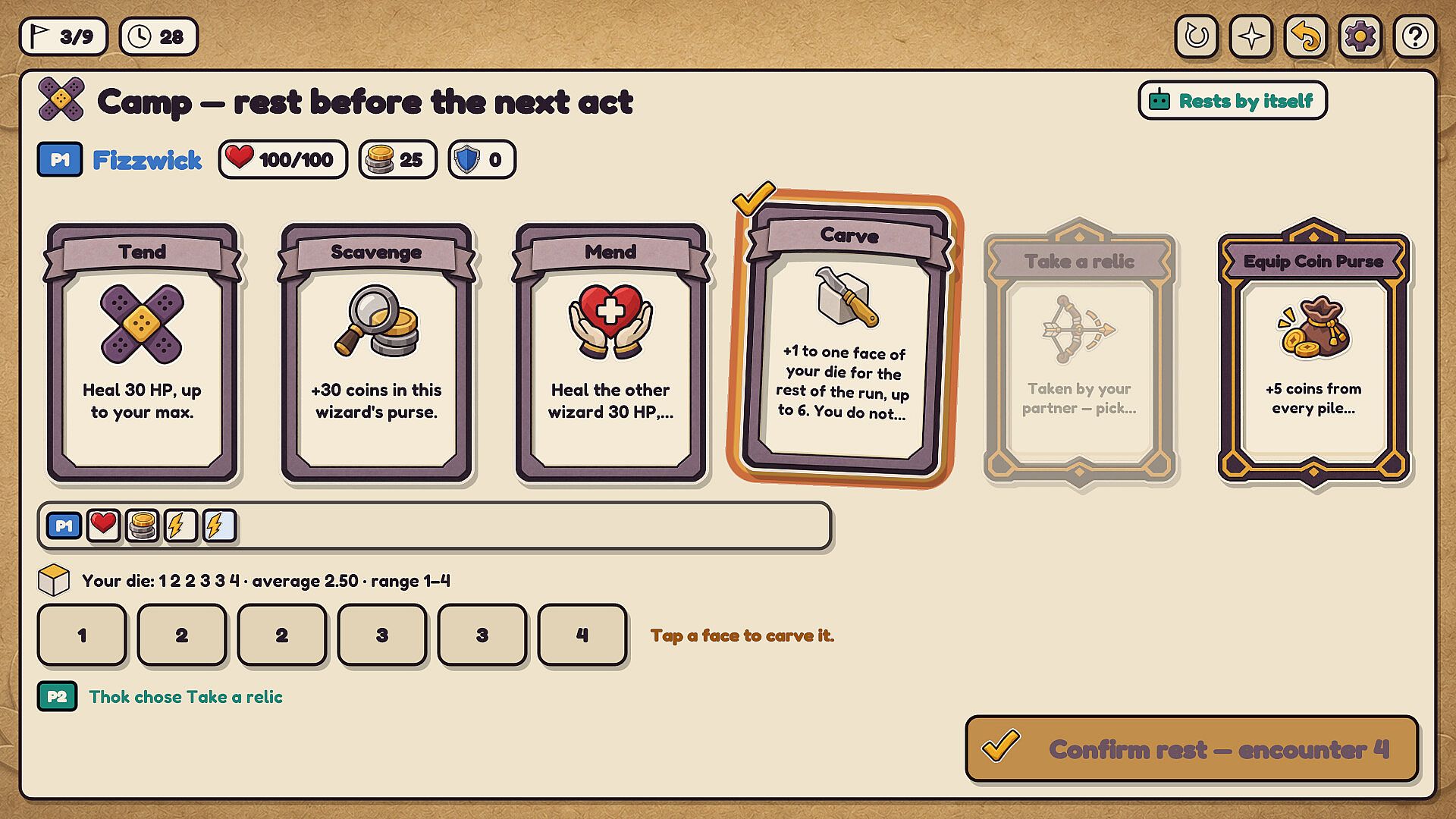
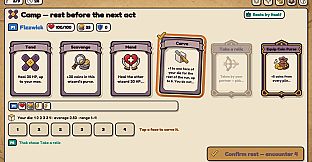
A standard run consists of three acts containing nine fights and three bosses. Each boss features readable windup phases and clear punish windows. Drafting occurs after fights, with over one hundred cards available to reshape turn mechanics. Relics, merchants, and rest stops provide additional progression options, and every run carries a shareable seed for replay or restart.
Multiple play options support different duo situations. Online sessions use a lobby code system. Hotseat play works on a single screen, and Remote Play Together extends access to partners without the game installed. A solo mode pairs the player with a bot that follows identical rules and can be revived after friendly fire incidents. The game operates offline first with no accounts or live service elements required.
Core Mechanics and Progression
The simultaneous commit system forms the heart of every encounter. Dice rolls happen first, then move selection occurs with full visibility between partners. Enemies never roll dice, so their threats remain predictable and telegraphed. Cards and relics introduce variations that change how collisions, whiffs, or initiative function across the team. This structure rewards communication and adaptability over individual execution skill.
Progression centers on team drafting and shared resources. Partners view each other's cards and relics in real time, allowing setups that benefit the duo as a whole. The three-act structure provides a complete run experience while an endless mode offers extended play for those who complete the main campaign.
Is It Worth Playing?
Die Casting Together suits players who enjoy cooperative strategy sessions focused on simultaneous planning and visible information. The core turn system delivers consistent tension through shared commitment and immediate resolution of all actions. Early Access currently includes the full turn mechanics, four heroes, a three-act campaign with bosses, card drafting, relics, and multiple play formats including bot support. Development continues with community input on additional heroes, encounters, and long-term goals such as harder difficulties. Those drawn to two-player tactics roguelites with predictable enemy behavior and emphasis on duo coordination will find the available systems engaging from the start.











