


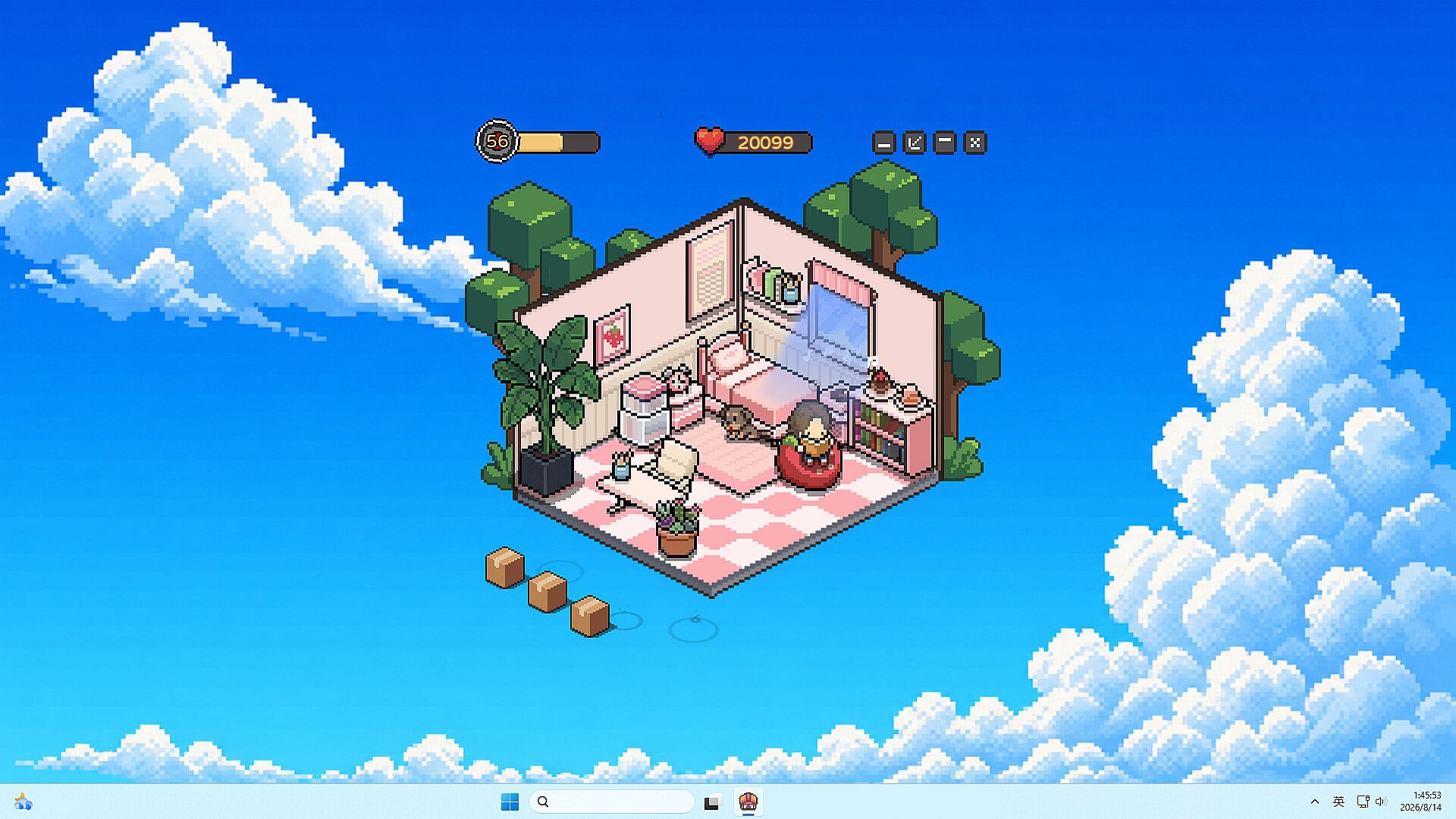
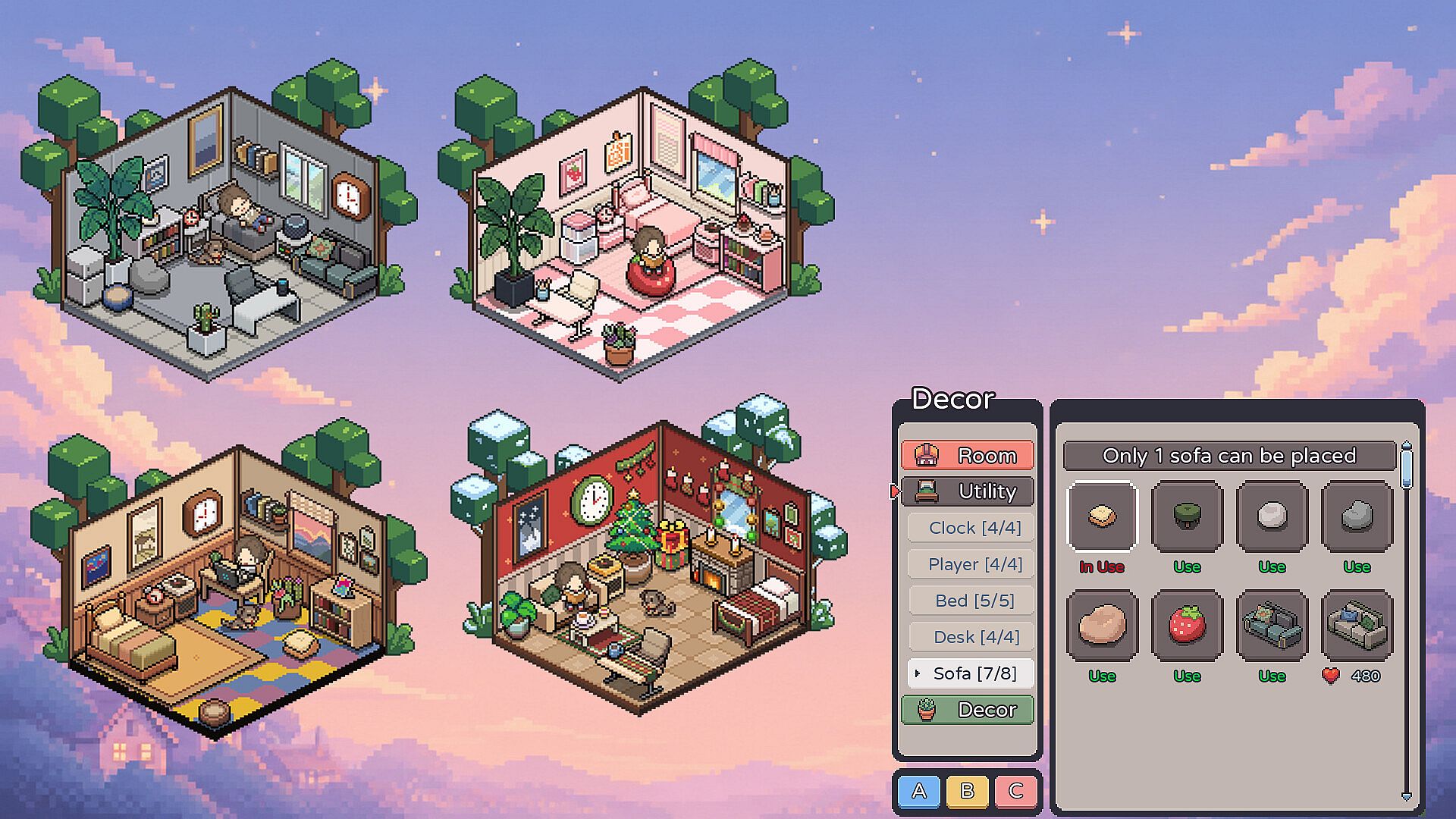
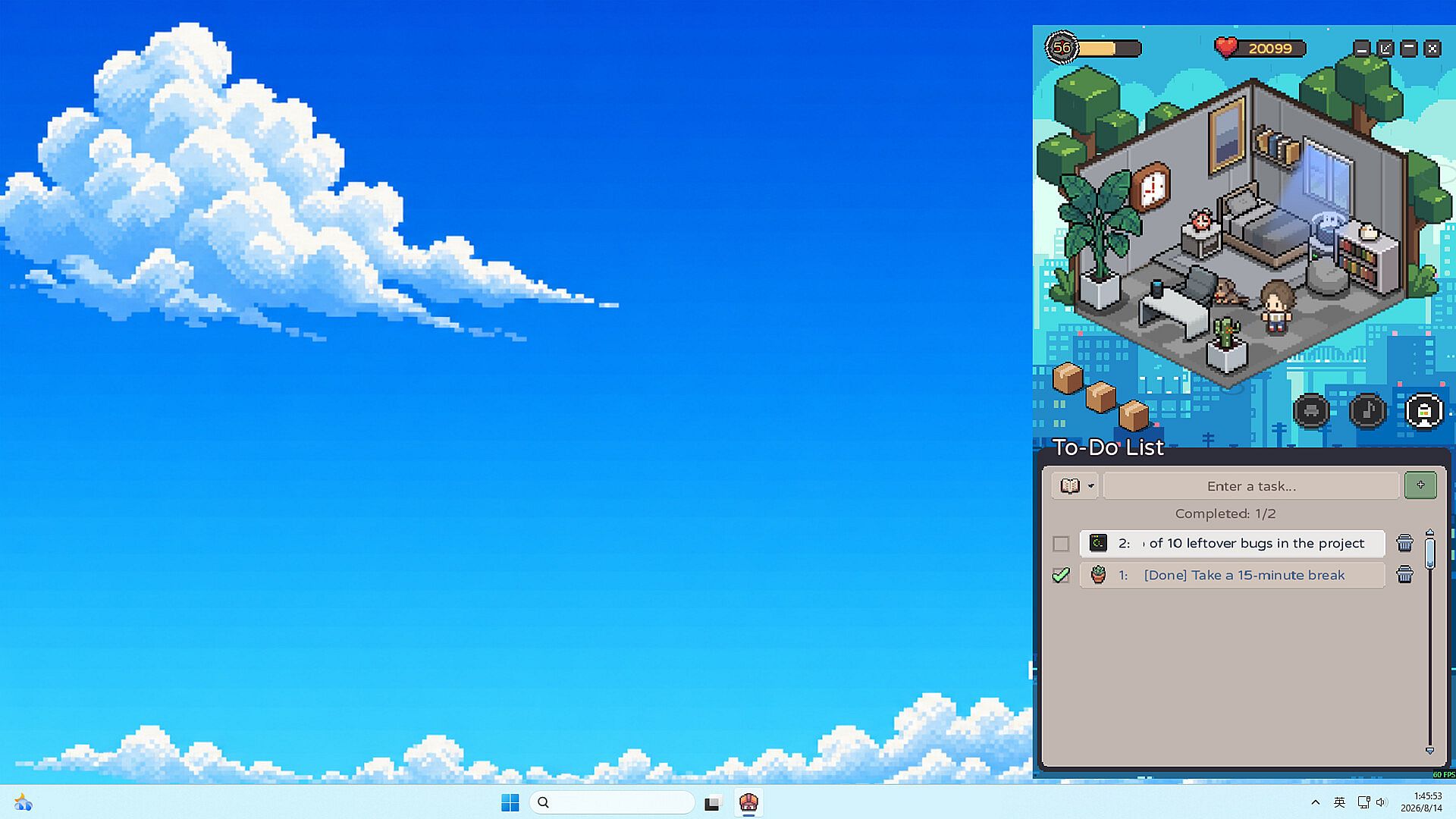
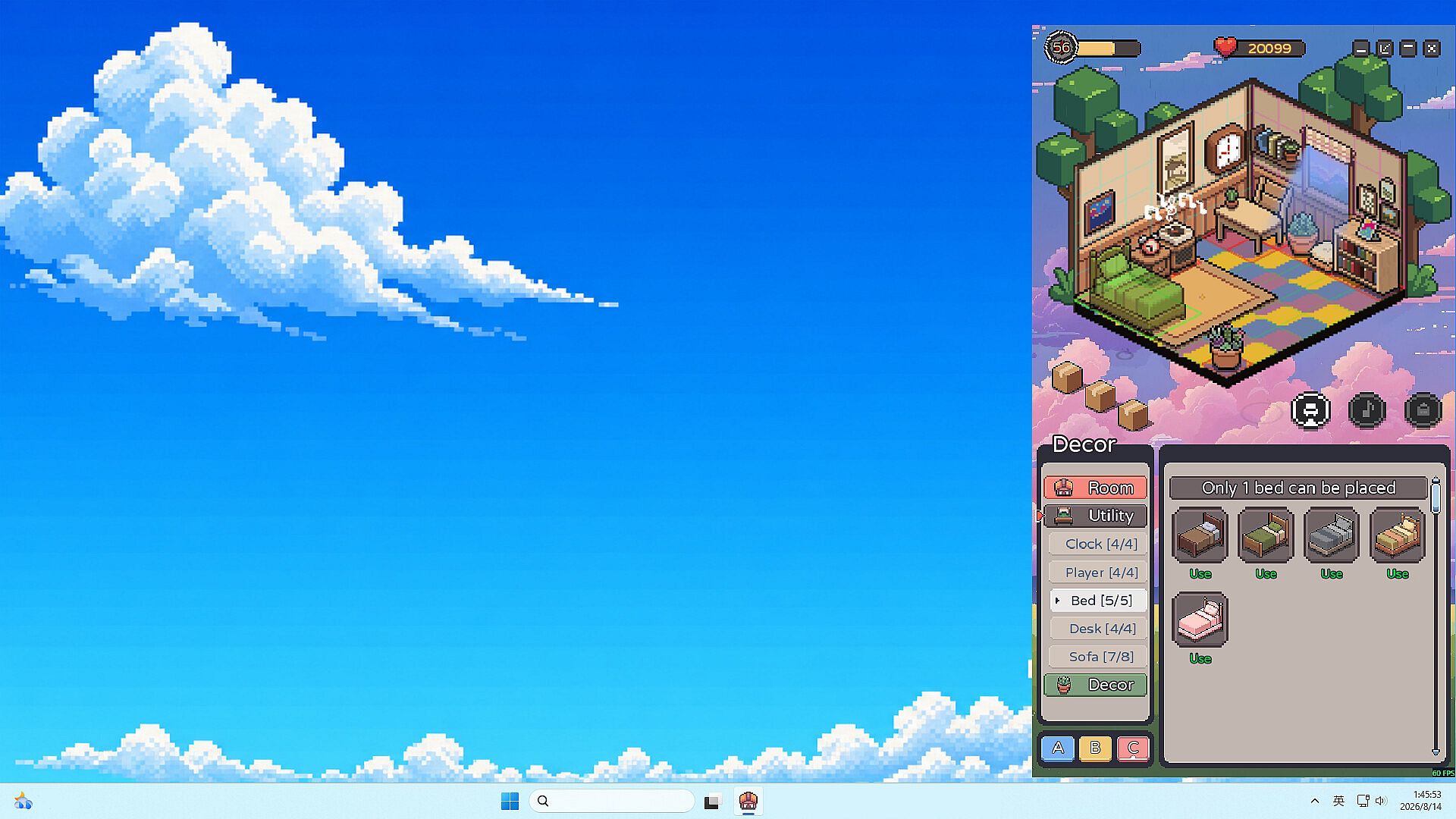

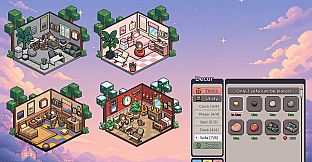



Dwellune: A Cozy Focus Room is an indie casual simulation game for PC that centers on building and customizing a personal pixel-art space tailored to individual moods and daily routines. Players shape a small room by selecting and positioning furniture, decorations, floors, and walls while layering in music tracks and ambient audio to support activities like reading, studying, working, or simply unwinding. The experience emphasizes quiet personalization rather than competition or narrative progression, creating a digital environment that adapts to changing preferences through saved layouts.
Gameplay
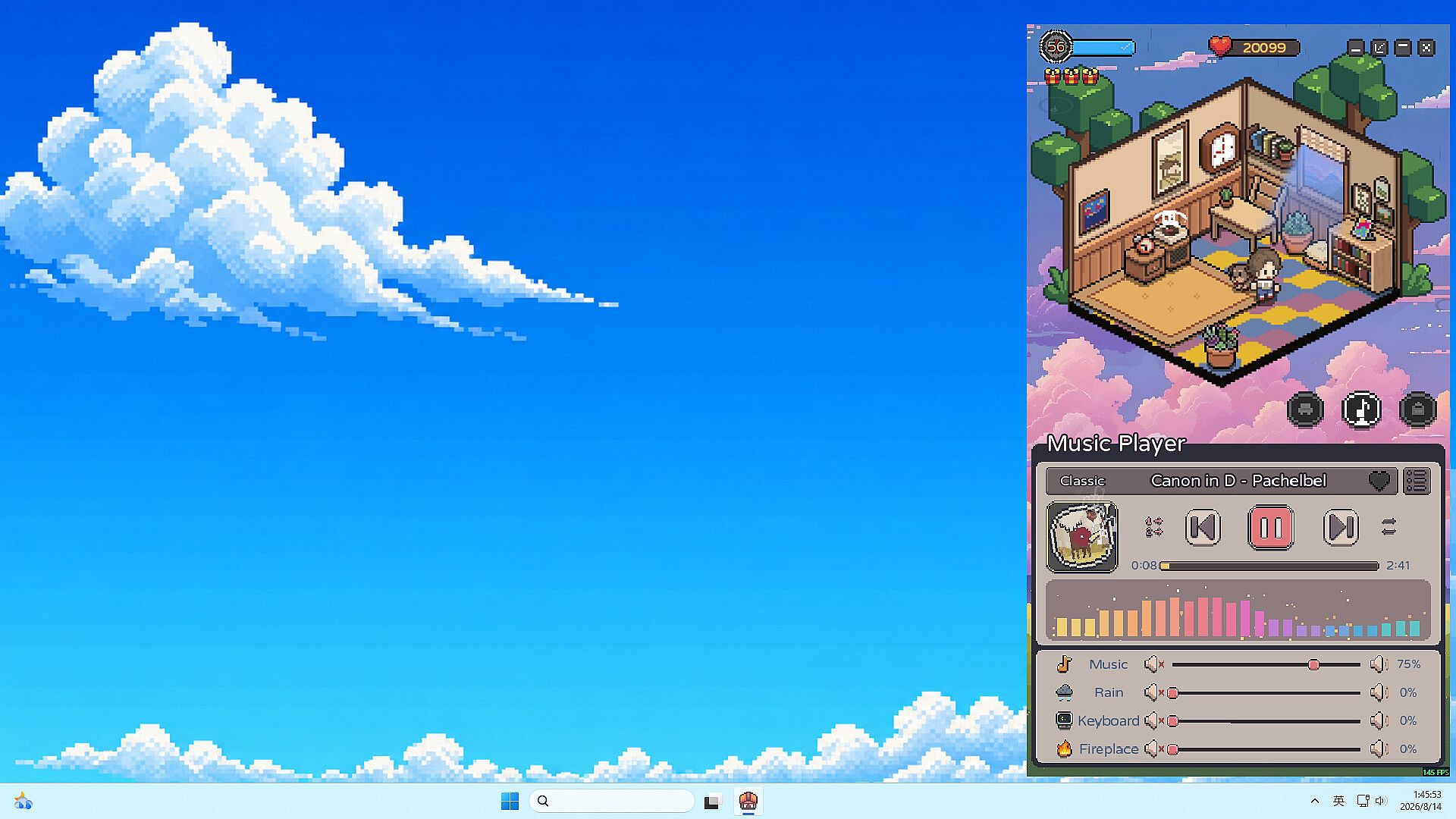
The core loop revolves around free placement of items within a pixel-art room. Users select from multiple themes that alter the overall aesthetic, then combine functional pieces such as seating, lighting, and storage with purely decorative elements to fill every corner. Flooring and wall options further refine the atmosphere, allowing shifts from warm retro styles to clean modern setups or soft bedroom looks. Once arranged, players add a music player and ambient sound layers that play continuously to match the intended activity, whether that means gentle background noise for concentration or calmer tones for rest. Layouts can be saved at any point, enabling quick switches between different configurations as routines evolve throughout the day or week.
Customization extends to every visible surface and object, encouraging repeated adjustments until the space feels personal. The pixel-art presentation keeps the visual style consistent and approachable, with no timers or scoring systems to interrupt the flow. Instead, the mechanics focus on iterative building and audio selection, supporting extended sessions of quiet tinkering or passive listening while the room remains on screen.
Game Modes
No distinct named modes exist beyond the primary room-building activity. The game supports flexible use cases through its audio and layout tools, letting players configure the space for focused tasks such as studying or working, or for lighter relaxation periods. Switching between saved layouts serves as the main way to vary the experience, moving from one theme or arrangement to another without restarting the session. This approach keeps the emphasis on personal routine rather than structured challenges or separate gameplay variants.
Audio selection functions as an integrated layer that aligns with the chosen activity. Users pick tracks and sounds suited to reading sessions, study blocks, work periods, or moments of slowing down, creating an environment that stays active in the background. Multiple saved rooms allow seamless transitions when the mood shifts, maintaining continuity across different setups without additional loading steps.
Customization Options
Item collection and combination form the heart of personalization. Players gather functional pieces alongside decorative ones, then experiment with placement across the room grid to achieve balanced or intentional compositions. Theme variations provide starting points that influence available colors, textures, and object styles, while floor and wall choices add further depth to the visual result. The system supports ongoing refinement, with no limits on how many times items can be rearranged within a single session.
Language support includes both English and Simplified Chinese, broadening accessibility for different players. All changes save automatically within each layout, preserving progress across multiple configurations. This setup rewards careful observation of how small adjustments affect the overall feel of the space.
Is It Worth Playing?
The game suits individuals seeking a low-pressure digital space for focus or calm without complex systems or external goals. Its pixel-art room decoration and ambient audio tools deliver a straightforward loop centered on personal arrangement and sound layering, appealing to those who enjoy simulation titles that prioritize atmosphere over progression. Availability on PC makes it accessible for desktop use during work or study sessions, where the saved layouts enable quick adaptation to different needs.
Player interest tends to center on the relaxing customization and audio features described in the core design. Without competitive elements or story content, the experience remains consistent and repeatable for users who value quiet personalization. Those drawn to cozy simulation games with practical audio support will find the mechanics align directly with that preference, while players expecting action, multiplayer, or narrative depth may prefer other titles. The current state reflects a focused indie release centered on these verified features.