



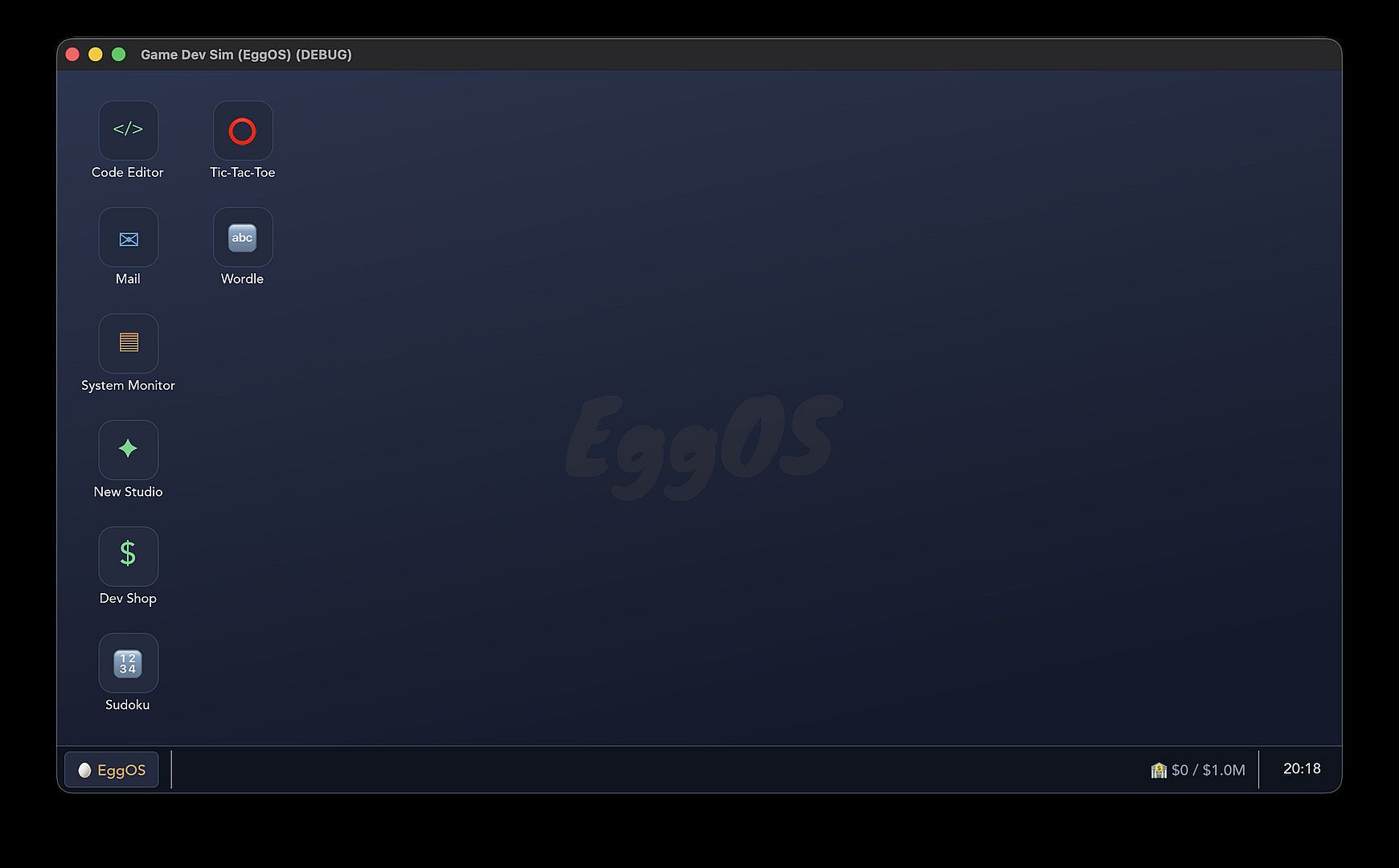



EggOS: Incremental Game Dev to symulacja przyrostowa dla jednego gracza, stworzona z myślą o komputerach PC. Wcielasz się w dewelopera, który musi spłacić dług grożący utratą dachu nad głową. Pracujesz w symulowanym środowisku pulpitu, tworząc i sprzedając gry, aż zobowiązanie zostanie uregulowane. Mechanika łączy pisanie kodu, działania marketingowe i system sprzedaży w wielowarstwowej pętli progresji, która działa zarówno przy aktywnym graniu, jak i podczas nieobecności.
Rozgrywka
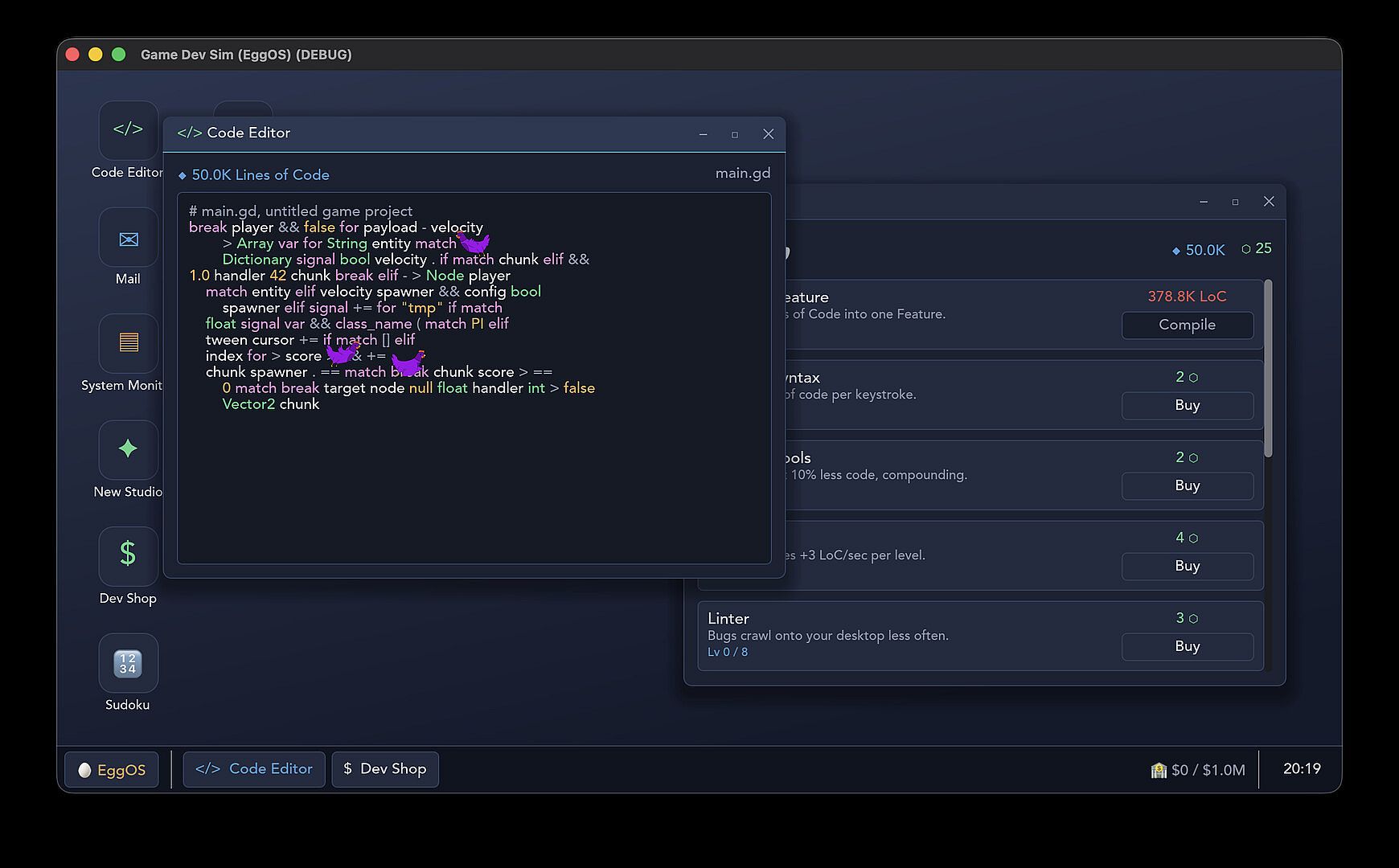
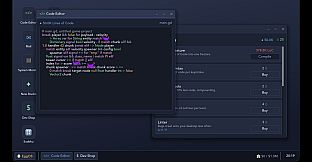
Podstawowy cykl zaczyna się w Edytorze Kodu, gdzie gracz ręcznie wpisuje linie kodu. Gotowe fragmenty trafiają do Sklepu Deweloperskiego, w którym można inwestować zasoby w ulepszenia zwiększające wydajność. Po odblokowaniu narzędzi automatyzacji - AI do kodowania i automatycznego kompilatora - produkcja toczy się dalej bez udziału gracza, także w trybie idle. Zyski ze sprzedaży finansują kolejne ulepszenia, tworząc stały cykl rozwoju.
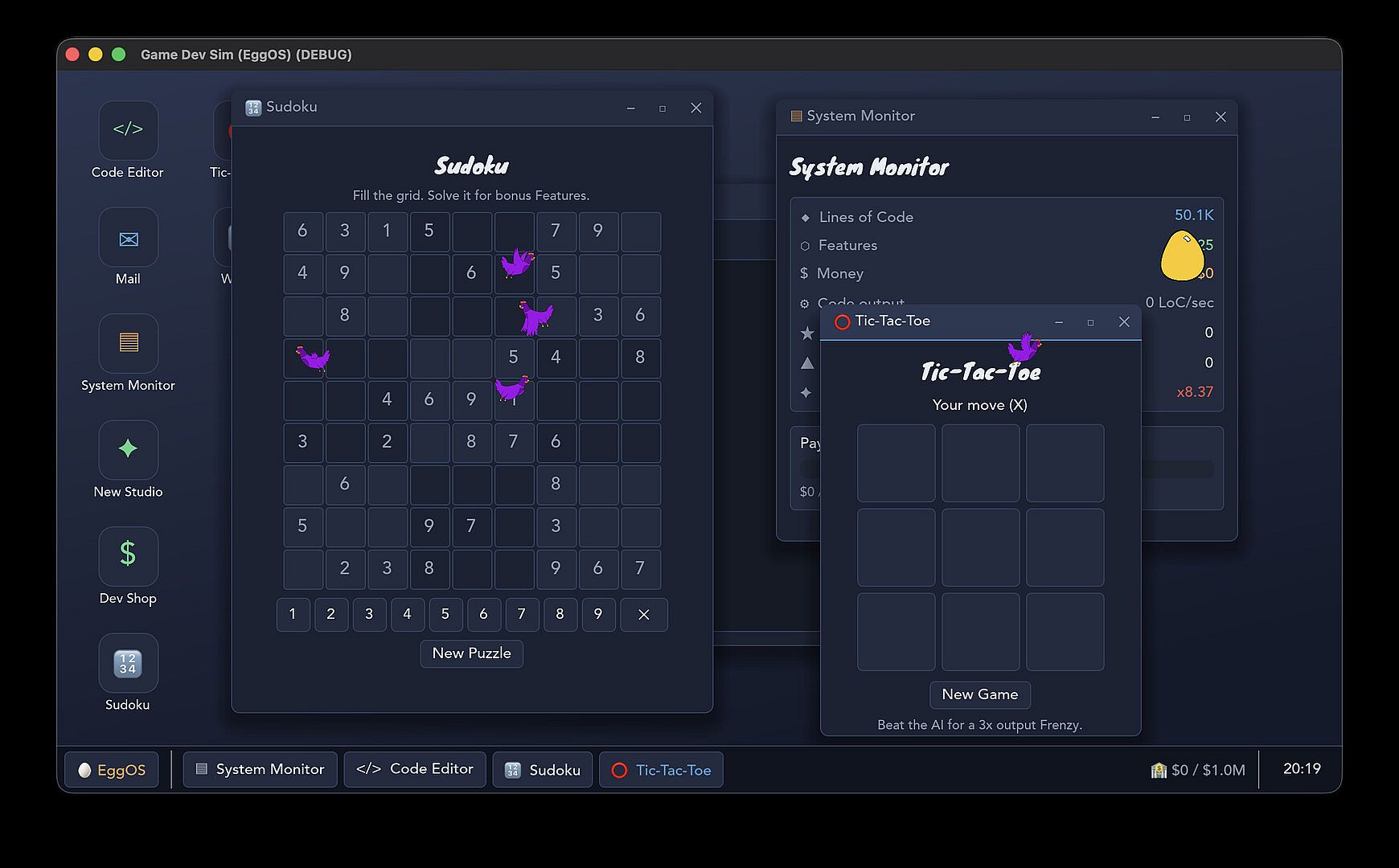
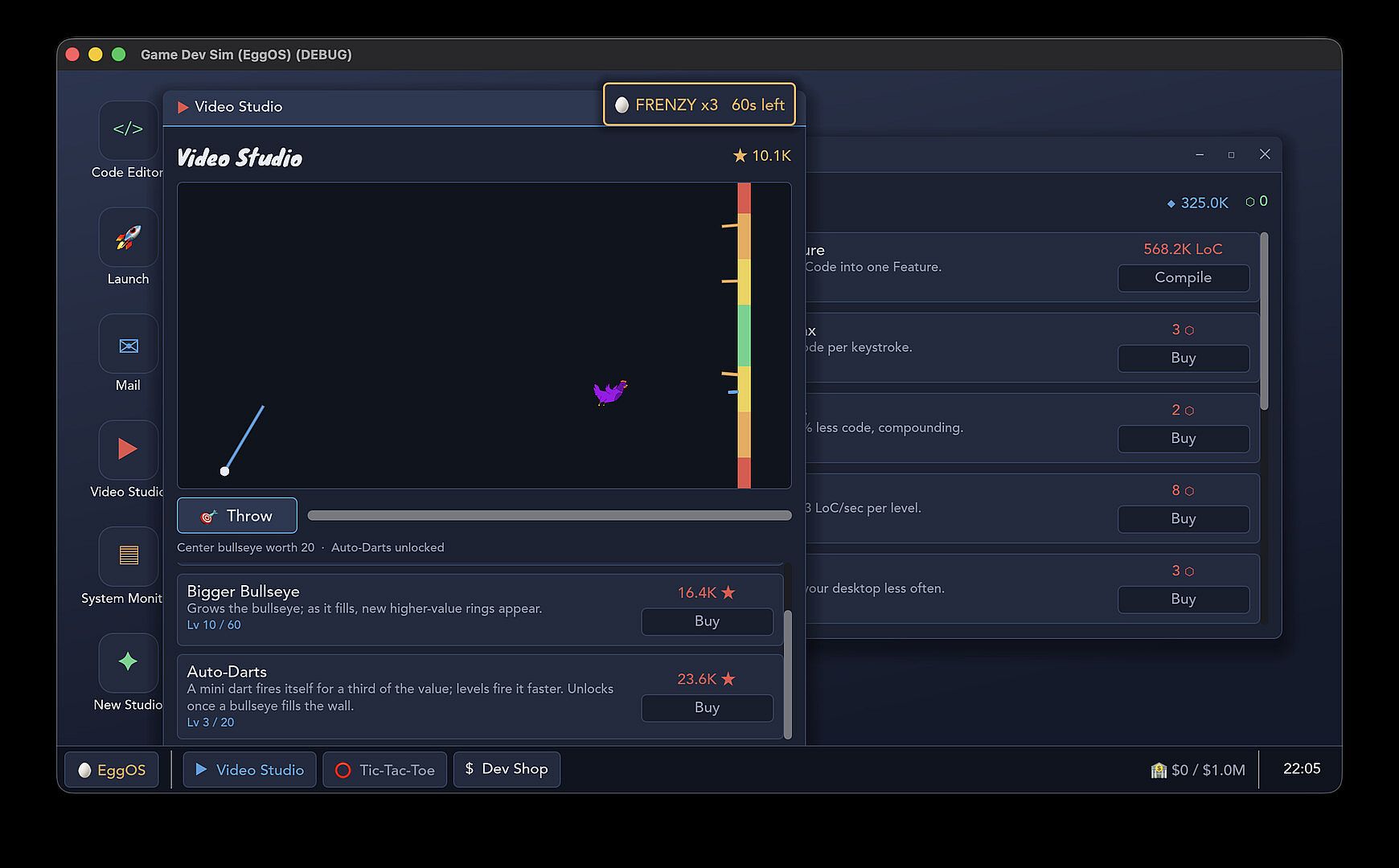
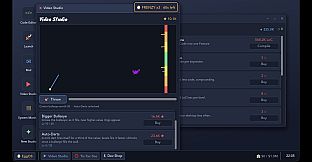
Marketing realizowany jest w Studiu Wideo - aktywności opartej na fizyce, w której gracze rzucają rzutkami w powiększającą się tarczę, budując listę życzeń. Po zakończeniu fazy promocji lista przekształca się w premierę, a sprzedaż działa jak automat z trzema bębnami, zamieniając hype na gotówkę. Uzyskane środki zmniejszają zadłużenie wobec banku. Na pulpicie pojawiają się rozpraszacze: powiadomienia, wygaszacz ekranu, złote jajka uruchamiające mnożniki punktów oraz błędy, które trzeba szybko usuwać, by utrzymać koncentrację.
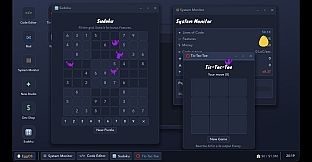
Dodatkowe aktywności to wbudowane wersje Kółko i krzyżyk, Sudoku, Wordle oraz łamigłówka przesuwna, wszystkie dostępne bezpośrednio na pulpicie. Całość opiera się na przeciąganych oknach i pasku zadań, dając wrażenie pracy w pełnoprawnym, fikcyjnym systemie operacyjnym zamiast klasycznego menu.
Tryby gry
Główny tryb to kampania spłaty długu - ciągła sesja jednoosobowa. Gracz zarządza zasobami w fazach kodowania, marketingu i sprzedaży, aż do osiągnięcia celu miliona dolarów. Po uregulowaniu zobowiązania aktywuje się system prestiżu, umożliwiający otwarcie nowego studia i rozpoczęcie kolejnego cyklu z trwałymi ulepszeniami.
Prestiż stanowi powtarzalną warstwę endgame. Punkty zdobyte w poprzednich przebiegach wydaje się w drzewku umiejętności, które zapewnia mnożniki, przewagę na starcie oraz specjalistyczne bonusy. Każde nowe studio korzysta z tych ulepszeń, przyspieszając wczesny rozwój i umożliwiając głębszą automatyzację. Zarobki w trybie idle naliczają się między sesjami, więc czas offline również przynosi korzyści.
System prestiżu i progresji
Drzewko prestiżu rozgałęzia się na kilka ścieżek. Ulepszenia kumulują się, zwiększając wydajność kodowania, generowanie list życzeń, efektywność sprzedaży oraz szybkość automatyzacji. Gracz może wybrać kierunek skupiony na szybkim starcie lub na długoterminowym skalowaniu, co pozwala na różne strategie w kolejnych przebiegach. System zachęca do powtarzania gry, przy czym każdy kolejny cykl jest szybszy dzięki nagromadzonym bonusom.
Postęp offline jest ściśle powiązany z automatycznymi narzędziami. Gdy kodowanie i kompilacja działają w tle, produkcja i przychody rosną bez udziału gracza, a zasoby czekają na odbiór po powrocie. Rozwiązanie wspiera zarówno krótkie sesje skupione na aktywnych mini-grach, jak i dłuższe okresy pasywnego rozwoju.
Czy warto zagrać?
EggOS: Incremental Game Dev trafia w gusta fanów gier przyrostowych i idle, ceniących nietypową tematykę pulpitu. Połączenie aktywnych zadań - rzucania rzutkami czy obsługi automatu sprzedażowego - z pasywną automatyzacją tworzy zrównoważoną pętlę, która nagradza zarówno zaangażowanie, jak i planowanie. Drzewko prestiżu zapewnia długoterminowe cele bez konieczności ciągłej uwagi.
Tytuł przypadnie do gustu graczom casualowym i miłośnikom symulacji, którzy lubią lekkie mini-gry obok głównego systemu progresji. Wyraźny cel w postaci spłaty długu wyznacza konkretny punkt zakończenia każdego cyklu, a warstwa prestiżu wspiera dłuższe rozgrywki. Ponieważ gra jest nowa, opinie graczy są jeszcze nieliczne, jednak mechaniki wpisują się w sprawdzone konwencje gatunku, które przyciągają entuzjastów. Osoby szukające spójnego doświadczenia na PC z różnorodnością wizualną i stałym postępem powinny znaleźć tu satysfakcjonującą strukturę.