

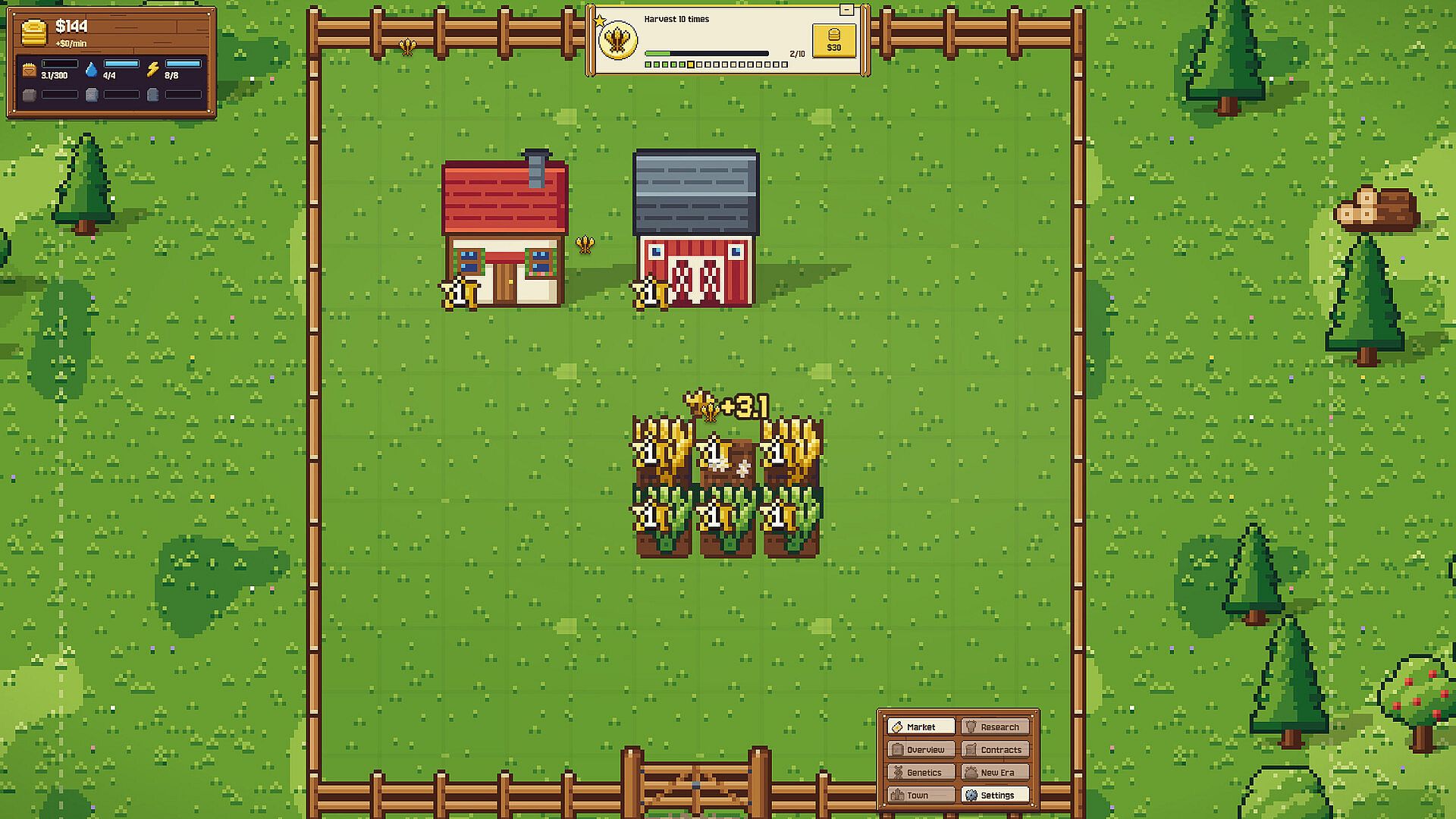
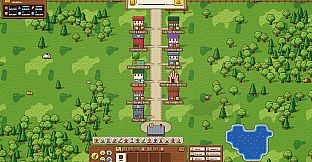
Farm Factory is a strategy, indie, casual, and simulation game centered on building and expanding an automated farm operation. Players begin with basic manual tasks like planting and watering crops before introducing machines that handle the work, allowing the focus to shift toward designing efficient layouts and production chains that turn raw harvests into sellable goods.
Gameplay
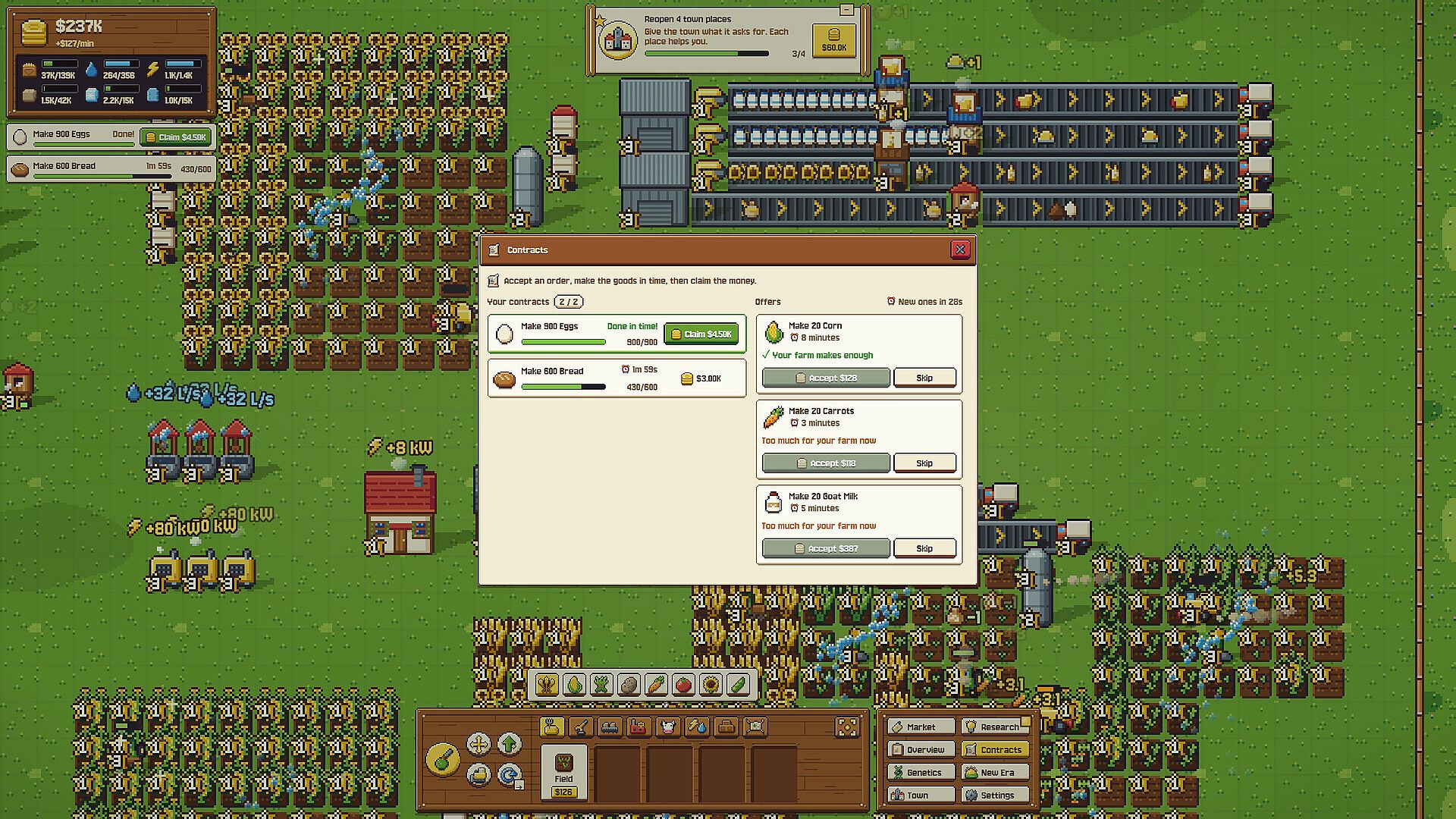
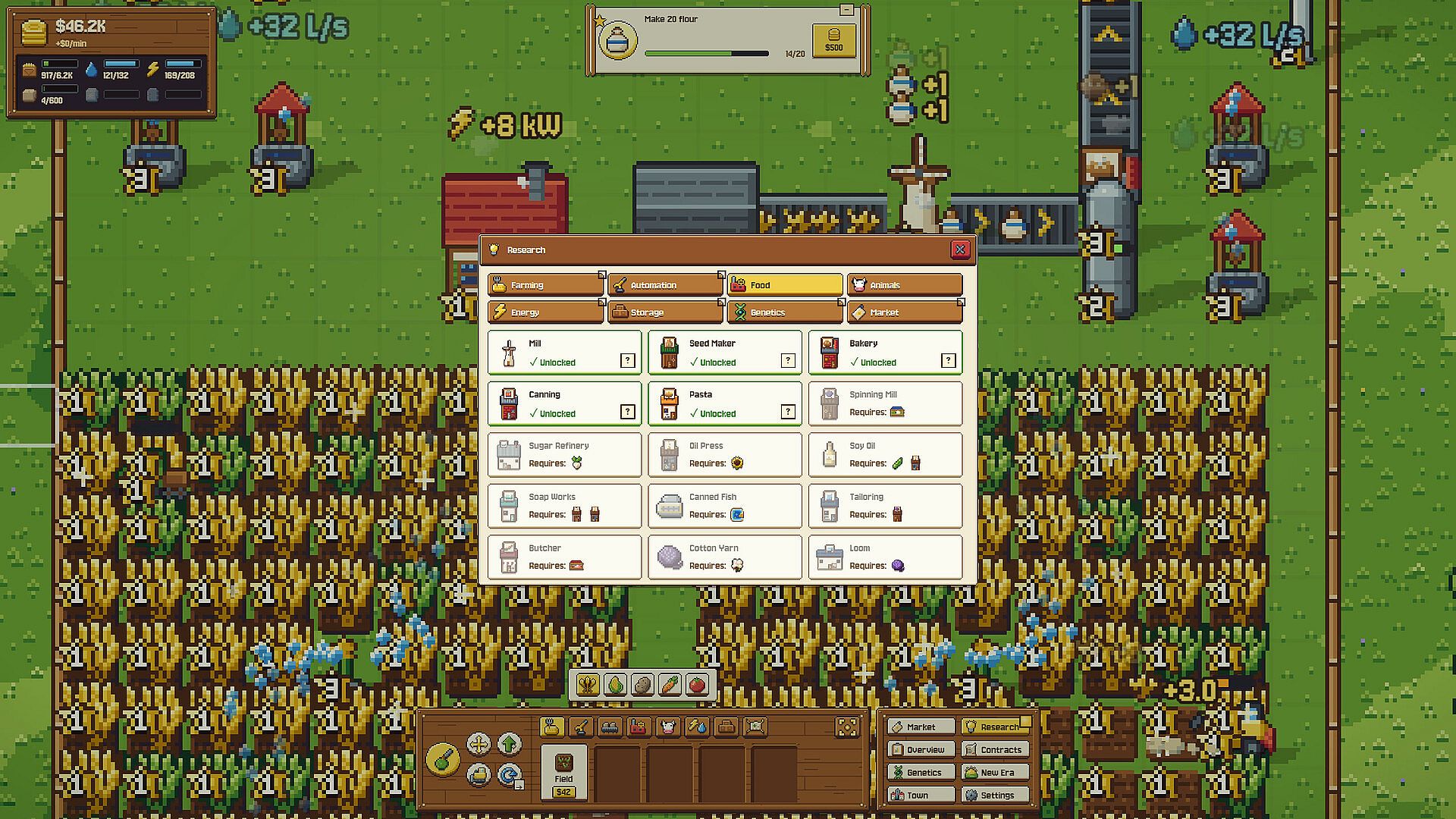
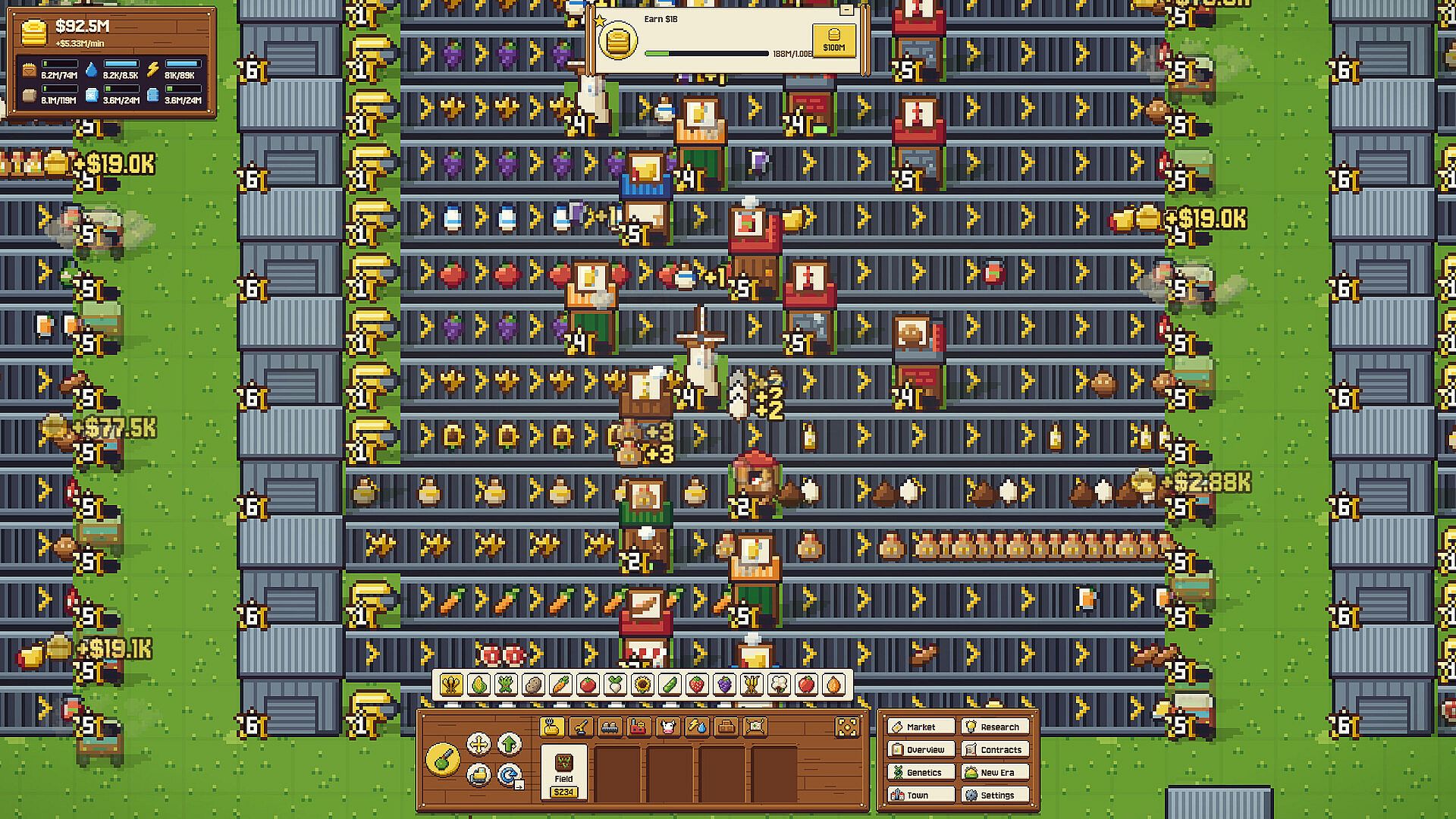
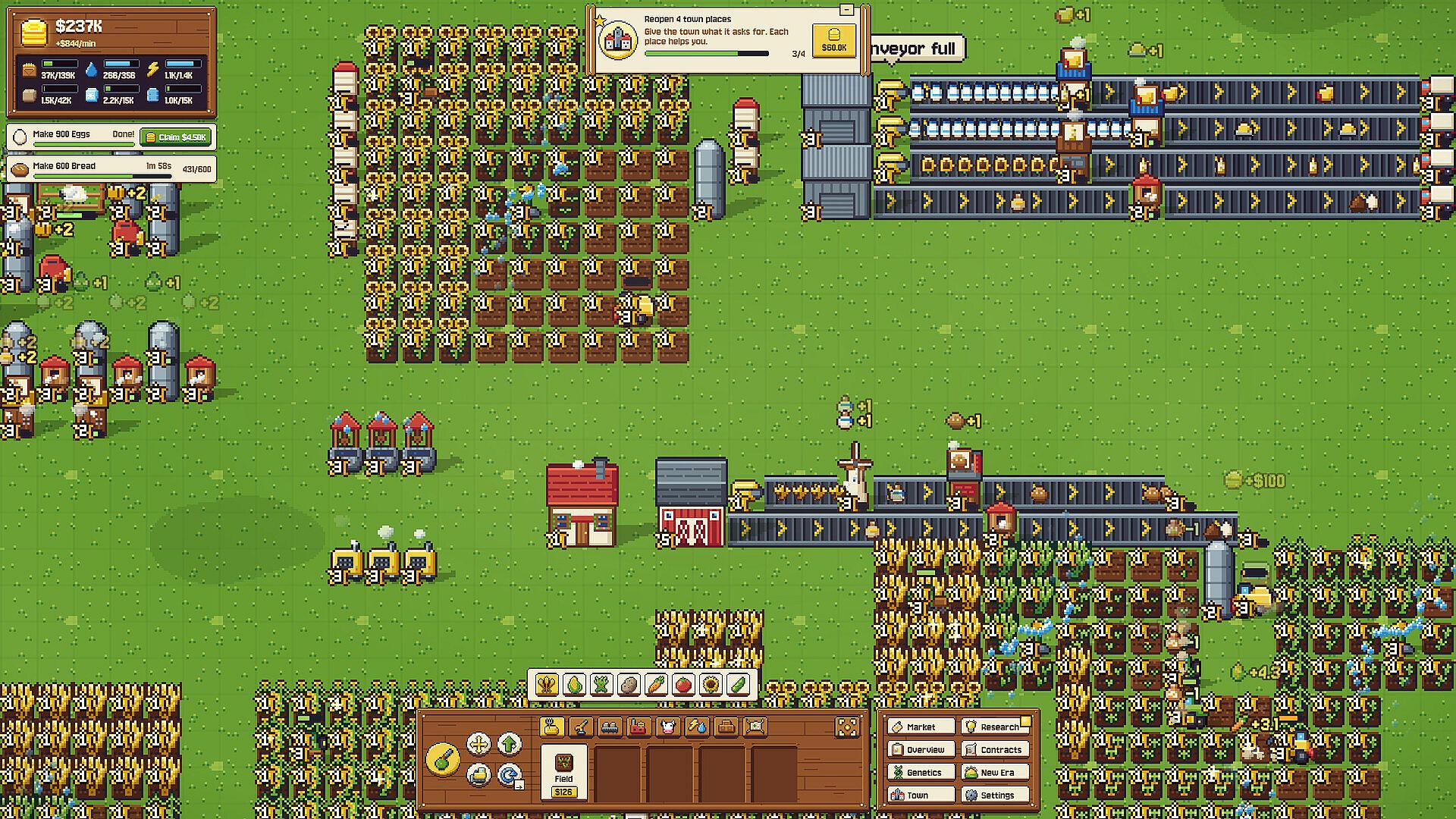
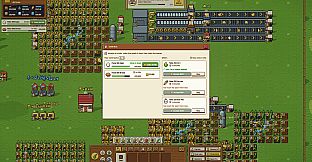
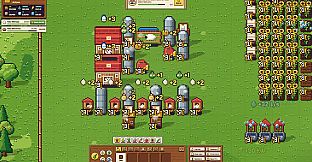
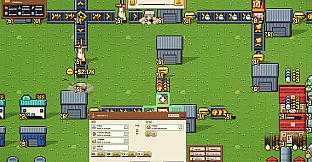
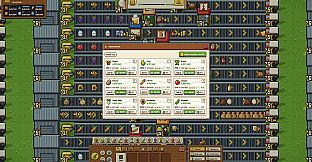
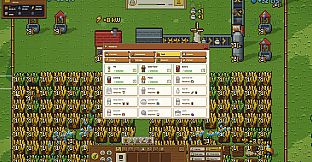
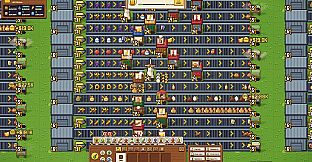
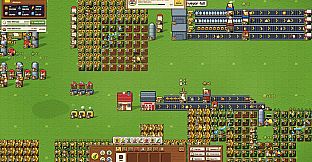
The core loop revolves around starting small on a modest plot and gradually layering in automation. Sprinklers cover surrounding fields, while specialized machines such as planters, harvesters, and fertilizer spreaders move across crops and return to storage. Bees can be positioned near sunflowers to boost yields. Production flows through conveyors that transport wheat into mills, flour onward to bakeries, and finished bread to truck stops where vehicles depart for town and return with revenue.
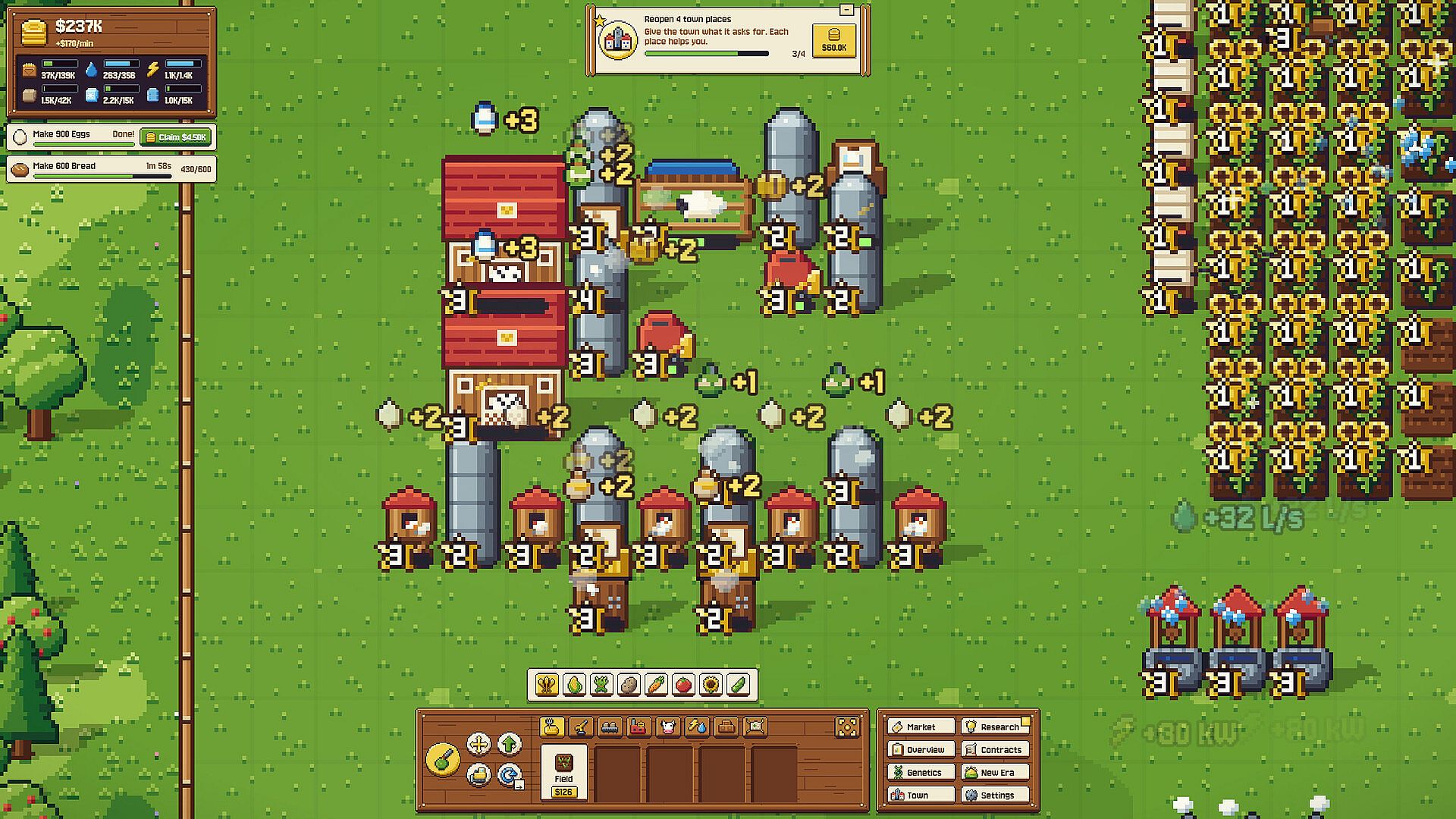
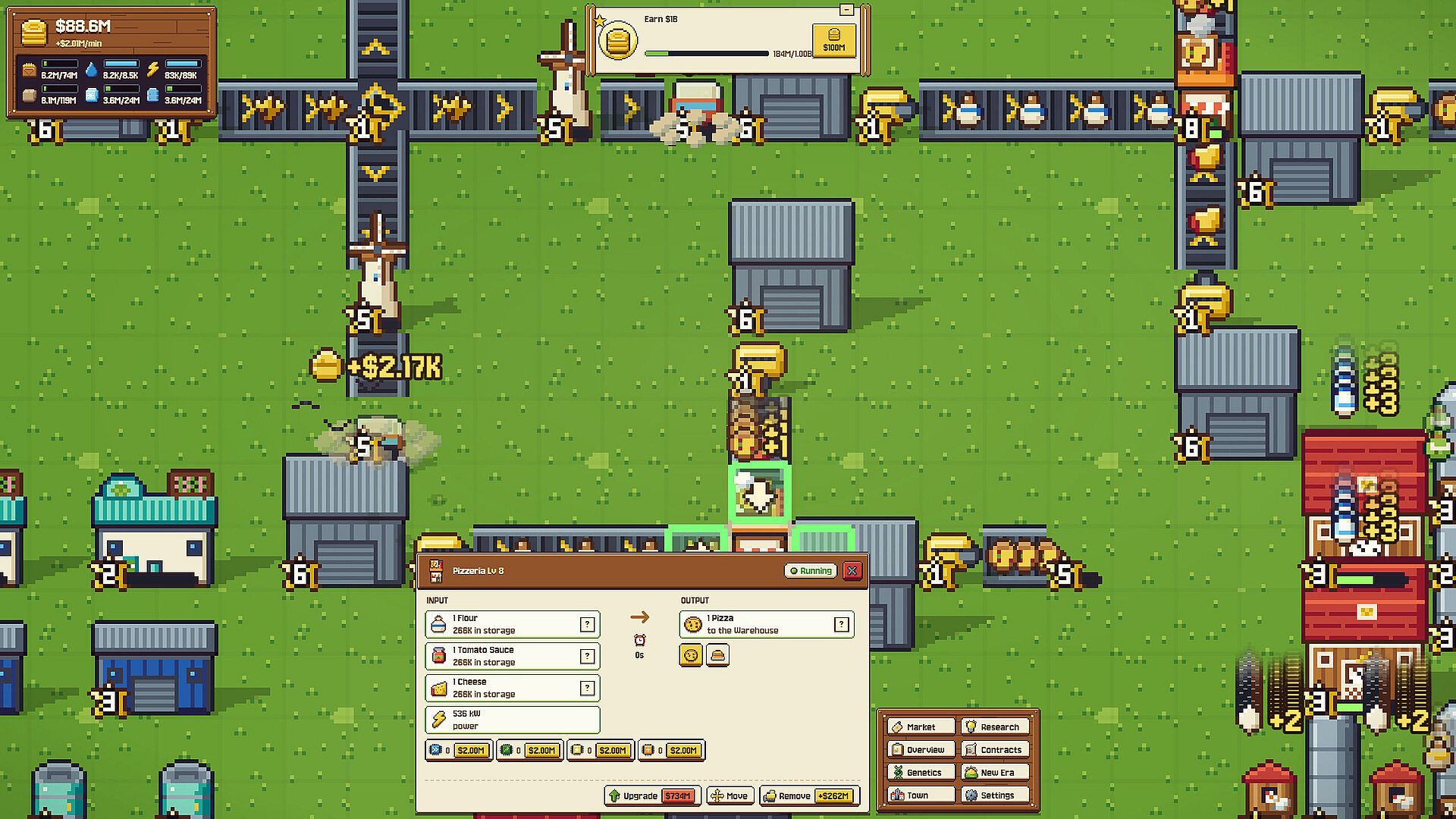
Players connect machines in flexible configurations, using splitters to divide resource lines among multiple processors. Additional lines bring ingredients like tomato sauce and cheese together at facilities such as a pizzeria. Animal systems integrate with the same infrastructure: feed mills convert crops into animal feed, hay balers process grass, and livestock including cows, sheep, goats, and chickens produce milk, wool, eggs, and other outputs. Manure is composted into fertilizer that improves future harvests.
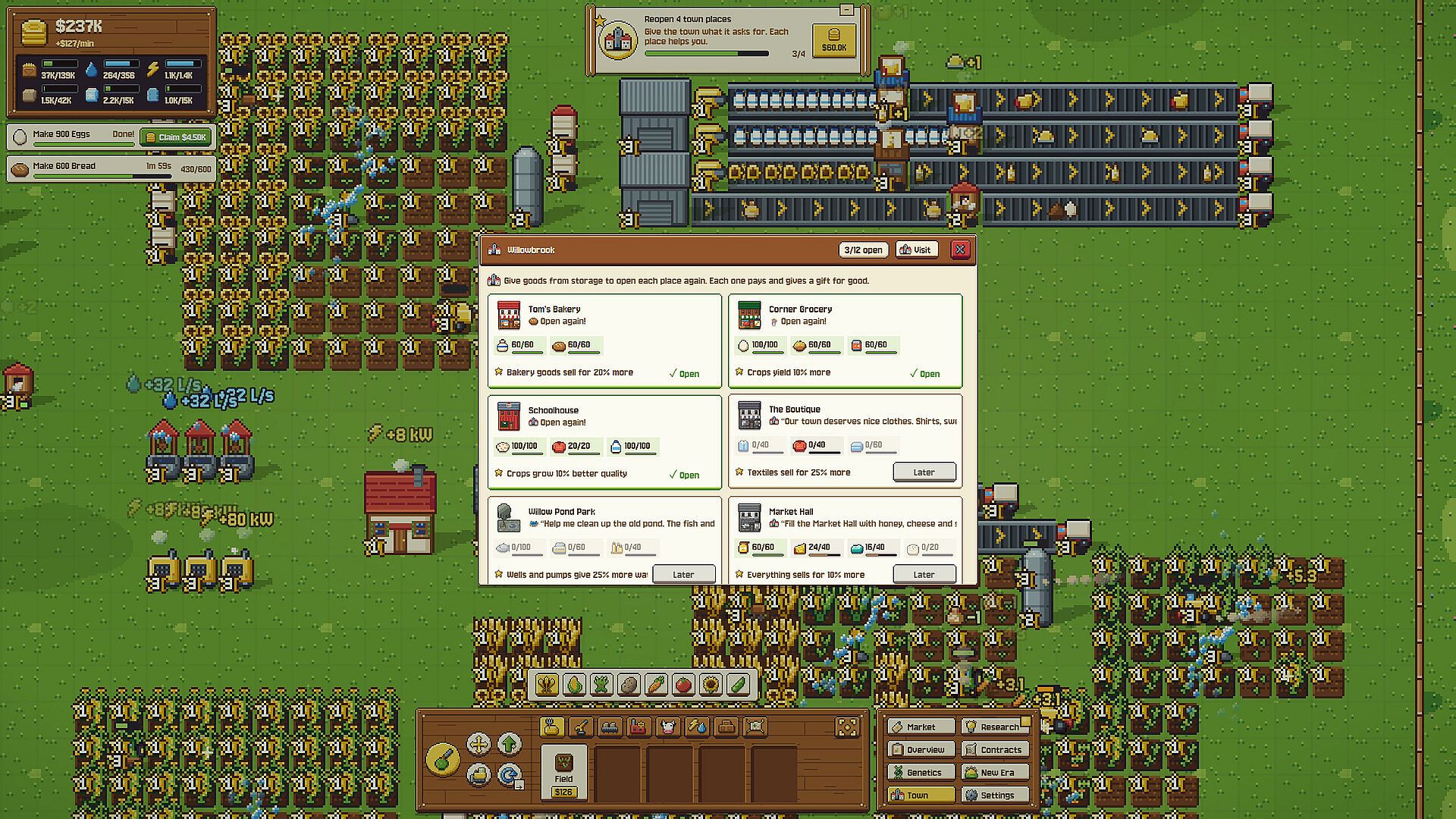
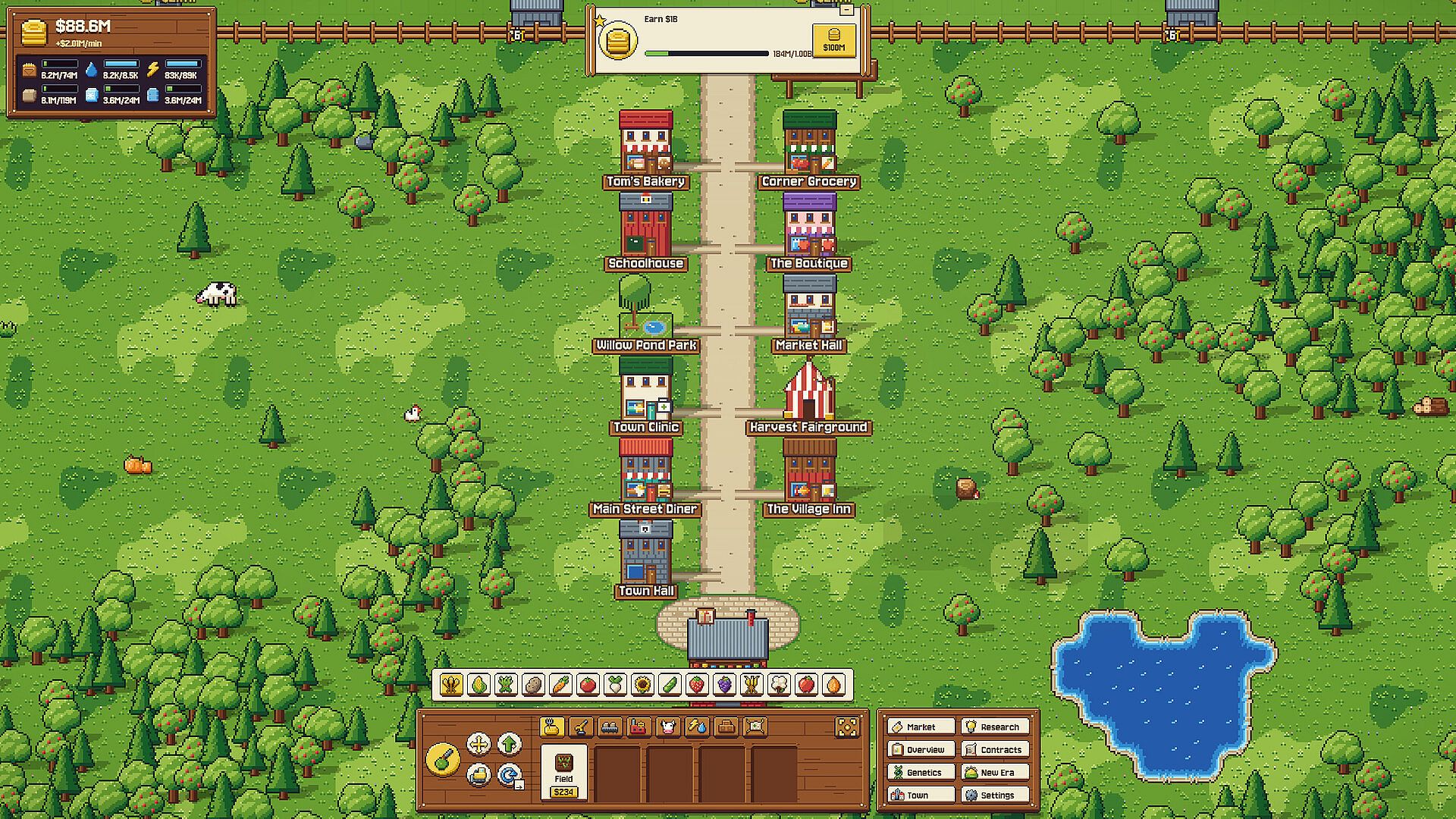
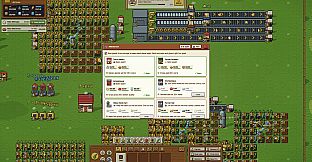
Expansion ties directly to reviving the town of Willowbrook. Shops remain closed until supplied with requested goods; each opened business provides payment, a permanent farm upgrade, and visible progress along the streets. Progression occurs through player levels that unlock larger store and factory areas, additional machine capacity, and refined systems for deliveries and supply management.
Game Modes
Farm Factory operates as a single-player experience with no separate competitive or multiplayer modes. All activity centers on the ongoing management and expansion of one farm factory, where players balance crop growth, livestock care, machine configuration, and product distribution. Progression systems such as level-based unlocks and relationship development with arriving visitors provide structure without altering the fundamental single-player loop.
Updates during the current early access phase have added features like drone delivery stations for off-site projects, configurable daily supply lists, and expanded late-game areas that support more complex production networks. These elements build on the same core systems rather than introducing distinct modes.
Building Efficient Systems
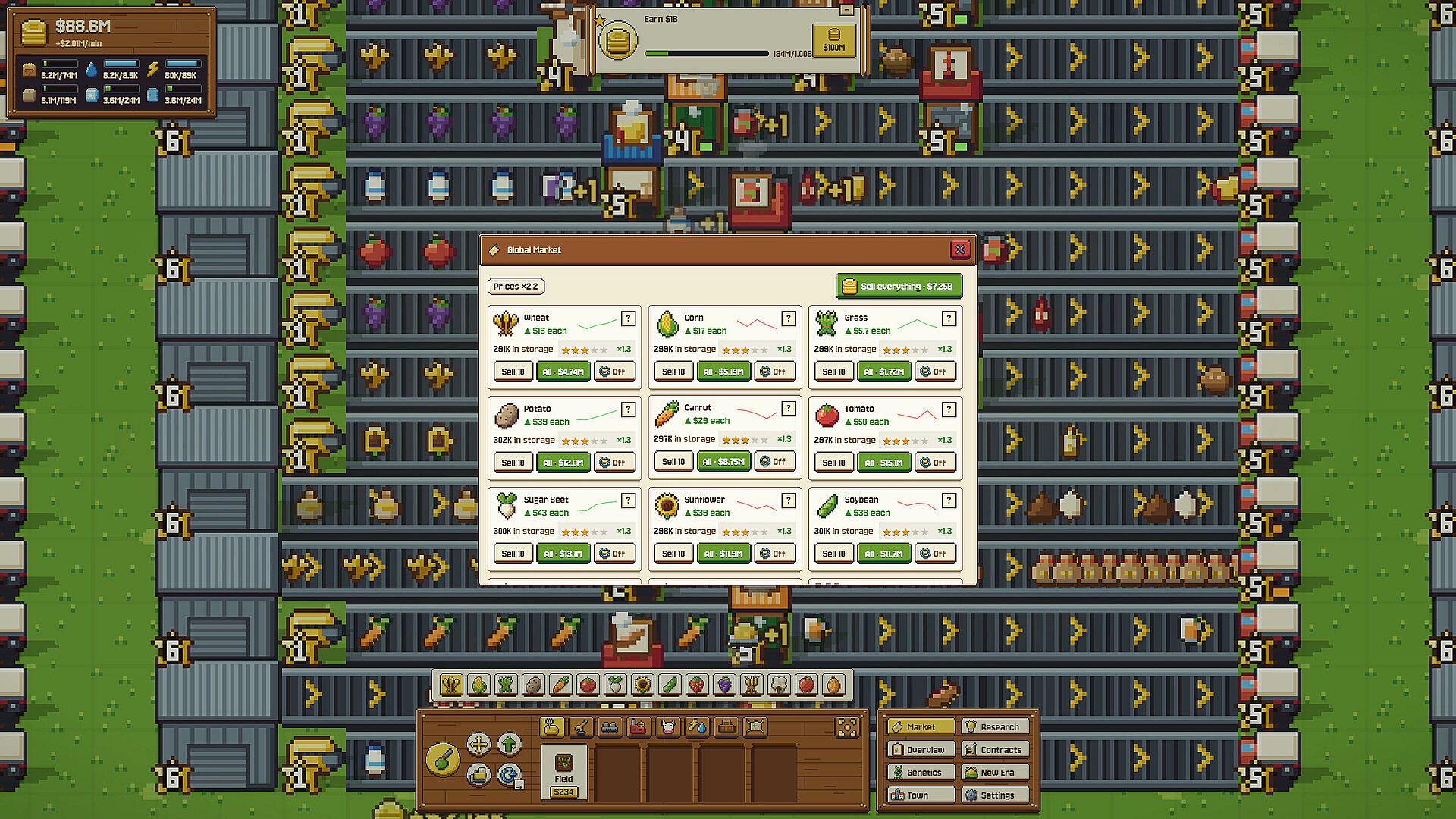
Success depends on identifying and resolving bottlenecks in resource flow. Machines can be upgraded for speed, with recent changes making processing time reductions more impactful on equipment such as ovens, mixers, and presses. Layout decisions matter because conveyors, splitters, and storage interact in three-dimensional space, and loose items can be scanned for quick recovery.
Store management adds another layer: products arrive via conveyors or cranes, cashiers handle sales, and rack space determines how much inventory can be displayed. Expansions at higher levels provide room for wider racks, more checkout capacity, and additional drone or supply infrastructure, encouraging players to redesign sections as output scales.
Is It Worth Playing?
Farm Factory suits players who enjoy automation-focused management games and relaxed farming simulations. The verified player reception on its platform stands at very positive, with review scores near 94 percent from over one hundred submissions. Ongoing early access updates continue to refine progression, add late-game content up to player level 35, and improve quality-of-life tools such as supply automation and item scanning.
Those drawn to incremental building, production line optimization, and steady expansion without time pressure or combat will find a calm, satisfying loop. The game remains in active development, so features may evolve, but the current systems already deliver substantial depth for fans of the genre. A demo version allows direct testing of the foundational mechanics before purchase.