

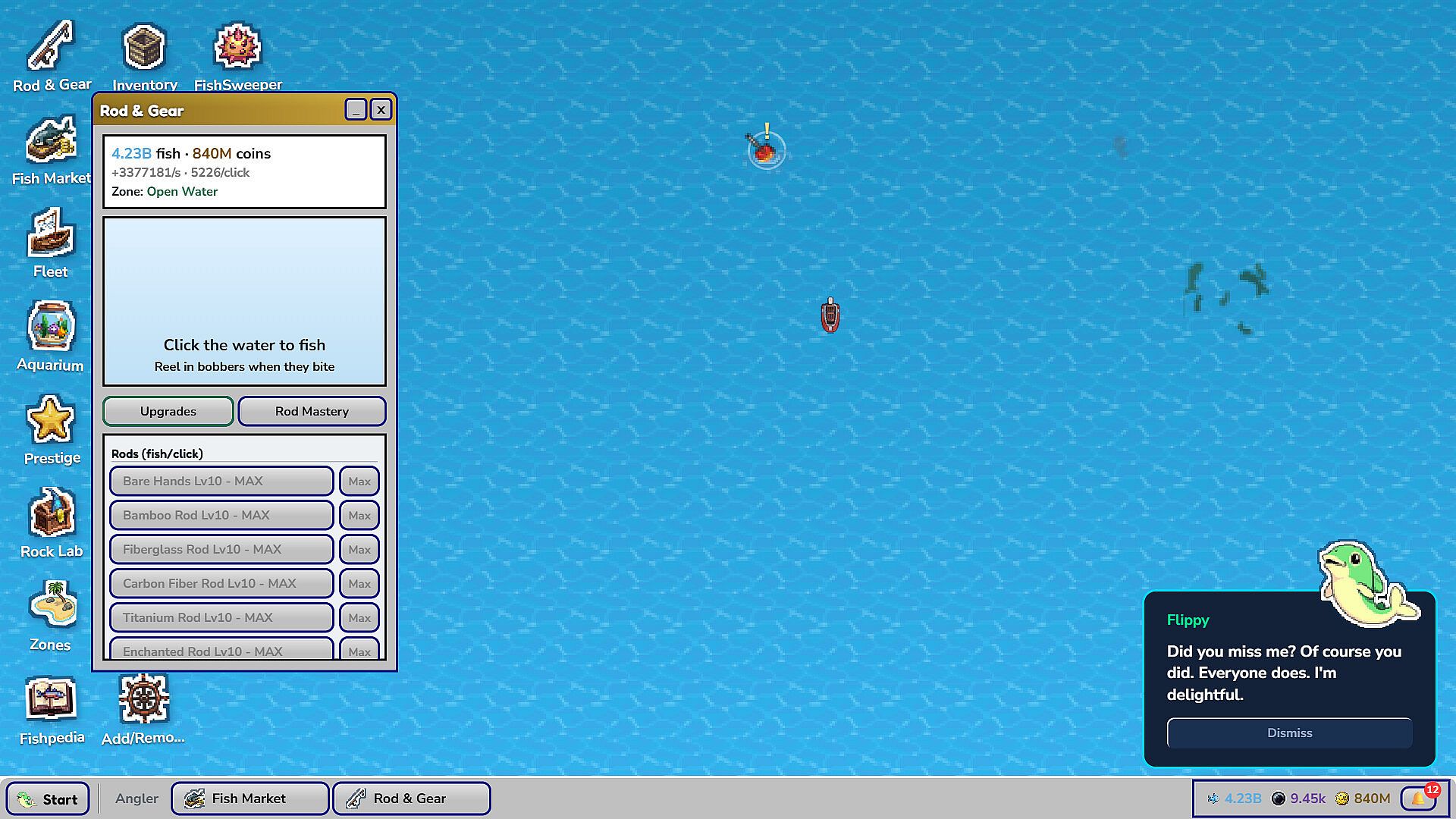
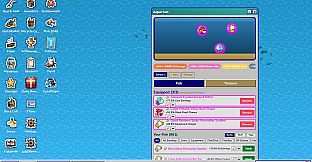
FISH OS is an indie idle fishing game for PC that wraps its core loop inside a simulated 1997 operating system desktop. Players manage multiple windows to catch fish, sell catches, upgrade equipment, and expand an offline fleet while the interface itself becomes part of the experience. The game emphasizes passive progress through boat expeditions that continue while the application is closed, combined with periodic prestige resets that grant permanent multipliers for subsequent runs.
Gameplay
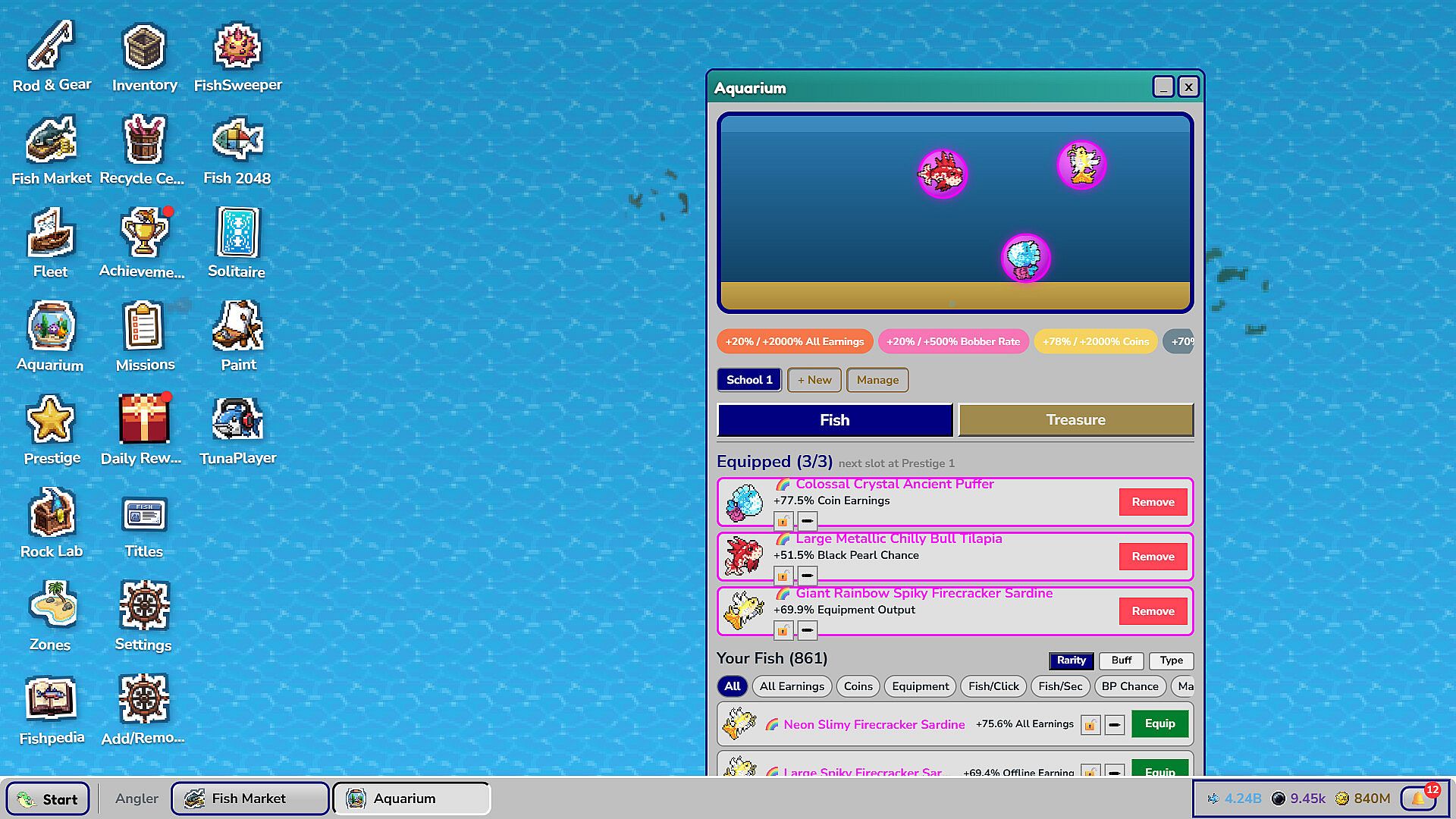
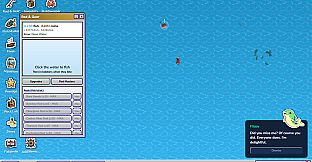
The central loop revolves around opening the fishing application within the desktop environment and casting lines into different zones. Each catch adds to a growing collection logged in the Fishpedia, where entries are organized by rarity and habitat. Common species appear frequently, while rarer ones require sustained effort across multiple sessions. Duplicates can be fused into hybrid variants, and standout catches are placed in a customizable aquarium that serves as both a display and a visual record of progress.
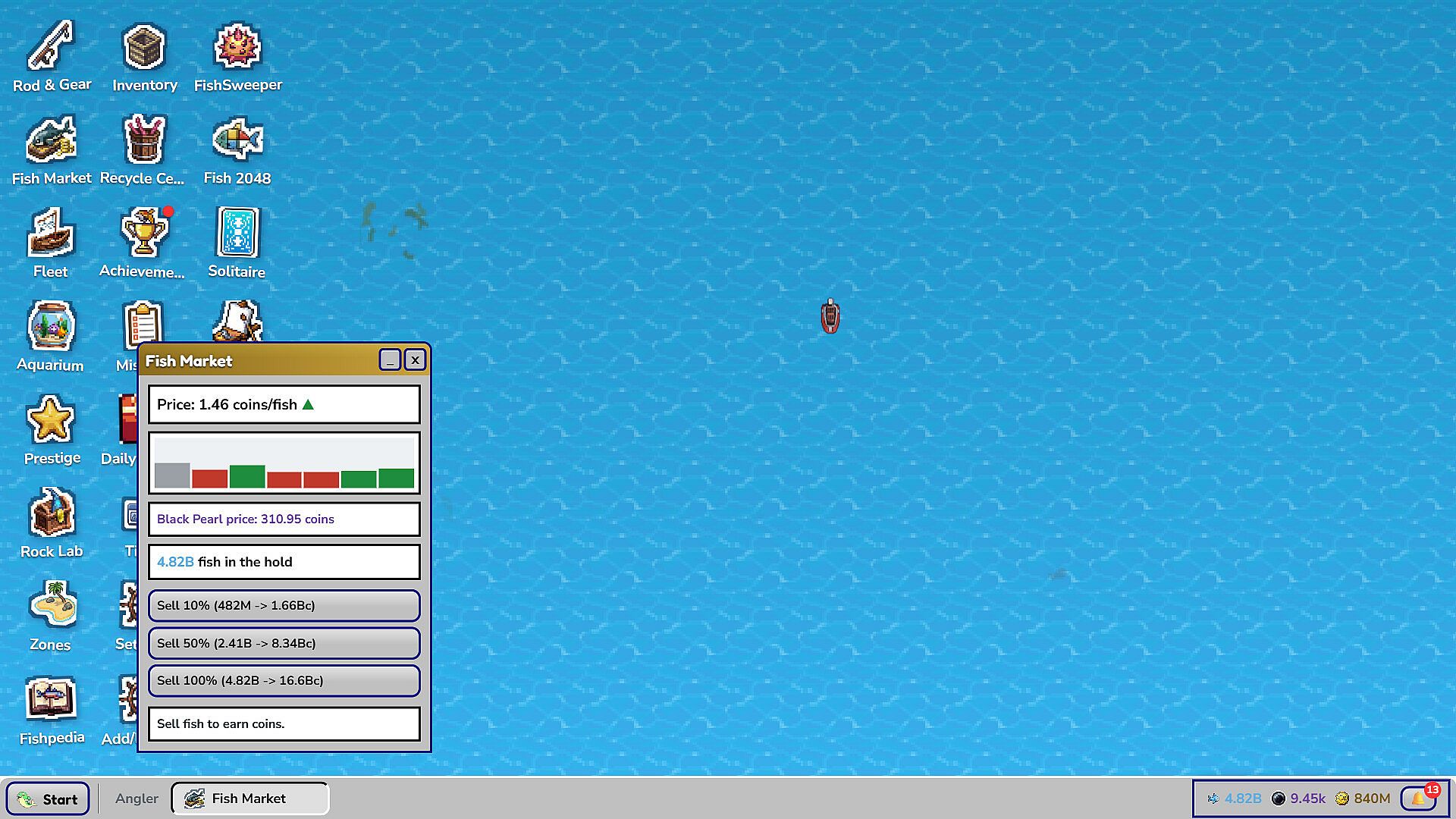
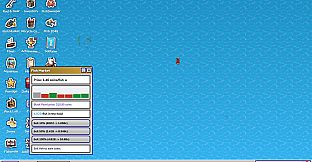
Economy management extends beyond active fishing. Players purchase and dispatch boats on expeditions that generate resources overnight or during extended absences. Returning to the game reveals a summary of earnings and new inventory. This offline system forms the foundation rather than an optional feature, allowing steady advancement without constant input. Additional tools appear as separate windows, including a market for selling fish and a workshop for crafting improved rods from gathered materials.
Prestige occurs through a full drive format that clears current progress in exchange for a lasting multiplier. Subsequent runs benefit from stronger starting equipment, access to deeper zones, and new titles earned along the way. Materials gathered in a dedicated lab support further upgrades, creating a cycle of incremental depth with each reset.
Game Modes
The primary experience centers on the idle fishing simulation integrated into the operating system shell. Window management allows simultaneous operation of the fishing app, market interface, and aquarium display, with the ability to minimize or rearrange elements without interrupting passive gains. The fish keep biting regardless of whether the desktop remains visible.
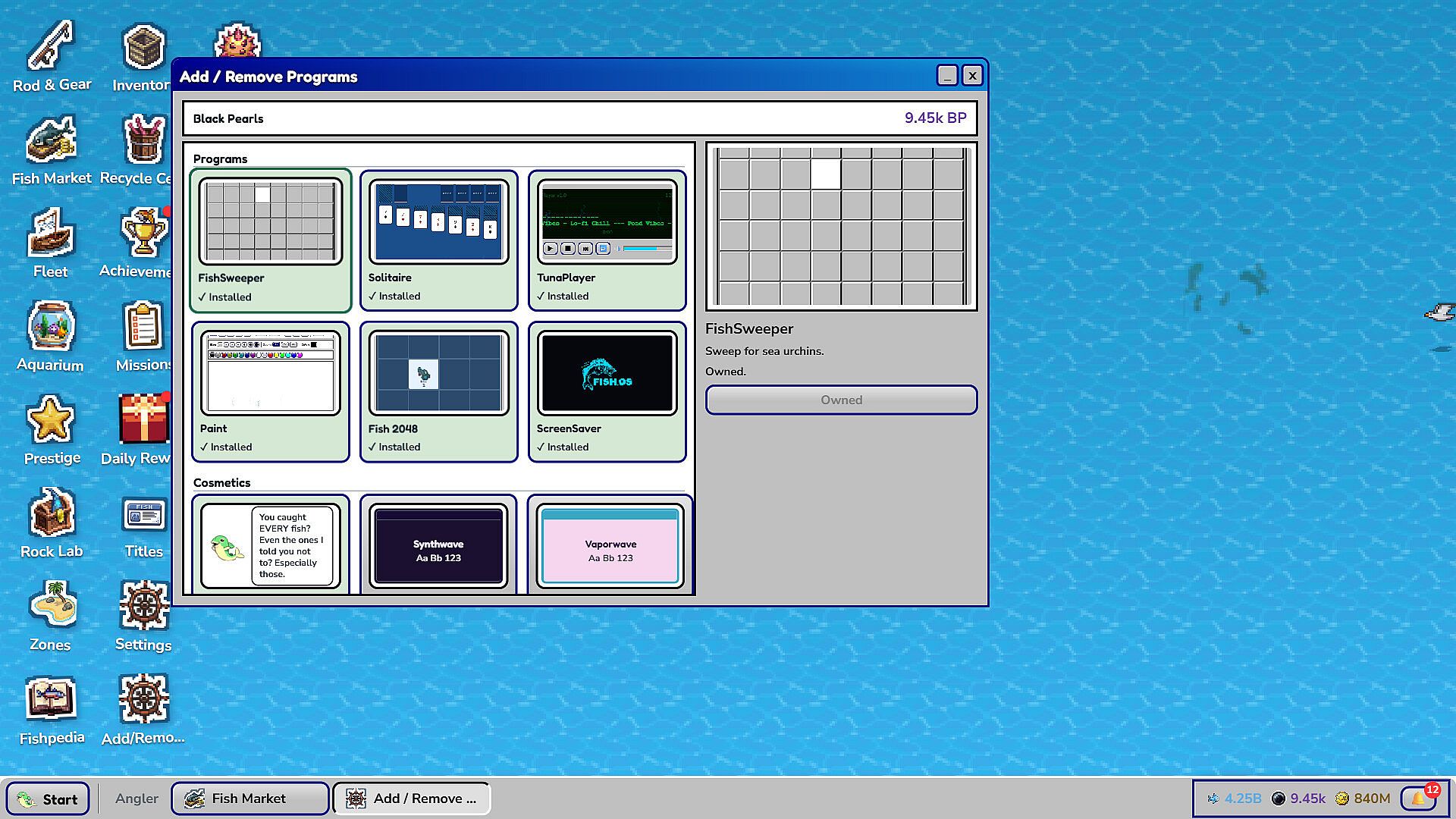
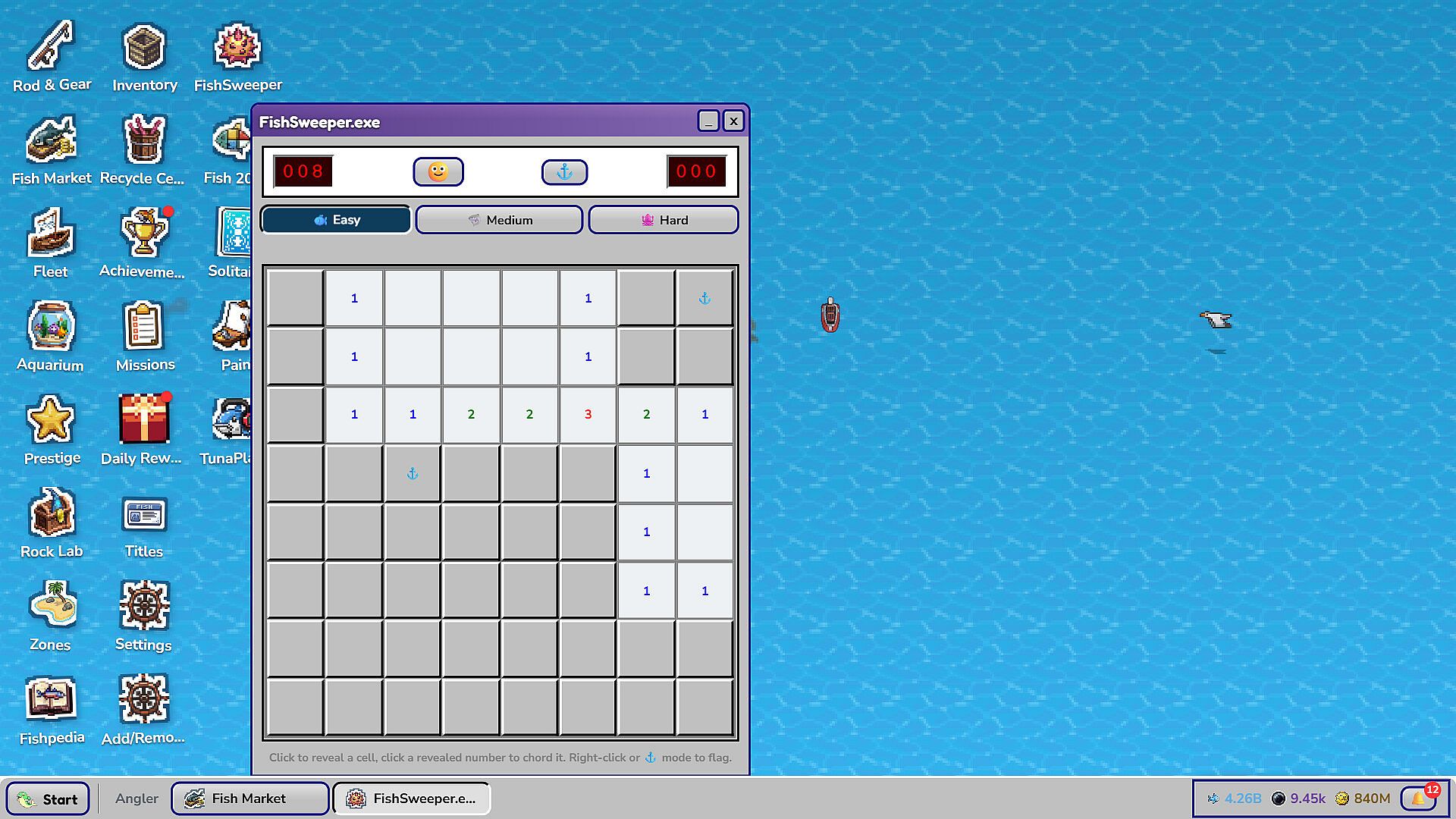
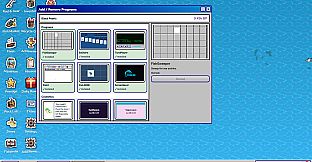
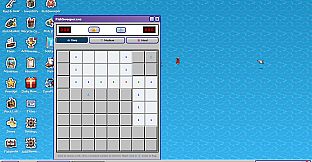
Functional mini-applications expand the desktop environment beyond fishing. These include Solitaire, FishSweeper, Fish 2048, a layered paint program, and TunaPlayer for music playback. Desktop themes, a screensaver, and an interactive seagull add further layers of interaction. All of these elements operate as standalone, playable features that coexist with the main fishing systems.
Exploration of unlockable zones and completion of the Fishpedia collection provide additional structure. Players track progress toward full species documentation while decorating the aquarium and experimenting with hybrid fusions. The entire package runs fully offline with no account requirements or external servers.
Key Features and Mechanics
Pixel-art fish sprites populate the collection, each tied to specific rarity tiers and zones that unlock progressively. Completion percentage advances gradually through consistent play and strategic fusions. Boat expeditions deliver reports and resources upon return, reinforcing the idle nature of the economy.
Prestige multipliers compound across runs, enabling access to advanced rods, new materials from the lab, and expanded fishing areas. Titles earned during each cycle serve as markers of achievement. Steam achievements track various milestones within this single-player setup.
Is It Worth Playing?
FISH OS targets players who enjoy idle and incremental games built around long-term progression and offline rewards. The retro operating system presentation adds a distinct layer of interaction through window arrangement and bundled functional software. Because the game remains in development with a planned release in Q4 2026 and currently has no user reviews available, its appeal rests on the described systems of fishing collection, boat management, and prestige resets.
Those drawn to single-player experiences with strong passive elements and a self-contained desktop interface may find the combination engaging. The absence of online requirements or daily logins supports flexible play sessions. Potential buyers can monitor updates closer to launch to assess final polish and community feedback once the title becomes available.