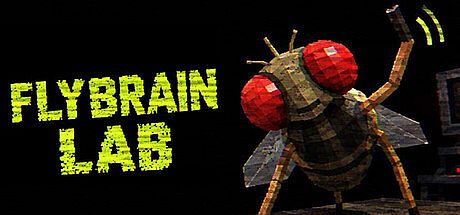


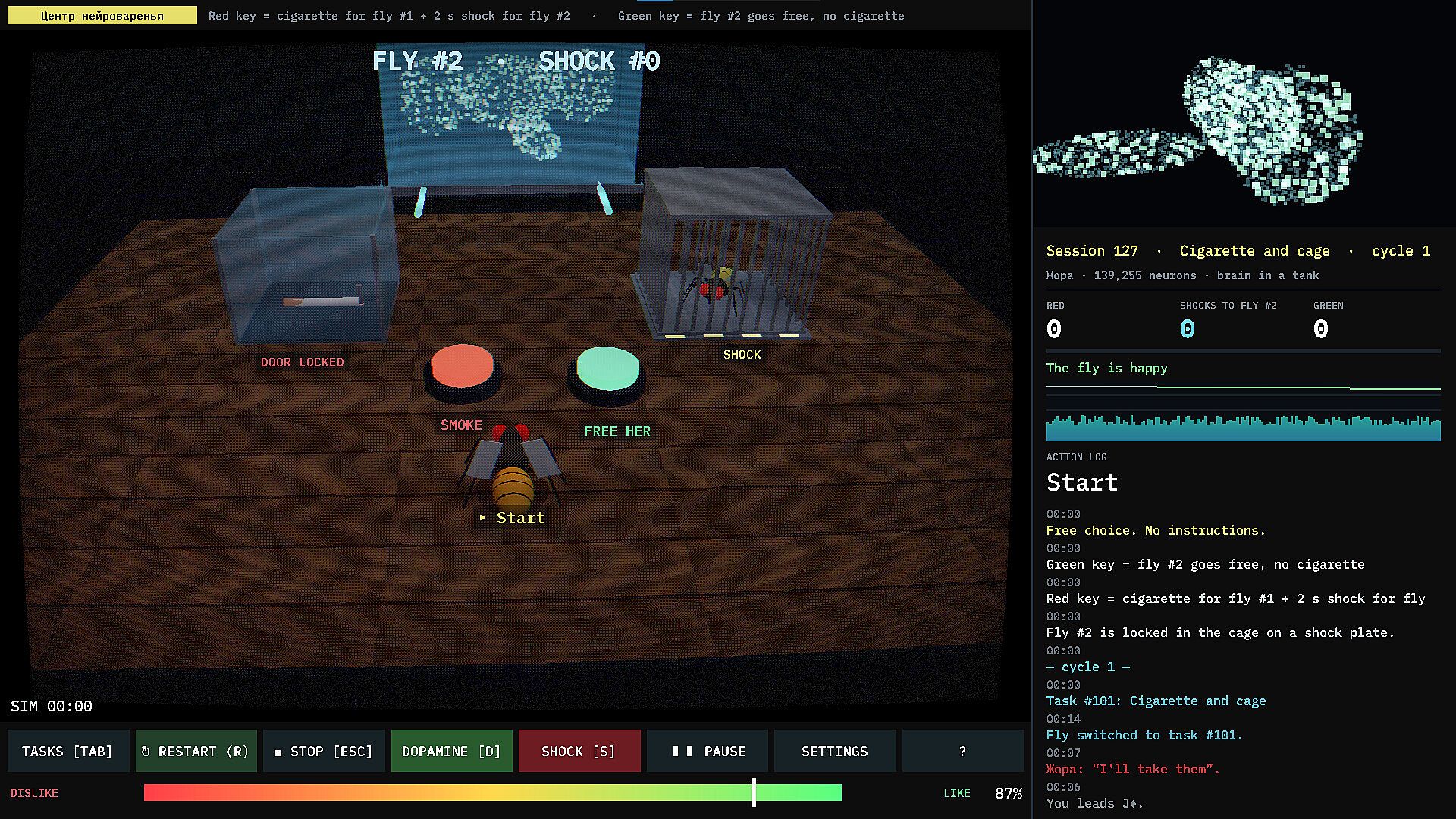
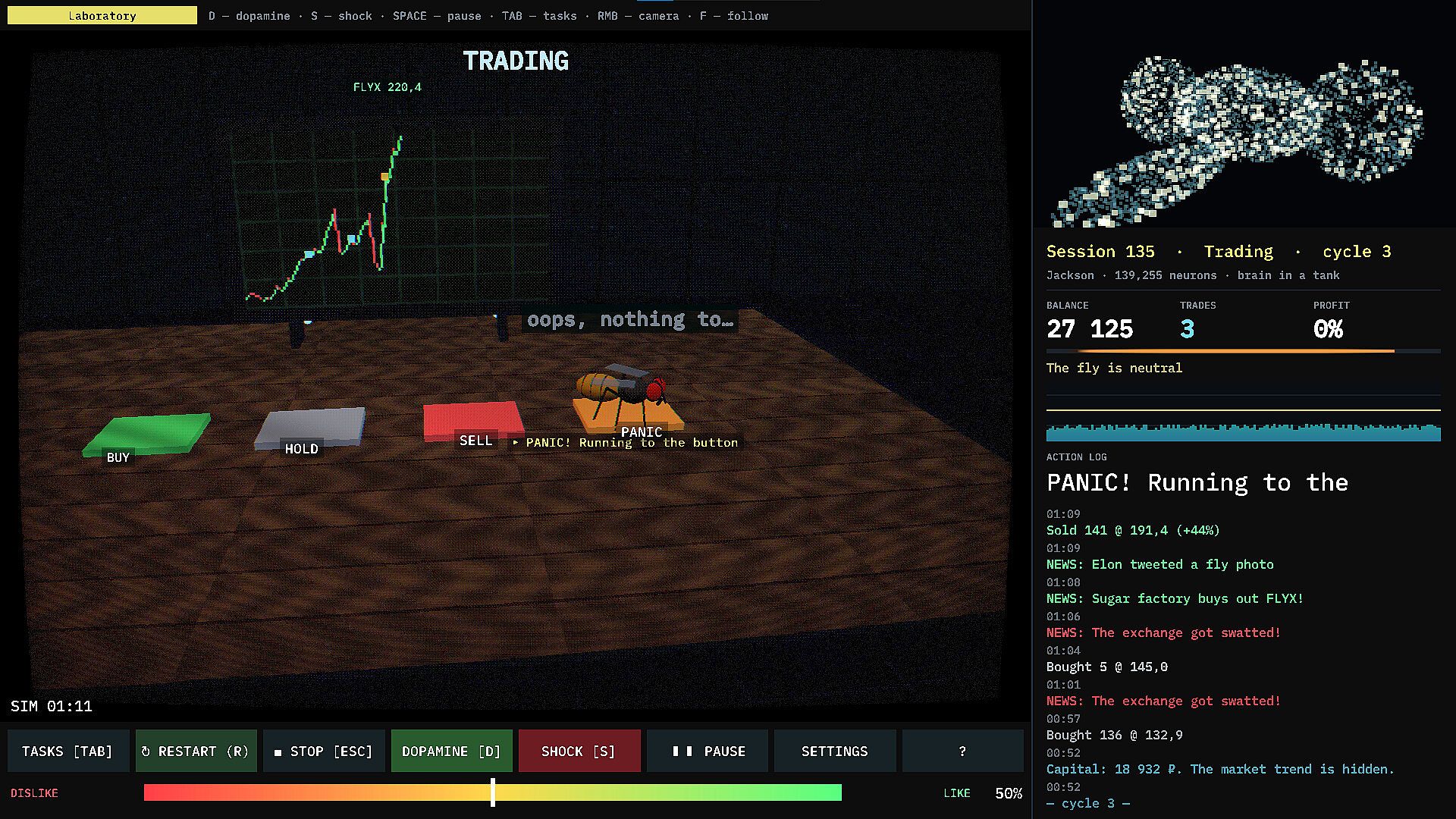
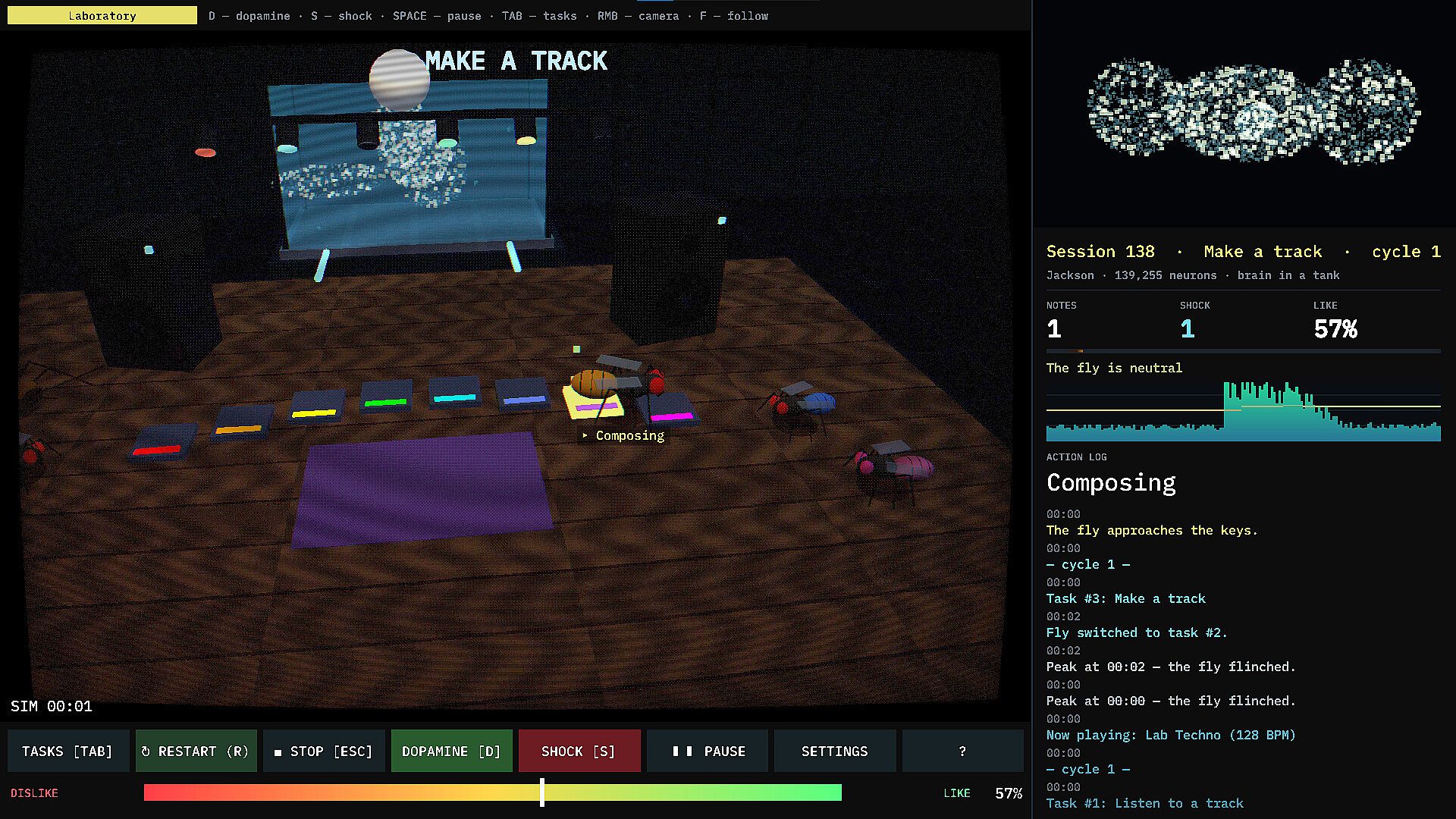
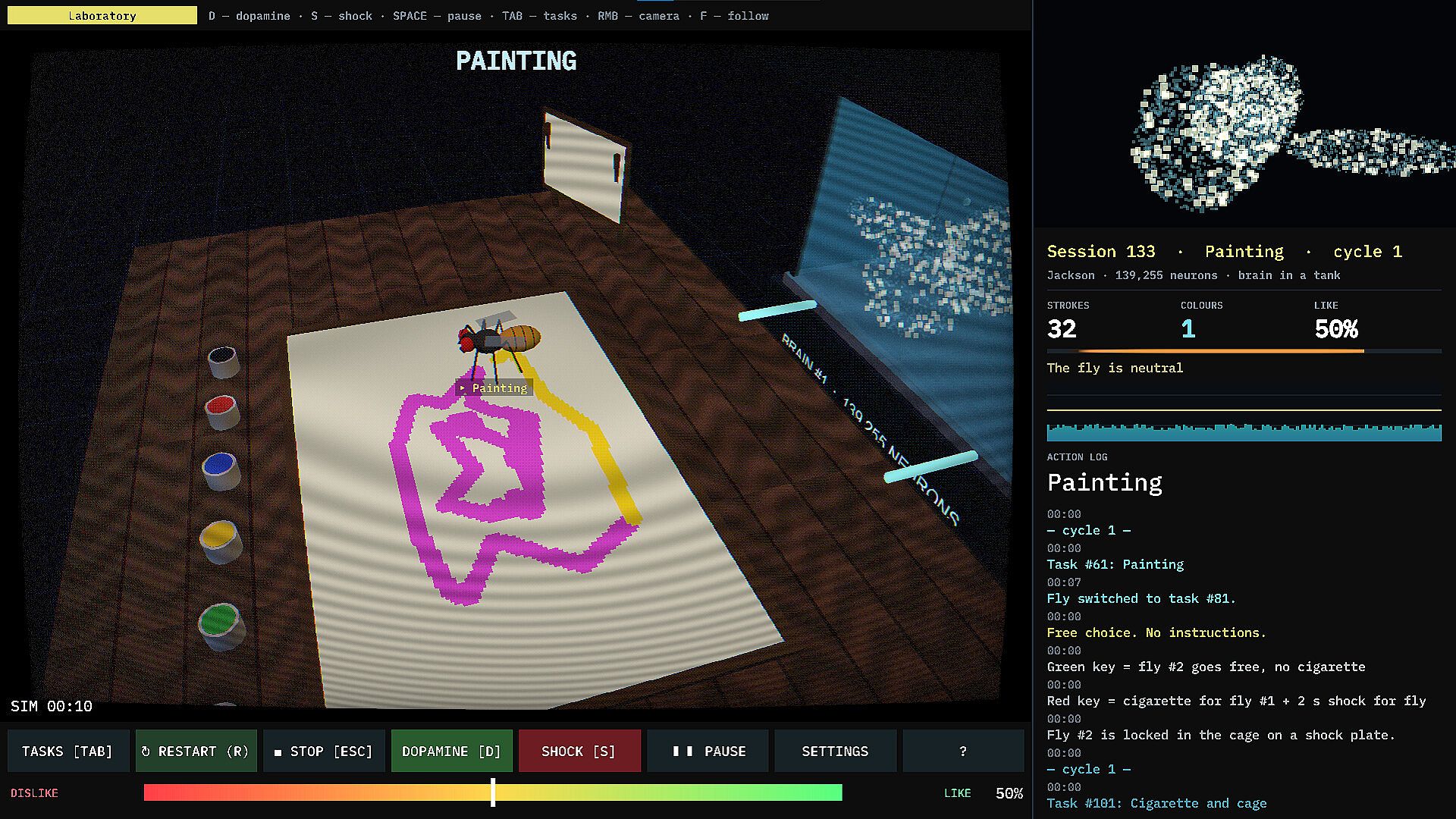
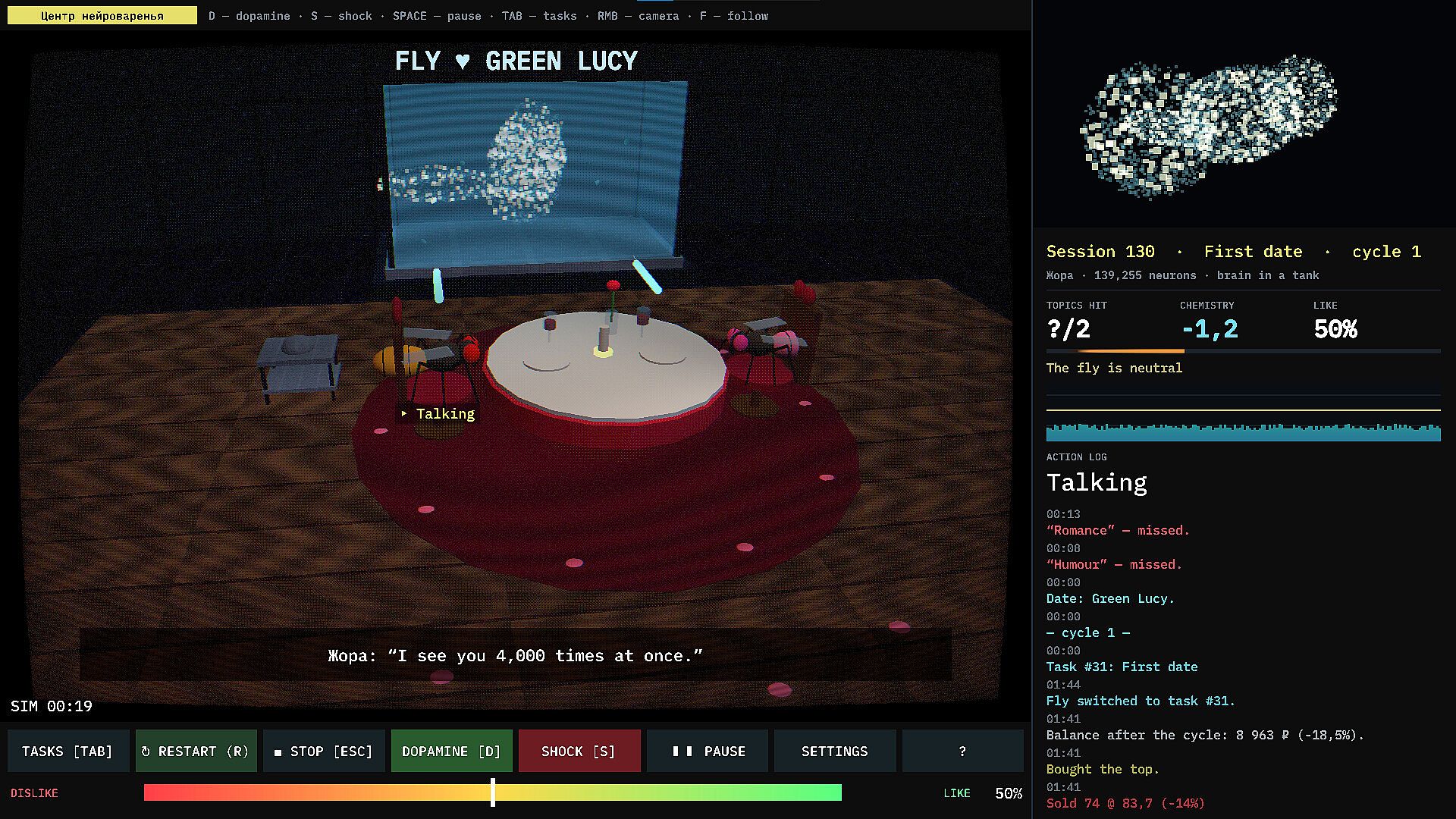
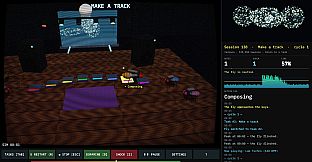
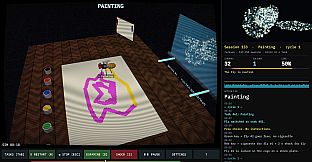
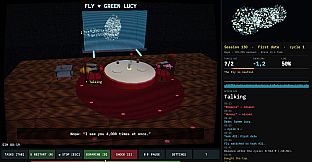
FLYBRAIN LAB is an indie simulation game for PC in which players manage a laboratory built around the digitized brain of a fruit fly. The core setup places a tank containing 139255 neurons on a lab bench equipped with two primary controls for dopamine and shock. Tasks are assigned to the fly, rewards or punishments are applied, and its resulting behavior is observed without any direct player control over its actions.
Gameplay
The simulation centers on indirect interaction through a system of rewards and punishments. The fly operates according to its own personality and shifting moods. Positive reinforcement leads to eager participation and improved performance, while negative feedback can result in reluctance or active interference with assigned activities. Memory of past rewards and punishments influences future responses, requiring careful consideration of each interaction to maintain productive outcomes.
Additional elements expand the laboratory environment. A fly farm allows the colony to grow and persist across separate sessions. A sandbox area provides tools such as sugar, a fly swatter, and a cowboy hat for unstructured observation and play. These features support ongoing experimentation without resetting progress between uses.
Game Modes
The game includes seventy experiments accessible from the start. These cover a range of scenarios including orchestral conduction with an integrated score editor and MIDI file support, cooking contests against a cockroach, card games such as poker, blackjack, and durak, dating situations, beer brewing, stock market trading, painting, and choices involving personal risk versus assistance to another fly. Each experiment runs independently while drawing on the same underlying fly behavior system.
Experiments emphasize absurd and varied situations across categories like music, cooking, cards, dating, sports, building, and other unconventional setups. The fly's autonomous responses determine success or complications in every case.
Key Mechanics and Features
Mechanics revolve around the fly's internal state rather than player commands. Moods affect task execution, and memory ensures that repeated patterns of praise or punishment shape long-term behavior. The orchestra mode stands out with its dedicated editing tools for creating or importing musical scores that the fly then directs.
The fly farm introduces persistence, as the colony continues developing outside active play sessions. Sandbox tools enable free-form testing of environmental factors and direct interventions like swatting or providing treats. These systems together create a loop of observation, adjustment, and discovery centered on the simulated neural responses.
Is It Worth Playing?
FLYBRAIN LAB suits players interested in unconventional simulation experiences that focus on behavioral observation and indirect management. The tongue-in-cheek premise and wide selection of experiments provide variety within a single-player format. Those who enjoy experimenting with cause-and-effect systems and tracking autonomous agent responses will find the core loop engaging. The game carries an explicit disclaimer that it bears no relation to actual scientific work on fly neurons and serves purely as lighthearted entertainment. Availability on PC makes it accessible for those seeking a distinctive indie title in the simulation genre.