

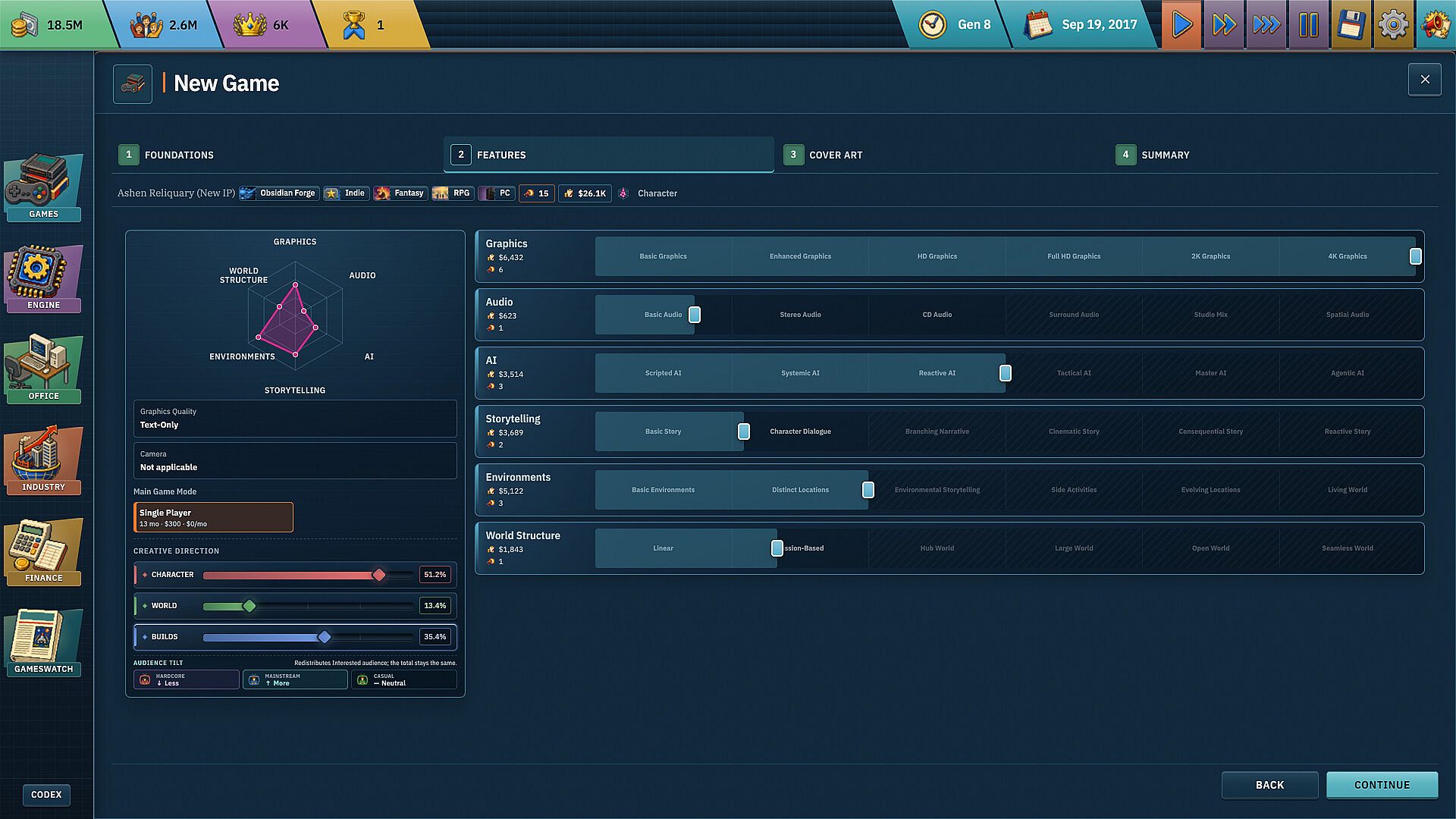
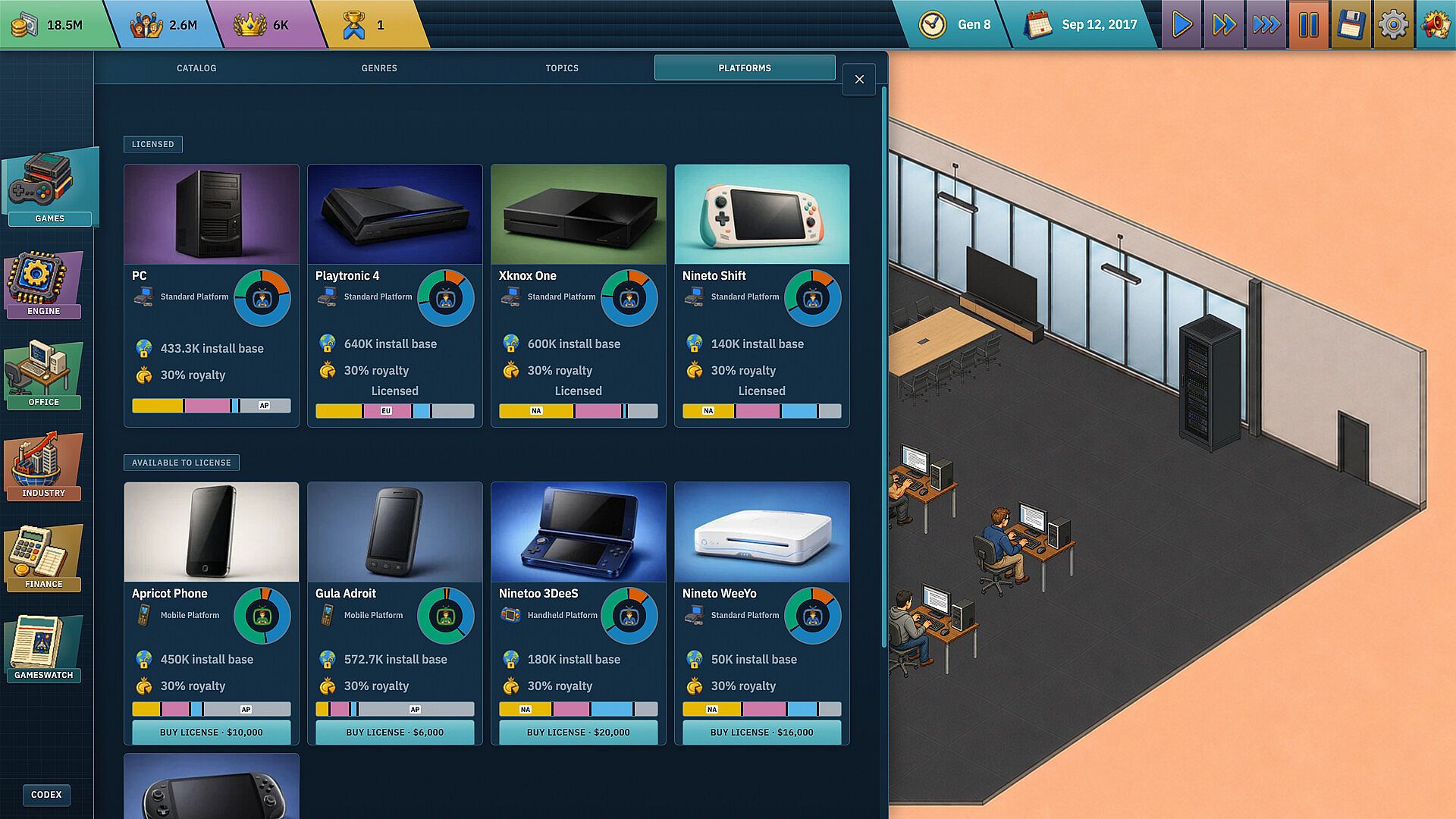
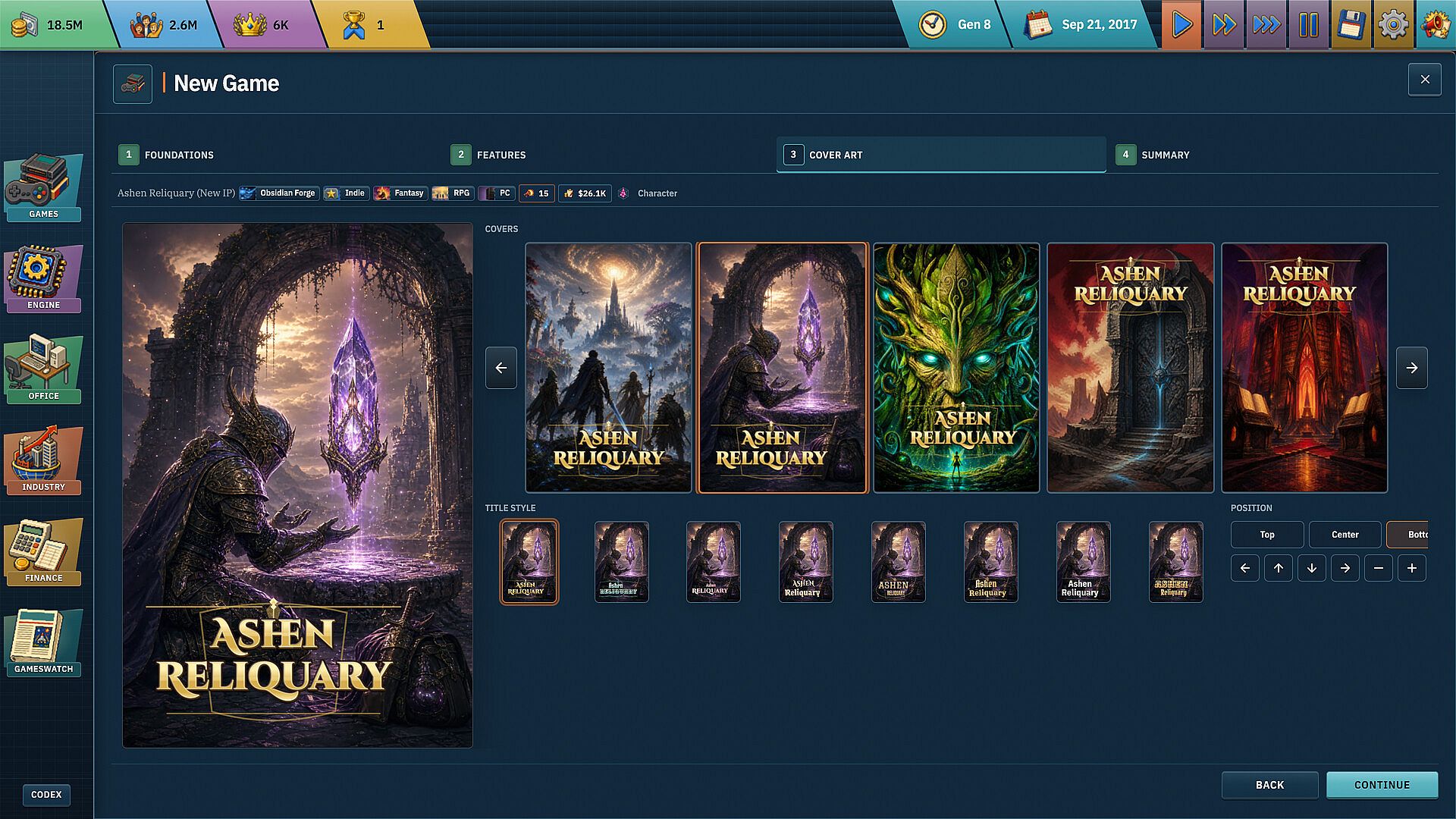
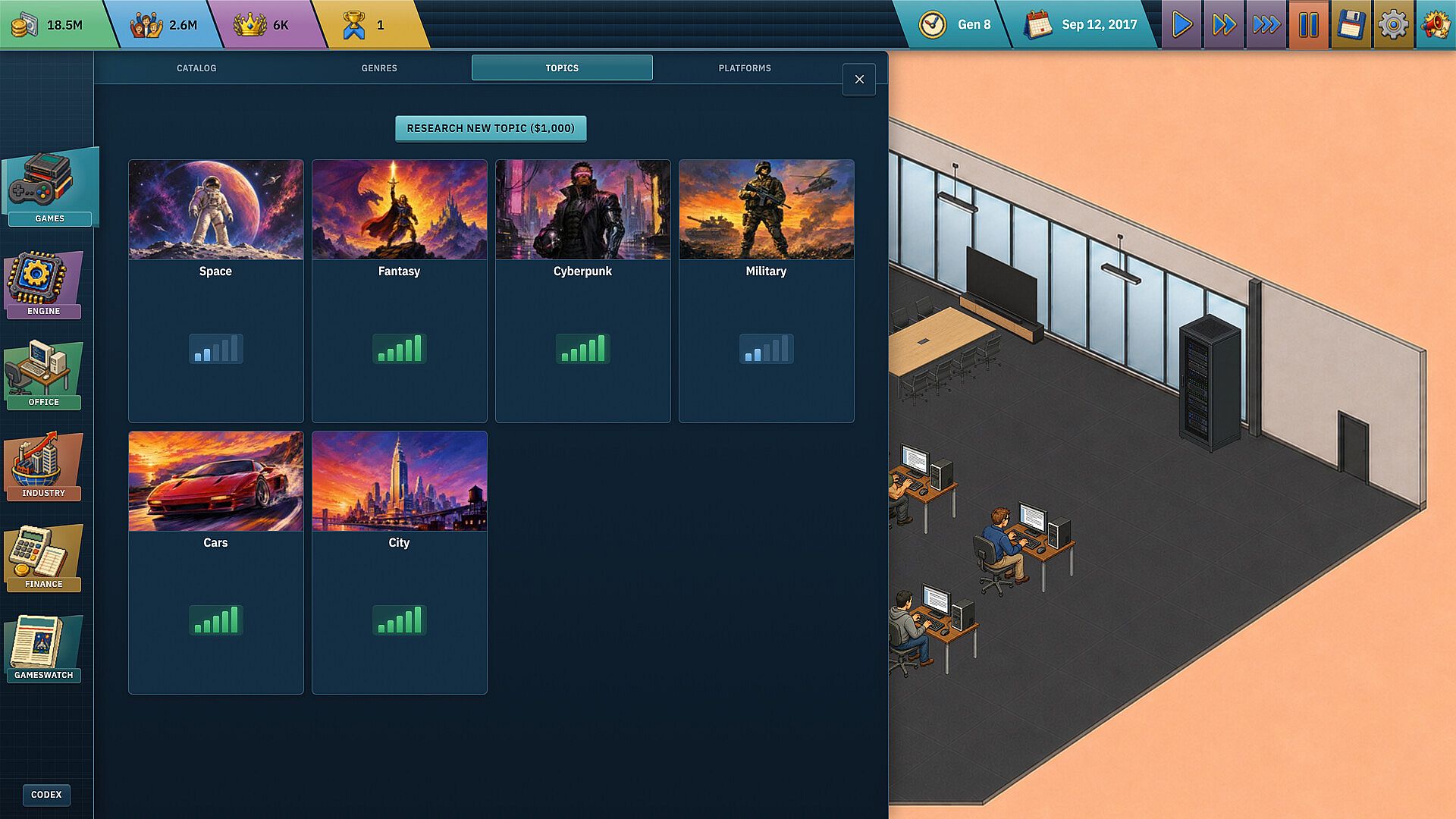
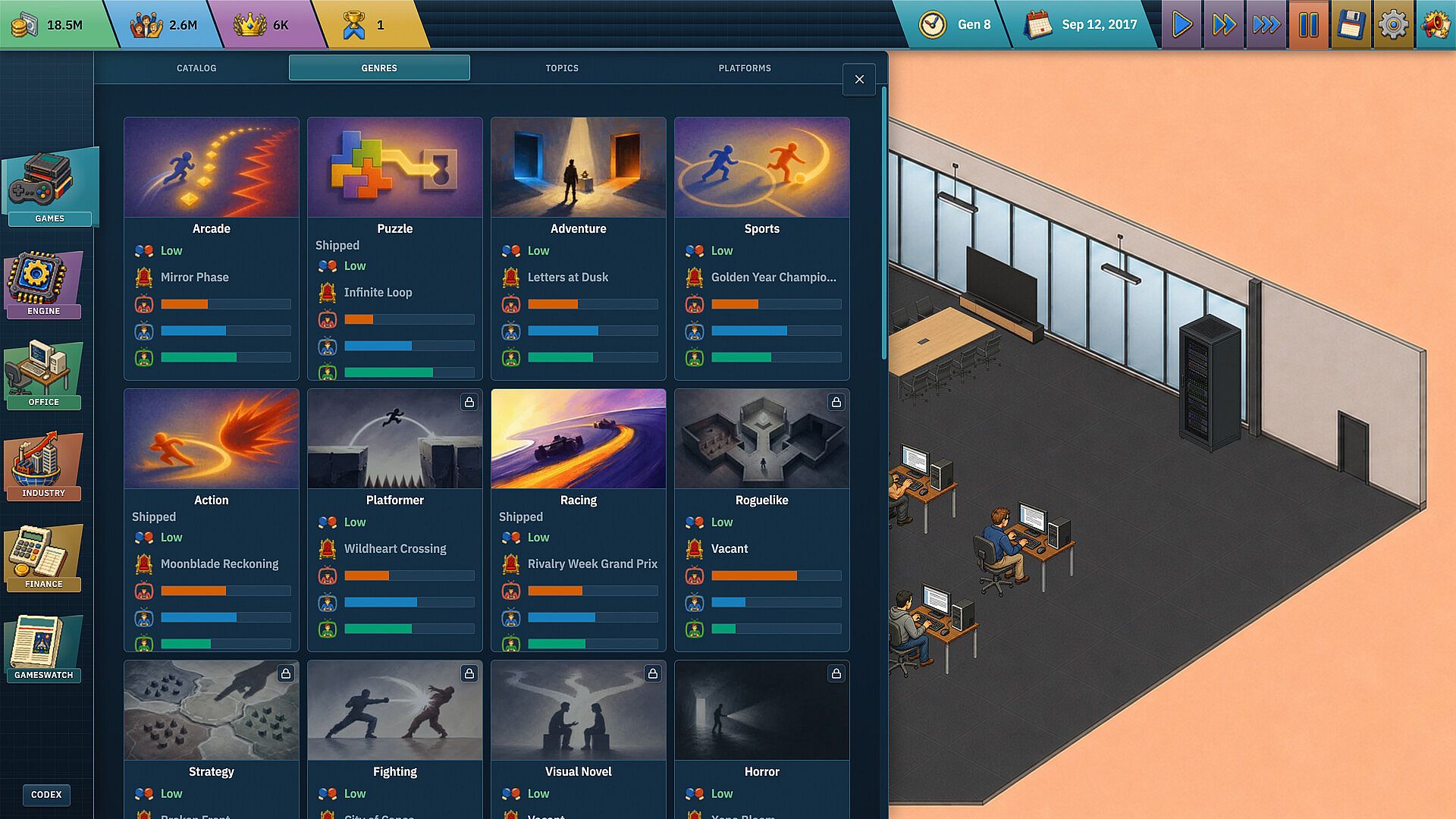
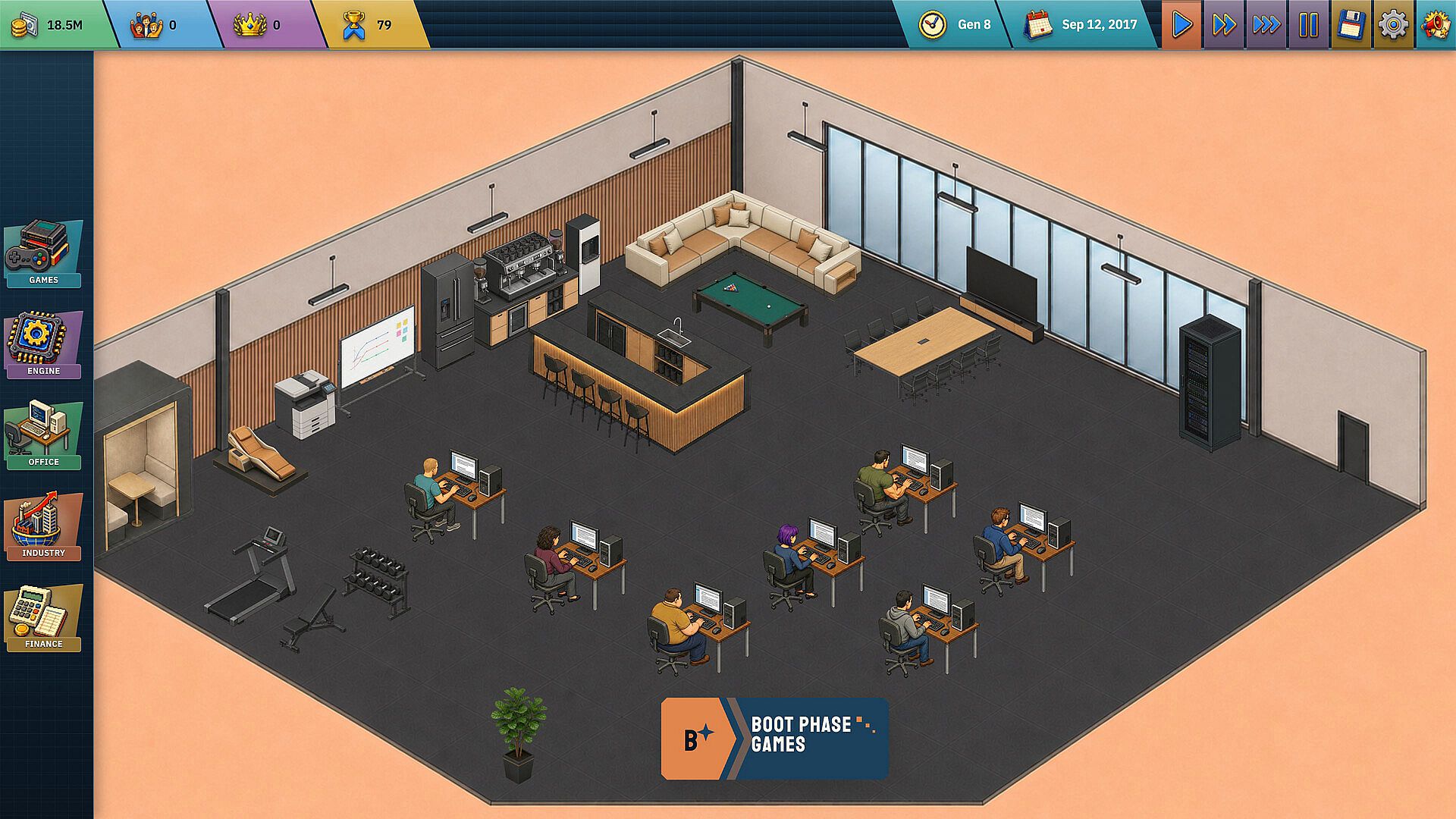

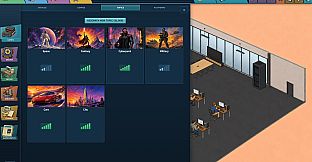
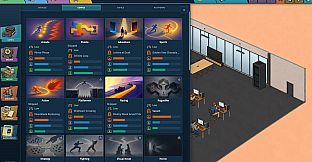
Game Dev Dynasty is a strategy simulation game set on PC that puts players in charge of building a game development studio from the ground up. Starting in 1995 with a single developer and a modest office, the experience centers on creating original titles through deliberate choices about genre, topic, platform, and features while also crafting the cover art. Success depends on matching audience preferences rather than following any guaranteed formula, allowing for personal creative direction or pursuit of broad appeal that can spawn ongoing series.
Gameplay
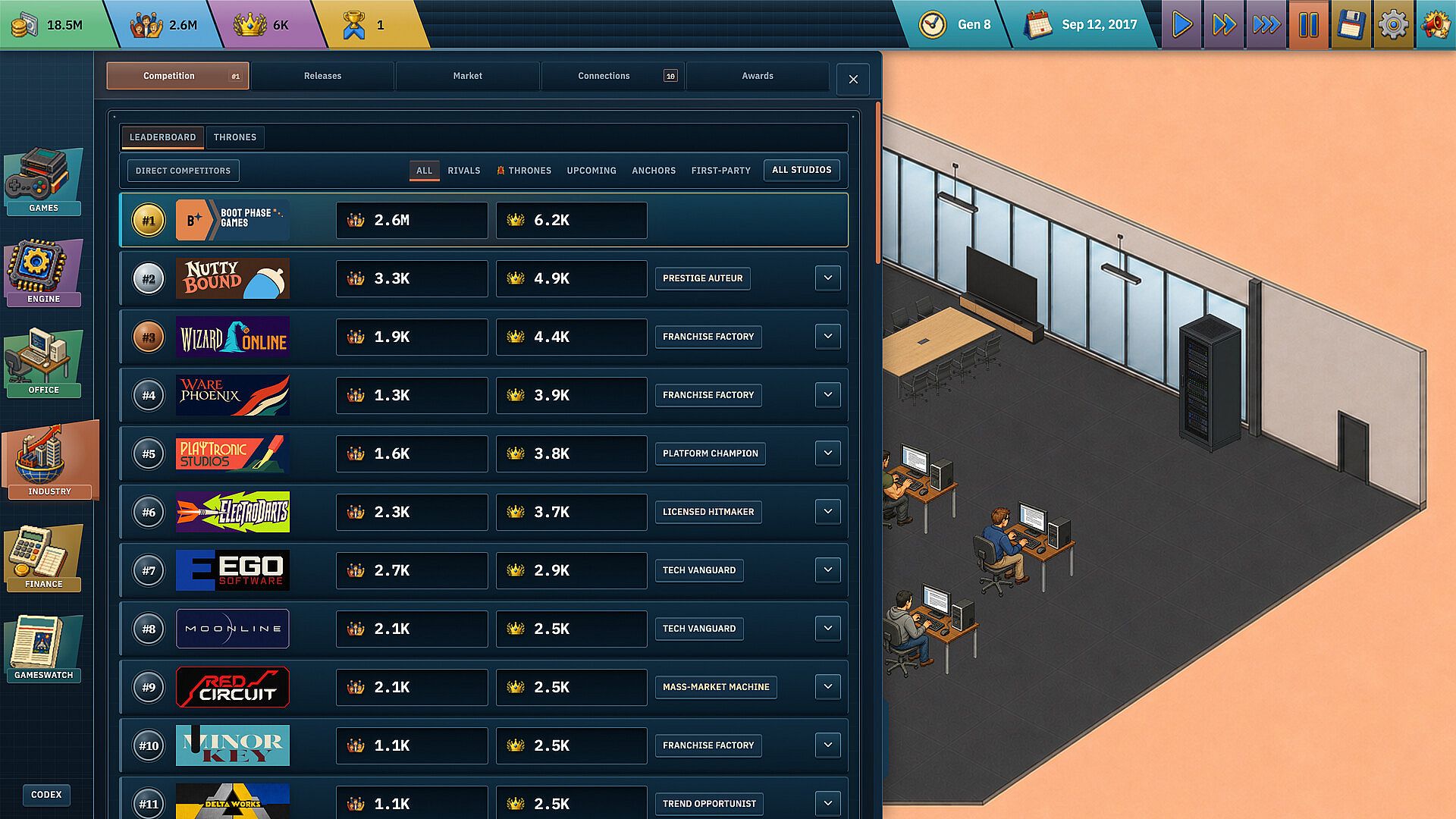
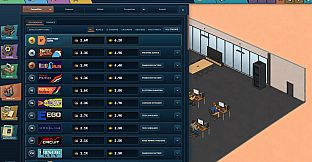
The core loop revolves around managing development cycles in a competitive environment. Players select project parameters to shape each game, then monitor how it performs against other studios active in the same era. Rival developers pursue their own paths with distinct audience focuses such as casual, mainstream, or hardcore players, which influences chart positions and genre dominance over time. Timing releases strategically helps secure top spots or reclaim ground in categories where competitors have gained traction.
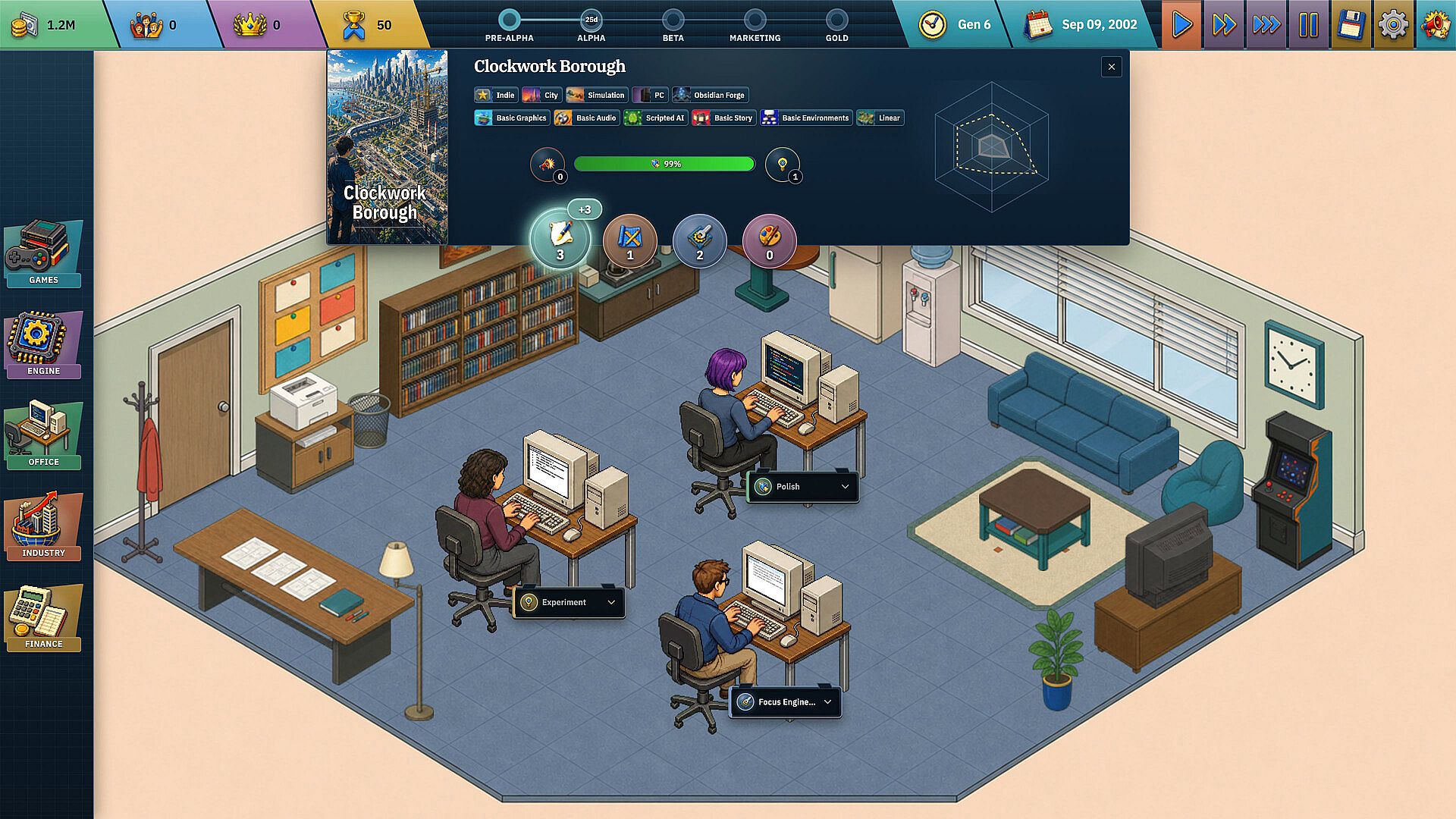
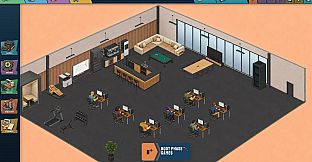
Studio expansion forms another key layer. Hiring additional staff, improving hardware for the team, and addressing issues that arise mid-project support steady progress. As the business grows, relocating to larger facilities and developing proprietary engines become options that expand capabilities for future projects. The timeline advances toward 2020, where accumulated releases create a mix of underperformers, standout hits, enduring franchises, and genre leaders.
Game Modes
Game Dev Dynasty operates as a singleplayer experience without separate multiplayer or competitive modes. The entire session unfolds as one continuous management simulation where decisions compound across years. Players track overall studio performance through world rankings and yearly achievements, with the primary objective being to produce the highest-regarded title in a given year while climbing to the global top position.
Studio Building and Competition
Progression emphasizes incremental improvements to infrastructure and personnel. Early limitations with a small team give way to larger operations capable of handling more ambitious projects. Rival studios operate simultaneously, each maintaining their own catalogs and fan bases, which creates dynamic pressure to adapt release schedules and feature sets. Observing competitor activity helps inform whether to target underserved audiences or challenge established leaders directly.
Long-term play rewards consistent output across multiple releases. Building a catalog that includes both commercial successes and creative experiments leads to stronger market presence by the later years. Engine development and office upgrades directly influence the scope of games that can be produced, tying resource management to creative output.
Is It Worth Playing?
Game Dev Dynasty suits players who enjoy detailed strategy and simulation titles focused on business management and creative decision making. The emphasis on competing within a simulated market of active rivals adds tension to release planning and feature selection. Those drawn to tycoon-style progression through studio growth and catalog building will find the mechanics align closely with that preference. The singleplayer format supports extended sessions of planning and iteration without external dependencies. With a free demo available for testing the core systems, interested players can evaluate the fit before committing further. The approach to separating creative quality from market outcomes encourages experimentation within the 1995 to 2020 timeframe.