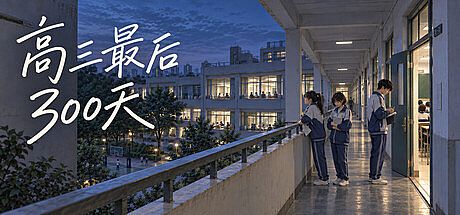


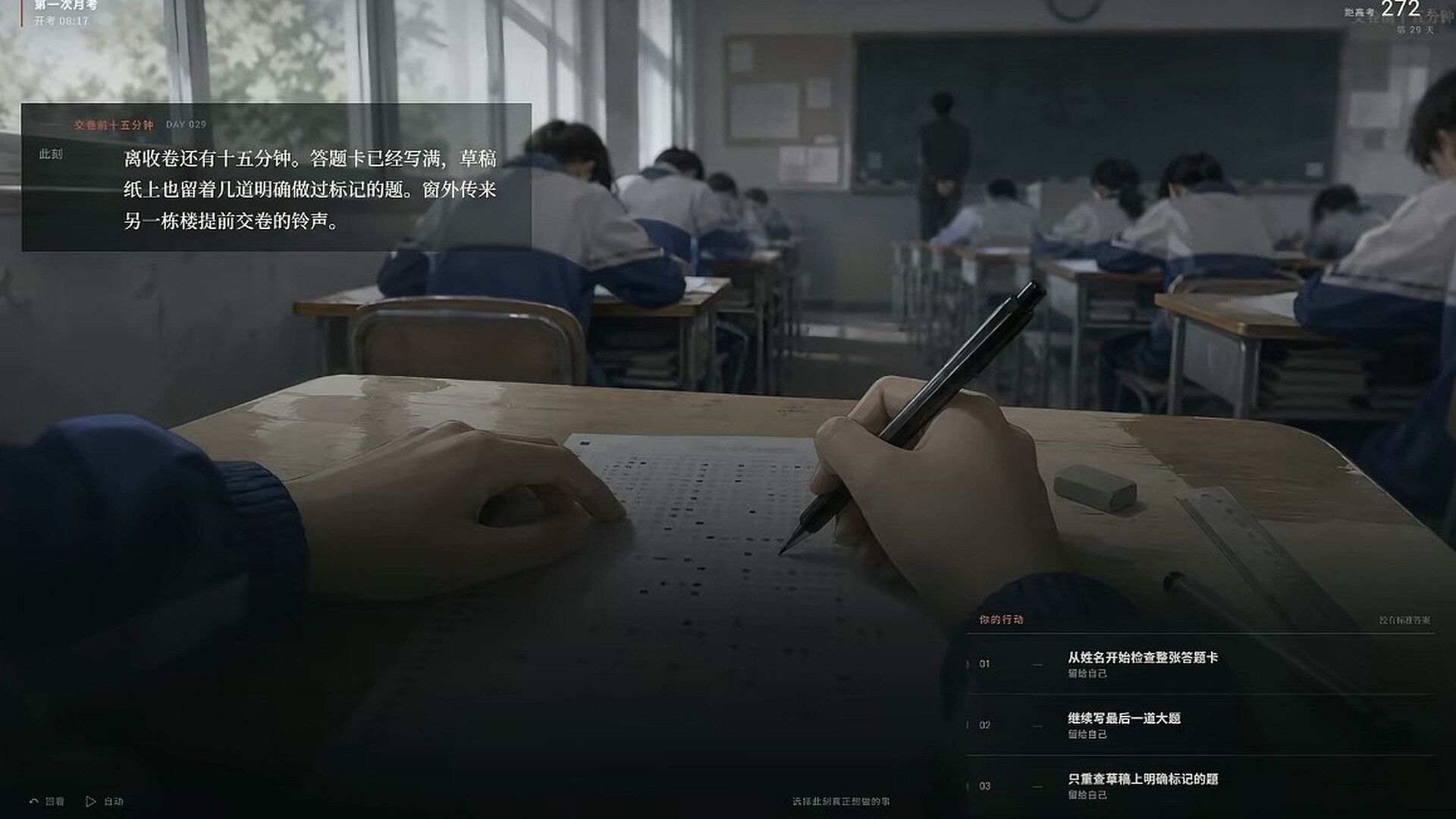
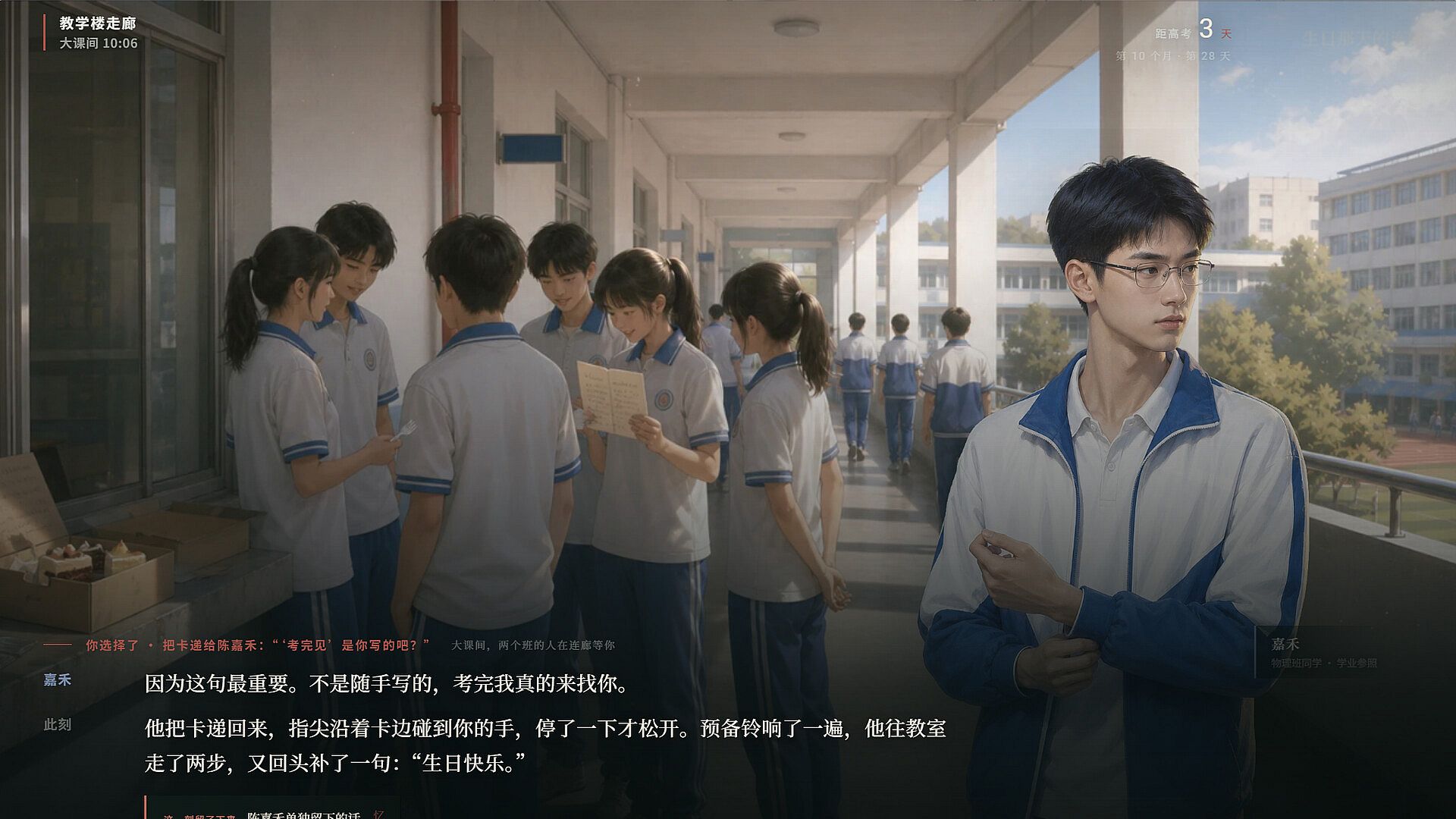

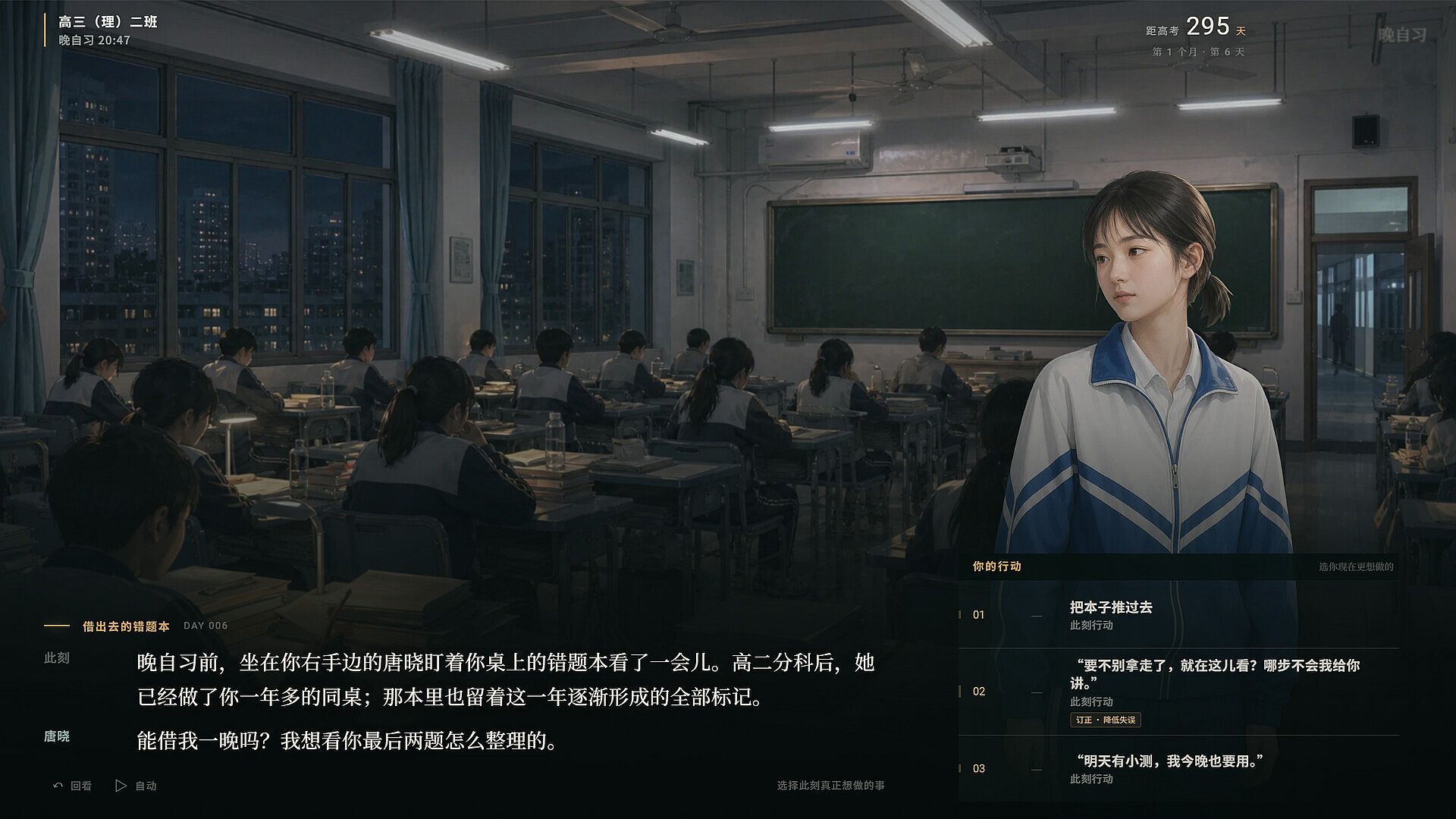

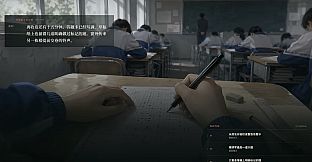
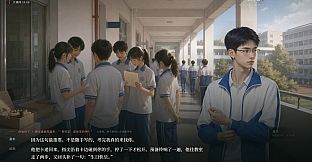

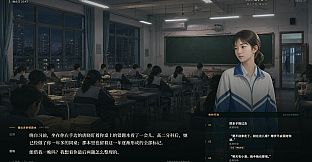
高三最后300天 is an indie RPG simulation game set in a realistic Chinese high school environment during the final year before the Gaokao exam. Players step into the role of a student facing 303 narrative days of academic pressure, personal choices, and interpersonal relationships, with the opportunity to shape one unique high school experience through deliberate decisions on study habits, social interactions, and daily routines.
Gameplay
The core loop revolves around weekly planning and daily micro-decisions that influence academic progress and personal connections. At the start, players select the protagonist's gender, academic direction between physics or history tracks, and whether to live on campus or commute. These choices determine the specific class composition, subjects, classmates, and living conditions encountered throughout the year.
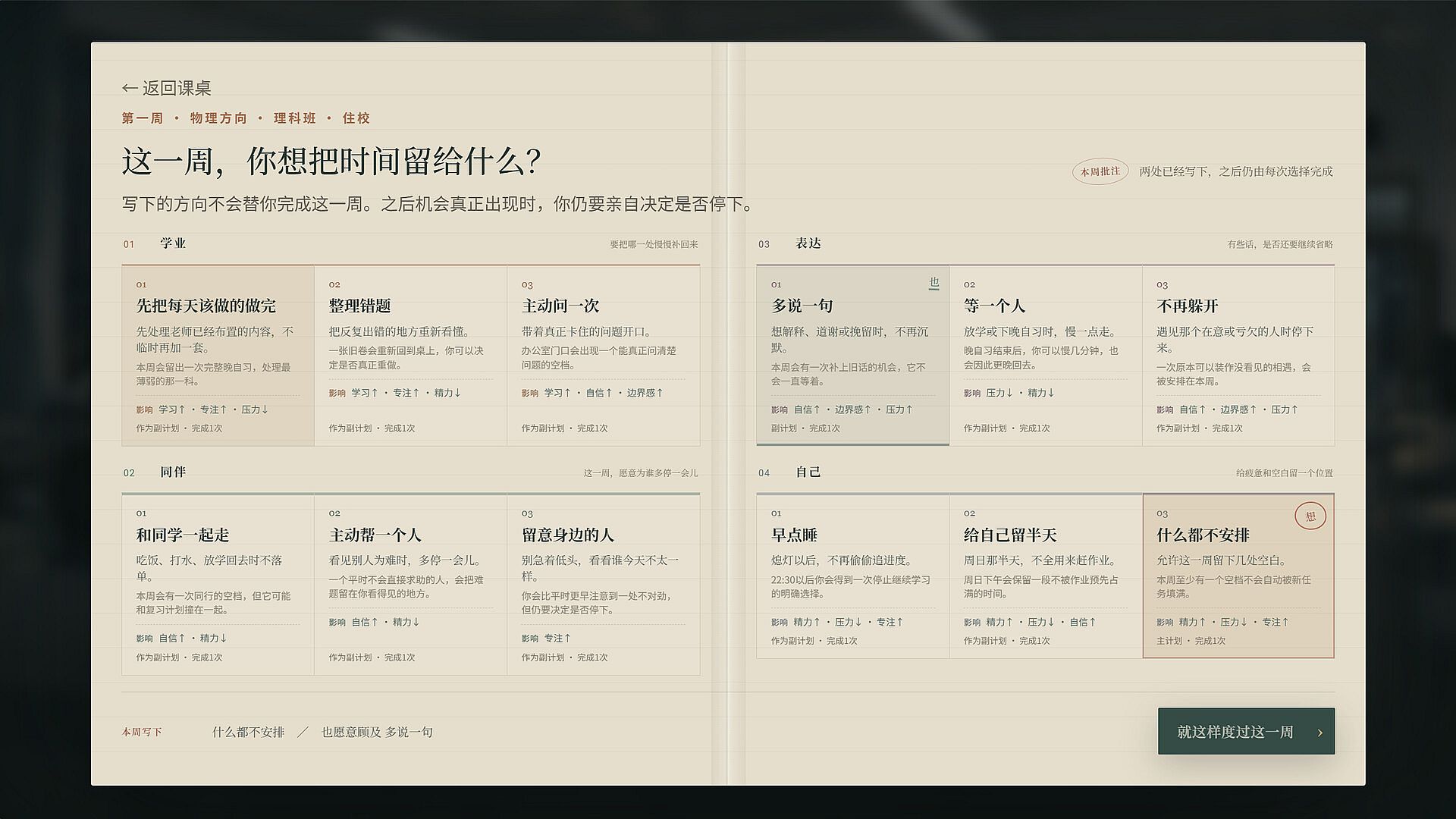
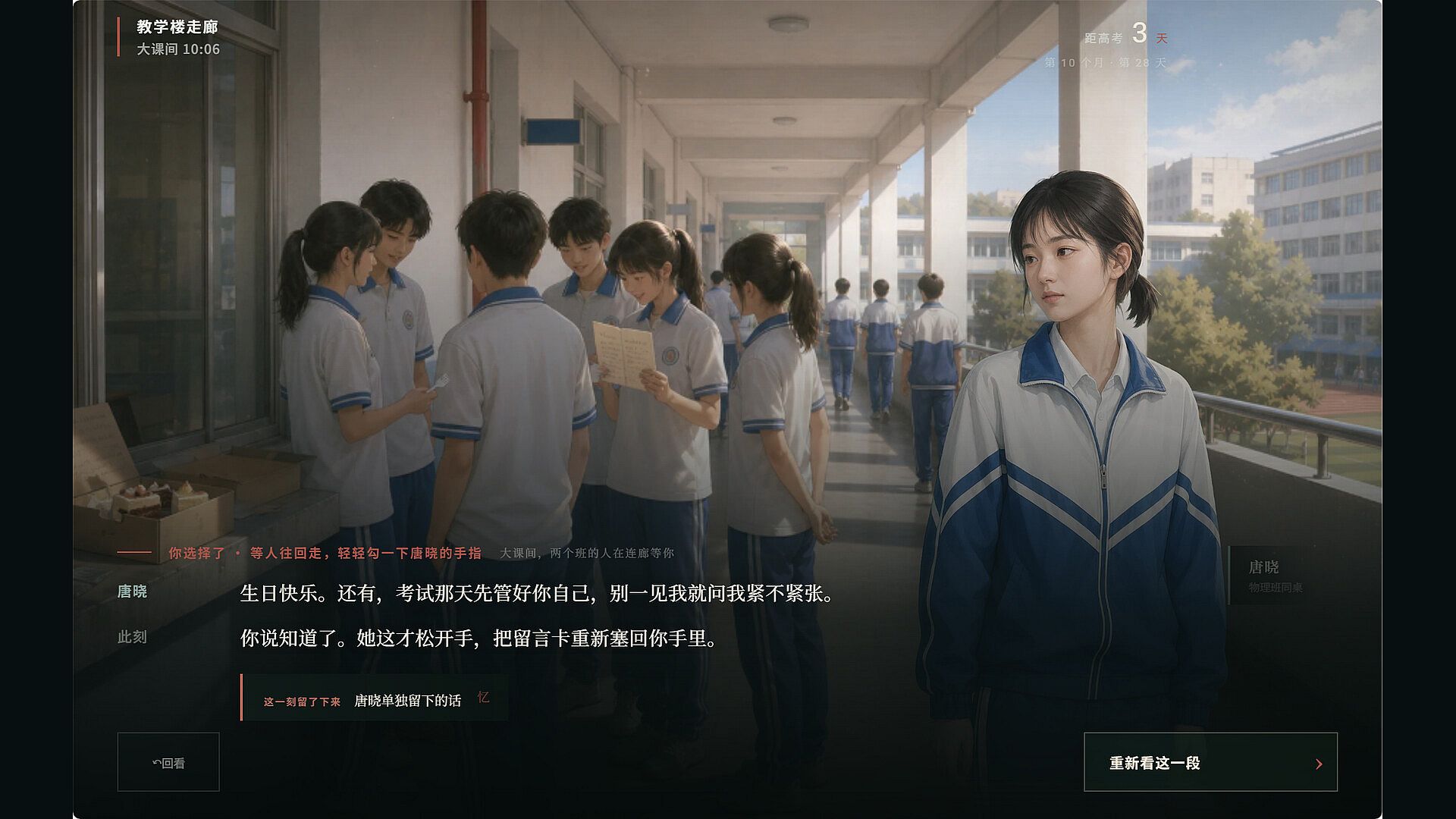
Each week begins with setting main arrangements and prioritizing subjects for improvement. Plans do not directly alter stats but shift the likelihood of encountering relevant opportunities during the following days. Daily actions include correcting mistakes on practice tests, joining discussions, honoring commitments, managing sleep, or dedicating time to people nearby. Unfinished plans, broken promises, and unspoken words carry forward into later story segments, creating persistent consequences.
Academic performance tracks mastery, stability, weak points, and exam results across six core subjects plus the three elective subjects tied to the chosen direction. Major assessments such as monthly exams, the first and second mock exams, and the final Gaokao test evaluate more than raw numbers; factors like review methods, sleep schedules, on-the-day condition, and accumulated stress all play roles in outcomes. Relationships develop organically through repeated interactions rather than scripted romance routes, with friendship, rivalry, trust, distance, and affection emerging from concrete moments. Only when identities and connections feel authentic do emotional developments advance, and choosing to focus on platonic bonds yields complete, standalone storylines.
Game Modes
The experience unfolds as a single-player narrative simulation divided into ten chapters that span the full high school year. Players navigate boarding life with curfews, shared facilities, and roommate dynamics or commuting life involving bus schedules and late-night decisions at home. Branching arises naturally from the combination of chosen identity, weekly plans, and daily selections, leading to varied academic results, relationship states, and post-exam developments.
After completing one playthrough, a new run returns the player to the starting point 300 days before the exam. Limited memories from the previous attempt persist, allowing earlier recognition of issues, different approaches to commitments, or resolution of previously unfinished conversations. This structure emphasizes replayability through evolving personal insight rather than exhaustive checklist completion.
Story and Progression
The narrative covers key milestones from the opening of school and seat changes through winter break return, the hundred-day oath ceremony, graduation photos, the final class, and the three-day Gaokao itself. Following the exam, players experience score checking, formal college application filling, admission results, and a closing sequence shaped by academics, family dynamics, relationships, and individual choices. The ten-chapter structure ensures steady pacing across the 303 days while allowing accumulated decisions to influence the tone and details of later events.
Is It Worth Playing?
This title suits players interested in thoughtful simulation experiences centered on time management, consequence-driven choices, and authentic depictions of high-pressure academic life. The emphasis on persistent effects from small daily actions and the replay system that carries select memories forward rewards careful planning and reflection. Those seeking a grounded exploration of balancing studies with personal connections will find the mechanics align closely with the described systems of planning, opportunity encounters, and relationship formation. Availability is limited to PC, and the game stands alone without reliance on prior entries or additional content. If the combination of RPG progression through exams and simulation of routine high school decisions appeals, the structured narrative and branching outcomes provide substantial depth for multiple play sessions.