

















Hollywood Agent is a simulation game set in the competitive world of Hollywood talent management. Players take on the role of an agency owner tasked with scouting new actors, signing them to contracts, developing their skills, and securing roles in film and television productions. The experience unfolds through monthly cycles of decisions that influence client careers and the agency's overall success on PC.
Gameplay
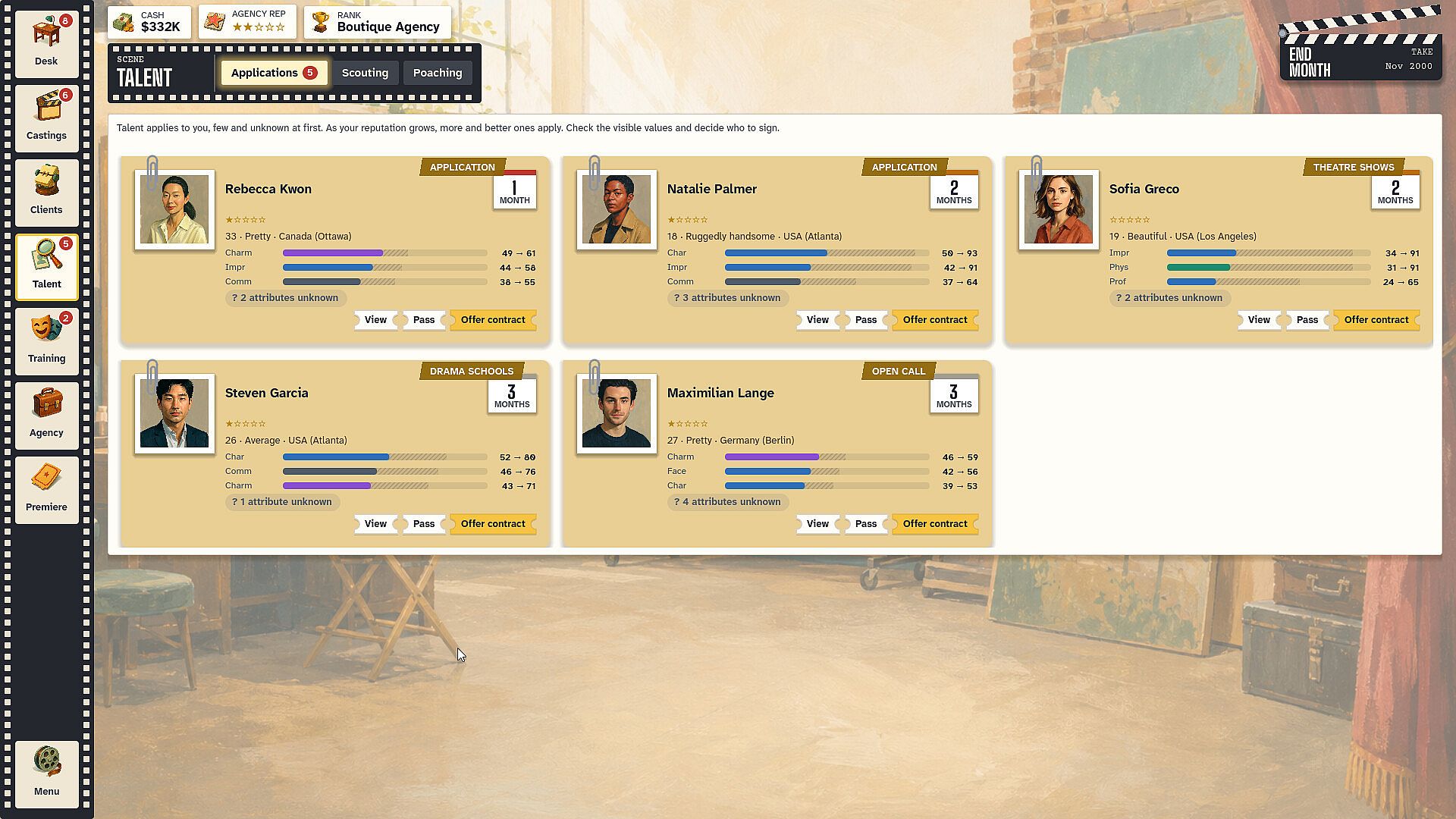
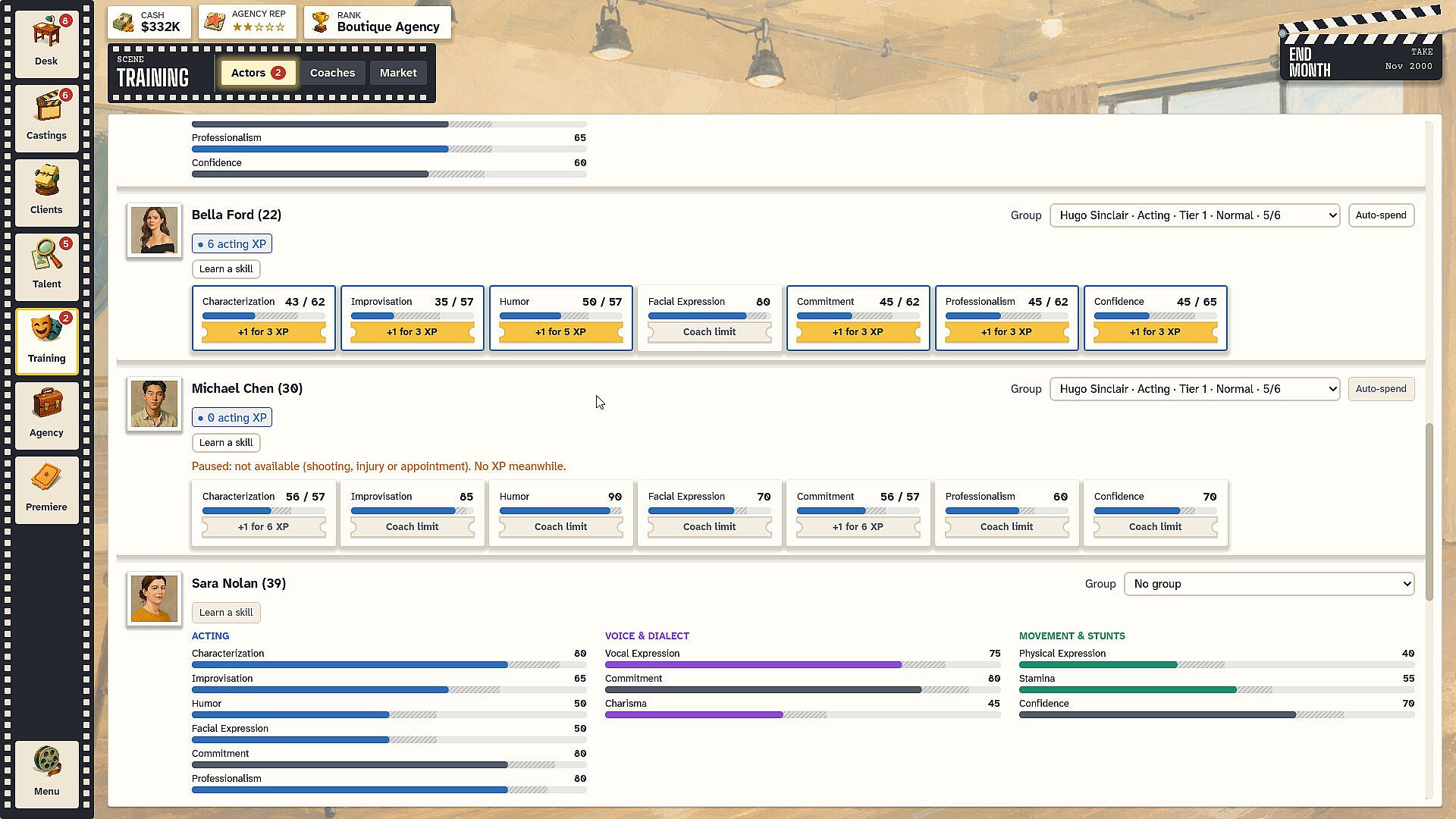
The core loop revolves around talent discovery and client development. New actors appear each month through applications and scout reports, each bringing distinct attributes such as skills, backgrounds, languages, accents, personalities, and career ambitions. Spotting potential early requires evaluating these traits against market demands. Once signed, players allocate training points, hire coaches, and enroll actors in courses to build abilities, though costs increase with higher skill levels. Conversations with clients help maintain morale and align with their evolving preferences, preventing neglect that can lead to management difficulties.
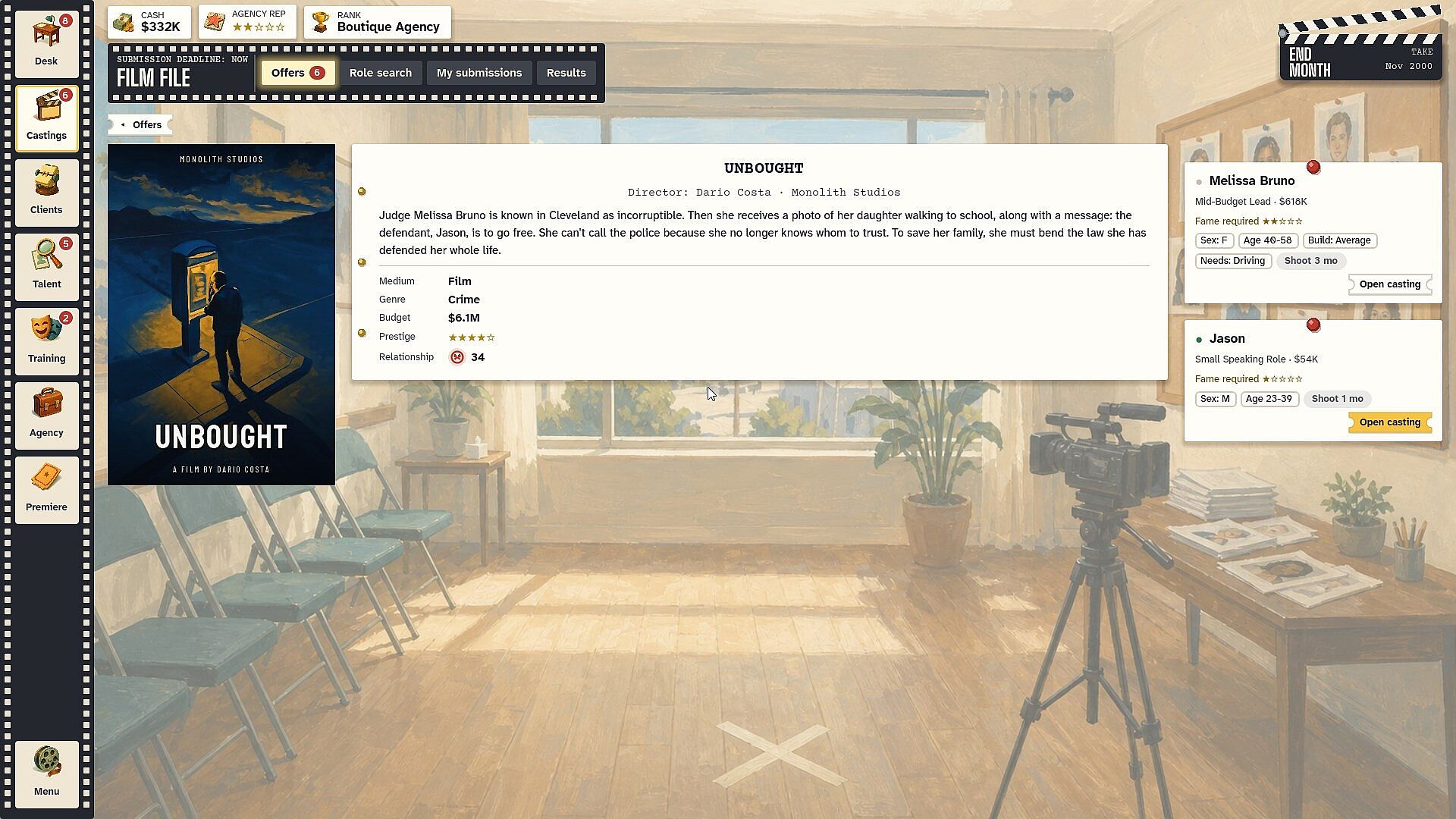
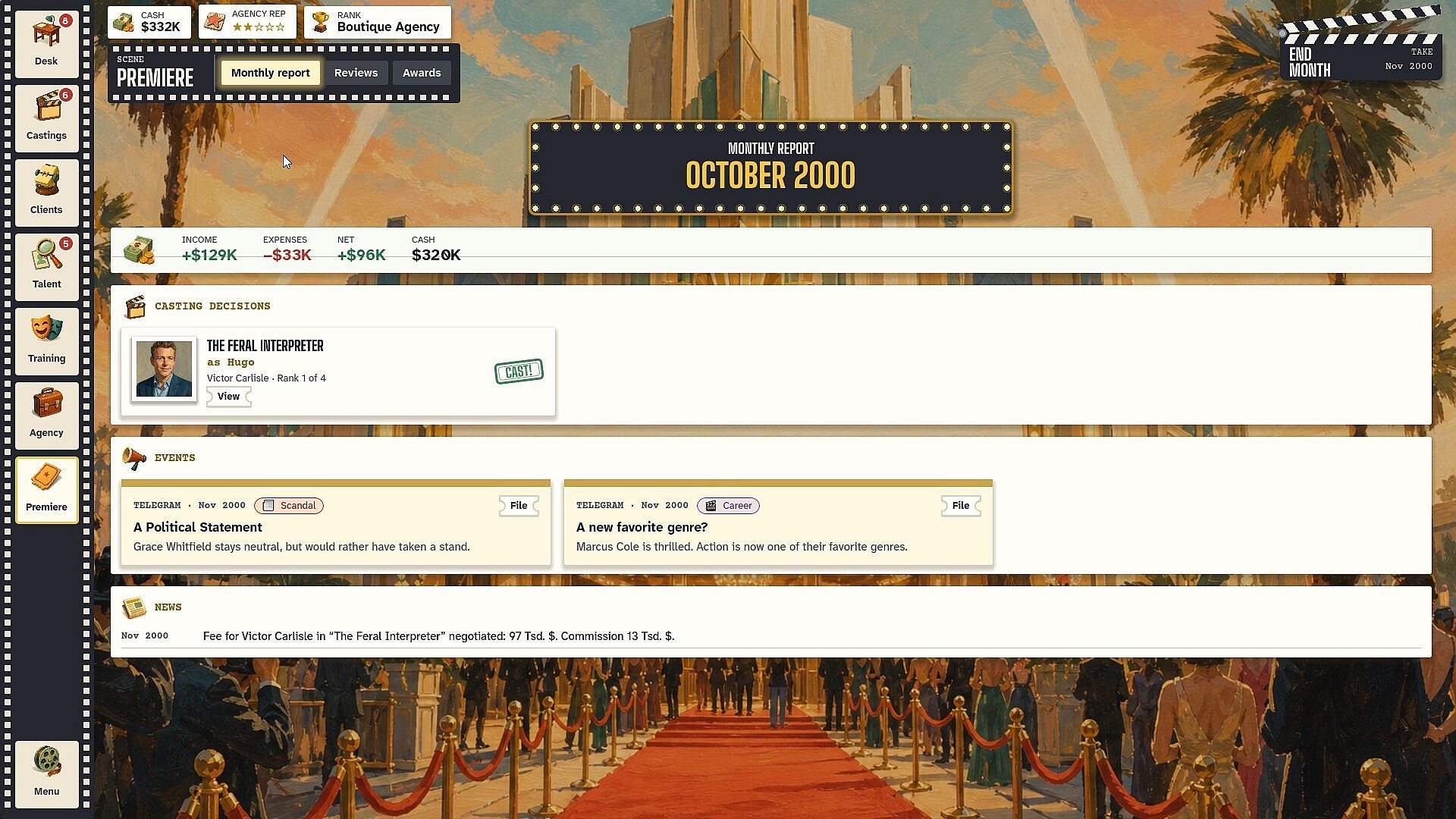
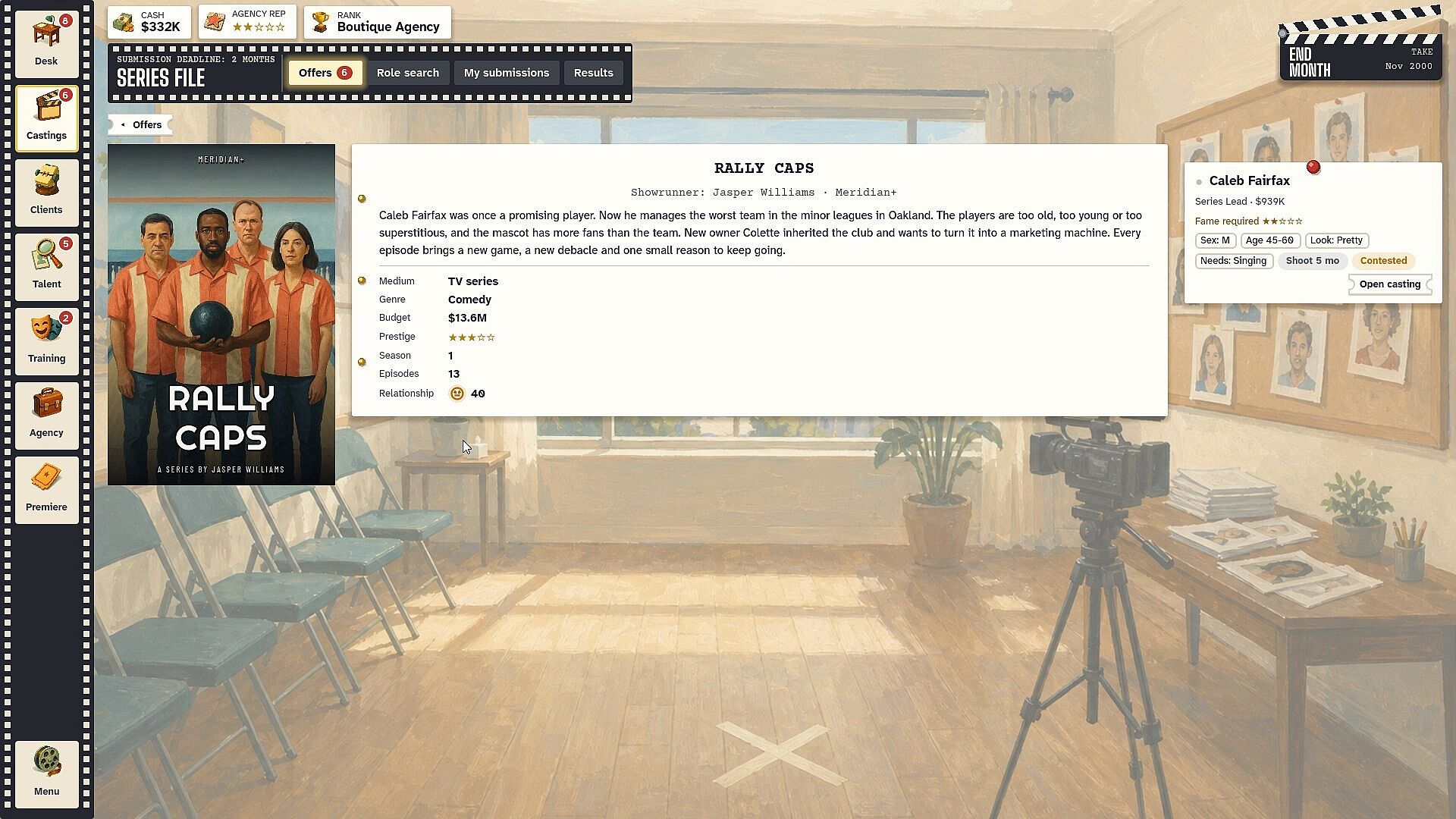
Contract negotiations occur one offer at a time, balancing aggressive terms against the risk of actors walking away or margins shrinking. Rival agencies compete directly by poaching clients or buying out contracts. Landing roles involves matching actors to announced productions, which include detailed premises, genres, and casting timelines. Auditions follow a schedule, with results determining success against competitors. Post-release outcomes like box office performance, ratings, and reviews feed back into fame and star power, unlocking larger opportunities.
Game Modes
Hollywood Agent operates as a single-player management simulation centered on long-term agency building. The primary experience follows a career progression that begins in a modest office and advances through Hollywood ranks via consistent performance. Difficulty settings allow adjustments from relaxed pacing to high-stakes challenges, shaping how finances, client relationships, and rival interactions unfold over multiple years.
Progression ties directly to monthly cycles where decisions on scouting, training, negotiations, and casting accumulate into broader outcomes. No separate multiplayer or alternate modes exist beyond this core structure, keeping focus on the evolving roster and agency finances.
Agency Management and Rival Dynamics
Financial oversight forms a critical layer, covering commissions, fixed costs, office upgrades, and a cash ledger with credit options. Running out of funds ends the game, so balancing investments in client growth against operational expenses remains essential. Events and crises, including scandals, introduce unexpected choices that ripple through the agency and its clients.
Rival agencies maintain their own rosters and actively contest roles while attempting to lure away talent. This competition extends to contract buyouts and influences casting reports after auditions. The hand-painted art style supports immersion through portraits of actors and posters for productions, presented within a desk-interface filled with files and paperwork.
Is It Worth Playing?
Hollywood Agent suits players who enjoy detailed management simulations focused on career building and strategic decision-making. The systems for talent scouting, skill development, contract negotiations, and production casting create a cohesive loop that rewards careful planning and adaptation to client personalities. Those drawn to tycoon-style experiences with evolving characters and competitive elements will find depth in tracking long-term success through awards, reviews, and roster growth.
The game supports varied playstyles, from nurturing a stable group of character actors to pursuing high-risk superstars. Difficulty options accommodate different preferences, and the single-player format emphasizes personal agency progression without external pressures. For fans of simulation games centered on the entertainment industry, it delivers a focused and original take on the genre.