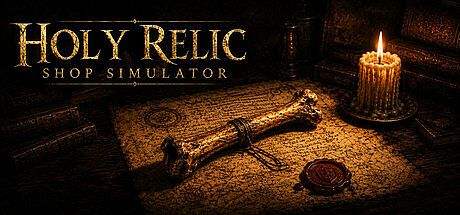


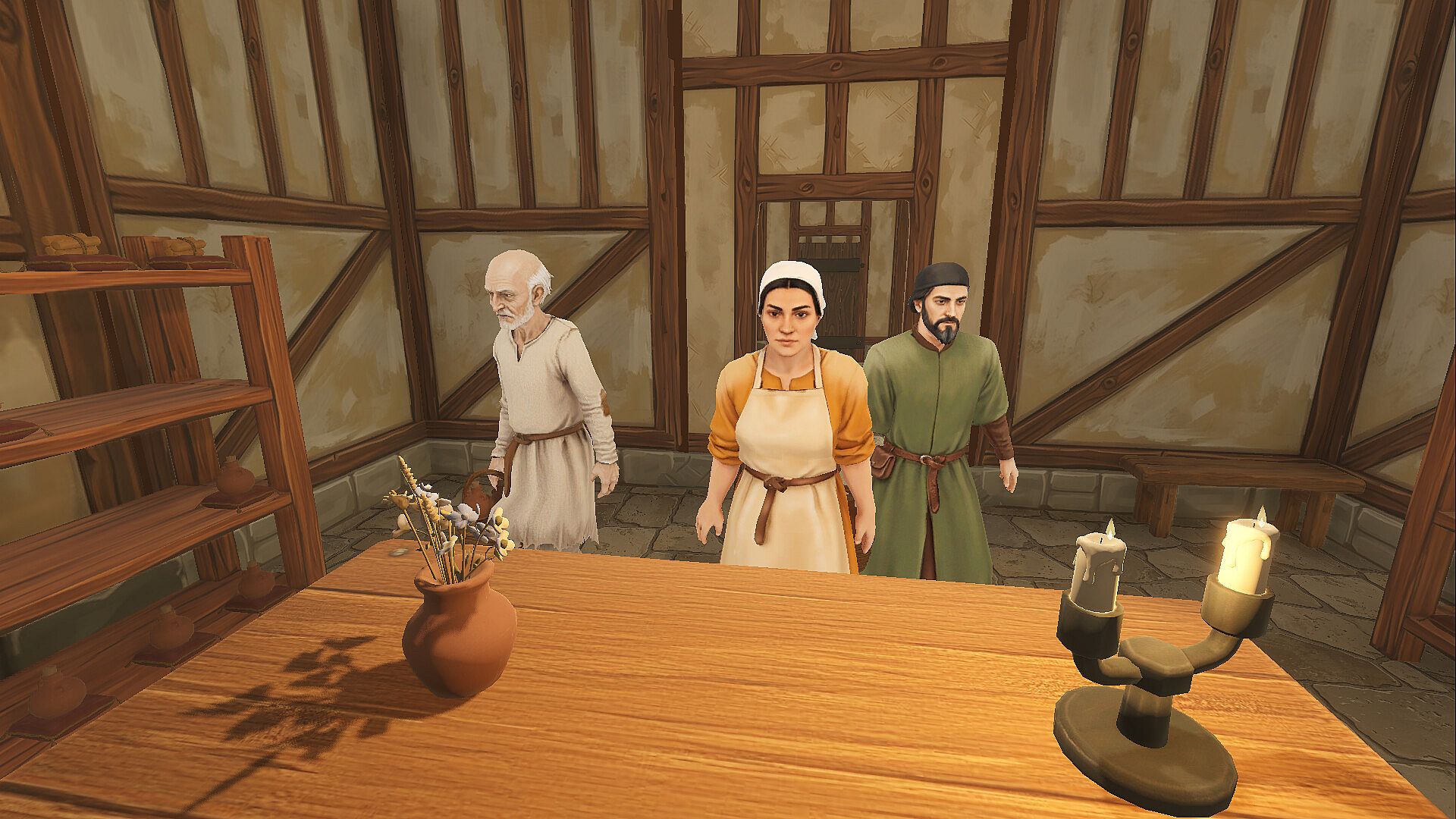
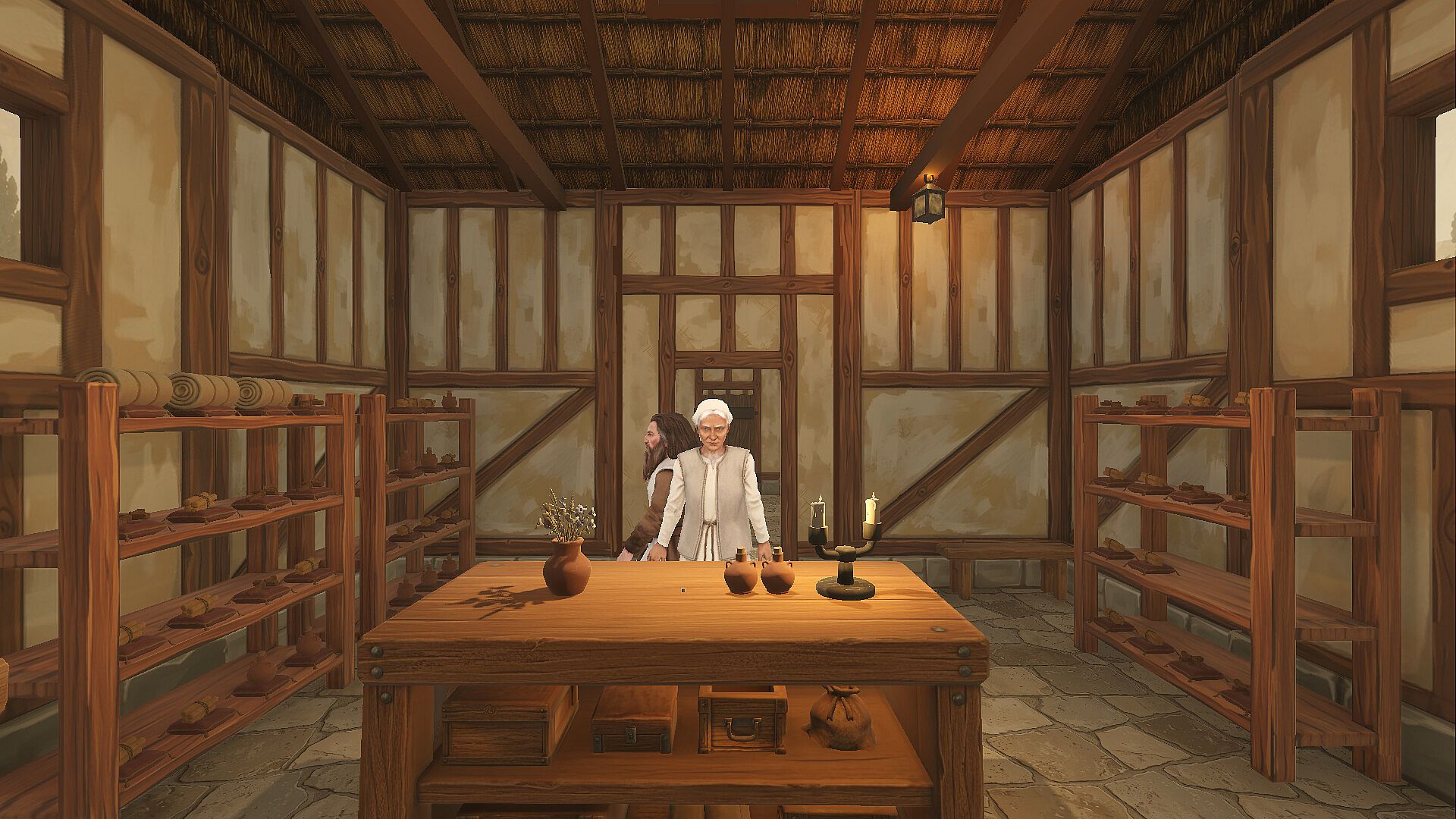
Holy Relic Shop Simulator is an indie simulation adventure game set in a medieval pilgrim city where players take on the role of a relic appraiser. The experience centers on examining sacred objects, weighing conflicting evidence, and making choices that shape both personal reputation and the shop itself. Every item arrives with layers of clues that rarely align, forcing careful inspection before any verdict.
Gameplay
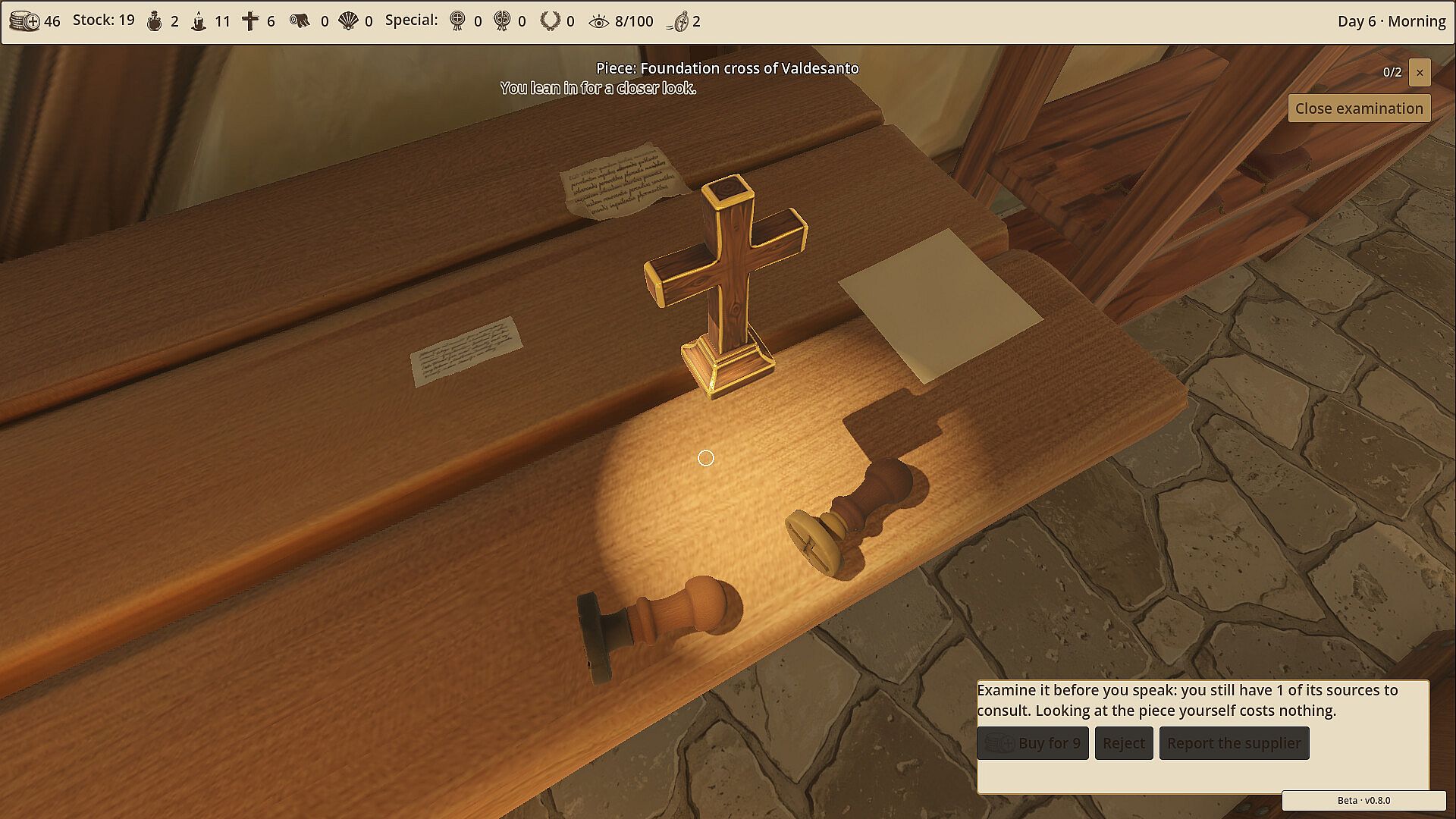
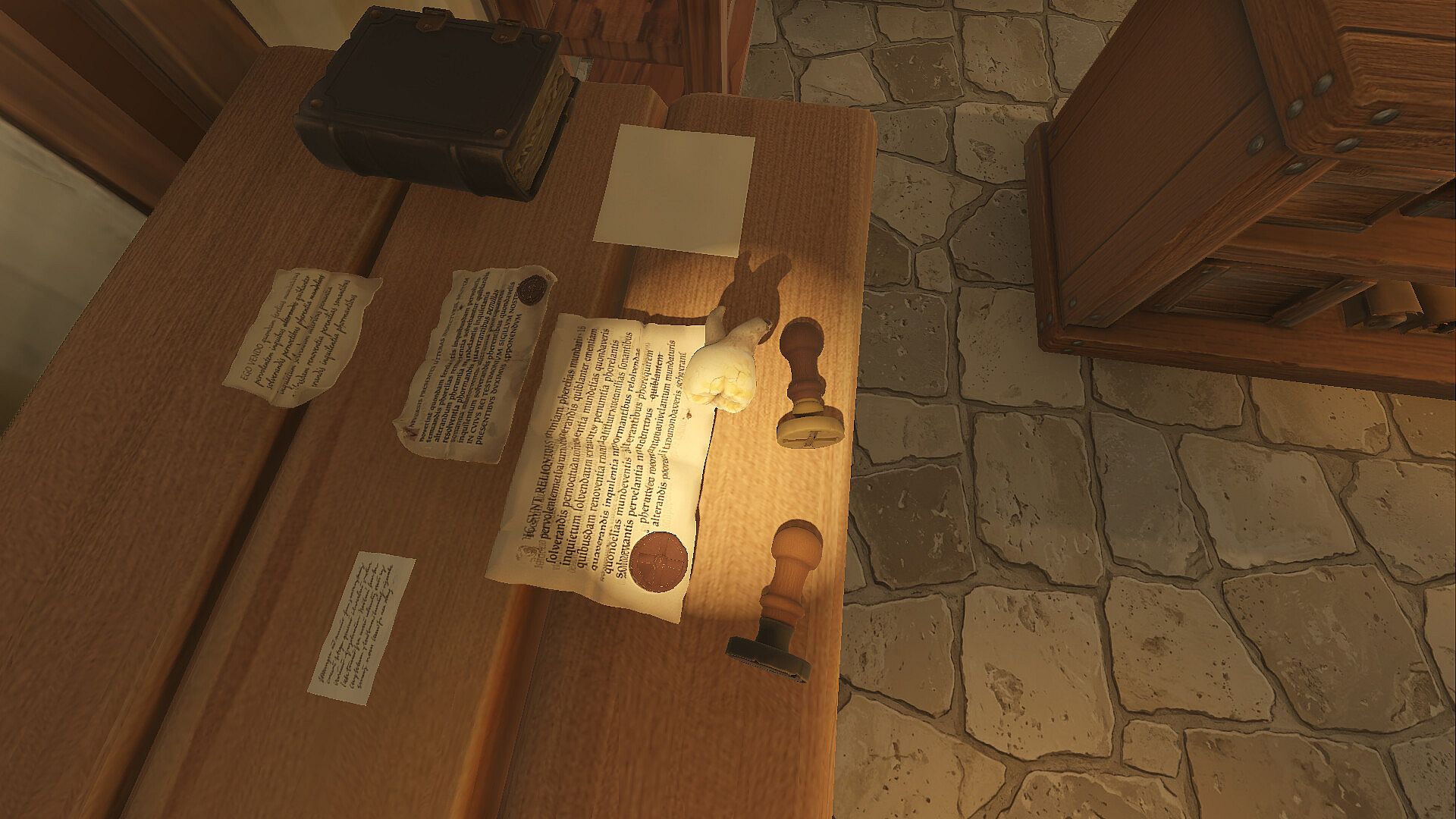
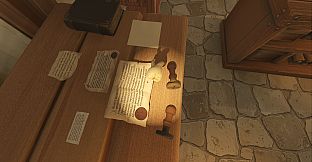
The core loop revolves around turning each relic on the table and cross-checking its physical details against accompanying documents and materials. Bone weight might contradict the engraving on a cross, or wood grain could clash with the story told by a certificate. Instruments help reveal these inconsistencies, but no prompt highlights the exact mismatch. The player must identify it through observation and logic.
Once the contradiction surfaces, the verdict follows. Pressing the seal records the decision permanently, and the city remembers. Options then open around what to do next: sell the piece as genuine for modest returns, report the forger and risk future trouble, or withhold the full truth to charge a higher price. Each path carries consequences that surface later through customer behavior and external attention.
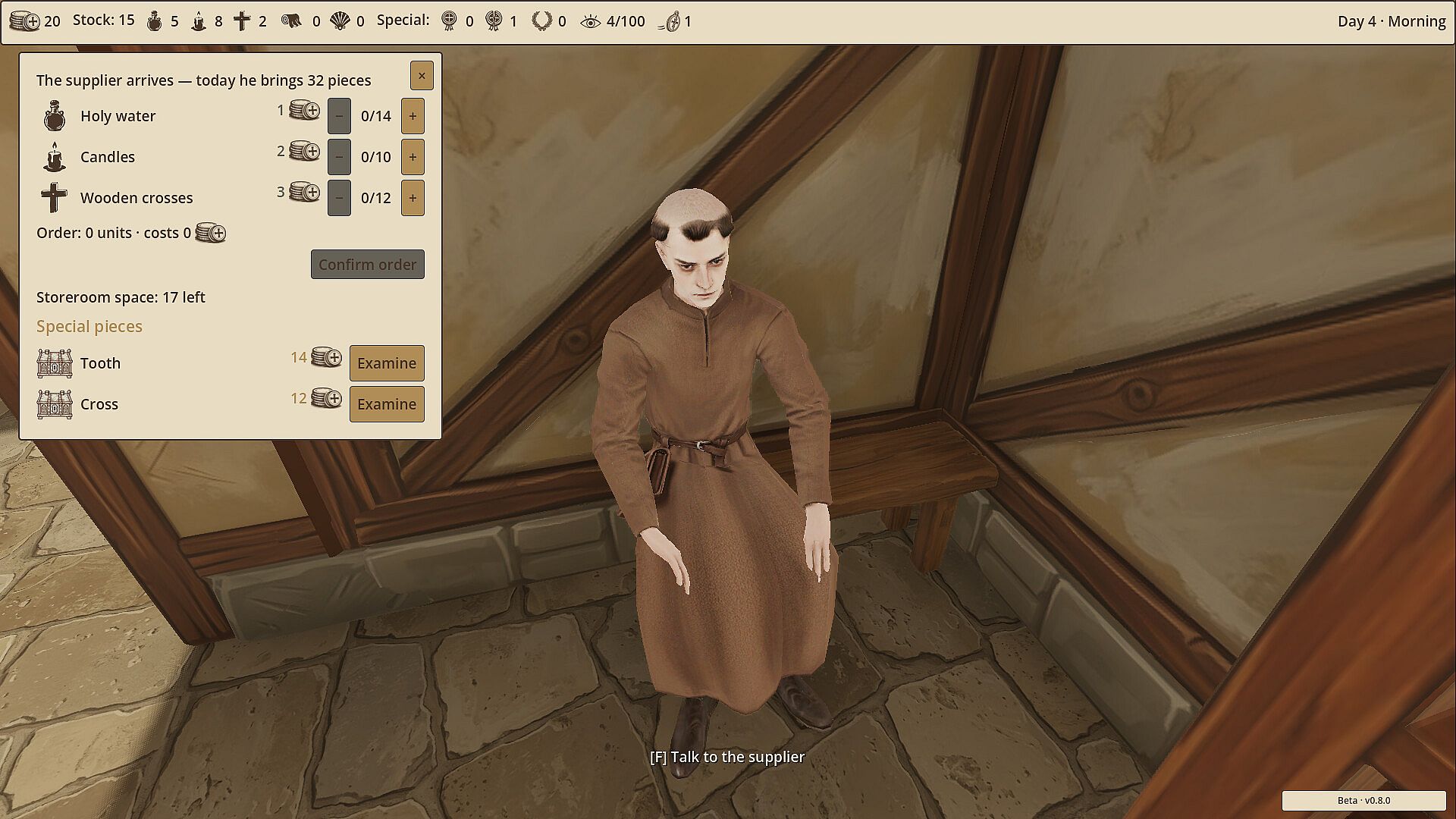
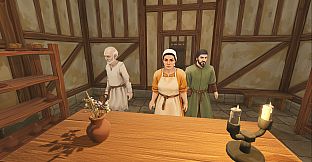
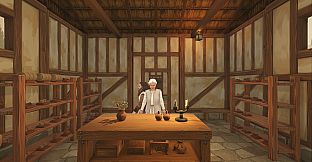
Shop appearance evolves alongside reputation. Pilgrims notice changes in the space before any conversation begins, reflecting the appraiser's growing identity. New pieces, suppliers, and visitors arrive only after consistent choices build trust or notoriety. No numerical trackers appear; progress shows through the environment and the people who enter.
Game Modes
The game operates as a single continuous experience without separate modes or multiplayer components. All activity takes place in the one shop setting, where examination, judgment, and decision-making unfold in sequence. Progression ties directly to reputation gains that unlock different customers and relic quality over time.
Survival elements emerge from accumulating traces of past choices. The Inquisition sends polite inquiries that note answers, creating pressure without dramatic confrontations. Players manage suspicion through consistent behavior rather than any dedicated mode or timer system.
Shop Growth and Reputation
Expansion happens organically as the appraiser's name spreads. Better relics reach the counter only after earlier verdicts demonstrate reliability or cunning. The physical shop reflects these shifts, with visible alterations that signal status to incoming pilgrims. No separate upgrade menus exist; the space itself communicates progress.
Decisions compound across multiple visits. A single report might close one supplier route while opening another through unexpected connections. The city responds weeks later, so patterns become clear only after several cycles of examination and sale.
The Role of the Inquisition
Authority figures appear as ordinary visitors who ask measured questions and record responses. Their presence adds weight to every verdict without turning into overt conflict. Notes accumulate in the background, influencing later events based on the balance of honest and deceptive actions taken.
Players learn to anticipate these visits by tracking their own patterns. The system rewards foresight rather than reaction, as traces build where direct observation is limited.
Is It Worth Playing?
This title suits players who enjoy deliberate evidence analysis and moral trade-offs in a contained setting. The examination process mirrors the satisfaction of solving layered puzzles, while the decision phase introduces lasting consequences that affect future opportunities. Those drawn to thoughtful single-player simulations will find the loop engaging through its focus on observation and consequence rather than action or collection.
Because the game remains in development with a TBA release, current details rest on the described systems of relic inspection and reputation management. It offers a focused experience for anyone interested in merchant life shaped by authenticity questions in a historical-inspired world. If the appeal lies in weighing evidence and living with the results, the simulation delivers on that premise without additional layers or distractions.