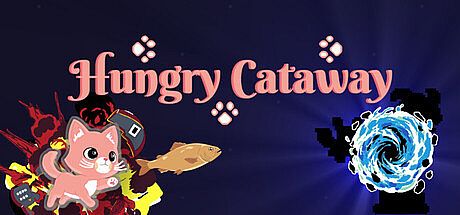


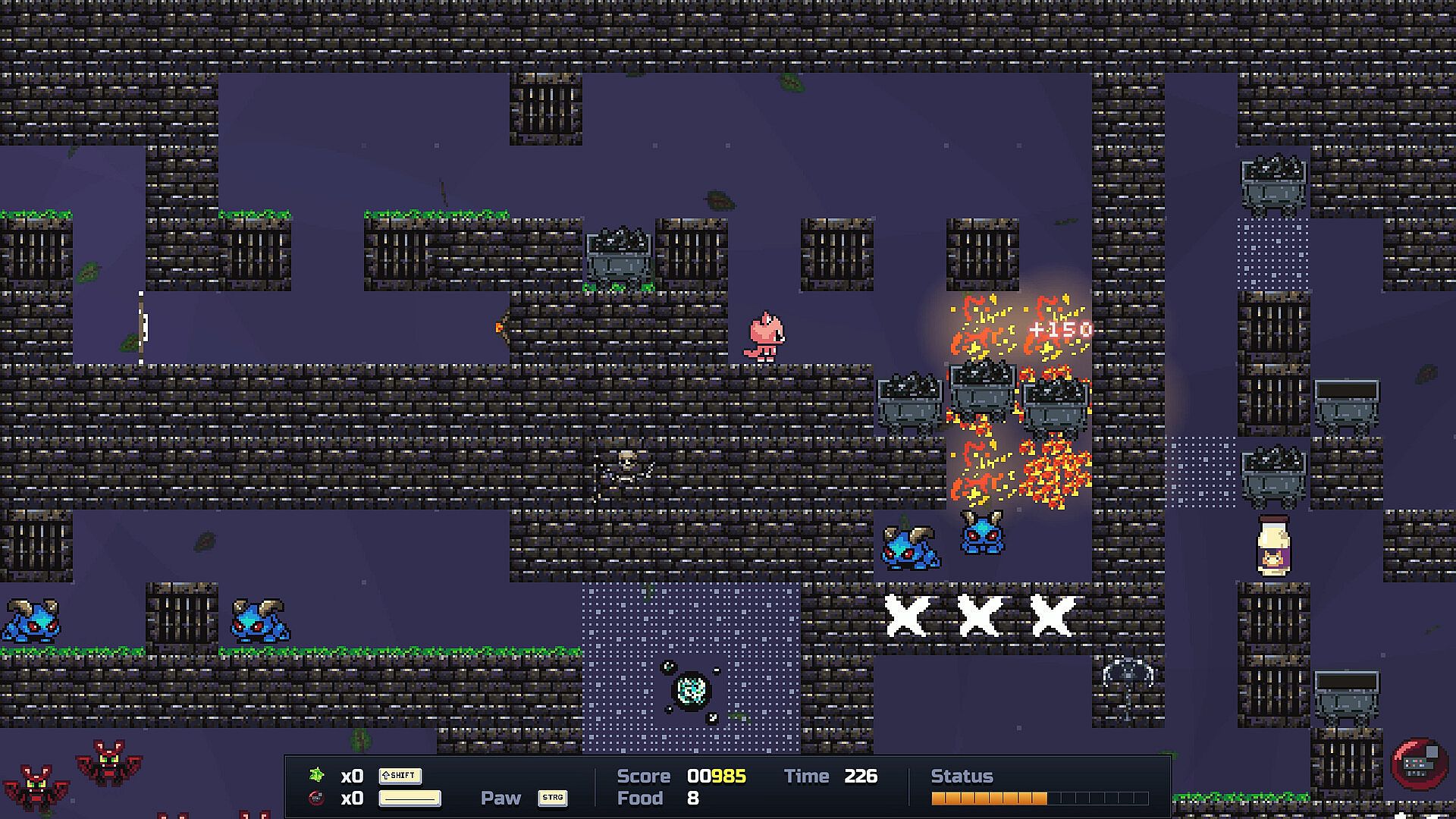
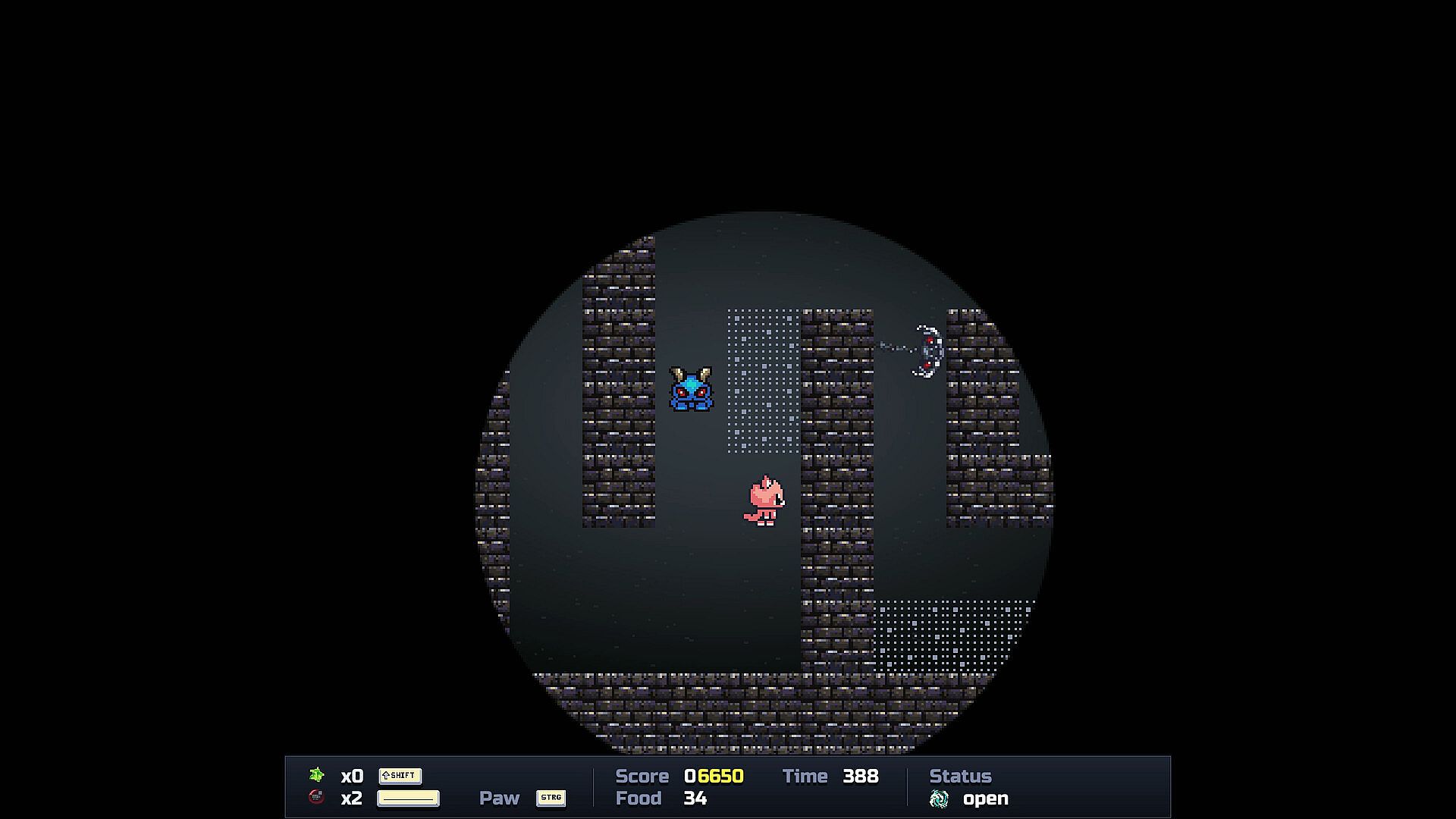
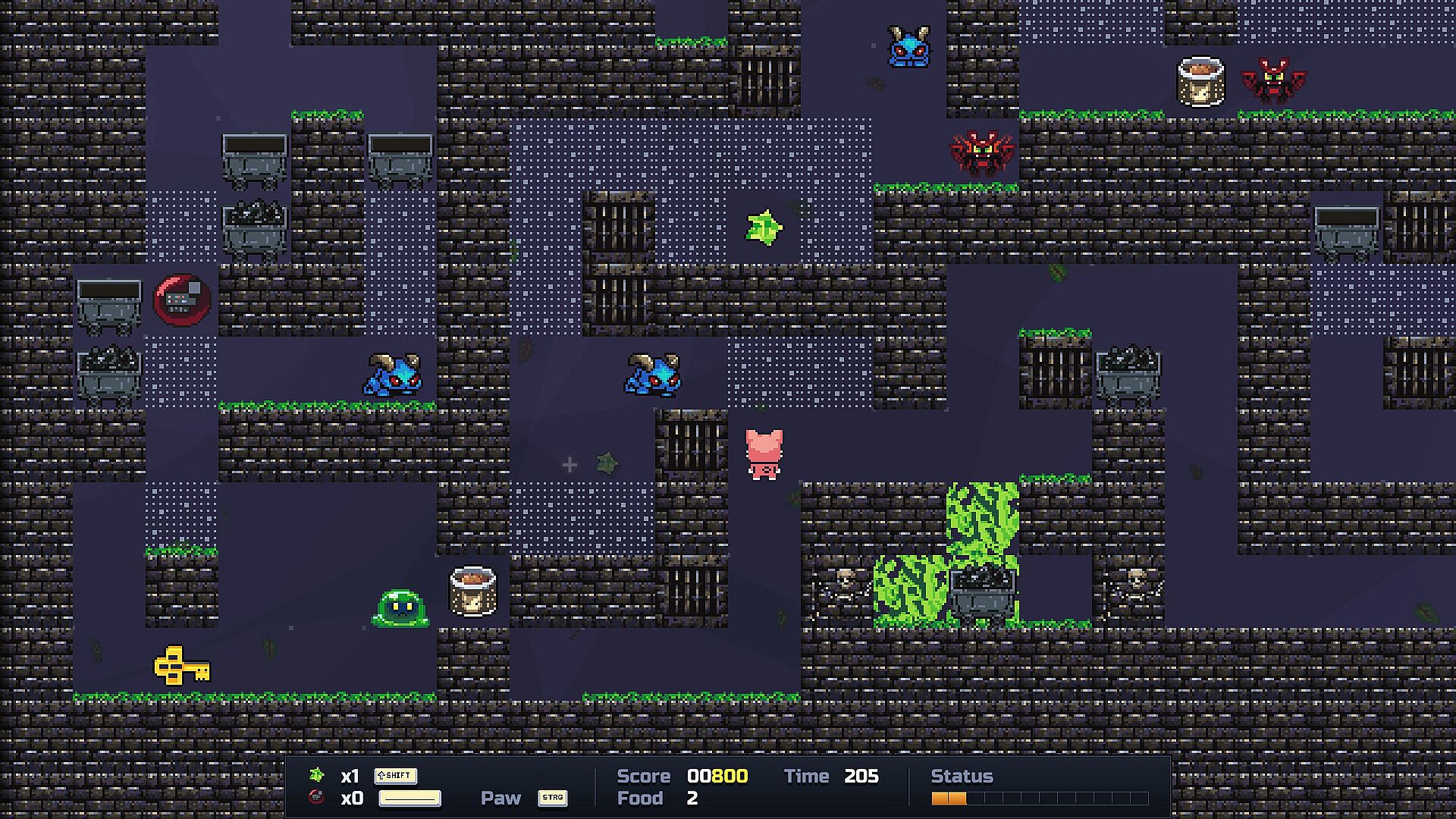
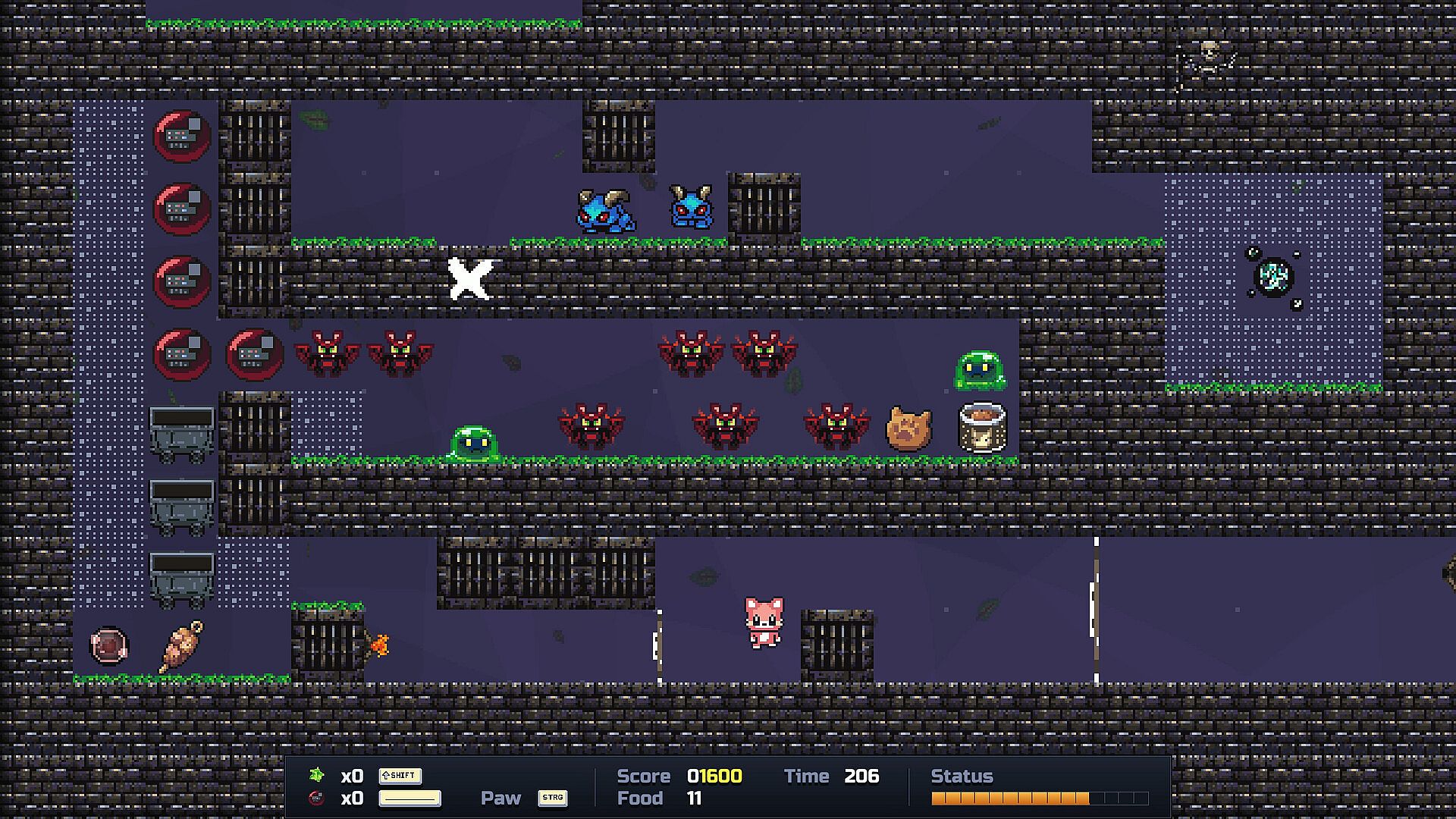
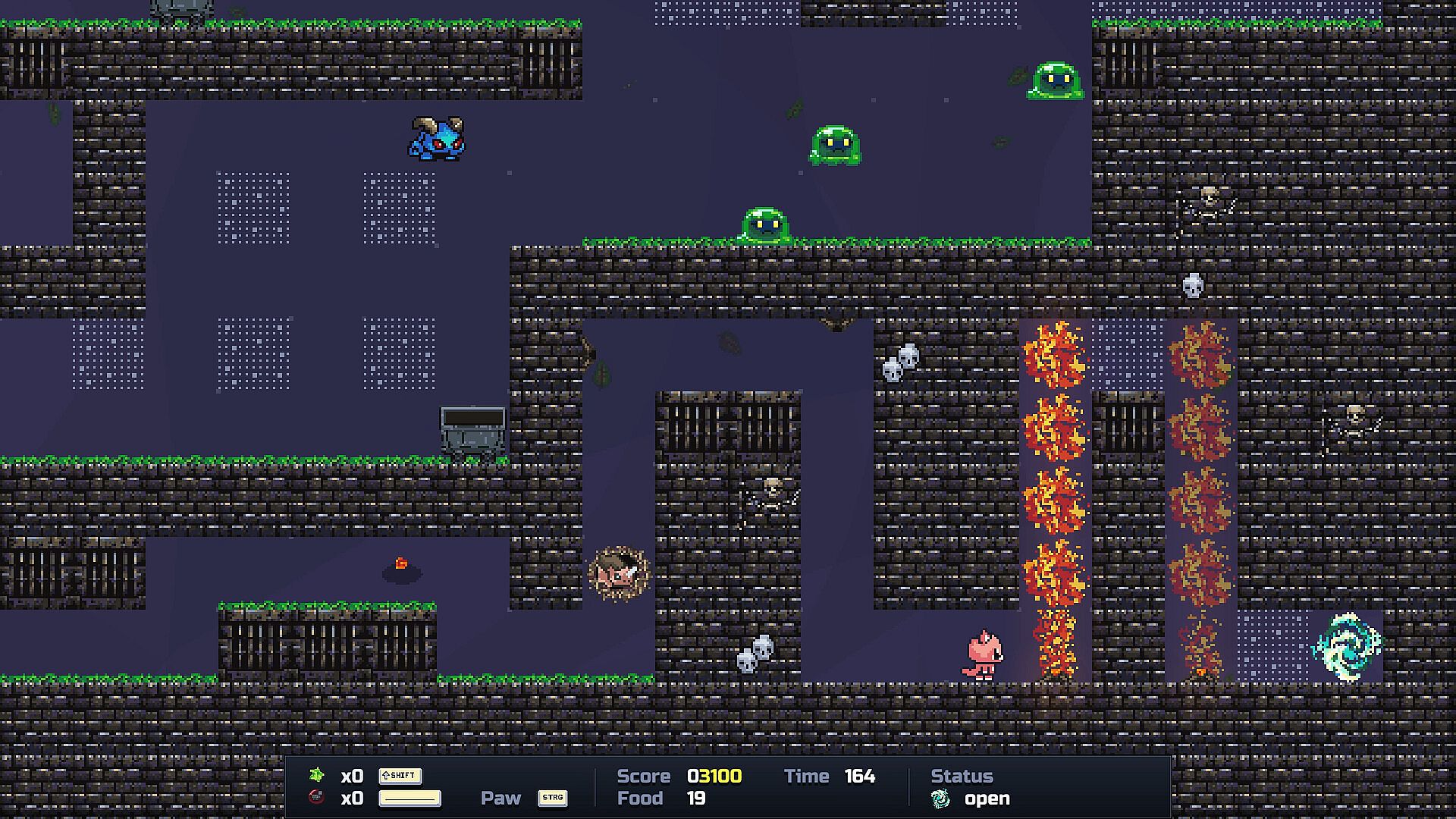
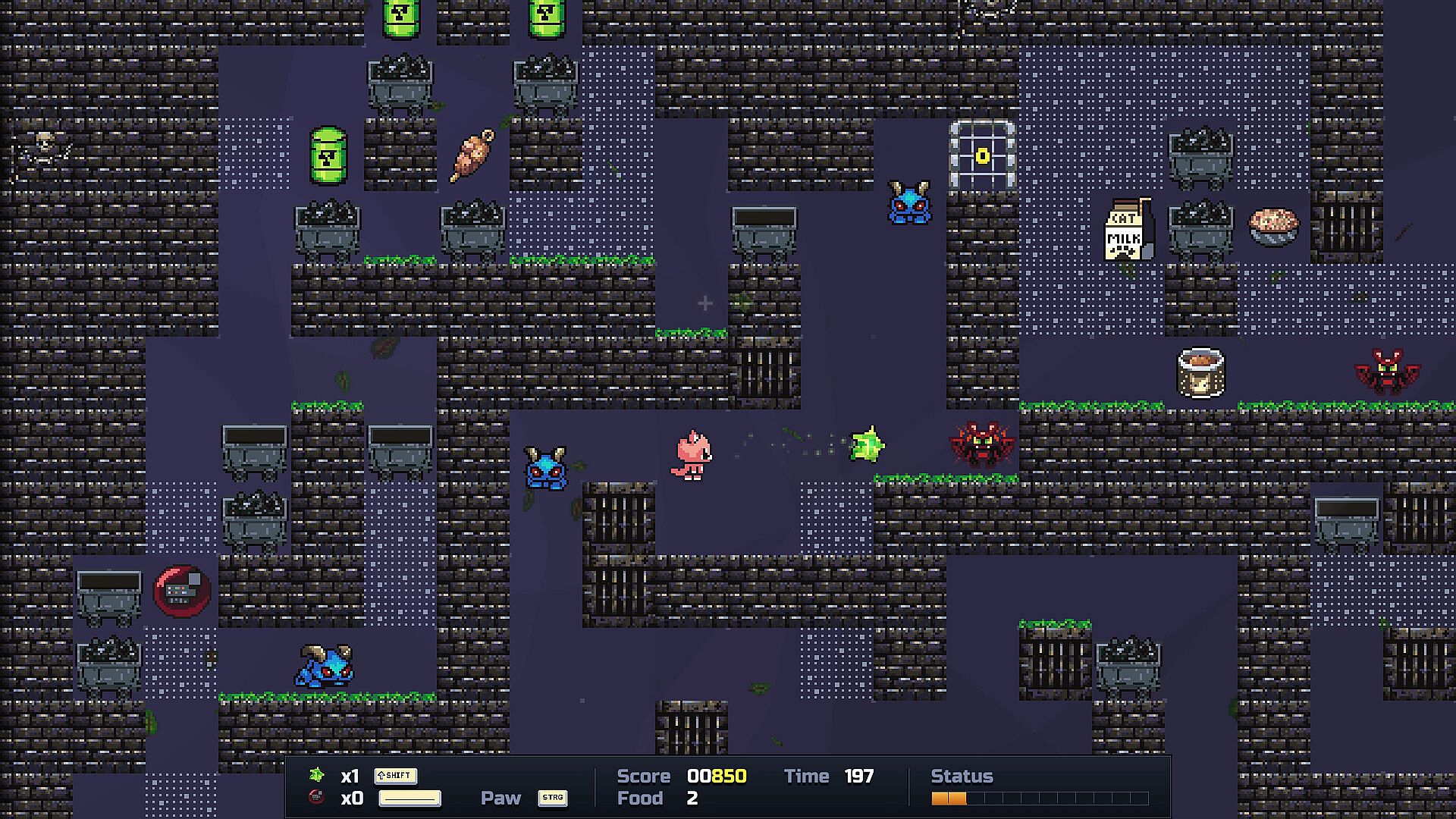
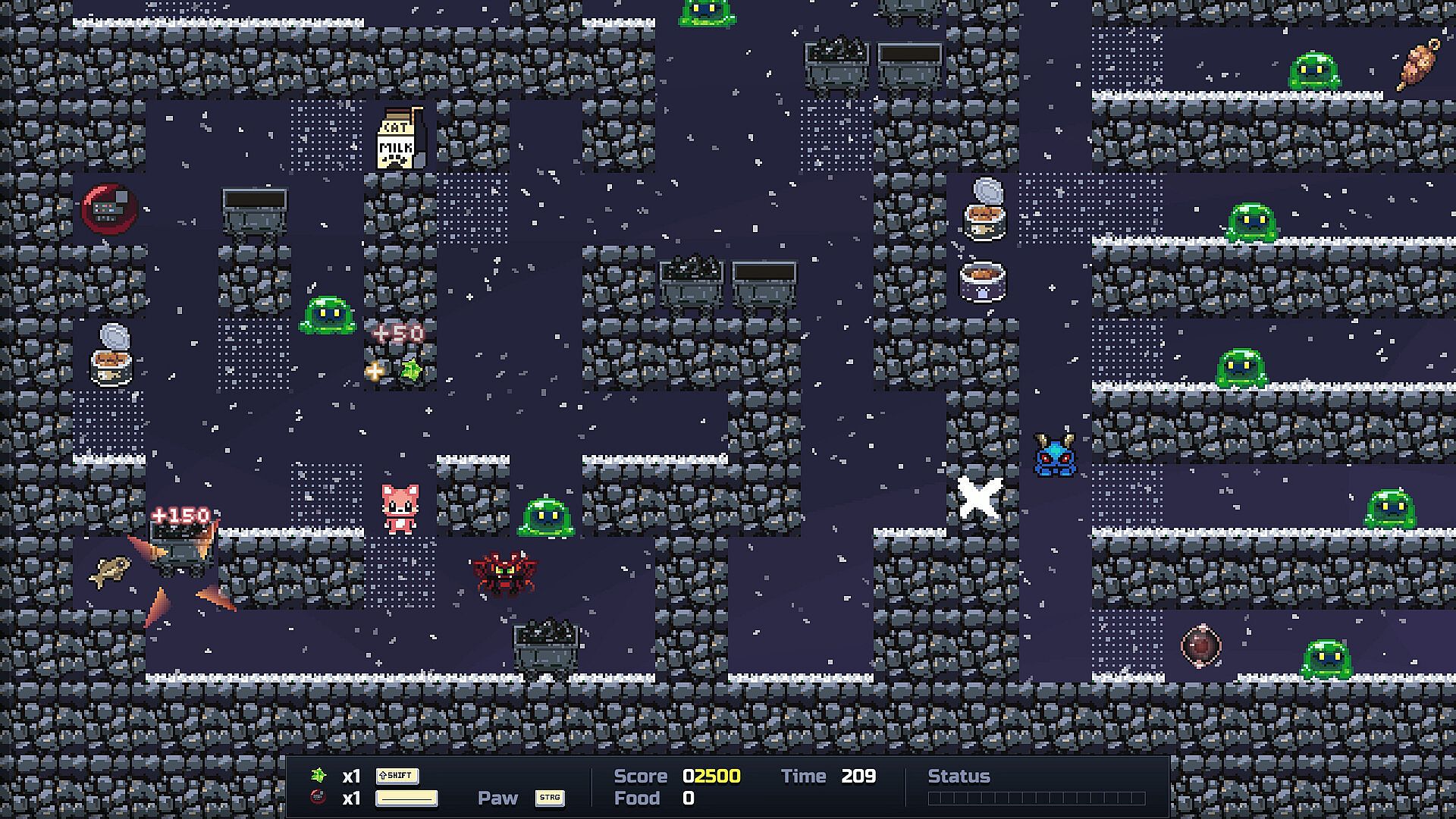
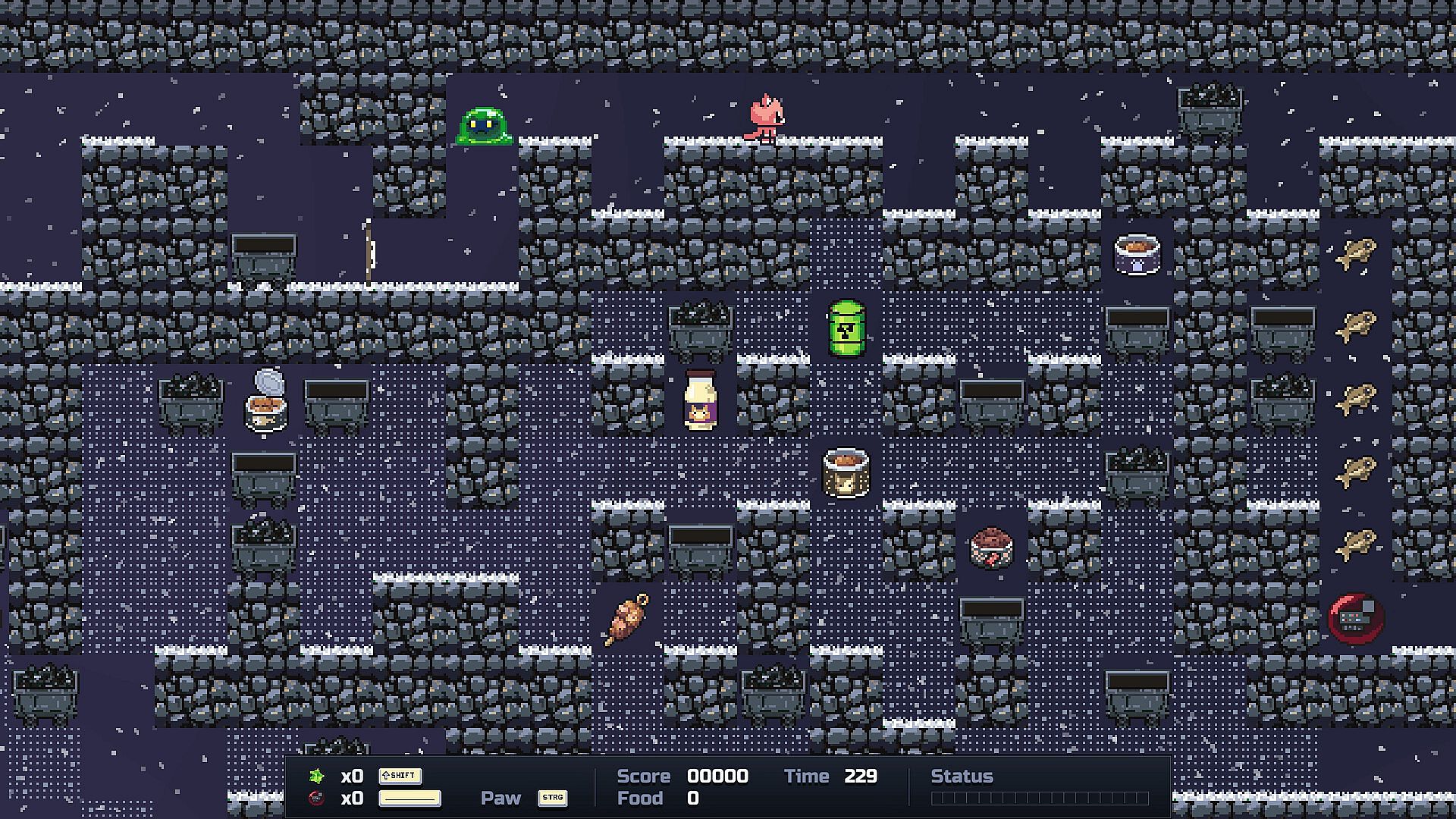
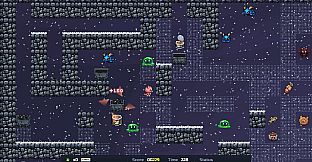
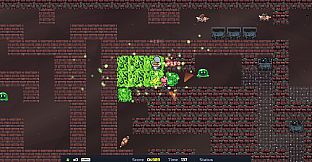
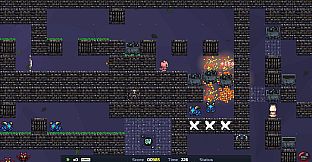
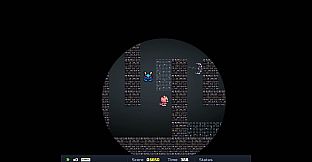
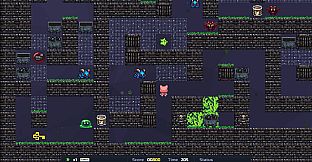
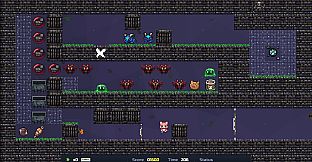
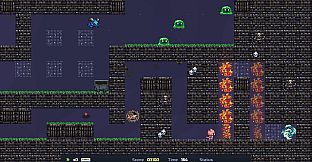
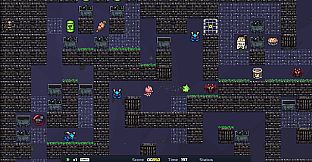
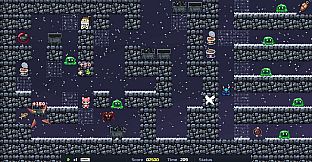
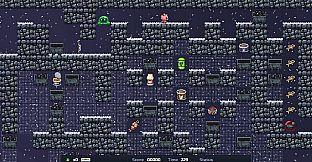
Hungry Cataway is an indie casual grid-based pixel-art arcade game for PC. Players control a cat navigating confined levels filled with obstacles, enemies, and scattered food items. The core loop centers on eating treats to unlock an exit portal while avoiding traps and hazards along the way.
Gameplay
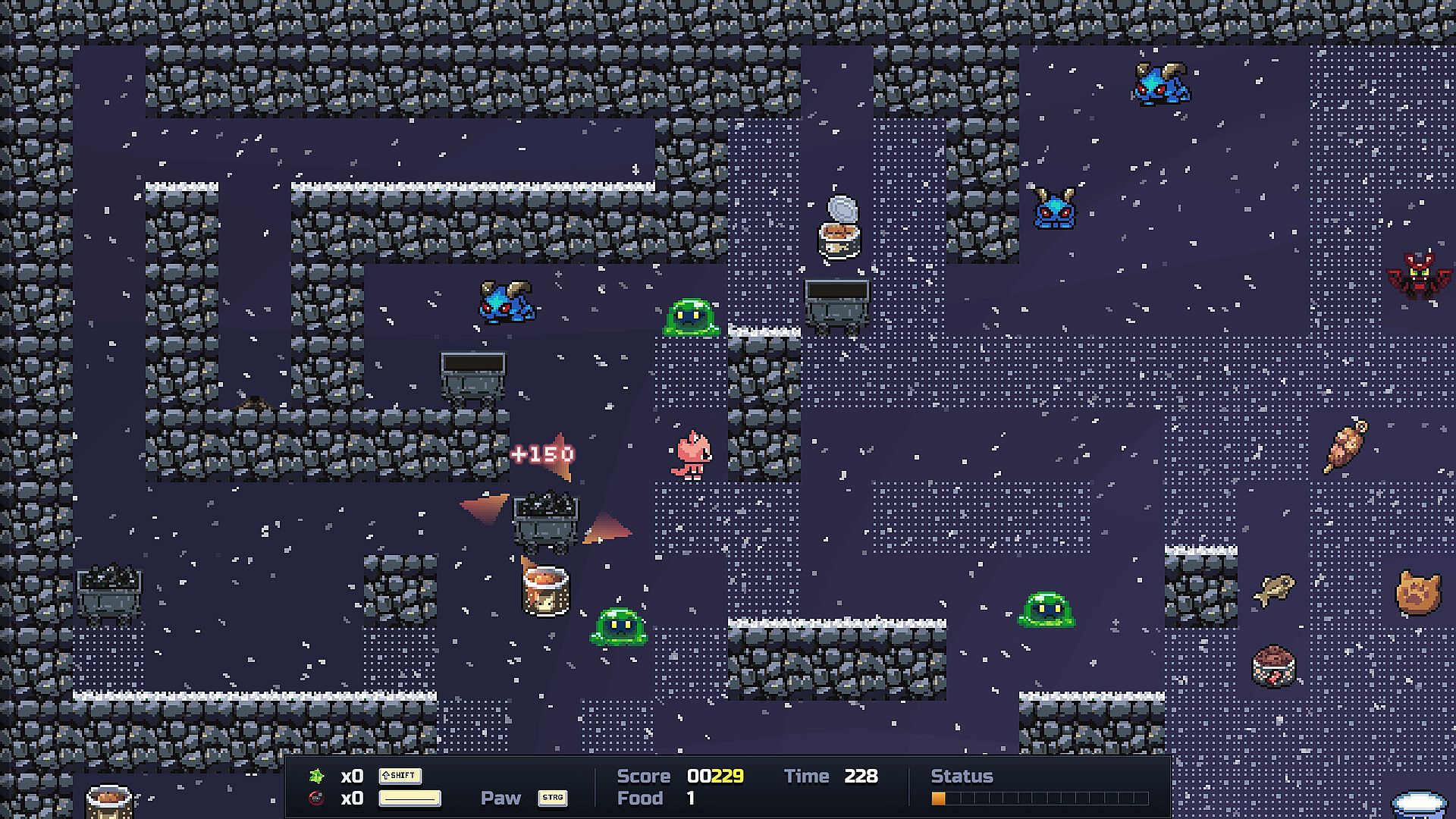
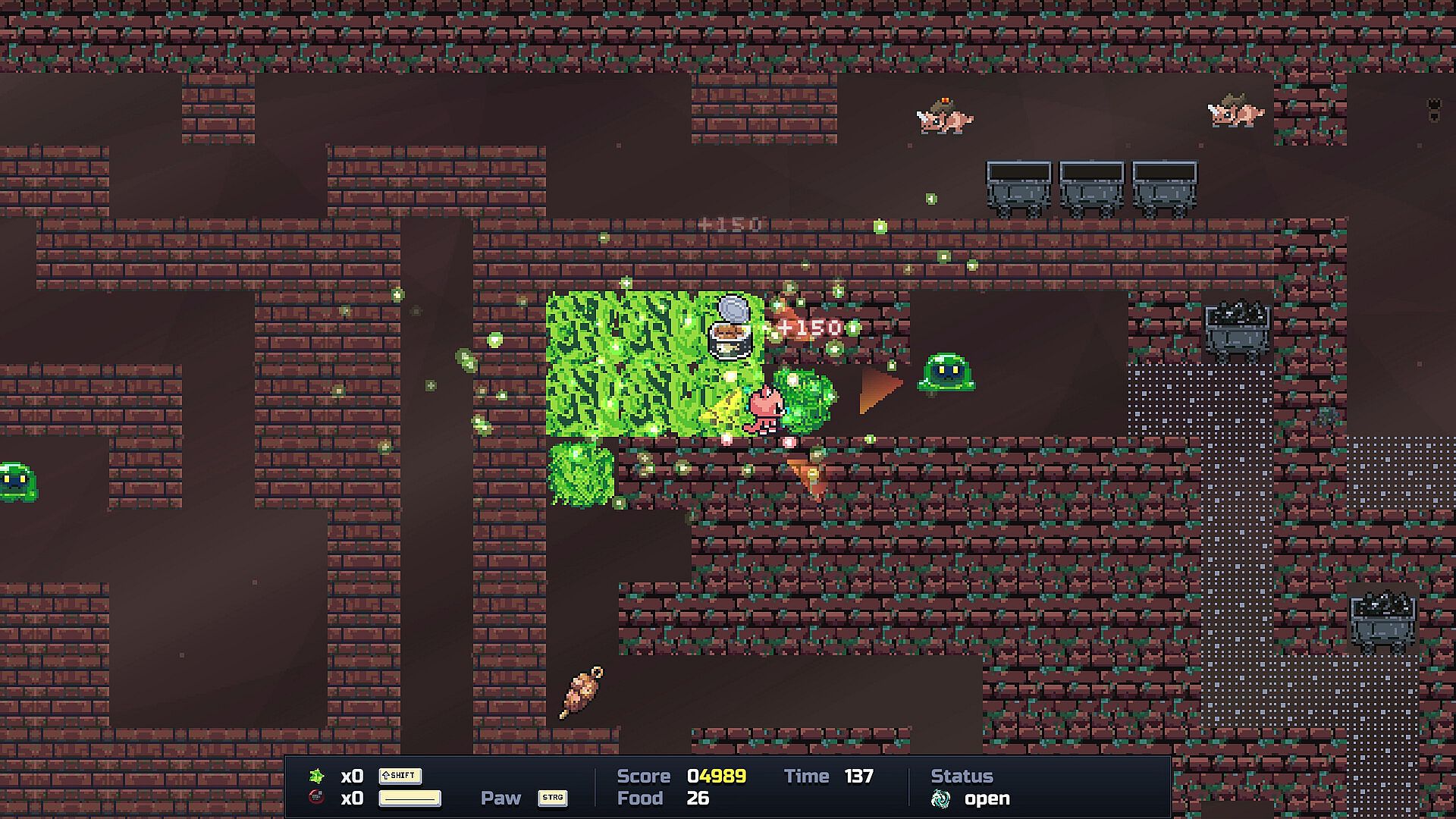
The game places the cat on a grid where movement follows strict paths. Eating food advances progress toward the portal, but players must plan routes carefully to avoid stepping into traps. Bombs allow blasting through walls to open new paths or clear blockages. A special vomit attack clears clusters of hazards or enemies when activated at the right moment. Minecarts sometimes block routes, and the cat uses its paw to push them aside. Enemy patterns can be exploited by positioning and timing moves to turn their behavior against them rather than direct confrontation.
Levels emphasize precision and foresight. A single misstep ends the attempt, requiring a restart from the current board. The pixel-art style keeps the visual focus on the grid layout and simple animations for movement, explosions, and attacks.
Game Modes
Hungry Cataway operates as a single-player experience built around sequential levels. Each stage stays locked until the previous one is completed. Success demands reaching the exit in one clean run without errors. Leaderboards track optimized paths and personal best times or scores for each level, encouraging repeated attempts to improve efficiency and placement.
No separate multiplayer or alternate modes appear in the available details. The focus remains on mastering individual grids through repeated practice and strategic use of bombs, the vomit attack, and environmental interactions.
Key Mechanics and Progression
Progression follows a strict linear unlock system. Players advance only after clearing the prior level, which builds familiarity with core tools before introducing new combinations of hazards. Food collection serves as the primary objective driver, turning each grid into a resource-management puzzle where overeating or poor routing leads to dead ends.
Enemy encounters reward observation over aggression. Movement patterns become predictable with experience, allowing players to position the cat so foes move into cleared areas or away from the intended path. Minecart pushing adds a physical interaction layer that integrates with bomb placement for creative solutions.
Is It Worth Playing?
Hungry Cataway targets players who enjoy short-session arcade challenges with puzzle elements. The grid-based structure and pixel-art presentation deliver clear, readable gameplay that suits casual play without requiring long commitments. Leaderboards provide ongoing motivation for those who like optimizing routes and competing on personal or global rankings.
With a release scheduled for Q1 2027 and no user reviews available yet, the game remains untested in the wild. Its mechanics align with classic arcade titles that reward pattern recognition and quick decision-making. Fans of indie casual games focused on single-player level mastery may find it appealing once it launches, particularly if they appreciate the cat-themed twist on bomb and attack mechanics. Those seeking multiplayer or narrative depth should look elsewhere based on current information.