






Investor Life is a single-player simulation game set in 1956 where players manage an investment company starting with JPY 100 million in net assets. The core experience revolves around building a business group through careful stock investments, company acquisitions, and government bonds while navigating a dynamic market of randomly generated companies.
Gameplay
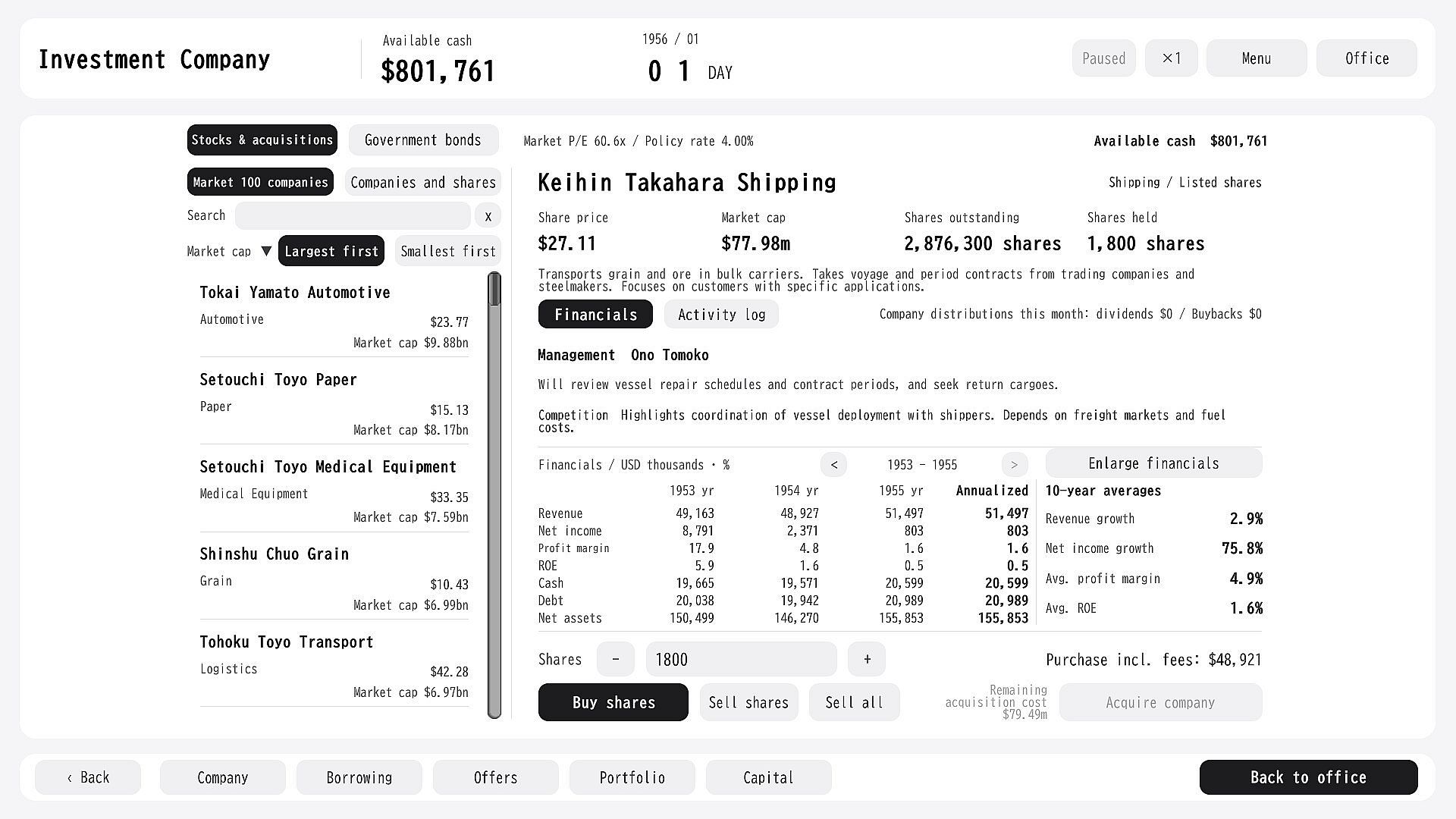
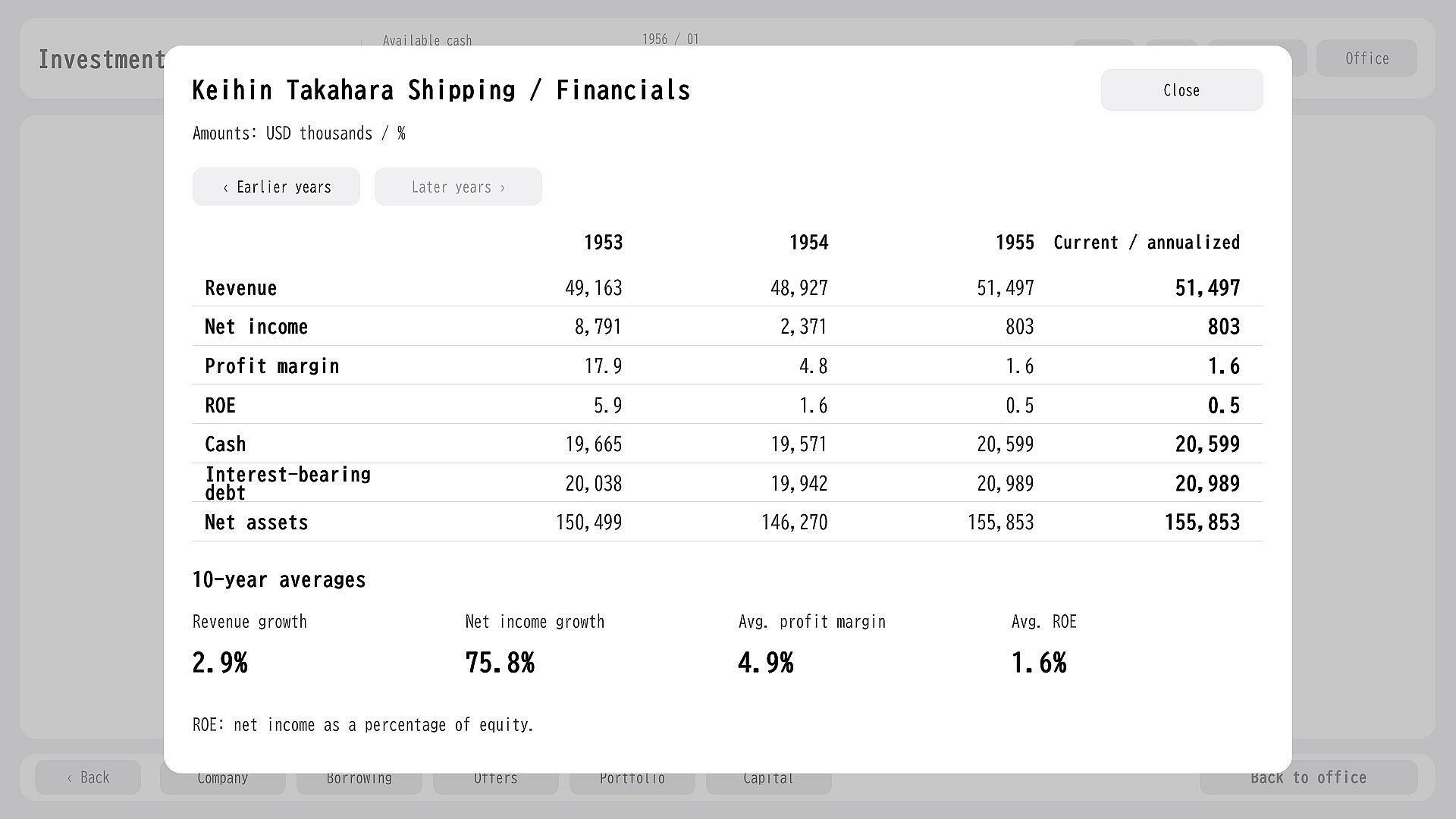
Each playthrough begins with a fresh market containing 100 listed companies. These businesses vary in operations, finances, and management even within the same industry. Players examine historical financial reports and track company actions to identify promising investments and determine appropriate purchase prices. The simulation advances day by day, with economic conditions, competition, and internal decisions influencing performance and share prices.
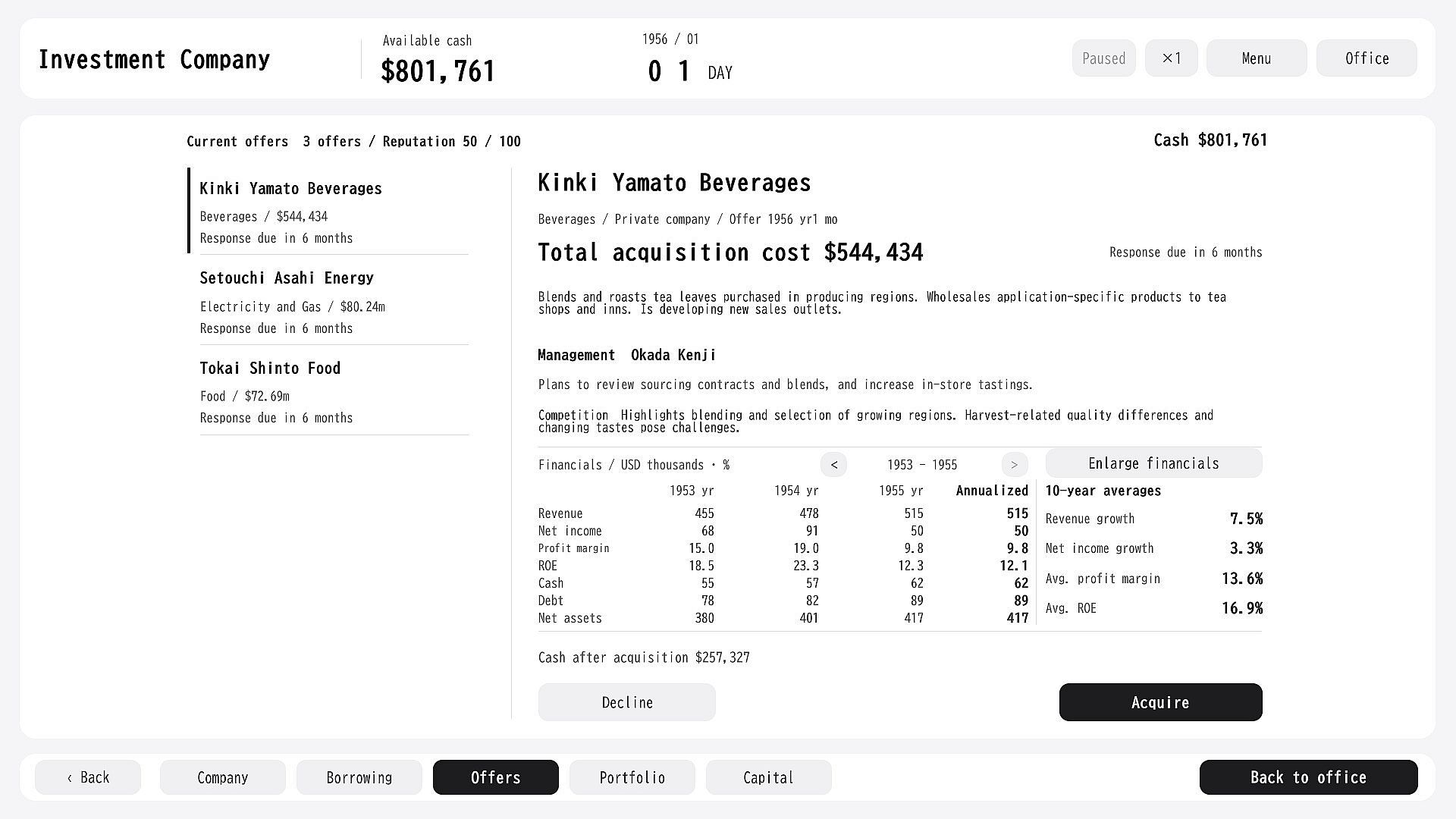
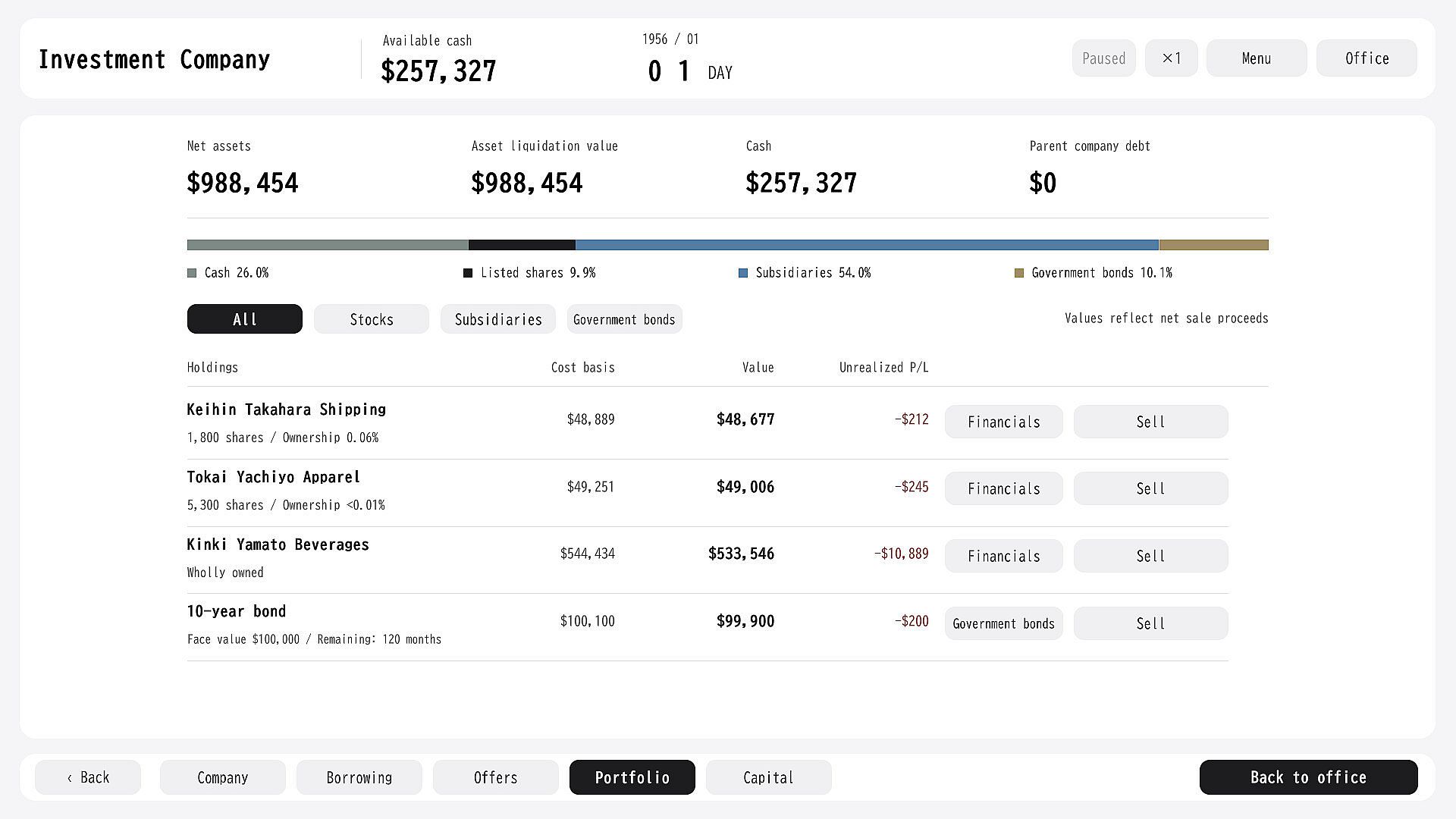
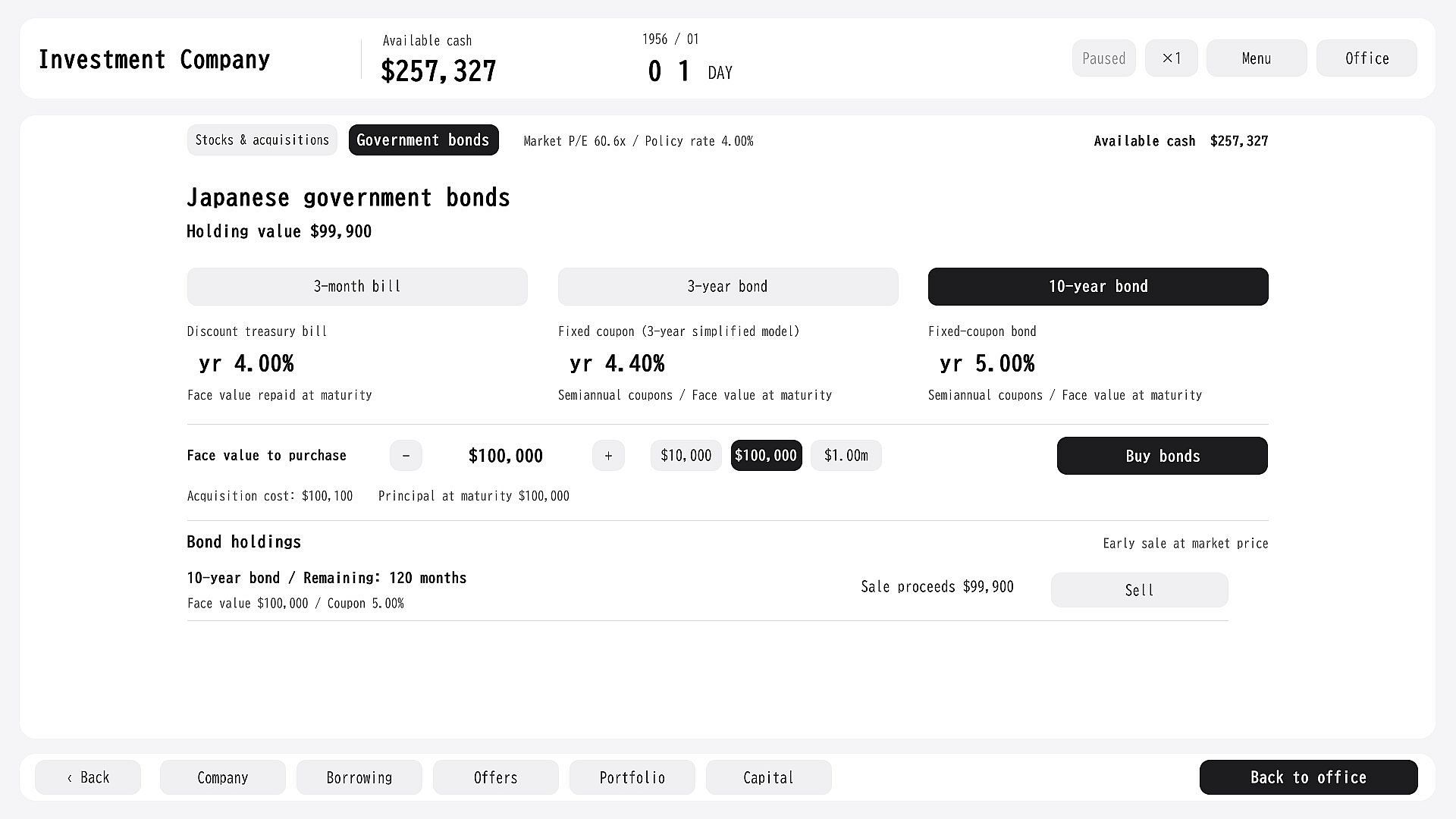
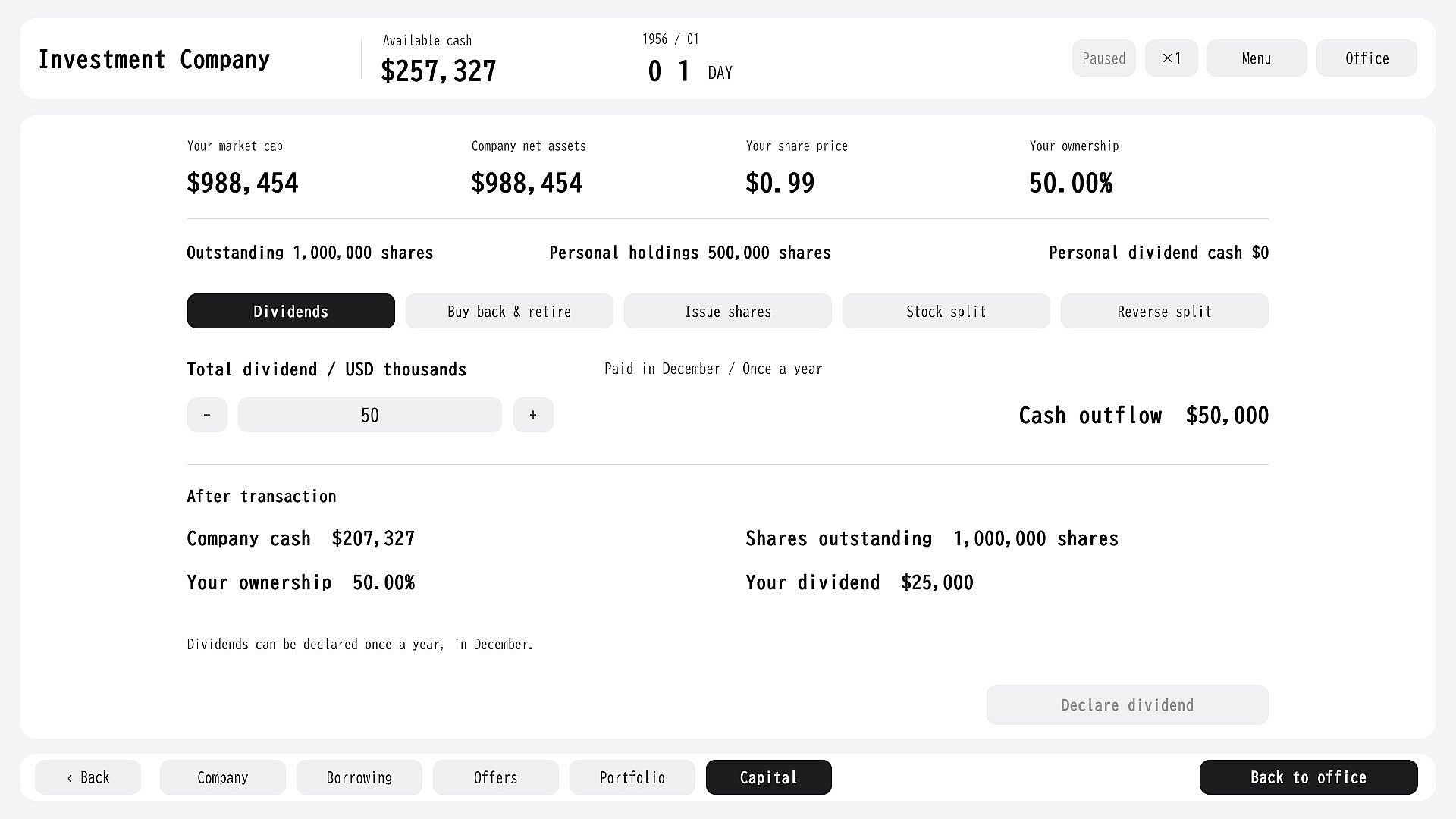
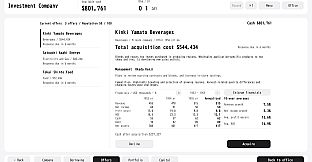
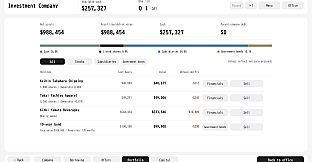
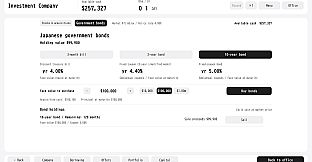
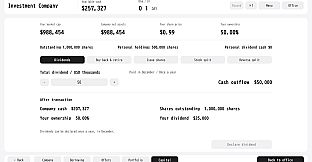
Investments range from minority stakes focused on dividends and capital gains to full acquisitions that turn targets into subsidiaries. Acquired companies retain their own management teams and continue operating independently. Players can hold positions long term or sell them to redirect capital. Private company acquisition offers add another expansion route. Capital allocation requires balancing shares, subsidiaries, bonds, and cash reserves while reinvesting returns and managing borrowing, dividends, buybacks, and share issues on the player's own firm.
Time controls allow pausing or adjusting speed, with automatic pauses during detailed market and management screens. Over years of play, economic cycles create opportunities and risks, including company recoveries, losses, and bankruptcies. Growth brings new titles and visual upgrades to the office space, evolving it from a basic rented room to a polished headquarters.
Game Modes
Investor Life operates as a single-player experience without separate named modes or multiplayer components. The entire game centers on one continuous management simulation that unfolds over decades. Players control the pace of time and make ongoing decisions about investments and corporate strategy within this unified framework. Random market generation ensures each session presents unique companies and conditions to analyze and respond to.
Key Mechanics
Financial analysis forms the foundation, requiring study of reports to evaluate operations and prospects before committing capital. Diversification across asset types helps manage risk amid fluctuating markets. Ownership progression allows shifting from passive shareholder to active owner through acquisitions. Capital management includes handling reinvestments, loans, and corporate actions like buybacks or new issues. Economic simulation introduces variability through cycles that affect individual businesses differently, rewarding patience and adaptability.
Is It Worth Playing?
This title suits players who enjoy detailed, numbers-driven management simulations focused on long-term investment strategy. The emphasis on reading reports, timing purchases, and responding to market shifts provides depth for those interested in corporate finance and portfolio building. With its single-player structure and player-controlled pacing, it offers a focused experience free from external pressures. As an upcoming release, its appeal will depend on how well the simulation delivers on the described systems of company analysis and group expansion. Those drawn to realistic economic modeling and decision-making over extended periods will find the core loop aligned with their preferences.