







Is Gambling Bad For Business? is a strategy and simulation game that puts players in charge of a fledgling company where gambling drives both rapid growth and potential collapse. The premise centers on a CEO who uses company funds for bets while managing staff, expanding an office tower, and navigating board oversight in a single-player experience with optional online elements on PC.
Gameplay
Players begin with a small office, a stack of applicant CVs, and the option to flip a coin for quick cash. Each hire comes with details on education, personality traits, and expected daily earnings. Staff files track productivity, and firing carries a severance cost of thirty days' salary that affects office morale. Office space has a hard capacity limit, forcing expansion through new floors paid for exclusively with gambling winnings.
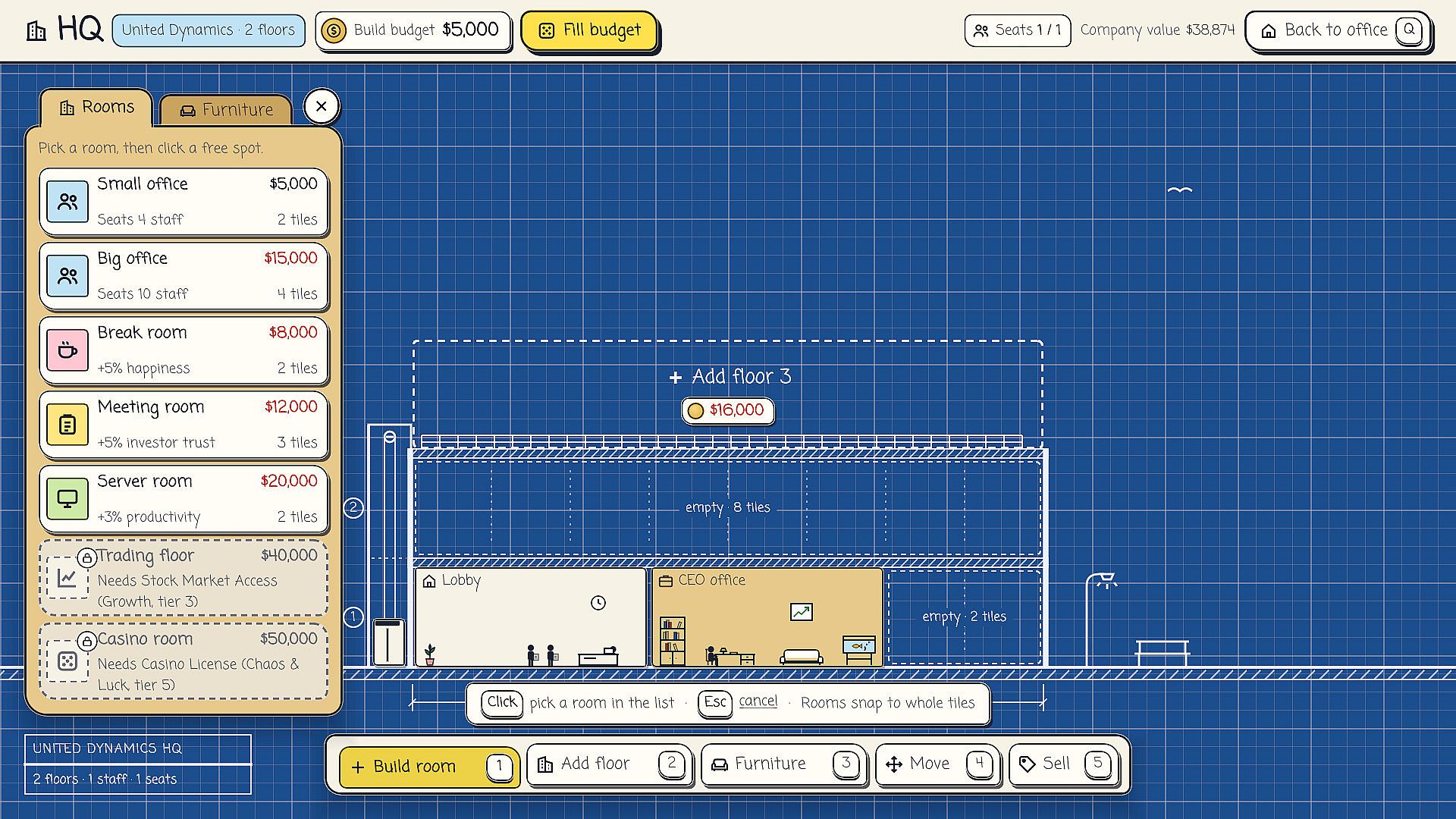
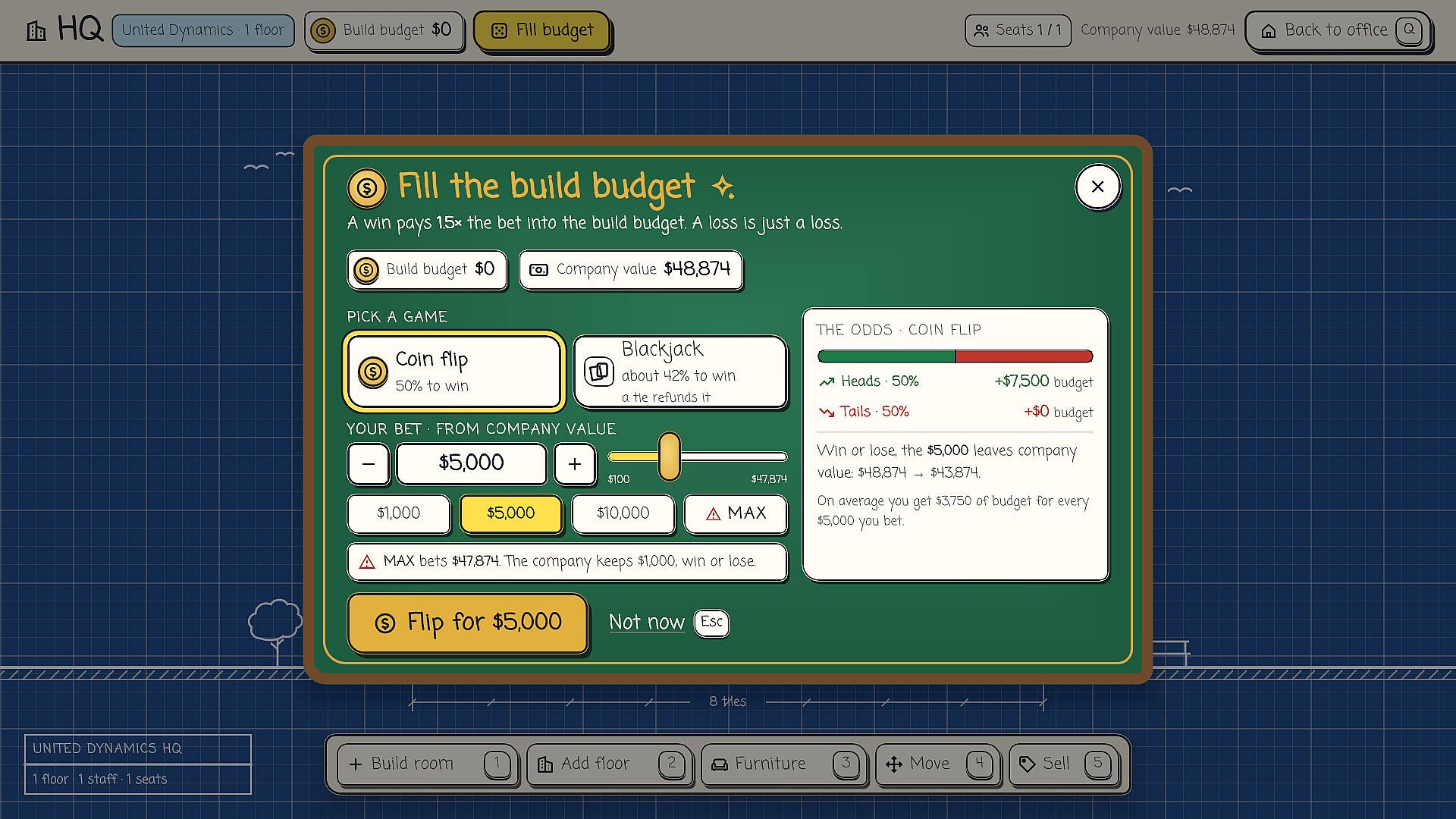
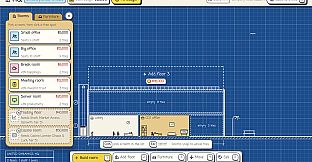
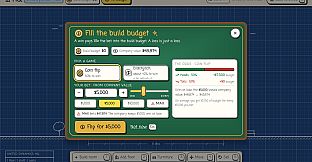
Core progression involves coin flips, blackjack, and slots played with company money. Wins boost the ledger, but every bet increases a Heat meter that attracts auditors, lowers staff morale, and erodes board trust. After significant losses the game prompts a choice to attempt recovery through further risk. The headquarters appears as a side-view tower where players add floors, outfit rooms such as offices, break rooms, meeting rooms, server rooms, a trading floor, and a casino, then upgrade furnishings while watching pixel-art employees at their desks.
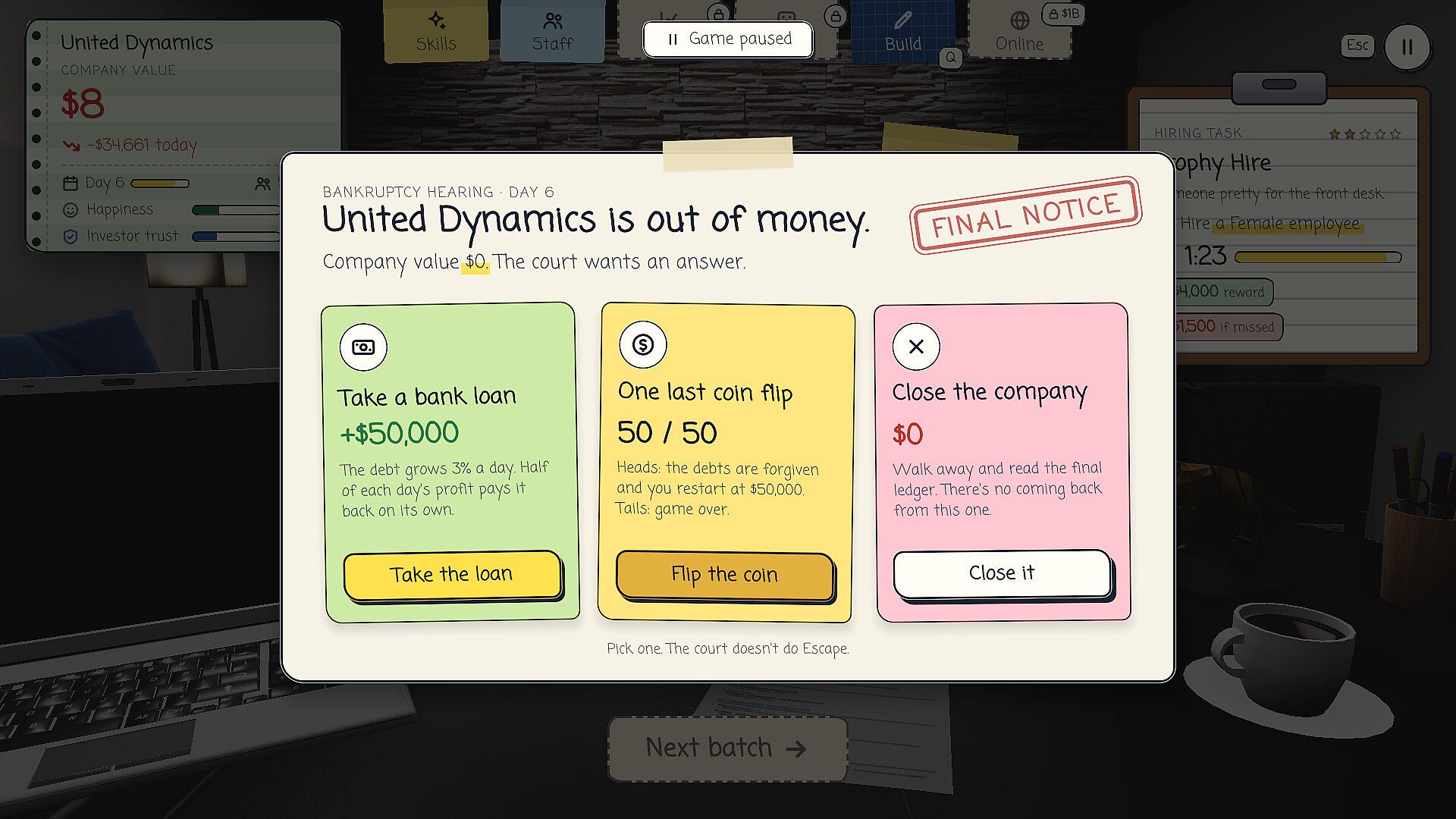
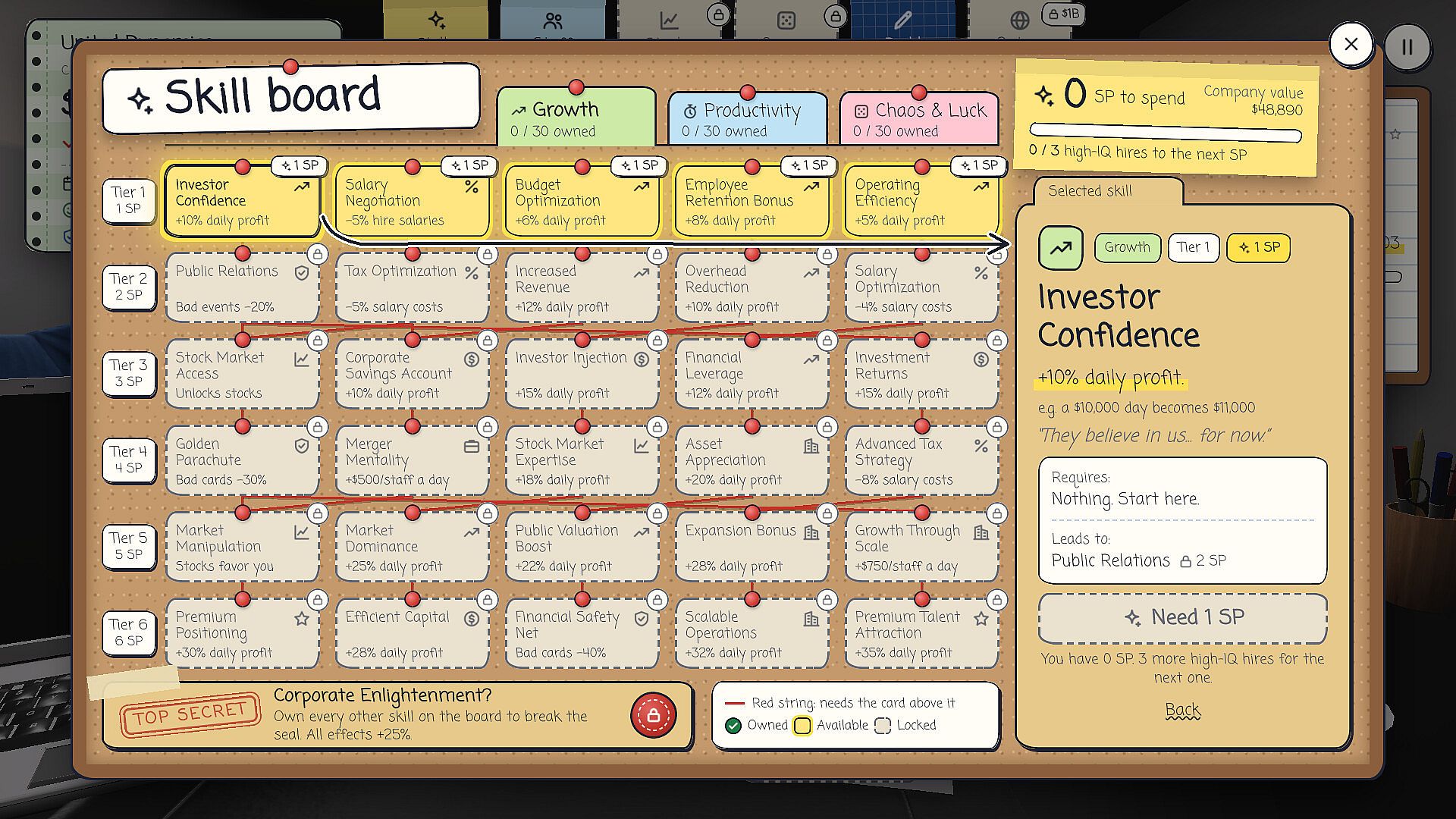
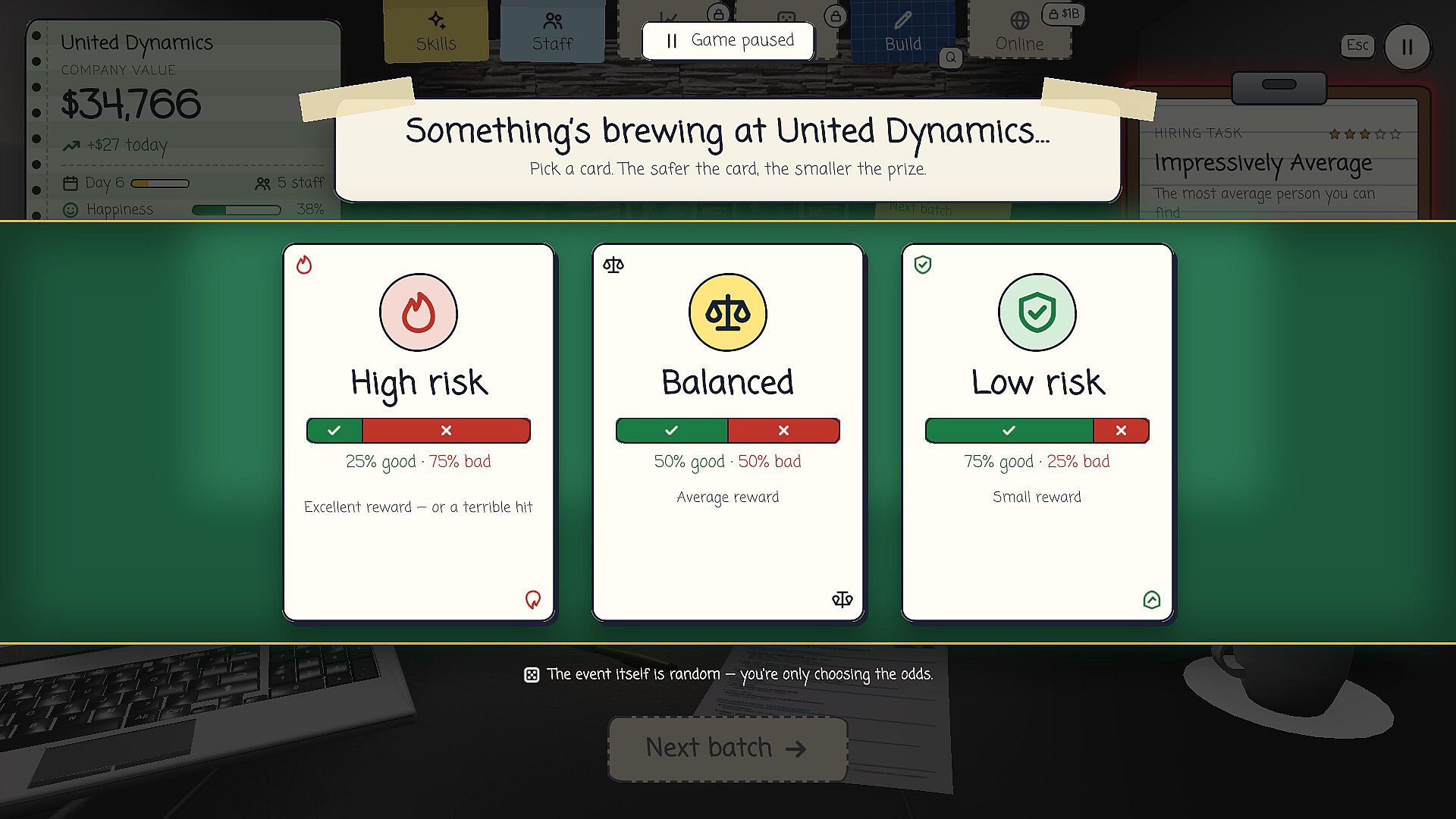
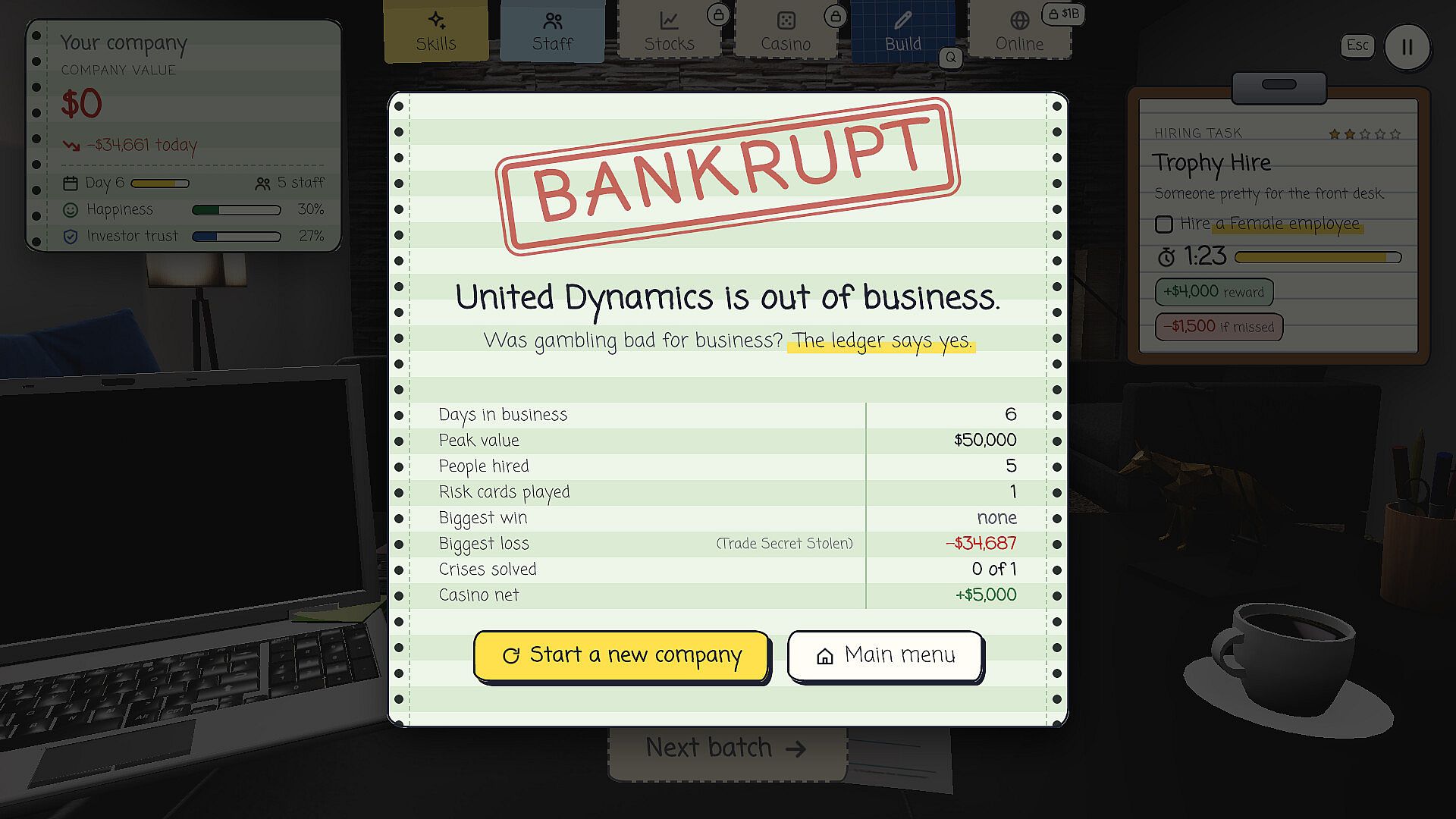
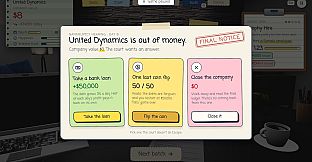
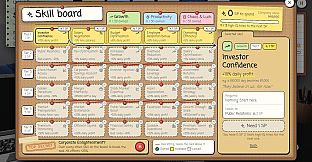
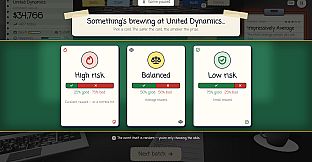
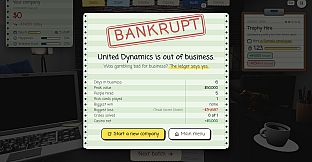
Crises appear on a beige CRT monitor through twenty mini-games including safe cracking, keypad codes, whack-a-mole, math blitz, and pattern memory. Nearly six hundred risk cards present binary choices between caution and aggression. Board meetings occur every ten days, requiring selection of Safe, Stretch, or Moonshot targets. Missing targets repeatedly leads to restructuring. On day five a manager is chosen from three candidates who offer personality-driven advice, demand compensation, and may resign. Ninety-one skills unlock via skill points, a stock market provides additional volatility, and promotions advance the company through tiers up to Billionaire. Reaching zero funds triggers a bankruptcy hearing with options for a loan, an all-in final bet, or permanent closure that deletes the save.
Game Modes
The primary experience unfolds as a single-player office tycoon loop focused on hiring, risk management, and incremental tower construction. A separate online layer activates after reaching one billion dollars, opening six shared cities including London, New York, Tokyo, Istanbul, Dubai, and Shanghai. In these cities players purchase unclaimed land to place pixel-art logos that generate rent. Owned plots can only change hands through blackjack wagers where the challenger must put up one and a half times the current owner's purchase price. A twenty-four-hour protection period follows any transfer before the plot becomes contestable again. This competitive element allows players to target landmarks and climb a rich list while sharing the world with others.
Key Mechanics and Progression
Risk permeates every system. Construction relies solely on gambling proceeds, creating a direct link between betting success and physical expansion. The Heat system adds pressure by escalating consequences for repeated wagers. Crisis mini-games and risk cards introduce quick decision points that can mitigate or amplify losses. Manager interactions add ongoing consequences through personality-specific advice and potential departures. Skill unlocks and the stock market provide avenues for optimization beyond pure gambling. Permanent bankruptcy enforces high stakes, while the city phase shifts focus toward territorial competition and passive income from land holdings.
Is It Worth Playing?
This title suits players who enjoy strategy and simulation games that blend management with deliberate risk-taking. The core loop rewards careful hiring and measured bets while punishing overextension through Heat, board pressure, and potential permanent loss. The tower-building phase offers steady progression through visible upgrades and staff management, and the later city conquest adds a layer of player interaction without requiring real-money transactions. Those drawn to tycoon experiences with built-in volatility and clear win conditions at ten billion dollars will find a focused, self-contained challenge. The Early Access status means the feature set described here forms the current foundation, with cloud saves tied to a Steam account supporting continued play across sessions.











