







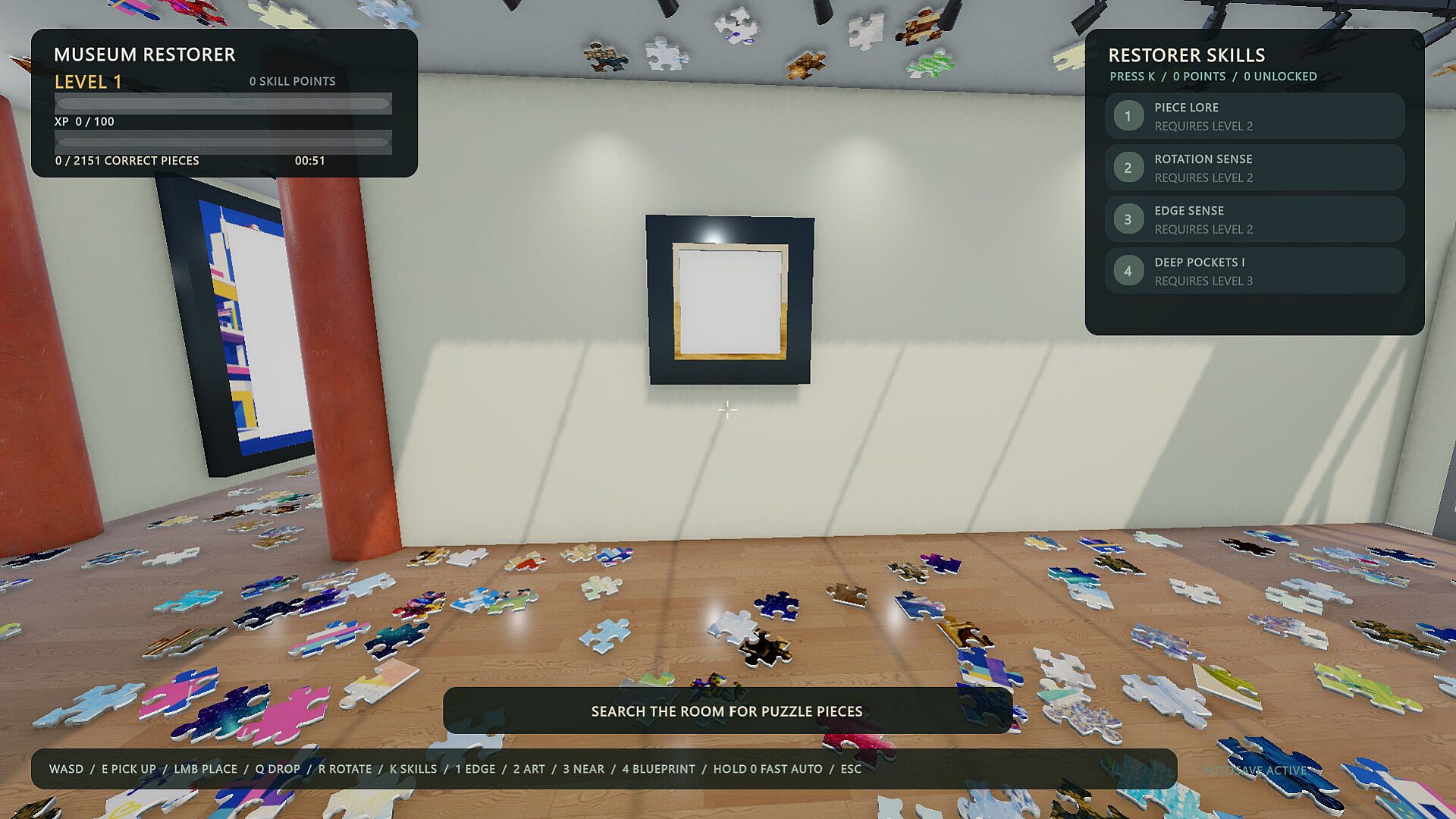
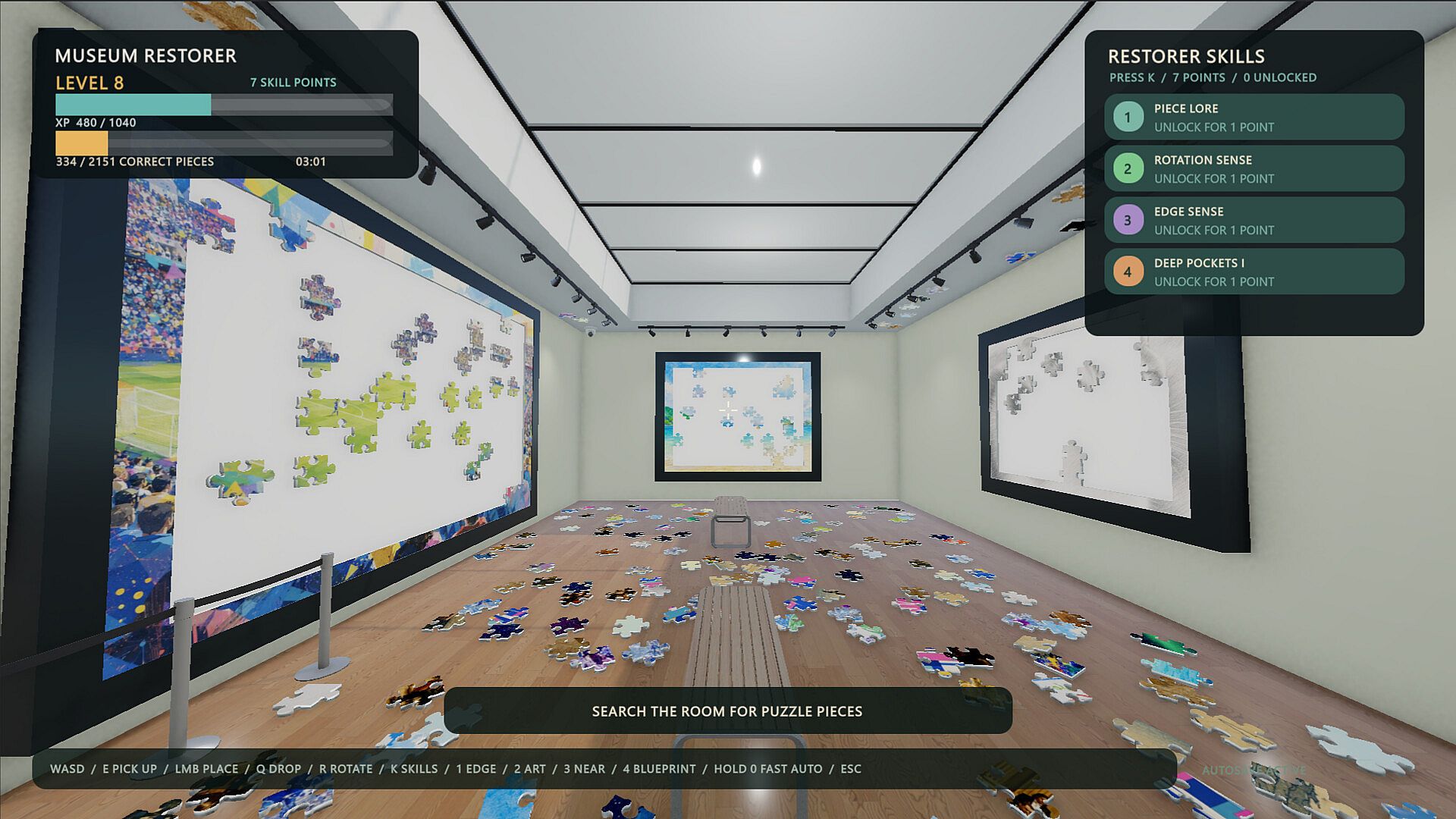
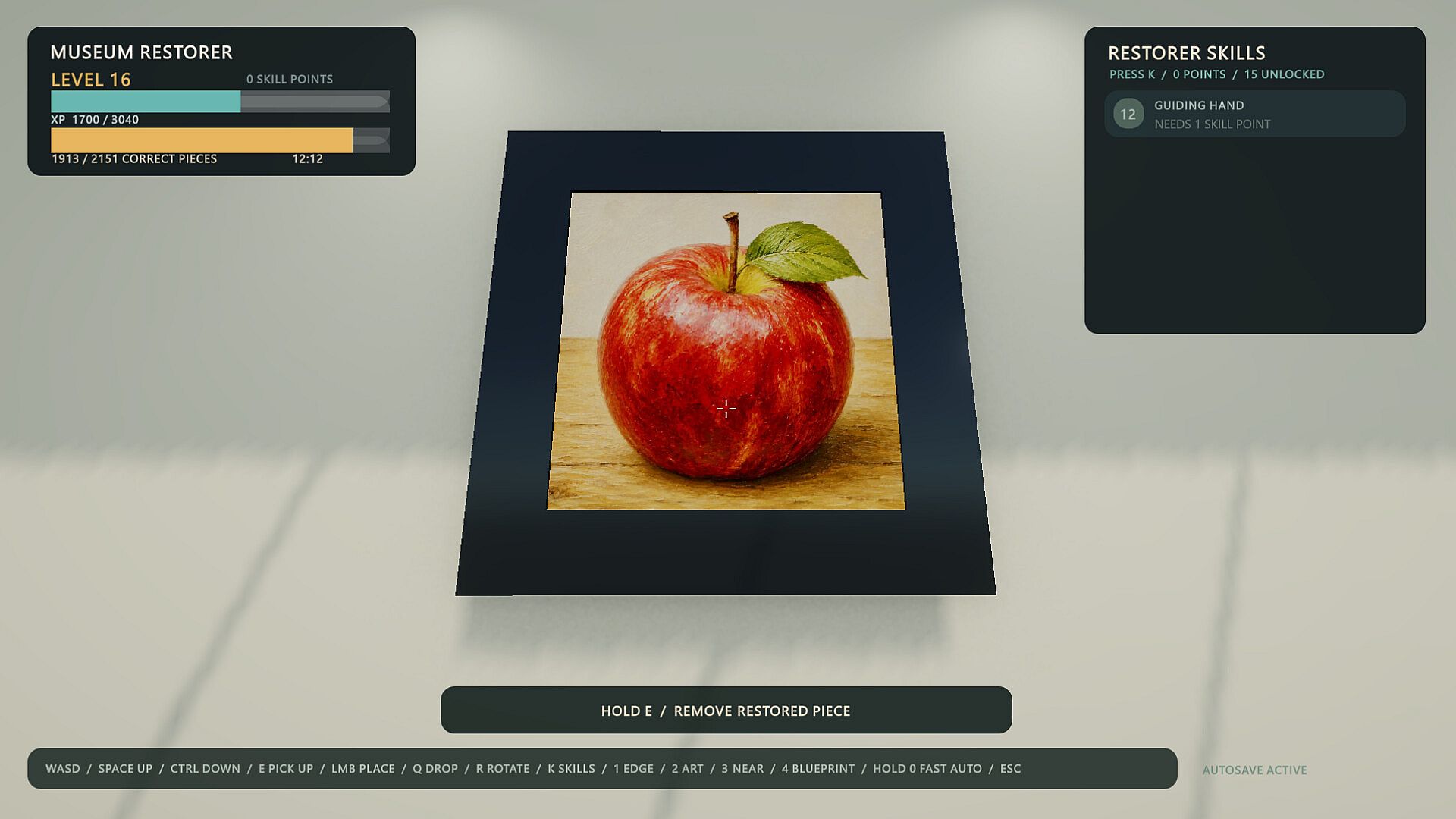
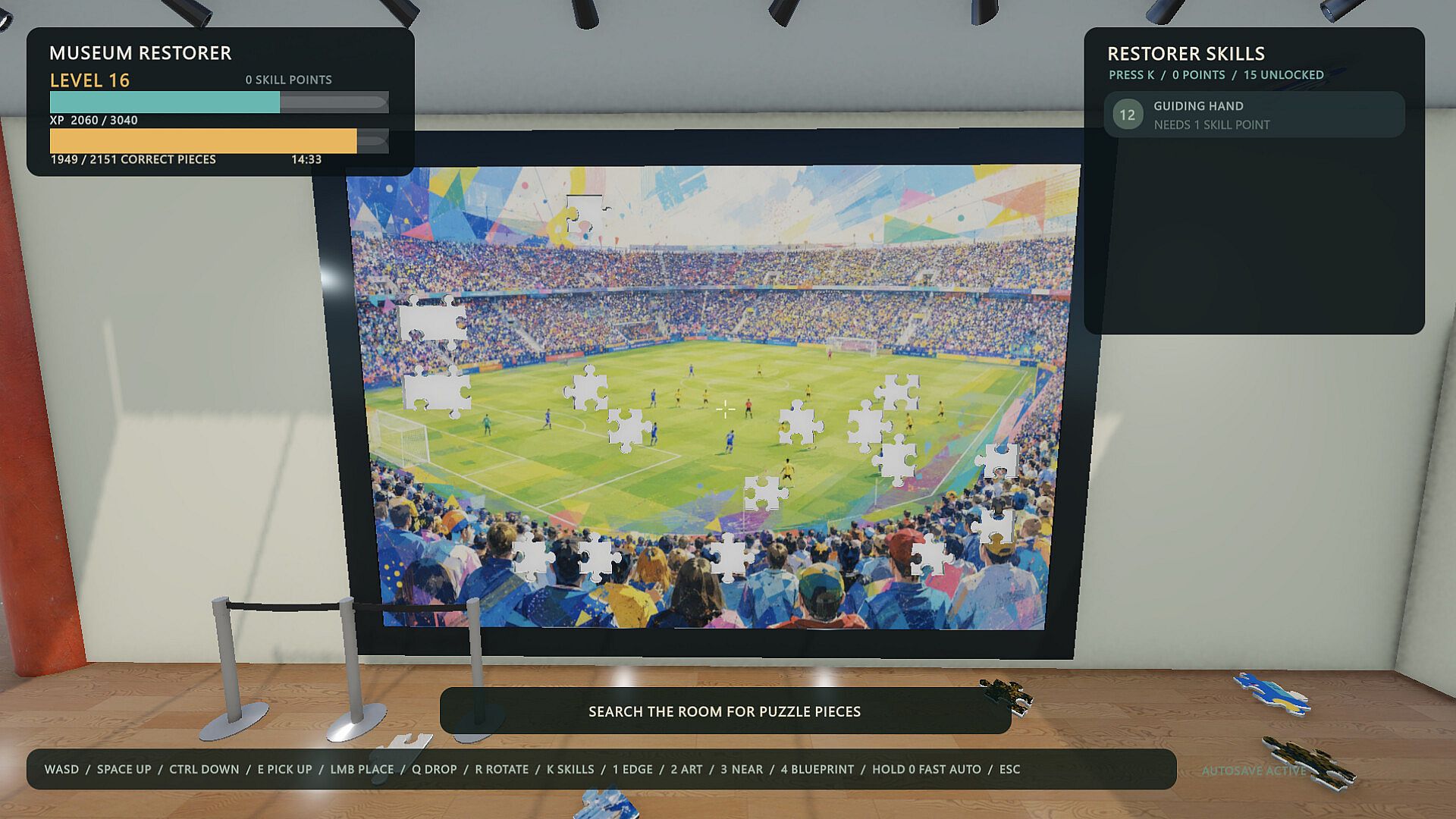
JIGSEUM: Assemble Jigsaws with Magic is a first-person jigsaw puzzle game developed in the indie casual simulation genre for PC. Players move through a quiet museum environment to locate scattered pieces and restore 15 artworks while unlocking magical tools that support the assembly process.
Gameplay
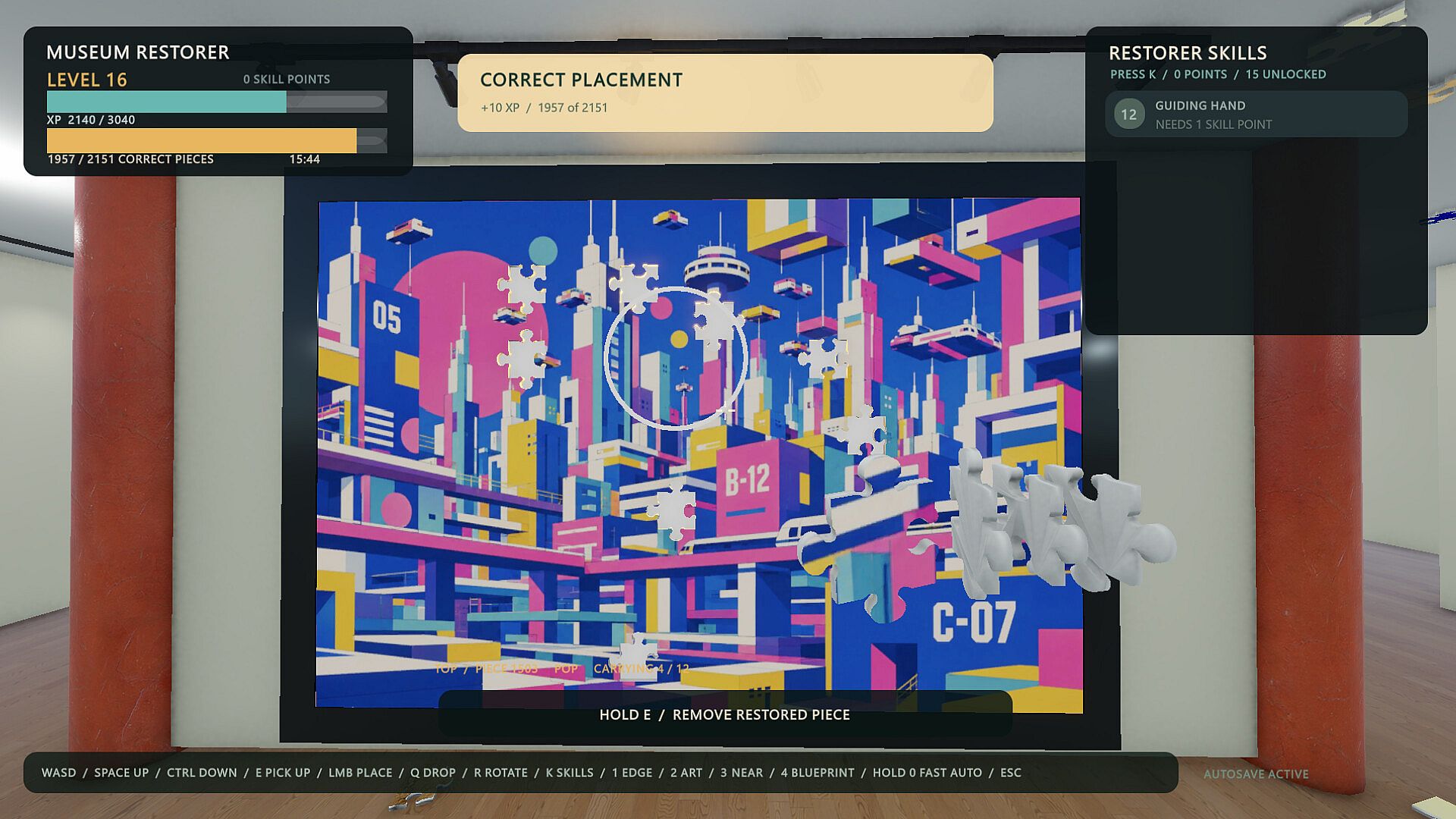
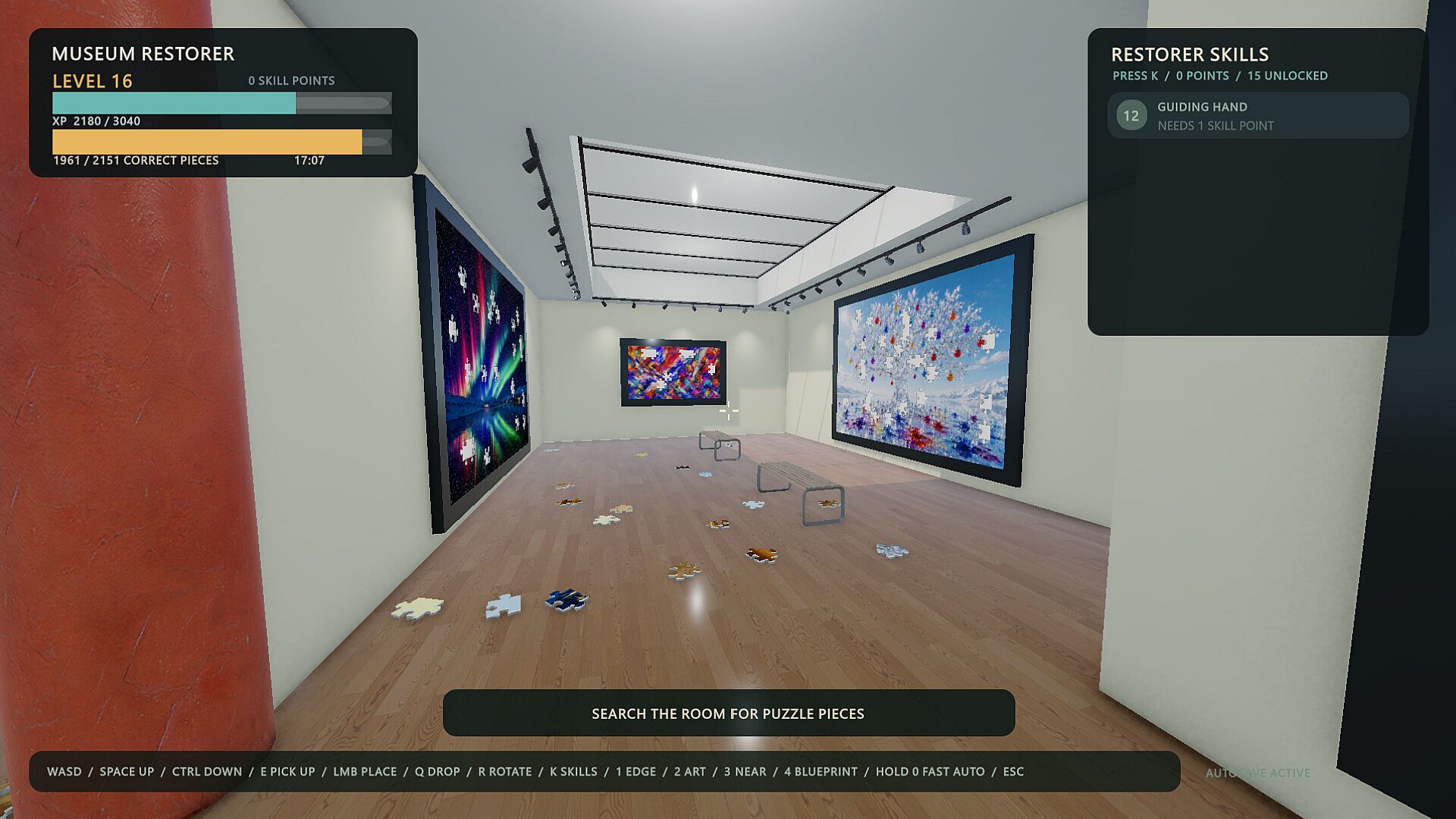
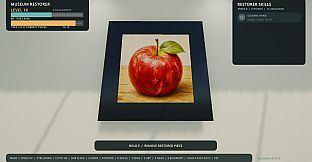
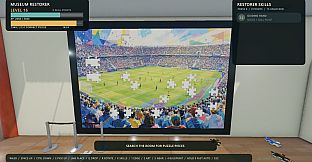
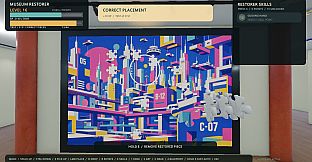
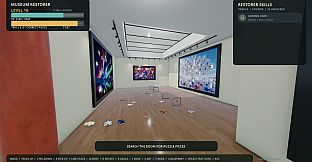
The core loop centers on free movement through exhibition spaces where roughly 2,500 pieces rest on floors, ceilings, and other surfaces. Players pick up multiple pieces at once, rotate them in 90-degree steps, and match them to the correct painting using both shape outlines and visible artwork details. Pieces can be carried to the target frame immediately or set aside for later organization, allowing progress across several paintings during a single visit.
Exploration reveals new locations and piece placements each time the museum is traversed. Completed sections gradually restore color to the displays, turning empty walls into finished works. The system supports flexible pacing, with no timers or forced sequences, so players can compare patterns at leisure or shift focus between different artworks as discoveries occur.
Game Modes
The game operates as a single continuous experience without distinct named modes. Players decide their own structure by focusing on one painting at a time or advancing multiple pieces across several artworks simultaneously. This approach lets individuals tailor sessions around personal preference, whether methodically finishing smaller puzzles first or tackling larger collections over repeated explorations.
Progress carries forward naturally through the museum layout, and each return trip can uncover previously missed pieces or new vantage points for assembly. The absence of separate competitive or timed variants keeps the emphasis on steady, self-directed puzzle solving within the shared environment.
Magic Abilities and Progression
Correct piece placement grants experience points that raise the player's level and unlock magical abilities. Early unlocks include revealing a piece's proper orientation, highlighting edge pieces for easier location, and showing hints directly on the puzzle board. Later abilities expand carrying capacity and grant access to previously unreachable areas of the museum.
Magic begins with modest support and scales in power as levels increase. Stronger spells streamline work on large paintings and open shortcuts or hidden sections, making efficient completion of the full set of 15 artworks more achievable over time. Players earn these tools through regular play rather than separate progression tracks.
Is It Worth Playing?
This title suits players who enjoy relaxed puzzle solving combined with light exploration in a contained setting. The mechanics reward careful observation of shapes and patterns while the magic system gradually reduces friction on bigger tasks. Those who prefer open-ended sessions without pressure from timers or failure states will find the museum layout accommodating for repeated visits and incremental progress.
The experience stays focused on the core loop of finding, carrying, and assembling pieces across 15 varied artworks. Completion brings a sense of gradual restoration to the space, and the leveling system provides ongoing assistance that matches growing familiarity with the layout. It appeals most to fans of casual simulation games centered on methodical puzzle work rather than fast action or narrative depth.











