







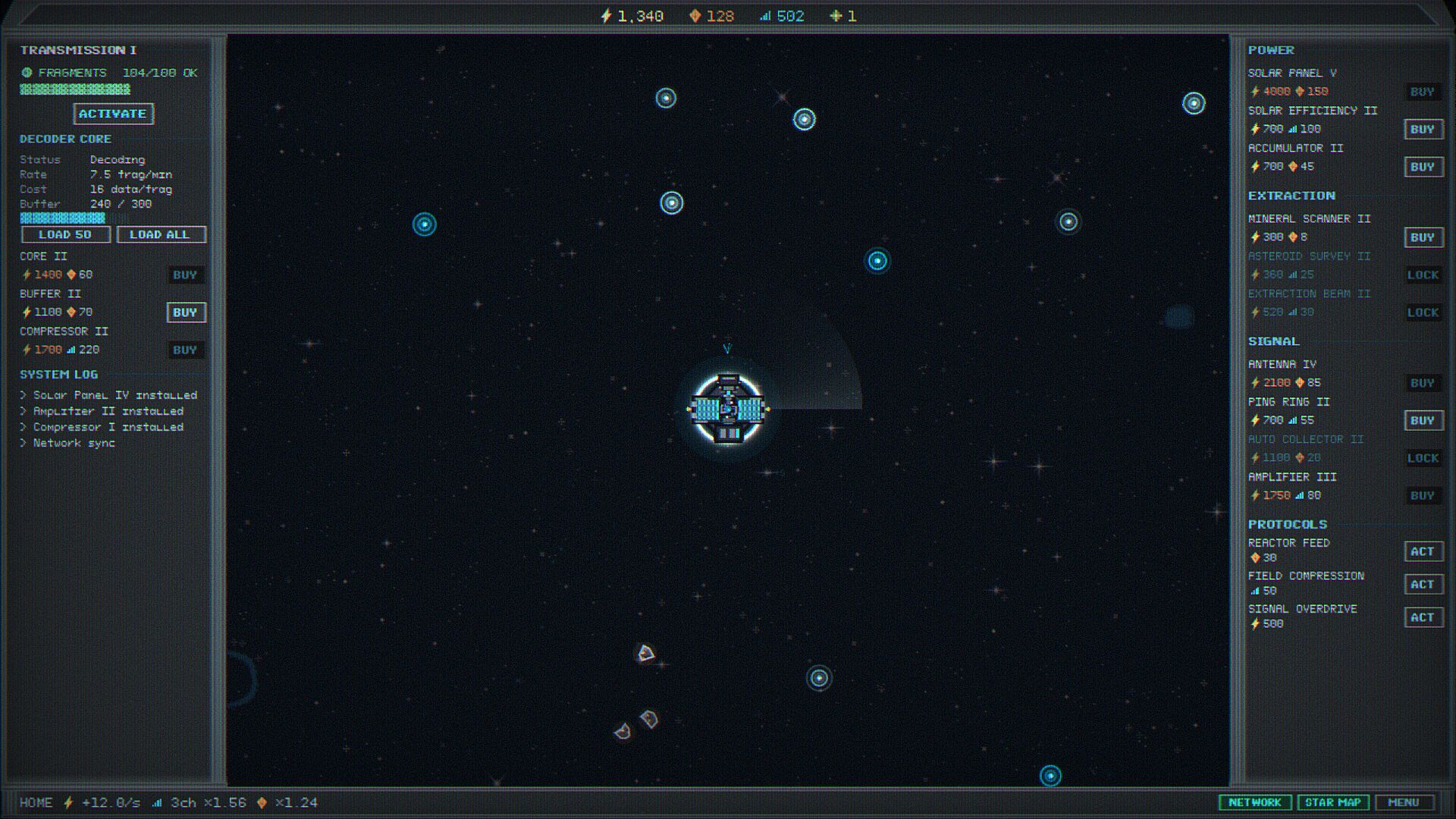
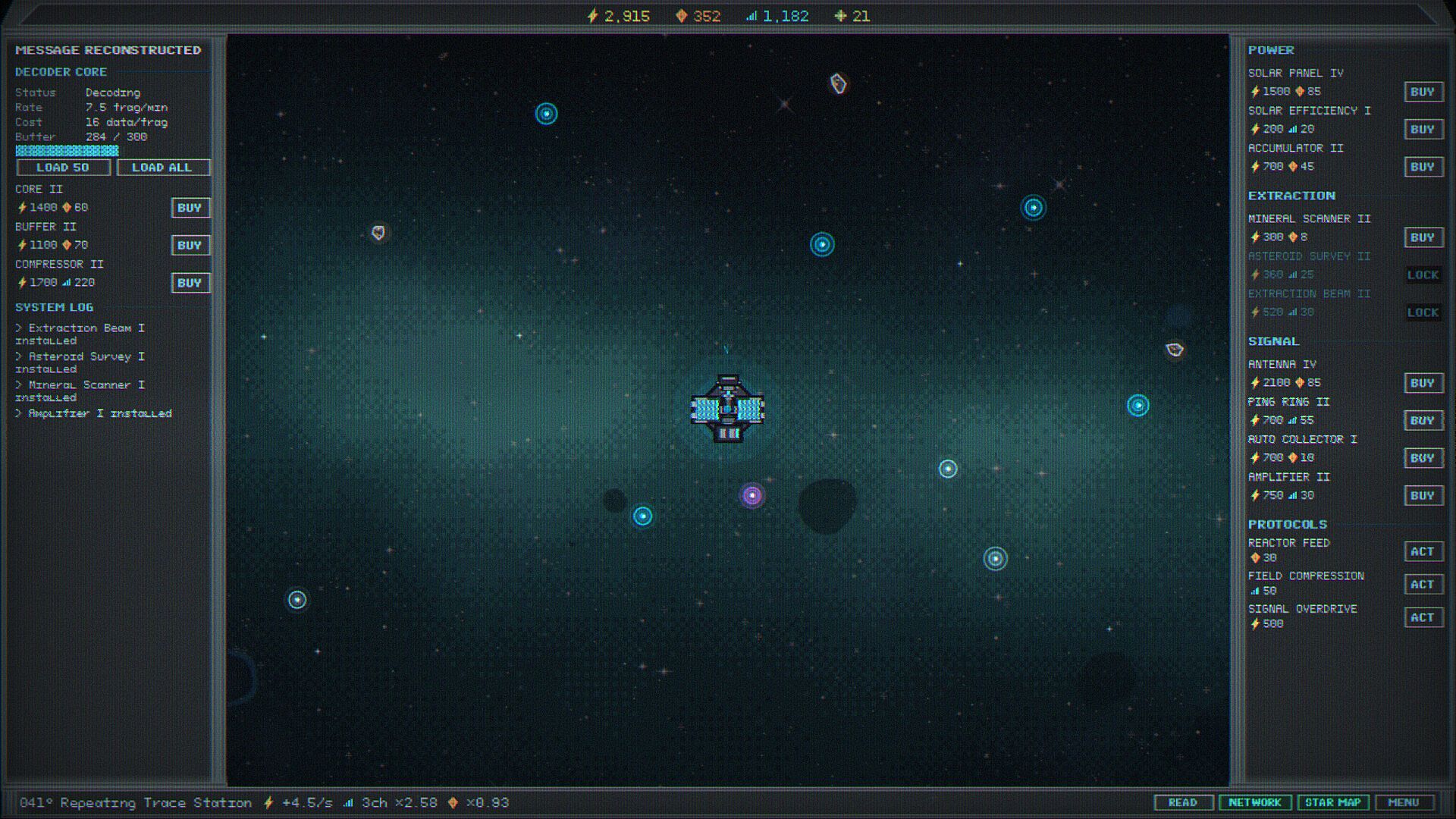
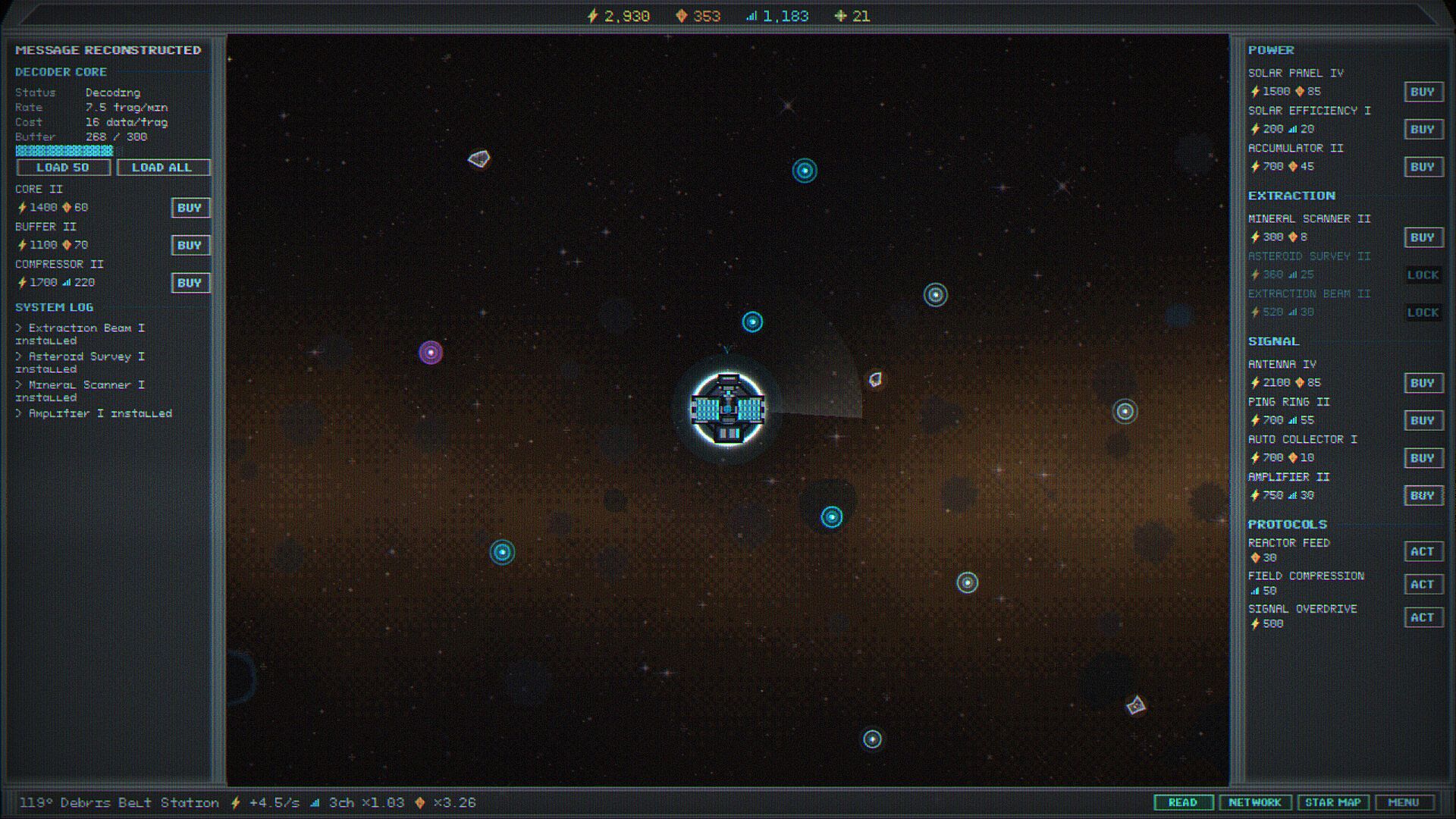
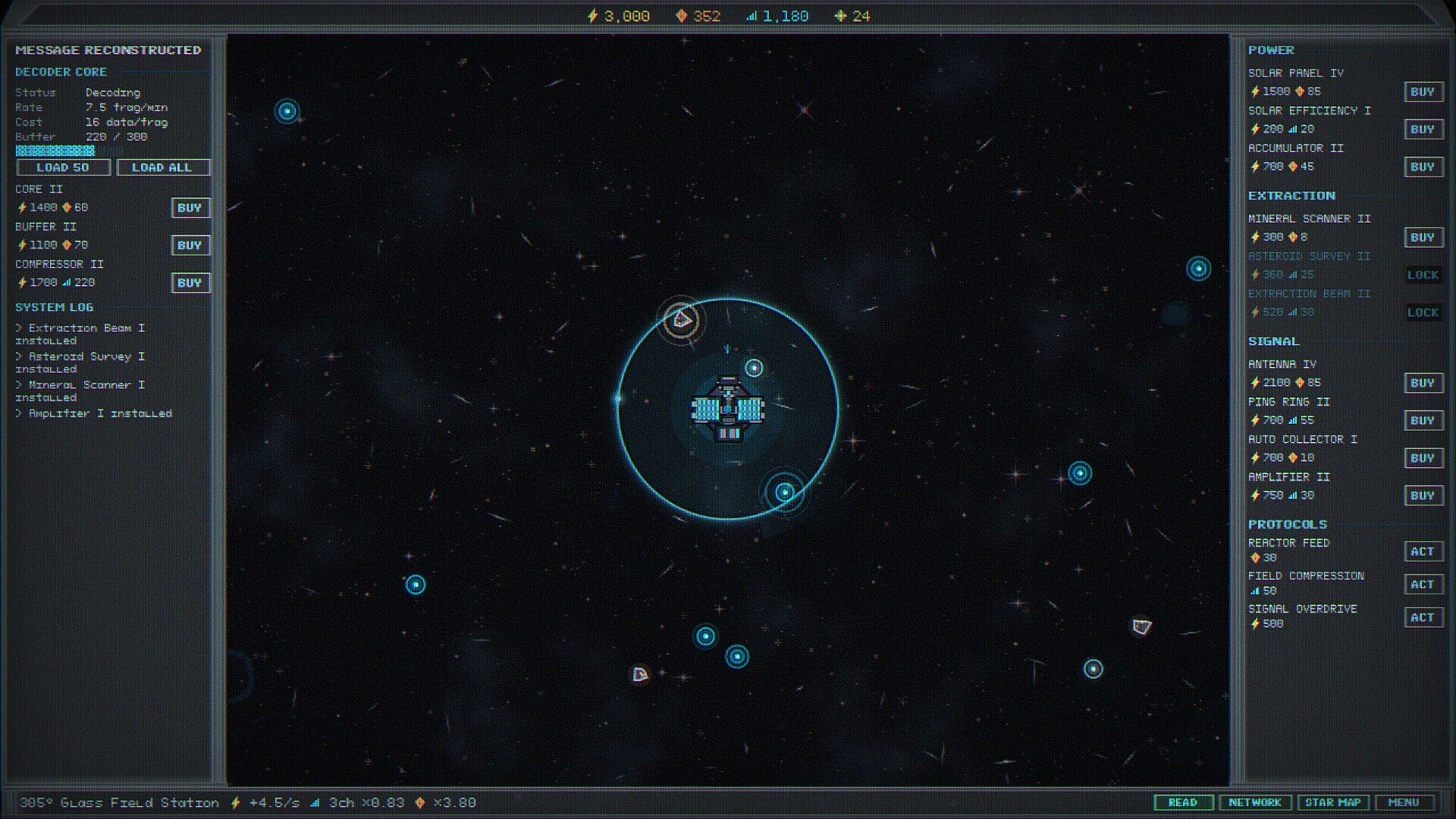
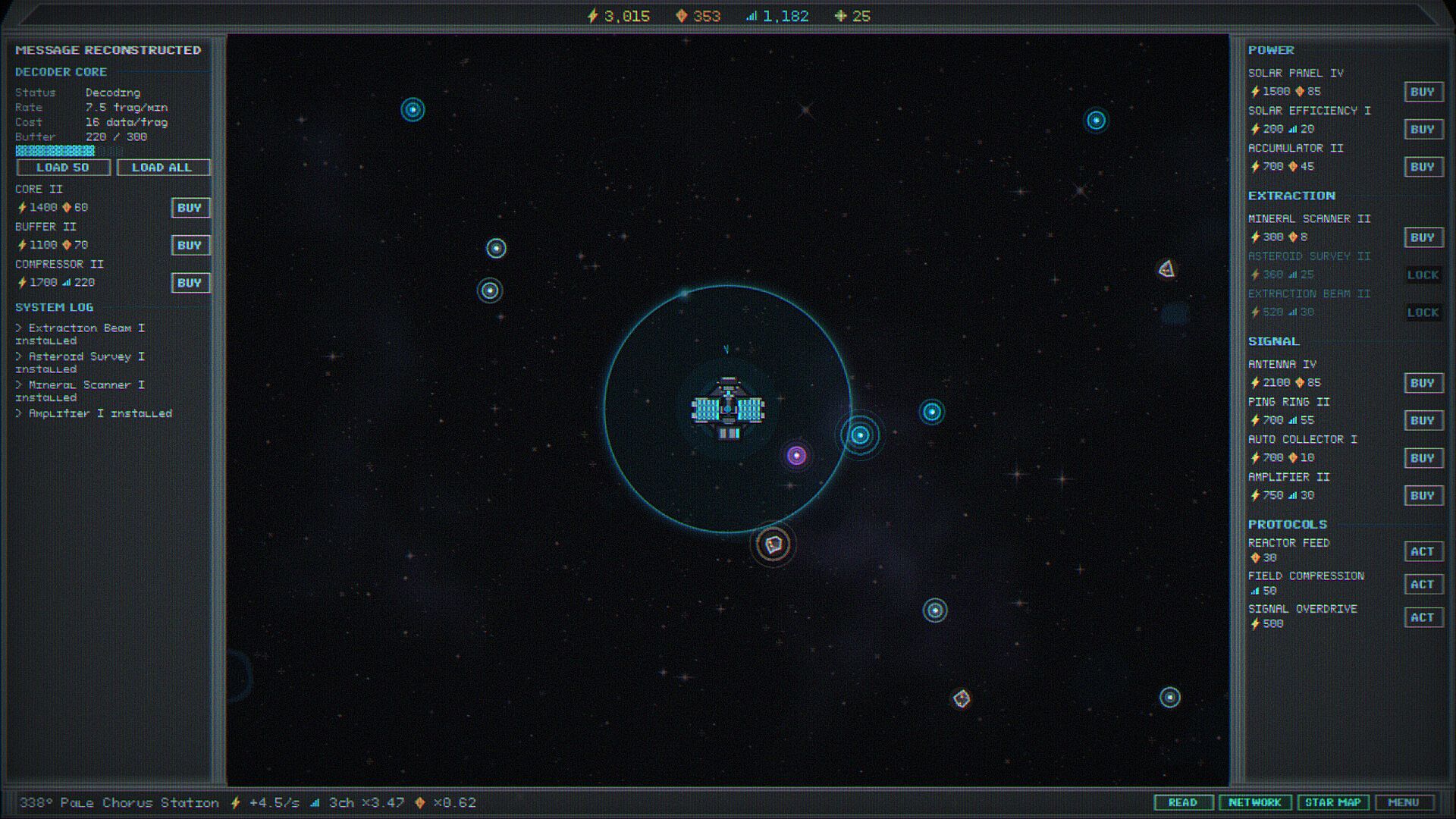
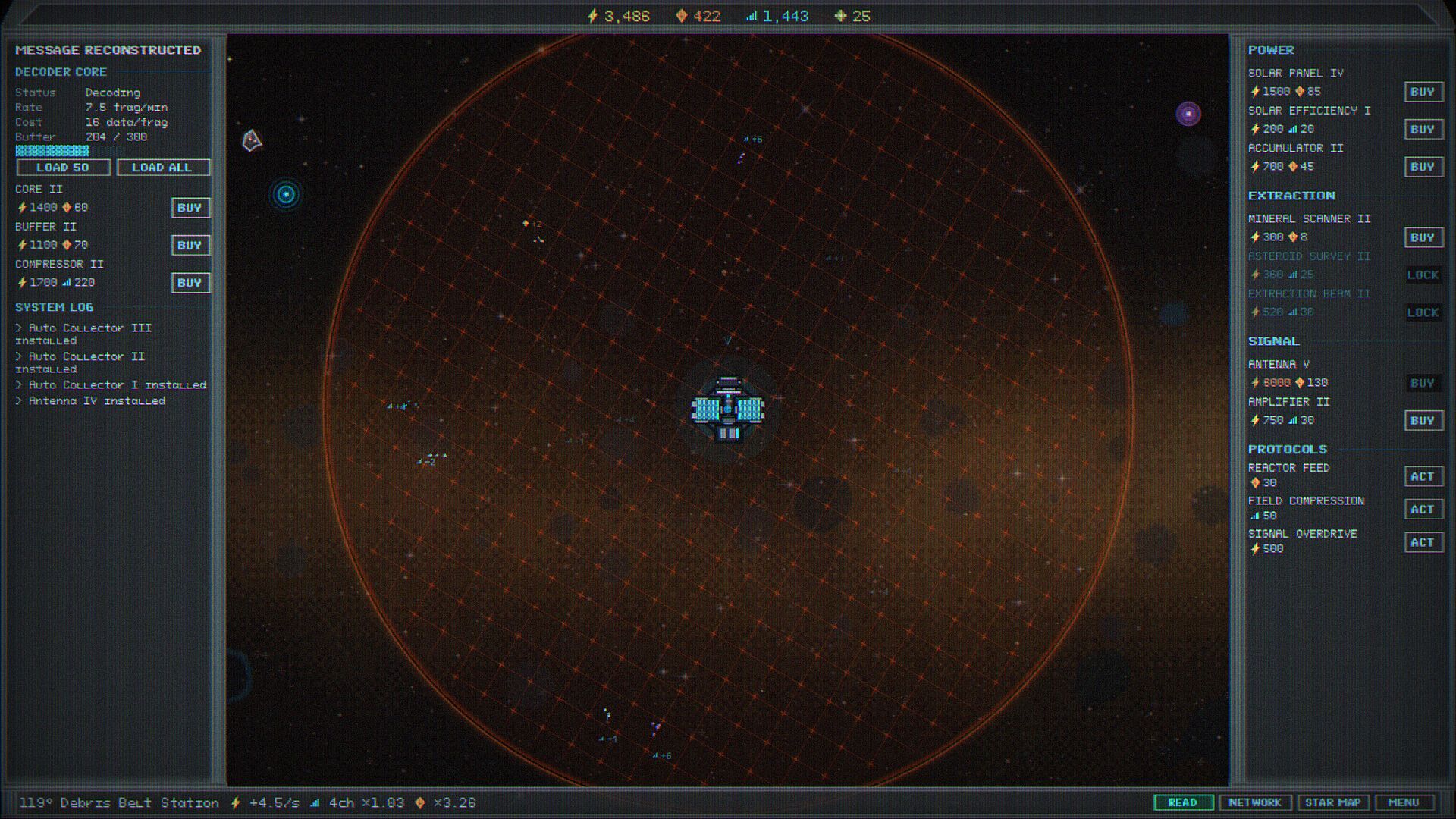
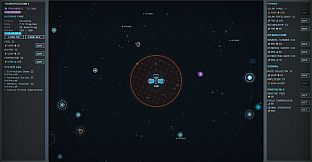
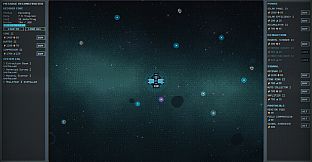
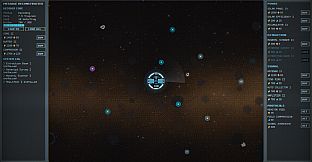
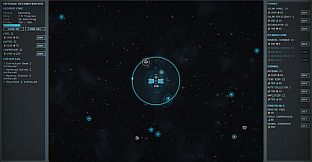
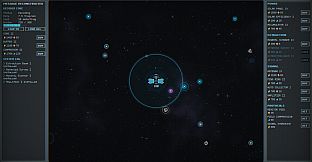
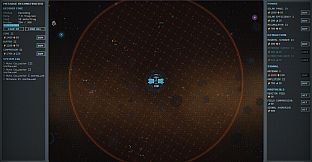
Long Watch is an indie simulation game for PC that blends idle and incremental mechanics into a focused single-player experience. Players restore a relay station that has remained offline for thousands of years, starting with minimal resources and gradually restoring functionality through power generation, signal recovery, and station reconstruction.
Gameplay
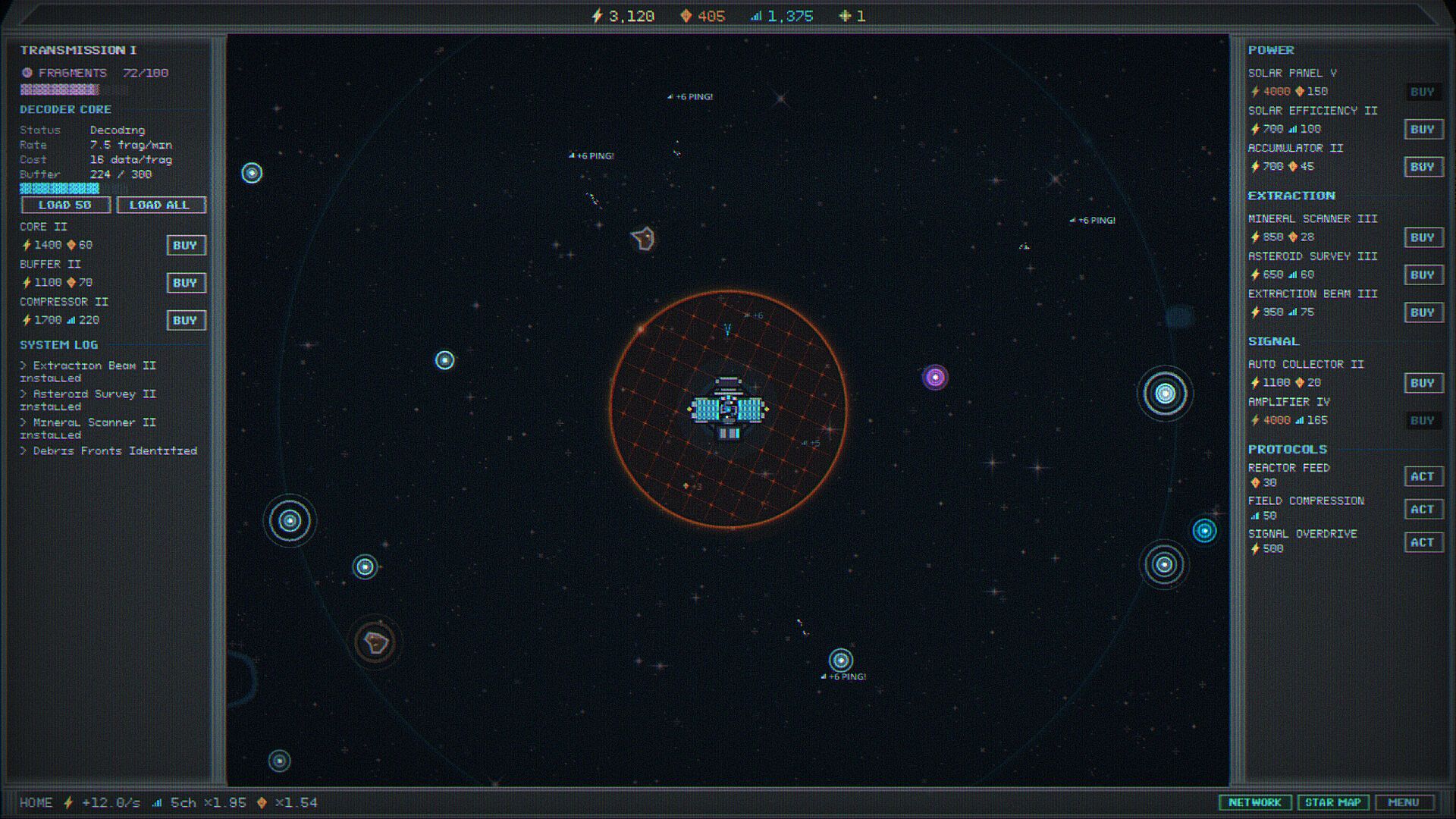
The core loop centers on bringing the relay back online. Early stages require hands-on effort to generate power, collect drifting signals from deep space, and gather resources to rebuild the station section by section. Reconstructed signals provide fragments of the station's history, unlocking new systems as progress continues. Resource management stays central, with each recovered element feeding into further repairs and expansions.
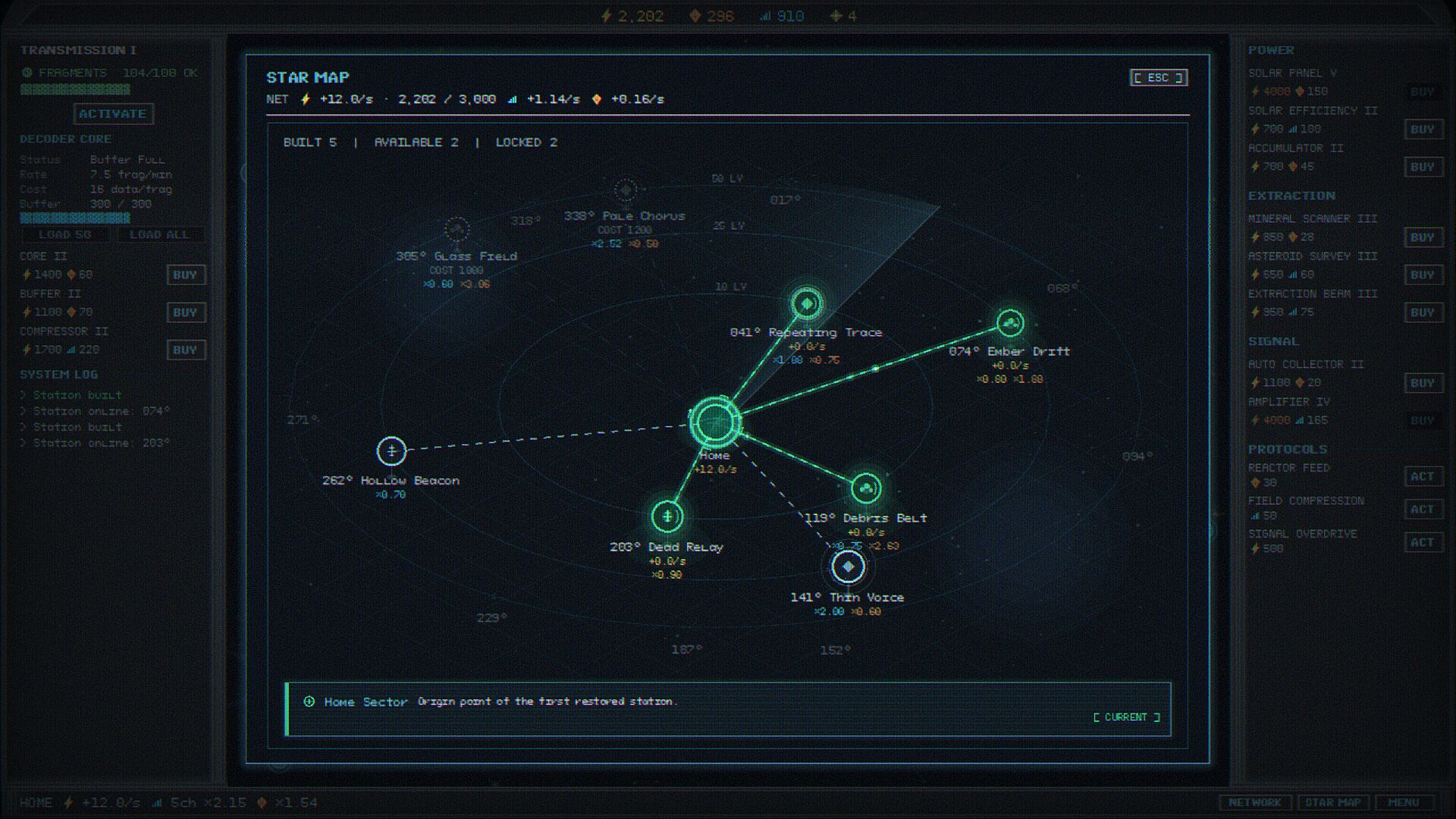
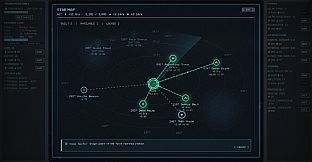
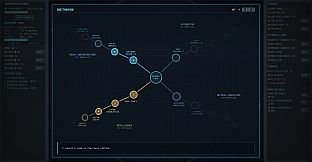
Expansion forms a key part of the experience. A single station serves as the starting point, but players extend operations into new sectors by establishing remote relay stations. These additions create a growing network that handles resource production and signal processing across multiple sites. Different sectors present unique conditions that influence how efficiently the network operates, while upgrades streamline further growth and reduce the time needed for expansion.
Automation gradually shifts the focus. Initial play involves direct manual control over station functions and resource collection. As the network scales, automated systems take over routine tasks, allowing attention to move toward strategic upgrades, broader expansion planning, and overall system oversight. This transition keeps the experience engaging without requiring constant direct input.
Game Modes
Long Watch operates as a single continuous experience rather than offering distinct game modes. The structure follows a clear progression from initial manual startup through network building to full automation, all within one cohesive campaign. There are no separate multiplayer options, competitive modes, or alternate scenarios; the emphasis remains on the incremental development of the relay network in a solitary deep-space setting.
Progression and Automation
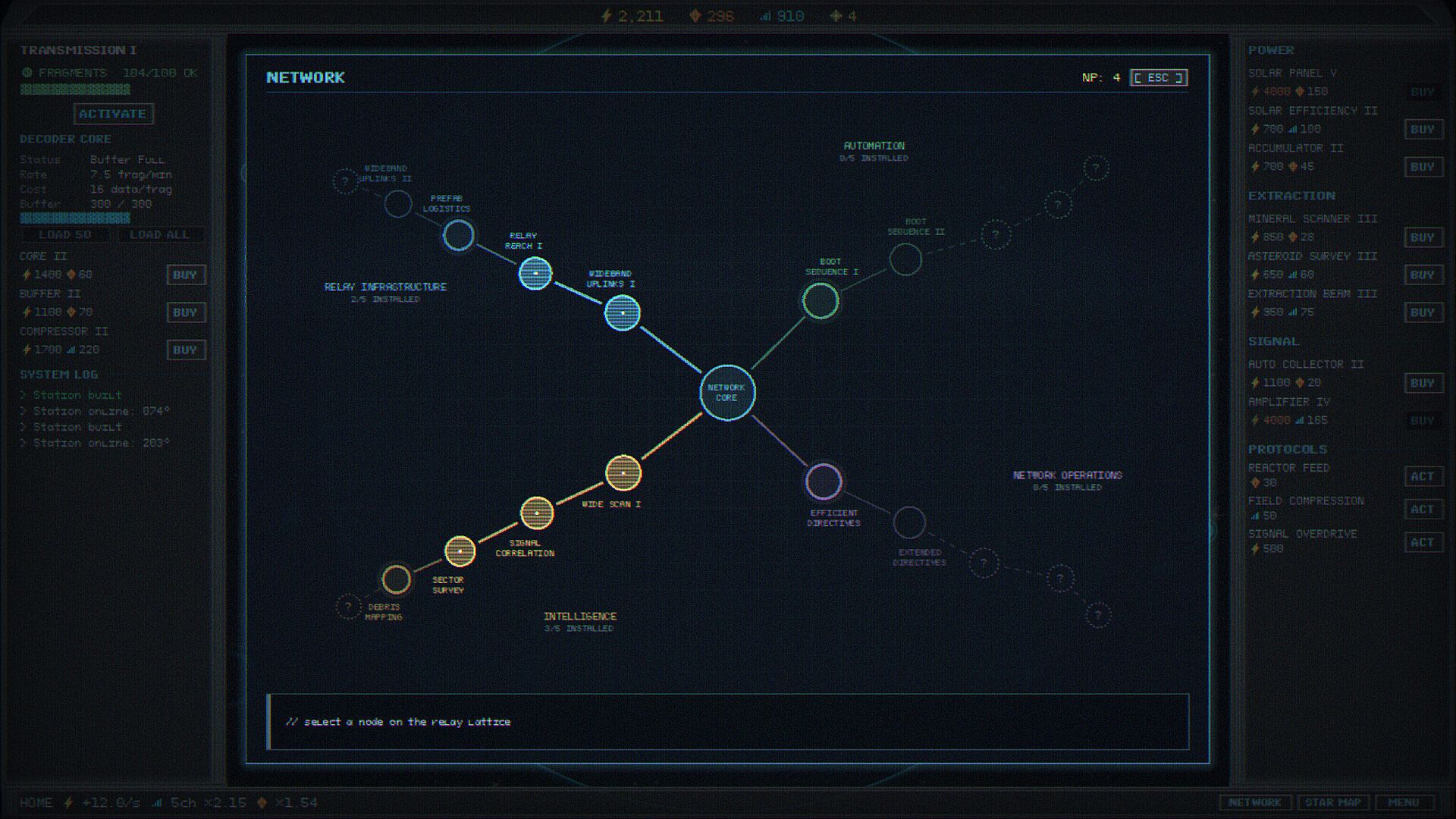
Progression ties directly to signal reconstruction and network growth. Each decoded message reveals more about the station's past while enabling additional systems to come online. Resource gathering supports both immediate repairs and long-term expansion, creating a steady sense of advancement. The shift toward automation reduces repetitive actions over time, freeing players to concentrate on optimization and scaling the network across sectors.
The game maintains a compact scope with a defined beginning and end. Players move through stages of increasing complexity without open-ended grinding or endless loops, focusing instead on completing the relay restoration and network establishment.
Is It Worth Playing?
Long Watch suits players who enjoy idle and incremental simulation games with a structured narrative arc. The mechanics emphasize steady resource management, signal decoding, and network expansion in a single-player format on PC. Those seeking a self-contained experience that transitions from hands-on operation to automated oversight will find the core loop consistent with the described systems. The absence of additional modes or external content keeps the focus narrow and deliberate, appealing to fans of deliberate progression rather than broad feature sets.











