



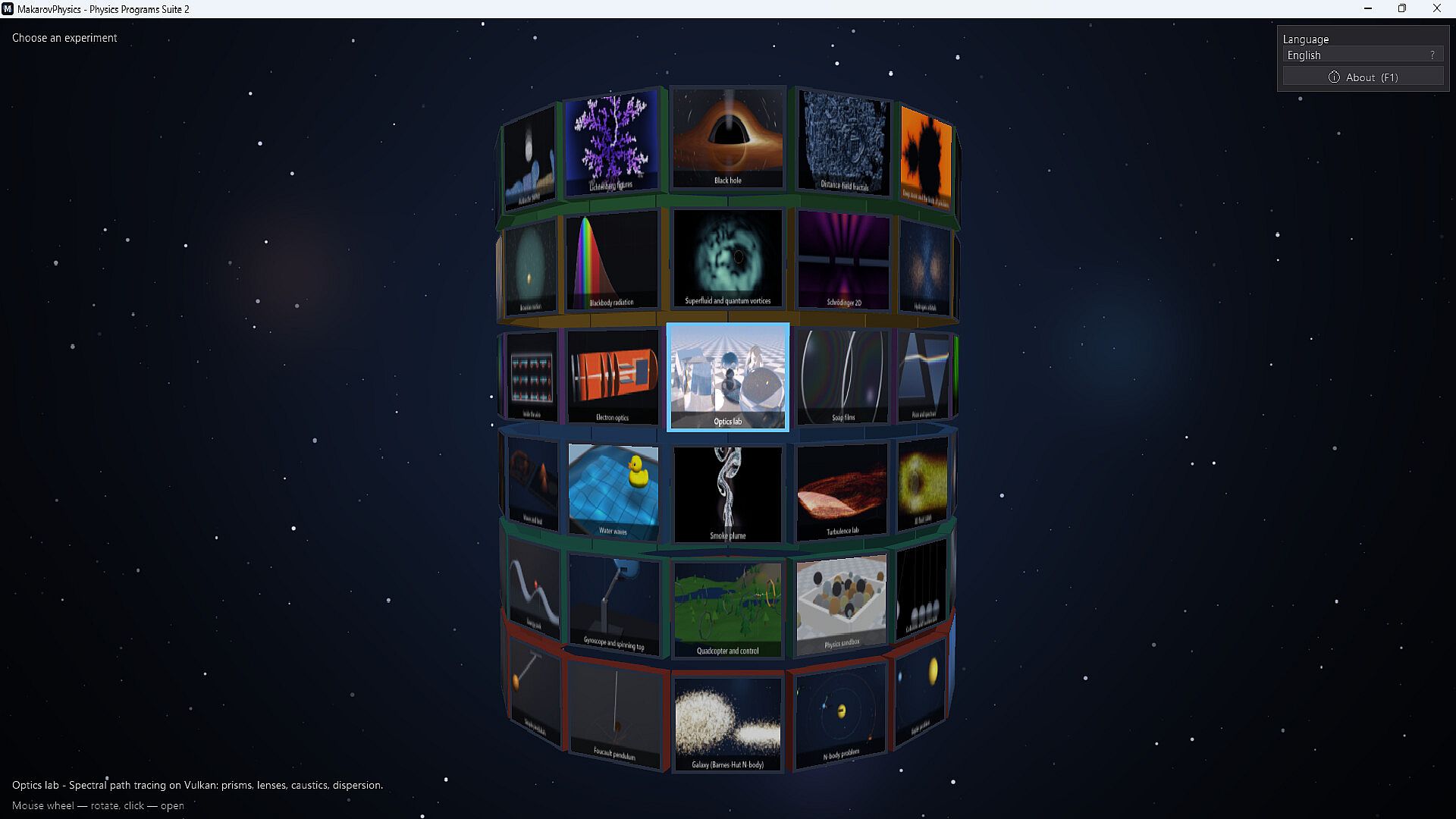
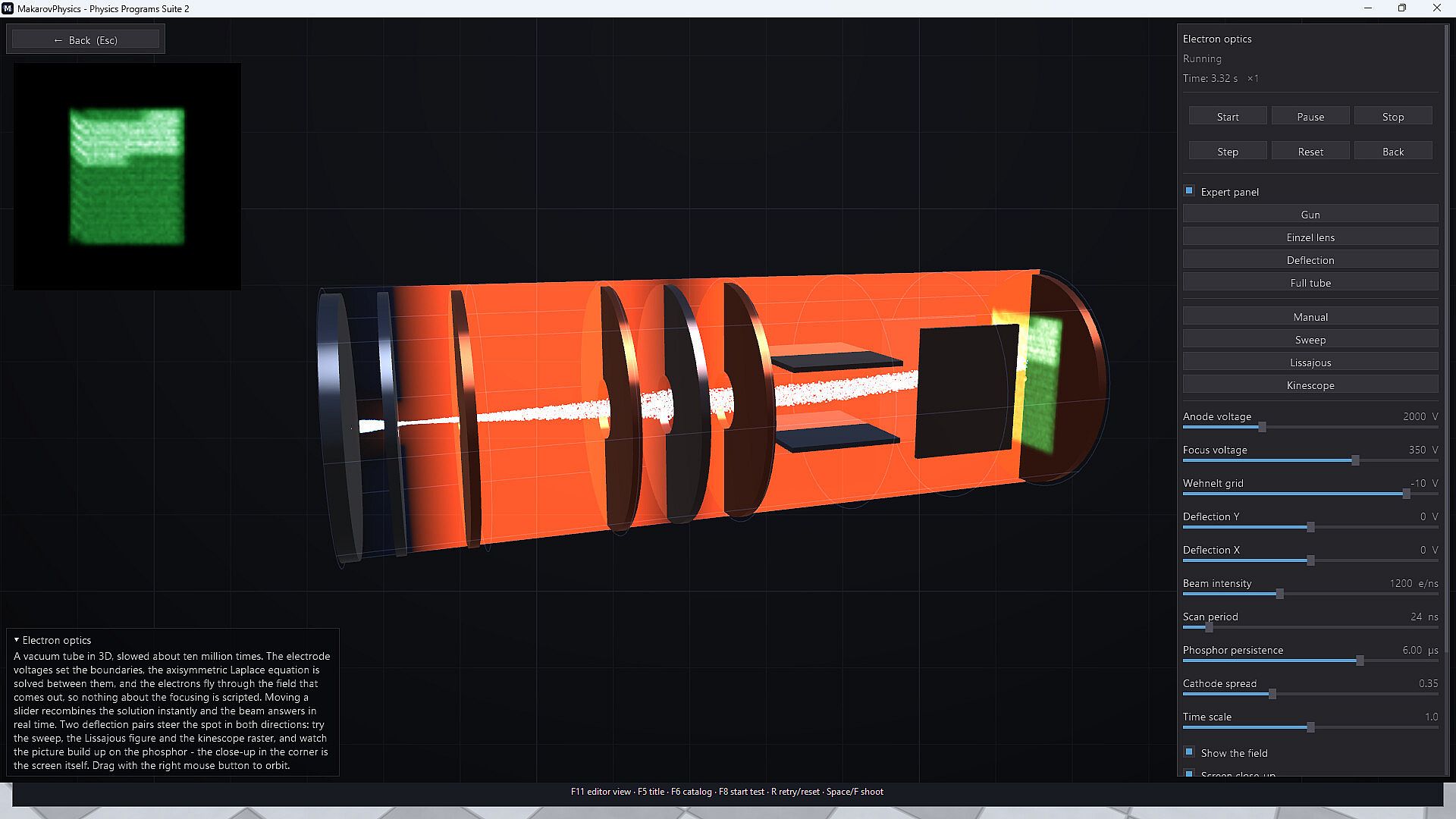
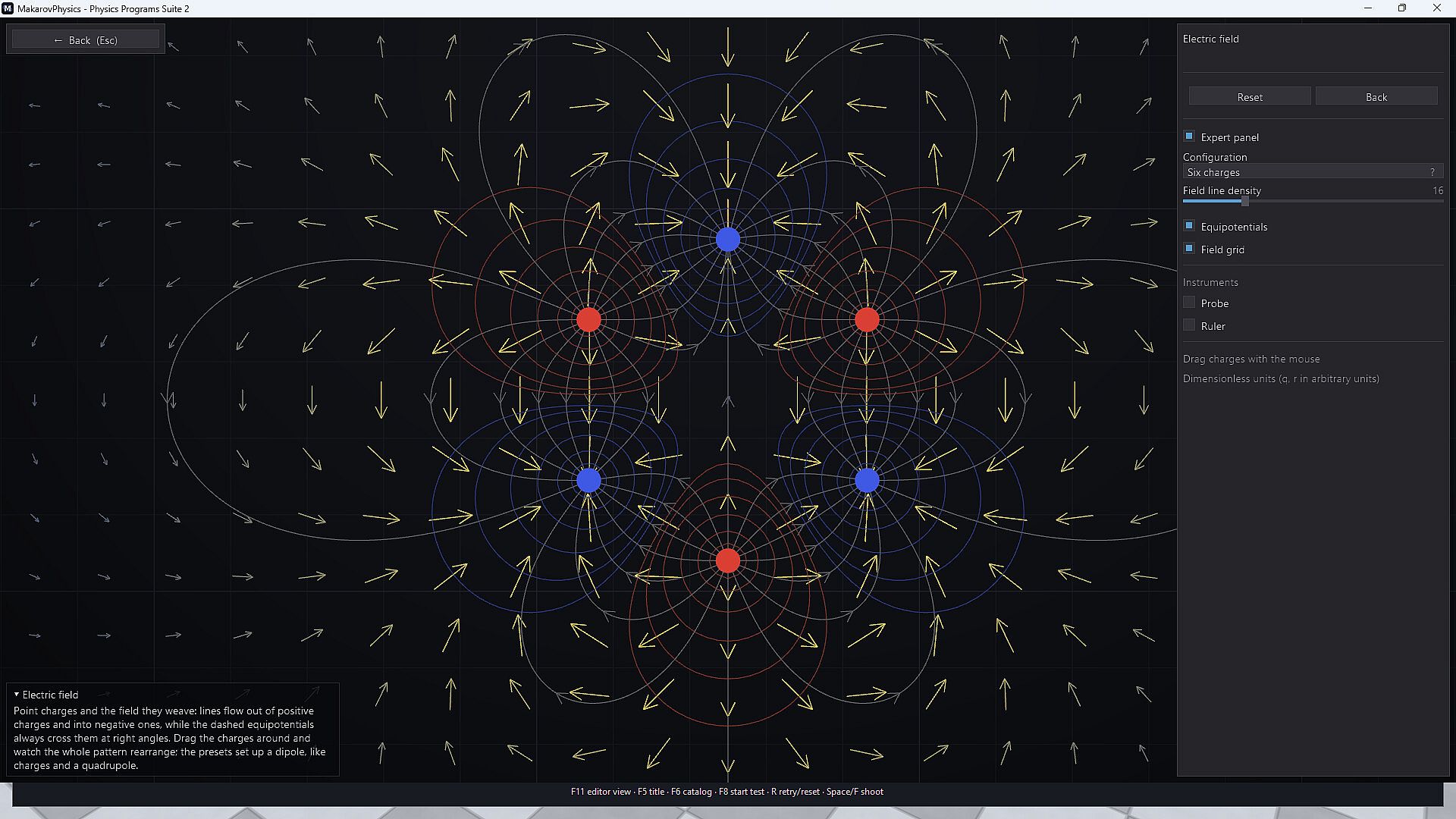
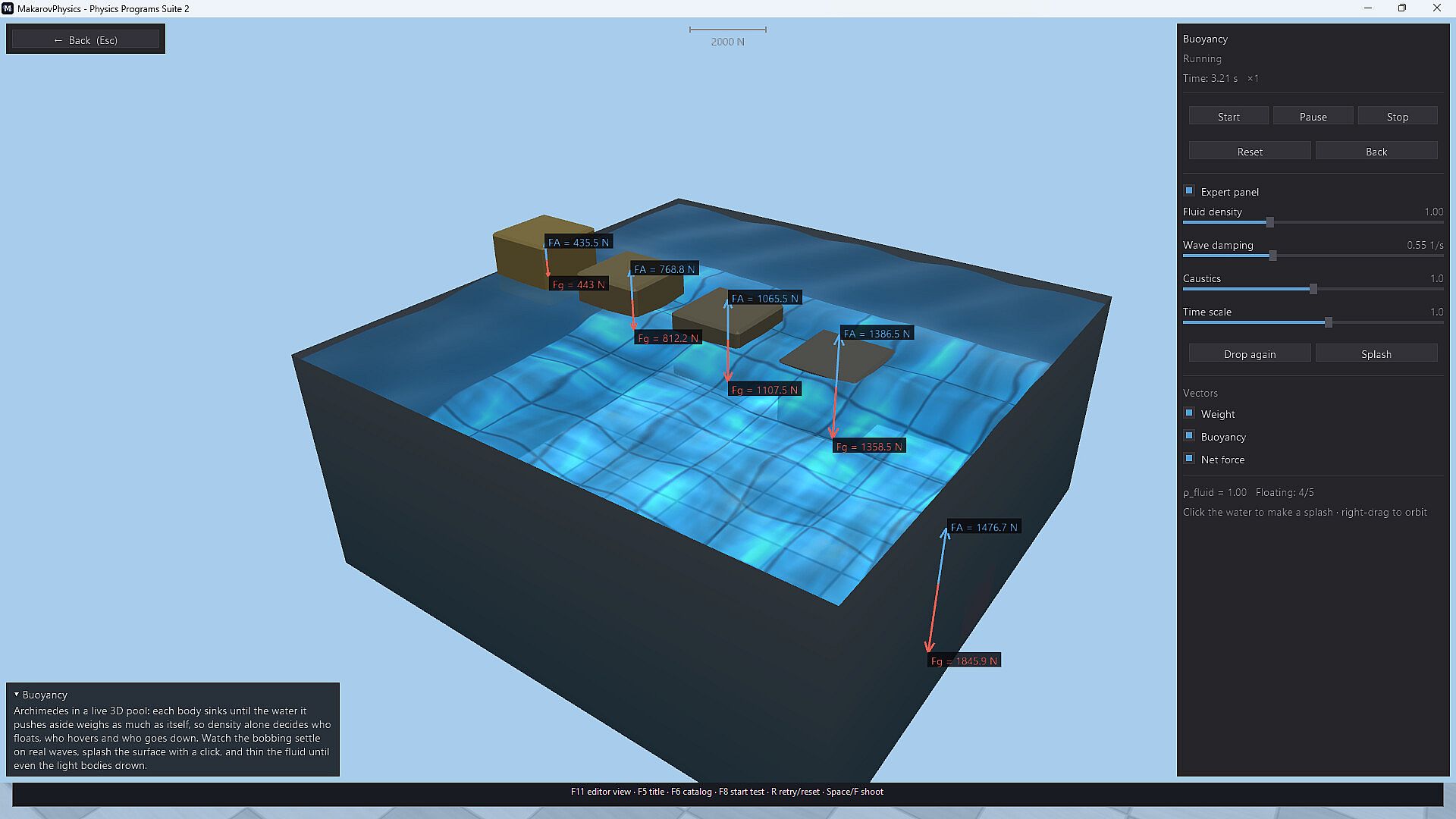
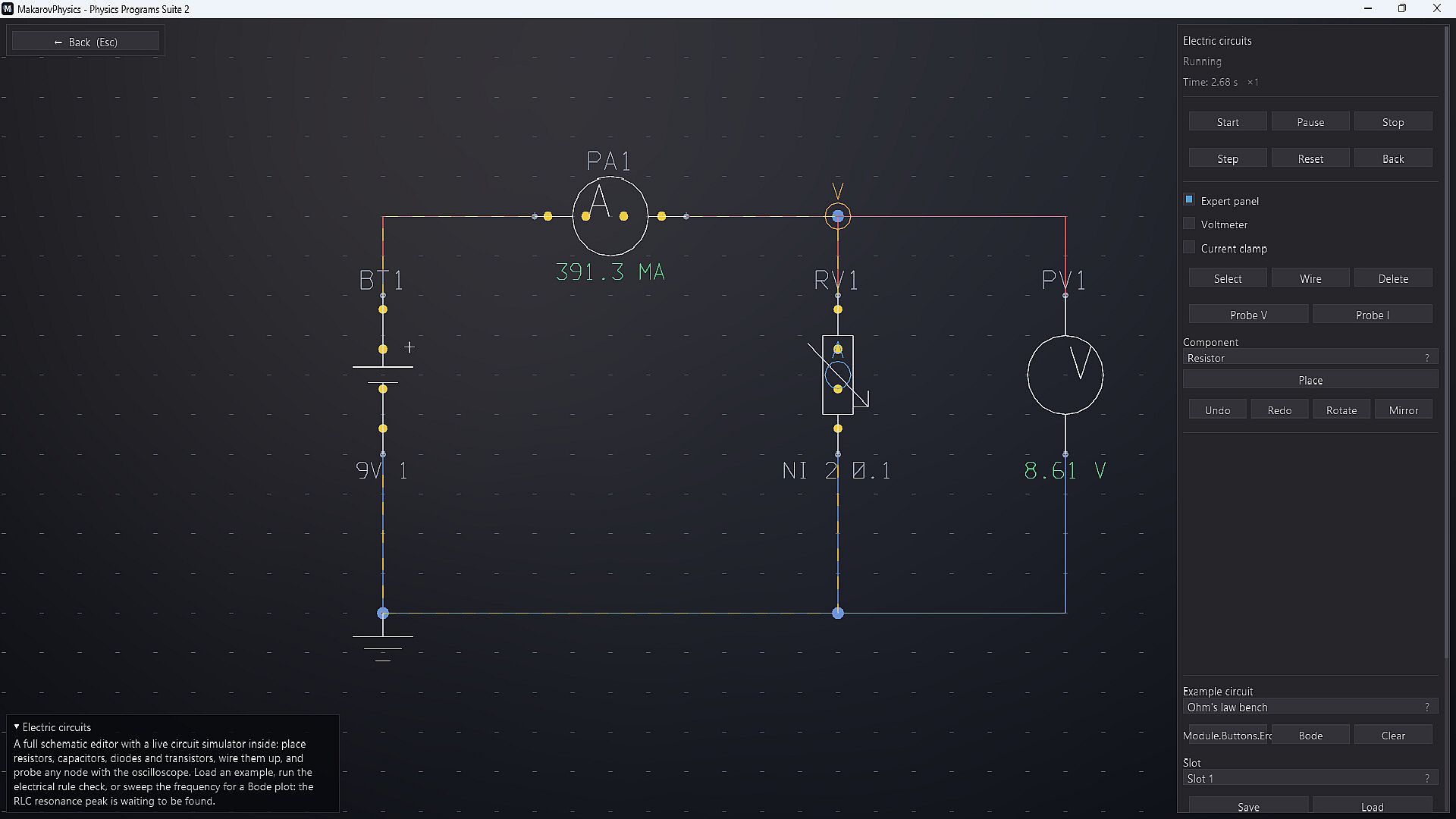
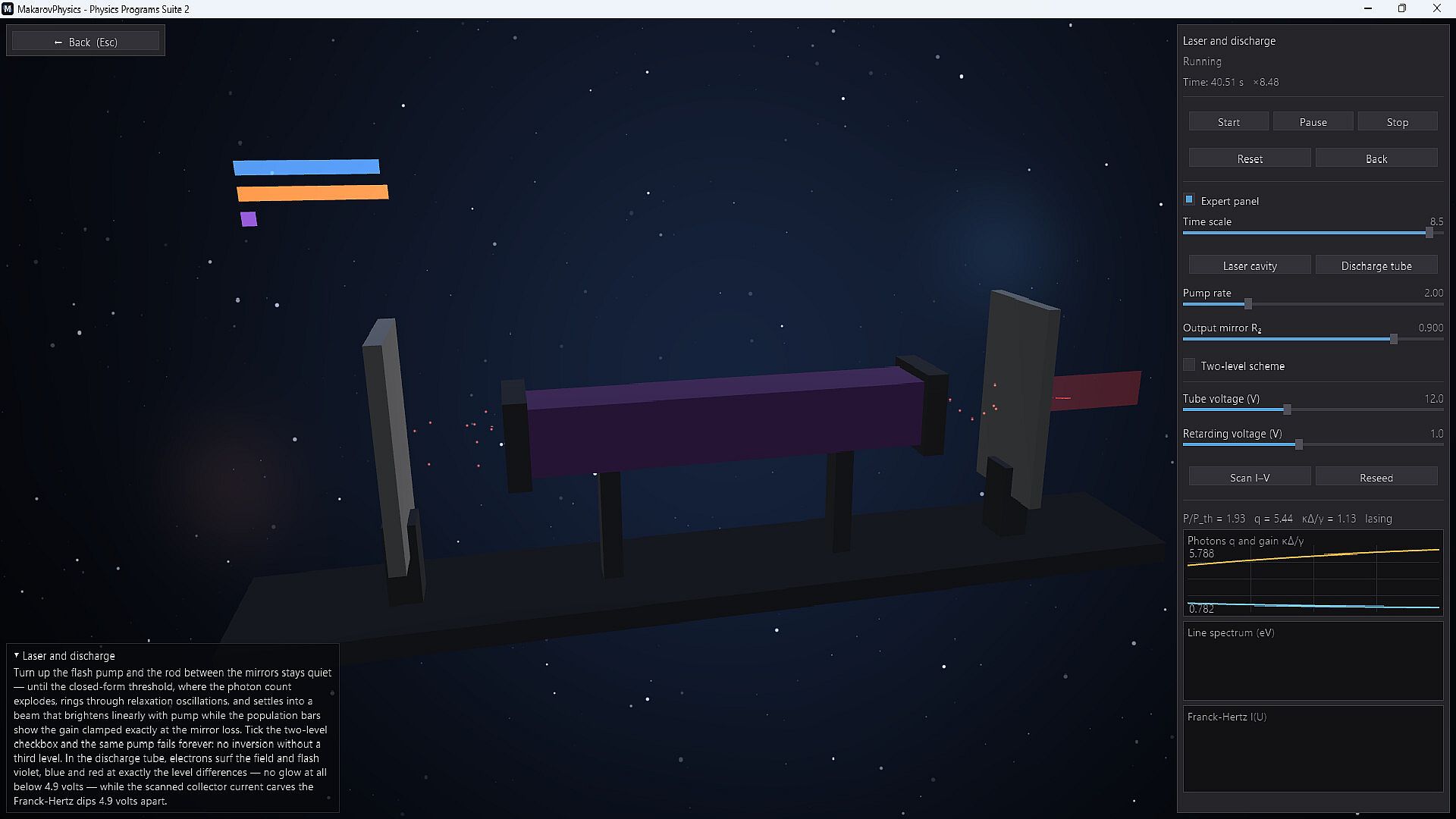
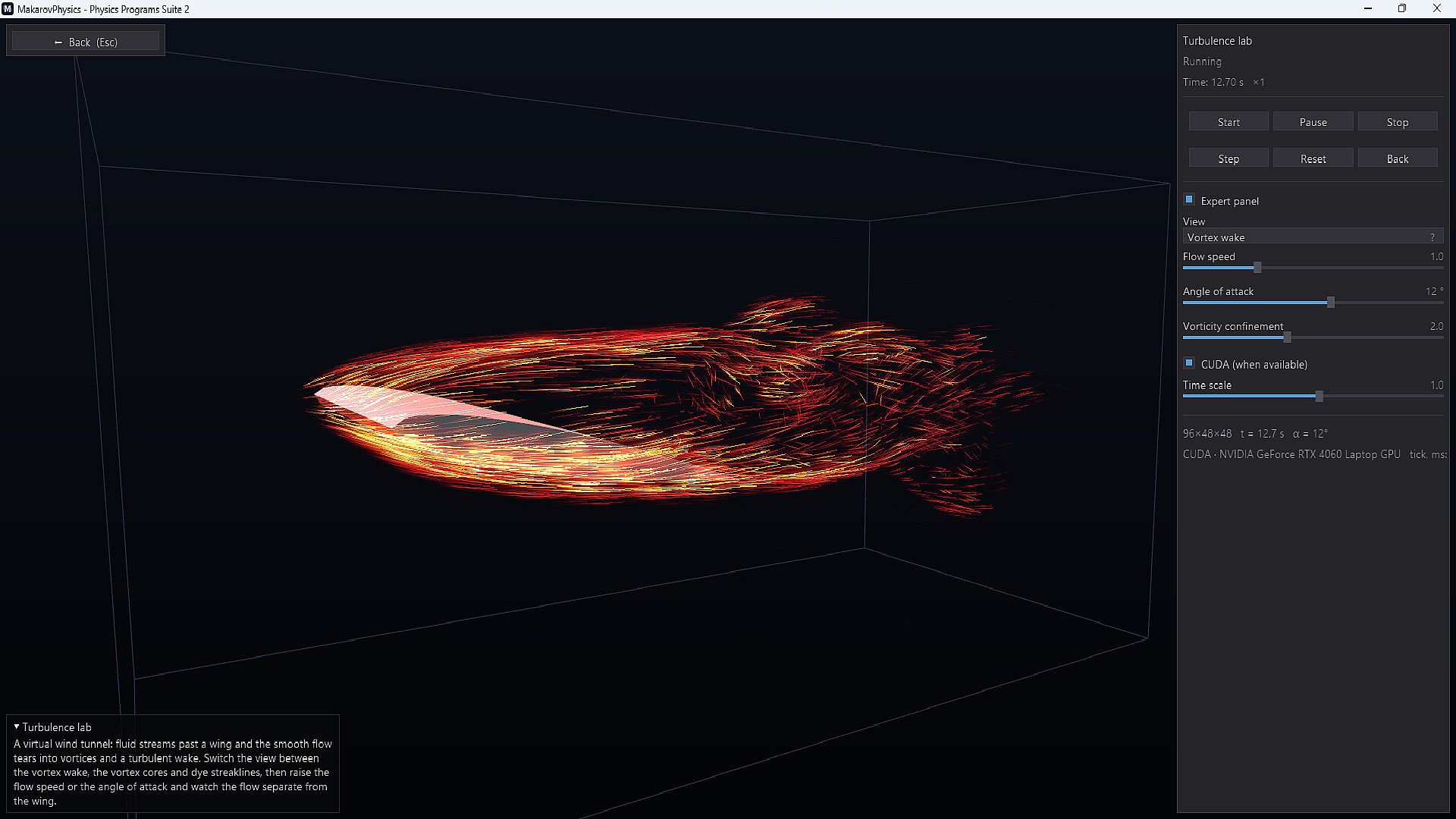
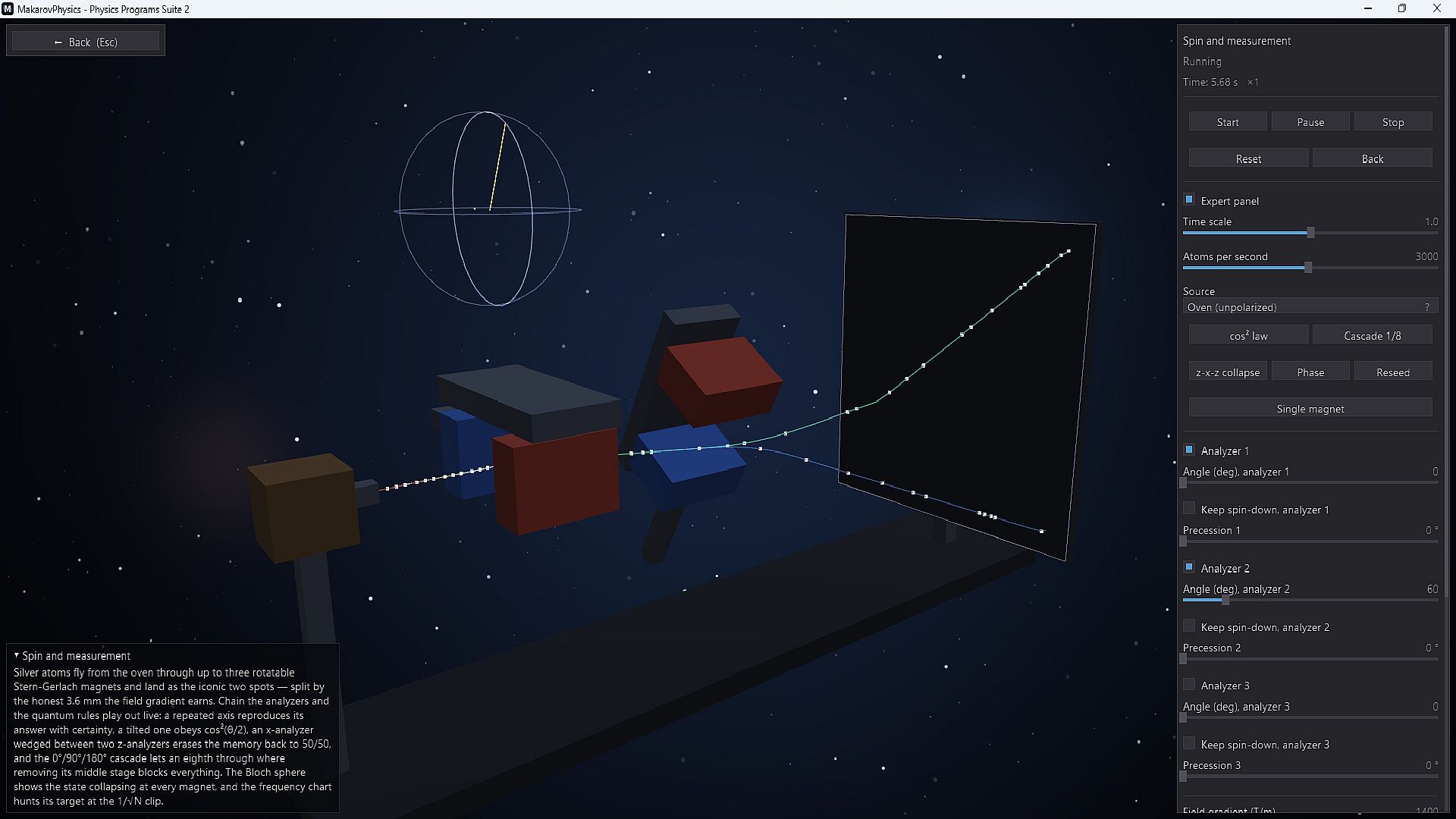
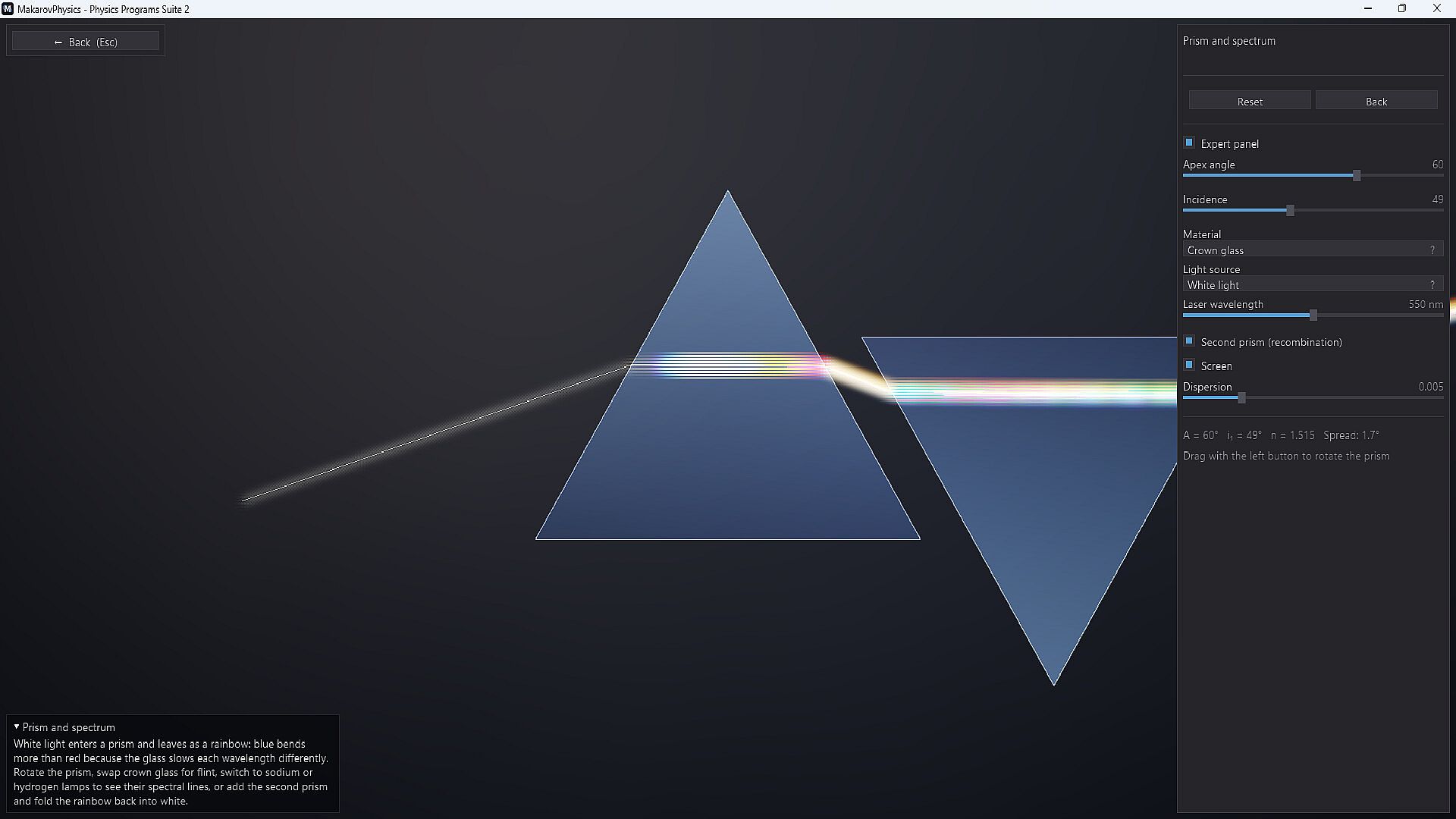
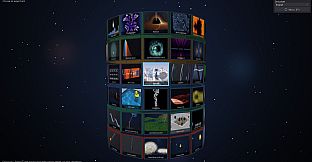
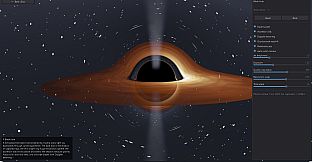
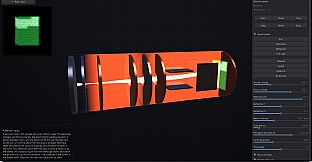
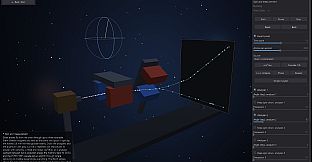
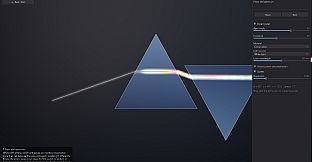
Makarov Physics Suite to niezależna gra edukacyjna, która oferuje dziewięćdziesiąt interaktywnych eksperymentów fizycznych w 3D na PC. Zamiast korzystać z gotowych animacji, symulacja rozwiązuje równania fizyczne w czasie rzeczywistym, dzięki czemu użytkownik może na bieżąco zmieniać parametry i obserwować ich wpływ na wynik. Program obejmuje mechanikę, fale, optykę, elektromagnetyzm, fizykę kwantową, termodynamikę, płyny, dynamikę nieliniową oraz ekologię.
Rozgrywka
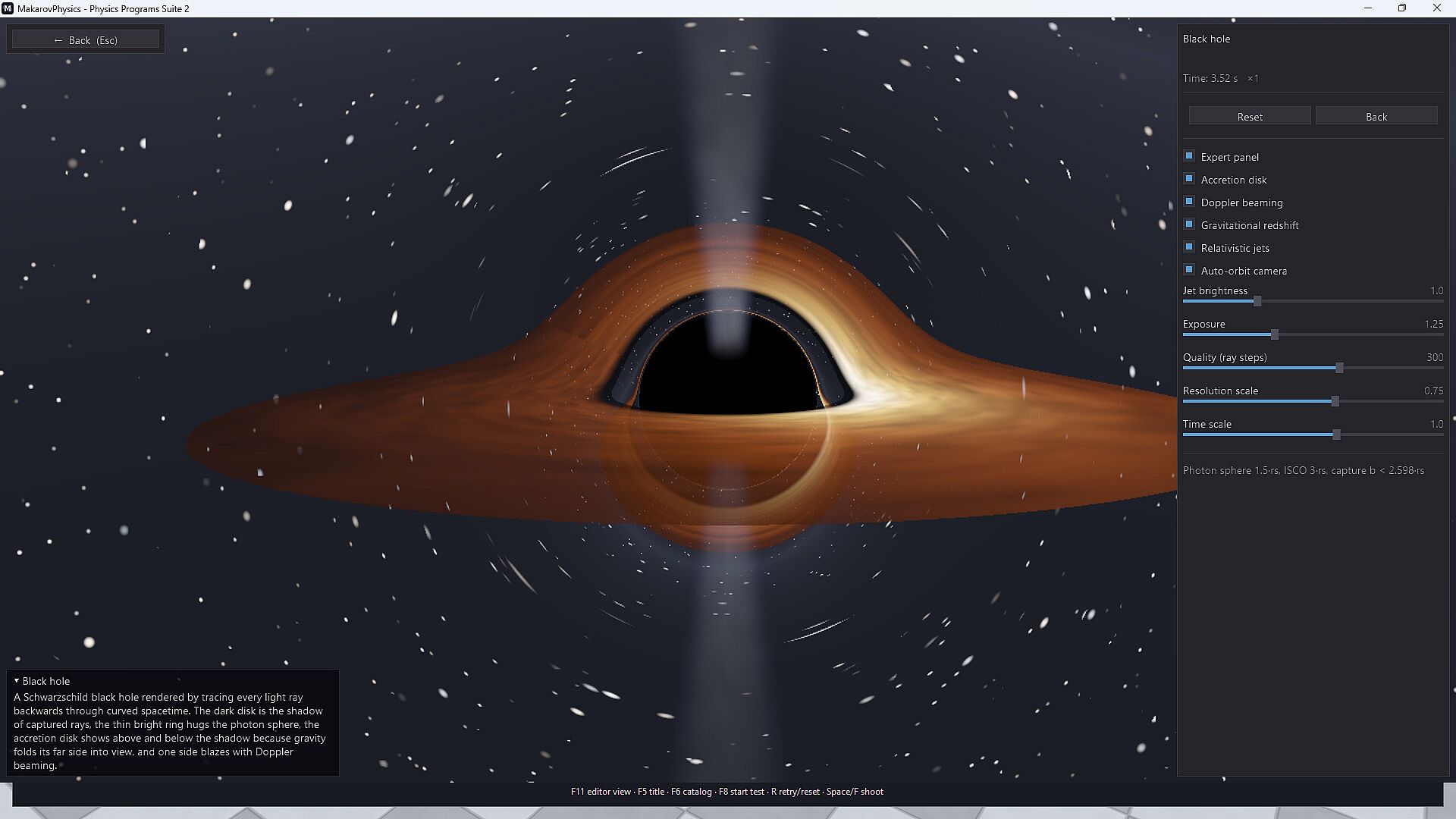
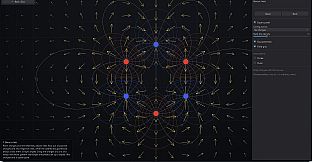
Podstawą jest wybór eksperymentu i praca z dedykowaną sceną 3D. Każda symulacja przelicza równania na bieżąco, więc zmiana wartości takich jak tłumienie, sztywność czy wielkość siatki od razu wpływa na zachowanie układu i wykresy. Do dyspozycji są narzędzia pomiarowe: linijka, stoper, kątomierz, woltomierz oraz cęgowy miernik prądu. W zależności od sceny pojawiają się wektory sił, linie pola, trajektorie ruchu oraz paski energii. Panel ekspercki daje dostęp do kluczowych parametrów numerycznych, a portrety fazowe, widma, bilanse energetyczne i wskaźnik dryftu energii pozwalają kontrolować dokładność symulacji. Gra działa całkowicie offline, obsługuje osiem języków interfejsu i nie wymaga kont ani telemetrii.
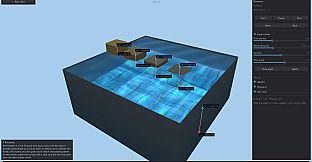
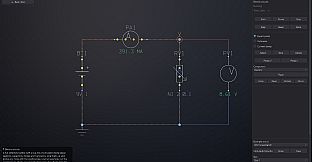
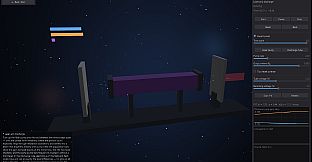
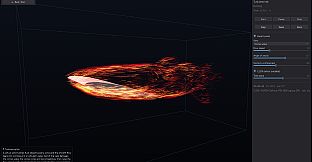
Przykłady pokazują charakter symulacji. W ruchu Browna widoczne cząsteczki zderzają się z ciężkim znacznikiem, którego ruch wynika wyłącznie z zasady ekwipartycji, bez dodanego szumu czy tarcia. Eksperyment z wieżą i trzęsieniem ziemi modeluje ramę ścinaną aż do momentu uplastycznienia, po czym elementy przechodzą pod kontrolę solwera brył sztywnych, co daje za każdym razem inną, nieskryptowaną sekwencję zawalenia. Równania Maxwella napędzają symulację fali elektromagnetycznej na dużej siatce, pokazując rozchodzenie się fal z punktu przez podwójną szczelinę. Zachowanie kondensatora wynika z obliczeń różnicowych pola wykonywanych na żywo, a nie ze statycznych wzorów. Wahadło magnetyczne rysuje na stole baseny przyciągania, ujawniając ich fraktalne granice, które można powiększać i analizować.
Tryby gry
Nie ma osobnych trybów. Całość składa się z indywidualnych eksperymentów, do których gracz wraca we własnym tempie w trybie jednoosobowym. Każdy z dziewięćdziesięciu układów działa jak samodzielny moduł laboratoryjny z własnym zestawem sterowania, wykresów i przyrządów, zachęcając do powtarzania pomiarów przy różnych parametrach.
Główne cechy i mechaniki
Integracja w czasie rzeczywistym gwarantuje, że wyniki wynikają bezpośrednio z równań, a nie z nagranych sekwencji. Przy wymagających symulacjach, takich jak siatka fali elektromagnetycznej, wykorzystywane jest przyspieszenie GPU, jeśli sprzęt je obsługuje. Wykresy aktualizują się na bieżąco, pokazując m.in. zachowanie energii i zawartość widmową. Wymagania sprzętowe są umiarkowane: 64-bitowy system Windows 10 z obsługą OpenGL 3.3 oraz standardowa ilość pamięci RAM i miejsca na dysku. Gra stawia na wartość edukacyjną poprzez możliwość weryfikacji pomiarów i eksploracji parametrów, bez elementów fabularnych czy rywalizacji.
Czy warto zagrać?
Tytuł kierowany jest do uczniów, nauczycieli i pasjonatów, którzy chcą samodzielnie badać zasady fizyki za pomocą dokładnych modeli numerycznych. Tryb jednoosobowy i działanie offline ułatwiają wielokrotne korzystanie, a szeroki zakres tematów - od podstaw mechaniki po dynamikę nieliniową - dostarcza obszernego materiału do samodzielnej nauki. Planowana premiera pod koniec sierpnia 2026 i brak dotychczasowych recenzji oznaczają, że zainteresowani mogą ocenić grę na podstawie zainteresowania interaktywnym rozwiązywaniem równań i wizualizacją danych na żywo. Brak trybu wieloosobowego i systemów progresji skupia uwagę na precyzji i eksperymentowaniu.