








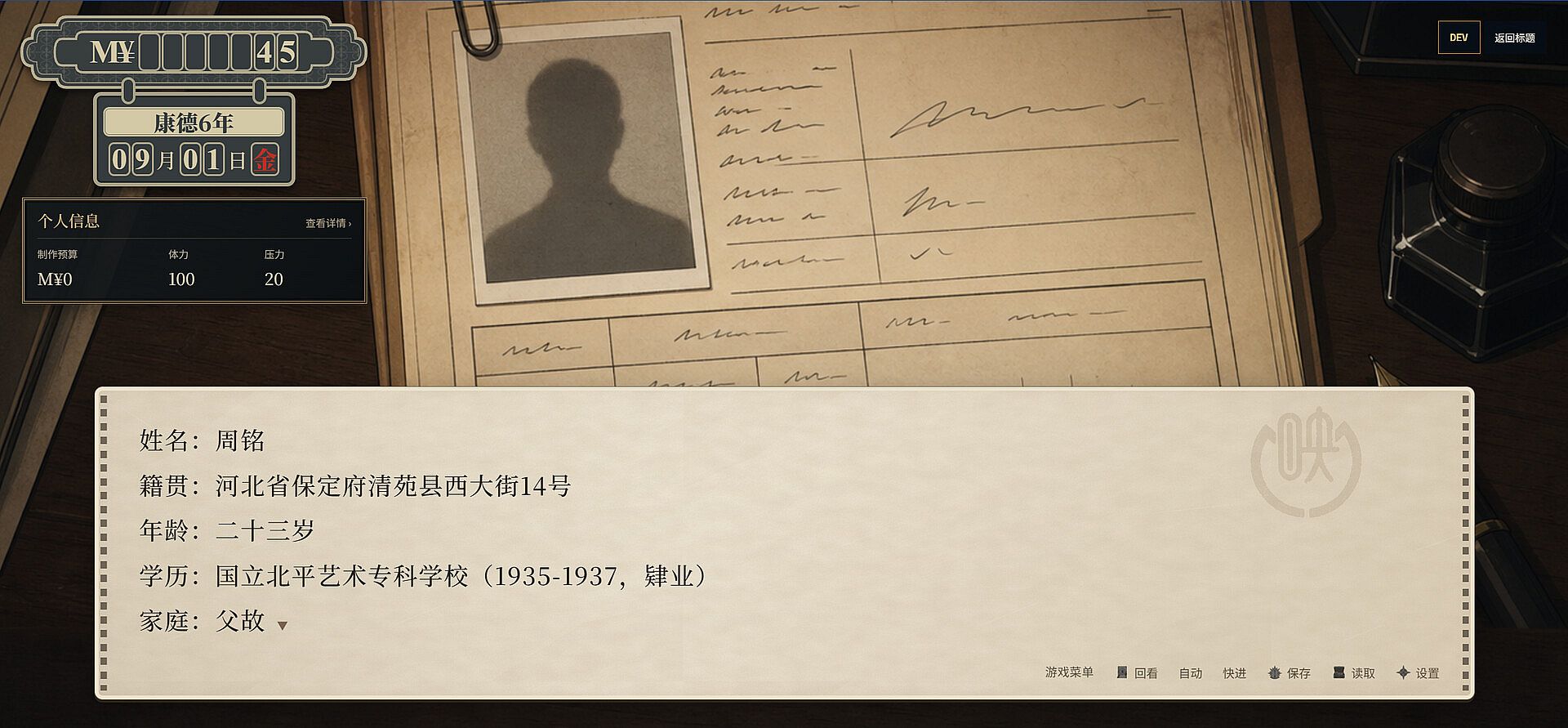
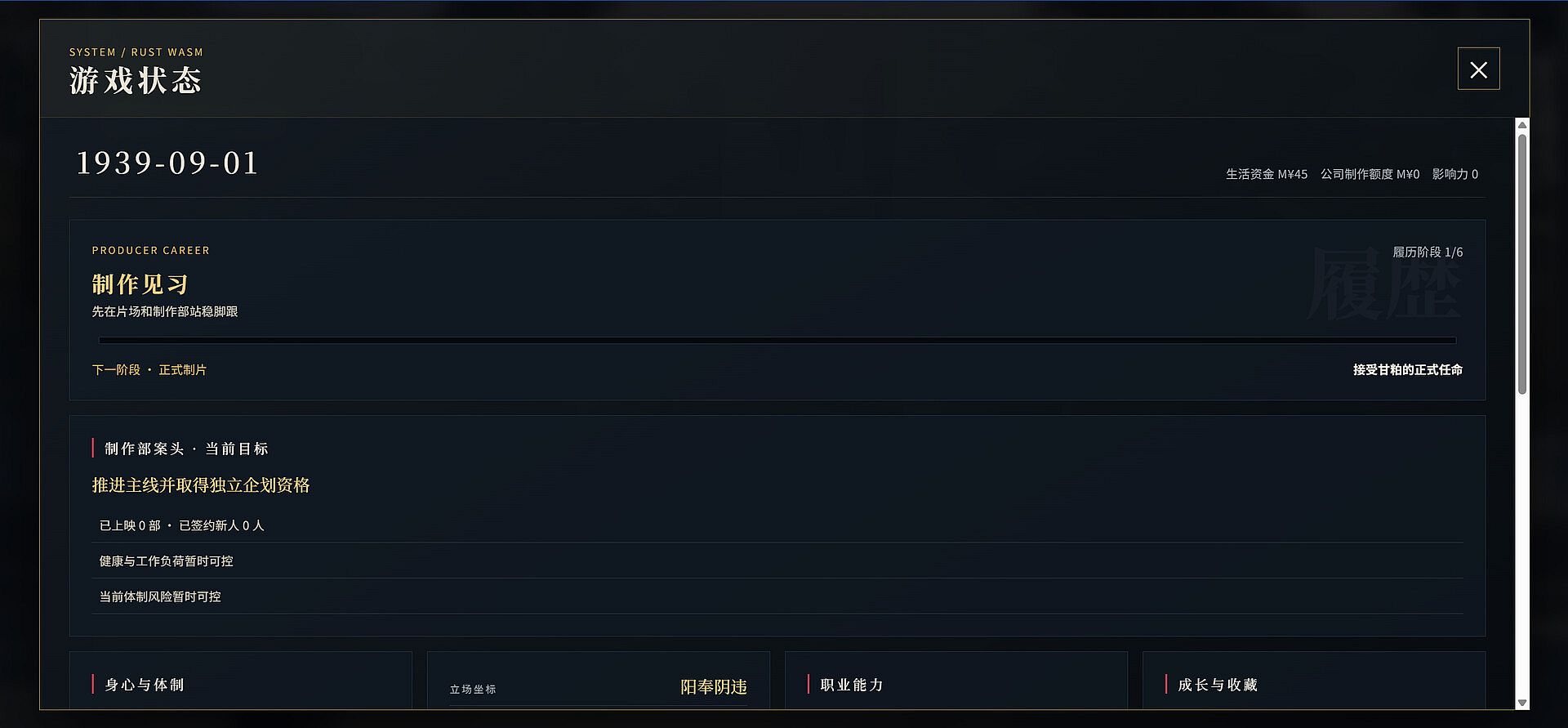
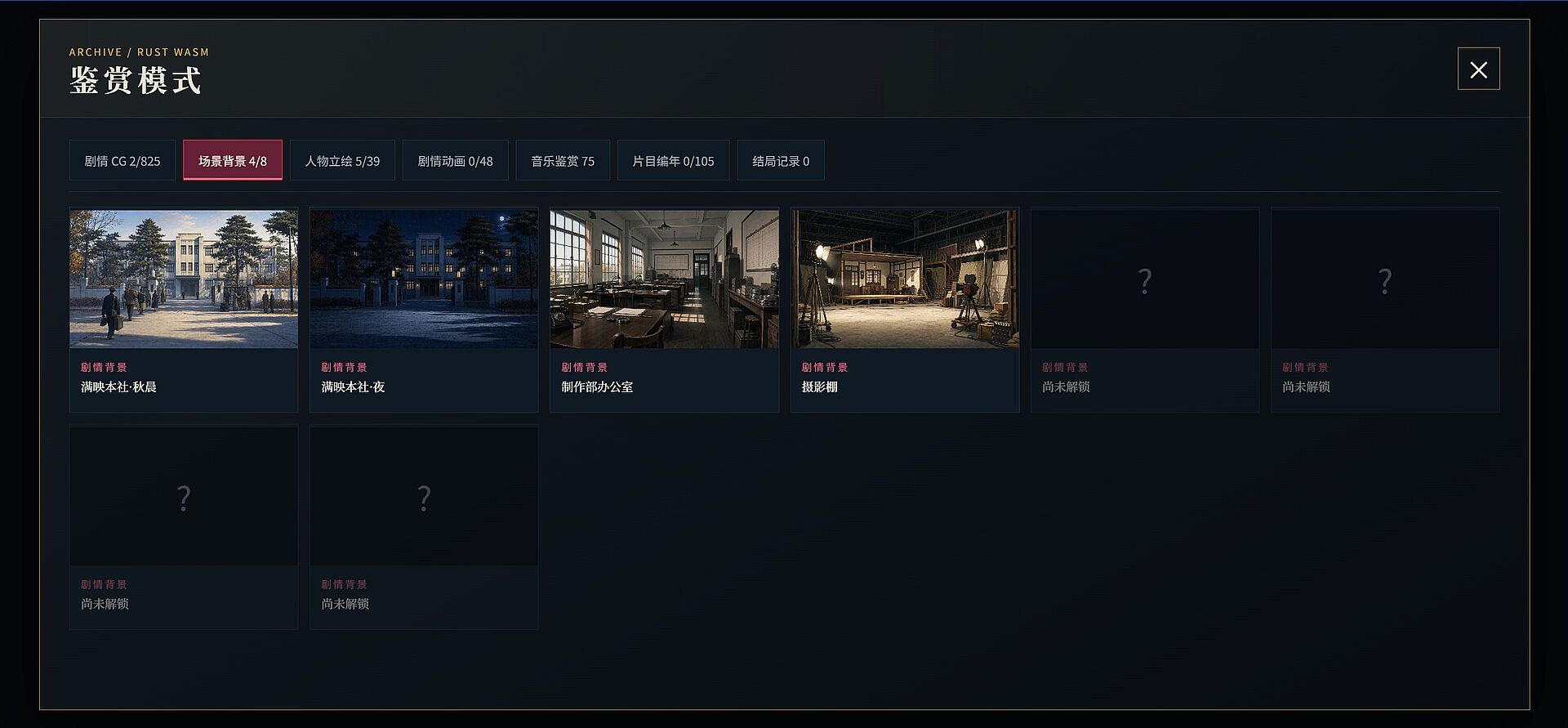



Manei Monogatari is a simulation and adventure game set on PC that places players in the role of Zhou Ming, a young man transferred in 1939 to the Manchuria Film Association studio known as Man'ei in Xinjing. The story unfolds through his eyes as he navigates daily life and film production inside a studio operating under Japanese colonial rule in northeastern China. Players manage limited resources while making decisions that influence relationships, creative projects, and the narrative outcome.
Gameplay
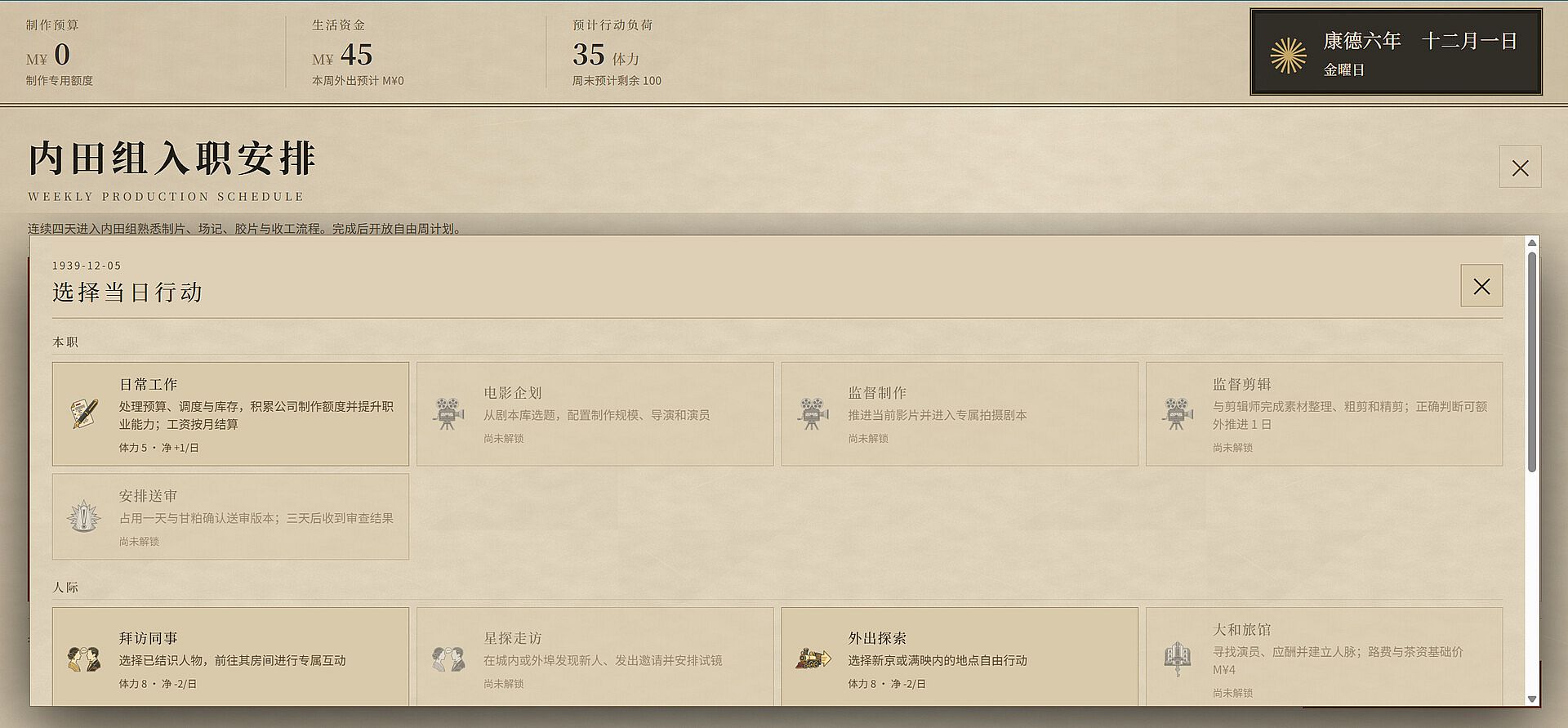
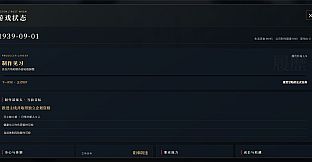
The core loop revolves around managing a week of activities with constraints on time, stamina, and living funds. Each day offers options such as sorting documents and running errands at the studio, participating in film work, visiting colleagues, exploring the city, or resting to recover. Production schedules continue regardless of personal fatigue, so choices about staying late on set or honoring appointments directly affect available opportunities and character interactions.
Players gradually gain access to script handling, filming, and post-production tasks. Budget limitations, crew assignments, creative differences, and external requirements from officials shape every project. Completing a film marks only the beginning, as distribution and audience response determine further consequences for the studio and the protagonist's standing.
Relationships form the connective tissue of the experience. Directors, actors, camera operators, and administrative staff each carry distinct responsibilities and personal pressures. Conversations after hours or disagreements during production can strengthen alliances or create lasting friction, altering both the films produced and the paths available in the story.
Game Modes
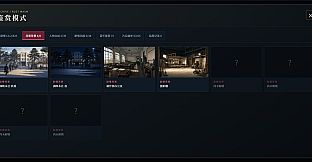
Manei Monogatari centers on a single-player branching narrative experience built around daily planning and film production systems. There are no separate multiplayer or competitive modes. Instead, the game structures play through repeated cycles of resource management and decision-making that lead to different story branches and endings. Players experiment with schedules and crew selections across multiple playthroughs to explore alternate outcomes for characters and completed projects.
Historical Setting and Narrative Choices
The game draws from the real history of the Man'ei studio while incorporating fictional elements. The protagonist, dialogue, and certain episodes are invented, and the title does not claim to be a full historical reconstruction. It depicts and references the realities of the era, including war, forced labor, violence, death, and political repression. Decisions about what to film or what to overlook carry weight, as the camera can capture or turn away from events unfolding in front of it.
Players decide whether to follow instructions, argue for different approaches, or probe unspoken matters. These choices ripple outward to affect personal bonds, the final form of films, and the overall conclusion of Zhou Ming's story.
Is It Worth Playing?
Manei Monogatari suits players interested in narrative-driven simulation and adventure titles that combine time management with creative decision-making. The emphasis on limited daily resources and the consequences of production choices creates a focused loop that rewards careful planning and attention to character dynamics. Those drawn to historical settings with branching stories and moral ambiguity will find the structure engaging, particularly if they enjoy revisiting the week to test different approaches to crew assembly and project handling. The game remains a single experience without additional modes or ongoing seasonal content, so its appeal rests on the depth of its narrative branches and the weight of everyday decisions inside the studio.











