








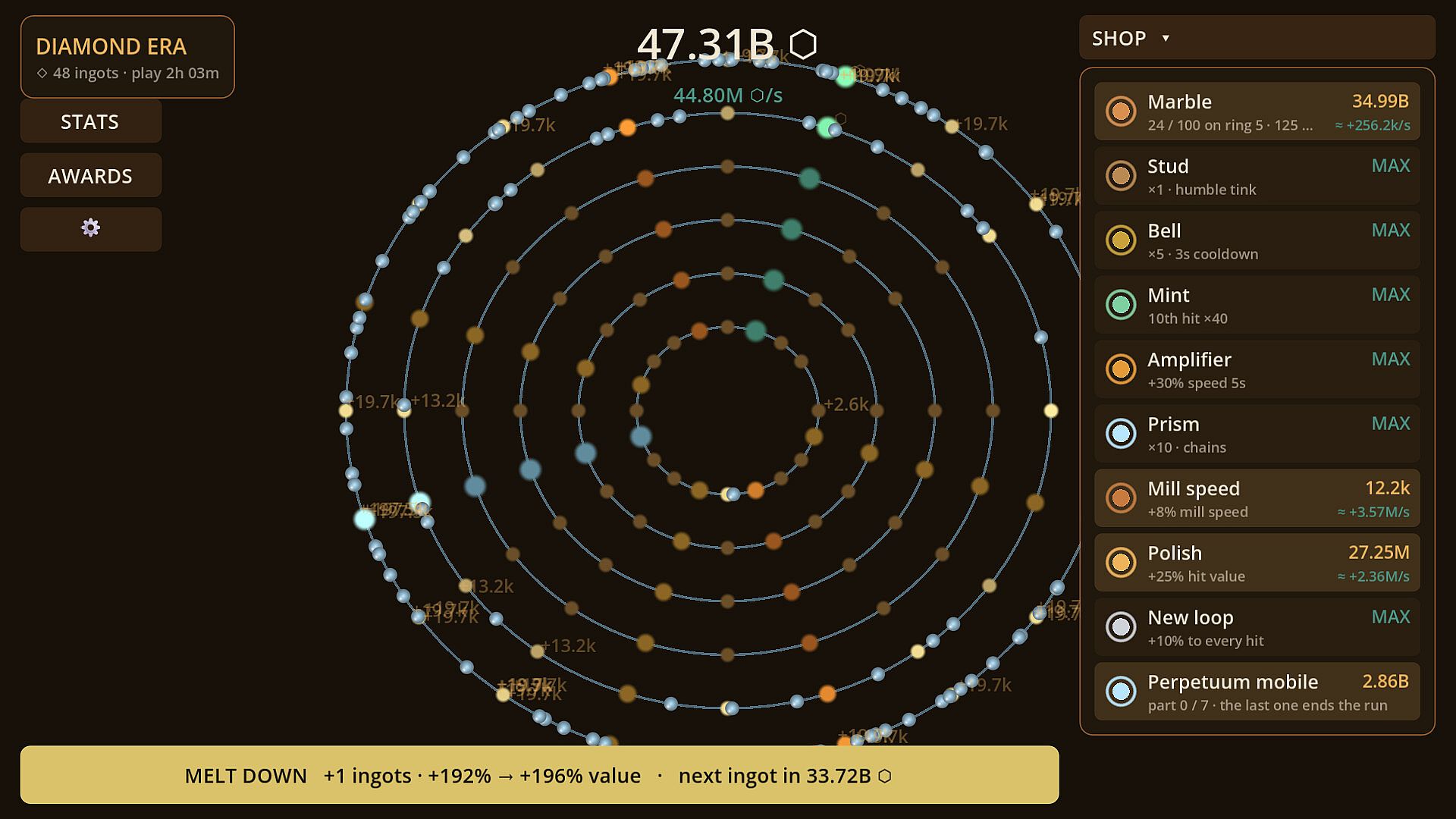






Marble Mill is a single-player casual simulation game built around the physical process of earning resources through visible marble collisions rather than abstract progress bars. Players construct and expand a mechanical mill where marbles roll through rings and bumpers to generate coins directly from each impact. The experience emphasizes tangible upgrades that alter the machine's structure in real time, creating a loop of observation and incremental expansion on PC.
Gameplay
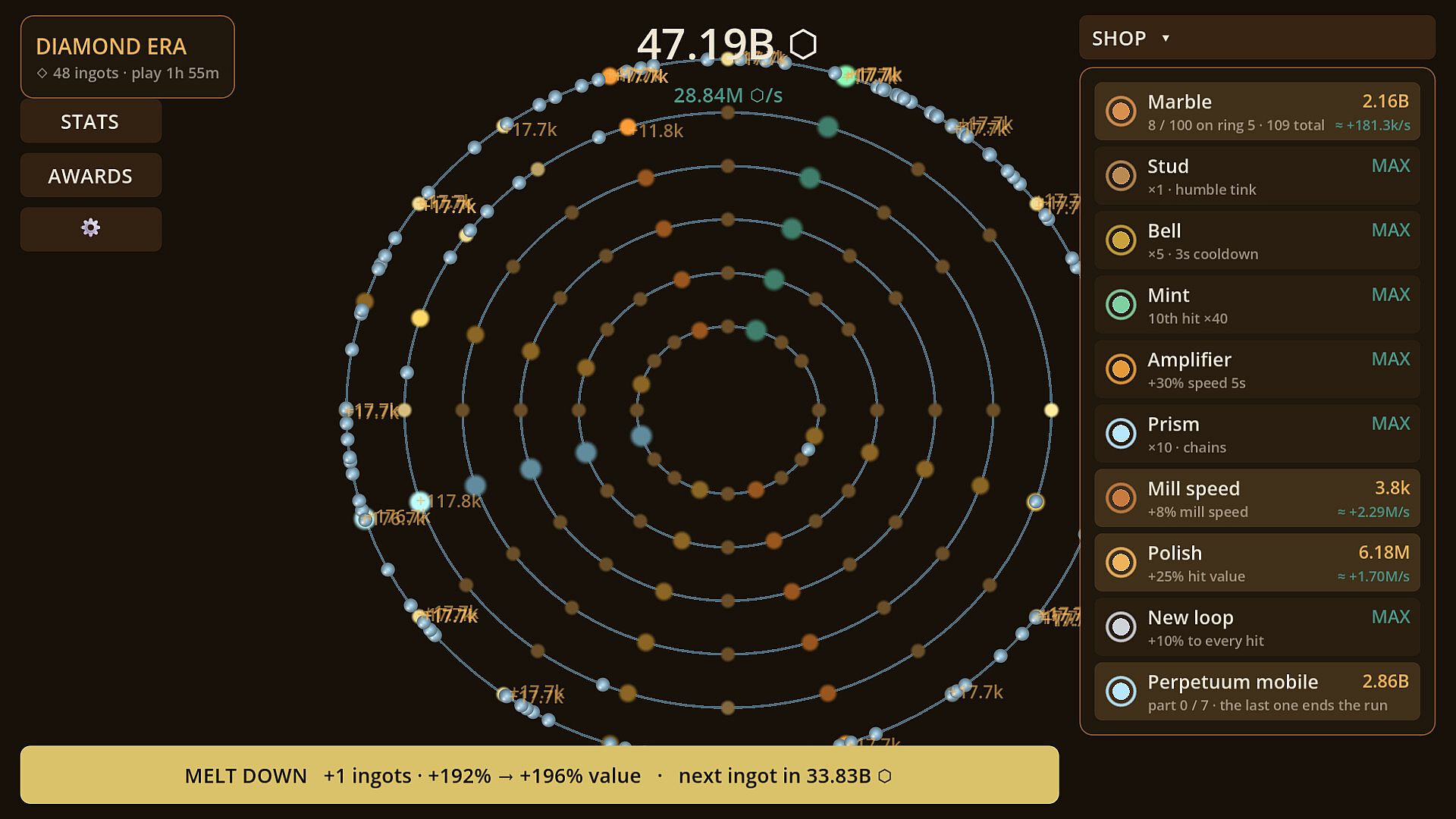
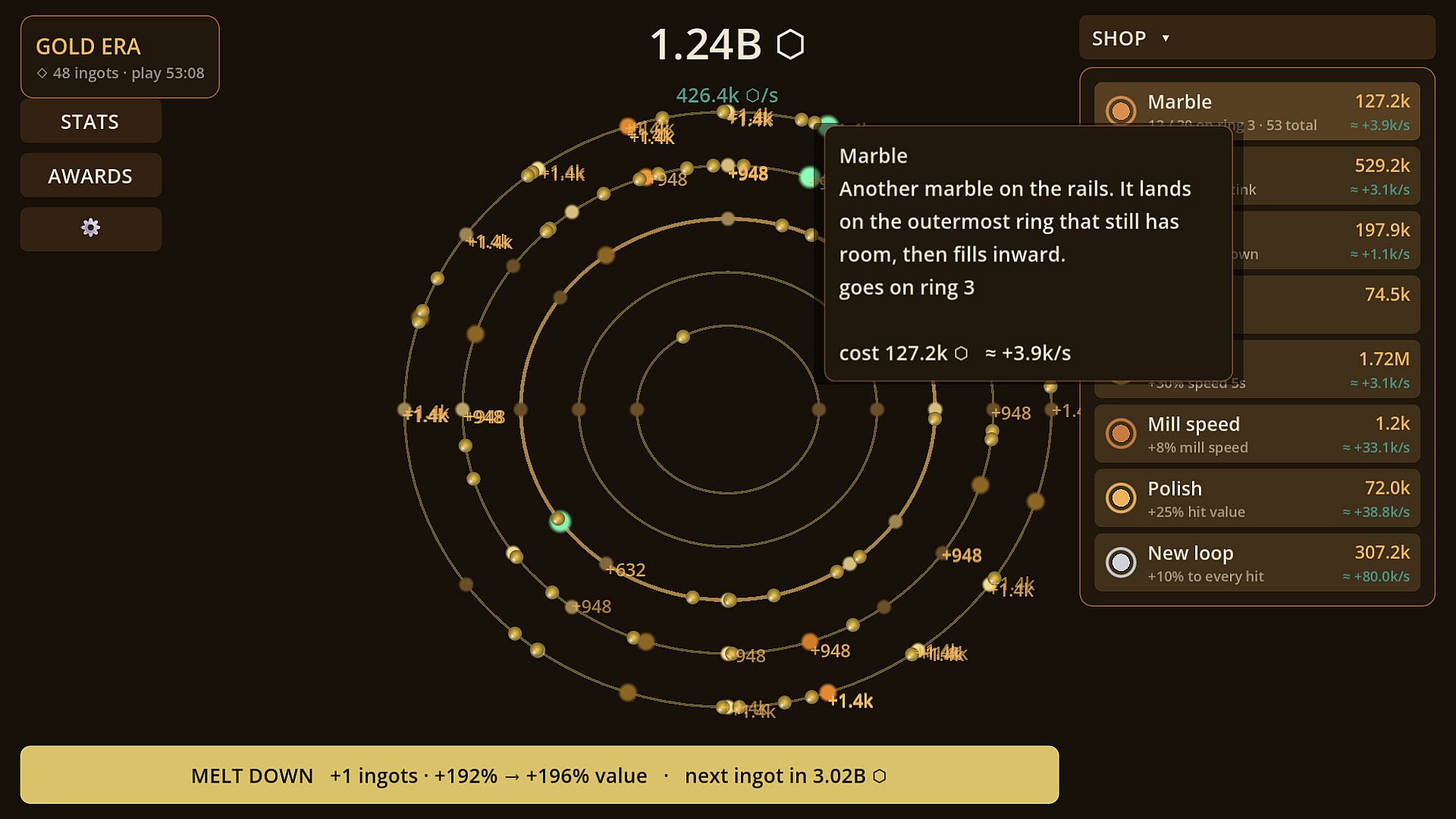
The core loop centers on watching marbles interact with the mill's components. Each collision produces a coin visibly, and upgrades add new elements like additional rings or bumper types that change how marbles move and interact. Five distinct bumper varieties handle different functions, including standard pegs, bells for audio feedback, mints that create coin bursts, amplifiers, and prisms for varied effects. The mill expands outward ring by ring up to a maximum of six rings, with each addition physically rebuilding parts of the structure.
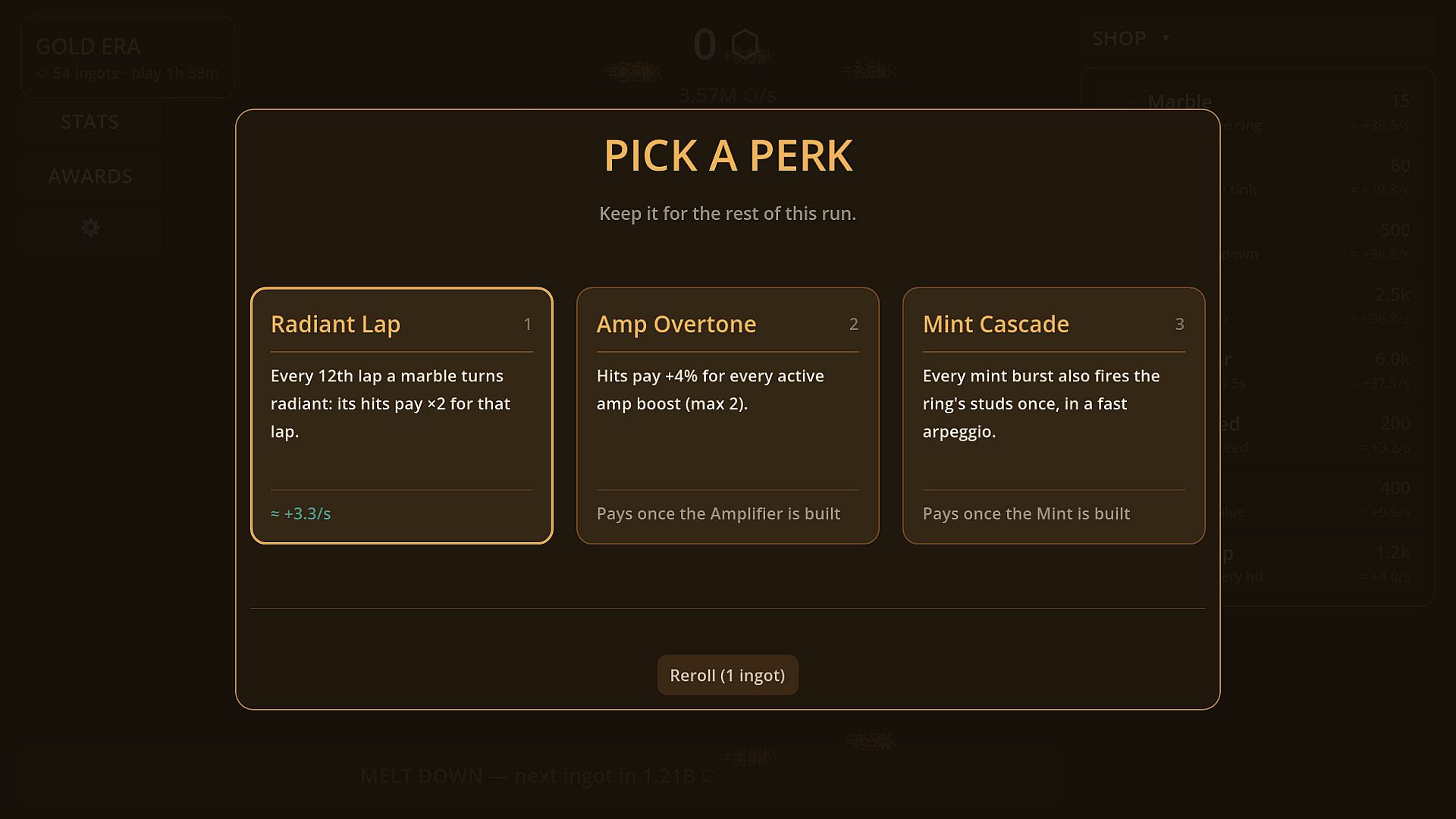
Materials progress through copper, silver, gold, and diamond stages. Melting the current mill yields permanent ingots that carry over, allowing faster reconstruction in upgraded materials. Each melt presents three perk cards, from which one is selected to influence the next run, with rerolls available at an ingot cost. Occasional golden marbles appear for timed clicks that grant bonuses without penalty for missing them. The entire system runs at high collision rates, reaching around 1,900 interactions per second at peak activity, producing denser rather than louder output.
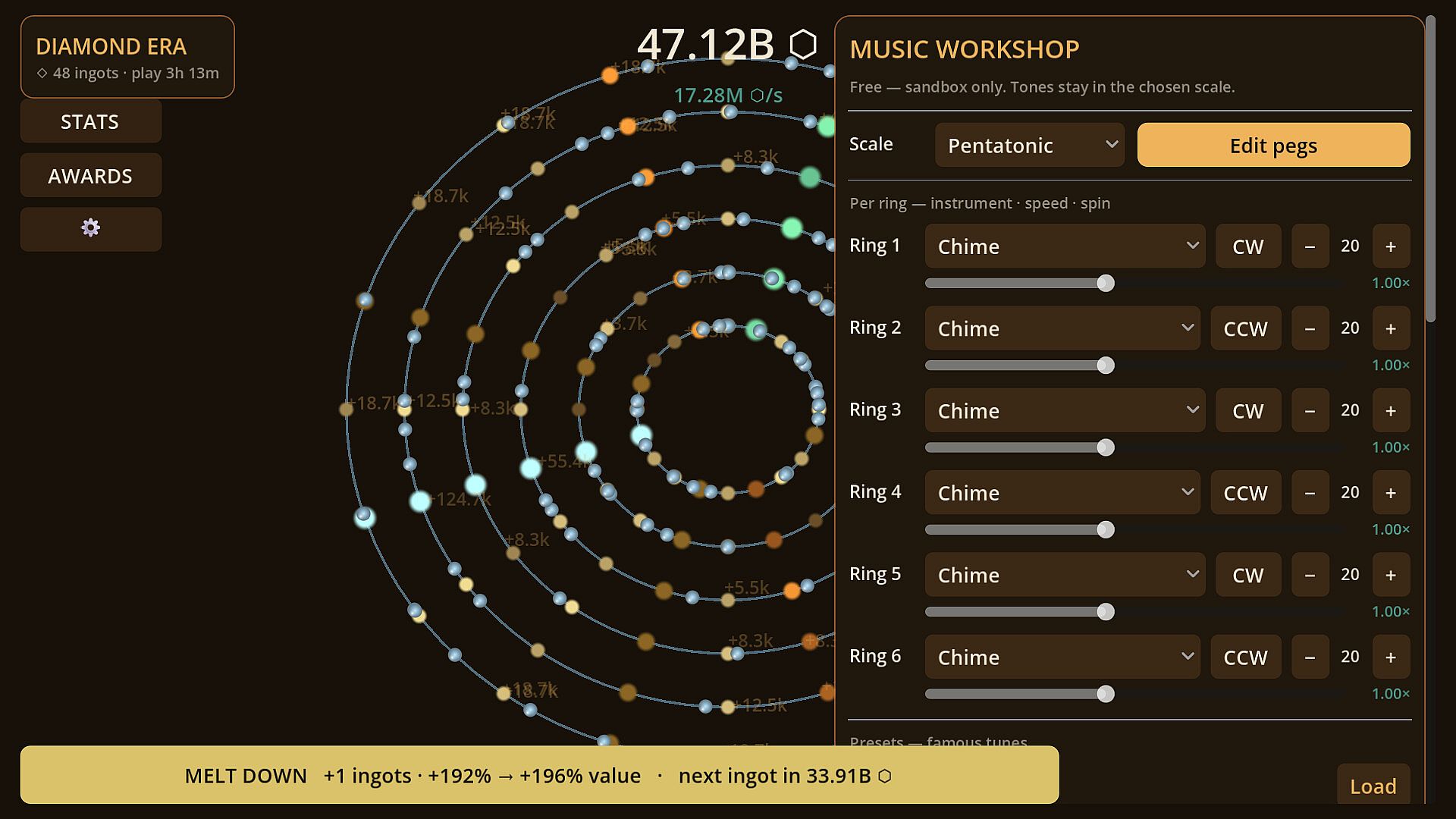
Sound integrates directly with mechanics. Hits align to a pentatonic scale for melodic results from random collisions. Each material era shifts the root note a fifth higher, creating audible progression from muted wooden tones in copper to clearer glass-like sounds in diamond. An ASMR mode strips away all interface elements with a single key press, leaving only the machine and its chimes for focused listening sessions.
Game Modes
The primary experience follows a structured path that concludes after roughly three hours with a complete ending and credits sequence. All achievements remain attainable within this timeframe without requiring repeated play or extended grinding. This finite campaign delivers a self-contained narrative arc centered on mill development and material advancement.
Following completion, an endless sandbox mode unlocks with full access to every component and material. Players can experiment freely without progression constraints, rebuilding and expanding indefinitely. No offline mechanics exist, so the mill operates only during active play sessions, encouraging direct engagement rather than background checking.
Sound and Visual Design
Audio serves as a central pillar, with every collision quantized to musical scales that turn mechanical chaos into coherent melodies. The absence of pre-recorded sound files means all chimes generate in real time through code, supporting smooth performance even on integrated graphics hardware. Visuals follow the same procedural approach, rendering the mill dynamically without reliance on external art assets beyond basic icons.
The game targets quiet evening play on laptops, with system requirements kept low enough for broad accessibility. No microtransactions, advertisements, or time-gated elements interrupt the flow, aligning the design with focused, uninterrupted sessions.
Is It Worth Playing?
Marble Mill suits players seeking a short, self-contained simulation experience that prioritizes visible cause-and-effect mechanics over endless progression. Its deliberate three-hour length to full completion, combined with the post-campaign sandbox, provides a clear endpoint absent in many idle-style titles. The emphasis on physical machine growth, integrated sound design, and lack of dark patterns or monetization elements makes it appealing for those who enjoy observing systems in motion without external pressures.
Those drawn to casual single-player simulations with strong auditory components will find the chime-based feedback and material-specific tones rewarding. The game runs efficiently on modest hardware and avoids common pitfalls like offline income or grind walls, delivering a polished, intentional package. For anyone interested in a marble-based builder that concludes on its own terms before offering open-ended play, it represents a worthwhile investment of a focused evening.











