


Medieval Fantasy Blacksmith Shop to swobodna gra indie o prowadzeniu warsztatu kowalskiego w średniowiecznym świecie fantasy. Gracze przejmują kontrolę nad własną kuźnią na PC, gdzie głównym zajęciem jest wytwarzanie mieczy z podstawowych materiałów, doradzanie poszukiwaczom przygód przy wyborze odpowiedniej broni oraz pilnowanie, by finanse warsztatu pozwalały uniknąć eksmisji.
Rozgrywka
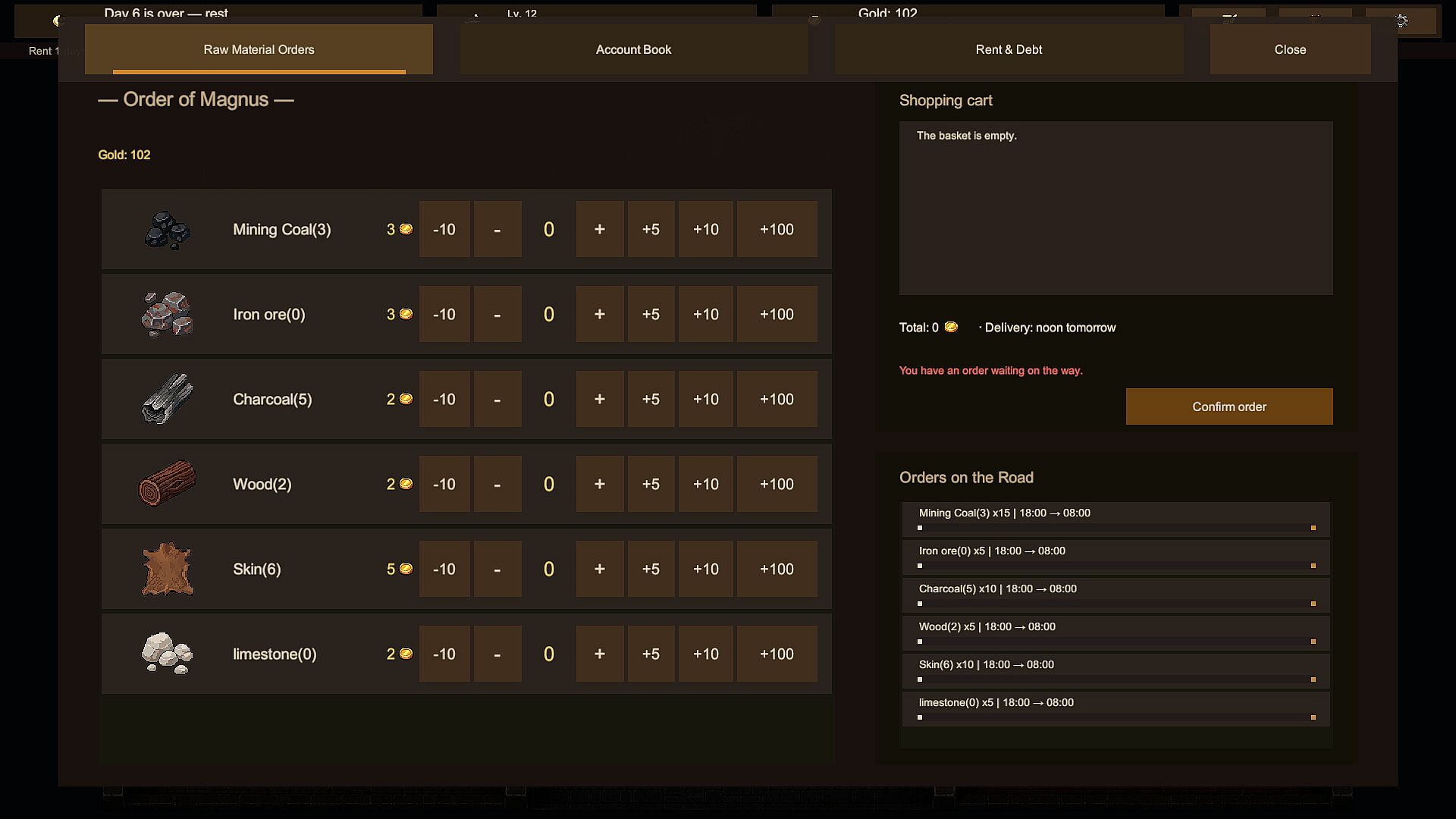
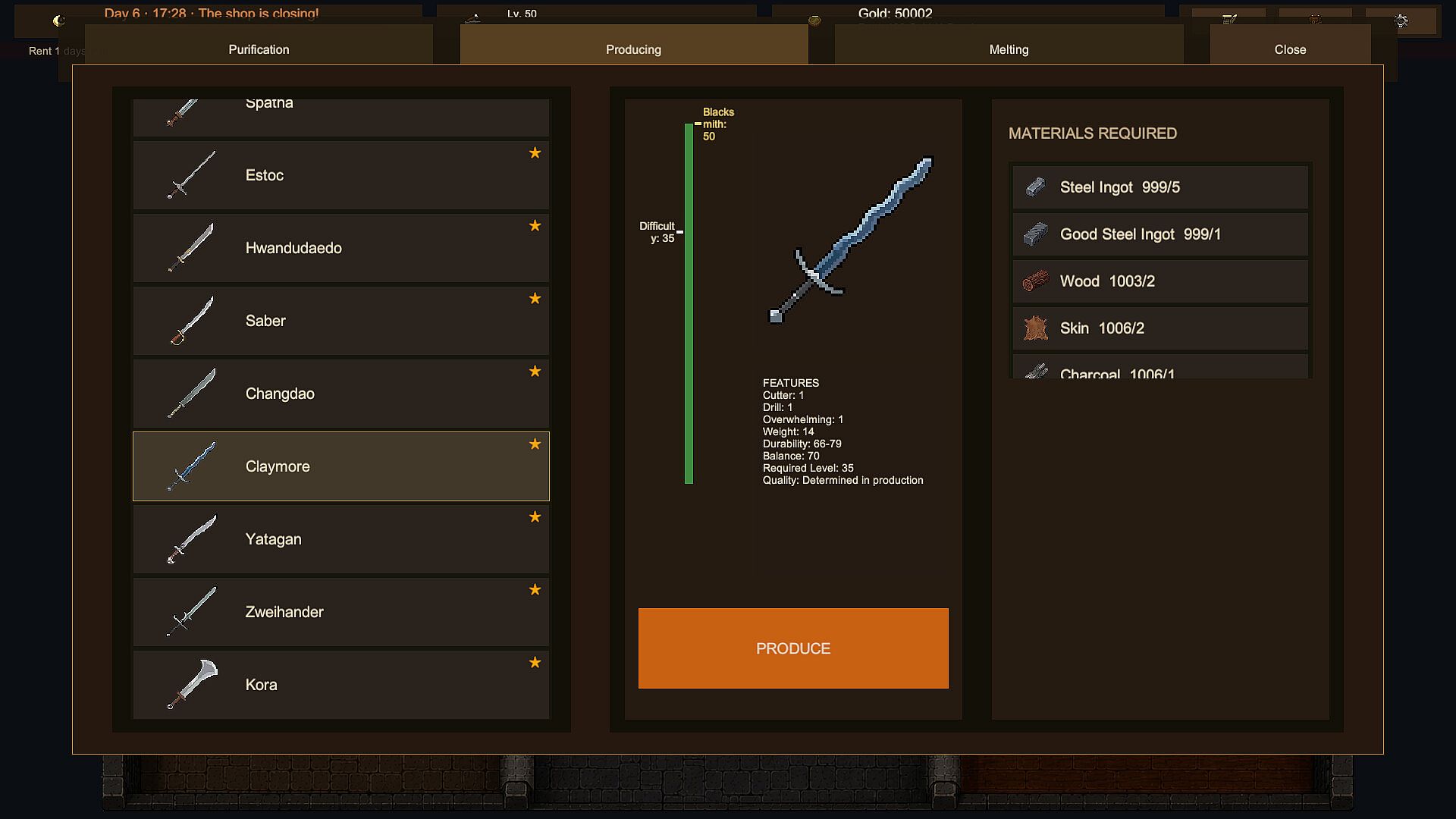
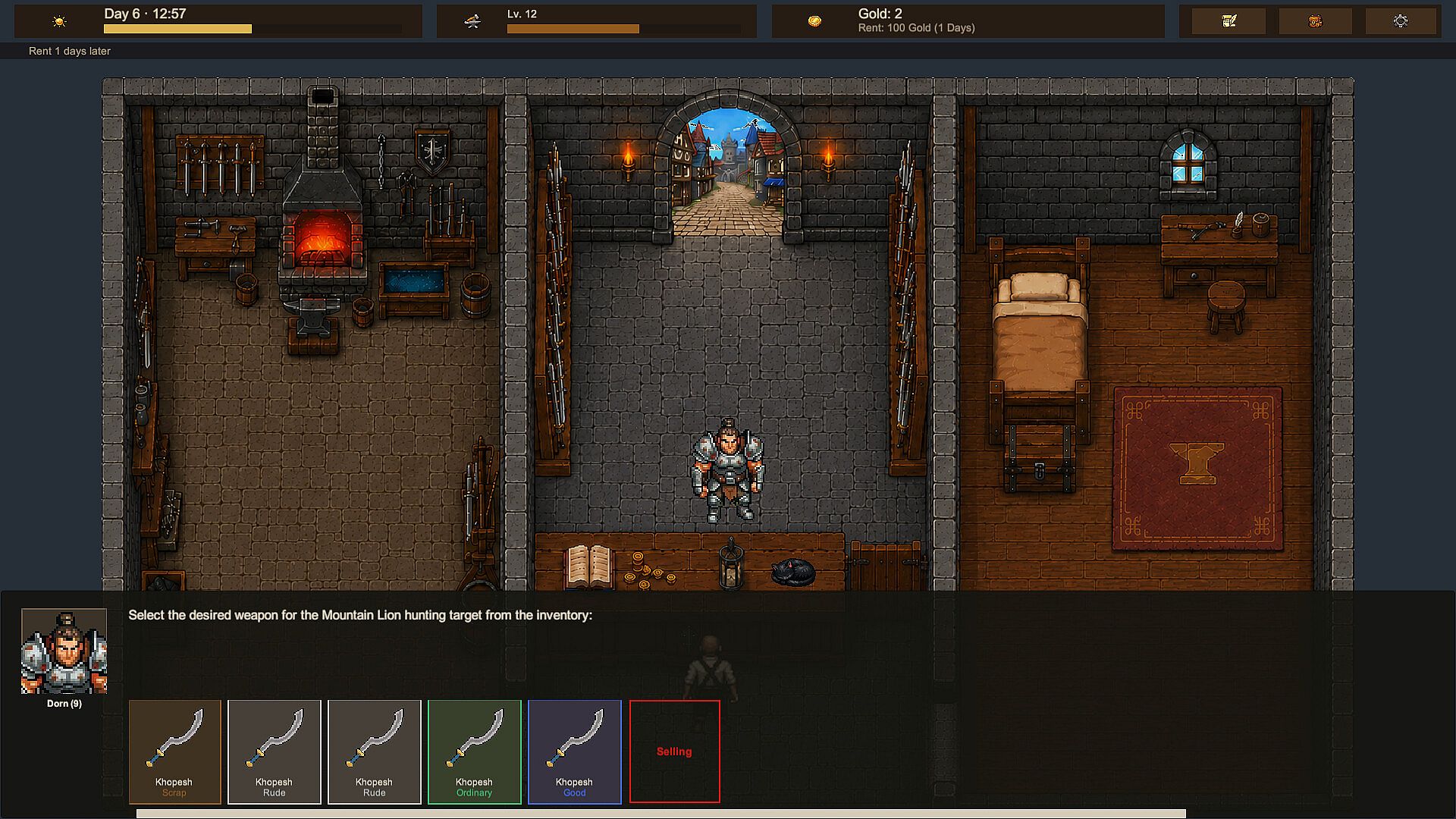
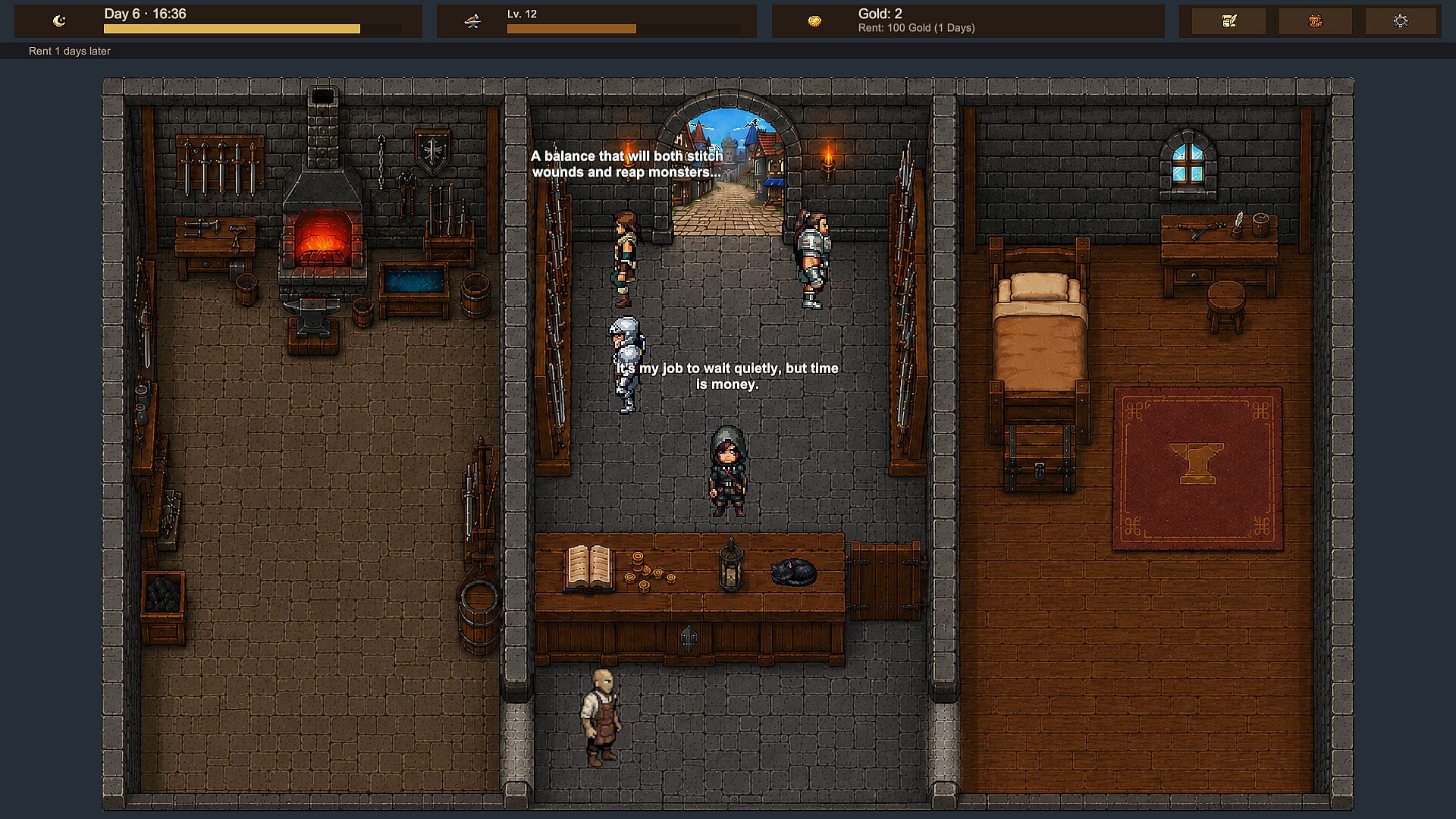
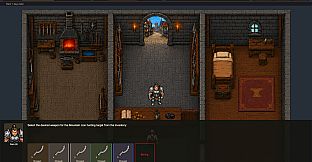
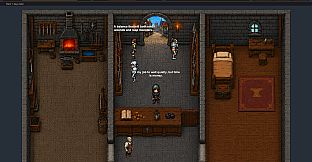
Każdy dzień zaczyna się od dostawy surowców: żelaza, węgla, skóry i drewna. W panelu kowalskim gracze łączą materiały, by uzupełnić półki nowymi mieczami. Gdy produkcja jest gotowa, uwaga przenosi się na obsługę klientów aż do zamknięcia. Do warsztatu zaglądają poszukiwacze przygód, którzy opowiadają o potworach, na które wybierają się na polowanie; na podstawie tych informacji gracz dobiera broń najlepiej pasującą do słabości przeciwnika.
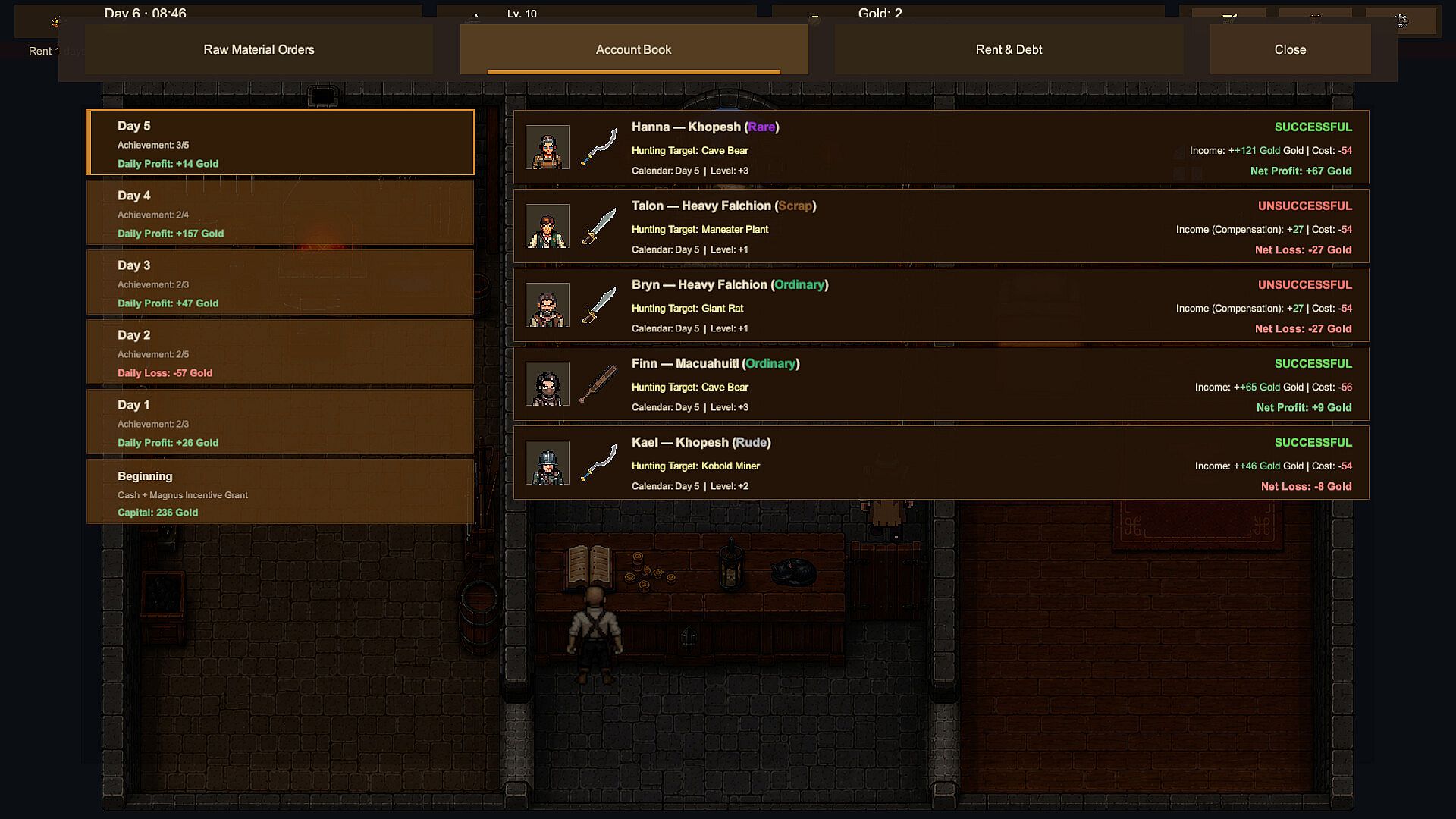
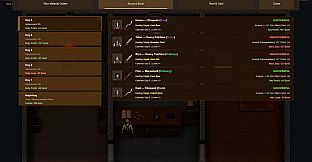
Skuteczność w walce przekłada się bezpośrednio na zarobki - im lepiej klient poradzi sobie z zadaniem, tym więcej złota trafia do kasy. Księga rachunków rejestruje dzienne transakcje i gromadzi plotki oraz informacje o potworach, dzięki czemu z czasem można udzielać coraz trafniejszych porad. Gracz może zamawiać dodatkowe materiały od dostawców, dopasowywać ceny do możliwości klientów lub odrzucać nieopłacalne zlecenia.
Zarządzanie finansami stanowi kluczowy element rozgrywki. Co tydzień trzeba uregulować czynsz, a w trudniejszych momentach można skorzystać z pożyczki awaryjnej. Brak środków na opłatę kończy się eksmisją i przerwaniem rozgrywki. Postęp prowadzi do możliwości obróbki coraz rzadszych materiałów i wykucia legendarnej broni związanej z wybawicielem królestwa.
Tryby gry
Gra jest przeznaczona wyłącznie dla jednego gracza - nie ma trybów wieloosobowych ani rywalizacji. Codzienny cykl zarządzania surowcami, produkcji mieczy, obsługi klientów i kontroli budżetu powtarza się w stałej strukturze, której celem jest przetrwanie i stopniowe doskonalenie warsztatu. Mechanika skupia się na krótkich sesjach wytwarzania, po których następują decyzje handlowe, a ostatecznym wyzwaniem jest utrzymanie kuźni do momentu wykucia legendarnej broni.
Zarządzanie warsztatem i ekonomia
Planowanie budżetu polega na zamawianiu dostaw, rejestrowaniu transakcji w księdze oraz synchronizowaniu sprzedaży z rosnącym czynszem. Okresy mniejszego ruchu można przetrwać dzięki pożyczkom, lecz ich nadużywanie grozi poważniejszymi problemami finansowymi. Informacje o potworach zapisane w księdze pomagają udoskonalać rekomendacje, co przekłada się na wyższe zyski i stabilniejszy dochód.
Gracz decyduje, które zlecenia przyjąć, kierując się opłacalnością i potrzebami klientów. System nagradza dbałość o efektywne wykorzystanie materiałów oraz uważne wsłuchiwanie się w opinie klientów, bez rozbudowanych menu czy dodatkowych, niezwiązanych mechanik.
Czy warto zagrać?
Medieval Fantasy Blacksmith Shop przypadnie do gustu osobom, które lubią proste zarządzanie sklepem i pętle craftingu w swobodnej atmosferze. Jednoosobowa rozgrywka oparta na codziennych rytuałach, rekomendacjach broni i walce o przetrwanie czynszu zapewnia klarowny schemat idealny do krótkich sesji. Dostępna jest wersja demo, pozwalająca wypróbować mechaniki przed premierą pełnej wersji. Dzięki naciskowi na proste kowalstwo i decyzje ekonomiczne gra przyciąga fanów indie managementów, którzy cenią skupioną, niewymagającą rozgrywkę zamiast rozległych światów czy walki. Tytuł jest wciąż w fazie rozwoju, lecz opisane systemy stanowią solidną podstawę dla docelowej grupy odbiorców.