



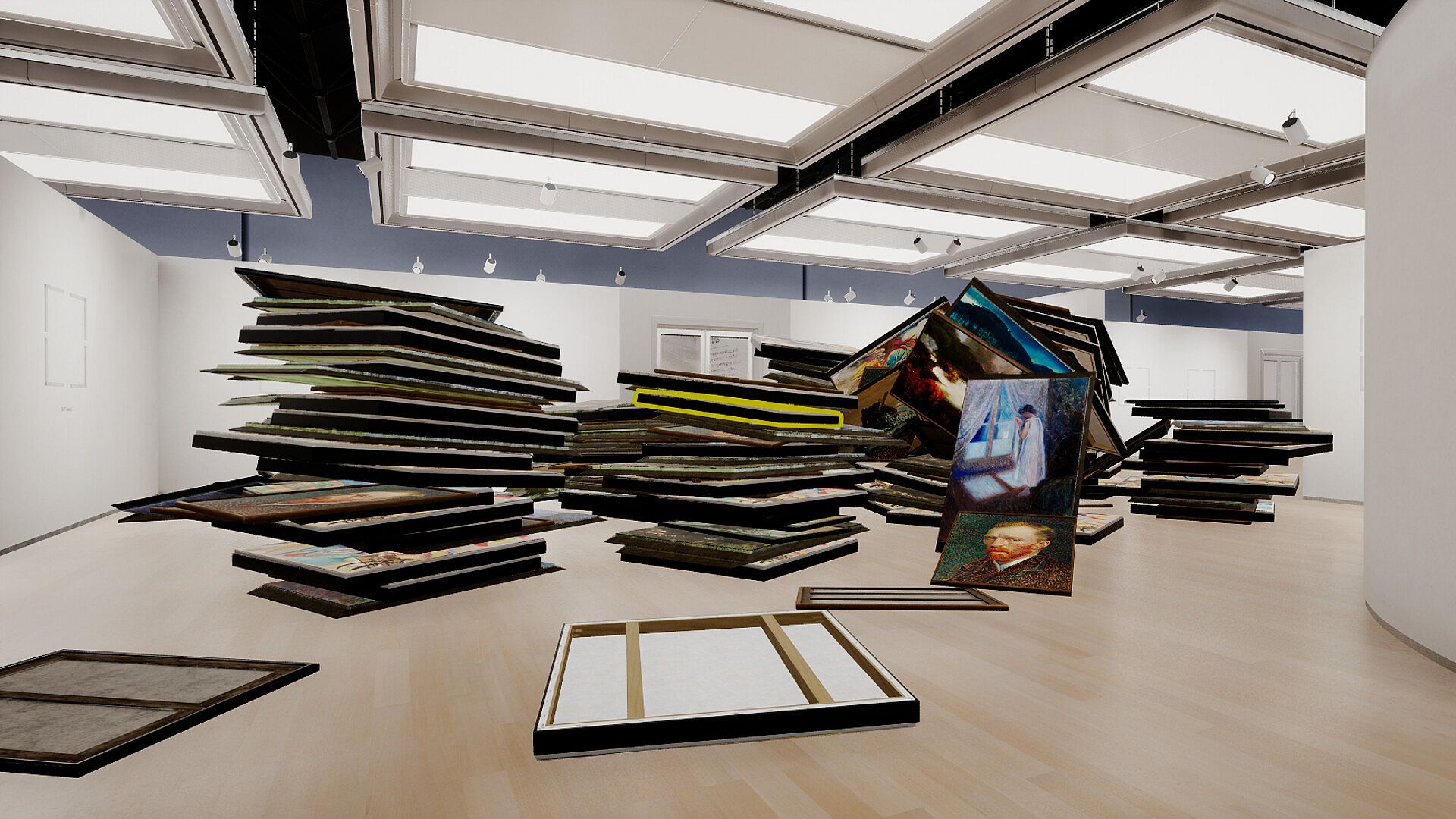
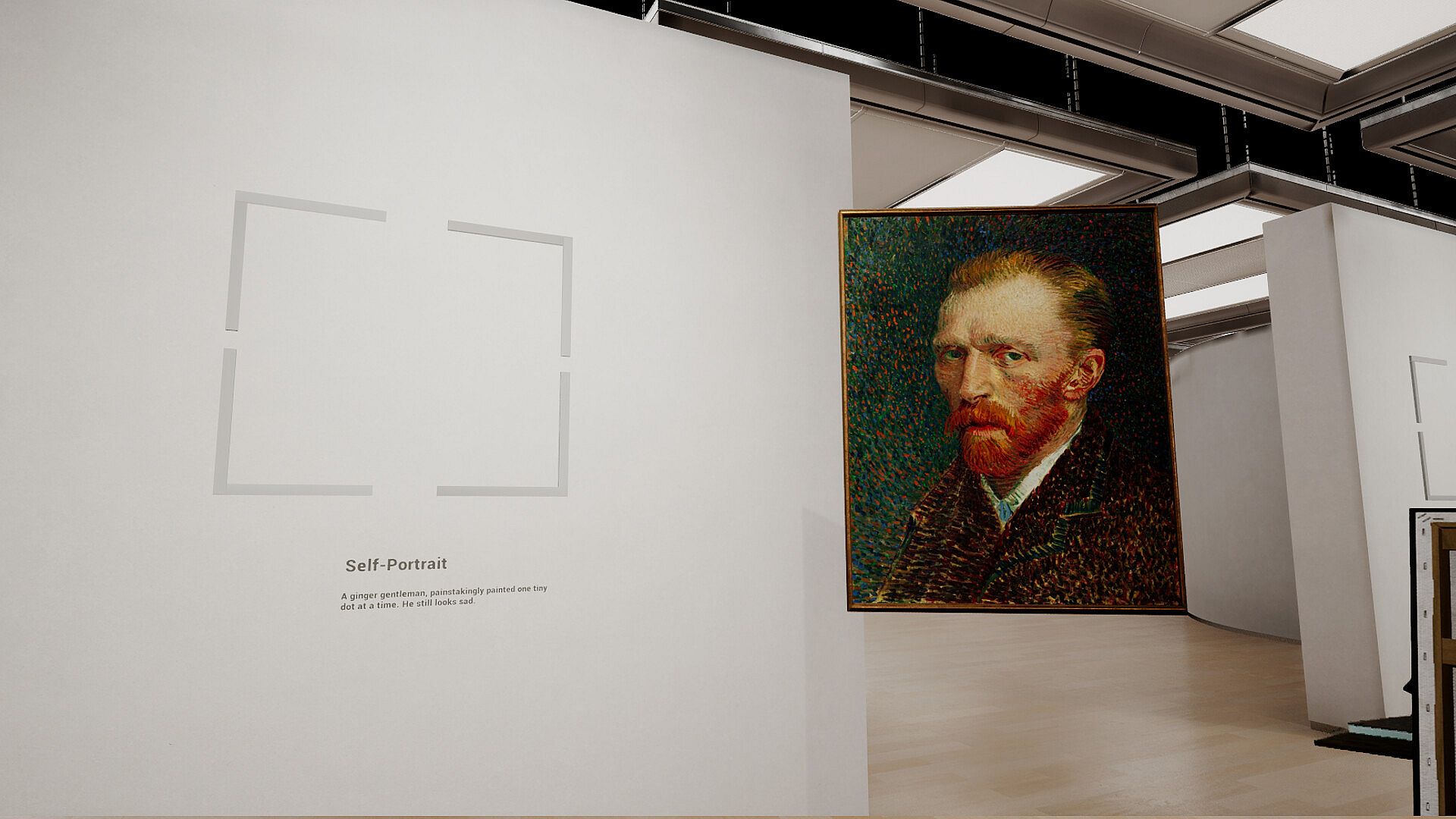
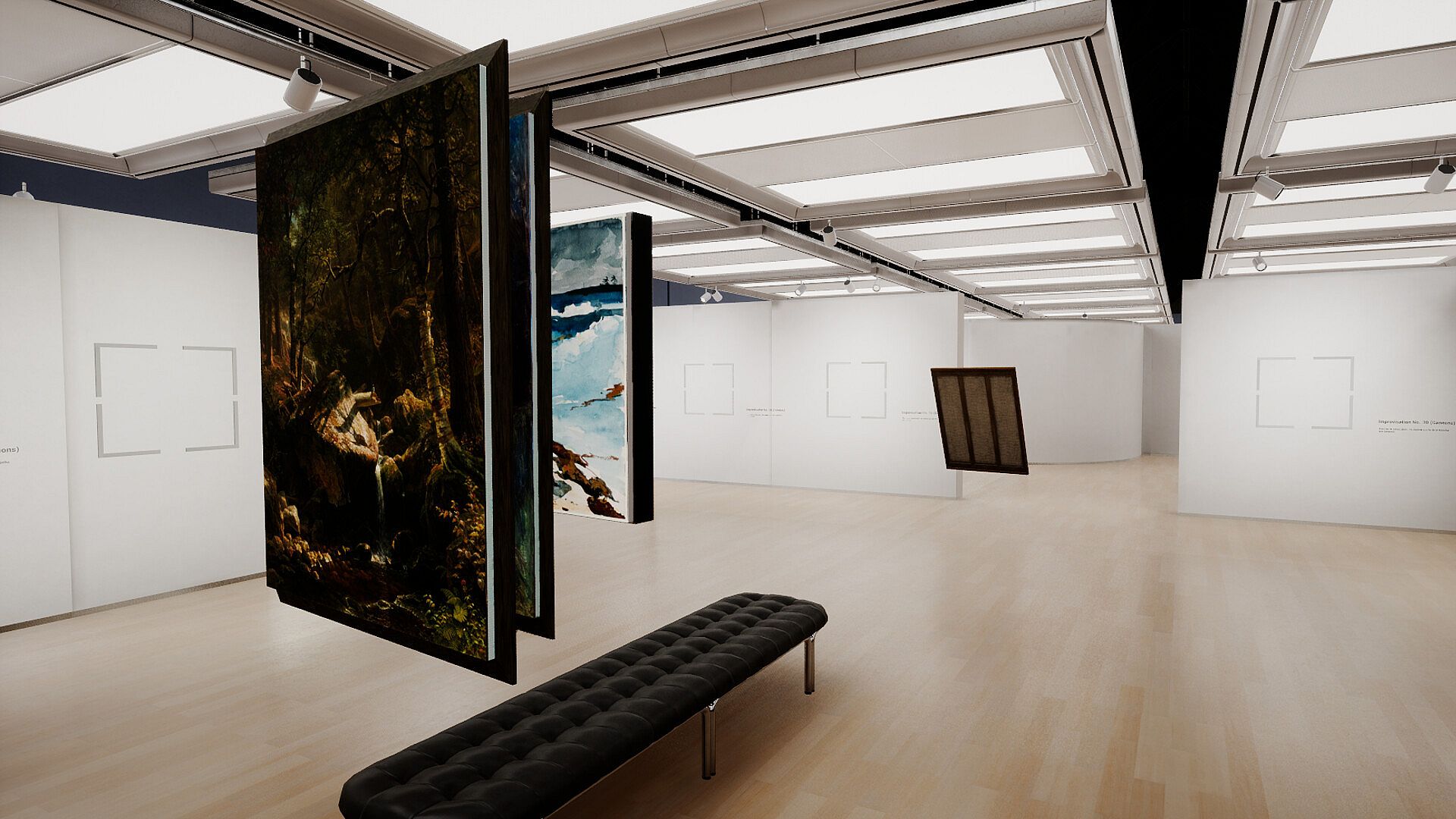
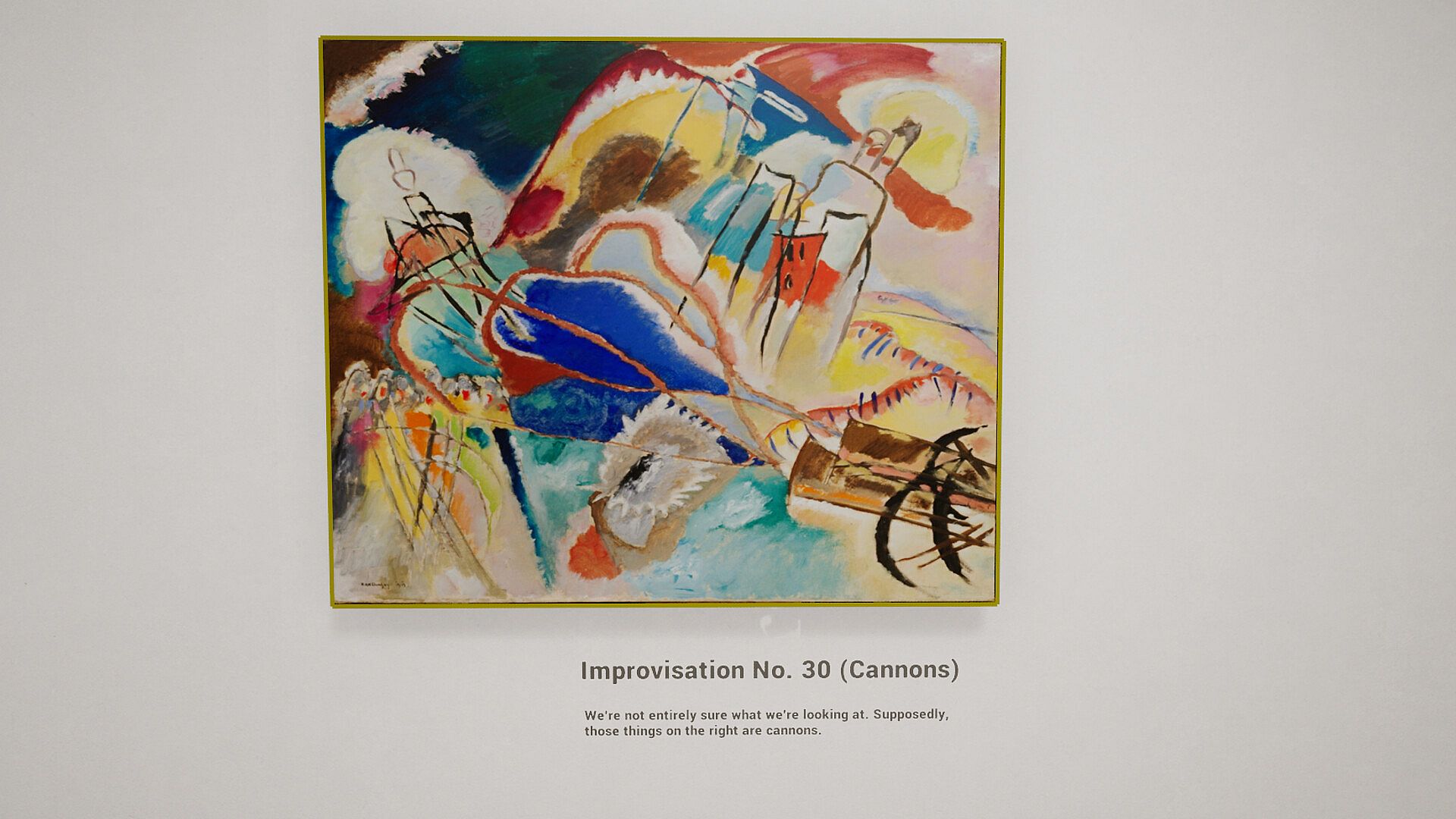




Museum Disarter is an indie simulation game built around first-person organization and deduction on PC. Players restore order to a ransacked museum by sorting hundreds of public-domain paintings back into their correct collections using casual, friend-like descriptions rather than formal art history notes.
Gameplay
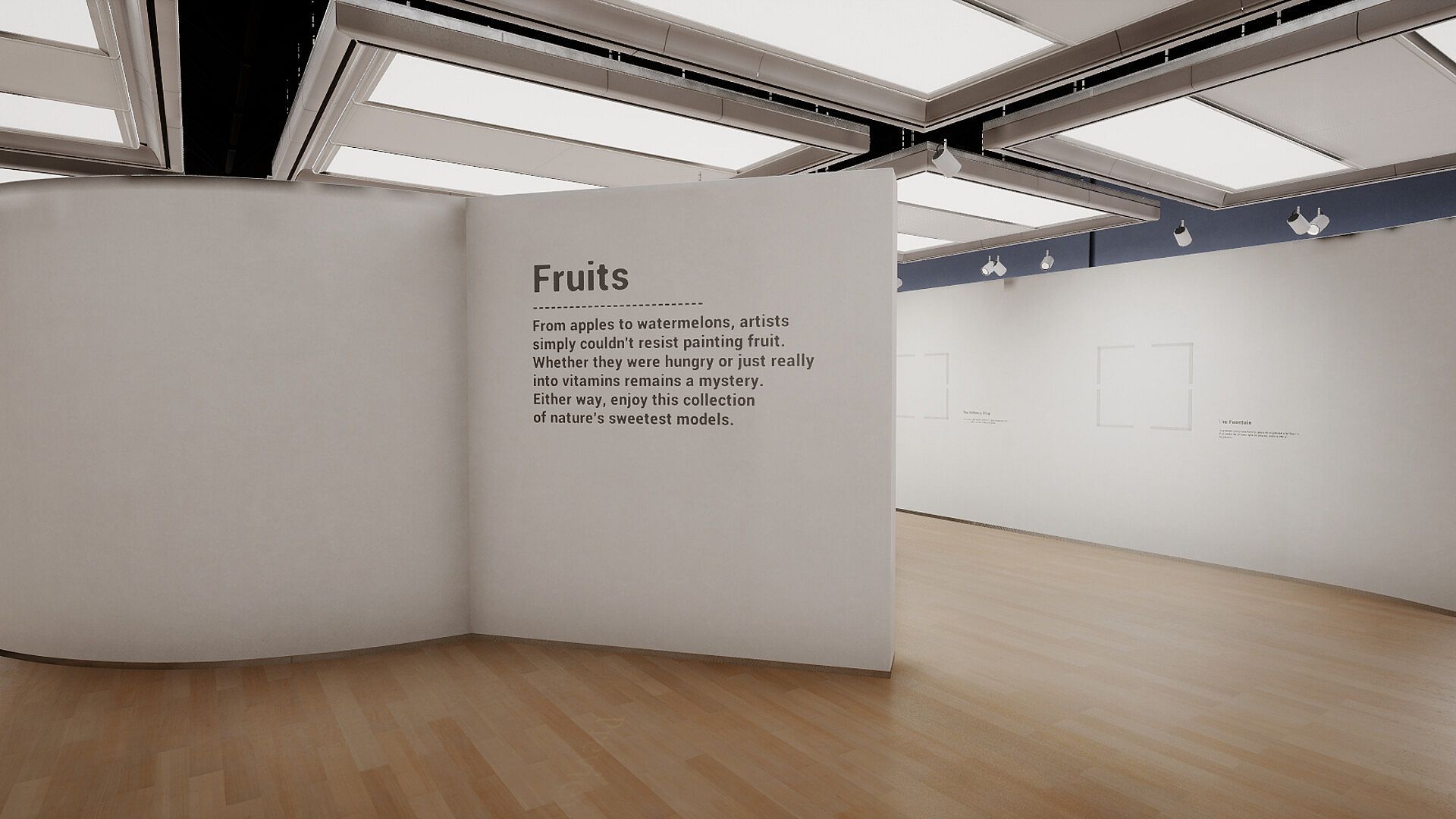
The core loop centers on exploring gallery spaces, examining individual artworks up close, and matching each one to its collection through short, informal clues. Descriptions emphasize everyday observations and light humor instead of technical terms like brushwork or symbolism. Once a painting is placed correctly, the museum environment updates to reflect progress, with completed sections gaining a more organized appearance. Serious details about each piece become available after placement for those who want them. The experience stays relaxed with no timers or scoring systems that reward speed. Every placement functions as its own small puzzle, some obvious at a glance and others requiring closer attention to details or a bit of creative interpretation. The developer created all descriptions manually without AI assistance, drawing from public-domain artworks and personal humor in both English and Spanish.
Game Modes
The game offers a single-player experience with no separate modes or multiplayer options. Progression happens through sequential gallery exploration and collection completion. There are no competitive elements, co-op features, or alternate rule sets. The focus remains on steady, unhurried sorting across numerous collections until the full museum feels restored.
Key Features and Mechanics
Hundreds of paintings are distributed across multiple collections, each requiring individual deduction based on the provided descriptions. The system avoids any incremental upgrades or tools that automate placement, keeping every decision manual and deliberate. Players move freely through the space at their own pace, with satisfaction coming from watching the galleries fill in naturally. The approach suits those who enjoy methodical tasks without pressure to optimize or rush. Public-domain artworks form the visual foundation, while the written clues blend accuracy with casual phrasing to guide matching without requiring prior art knowledge.
Is It Worth Playing?
This title appeals to players seeking a calm, puzzle-oriented simulation that emphasizes observation and light deduction over action or management complexity. Its no-pressure structure and focus on individual painting placement make it suitable for short or extended sessions. With a planned release in September 2026 and no reviews available yet, interest will likely depend on how well the casual descriptions and steady restoration loop resonate with those who enjoy cozy organization games. The single-player format and emphasis on taking time align with audiences looking for thoughtful, low-stress experiences rather than competitive or fast-paced gameplay.