





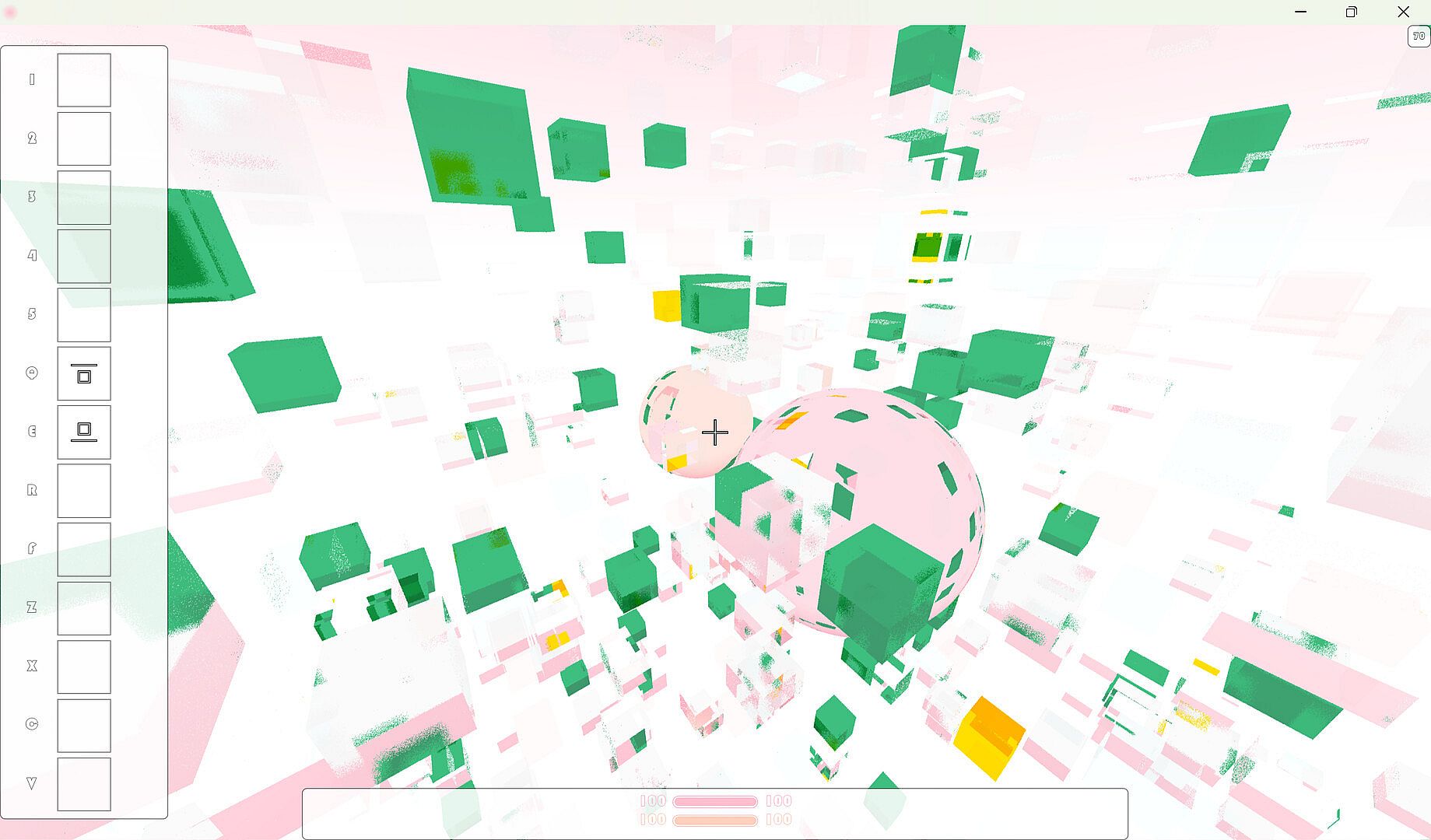
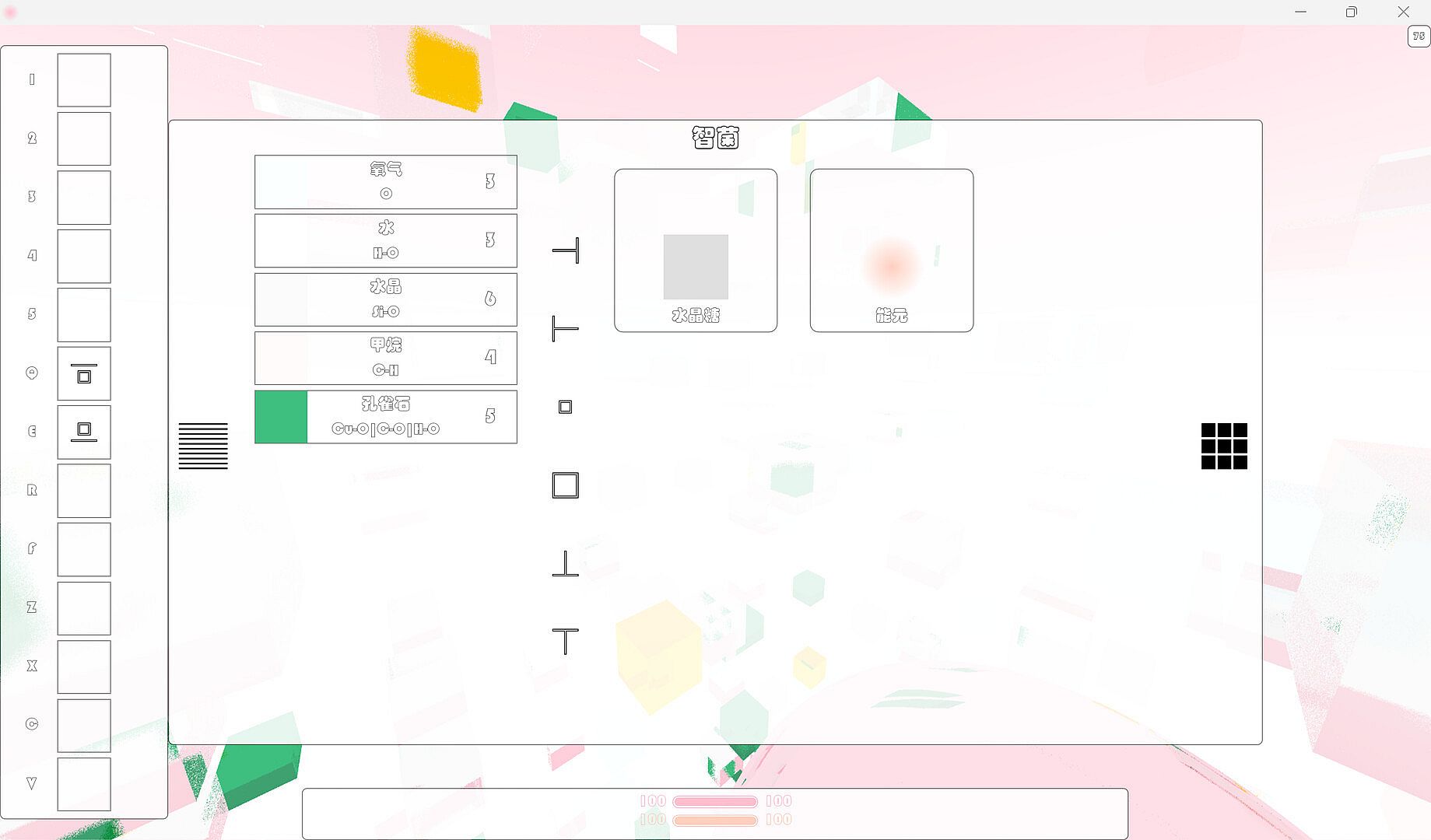
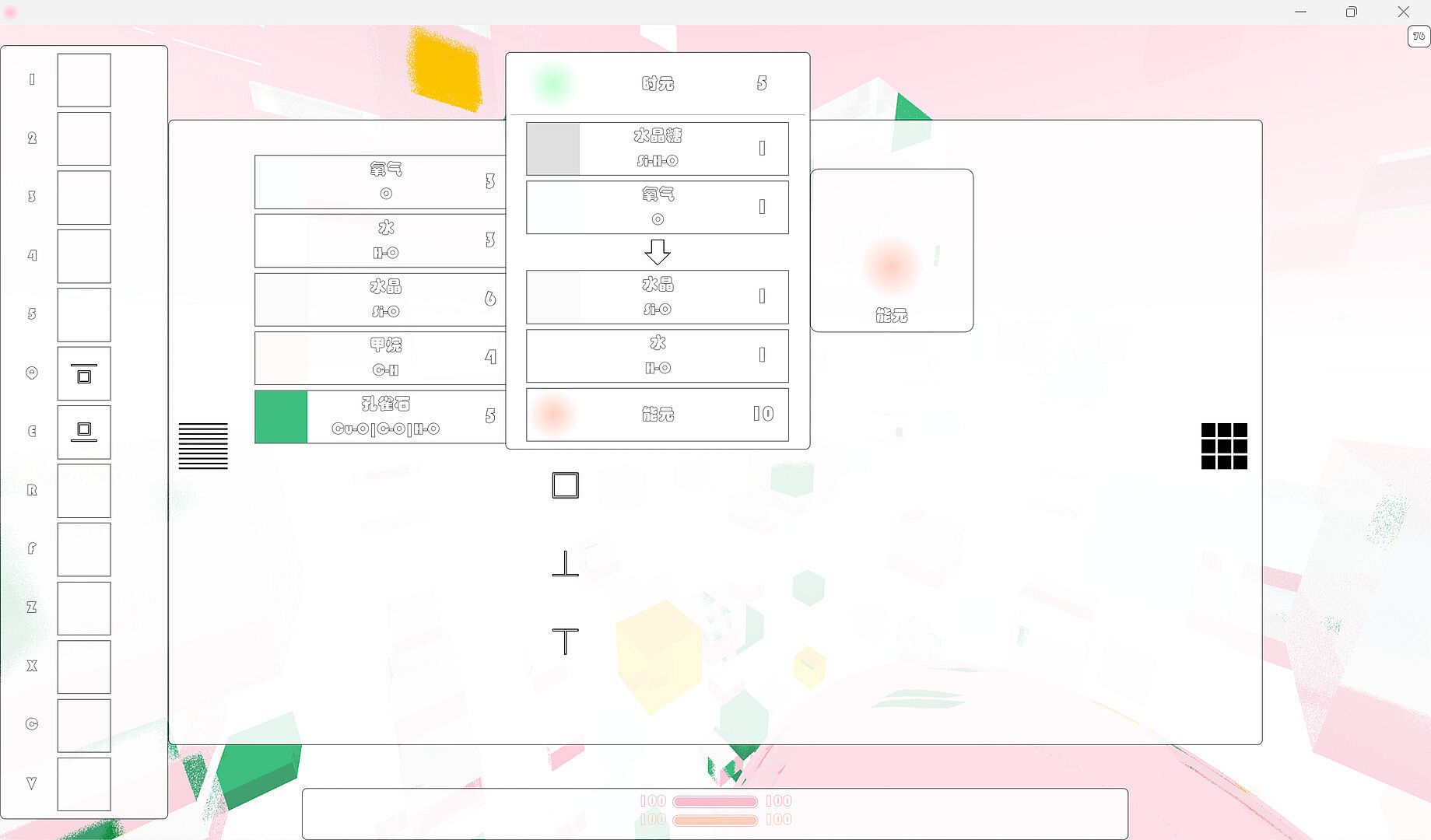
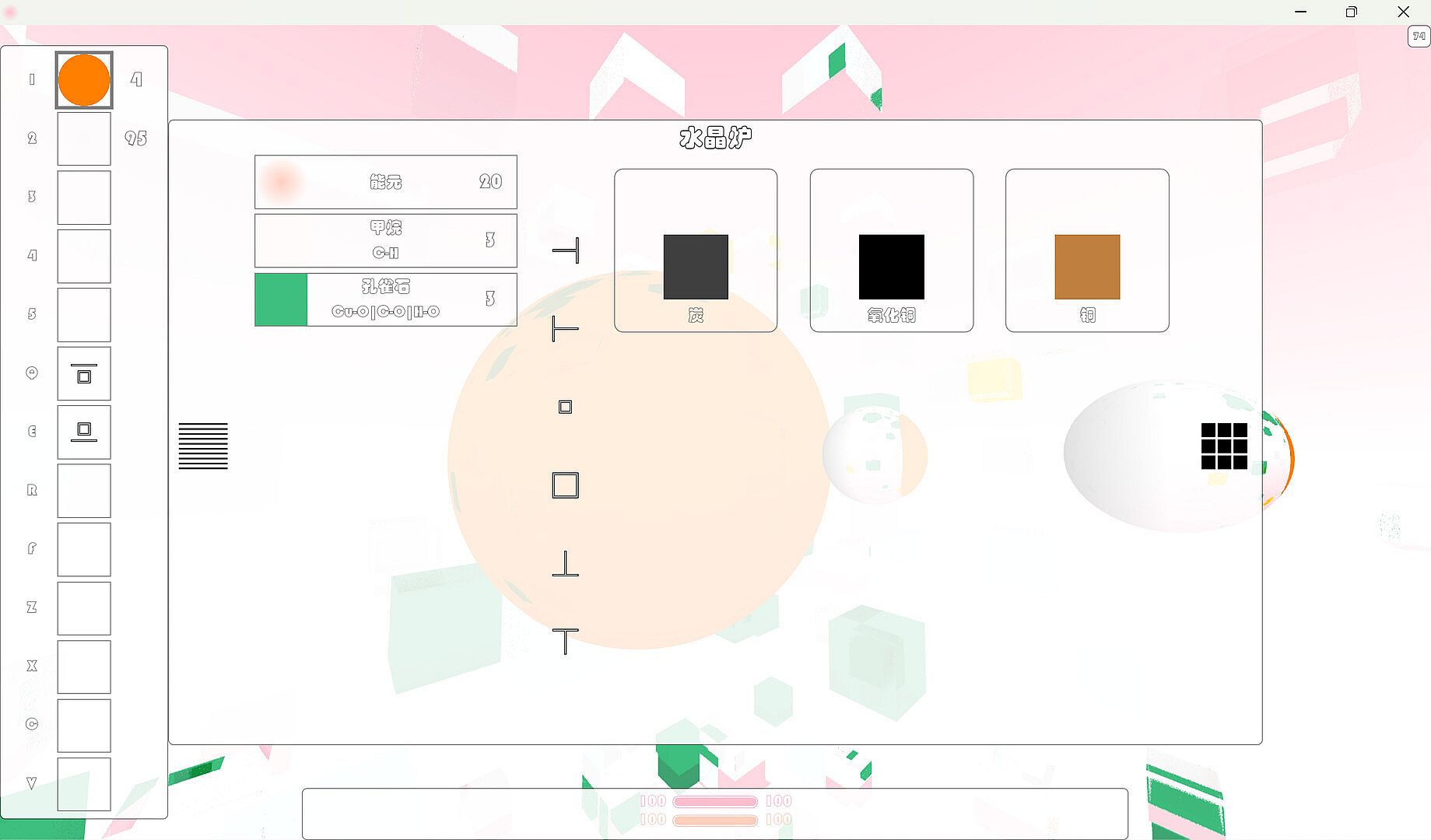
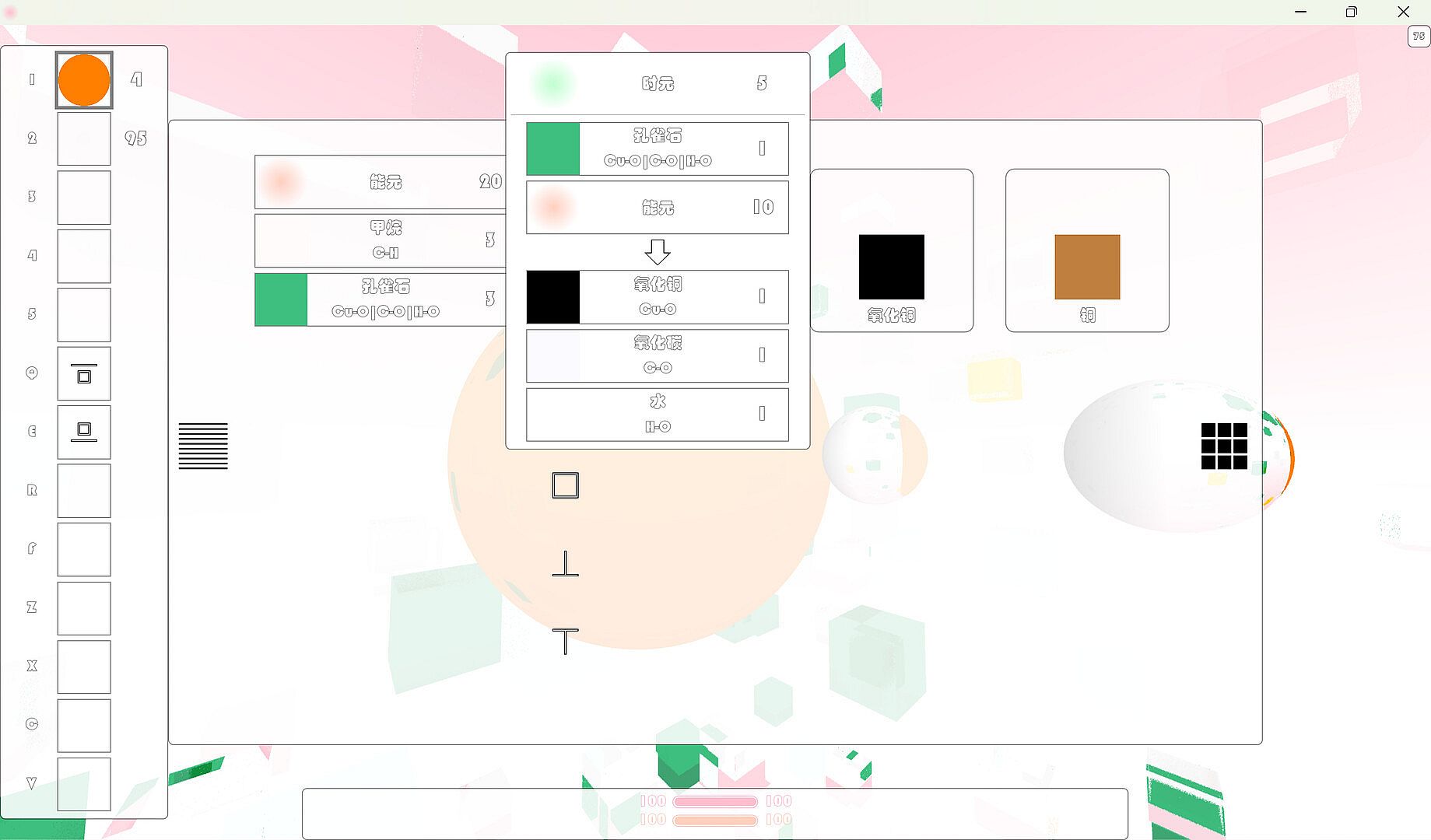
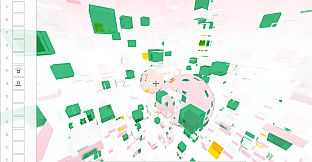

Nephele is an indie simulation game set on a gaseous planet where players guide the emergence of silicon-based cellular life. The core experience revolves around a detailed matter simulation system that treats voxels as molecules composed of 16 fundamental elements, enforcing conservation of matter through realistic chemical interactions.
Gameplay
Players begin as the first eukaryote on Nephele and focus on synthesizing organelles to expand cellular capabilities. This process supports the construction of a growing cell civilization through careful management of resources and interactions with the surrounding environment. Prokaryotic cells function as independent AI entities that reproduce and behave spontaneously, requiring players to decide between hunting them for immediate gains or maintaining them as part of a stable ecosystem. Genetic engineering provides additional options to unlock new cellular functions as the civilization develops. The simulation emphasizes ecological balance, as unchecked actions can disrupt the spontaneous behaviors of other cells and affect long-term survival.
Material properties extend beyond simple textures. Elements react according to defined chemical rules, and surfaces exhibit realistic light reflection, such as copper displaying proper metallic sheen under varying conditions. This system distinguishes the game's approach from conventional voxel titles by prioritizing physical accuracy in both composition and appearance.
Game Modes
The game operates as a single-player experience centered on progressive cellular development and environmental interaction. No separate multiplayer or competitive modes have been detailed. The primary loop involves starting from a basic eukaryote state, expanding through organelle synthesis, and adapting strategies around the AI-driven prokaryotic population. Players navigate decisions that influence ecological stability while advancing civilization-building goals.
Unique Simulation Features
The matter system forms the foundation of all interactions. Each voxel represents a molecule built from the 16 elements, and reactions follow conservation principles rather than abstract crafting recipes. This creates opportunities for precise manipulation of resources during organelle creation and cell management. Visual feedback reinforces the simulation through accurate rendering of material behaviors, making the world feel consistent with the underlying rules.
Cell-level AI adds depth to the ecosystem. Prokaryotes do not follow scripted enemy patterns but instead operate with ongoing reproduction and activity, which players must account for when expanding their own civilization. Genetic engineering serves as a progression tool that ties directly into these dynamics by offering new ways to interact with or stabilize the environment.
Is It Worth Playing?
Nephele targets players interested in simulation mechanics that prioritize scientific accuracy over traditional game abstractions. The combination of molecular-level matter modeling, reflective material properties, and AI-driven ecological systems offers a distinctive single-player experience focused on cellular evolution and balance. With a planned release in Q4 2026 and no reviews available yet, the game appeals most to those drawn to experimental indie titles that explore unconventional themes like silicon-based life and environmental stewardship. Those who enjoy methodical progression and systems-driven gameplay may find the upcoming title worth following for its fresh take on simulation design.












