

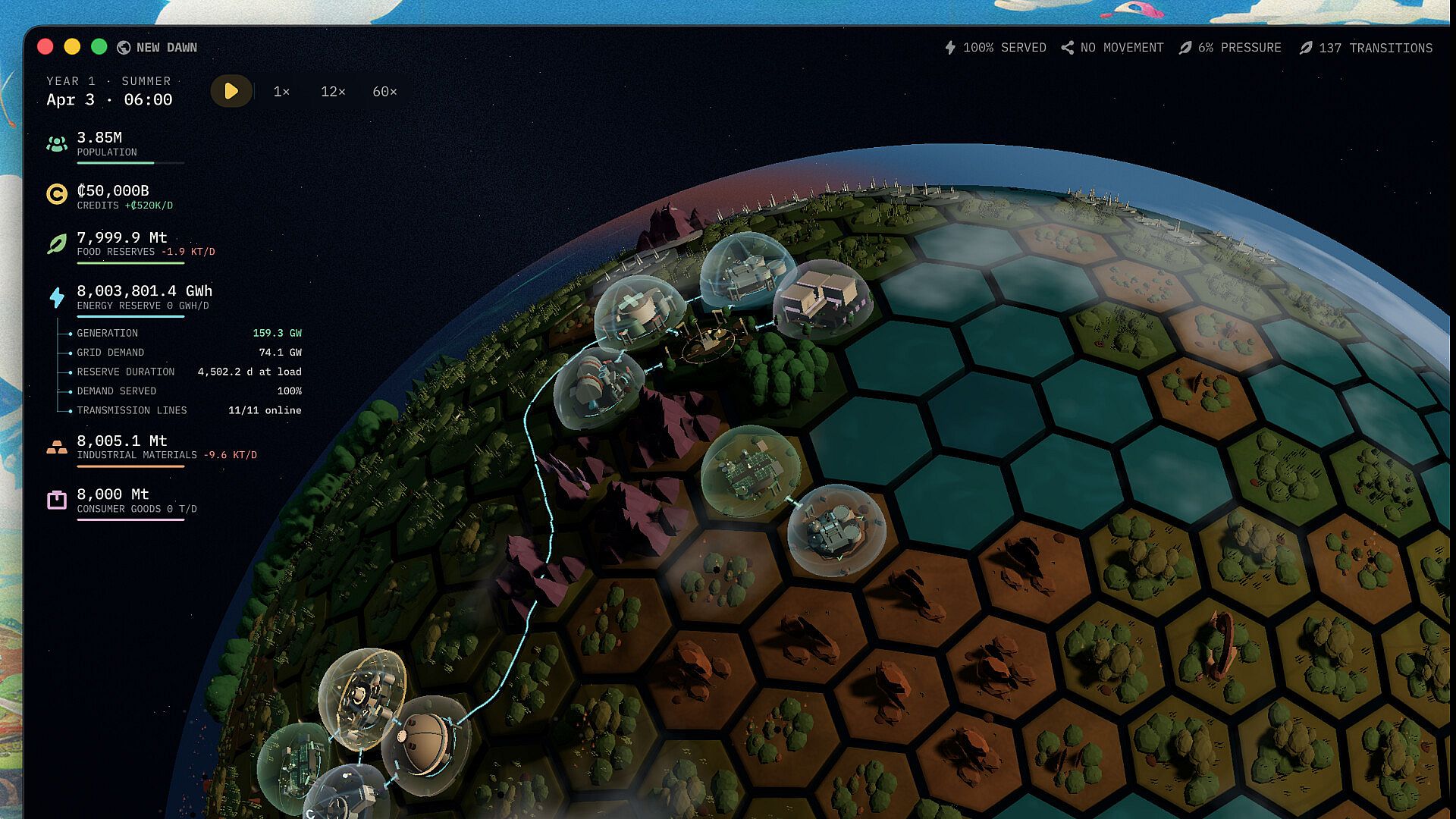
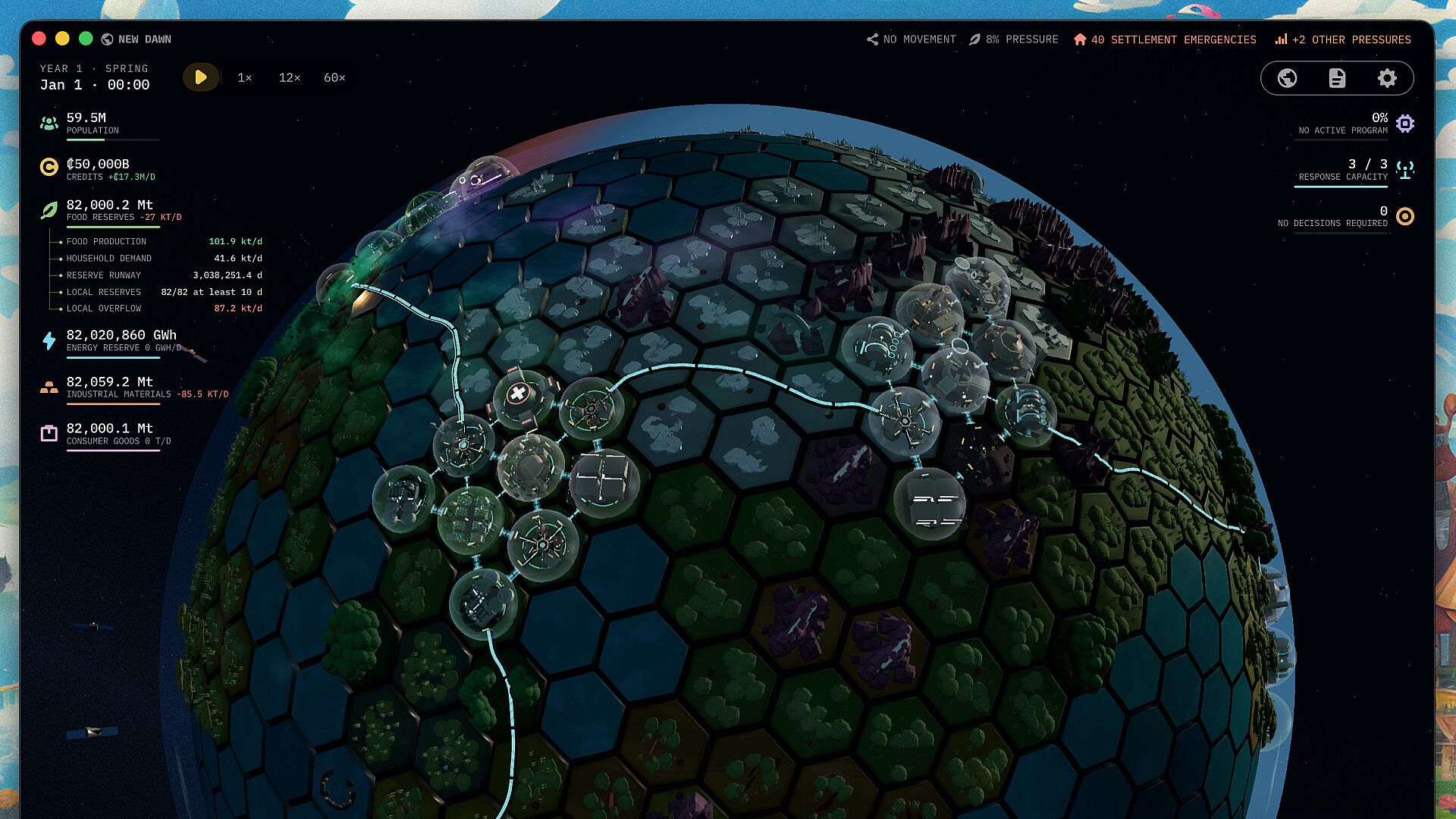
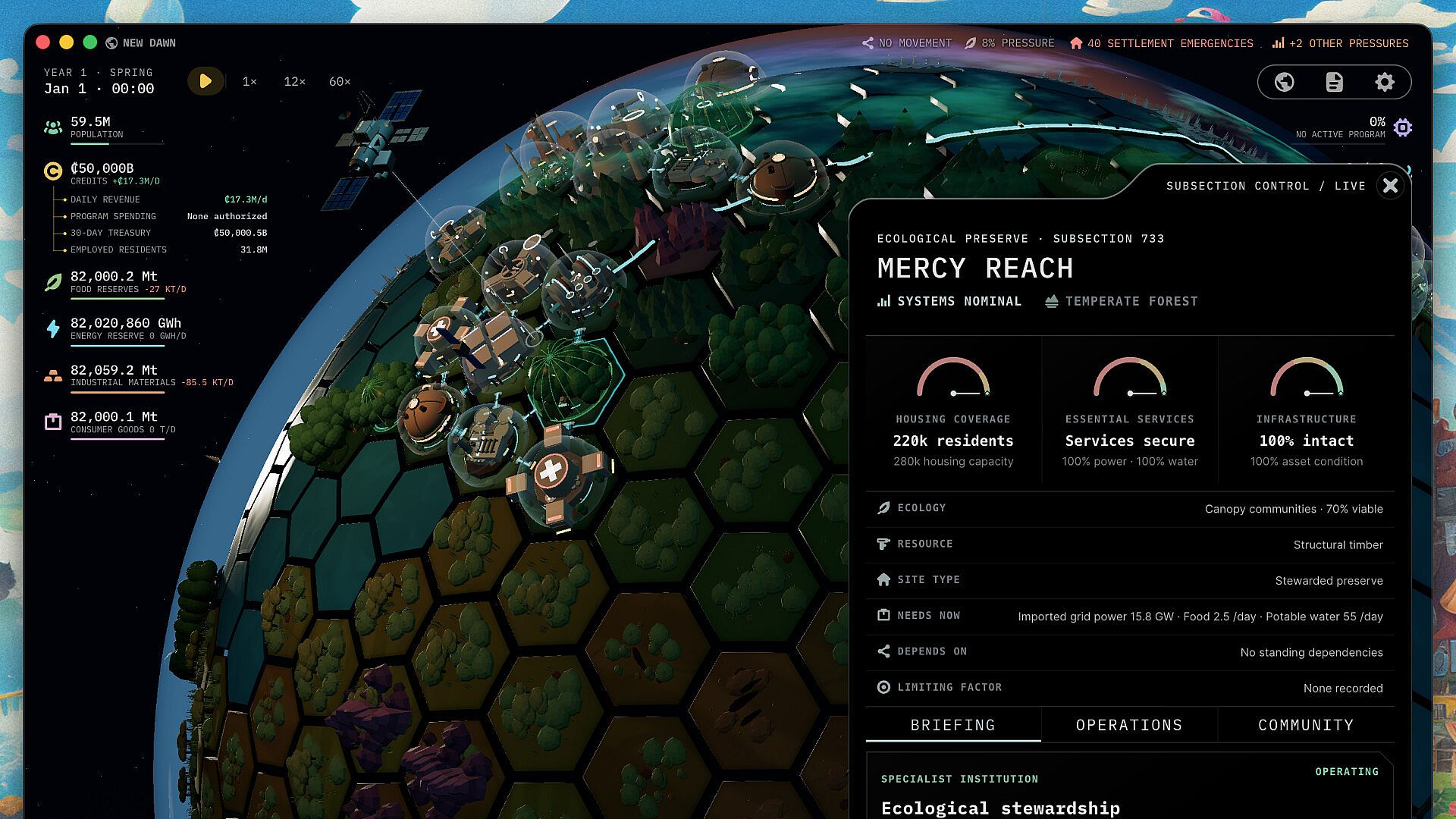
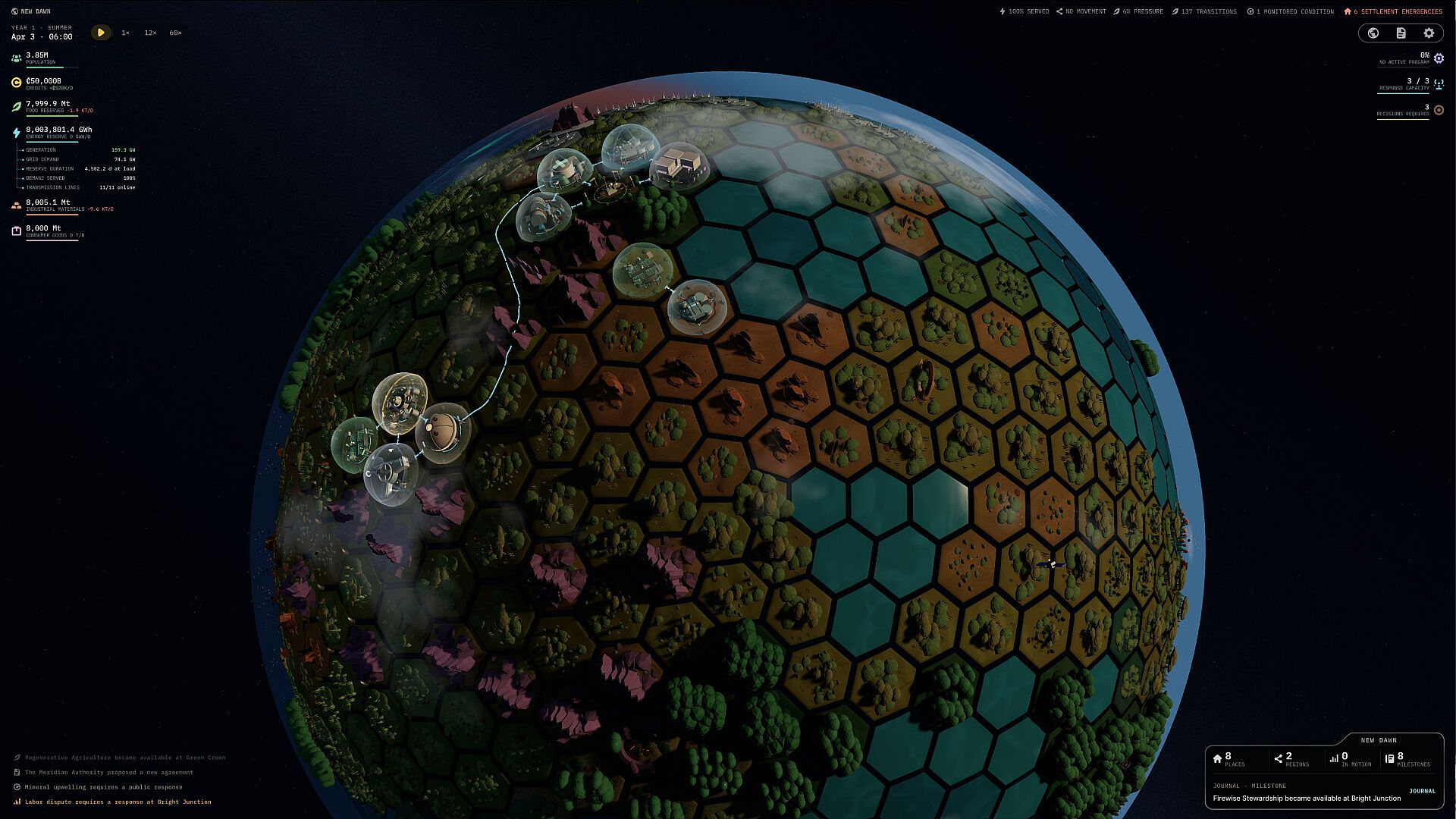
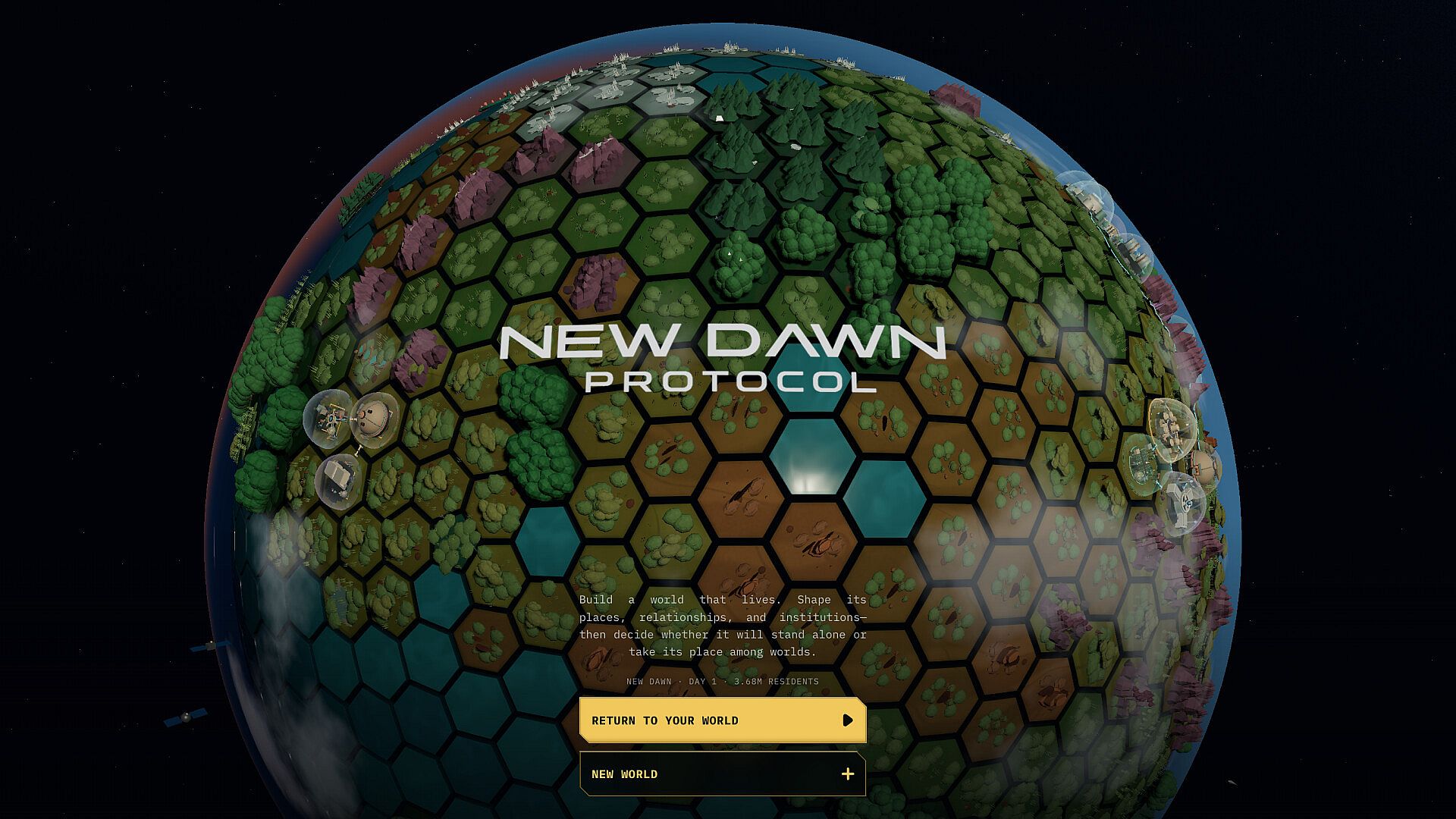
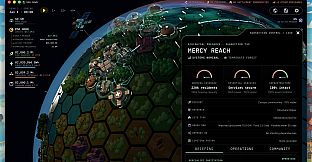
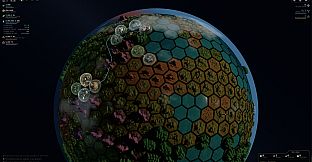
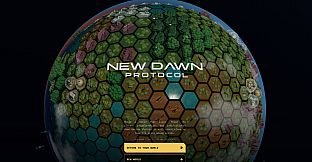
New Dawn Protocol is a single-player strategy and simulation game set on a recovering planet where players manage the reconstruction of interconnected systems across a living world. The core premise places you in charge of a planetary network that has been offline for decades, with communities that have developed their own structures and histories in the absence of central direction. Gameplay centers on placing and upgrading settlements on a globe, linking them through infrastructure networks for power, water, food, industry, transport, and research, then observing how those choices ripple outward over time.
Gameplay
Players position settlements directly onto distinct biomes and connect regions by restoring corridors and building networks that carry real resources and populations. Each project demands materials, labor, and ongoing support, after which it influences commuting patterns, freight movement, household migration, and the emergence of shortages or surpluses that cross borders. Infrastructure ages naturally, and events such as storms can reveal weaknesses in the systems you have created, forcing adjustments that affect multiple settlements at once.
Local councils operate with independent priorities, responding to your actions through cooperation, negotiation, or withdrawal of support. Decisions create lasting precedents that shape political memory, turning temporary measures into enduring institutions or leaving grievances that influence future interactions. The simulation tracks named residents, evolving settlements, regional groups, and physical networks, allowing players to trace how specific choices lead to broader outcomes without any scripted morality system guiding the results.
Geography, weather patterns, migration flows, and accumulated political history combine with player priorities to produce unique world states. Contact with other rebuilding societies occurs through signals, enabling exchanges of knowledge or cargo alongside negotiations that can lead to treaties, migration agreements, aid, or escalating tensions such as sanctions and blockades.
Game Modes
The experience unfolds as a continuous single-player sandbox without separate competitive or cooperative modes. Time advances to reveal the consequences of infrastructure and policy choices, with no fixed campaign structure or victory conditions. Players may keep their world isolated and independent indefinitely or activate the New Dawn Protocol to integrate it with a wider network of societies when conditions allow. This structure emphasizes ongoing adaptation over discrete sessions or ranked play.
World Building and Consequences
Settlements expand across varied terrain while networks for essential services must operate as integrated parts of a larger whole. Once active, these systems generate new opportunities alongside dependencies that can propagate across the planet. Communities retain agency, forming relationships and institutions that respond dynamically to external direction or its absence. The absence of a scoring system means outcomes emerge from the interplay of construction, migration, specialization, and memory rather than from meeting preset objectives.
Is It Worth Playing?
New Dawn Protocol suits players who enjoy deep strategy and simulation titles focused on long-term system management and emergent societal change. Its single-player format delivers an open-ended experience where the world continues to evolve based on infrastructure decisions and their ripple effects, with no required endpoint or victory screen. The game remains in a pre-release state with no user reviews available, so prospective players should monitor official updates for confirmation of release timing and final feature scope before committing.